





Saturday, 27 June 2026 06:20 PM
Advertorial
As preventive health screening interest continues rising in 2026, this Life Line Screening review explores package costs, stroke-risk-related screening options, physician-reviewed results, Medicare and insurance limitations, and key questions adults should review before booking.
INDEPENDENCE, OH / ACCESS Newswire / June 27, 2026 / Advertorial Disclosure: This sponsored article is for informational purposes and may contain affiliate links. If a reader books through links in this article, a commission may be earned at no additional cost to the reader. Life Line Screening provides preventive screening services, not emergency care, medical diagnosis, treatment, or a replacement for a physician visit. Anyone experiencing symptoms of a heart attack, stroke, or another emergency should call 911 immediately.
Check Life Line Screening packages before booking
Life Line Screening Consumer Research 2026: Reviewing Cost & Tests Before Booking Your Preventive Health Screenings
Quick Answer: Life Line Screening is a preventive health screening company offering community-based screenings for selected cardiovascular, stroke-risk-related, chronic disease, bone health, hormone, organ health, and wellness markers. The official website lists packages starting at $186, physician-reviewed results, HSA/FSA eligibility, no referral requirement, and no insurance requirement. It may be useful for adults who want additional screening information to discuss with a healthcare provider, but it does not diagnose disease, replace regular medical care, or rule out future health events.
You saw an ad for Life Line Screening and now you are checking the details before booking. That is the right move. Before choosing a package, it helps to understand the cost, which screenings are included, what Medicare does not cover, when results arrive, and what these screenings can - and cannot - tell you about your health risk.
Life Line Screening Review 2026: Read Before Booking
Quick Verification Snapshot As of June 2026
Before getting into the full Life Line Screening review, here is the clean version of what the official materials show and what readers should understand before booking.
Brand: Life Line Screening
Official website: https://www.lifelinescreening.com/
Service category: Preventive health screening and community-based wellness screening
Starting package price shown on official website: $186
Core screening focus: Stroke-risk-related, heart and vascular, atrial fibrillation, abdominal aortic aneurysm, peripheral arterial disease, chronic disease risk, A1C, organ health, bone health, and hormone-related markers depending on the package selected
Results process: The official website states that results are physician-reviewed and available online within about 10 days
Booking position: The official website states that no referral and no insurance are required
Medicare / insurance position: The official Terms state that Life Line Screening does not participate in Medicare and does not file insurance claims
Important limitation: Life Line Screening's Terms state that screenings do not diagnose, do not detect all forms of stroke, and do not replace regular physician follow-up
Before booking Life Line Screening: Confirm the package price, the screenings included, whether the event is available in your state, the cancellation terms, Medicare and insurance limitations, and how results should be reviewed with a healthcare provider. Life Line Screening may provide selected preventive screening information, but it does not diagnose disease or replace medical care.
Buyer takeaway: Life Line Screening is best understood as a preventive screening service that may provide selected health-risk information to review with a qualified healthcare provider. It should not be positioned as a diagnosis, emergency service, treatment plan, or substitute for a personal physician.
5 Things to Check Before Booking Life Line Screening
Before booking Life Line Screening, readers should confirm five details: the package price, the screenings included, whether the event is available nearby, how cancellation terms work, and what the results can and cannot tell them. These checks help readers choose the most appropriate package without treating preventive screening as a diagnosis or substitute for medical care.
Package cost: Confirm the current price before booking because promotions, package names, and package details may change.
Screenings included: Make sure the package includes the specific screenings you want, such as carotid artery, atrial fibrillation, abdominal aortic aneurysm, or peripheral arterial disease screening.
State and location availability: Some screenings, membership benefits, or add-on services may not be available in every state.
Cancellation terms: Review the 48-hour cancellation and rescheduling rules before choosing an appointment.
Result limitations: Results may provide selected screening information, but they do not diagnose disease, rule out future events, or replace physician follow-up.
Buyer takeaway: The most urgent step is not rushing to book. It is checking the right details before booking so the package, expectations, and follow-up plan make sense.
Check Life Line Screening packages before booking
What Is Life Line Screening?
Life Line Screening is a preventive health screening company that brings selected health screenings into community-based locations across the United States. Instead of requiring a hospital setting or a traditional referral-based appointment path, the company allows eligible adults to search for a nearby screening event, choose a package, attend an appointment, and receive physician-reviewed results.
The brand's strongest positioning is convenience combined with preventive awareness. Life Line Screening focuses heavily on cardiovascular and stroke-risk-related screenings, including carotid artery screening, abdominal aortic aneurysm screening, peripheral arterial disease screening, and atrial fibrillation screening. Its broader packages may also include chronic disease risk assessment, liver and kidney health markers, hormone levels, organ health, A1C screening, bone health screening, and related wellness assessments depending on the package chosen.
For readers, the easiest way to think about Life Line Screening is this: it may help you gather additional information about selected health-risk markers that you can bring into a healthcare conversation. That does not mean the service diagnoses disease, prevents a stroke, prevents a heart attack, or replaces medical care. It means the service may provide screening information that helps some adults feel more informed and better prepared to talk with a qualified healthcare professional.
This distinction is important because preventive screening is useful only when the reader understands both sides: what it can show and what it cannot show. A screening may identify a finding that deserves follow-up. A normal screening may also miss risks outside the test's scope. That is why Life Line Screening should be used as a health-information tool, not as medical clearance.
Buyer takeaway: Life Line Screening is not a doctor replacement. Its value is in giving adults convenient access to selected preventive screenings and physician-reviewed results that can be discussed with a healthcare provider.
How Does Life Line Screening Work?
Life Line Screening follows a simple process: search for a nearby screening, choose a package, attend the appointment, and review the results when they become available. The official website describes appointments as available at community-based venues such as churches, community centers, and other local locations. It also states that many appointments are available within a week, although availability can vary by location, date, package, and demand.
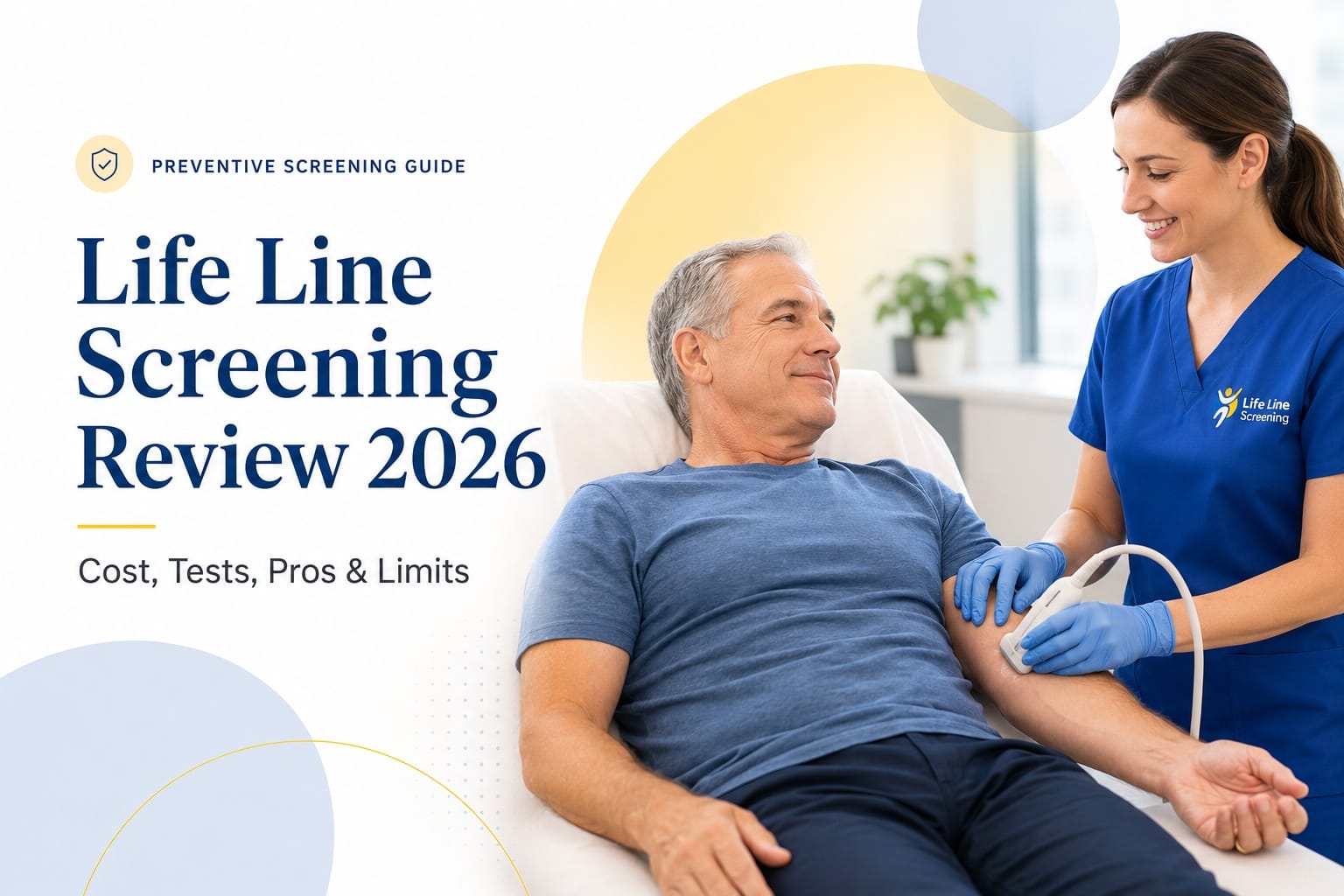
The appointment itself is described as non-invasive and generally designed to take about an hour. Depending on the package, Life Line Screening may use ultrasound imaging, EKG, blood analysis, or other assessment methods. The company states that its in-house technicians are specially trained in ultrasound imaging, EKG, and blood analysis.
After the appointment, Life Line Screening states that results are reviewed before they reach the customer. The official website says a board-certified physician reviews every result and that physician-reviewed results are available online within about 10 days. If something needs attention, the brand says the customer receives guidance about what to do next.
The right expectation is not "this tells me everything about my health." The right expectation is "this may give me selected screening information that I should review with a healthcare provider." That expectation protects the reader and strengthens the article's trust value.
Quick answer: Life Line Screening works by letting adults book a nearby community-based screening event, attend a non-invasive appointment, and receive physician-reviewed results afterward. Depending on the package, screenings may involve ultrasound, EKG, blood analysis, or risk assessment tools. Results should be reviewed with a healthcare provider before making medical decisions.
What Screenings Does Life Line Screening Offer?
Life Line Screening offers several preventive screening packages. The core package listed on the official website is the Heart & Stroke Risk package, which includes four screenings plus physician review. The listed screenings include carotid artery screening, abdominal aortic aneurysm screening, arterial disease screening, and atrial fibrillation screening.
These topics matter because many adults search for preventive screening after thinking about stroke risk, heart disease risk, family history, aging, blood pressure, circulation, or overall health awareness. Life Line Screening's role is not to guarantee that a health event will be prevented. Its role is to provide selected screening information related to certain risk markers.
The official website also lists broader packages. The Chronic Disease Risk package includes the heart and stroke tests plus chronic disease risk assessment. The Men's & Women's Health package includes chronic disease tests plus liver and kidney health, hormone levels, organ health, and A1C. The Complete Preventative Care Suite includes all listed health assessments plus a mid-year monitoring assessment.
That gives readers several levels of choice. A person focused mainly on cardiovascular and stroke-risk-related screening may not need the broadest package. Someone who wants a fuller wellness snapshot may compare the higher-tier packages. The most appropriate choice depends on age, health history, risk factors, budget, physician input, and the exact screenings available in the reader's area.
Some screenings, membership benefits, or add-on services may not be available in every state. Readers should confirm availability before booking, especially if they are comparing membership options, specialty tests, or location-specific screening events.
Buyer takeaway: Life Line Screening packages are not one-size-fits-all. Readers should choose based on the screenings they actually need, the questions they want answered, and what they plan to discuss with a healthcare provider after receiving results.
Life Line Screening and Stroke Risk Screening
Stroke-risk-related screening is one of the main reasons many adults research Life Line Screening. The company's Heart & Stroke Risk package includes carotid artery, abdominal aortic aneurysm, arterial disease, and atrial fibrillation screenings. These screenings may provide selected information related to risk markers, but they do not diagnose stroke, rule out all future stroke risk, or replace emergency care.
This is where the article needs to be direct without sounding frightening. If someone is reading because they are generally curious about preventive screening, Life Line Screening may be worth researching. If someone is reading because they are having sudden symptoms, a screening appointment is the wrong next step. Sudden facial drooping, arm weakness, speech trouble, confusion, vision changes, trouble walking, dizziness, balance problems, or severe headache may require emergency attention.
Life Line Screening's Terms also make an important point: its screenings do not detect all forms of stroke and do not replace regular contact and follow-up with a physician. That is not a reason to dismiss the service. It is a reason to use the service correctly. Screening information can be helpful, but emergency symptoms require emergency care, and long-term health decisions require medical guidance.
Quick answer: Life Line Screening offers selected stroke-risk-related screenings, but it does not diagnose stroke or replace emergency care. Adults researching preventive screening may use screening information as part of a healthcare conversation. Anyone experiencing sudden stroke symptoms should call 911 immediately rather than booking a screening.
Check Life Line Screening packages before booking
Life Line Screening for Heart Disease Risk: What It Can and Cannot Tell You
Life Line Screening's cardiovascular screening options are designed to provide selected information related to heart and vascular risk markers. The service may be useful for adults who want additional screening data to bring to a healthcare provider, especially when they are thinking about circulation, vascular health, heart rhythm, or family history.
However, it should not be described as a heart disease diagnosis, treatment plan, or guarantee of future protection. The company's Terms state that no screening test can screen for every possible cause of stroke or heart disease. The Terms also note that Life Line Screening does not screen the coronary arteries, which are the arteries surrounding the heart.
This is the responsible way to explain the service: Life Line Screening may identify selected findings that deserve follow-up, but it does not "clear" a person's heart health. A normal result should not be treated as permission to ignore symptoms, skip routine care, or stop working with a physician.
For the right reader, that honest explanation can actually improve conversion. It shows that the article is not trying to sell at any cost. It is helping the reader understand the real role of the service.
Buyer takeaway: Life Line Screening may provide helpful cardiovascular screening information, but it should not be treated as a full heart-disease evaluation. Readers should use results as part of a broader care conversation with a qualified healthcare provider.
Before You Book: What Life Line Screening Can and Cannot Tell You
Life Line Screening may provide selected preventive screening information. That is the useful part. It can help some adults understand whether certain screening findings deserve follow-up and can give them information to discuss with a healthcare provider.
What it cannot do is just as important. It cannot diagnose disease, treat disease, replace emergency care, replace a physician, rule out every future health event, or guarantee that a person is healthy. A normal result should not be used as complete medical clearance, and an abnormal result should not be self-diagnosed without appropriate follow-up.
This is the most important reason to read before booking. The value of Life Line Screening depends on choosing the right package, understanding the limitations, and having a plan for what to do with the results.
Buyer takeaway: Before booking, readers should know what the screening can and cannot tell them. That clarity helps the service work as a preventive information tool instead of becoming a substitute for medical care.
Life Line Screening Cost and Pricing
Quick answer: Life Line Screening packages start at $186 on the official website, with higher-tier packages listed at $285, $384, and $483 at the time reviewed. Readers should confirm current pricing before booking because package names, promotions, availability, and membership benefits may change.
Life Line Screening cost is one of the most important buyer questions, and the official website gives clear starting figures. At the time reviewed, the official website listed packages starting at $186.
Heart & Stroke Risk: Listed at $186. Includes four screenings plus physician review. The listed areas include carotid artery, aortic aneurysm, arterial disease, and atrial fibrillation.
Chronic Disease Risk: Listed at $285. Includes 10 screenings plus physician review. The official website describes it as including the heart and stroke tests plus chronic disease risk assessment.
Men's & Women's Health: Listed at $384. Includes 15 screenings plus physician review. The official website lists chronic disease tests plus liver and kidney health, hormone levels, organ health, and A1C.
Complete Preventative Care Suite: Listed at $483. Includes 19 screenings plus physician review. The official website describes it as including all health assessments plus a mid-year monitoring assessment.
Pricing, promotions, package names, screening availability, membership benefits, state availability, and booking-path details may change. Readers should always confirm current pricing directly before booking.
The important conversion point is that pricing is not just about the lowest number. The better question is whether the package includes the screenings the reader actually wants. A lower-cost package may be enough for someone focused on cardiovascular and stroke-risk-related screening. A broader package may make more sense for someone who wants additional wellness markers. The right choice depends on the person's goals and healthcare context.
Buyer takeaway: Life Line Screening pricing starts at $186 on the official website, but the most appropriate package depends on which screenings the reader wants, what is available near them, and whether they are booking a one-time screening or considering ongoing annual screening.
Check Life Line Screening packages before booking
Does Medicare or Insurance Cover Life Line Screening?
Quick answer: Life Line Screening's Terms state that the company does not participate in Medicare, that screening services are not covered or reimbursable by Medicare, and that Life Line Screening does not file insurance claims. Readers should verify any HSA/FSA questions with their own plan administrator.
Life Line Screening's official Terms state that the company does not participate in the Medicare program and that the cost of its screening services is not covered or reimbursable by Medicare. The Terms also state that Life Line Screening does not file insurance claims or provide referrals to a physician group or hospital.
This is a major point for readers comparing Life Line Screening cost, Life Line Screening pricing, and Life Line Screening Medicare questions. The article should not suggest that Medicare covers the service. It should not say insurance is accepted. It should not imply reimbursement is guaranteed.
The official website also describes packages as HSA/FSA eligible. That is useful for some buyers, but it still needs a clear caveat. HSA and FSA rules can vary depending on the account, plan administrator, documentation requirements, and individual circumstances. Readers should confirm their own plan rules before relying on reimbursement.
Buyer takeaway: Medicare and insurance details matter before booking. Readers should not assume reimbursement, coverage, or claim filing. They should verify HSA/FSA questions with their own benefits administrator before payment.
Is Life Line Screening Legit?
Life Line Screening appears to be an established preventive health screening company with a public official website, listed leadership, customer support channels, published Terms of Service, privacy notices, and a long operating history. The official website states that the company has screened more than 11 million customers, operates through thousands of nationwide locations, and has more than 30 years of experience.
But "legit" does not mean "right for everyone." That is the distinction a good Life Line Screening review must make. A service can be real, established, and useful for certain adults while still having limits. Preventive screening is not the same thing as diagnosis. A physician-reviewed result is not the same thing as a personal doctor visit. A normal result is not a guarantee that no future health event will happen.
The safest way to evaluate Life Line Screening is as a preventive screening service that may provide selected health-risk information to review with a qualified healthcare provider. That framing lets readers make a practical decision without feeling pressured or misled.
Readers should still review current package details, limitations, pricing, privacy notices, state availability, and cancellation terms before booking. For people who want more information about selected risk markers, Life Line Screening may be worth considering. For people with symptoms, known health concerns, abnormal prior results, or uncertainty about which screenings are appropriate, a healthcare provider should be involved before or after booking.
Buyer takeaway: Life Line Screening appears to be a real preventive screening company, but its services should be used responsibly. The key is to treat screening results as health information to discuss with a provider, not as a diagnosis or medical clearance.
Life Line Screening Results: What to Expect
Life Line Screening states that physician-reviewed results are available online within about 10 days. The company also states that if something needs attention, customers receive guidance in plain language. That result experience is one of the major reasons people research Life Line Screening before booking.
Still, results should be interpreted carefully. A screening result may help identify selected findings that deserve follow-up, but it should not be used as a standalone medical decision tool. If a result raises concern, the reader should contact a healthcare provider. If a result appears normal but symptoms develop later, the reader should still seek care.
The best way to use Life Line Screening results is to save them, read the explanation carefully, and bring them to a qualified healthcare professional. That is especially important for people with family history, existing conditions, medication use, prior abnormal testing, or questions about cardiovascular, vascular, bone, metabolic, or hormone-related risk markers.
Quick answer: Life Line Screening results are described by the company as physician-reviewed and available online within about 10 days. Results may help identify selected findings that deserve follow-up, but they should be reviewed with a healthcare provider before making medical decisions.
Life Line Screening Near Me: How to Find a Screening Event
People searching for "Life Line Screening near me" can use the official website to search for nearby screening events. The company states that screenings are offered in community-based locations such as churches, community centers, and other local venues. This is one of the most practical reasons the service attracts attention: it brings selected screenings into locations that may feel easier to access than a hospital appointment path.
Availability may vary by area, date, package, and state-specific rules. A reader in one city may see different appointment options than a reader in another state. Some tests, membership benefits, or add-on services may also have state-specific restrictions or availability limits.
Before booking, readers should check the location, appointment date, package contents, preparation instructions, cancellation terms, and whether the specific screenings they want are included. If they are unsure which package fits their health situation, they should ask a healthcare provider or contact Life Line Screening before payment.
Buyer takeaway: The "near me" value is convenience. Readers can search for nearby events, but they should still verify the exact package, location, preparation requirements, state availability, and cancellation rules before booking.
Who May Want to Consider Life Line Screening?
Life Line Screening may appeal to adults who want more visibility into selected health-risk markers, especially cardiovascular and stroke-risk-related areas. It may also appeal to people who prefer a community-based screening event and want a more convenient way to gather preventive health information.
Potentially relevant readers may include adults thinking about family history, aging, vascular health, circulation, heart rhythm, bone health, chronic disease risk, A1C, or broader wellness markers. The service may also fit people who want annual tracking through the OneLife Membership model, provided they review the membership terms carefully.
Life Line Screening may be less appropriate as a first step for people who are actively experiencing symptoms, people who need diagnostic testing ordered by a clinician, or people who are trying to replace routine care. The service should not be used as a reason to delay medical attention.
The most responsible path is simple: use Life Line Screening as an optional source of selected screening information, then bring the results to a healthcare provider who can interpret them in the context of age, health history, symptoms, medications, and prior tests.
Buyer takeaway: Life Line Screening may fit adults who want additional preventive screening information, but readers with symptoms, known conditions, or complex medical history should involve a healthcare provider rather than relying on a screening alone.
Important Limitations of Life Line Screening
Life Line Screening can provide selected preventive screening information, but it has important limits. The company's Terms state that screenings do not detect all forms of stroke and do not replace regular contact and follow-up with a physician. The Terms also note that no screening test can screen for every possible cause of stroke or heart disease, and that a person may have a normal screening result and still later experience a stroke or heart attack.
This section is not here to scare readers away. It is here to help them use the service correctly. A screening can be useful when the reader understands its purpose. It becomes risky only when someone treats it as a complete medical evaluation or ignores symptoms because of a prior result.
For abdominal aortic aneurysm screening specifically, eligibility can depend on age, sex, smoking history, family history, and clinician guidance. That is why a screening package should be chosen thoughtfully. A package may be convenient, but not every test is equally relevant for every person.
The strongest buyer guidance is to ask three questions before booking: What screenings are included? Why do I want these screenings? What will I do with the results afterward? If the answer includes "I will review results with a qualified healthcare provider," the reader is approaching the service the right way.
Buyer takeaway: Life Line Screening can be useful without being unlimited. The right expectation is selected preventive screening information, not diagnosis, treatment, emergency care, or a guarantee of future safety.
Life Line Screening vs. a Traditional Doctor Visit
Life Line Screening and a traditional doctor visit serve different roles. Life Line Screening may provide convenient access to selected preventive screenings, while a personal physician can evaluate symptoms, medical history, medications, prior test results, family history, physical examination findings, and treatment options.
That means one should not be positioned as a replacement for the other. A doctor visit is broader and more personalized. A Life Line Screening appointment may be more convenient for selected screenings and may provide information the reader wants to discuss later with a healthcare provider.
This is also why unsupported comparison claims should be avoided. The article should not say Life Line Screening is better than a doctor, more accurate than a hospital, or a way to skip the medical system. The more credible and compliant angle is that Life Line Screening may be one piece of a broader preventive health strategy.
For many readers, that honest distinction builds trust. They do not want hype. They want to know where the service fits.
Quick answer: Life Line Screening is not a replacement for a traditional doctor visit. It may provide selected preventive screening information, while a healthcare provider can interpret symptoms, history, risk factors, and results in a more complete medical context.
Cancellation Policy and Refund Terms
Life Line Screening's Terms describe a cancellation approach that readers should understand before booking. If a customer cancels more than 48 hours before the appointment, the Terms state that Life Line Screening will issue a gift card for the full amount to be used by the customer or anyone they choose for future screening services.
If the customer cancels or reschedules less than 48 hours before the appointment, the Terms state that a $50 cancellation fee will be deducted from the gift card issued. Current OneLife membership customers are not subject to the $50 cancellation fee when rescheduling, according to the Terms reviewed.
This should not be rewritten as a simple cash-refund promise. The safer wording is that the Terms describe gift-card handling for cancellations, with timing rules and a possible fee depending on when the cancellation or reschedule occurs. Readers should review current Terms before booking because policies may change.
Buyer takeaway: Life Line Screening's cancellation policy matters before payment. Readers should understand the 48-hour timing rule, the gift-card language, and the possible $50 fee before choosing an appointment.
Customer Testimonials and Experience Notes
Life Line Screening's official website includes customer testimonials describing affordability, convenience, staff experience, peace of mind, and follow-up with doctors. These testimonials can be useful for understanding why some customers value the service, but they must be read correctly.
Customer testimonials reflect individual experiences and should not be interpreted as typical, guaranteed, or diagnostic outcomes. Screening findings require appropriate medical follow-up, and normal results do not eliminate future health risk.
The most useful takeaway from testimonials is not that every person will have the same outcome. It is that some customers appreciate the convenience, the appointment flow, and the additional information they can bring to a healthcare provider. That is the compliant, reader-helpful way to use testimonial content.
Any testimonial suggesting that screening "helped save" someone should be treated as a personal experience, not a universal claim. It does not mean Life Line Screening prevents, diagnoses, or treats any condition for all customers.
Buyer takeaway: Testimonials may help readers understand customer experience, but they should not be used as medical proof. Individual outcomes vary, and any concerning finding should be reviewed with a qualified healthcare provider.
Privacy and Consumer Health Data Considerations
Because Life Line Screening involves health-related information, privacy matters. Booking may require personal information, appointment details, payment details, and health-related information connected to the screening process. The official website links to a Privacy Notice and a Consumer Health Data Privacy Notice.
Readers should review those notices before submitting personal information. This is especially important for anyone concerned about how screening results, health history, contact information, payment information, or communication preferences may be collected, used, disclosed, or retained.
This privacy step does not need to feel intimidating. It is part of making a smart booking decision. The same reader who checks pricing and package details should also check how their information is handled.
Buyer takeaway: Before booking any health-related service, readers should review privacy and consumer health data notices. Life Line Screening publishes these notices on its official website, and they should be part of the reader's pre-booking review.
Where to Book Life Line Screening
Readers interested in Life Line Screening should book through the official Life Line Screening website or an approved booking path. The booking process generally begins by searching for screening events near the reader, reviewing available packages, choosing a date and location, and confirming the appointment details.
Before booking, readers should understand that Life Line Screening does not provide emergency care or replace a personal physician. Screening results should be reviewed with a qualified healthcare provider, especially for anyone with symptoms, known medical conditions, abnormal prior tests, or questions about which screenings are appropriate.
Readers should also confirm the current package, current price, event location, state availability, cancellation terms, privacy notices, and whether any membership or enhancement is being added to the booking path. That is the best way to prevent confusion and make sure the selected package fits the reader's needs.
Check Life Line Screening packages before booking
Frequently Asked Questions About Life Line Screening
What should I know before booking Life Line Screening?
Before booking Life Line Screening, confirm the current package price, screenings included, event location, state availability, cancellation terms, Medicare limitations, HSA/FSA questions, and how results should be reviewed with a healthcare provider. The service may provide selected screening information, but it does not diagnose disease or replace medical care.
Is Life Line Screening worth it before seeing a doctor?
Life Line Screening should not be treated as a replacement for seeing a doctor. It may provide selected preventive screening information that some adults choose to discuss with a healthcare provider. Anyone with symptoms, known medical concerns, or urgent questions should contact a qualified medical professional instead of relying on a screening appointment alone.
What are the limits of Life Line Screening results?
Life Line Screening results may identify selected findings that deserve follow-up, but they do not diagnose disease, rule out future stroke or heart attack risk, or replace routine physician care. A normal result should not be treated as complete medical clearance.
Is Life Line Screening a real company?
Life Line Screening appears to be an established preventive health screening company with a public official website, listed screening services, published Terms of Service, privacy notices, customer support channels, and a national community-based screening model. Readers should still review current package details, limitations, pricing, privacy notices, state availability, and cancellation terms before booking.
Is Life Line Screening a doctor visit?
No. Life Line Screening is not a replacement for a doctor visit. The company states that results are physician-reviewed, but its Terms also state that screenings do not diagnose, do not detect all forms of stroke, and do not replace regular physician follow-up. Readers should review results with a qualified healthcare professional.
How much does Life Line Screening cost?
The official website lists Life Line Screening packages starting at $186. At the time reviewed, the site listed Heart & Stroke Risk at $186, Chronic Disease Risk at $285, Men's & Women's Health at $384, and Complete Preventative Care Suite at $483. Prices, promotions, package contents, and availability may change, so readers should confirm current pricing before booking.
Does Life Line Screening accept Medicare?
Life Line Screening's Terms state that the company does not participate in Medicare and that the cost of screening services is not covered or reimbursable by Medicare. The Terms also state that Life Line Screening does not file insurance claims. Readers should verify payment and reimbursement questions before booking.
Are Life Line Screening packages HSA or FSA eligible?
The official website describes packages as HSA/FSA eligible. However, readers should verify their own account rules with their HSA or FSA administrator before relying on reimbursement. Eligibility can depend on plan rules, documentation, and individual circumstances.
What do Life Line Screening results show?
Life Line Screening results may provide selected information related to the screenings performed, such as certain cardiovascular, vascular, chronic disease, bone health, hormone, organ health, or wellness markers depending on the package. Results should not be treated as a diagnosis or full medical clearance. They should be reviewed with a healthcare provider.
How long does a Life Line Screening appointment take?
The official website describes the appointment as taking about an hour. Actual timing may vary depending on the package selected, event flow, location, and any optional enhancements. Readers should review appointment instructions before arriving.
When are Life Line Screening results available?
The official website states that physician-reviewed results are available online within about 10 days. If something needs attention, the brand states that customers receive guidance. Readers should bring results to a healthcare provider for interpretation and follow-up planning.
Can Life Line Screening prevent a stroke or heart attack?
No. Life Line Screening should not be described as preventing stroke or heart attack. It may provide selected screening information related to certain risk markers, but it does not diagnose disease, rule out all future risk, or replace emergency care or physician follow-up.
What should someone do if they have stroke or heart attack symptoms?
Anyone experiencing possible stroke, heart attack, or other emergency symptoms should call 911 immediately. A screening appointment is not emergency care. Sudden weakness, facial drooping, speech trouble, chest pain, severe shortness of breath, fainting, or other urgent symptoms require immediate medical attention.
Final Verdict: Should You Try Life Line Screening?
The bottom line of this Life Line Screening review is that the service may be useful for adults seeking selected preventive screening information to discuss with a healthcare provider. Its biggest strengths are convenience, community-based event access, physician-reviewed results, no referral requirement, no insurance requirement, clear package options, and a strong focus on cardiovascular and stroke-risk-related screenings.
The most important limits are just as clear. Life Line Screening does not diagnose disease, does not replace a physician, does not provide emergency care, does not screen for every possible cause of stroke or heart disease, and does not guarantee that a normal result means a future health event cannot occur.
For the right reader, that balance is exactly why the service may be worth considering. It can provide additional information, but the reader still remains responsible for choosing the right package, reviewing the Terms, understanding pricing, checking privacy notices, confirming state availability, and sharing results with a qualified healthcare provider.
If you are a generally proactive adult researching preventive screening, Life Line Screening may be worth comparing. If you are having symptoms or need medical answers now, contact a healthcare professional or seek emergency care instead.
Check Life Line Screening packages before booking
Contact Information
Customer Service: 800.718.0961
Availability: Monday - Friday 7:30am - 9pm (EST)/ Saturday 9am - 5:30pm (EST) /Sunday 12pm - 6pm (EST)
LifeLine Headquarters Address: 6111 Oak Tree Blvd., Independence, OH 44131
Medical, Advertising, Affiliate, and Privacy Disclosures
This content is an advertorial and contains affiliate links. If a reader books or purchases through links in this content, a commission may be earned at no additional cost to the reader. This content is for informational and advertising purposes only and should not be used as medical advice.
Life Line Screening services are preventive screening services. They are not emergency services, diagnostic medical exams, treatment plans, or substitutes for a physician's care. Screening results should be reviewed with a qualified healthcare provider. A normal screening result does not guarantee that a person will experience or avoid any future stroke, heart attack, vascular event, or other health condition.
If a reader is experiencing symptoms of stroke, heart attack, severe pain, sudden weakness, trouble speaking, vision changes, shortness of breath, fainting, or any other urgent symptom, they should call 911 or seek emergency care immediately.
Pricing, package contents, locations, screening availability, membership benefits, cancellation terms, state availability, privacy practices, and policies may change. Readers should verify current details directly through Life Line Screening before booking.
Customer testimonials reflect individual experiences and should not be interpreted as typical, guaranteed, or diagnostic outcomes. Screening findings require appropriate medical follow-up, and normal results do not eliminate future health risk.
Trademarks referenced are the property of their respective owners. Mention does not imply endorsement, sponsorship, or affiliation beyond the advertising and affiliate disclosures stated in this content.
SOURCE: Life Line Screening