




Wednesday, 11 December 2024 04:30 AM
Company Update
In terms of growth, the beverage metal cans market is projected to witness a prominent sales growth rate by 2034, owing to the increasing consumption of alcoholic and non-alcoholic drinks and consumer's awareness for sustainable and environmentally friendly products
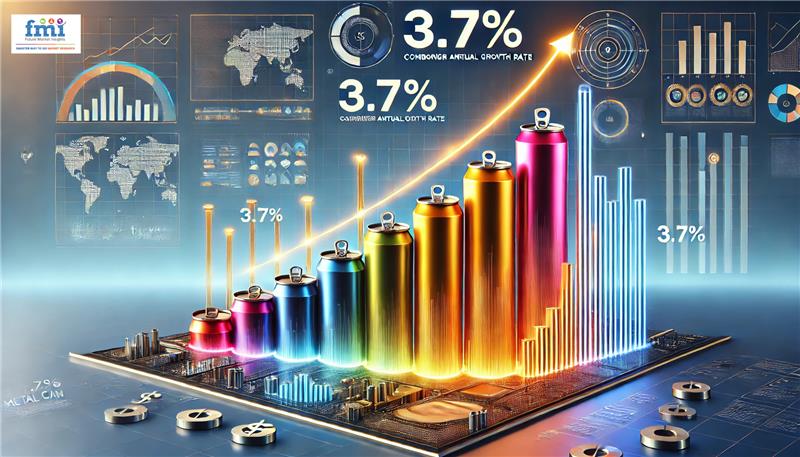
NEWARK, DE / ACCESSWIRE / December 11, 2024 / The global beverage metal can market is on an impressive growth trajectory, with its size projected to reach USD 32.1 billion by 2024 and grow at a robust 3.7% CAGR through the next decade, reaching an estimated USD 45.9 billion by 2034. A surge in consumer preference for portable, eco-friendly, and convenient packaging is at the heart of this market boom.
The beverage metal can market has experienced consistent growth, driven by increasing demand for sustainable and convenient packaging solutions. With a rising global emphasis on environmental conservation, consumers and manufacturers alike are favoring metal cans due to their recyclability and lower carbon footprint compared to plastic alternatives. This shift in consumer preferences, coupled with the robust demand for beverages such as carbonated soft drinks, energy drinks, and alcoholic beverages, has propelled the growth of the metal can industry.
Looking ahead, the beverage metal can market is poised for significant expansion. Several factors contribute to its promising outlook. Firstly, the growing popularity of ready-to-drink (RTD) beverages, including health drinks and functional beverages, has created new opportunities for the industry. Secondly, the increasing urbanization and a preference for on-the-go consumption have reinforced the demand for lightweight, durable, and portable packaging options. Additionally, stringent regulations and corporate commitments toward sustainability are driving beverage companies to adopt metal cans over other materials.
Innovations in the metal can market further enhance its future potential. Advances in can design, such as resealable and temperature-sensitive packaging, cater to changing consumer expectations. Smart packaging technology, which incorporates QR codes and augmented reality for enhanced consumer engagement, is gaining traction. Moreover, innovations in material science, such as ultra-lightweight aluminum alloys, are making cans even more eco-friendly and cost-effective.
Furthermore, the industry is witnessing a shift towards creative branding opportunities, with high-quality printing and custom designs enabling brands to differentiate themselves in competitive markets. As sustainability continues to dominate consumer and regulatory priorities, the beverage metal can market is set to thrive, supported by technological innovations and evolving consumer preferences.
Metal packaging is recognized for its versatility, protective qualities, and environment-friendly credentials. The beverage cans are valued for their portability and convenience. A beverage can is a container made up of aluminium, steel, and tin metals to hold a fixed portion of liquid. It is also referred to as a drink can primarily for alcoholic drinks, soft drinks, fruit juices, herbal teas, and energy drinks.
The beverage metal cans were typically designed in a cylindrical shape having a flat top and bottom. They have a large printing area and showcase a 360-degree billboard for brands image, which is not feasible in any other packaging format. The beverage metal cans are lightweight, stackable, and robust by saving the raw material and economical for the manufacturer and the customers.
Metal cans are safe packaging as they act as a powerful barrier against light, air, and oxygen, keeping the drink fresh and tasty for a more extended period. The beverage can chill quickly, and a specific sound of cans opening is a unique indicator that the liquid inside the can is 100% fresh. Thus, the beverage metal cans market will have significant demand.
Key Takeaways:
Market Valuation for 2024: The global beverage metal can market is projected to reach USD 32.1 billion in 2024, showcasing its robust demand.
Future Market Valuation: The market is expected to grow steadily, reaching a valuation of USD 45.9 billion by 2034.
Projected CAGR: The beverage metal can market is estimated to expand at a CAGR of 3.7% from 2024 to 2034.
Aluminium Cans Dominance: The aluminium canssegment is anticipated to garner a significant value share in 2024, driven by sustainability and consumer preference.
Growth Drivers: Increasing demand for sustainable packaging, urbanization, and innovations in can design and material science are key factors driving market growth.
"The beverage metal can market is thriving, driven by rising demand for eco-friendly, portable, and convenient packaging. With infinite recyclability and a strong appeal to sustainability-focused consumers, metal cans are reshaping beverage packaging trends. Their branding potential and protective qualities further fuel market growth." Says a Lead Consultant Ismail Sutaria in Packaging at Future Market Insights (FMI).
What Are the Key Market Drivers Impacting the Growth of Beverage Metal Cans Market?
The beverage metal cans are durable, sturdy, and portable. Therefore, they are ideal for outdoor adventures, camping, extended events, and sports activities; as it has a minimal chance of leakage and tearing during transportation.
They have superior portability, as the cans take up less space, which allows denser shipping and is well accepted in all environments, and doesn't shatter during transportation. The customers can carry and enjoy their favourite drink whenever and wherever they want, like in the offices, parties, concerts, and outdoor venues.
The customers have become more health-conscious and hygiene-oriented. Consumers highly prefer the single-use or one-time use metal can as it protects the beverages from light, air and retains the freshness, taste, and quality. They are entirely airtight; hence, the beverages can keep the oxygen out and carbonation in, allowing the beverages to stay fresh for an extended period.
The increasing consumption of alcoholic and non-alcoholic drinks such as beer and carbonated drinks, the growing popularity of beverage consumption will augment the growth of the beverage metal cans market.
The Perfect Blend of Convenience and Sustainability
Modern consumers' hectic lifestyles and heightened environmental awareness have created a significant demand for beverage metal cans. Lightweight, stackable, and portable, these cans are ideal for on-the-go consumption, whether at the office, a party, or an outdoor adventure. The durable design minimizes the risk of leaks or tears during transport, making them a staple for today's active individuals.
Beverage metal cans also cater to the eco-conscious mindset of today's consumers. Made from materials like aluminum and steel, they are infinitely recyclable and boast one of the highest recycling rates in the packaging industry. With consumers striving to reduce their carbon footprint, the sustainability of beverage metal cans offers a guilt-free way to enjoy their favorite drinks while contributing to environmental preservation.
Marketing and Freshness - A Winning Combination
In addition to their functional benefits, beverage metal cans offer unique advantages for brands looking to make a splash in the market. With their 360-degree branding surface, these cans provide unparalleled visibility, turning each container into a mini billboard for showcasing bold designs, vibrant graphics, and compelling messaging. This feature gives beverage metal cans a competitive edge over other packaging options, amplifying brand recognition and consumer appeal.
When it comes to freshness, beverage metal cans stand out as a powerhouse of protection. Their airtight design shields beverages from light, air, and oxygen, ensuring optimal taste and quality while extending shelf life. The quick chilling ability of cans further enhances the consumer experience, delivering a consistently refreshing drink every time.
Unlock Comprehensive Market Insights - Explore the Full Report Now:
https://www.futuremarketinsights.com/reports/beverage-metal-cans-market
A Growing Market Fueled by Diverse Beverage Preferences
The rising popularity of both alcoholic and non-alcoholic beverages is a significant driver of growth in the beverage metal can market. From energy drinks to craft beers and carbonated sodas, the versatility of metal cans makes them a preferred packaging solution for a wide range of beverages. As consumer demand for ready-to-drink beverages options continues to grow, the market is poised for sustained expansion.
What are the Key Challenges that may Restrain Growth of the Beverage Metal Cans Market?
The lightweight beverage metal cans are an increasingly popular choice, but the aluminium is prone to crush damage and is susceptible to denting. Improper seal and pinhole damage are some of the common causes of metal cans damage. The rising demand and preference for flexible packaging over rigid packaging could lessen the demand for metal cans.
Also, the glass and plastic bottles are considered as the alternative packaging solution. The growing popularity of using plastic bottles for beverages due to lightweight and cost-effective benefits will obstruct the demand for beverage metal cans.
Country-wise Insights:
United States: A Leader in Beverage Metal Can Consumption
The United States offers fertile ground for the consumption of beverage metal cans, driven by its dynamic beverage packaging sector. Key contributors include the beer, wine, and other beverage industries, which require sustainable and practical packaging solutions. Rising consumer awareness regarding eco-friendly products and the high recycling rate of aluminum have bolstered demand for metal cans. Additionally, advanced coating processes enhance the safety and hygiene of cans, making them ideal for beverage packaging. Factors such as the popularity of single-use items, growing preference for on-the-go beverages, and increasing health-consciousness among consumers are further fueling growth.
China: A Thriving Ecosystem for Beverage Metal Cans
China's beverage metal can market thrives on its vast consumer base, competitive manufacturing landscape, and focus on sustainability. The country's rich culinary culture and strong domestic beverage industry drive demand for efficient and sustainable packaging solutions. Beverage metal cans align well with China's sustainability initiatives due to their near-infinite recyclability. As consumption of alcoholic and non-alcoholic beverages grows, demand for protective and cost-effective packaging is on the rise. This combination of affordability, innovation, and eco-friendliness has positioned beverage metal cans as a dominant force in China's packaging landscape.
India: A Booming Market for Energy Drinks in Metal Cans
India is witnessing a surge in demand for beverage metal cans, particularly fueled by the growing energy drink segment. These drinks, popular among teens and young adults, cater to on-the-go consumption needs. Despite concerns about sugar and caffeine content, the market is evolving with healthier options like organic and diet energy drinks. Metal cans, being portable and durable, are an ideal packaging solution. This shift toward health-conscious, innovative energy drinks is expected to drive the demand for metal cans, establishing them as a crucial component of India's beverage packaging market by 2034.
Future Trends
Sustainability Focus: Increased demand for eco-friendly, recyclable cans, as consumers and brands prioritize sustainability.
Innovative Packaging: Introduction of new shapes, sizes, and designs to enhance product differentiation and appeal.
Smart Cans: Integration of digital technology, like QR codes and NFC, for enhanced consumer engagement and real-time product information.
Lightweight Materials: Shift towards lighter, stronger metals to reduce carbon footprint and improve cost efficiency in production.
Health-Conscious Consumer Demand: Rise in metal cans for non-alcoholic beverages like energy drinks, health tonics, and plant-based options.
Growth Opportunities in the Beverage Metal Can Market
Expansion in Craft Beverage Segment: Increasing demand for craft sodas, beers, and other specialty drinks presents a growing market for unique can packaging.
Premium and Convenience Trends: Rising demand for premium, ready-to-drink beverages fuels the need for high-quality, convenient packaging solutions.
Canned Wine and Spirits: Growth in canned alcoholic beverages, such as wine and cocktails, offers new opportunities for metal can producers.
Innovative Can Recycling Programs: Expansion of can recycling programs and circular economy initiatives to further strengthen the environmental benefits of metal cans.
E-commerce Growth: Increasing online beverage sales, especially for premium and niche products, driving demand for durable, attractive, and transport-friendly metal cans.
Company Profile
Ardagh Group S.A.
Crown Holdings Inc.
Can-Pack S.A.
Ball Corporation
Silgan Containers LLC
Nampak Ltd
Orora Packaging Australia Pty Ltd
Amcor plc
Silgan Containers LLC
GZI Industries Limited
Key Segments of Beverage Metal Can Market
By Material:
In terms of material, the market encompasses aluminium, steel, and tin.
By Beverage Type:
The industry is bifurcated into cans for alcoholic beverages and cans for non-alcoholic beverages, based on the product type.
By Capacity:
Based on the capacity of the cans, the industry is forked into upto 5 oz, 6 oz to 10 oz, 11 oz to 15 oz, and above 15 oz.
By Region:
As per region, the industry is divided into North America, Latin America, Europe, Asia-Pacific, and the Middle East and Africa.
Authored by:
Ismail Sutaria (Lead Consultant, Packaging and Materials) has over 8 years of experience in market research and consulting in the packaging & materials industry. Ismail's strength lies in identifying key challenges faced by the client and offering logical and actionable insights to equip the clients with strategic decision-making power.
Ismail has been an instrumental part of several transformational consulting assignments. His key skills include competitive benchmarking, opportunity assessment, macroeconomic analysis, and business transformation advisory. Ismail is an MBA holder in Marketing and has a Bachelor's Degree in Mathematics.
Have a Look at Trending Research Reports on Packaging Domain:
The metal food cans market sales are expected to reach USD 38.4 billion by 2034 seeing stricter safety regulations. The metal food cans market is expected to register a CAGR of 3.8% from 2024 to 2034.
The alcohol packaging market demand is registering a CAGR of 2.30% from 2024 to 2034. The market is foreseen to reach USD 56.7 billion by 2034.
The global cans market size is estimated to reach USD 36.99 billion by 2023. Can manufacturers can expect a CAGR of 3.9% from 2023 to 2033. The cans market size is projected to reach USD 54.23 billion by 2033.
Food tins and drink cans are expected to record a CAGR of 4.5% through 2032, with a current value of USD 2.25 Billion in 2022, indicating that the market may record a CAGR of 4.5%. The market is likely to reach a valuation of USD 3.49 Billion by 2032.
The fish can market sales is reach a CAGR of 3.9% during the period. The valuation of the industry is poised to reach USD 1,853 million by 2034.
The global sales of beverage can seamers are anticipated to reach a value of USD 1.9 billion by 2031. Sales are projected to rise at a CAGR of 4.5% over the forecast period between 2021 and 2031.
The oily waste can market is anticipated to experience robust growth, with projections estimating it will reach USD 336.4 million by 2034. The growth trajectory is underpinned by a CAGR of 2.8% from 2024 to 2034.
The global drink cans market size is predicted to grow by 7.7% CAGR during the forecast period. The market is projected to be valued at USD 119,208.6 million by 2033.
The global value of bowl cans are anticipated to reach a value of USD 4.9 billion by 2031. Sales are projected to rise at a CAGR of 4.1% over the forecast period between 2021 and 2031.
The global sales of beverage aluminum cans are anticipated to reach a value of USD 43.6 billion by 2031. Sales are projected to rise at a CAGR of 3.5% over the forecast period between 2021 and 2031.
The canned food packaging market share is anticipated to flourish at an average CAGR of 4.8% between 2023 and 2033. The market is expected to hold a market share of USD 46.70 billion by 2033.
Global sales of can holders are expected to reach a revenue of USD 603.4 million in 2034. Revenue is set to increase at a CAGR of 3.6% during the forecast period, from 2024 to 2034.
About Future Market Insights (FMI)
Future Market Insights, Inc. (ESOMAR certified, recipient of the Stevie Award, and a member of the Greater New York Chamber of Commerce) offers profound insights into the driving factors that are boosting demand in the market. FMI stands as the leading global provider of market intelligence, advisory services, consulting, and events for the Packaging, Food and Beverage, Consumer, Technology, Healthcare, Industrial, and Chemicals markets. With a vast team of over 400 analysts worldwide, FMI provides global, regional, and local expertise on diverse domains and industry trends across more than 110 countries.
Join us as we commemorate 10 years of delivering trusted market insights. Reflecting on a decade of achievements, we continue to lead with integrity, innovation, and expertise.
Contact Us:
Future Market Insights Inc.
Christiana Corporate, 200 Continental Drive,
Suite 401, Newark, Delaware - 19713, USA
T: +1-347-918-3531
For Sales Enquiries: [email protected]
Website:https://www.futuremarketinsights.com
LinkedIn| Twitter| Blogs | YouTube
SOURCE: Future Market Insights, Inc.