





Friday, 22 May 2026 03:00 PM
Advertorial
New informational release reviews transdermal berberine questions, disclosed ingredients, daily use timeline, pricing terms, and safety considerations without equating patch products to oral clinical research.
LOS ANGELES, CA / ACCESS Newswire / May 22, 2026 / Disclaimers: This article contains affiliate links. A commission may be earned on qualifying purchases made through links in this content, at no additional cost to the reader. Affiliate relationships do not influence editorial content or the evaluation of products described. Disclosure is provided in accordance with FTC 16 CFR Part 255. The statements in this article have not been evaluated by the Food and Drug Administration. Products discussed are not intended to diagnose, treat, cure, or prevent any disease. Purisaki Berberine Patches are marketed as botanical wellness products and are not approved medications for obesity, diabetes, metabolic disease, or any other medical condition. This content is an independently prepared advertorial review based on publicly available brand materials at the time of publication and does not constitute medical advice, diagnosis, or treatment guidance.
Purisaki Berberine Patches 2026 Consumer Report Examines Patch Format, Ingredient Transparency, and Return Policy Details
Bottom line on Purisaki Berberine Patches: These are skin-applied botanical wellness patches built around berberine extract, worn for 8 hours daily. Berberine has a more substantial ingredient-level research history than most botanical supplements - the open question is whether a patch delivers it effectively through the skin. The brand recommends 90 days of consistent use; no product-specific absorption data has been published. Digestive side effects commonly associated with oral berberine may be less relevant with a skin-applied format, since the digestive tract is not directly involved. A 60-day return window is available from UAB BeWell EU, the registered operator.
Purisaki Berberine Patches vs. Berberine Capsules: The Dose Gap, the 60-Day Return Clock, and What the Available Evidence Actually Shows in 2026
Here is the number most Purisaki Berberine Patches reviews will not show you: published oral berberine research uses 900 to 1,500 mg daily. Independent assessments of consumer berberine patches estimate 8 to 9 mg of berberine per patch. The gap between that estimated figure and the 900-1,500 mg used in published oral research is the central question every buyer should understand before deciding whether this product makes sense for them. This article is built around that question.
If oral berberine has caused digestive discomfort - or if pill fatigue has made any consistent supplement routine feel unsustainable - you are the exact reader this article was written for. The cramping and bloating some buyers describe as "berberine belly" is a real pattern with oral berberine, and whether a patch format solves it without sacrificing the ingredient's documented research history has a practical answer. There is a practical answer. It has two parts, and both matter.
Every factual claim here traces to a verifiable source. Brand-reported figures are attributed to the brand. Ingredient-level research is separated from product-level claims with explicit caveats. The per-patch dose gap above comes from third-party assessments of the consumer patch category - Purisaki has not published its own per-patch berberine amount, which is itself a fact worth knowing.
View current Purisaki Berberine Patches pricing and bundle options here
Disclosure: If you buy through this link, a commission may be earned at no extra cost to you.
The Format Difference: What Changes When You Switch from Capsules to a Patch
Deciding between oral berberine capsules and a patch? Two of the three meaningful differences favor the patch format. One is genuinely unresolved. Here is exactly which is which - because the unresolved one is the question that drives most of the skepticism about this product, and it deserves a direct answer.
Digestive bypass - the format difference that matters most for GI-sensitive buyers: Oral berberine is associated with gastrointestinal side effects in some users - cramping and bloating are most commonly reported. These effects occur because oral berberine passes through the digestive system before any absorption occurs, and the unabsorbed compound sitting in the gut produces irritation for many users. A skin-applied patch bypasses the digestive route entirely. The ingredient is applied dermally rather than orally, which means the GI tract is not involved in absorption. For buyers who discontinued oral berberine because of digestive discomfort, that format distinction may be meaningful.
Delivery continuity - a genuine format distinction worth knowing: Oral capsules undergo what pharmacologists call first-pass metabolism - the compound hits your digestive tract, gets processed by the liver, and what reaches your bloodstream is a fraction of the original dose. That delivery also spikes and drops rather than sustaining over time. A patch releases botanical content gradually across its wear window. According to the brand, Purisaki is worn for 8 hours daily, designed for steady botanical support over that period rather than a one-time pulse. Whether that release pattern produces meaningfully different outcomes compared to oral supplementation is not established by product-specific published data - but the rationale for the format difference is mechanically sound, and for buyers who want consistent support without remembering multiple daily doses, it may represent a practical convenience advantage for some buyers.
Bioavailability - the question this product cannot yet answer: Here is what buyers searching for this product most deserve to know up front. Published research on berberine's wellness effects uses oral supplementation - typically 500 mg to 1,500 mg per day in defined study populations. That research does not apply to transdermal delivery of berberine. Skin permeability for large alkaloid molecules like berberine is not the same as oral absorption - the skin is designed to keep things out, and berberine's molecular structure makes dermal penetration a genuine challenge without permeation-enhancing compounds. Purisaki has not published product-specific clinical data confirming how much berberine the patch delivers through the skin, what the systemic exposure levels are, or whether those levels correspond to the concentrations studied in oral berberine research. The most relevant published data is a 2018 pharmacokinetics study (Buchanan et al., PLOS ONE) that measured transdermal berberine and dihydroberberine absorption in animal models and found measurable systemic absorption from transdermal formulations - but those were specifically engineered pharmaceutical-grade formulations tested in animal models. Animal-model findings do not establish equivalent outcomes in humans, and no peer-reviewed human clinical trial has been published evaluating transdermal berberine delivery from consumer patches. Consumer botanical patches are a different product category from the formulations that study examined. That is a genuine gap. It does not mean the patch delivers nothing - skin-applied delivery is an established pharmaceutical mechanism for other compounds. It means that the specific delivery question for this product remains unanswered by published data, and buyers who require that data before purchasing should note that it does not currently exist for Purisaki.
The honest summary: the digestive bypass distinction is mechanistically sound - oral berberine involves the GI tract; a patch does not. Whether that distinction produces meaningfully different wellness outcomes for a given buyer has not been established by product-specific published data. The bioavailability question is not answered. Buyers who switch from oral berberine because of GI side effects are making a rational choice based on the mechanistic distinction between oral and transdermal delivery. Buyers who expect the patch to produce outcomes equivalent to the oral research doses at 500-1,500 mg daily are working from an assumption that has not been verified for this product.
The Dose Gap: What 8-9 mg Per Patch vs. 900-1,500 mg Oral Means for You
This is the section most reviews skip entirely, and it is the most important one for a buyer making an honest evaluation.
Published clinical research on oral berberine uses between 900 and 1,500 mg daily - typically split across two or three doses - to produce the metabolic effects that generate the research citations you see across the entire berberine supplement category. That dosage range is not arbitrary. It reflects the amount needed to produce measurable systemic effects given oral berberine's poor bioavailability, since only a fraction of what you swallow reaches your bloodstream after first-pass metabolism.
Consumer berberine patches - as a category - are estimated by independent assessors to contain approximately 8 to 9 mg of berberine per patch. Purisaki does not publish its per-patch berberine amount on the consumer product page, so the exact figure for this specific product is not confirmed. What is confirmed: the amount is not disclosed.
The implication of those estimated figures is significant. Published oral berberine research uses 900 to 1,500 mg daily; independent category assessments estimate consumer patches at approximately 8 to 9 mg per patch. To deliver a systemically equivalent dose through skin absorption, a patch would need substantially greater bioavailability efficiency than current published data supports for berberine - a positively charged alkaloid that the skin barrier is mechanically designed to keep out, and which presents known challenges for passive transdermal penetration without pharmaceutical-grade permeation enhancers.
Why does this matter for your decision? Two reasons. First, it is the honest context behind the Buchanan et al. (2018) PLOS ONE transdermal berberine study that pro-patch content often cites - that study used specifically engineered pharmaceutical formulations in animal models, not consumer adhesive patches with undisclosed botanical doses. Second, it does not necessarily mean the patch produces nothing. Buyers who report genuine appetite-related changes and craving reduction during consistent use are reporting real subjective experiences. What cannot be claimed is that those experiences are equivalent in mechanism or magnitude to the outcomes documented in published oral berberine research at clinical study dosages.
The dose gap is not a reason to automatically rule out the patch. It is a reason to enter with calibrated expectations: this is a botanical wellness supplement in a convenient format, not a clinical-dose berberine protocol. If that framing matches your goal - consistent daily botanical support, no pills, no GI disruption - the product may be worth a personal evaluation under the 60-day return window. If you need the documented clinical outcomes of oral berberine research reproduced in patch form, that evidence does not currently exist for any consumer patch product on the market.
Purisaki Berberine Patches Side Effects: What the Evidence Actually Shows
The side effects profile for a skin-applied botanical patch is categorically different from an oral supplement. Because the digestive system is not involved, the GI side effects most commonly reported with oral berberine are generally less associated with a skin-applied format, since the digestive route is not involved. The side effects that do apply are primarily skin-related - and they are manageable with the application protocol the brand publishes.
Skin reactions - the primary documented risk: Redness, itching, or localized irritation at the application site are the most commonly reported adverse responses to adhesive skin patches in general. Per the brand's published Terms of Service, Purisaki specifically advises: a 24-hour patch test on a small area before committing to daily full-area application; application only to clean, dry, intact skin; avoidance on broken, damaged, irritated, or very sensitive skin; and immediate discontinuation if any redness, itching, swelling, or discomfort develops. Buyers with a history of adhesive reactions or known skin sensitivities should take the patch test recommendation seriously before beginning daily use.
Adhesion-related issues: A smaller subset of buyer feedback mentions adhesion problems in warm or humid conditions. The brand's instructions specify pressing firmly for 10-15 seconds on application, rotating application sites daily, and applying to the upper arm, shoulder, or back on clean dry skin. Buyers in hot or high-humidity climates, or who apply the patch before physical activity, report adhesion issues more frequently.
Medication interaction - the critical warning: This is not a side effect in the conventional sense, but it is a safety consideration that requires direct placement. Berberine has documented ingredient-level interactions with medications affecting blood sugar, blood pressure, and drugs metabolized through the CYP3A4 liver pathway. The risk does not disappear because delivery is through a skin-applied patch rather than an oral capsule. Anyone currently taking prescription medications for blood sugar management, blood pressure, or any drug that uses CYP3A4 pathways should consult their prescribing physician before starting any berberine-containing product, in any delivery format. Consultation with a licensed healthcare professional is strongly recommended before combining any supplement with an active prescription protocol.
Pregnancy and nursing: Per the brand's published Terms of Service, the patches are not for use during pregnancy or nursing without physician approval. Do not use without medical clearance if either applies.
What has not been documented: The digestive side effects that generate most oral berberine complaints are not reported with meaningful frequency for the patch format in available third-party buyer feedback. This is consistent with the digestive bypass advantage described above.
Purisaki Berberine Patches and Weight Loss: How Long Does It Actually Take?
The timeline question is where buyer disappointment tends to concentrate most predictably - and it is the part of the Purisaki berberine weight-loss conversation that honest framing can actually fix before you spend a dollar.
Per the brand's own published FAQ, Purisaki recommends at least 90 days of consistent daily use before drawing conclusions. That recommendation is not a marketing hedge - it reflects how ingredient-level botanical wellness research is typically structured. Short-term trials on berberine supplementation consistently show less pronounced outcomes than trials running 12 or more weeks, which is why most published oral berberine research that shows the findings consumers find compelling used daily supplementation over extended periods.
What the first 30 days actually look like: The most consistent early pattern in buyer feedback from those who stuck with the protocol is appetite control - reduced snacking urges, particularly in the mid-morning and afternoon windows - beginning in the first few weeks. Some buyers report minor skin adjustment responses in the first few applications - mild itching or warmth under the patch - that typically resolve with consistent use and proper site rotation. Buyers looking for dramatic body composition changes within 30 days are applying a pharmaceutical-speed expectation to a botanical supplement. The brand's advertising has contributed to this expectation; the brand's own FAQ contradicts it.
Weeks four through eight - where consistent users start noticing a difference: Buyer feedback from multiple third-party sources shows a consistent pattern: the buyers who get to week four and beyond with daily use describe craving regulation and energy stability at meaningfully higher rates than buyers who evaluate within the first few weeks and stop. This is consistent with how botanical ingredient research is structured - berberine's relationship with AMPK-related metabolic pathways, one of the primary areas explored in ingredient-level research, involves cellular adaptation that builds over time, not a single-dose response.
The 90-day recommendation versus the 60-day return window - a gap worth knowing: The brand recommends 90 days to evaluate. The return window closes at 60 days from delivery. That is a 30-day gap between when your return eligibility expires and when the brand says you should draw conclusions. Buyers who intend to use the full 90-day trial period cannot rely on the return policy as a complete backstop for the entire recommended evaluation. That is a practical disclosure, not a criticism - it is simply a fact worth knowing before committing.
Who reports the best outcomes: Based on available third-party buyer feedback, the buyers who describe the most consistent positive experiences share three characteristics - they entered with realistic botanical-supplement expectations rather than pharmaceutical-speed ones, they maintained consistent daily application without skipping, and they paired the patches with active dietary adjustments rather than using the supplement as a standalone intervention. That pattern is consistent across the entire botanical supplement category, not specific to this product.
Purisaki Berberine Patches Ingredients: What Is Confirmed and What Is Not
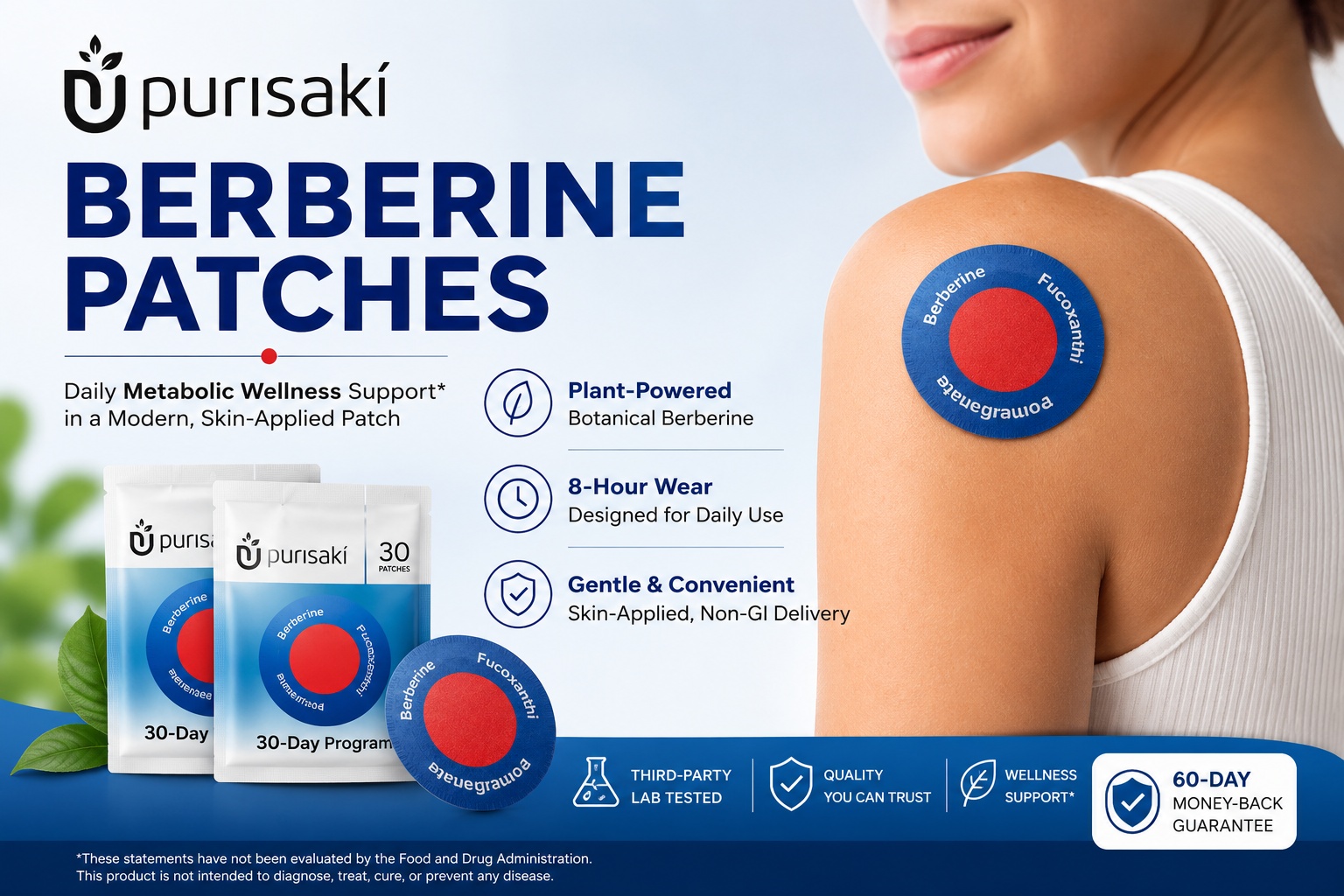
According to the official brand website, the Purisaki Berberine Patch formula contains the following named ingredients. Every research finding below applies to the ingredient in isolation from published studies - none of it is evidence specific to this patch product as a finished item.
Berberine Extract: The company states berberine "can contribute to supporting your body's natural inner balance." At the ingredient level, berberine is among the more thoroughly studied naturally occurring alkaloids in wellness and nutrition research literature. Published studies have examined berberine's relationship with AMPK (adenosine monophosphate-activated protein kinase) activity in defined study populations using oral supplementation. A frequently cited 2008 study in the journal Metabolism (Zhang et al.) examined oral berberine in a specific population with type 2 diabetes and dyslipidemia. A 2015 meta-analysis in Evidence-Based Complementary and Alternative Medicine (Lan et al.) reviewed 14 randomized controlled trials on oral berberine and fasting glucose and lipid markers. All of this is ingredient-level oral research. It does not apply to transdermal delivery from this patch. The per-patch berberine dose is not disclosed by the brand.
Fucoxanthin Extract: Per the official site, described as supporting "daily vitality and energy balance." A carotenoid from brown seaweed with a smaller, earlier-stage research base than berberine. Supporting ingredient in the formula.
Pomegranate Oil (Punicic Acid Extract): According to the company, described as supporting "skin's natural radiance and daily protection." A conjugated fatty acid from pomegranate seed examined in early antioxidant research contexts. Supporting role.
Green Tea Extract: Per the official website, described as able to "gently support your daily refreshment and natural flow." Among the more extensively studied botanical wellness ingredients in nutritional research literature, primarily through catechin compounds.
African Mango Extract: Irvingia gabonensis seed extract. The evidence base here is smaller and more preliminary than berberine or green tea - it rounds out the formula rather than anchoring it.
Vitamins C, B1, B3: Established micronutrients with well-documented roles in energy metabolism and antioxidant function.
The brand references "+9 more natural ingredients" without naming them on the consumer product page. The complete ingredient list is not publicly available. Buyers with known botanical allergies, skin sensitivities, or complex medication profiles should contact the brand at [email protected] before purchasing to request full ingredient disclosure. This is particularly important for the patch format, where all named and unnamed ingredients make contact with the skin.
Purisaki Berberine Patches Pricing, Subscription Terms, and the Return Detail That Catches Most Buyers
The following prices are from the brand's official website at the time of publication. Per the brand's Terms of Service, prices can change - always confirm at checkout before you complete your order.
4-Pack Bundle: $22.70 per pack - $90.80 total (brand-listed as 70% off)
3-Pack Bundle: $27.25 per pack - $81.70 total (brand-listed as 64% off)
2-Pack Bundle: $37.85 per pack - $60.56 total (brand-listed as 50% off)
1-Pack: $60.57 (brand-listed as 40% off)
Products are shipped from warehouses in China per the brand's published Terms of Service. Import duties or customs fees may apply depending on buyer location and are not included in the displayed prices. Final price, including applicable taxes, is confirmed at checkout.
The one checkout step that generates the most complaints about this product is the subscription option with recurring monthly billing, which is available at checkout, and multiple buyers report being enrolled without intending to subscribe. At the 1-pack price of $60.57, an unintended subscription means an unexpected charge roughly 30 days after your first order dispatches, before many buyers have even finished evaluating the product. This is the most preventable complaint in the entire Purisaki buyer feedback record. Thirty seconds of attention at checkout eliminates it completely.
Multiple buyer reports in third-party forums describe unexpected enrollment in recurring billing after not noticing the subscription option during checkout. Confirm whether your order is a one-time purchase or a subscription before completing the transaction. Retain your order confirmation email. To cancel: contact customer support via the form at purisaki.com/contact or at [email protected] before the next order dispatches. Per Section 7.2 of the brand's Terms of Service, if the order for the current month has already been dispatched at the time of cancellation, that order is not refunded - cancellation takes effect from the following month.
Return policy: Per the brand's published Return Policy, products may be returned within 60 days of delivery for a refund, exchange, or store credit. The step that causes the most confusion: returns must be initiated by contacting the brand first via the contact form at purisaki.com/contact. The brand provides a return merchandise authorization (RMA) code and the correct return address after that contact. Items sent back without authorization will not be accepted, and returns sent to the company's registered office address are not accepted - only to the return address the brand provides. Shipping costs are not refundable. Per Section 6.9 of the brand's Terms, if a free promotional item was included in the order through a promotional code, it must be returned along with all purchased items to remain eligible for a full refund. Once the brand receives and inspects the return, refunds are processed within 14 business days to the original payment method. That 14-business-day figure is the brand's processing commitment, not a buyer-side eligibility deadline.
View the current Purisaki Berberine Patches offer and review available bundle options
Purisaki Company Registration and Verification: What the Records Show
Purisaki is operated by UAB BeWell EU, a registered company at Gynėjų St. 4-333, LT-01109 Vilnius, Lithuania (company registration number: 305788600). Customer support is available via US phone +1 (850) 389-0125, UK phone +442080891401, email [email protected], and a contact form at purisaki.com/contact. Manufacturing and delivery originate from China per the brand's published Terms of Service. The brand publishes Terms of Service, Privacy Policy, Shipping Policy, and Return Policy, all accessible from the product page at https://trypurisaki.com.
The brand's own product page footer states: "This botanical wellness patch is not a medicine or medical device and is not intended to diagnose, treat, or prevent any disease." That language reflects disclosure terminology commonly used within the U.S. dietary supplement regulatory framework. The brand is a registered legal entity. Readers are encouraged to review official brand materials and consult a qualified healthcare professional before making purchasing decisions.
Who Should Buy Purisaki Berberine Patches - and Who Should Not
Most buyer disappointment with supplement products comes down to one thing: the product was the wrong fit, not necessarily the wrong product. Here is how to tell which side of that line you are on before you order.
A realistic candidate is someone who:
Has tried oral berberine and stopped because of digestive side effects - and wants to continue berberine support in a format that does not involve the digestive route
Has supplement or "pill fatigue" - the daily friction of multiple capsules, timing, and stomach sensitivity - and wants a format that removes that friction entirely
Plans to commit to consistent daily use for at least 90 days and understands the brand's own recommended evaluation timeline
Is pairing the supplement with consistent dietary adjustments and activity - not using it as a standalone intervention expecting pharmaceutical-scale outcomes
Is not taking prescription medications for blood sugar, blood pressure, or drugs metabolized through CYP3A4 liver pathways - or has confirmed safety with their prescribing physician
This product is not the right fit for someone who:
Takes prescription medications affecting blood sugar or blood pressure, or any drug processed through CYP3A4 pathways, without first consulting their prescribing physician - the medication interaction risk is documented at the ingredient level and applies to all berberine-containing products regardless of delivery format
Is pregnant or nursing without physician approval
Has a diagnosed metabolic condition and is looking for a supplement to manage it - supplements are not designed or legally permitted to diagnose, treat, or manage disease
Expects results within 30 days or outcomes comparable to GLP-1 prescription medications - no supplement in any format replicates those effects at comparable magnitude
Has sensitive skin, a history of adhesive reactions, or known botanical allergies - the complete ingredient list beyond the seven named compounds is not publicly available; contact the brand before purchasing
Requires published product-specific clinical data on patch absorption before purchasing - that data does not currently exist for Purisaki
How to Apply Purisaki Berberine Patches Correctly
The brand's published instructions are worth reading in full. Open the individual pouch immediately before use - the brand notes that air or moisture exposure after opening degrades the formula, so do not open pouches ahead of time. Remove the backing and press firmly to clean, dry skin on the upper arm, shoulder, or back for 10-15 seconds to ensure full contact. Wear for 8 hours. Remove and rotate the application site daily - applying repeatedly to the same skin area increases the risk of localized irritation. A 24-hour patch test on a small area is recommended before beginning daily full-routine use. The patches are for external use only and should not be applied to broken, damaged, irritated, or very sensitive skin. Discontinue use and consult a healthcare professional if any skin reaction develops.
Three Things to Confirm in 60 Seconds Before You Order
Most buyer regret with this product traces to one of three skipped steps. All three take under a minute combined.
1. Confirm your order type at checkout. One-time purchase or subscription - these are two different selections on the checkout page. The subscription auto-enrolls recurring billing. Choosing the wrong one at checkout is the most commonly reported mistake in third-party buyer feedback, and it is entirely avoidable. Look at your checkout page before clicking the final button.
2. Confirm the current price before committing. The promotional pricing referenced in this article was verified at time of publication. Per the brand's Terms of Service, prices are subject to change without notice. The promotional discounts on multi-pack bundles have varied. Verify the price shown at checkout matches your expectation before completing your order.
3. Note your delivery date when the package arrives. Your 60-day return window opens the moment the order is delivered - not when you open it or start using it. Start using the product the day it arrives. If you decide it is not for you, initiate the return through the contact form at purisaki.com/contact before day 60. Waiting until week eight to think about it leaves less than two weeks on the clock.
Frequently Asked Questions: Purisaki Berberine Patches Side Effects and Timeline
What side effects do Purisaki Berberine Patches cause?
Because the patches are applied to skin rather than swallowed, the GI side effects most commonly reported with oral berberine are not the primary consideration here, since the digestive route is bypassed entirely. The side effects documented for this format are primarily skin-related: redness, itching, or localized irritation at the application site. These are most common in buyers with skin sensitivities or those who skip the recommended 24-hour patch test before starting. Adhesion issues are reported in warm or humid conditions. The critical safety consideration that applies in all formats is the medication interaction risk: berberine has documented ingredient-level interactions with blood sugar medications, blood pressure medications, and drugs processed through CYP3A4 liver pathways. Anyone on prescription medications in these categories must consult their physician before use. Individual responses to any supplement vary.
How long does it take for Purisaki Berberine Patches to work?
The brand recommends at least 90 days. Most buyers who report noticeable changes describe appetite-related differences beginning in weeks two to four. Per the brand's published FAQ, the company recommends at least 90 days of consistent daily use. The 90-day recommendation is consistent with how longer-form botanical supplement research is typically structured - most of the published ingredient-level research on berberine that shows the outcomes consumers find relevant used extended supplementation periods rather than short trials. Based on available third-party buyer feedback, the most consistent early reports concern appetite-related changes and reduced snacking urges appearing in the first few weeks, with more noticeable changes described by buyers who continued through weeks six to twelve. Buyers expecting significant body composition changes within 30 days are working from an expectation misaligned with how botanical supplements function. There is no guarantee of specific outcomes - individual results vary based on physiology, consistency of use, diet, activity level, and other factors.
Do Purisaki Berberine Patches cause skin irritation?
A subset of buyers reports localized skin reactions - redness, itching, or mild irritation - at the application site, particularly in the early days of use. Per the brand's Terms of Service, a 24-hour patch test on a small skin area before committing to full daily use is recommended. Patches should be applied only to clean, dry, intact skin - not broken, irritated, damaged, or sensitive skin. Rotating the application site daily reduces the risk of repeated-application sensitivity. If any skin reaction develops, the brand instructs users to discontinue immediately and consult a healthcare professional. Buyers with a known history of adhesive or botanical allergies should contact the brand at [email protected] to request the complete ingredient list, as the consumer product page names only seven of the formula's compounds.
Is there a difference between the GI side effects of oral berberine versus the patch?
Yes, and it is the primary practical advantage of the patch format. Oral berberine can cause GI discomfort in a subset of users because unabsorbed material remains in the digestive tract and irritates the lining - a phenomenon some buyers describe as "berberine belly," with cramping and bloating as the most commonly reported symptoms. A skin-applied patch bypasses the digestive system entirely - absorption, if it occurs, is through the skin rather than the gut. Buyer feedback from users who switched from oral capsules to the Purisaki patch specifically to avoid GI side effects consistently describes the digestive discomfort as absent with the patch format, which is consistent with the digestive bypass mechanism. The open question - whether the patch delivers berberine at levels sufficient to produce measurable effects - remains unanswered by published product-specific data. But the physiological distinction between oral ingestion and transdermal application is mechanically legitimate - and for buyers who stopped oral berberine specifically because of digestive discomfort, that distinction is worth understanding.
Can I use Purisaki Berberine Patches if I take diabetes medication?
No, not without explicit clearance from your prescribing physician. Berberine has been studied at the ingredient level for its effects on glucose metabolism, and it has documented potential interactions with blood sugar-lowering medications. The concern is the additive effect: combining berberine with diabetes medications could produce glucose-lowering effects beyond what either produces alone. This risk applies regardless of delivery format - oral or transdermal. Do not add any berberine-containing supplement to an active diabetes medication protocol without physician guidance. The same caution applies to blood pressure medications and drugs metabolized by the CYP3A4 pathway.
Why is berberine sometimes compared to GLP-1 medications online, and does it apply here?
The "nature's Ozempic" label for berberine is consumer media shorthand, not a pharmacological comparison. GLP-1 receptor agonist medications like semaglutide work through direct pharmaceutical activation of gut and pancreatic hormone receptors at drug doses developed through clinical programs. Berberine works through AMPK activation - a different mechanism at a different scale. The comparison became popular because berberine's ingredient-level research touches metabolic pathways that overlap conceptually with GLP-1 effects, but the mechanisms, potency, and clinical evidence bases are not equivalent. For buyers trying to evaluate whether berberine - in any format - can approximate the outcomes reported with GLP-1 medications: the published evidence does not support that comparison. Berberine has a legitimate ingredient-level research history for metabolic support. That case stands on its own without the GLP-1 framing, and buyers who enter expecting GLP-1-scale outcomes are setting themselves up for the most common complaint category documented in prior consumer analysis of this product.
What is the 14-day vs. 60-day return window difference?
Per the brand's published Return Policy, items returned within 14 days of delivery qualify for a full refund without additional fees. Items returned after 14 days but within 60 days of delivery may be subject to additional fees at the brand's discretion - the policy states that additional fees "may be applied" for returns in the 15-60 day window. The practical difference: buyers who try the product and decide quickly are better positioned for a full, no-hassle refund. Buyers who use the product through most of the 60-day window before deciding to return may face deductions. Returns must be initiated through the contact form at purisaki.com/contact before shipping anything - unauthorized returns are not accepted. Shipping costs are not refunded in either scenario. Free promotional items must be returned with purchased items to remain eligible for a full refund per Section 6.9 of the brand's Terms of Service.
How does the Purisaki subscription work and how do I avoid accidental enrollment?
A subscription option with recurring monthly billing is available on the checkout page. Multiple buyer reports describe accidental enrollment - typically from not noticing the subscription selection versus the one-time purchase option at checkout. Before completing your order: read the checkout page carefully, confirm which option is selected, and retain the order confirmation email. If you are enrolled in a subscription and want to cancel, contact customer support at [email protected] or via the contact form at purisaki.com/contact before the next order dispatches. Per Section 7.2 of the brand's Terms, if the next order has already been dispatched at the time of your cancellation request, that order is not refunded - the subscription terminates from the following month. The most preventable complaint category in all available buyer feedback is subscription billing confusion. Take 30 seconds to confirm your order type before clicking the final purchase button.
What ingredients are actually in Purisaki Berberine Patches?
According to the brand's official product page at https://trypurisaki.com, the named ingredients are: Berberine Extract, Fucoxanthin Extract, Pomegranate Oil (Punicic Acid Extract), Green Tea Extract, African Mango Extract, Vitamin C, B1, and B3. The brand also references "+9 more natural ingredients" without listing them on the consumer product page. No per-patch dose amounts are disclosed for any ingredient. Buyers who need the complete ingredient list - particularly those with skin allergies, botanical sensitivities, or complex medication profiles - should contact the brand at [email protected] directly before purchasing.
Is Purisaki FDA approved?
No - and this is true of all dietary supplements in the U.S., not a Purisaki-specific issue. But that is true of every dietary supplement in the United States, not a Purisaki-specific concern. The FDA regulates dietary supplements under DSHEA (the Dietary Supplement Health and Education Act of 1994), which does not require pre-market FDA approval. Manufacturers are responsible for ensuring product safety and the accuracy of label claims, but FDA review before market entry is not part of the regulatory framework for supplements. Purisaki's own product page states: "This botanical wellness patch is not a medicine or medical device and is not intended to diagnose, treat, or prevent any disease." That statement reflects standard disclosure language commonly used within the DSHEA (Dietary Supplement Health and Education Act of 1994) supplement framework. The absence of FDA approval is not a red flag for this brand - it describes the regulatory category all dietary supplements occupy.
What is the brand behind Purisaki Berberine Patches?
Purisaki Berberine Patches are operated by UAB BeWell EU, a company registered at Gynėjų St. 4-333, LT-01109 Vilnius, Lithuania (company registration number 305788600). Manufacturing and delivery originate from China per the brand's published Terms of Service, which means import duties or customs fees may apply depending on the buyer's country. US customer support is available at +1 (850) 389-0125, UK at +442080891401, by email at [email protected], and via the contact form at purisaki.com/contact. The combination of EU-registered operation and China-based manufacturing is standard in the botanical wellness patch category and is disclosed in the brand's own materials rather than hidden.
Do Purisaki Berberine Patches work for weight loss?
Short answer: berberine has a documented ingredient-level research history for supporting metabolic health, but no published clinical trial has confirmed that this specific patch delivers berberine at meaningful systemic exposure levels through the skin. Berberine weight loss research at the ingredient level is more substantial than most botanical supplements can point to - published studies have examined berberine's effects on blood sugar regulation, lipid metabolism, and body weight in defined study populations using oral supplementation. That ingredient-level evidence is real and more substantial than most botanical supplements can point to. What has not been established is whether a skin-applied patch delivers berberine at the concentrations studied in those trials - Purisaki has not published bioavailability or absorption data for this specific product. The honest answer: berberine as an ingredient has a legitimate research foundation for supporting metabolic health. Whether this patch format delivers berberine effectively enough to produce those effects is an open scientific question. Buyers who want to evaluate it practically have a 60-day return window to do so. No supplement of any kind produces weight loss outcomes equivalent to a caloric deficit, exercise, or prescription medications - and that applies here as well. Individual results vary and are not guaranteed.
What is first-pass metabolism and why does it matter for berberine patches?
First-pass metabolism is the process by which your liver processes a swallowed compound before it reaches your bloodstream - and it significantly reduces how much oral berberine actually absorbs. A skin-applied patch bypasses this process entirely. First-pass metabolism is what happens when you swallow any compound - it passes through your digestive system, gets broken down by stomach acid, and then gets processed by your liver before anything reaches your bloodstream. For oral berberine specifically, this process is particularly limiting: berberine has poor water solubility and low intestinal absorption, which means a significant portion of what you swallow never reaches systemic circulation. That is why oral berberine research typically uses 500 mg to 1,500 mg daily - those doses are calibrated partly to account for the low absorption rate. A skin-applied patch bypasses first-pass metabolism entirely. The ingredient is absorbed through the skin rather than the digestive tract, which theoretically means a lower total dose could produce comparable systemic exposure. The catch: while this theoretical advantage is mechanically sound, no published human clinical trial has confirmed what dose of berberine the Purisaki patch actually delivers through the skin, or whether it reaches meaningful systemic levels.
Is Purisaki Berberine Patches worth the money?
Whether Purisaki is worth the price depends entirely on what you are comparing it to and what problem you are trying to solve. At the 4-pack price of $22.70 per pack, the cost per day is roughly $0.76, which is competitive with mid-range oral berberine supplements. At the 1-pack price of $60.57, the cost is meaningfully higher than most oral berberine options. The value proposition is specific: if you have tried oral berberine and found the GI side effects intolerable, and you want a pill-free daily routine, the patch format offers a genuine format difference that the pricing reflects. If you have no GI issues with oral berberine and price per day is your primary metric, the oral formulation with published dosing transparency will likely offer better value. The 60-day return window is the practical way to evaluate personal value - try it, and if the format does not work for you, the return process is available within that window. The most important step is confirming your order type at checkout, since the subscription option auto-enrolls at a recurring price if selected.
How many mg of berberine is in each Purisaki patch?
Purisaki does not publish the per-patch berberine amount on its consumer product page - this figure is not disclosed. Independent category assessments of consumer berberine patches estimate approximately 8 to 9 mg of berberine per patch, though the specific figure for Purisaki has not been confirmed by the brand. For comparison, published clinical research on oral berberine uses 900 to 1,500 mg daily. Buyers who need dosage information for medical or allergy reasons should contact the brand directly at [email protected] before purchasing. The absence of per-patch dosage disclosure is documented in this article's Verification Snapshot as an unconfirmed data point.
Can Purisaki Berberine Patches replace Ozempic or GLP-1 medications?
No. Berberine patches and GLP-1 receptor agonist medications work through entirely different mechanisms at entirely different potencies, and no supplement of any kind can replicate prescription GLP-1 outcomes. GLP-1 medications like semaglutide work through direct pharmaceutical activation of gut and pancreatic hormone receptors at drug doses developed through clinical trials. Berberine at the ingredient level works through AMPK-related metabolic pathways - a different mechanism, at a different scale, with a different evidence base. The "nature's Ozempic" label is consumer media shorthand that is technically inaccurate as a pharmacological comparison. Buyers who are candidates for GLP-1 therapy based on a medical evaluation should pursue that conversation with a licensed clinician rather than substituting any supplement. Berberine has a legitimate ingredient-level research history that stands on its own terms - it does not need the GLP-1 comparison, and that comparison sets expectations this product cannot meet.
Is berberine safe to take every day?
For healthy adults without contraindications, daily berberine use is generally considered low risk at typical supplementation levels - but the safety profile of skin-applied patches has not been studied in published human trials. At the ingredient level, berberine has been used in traditional medicine and studied in modern clinical research, with no major safety signals in healthy adult populations. The primary safety considerations that are relevant here are: (1) drug interactions - berberine has documented interaction potential with blood sugar medications, blood pressure medications, and drugs processed through CYP3A4 liver pathways, which applies regardless of delivery format; (2) skin reactions - a subset of patch users reports localized redness or irritation at the application site, addressed by rotating sites daily and performing a 24-hour patch test before regular use; and (3) pregnancy and nursing - the brand's Terms of Service advise against use without physician approval. If you take any prescription medications, consult your physician before starting any berberine supplement.
What This Article Verified - and What It Could Not
Confirmed from official brand sources: Named ingredients (Berberine Extract, Fucoxanthin Extract, Pomegranate Oil/Punicic Acid, Green Tea Extract, African Mango Extract, Vitamins C/B1/B3); application protocol (8-hour wear, 10-15 sec press, upper arm/shoulder/back, daily site rotation); pricing tiers as published; return policy (initiate via contact form, RMA required, 14-day full refund / 60-day outer window, non-refundable shipping); subscription auto-renewal option and cancellation terms; customer support contacts; company registration (UAB BeWell EU, Lithuania, reg. no. 305788600); manufacturing and delivery from China; brand-reported 4.3-star rating from 8,658+ reviews (negative reviews generally not posted per brand policy); dietary supplement regulatory disclosure language in the brand's product footer.
Not confirmed / not published by brand: Specific berberine dose per patch; complete ingredient list beyond seven named compounds plus "+9 more"; product-specific clinical data on transdermal absorption, bioavailability, or efficacy; GMP manufacturing certification referenced in third-party reviews but not located on official brand materials reviewed for this article.
Not used in this article: Specific weight or outcome figures from individual customer reviews as factual outcome claims; equivalence statements between this product and prescription GLP-1 medications as factual comparisons; fabricated or unattributed study citations; testimonials without adjacent disclaimers
See current Purisaki Berberine Patches pricing and start your evaluation period here
Contact Information
Company: Purisaki
Email: [email protected]
US: +1 (850) 389-0125
UK: +442080891401
DE: +498004009820
Disclaimers
FDA Disclaimer: The statements in this article have not been evaluated by the Food and Drug Administration. Products discussed are not intended to diagnose, treat, cure, or prevent any disease. Information provided is for general informational purposes and does not constitute medical advice. Readers experiencing symptoms or considering changes to health regimens should consult a licensed healthcare professional. Individual results vary.
Affiliate Disclosure: This article contains affiliate links. A commission may be earned on qualifying purchases made through links in this content, at no additional cost to the reader. Affiliate relationships do not influence editorial content or the evaluation of products described. Disclosure is provided in accordance with FTC 16 CFR Part 255.
Results Disclaimer: Individual results from use of the products described in this article vary. No specific outcomes are guaranteed. Supplement responses depend on individual physiology, consistency of use, diet, activity level, and other factors. Outcomes described in brand-published customer reviews represent individual buyer experiences and are not typical results. Per the brand's own published policy, negative reviews are generally not posted, meaning brand-published reviews represent a curated sample of customer feedback.
Medical Advice Disclaimer: Nothing in this article constitutes medical advice, diagnosis, or a recommendation to start, stop, or modify any health regimen. Readers who take prescription medications - including medications for blood sugar management, blood pressure, or conditions metabolized through certain liver pathways - should consult a qualified healthcare professional before using any berberine-containing product. Berberine has documented ingredient-level interactions with blood sugar medications; this risk applies regardless of delivery format. Do not add any supplement to an active prescription protocol without physician guidance. Consult a licensed healthcare professional before starting any new supplement, particularly if you are pregnant, nursing, or have an existing health condition.
Pricing Disclaimer: All pricing, bundle configurations, and promotional offers referenced in this article reflect publicly available information from the brand's official website at the time of publication and are subject to change without notice. Final pricing including applicable taxes is confirmed at checkout. Import duties or customs fees may apply depending on the buyer's location. Always verify current pricing and terms on the official brand website before purchasing.
Publisher Responsibility Disclaimer: This article has been prepared based on publicly available information from the brand's official website, published Terms of Service, and other publicly accessible sources at the time of publication. The publisher is not responsible for changes to product formulation, pricing, availability, or refund policy terms after publication. Readers are encouraged to verify all product details directly with the brand before making purchasing decisions.
Retailer Disclaimer: Products discussed in this article are sold directly by the brand through its official website. Purchases made through affiliate links in this article redirect to brand-authorized purchasing pages. Pricing, availability, and terms are set by the brand and may change at any time. The publisher has no control over and accepts no responsibility for product availability, shipping timelines, or customer service outcomes.
FDA Statement: These statements have not been evaluated by the Food and Drug Administration. This product is not intended to diagnose, treat, cure, or prevent any disease.
SOURCE: Purisaki