





Tuesday, 03 March 2026 11:30 AM
Advertorial
An independent due-diligence brief outlining purchase options, subscription disclosures, lab-testing questions, and the evolving CBD regulatory timeline.
NEW YORK, NY / ACCESS Newswire / March 3, 2026 / Disclaimers: This article is for informational purposes only and does not constitute medical or legal advice. CBD product legality varies by jurisdiction and is actively evolving. Verify current laws in your area before purchasing. Nothing in this article is intended to encourage the use of CBD products where prohibited by law. Always consult a qualified healthcare professional before starting any supplement. This article contains affiliate links. If you purchase through these links, a commission may be earned at no additional cost to you. This compensation does not influence the accuracy or integrity of the information presented.
ZenLeaf CBD Gummies 2026 Consumer Guide: Pricing Terms, Ingredient Overview, and Compliance Considerations
You saw the ad. Maybe it was on Facebook while you were scrolling before bed. Maybe it popped up on Instagram between stories. Maybe TikTok served it to you right when you were thinking about that nagging discomfort in your back or that restless feeling that keeps you staring at the ceiling at 2 AM.
Whatever brought you here, you did exactly the right thing. Instead of clicking "Buy Now" on an ad, you opened Google and searched for real information. That tells me something about you - you are not the kind of person who hands over your credit card without doing your homework first. Good. Because this particular product has some things you genuinely need to know before you order.
This is a complete, unfiltered breakdown of ZenLeaf CBD Gummies - what the science actually says about the ingredients, what the product actually costs (including charges the sales page does not make obvious), what the guarantee really covers when you read the fine print, and an honest look at who this product might genuinely serve well versus who should probably look elsewhere. This article is not affiliated with or endorsed by ZenLeaf, Thrive Botanicals, or any related entity.
If you searched for Thrive Botanicals CBD Gummies, you are in the right place too. The sales page uses both names, and we will untangle that confusion shortly.
See current ZenLeaf CBD Gummies pricing and availability
Disclosure: If you buy through this link, a commission may be earned at no extra cost to you.
Let us start with something most reviews skip entirely.
The Legal Landscape You Need to Understand First
Here is why this section comes before everything else. The rules around CBD are changing in a big way, and if you are buying a full-spectrum CBD product in 2026, you deserve to know what is happening at the federal level before you spend your money.
On November 12, 2025, Congress passed Section 781 of the Continuing Appropriations Act (P.L. 119-37), and it rewrites the definition of hemp under federal law. Up until now, the 2018 Farm Bill said hemp was any cannabis plant with less than 0.3 percent delta-9 THC. That is the rule that made most CBD gummies legal in the first place. The new law changes the measurement to total THC - meaning it counts delta-9, THCA, delta-8, and every other THC variant combined. It also caps finished products at just 0.4 milligrams of total THC per container.
Now, the important part: these changes do not take effect until November 12, 2026. So right now, in March 2026, full-spectrum CBD gummies like ZenLeaf are still legal under federal law. You have time. But the clock is ticking, and the landscape is shifting underneath the entire CBD industry.
There are efforts underway to push back. A bill (H.R. 6209) would repeal Section 781 entirely. Another (H.R. 7010) would delay implementation by two years. A December 2025 executive order acknowledged that some full-spectrum CBD products would be caught up in the new rules and directed officials to work with Congress on potential exemptions. Where all of this lands is genuinely uncertain as of this writing.
The sales page for ZenLeaf CBD Gummies states the product is "100% Legal." That is worth noting - under the current 2018 Farm Bill framework, hemp-derived CBD products that meet the delta-9 THC threshold are legal at the federal level. But absolute legality claims do not account for the state-by-state variations that exist right now (Idaho and Kansas require zero THC, for example) or the federal changes coming in November 2026. So take "100% legal" as a statement about the current federal framework, not as a blanket guarantee that applies everywhere and forever.
Before ordering any CBD product, check your state's current regulations. Laws change, and the smart move is to verify rather than assume. For specific legal questions, a qualified attorney familiar with cannabis and hemp law is your best resource.
The 2026 Regulatory Timeline: Key Dates That Matter
Because this is genuinely evolving, here is a timeline you can reference as developments unfold.
Right now (March 2026): CBD gummies made from hemp with less than 0.3 percent delta-9 THC are legal at the federal level. This is the framework that has governed the industry since the 2018 Farm Bill. Full-spectrum products like ZenLeaf fall under this framework. State laws apply on top of federal law, and some states restrict or further regulate CBD products.
February 2026 deadline: The new law required the FDA to publish lists of naturally occurring cannabinoids, THC-class cannabinoids, and other cannabinoids with similar effects to THC within 90 days of the law's enactment (by approximately February 10, 2026). This FDA guidance shapes how the industry knows what counts as "total THC" under the new rules. Check current FDA publications for the latest on whether these lists have been finalized.
November 12, 2026: The new hemp definition takes effect. Products that do not meet the revised thresholds will no longer be classified as legal hemp products and will instead fall under Controlled Substances Act regulation. For full-spectrum CBD gummies, the critical question is whether they can stay under the new 0.4 milligram total THC per container cap.
Active legislative pushback: Congress is not unified on these changes. H.R. 6209 would repeal Section 781 entirely. H.R. 7010 would push the deadline to November 2028. A December 2025 executive order directed federal officials to work with Congress on potential carve-outs for appropriate full-spectrum CBD products. Industry groups representing an estimated 300,000 jobs in the $28 billion hemp economy are actively lobbying for changes. The outcome remains genuinely uncertain.
What this means for your purchase: If you buy ZenLeaf CBD Gummies today, you are buying a product that is legal under current federal law. If you are thinking about stockpiling a large supply to last well into late 2026 or beyond, keep the regulatory uncertainty in mind. This is not a reason to panic - it is a reason to stay informed through reliable legal and industry sources rather than social media speculation.
Who is involved in regulating CBD? The regulatory picture involves multiple federal agencies, and understanding who does what helps you make sense of the news you will see heading into late 2026. The FDA oversees dietary supplement safety and labeling - they issue warning letters when companies make disease claims on supplement sales pages. The FTC governs advertising claims and requires that marketing be truthful and substantiated. The DEA administers the Controlled Substances Act, which matters because products falling outside the legal hemp definition are classified as controlled substances. The USDA oversees the hemp agricultural framework. Under Section 781, HHS plays a role in determining cannabinoid classifications that will shape which products remain legal after November 2026. State attorneys general also enforce consumer protection laws and have increasingly scrutinized CBD marketing in their jurisdictions.
None of these agencies has endorsed or approved any CBD gummy for consumer wellness purposes. The only FDA-approved CBD product is Epidiolex, a prescription medication for specific seizure disorders. Everything else in this space, including ZenLeaf, operates under a dietary supplement framework that the FDA has publicly stated is still evolving.
This information is provided for general awareness and does not constitute legal advice. For guidance specific to your situation, consult a qualified attorney familiar with cannabis and hemp law.
The CBD Market in 2026: What You Are Walking Into
A little context goes a long way. The CBD gummy market is enormous and competitive, and understanding where ZenLeaf sits in that landscape helps you evaluate it more clearly.
According to published market research, the global CBD gummies market was valued at approximately $4.75 billion in 2024, with continued growth projected. In the United States, CBD has become a multi-billion-dollar category, and surveys suggest roughly 60 percent of American adults have tried a CBD product at some point. Gummies are among the most popular formats.
The good side of this growth: Competition has driven innovation in product quality, formulation, and pricing. Companies that invest in third-party testing, transparent sourcing, and quality manufacturing are producing genuinely better products than what was available even a few years ago. You have more options, better information, and more competitive pricing than CBD buyers had in 2020.
The less good side: Rapid growth has also attracted companies that prioritize marketing over product quality, use aggressive subscription models, or make claims that fly well past what the science supports. Some of the most heavily advertised CBD products on social media are also the ones with the most aggressive marketing tactics and the least transparent business practices. That does not mean every advertised product is bad - it means your due diligence matters more than ever.
What to prioritize when shopping: Accessible third-party lab results, transparency about sourcing and manufacturing, clear disclosure of all pricing and subscription terms before checkout, claims that align with published research rather than infomercial-style promises, and responsive customer service you can actually reach. These factors matter more than flashy ads, celebrity endorsements, or the size of the discount timer on the sales page.
What Is ZenLeaf CBD Gummies, Exactly?
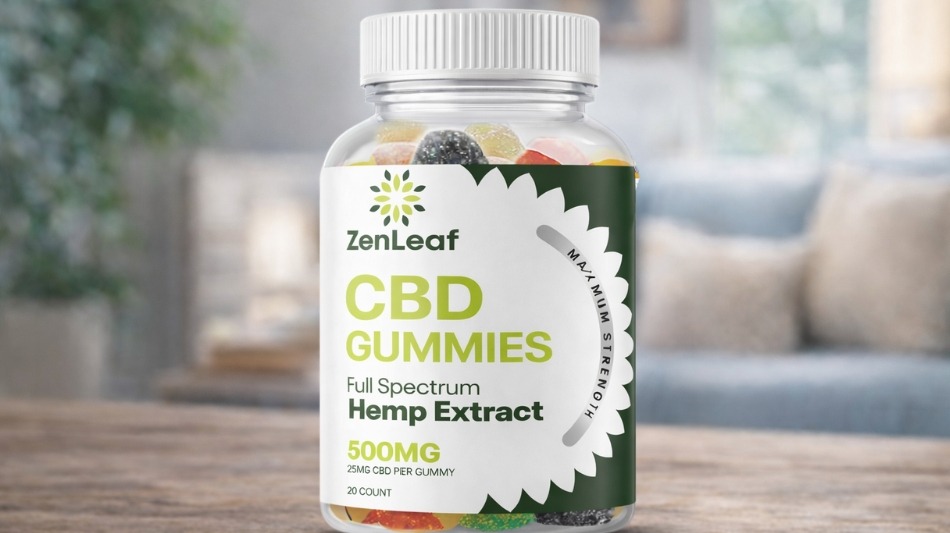
ZenLeaf CBD Gummies is marketed as a full-spectrum CBD gummy available in 500MG and 1000MG concentration options. According to the company's sales page, the product contains full-spectrum hemp extract - meaning CBD plus trace amounts of other naturally occurring cannabinoids, terpenes, and flavonoids from the hemp plant.
The gummies are positioned for general wellness purposes. The company's marketing references everyday comfort, relaxation, and sleep support as primary use cases.
Now, here is something you need to understand about this product's marketing.
The official sales page makes treatment-style claims that go beyond what federal regulators currently permit for dietary supplements. Phrases on the page reference specific medical conditions, quantified outcomes ("98% reduction"), drug replacement comparisons, and even smoking cessation - all of which fall outside what the FDA allows for products in this category. The only FDA-approved cannabidiol drug at the time of publication is Epidiolex, which is indicated for specific seizure disorders. Everything else in the CBD gummy space, including ZenLeaf, is a dietary supplement that legally cannot claim to treat, cure, or prevent any disease.
Why does this matter to you? Because it means you should evaluate this product based on what the ingredient-level research actually shows - not based on the marketing copy on the sales page. That is exactly what this guide helps you do.
One more thing. The sales page uses both "ZenLeaf CBD Gummies" and "Thrive Botanicals CBD Gummies" branding interchangeably. According to Better Business Bureau records, the company is registered in Florida under the name ZenLeaf Sales. Some consumers have also reported seeing charges from different billing processor names on their credit card statements, which can add to the confusion when trying to identify or dispute charges. If you searched for either brand name, you are looking at the same product - but the layered branding is worth being aware of before you order so you know what to expect on your statement.
A Note About the Sales Page Itself
You may have noticed some elements on the ZenLeaf sales page that are worth being aware of. The page uses countdown timers and limited-stock messaging as part of its marketing presentation. It also displays real-time purchase notifications showing names and locations. These are common marketing techniques used across many e-commerce sites and are not unique to ZenLeaf. However, as an informed buyer, it is worth recognizing these as designed urgency elements rather than indicators of actual scarcity. One date reference visible on the page at the time of our research appeared to reference a year that has already passed, which suggests these elements are part of an automated marketing template.
None of this necessarily reflects on the quality of the product itself. But it does speak to the marketing approach, and you deserve to make your purchasing decision based on facts and research rather than manufactured time pressure.
How CBD Works in Your Body: The Science Behind the Ingredient
Let us talk about what is actually happening when you take a CBD gummy - at the ingredient level. This is research on CBD as a compound, not claims about ZenLeaf specifically. That distinction matters, and we will keep reminding you of it throughout this guide.
Your body has an endocannabinoid system, or ECS. It was first described in the early 1990s, and researchers have since learned that it helps regulate a range of processes - from mood and stress response to how you perceive discomfort and how well you sleep. Think of it as a network of receptors and signaling molecules that helps your body maintain balance.
The ECS has two main receptor types. CB1 receptors are mostly in your brain and central nervous system. CB2 receptors are more common in your immune cells and peripheral nervous system.
Here is what makes CBD different from THC, the compound that gets people high. THC locks directly into CB1 receptors in the brain, which is why it produces psychoactive effects. CBD does not do that. According to a 2025 review published in the Journal of Cannabis Research, CBD works through several indirect mechanisms - it may influence how your ECS functions without directly flipping the same switches that THC does. Researchers describe it as "negative allosteric modulation," which in plain English means CBD may change how existing receptors respond rather than activating them directly.
This is why CBD does not get you high. And it is also why the effects people report from CBD tend to be more subtle than what you might expect from something derived from the cannabis plant.
This is ingredient-level research. ZenLeaf CBD Gummies as a finished product has not been clinically studied for these mechanisms.
What the Research Actually Shows About CBD
Here is where we separate what scientists have actually found from what marketing copy wants you to believe. The following is published, peer-reviewed research on CBD as an ingredient. These findings do not mean ZenLeaf CBD Gummies will produce these effects in you. Individual responses differ, results are not guaranteed, and none of this replaces working with your doctor.
CBD and Everyday Discomfort
This is the number one reason people try CBD - roughly 64 percent of users, according to survey data. A 2024 systematic review in the journal Pharmaceuticals looked at both animal studies and human data on CBD and pain. The researchers found that CBD has properties in various study models that suggest potential relevance to discomfort, though they noted that the exact mechanisms remain under investigation. The translation from promising animal studies to reliable human outcomes is an active and unfinished area of research.
The sales page for ZenLeaf makes specific claims about pain elimination, including references to arthritis, headaches, and even a comparison to oxycontin. Those claims go well beyond what the current evidence supports and well beyond what the FDA permits for a dietary supplement. The research is genuinely interesting at the ingredient level, but "interesting" and "proven to eliminate your pain" are very different things.
The FDA has not approved CBD for pain relief. Only Epidiolex (for specific seizure disorders) has FDA approval. Consult your physician before using any supplement for discomfort, especially if you take pain medications.
CBD and Stress Response
About 49 percent of CBD users cite stress management as their primary motivation. At the ingredient level, CBD has shown interaction with serotonin pathways - specifically the 5-HT1A receptor, which is involved in mood regulation. A 2019 review in Frontiers in Psychiatry noted that CBD's ability to influence both the ECS and serotonin systems has generated real research interest in its potential applications for mood support.
But the reviewers were careful to say that further investigation is needed across both preclinical and clinical trials. That is science-speak for "promising early signals, but we need more evidence before making confident statements."
The sales page claims a "98% reduction in anxiety." That is a specific, quantified efficacy claim that we could not verify through any published clinical research. Numbers like that look compelling in an ad, but they require substantiation that does not appear to be provided.
CBD and Sleep
Around 42 percent of CBD users report sleep support as a reason for use. The research here is honestly less developed than for some other areas. CBD is not melatonin - it does not work through the same pathways that directly regulate your sleep-wake cycle. What some researchers have explored is whether CBD's calming properties might create conditions that are more conducive to rest. If stress or discomfort is what keeps you awake, addressing those factors could naturally support better sleep. But that is an indirect relationship, not a direct sleep-inducing mechanism.
A Claim You Should Know About
The sales page includes "Helps Quit Smoking Addiction" among its listed benefits. Smoking cessation is a regulated therapeutic claim that falls into addiction treatment territory. This is extremely high-risk language from a regulatory standpoint, and it enters a space governed by both the FDA and behavioral health regulations. We cannot endorse or validate this claim, and you should approach it with significant skepticism.
These are individual research findings about CBD as a compound. ZenLeaf CBD Gummies as a finished product has not been clinically studied. This is not a substitute for medical care.
The "20,000 Clinical Studies" Claim
The sales page states that "after over 20,000 clinical studies, it has been proven" that CBD provides various benefits. This is worth addressing directly because it sounds authoritative.
There has been a substantial and growing body of research on cannabinoids, including CBD. The National Library of Medicine does contain thousands of entries related to cannabidiol research. However, there is a meaningful difference between "thousands of research papers exist on this topic" and "20,000 clinical studies have proven this specific product works." Most CBD research consists of preclinical studies (cell cultures, animal models), literature reviews, and relatively small human studies. Large-scale, double-blind, placebo-controlled clinical trials - the gold standard for proving efficacy - are far less common for CBD in consumer product formulations.
The claim appears to conflate the volume of published research on cannabinoids with clinical proof for this specific consumer product. The research on CBD is genuinely interesting and growing, but characterizing it as "proven" overstates where the science actually stands today.
Full Spectrum: What That Means and Why It Matters
ZenLeaf markets itself as a full-spectrum product. That is an important distinction in the CBD world, so let us break down what it actually means.
Full-spectrum means the extract contains CBD plus trace amounts of other naturally occurring cannabinoids like CBN, CBG, CBDV, and THCV, along with terpenes (aromatic compounds) and flavonoids. Critically, full-spectrum products also contain trace amounts of THC - legally required to be below 0.3 percent delta-9 THC under the current federal framework.
The idea behind full-spectrum is something called the entourage effect - the concept that these various compounds may work together synergistically, potentially producing different results than CBD alone. Some preliminary research supports this idea, though it remains a subject of active scientific investigation rather than established fact.
The sales page claims "superior absorption compared to all other CBD capsules." That is a comparative superiority claim that would require head-to-head study data to substantiate. We could not verify independent testing supporting this specific claim.
Here is something important if you are subject to drug testing: Full-spectrum CBD products contain trace THC. While the amounts are legally tiny, regular use of any full-spectrum product may result in a positive drug test. If your job requires drug testing, this is a factor you need to weigh seriously. Broad-spectrum or CBD isolate products, which are formulated to remove THC, may be more appropriate for your situation - though even those cannot guarantee zero THC in every case.
We should also note: we have not independently verified third-party lab testing results for ZenLeaf CBD Gummies. Without a current Certificate of Analysis, we cannot confirm the actual cannabinoid profile, THC levels, or absence of contaminants in any specific batch. Requesting a current COA before purchasing is a reasonable step for any CBD product.
This is ingredient-level research. ZenLeaf CBD Gummies as a finished product has not been clinically studied.
Check current ZenLeaf CBD Gummies pricing and bundle options
Other Cannabinoids in Full-Spectrum Extract
Since ZenLeaf is marketed as full-spectrum, here is a closer look at the supporting cast of cannabinoids that may be present in trace amounts alongside CBD. Understanding these helps you grasp what "full-spectrum" actually means beyond a marketing buzzword.
CBN (Cannabinol) forms naturally when THC ages and oxidizes - it is essentially what happens to THC over time. Early-stage research has explored CBN's potential relationship with relaxation and rest, and some CBD companies have started adding extra CBN to sleep-focused products. However, the evidence base for CBN specifically is still very preliminary, with most research limited to preclinical models. At the trace levels found in standard full-spectrum hemp extracts, CBN is not expected to produce significant effects on its own, but it may contribute to the broader entourage effect.
CBG (Cannabigerol) is sometimes called the "parent cannabinoid" because it is the chemical precursor from which other cannabinoids are synthesized in the hemp plant. Think of it as the starting material that the plant converts into CBD, THC, and other compounds as it grows. Some preclinical research has investigated CBG for potential anti-inflammatory properties, but this research is in very early stages. CBG is non-psychoactive and present in small amounts in most full-spectrum extracts.
CBDV (Cannabidivarin) is structurally similar to CBD and has been the subject of early-stage research, particularly in preclinical models related to neurological function. Clinical evidence for CBDV in consumer products is extremely limited. Like the other minor cannabinoids, it is non-psychoactive and present in trace amounts.
THCV (Tetrahydrocannabivarin) is a cannabinoid that has generated some preliminary research interest around metabolic processes. At the trace levels in legal hemp products (well below 0.3 percent total THC), THCV does not produce intoxicating effects. Research is very early-stage and should not be interpreted as evidence of specific benefits in consumer gummies.
Terpenes are aromatic compounds found in thousands of plant species, not just cannabis. You encounter terpenes every time you peel an orange (limonene), walk through a pine forest (pinene), or smell lavender (linalool). In hemp extracts, common terpenes include myrcene, limonene, linalool, and beta-caryophyllene. Some researchers hypothesize that terpenes contribute to the entourage effect by modulating how cannabinoids interact with your body's receptor systems. The science here is intriguing but still developing, and the concentrations of terpenes in a consumer CBD gummy may be significantly lower than what has been studied in research settings.
The bottom line on full-spectrum ingredients: The idea that all these compounds working together may produce something more than CBD alone is the central promise of full-spectrum products. It is a reasonable hypothesis supported by some preliminary evidence. But it is not proven in the way that, say, vitamin C preventing scurvy is proven. If you choose a full-spectrum product, you are making a bet on the entourage effect concept - which is fine, as long as you understand that is what you are doing.
The actual cannabinoid and terpene profile of any specific batch of ZenLeaf CBD Gummies would need to be verified through third-party lab testing, which we have not independently confirmed for this product.
CBD and Your Medications: The Conversation You Need to Have
This might be the most important section in this entire guide, and it is the one most other reviews completely skip.
CBD is processed by cytochrome P450 enzymes in your liver - specifically CYP3A4 and CYP2C19. These are the same enzymes responsible for metabolizing a huge range of prescription medications. According to the 2025 review in the Journal of Cannabis Research, CBD can inhibit or alter the activity of these enzymes, which means it has the potential to change how your body processes other drugs.
The list of potential interactions includes blood thinners like warfarin, certain blood pressure medications, some antidepressants, antiseizure medications, some immunosuppressants, and various other drugs metabolized by the liver.
The sales page claims "No Side Effects." That is an absolute safety claim that does not hold up against published research. CBD is generally well tolerated, but it is not side-effect-free. Drowsiness, digestive changes, appetite shifts, and drug interactions are all documented in the literature.
If you take any prescription medications, talking to your physician or pharmacist before starting CBD is not optional - it is essential. Do not change, adjust, or stop any medications without your doctor's guidance.
Quality Markers: How to Evaluate Any CBD Gummy
Before we get into pricing, here are the quality factors that matter when evaluating ZenLeaf or any product in this space. Think of these as your personal checklist - the questions a smart buyer asks before handing over their credit card.
Third-party lab testing is the gold standard. Independent labs verify actual CBD content, confirm THC levels, and screen for heavy metals, pesticides, and microbial contaminants. This matters because the CBD industry is not comprehensively regulated by the FDA, so voluntary third-party testing is how reputable companies prove their product contains what the label says. At the time of this review, we have not independently confirmed whether ZenLeaf provides accessible, current Certificates of Analysis for their product batches.
Hemp sourcing matters because hemp is a bioaccumulator - it absorbs substances from the soil it grows in, including both good and bad things. Products from regulated, tested growing operations carry lower contamination risk than those sourced from poorly monitored farms. The ZenLeaf sales page references their hemp but does not provide sourcing details we could independently verify.
Accurate labeling is a known industry challenge, and it is bigger than most people realize. Multiple studies, including research published in JAMA, have found that a significant percentage of CBD products on the market contain either more or less CBD than what the label states. Without verified lab results, you are essentially taking the company's word for it. That is not unique to ZenLeaf - it is an industry-wide issue that underscores why third-party testing matters so much.
GMP manufacturing (Good Manufacturing Practices) ensures consistency, quality control, and proper record-keeping. It is the same standard applied to traditional supplement manufacturers. Whether any specific company's facility holds GMP certification is a legitimate and reasonable question to ask before purchasing.
How CBD Gummies Compare to Other CBD Formats
If you are new to CBD, gummies are just one way to get it into your system. Here is a quick comparison to help you decide if this format is right for you.
Gummies vs. Oil Tinctures: Tinctures are drops you hold under your tongue for about 60 seconds before swallowing. Because CBD absorbs through the tissue under your tongue, tinctures may kick in faster than gummies, which have to travel through your digestive system first. Tinctures also let you fine-tune your dose drop by drop. The trade-off? Many people find tinctures inconvenient, the taste can be earthy, and measuring drops while half-asleep is not most people's idea of a good time. Gummies are pre-dosed, taste good, and fit easily into a daily routine.
Gummies vs. Capsules: Very similar in terms of how your body processes them - both go through your digestive system. Capsules are tasteless but lack the flavor experience that makes gummies feel less like taking a supplement. The bioavailability (how much CBD actually reaches your bloodstream) is roughly comparable for both formats.
Gummies vs. Topicals: Topical CBD products like creams and balms are applied directly to your skin. They are designed for localized use and do not enter your bloodstream in meaningful amounts. If your primary interest is targeted comfort in a specific area - a sore shoulder, stiff knees - topicals serve a completely different purpose than gummies. Some people use both.
Why gummies are popular: Pre-measured doses (no guessing), pleasant taste (making daily use sustainable), portable and discreet, and familiar (you have been eating gummies your whole life). These are practical advantages, and they are valid reasons to choose this format.
A note on bioavailability: Here is something most CBD marketing does not mention. When you eat CBD in any form - gummies, capsules, food - it goes through what scientists call "first-pass metabolism" in your liver before reaching your bloodstream. Published research indicates that oral CBD bioavailability is generally on the lower end compared to some other routes. This does not mean gummies do not work - it means the amount of CBD that actually enters your system is a fraction of what is listed on the label. This applies to all oral CBD products, not just ZenLeaf.
CBD vs. What You Might Already Be Using
Many people exploring CBD gummies have already tried other over-the-counter options for similar concerns. Here is some context on how CBD compares - though to be clear, none of this is a head-to-head clinical comparison, and individual responses to any supplement vary widely.
CBD vs. Melatonin (for sleep): Melatonin directly targets your sleep-wake cycle. CBD does not. If your sleep issues are primarily about circadian rhythm disruption (jet lag, shift work, inconsistent bedtimes), melatonin is more directly applicable. If what keeps you awake is an inability to quiet your mind or physical discomfort, CBD's potential calming properties might be relevant, though the evidence is less direct. Some people use both. Neither replaces evaluation for chronic sleep disorders by a physician.
CBD vs. NSAIDs (for discomfort): Ibuprofen and naproxen have decades of clinical evidence supporting their use for pain and inflammation, and they work through well-understood pathways. CBD's potential mechanisms are still being studied, and the evidence base is nowhere near as established. That said, some people look for alternatives to daily NSAID use because of concerns about stomach issues, kidney stress, or other long-term risks. If you are considering CBD as an alternative to NSAIDs, that is a conversation to have with your doctor - not a decision to make based on an ad you saw on Instagram.
CBD vs. Herbal Stress Supplements: Products with ashwagandha, L-theanine, magnesium, or valerian root are marketed for similar stress-and-relaxation territory. Each works through different biological pathways than CBD. Whether one approach fits you better than another depends on your specific biology, your other medications, and your healthcare provider's guidance. There is no universal "best" option - there is only what works for your particular situation.
This is general educational context. It is not medical advice or a recommendation to choose one approach over another. Your doctor is the right person to help you navigate these decisions.
Your First 30 Days: A Realistic Framework
If you decide to try ZenLeaf CBD Gummies or any CBD product, here is what a realistic first month might look like. This is not a guaranteed timeline - your body is unique, and your experience may look different. Think of this as a general roadmap, not a promise.
Days 1 through 3: Start with the lowest recommended serving size on the label. Pay attention to how your body responds. Some people notice a subtle sense of calm within the first couple of uses. Many notice nothing at all during these first days. Both are completely normal. If you experience any side effects - drowsiness, digestive discomfort, anything that concerns you - discontinue and talk to your doctor.
Days 4 through 14: If you are tolerating the product well, keep going at the same dose. Consistency matters more than dose size during this period. Your endocannabinoid system may need time to adjust to the introduction of external cannabinoids, and jumping around on dosing makes it harder to evaluate what is actually working. Give the initial serving size an honest two-week trial.
Days 15 through 30: If two weeks of consistent use have not produced any noticeable effects, you might consider a slight increase in serving size - but only within the product's labeled range, and ideally after a conversation with your healthcare provider. Some people find that effects become more apparent with several weeks of consistent use. Others determine that CBD simply is not producing meaningful benefits for them, which is a perfectly valid conclusion.
At the 30-day mark: Be honest with yourself. Has this product contributed something meaningful to your daily wellness? If yes, decide whether continuing makes sense given the cost, the subscription structure, and your overall health plan. If no, you have your answer, and you can stop without feeling like you did something wrong.
If you chose Subscribe and Save: The 30-day mark is also when the auto-ship enrollment kicks in according to the company's terms. Make your continuation decision before this window closes. This is why we recommended setting a calendar reminder back in the pricing section.
CBD Dosage: How Much Should You Actually Take?
Straight talk - nobody can give you a precise number, because there is no FDA-established recommended daily intake for CBD as a supplement, and optimal dosing depends on too many individual variables.
What we know from research: Clinical studies have used doses ranging from 15 milligrams to several hundred milligrams daily, depending on the study. But those studies typically use pharmaceutical-grade CBD under controlled conditions, which is different from a consumer gummy. The doses that appear in clinical research should not be directly applied to consumer product decisions.
The practical approach: Follow the product's labeled serving size. Start low. Give it time. If you feel nothing after two consistent weeks, consider a modest increase within the labeled range. If the maximum suggested dose does nothing for you after another two weeks, the product may not be the right fit for your biology.
Factors that affect your ideal dose: Your body weight, metabolism, what you are using CBD for, other medications you take (which can affect how your body processes cannabinoids), your experience level with CBD, and even what you have eaten recently. CBD taken with fatty foods may absorb better than CBD taken on an empty stomach, according to some research.
What dosage is not: A "more is better" situation. Higher doses may increase side effects (especially drowsiness and digestive issues) without improving results. The goal is finding the minimum effective amount that works for you.
For ZenLeaf specifically, the company offers 500MG and 1000MG options. Follow the serving suggestions on the packaging, and ask your doctor if you have questions about what is appropriate for you.
What ZenLeaf CBD Gummies Actually Costs
Let us talk money. And more importantly, let us talk about the charges that are not immediately obvious.
According to the company's website, ZenLeaf CBD Gummies is available through two purchasing models:
Subscribe and Save (per the company's website): The 500MG gummies show a Buy 1 Get 1 Free option at approximately $120.08 plus $9.95 shipping (two bottles), a Buy 2 Get 1 Free option at approximately $159.99 with free shipping (three bottles), and a Buy 3 Get 2 Free option at approximately $199.95 with free shipping (five bottles).
One-Time Purchase (per the company's website): The same 500MG gummies show Buy 1 Get 1 Free at approximately $132.32 plus $9.95 shipping, Buy 2 Get 1 Free at approximately $183.75 with free shipping, and Buy 3 Get 2 Free at approximately $233.75 with free shipping.
There are also "Grab and Go" add-ons - a CBD Oil 1000MG at approximately $17.49 plus $4.99 shipping and a CBD Cream 1000MG at approximately $8.99 plus $4.99 shipping, according to the website.
Verify current pricing on the official website before ordering, as these figures may change.
What You Need to Know About the Subscription Before You Click "Buy"
This is the section that separates this guide from every other ZenLeaf review on the internet. Pay close attention.
If you choose Subscribe and Save, you are agreeing to more than just a product shipment. According to the checkout terms, the Subscribe and Save option includes a $19.93 per month charge for a "Health and Wellness Digital Publication." This is a separate recurring charge on top of your product purchase. It has its own cancellation phone number: 888-582-5130. That is different from the main customer service line.
The auto-ship enrollment is the bigger concern. According to the company's terms, if you do not cancel within 30 days of your order date, your purchase automatically enrolls you in a monthly auto-ship program. According to Better Business Bureau records for ZenLeaf Sales, multiple consumers have reported being charged between approximately $129.99 and $239.99 per month for recurring shipments they did not realize they had signed up for. Consumers have also reported difficulty reaching customer service to cancel. The company states that customers agree to these terms at checkout and disputes that charges are unauthorized.
In the company's responses to these BBB complaints, ZenLeaf has sometimes offered partial refunds as a "one-time courtesy" while citing adherence to their return policy.
I am not telling you this to scare you away from the product. I am telling you this because you deserve to know exactly what you are agreeing to before you enter your payment information. If you decide this product is right for you, here is what I would suggest:
Read every word of the checkout terms before submitting payment. Choose the One-Time Purchase option if this is your first time and you want to try the product without subscription risk. If you do choose Subscribe and Save, set a calendar reminder well before the 30-day mark. Save your confirmation email and write down the cancellation phone numbers - both the main line (844-676-4283) and the digital publication line (888-582-5130). Document your order number.
See current pricing and options on the official ZenLeaf CBD Gummies website
The Guarantee: Sales Page vs. Fine Print
The ZenLeaf sales page prominently features satisfaction guarantee messaging. The marketing copy references a full 3-month trial period. However, according to the company's published Terms and Conditions, the money-back guarantee applies within a 30-day window from the date of purchase. That is a significant discrepancy between what the sales page suggests and what the legal terms actually provide.
Additionally, according to the terms, shipping and handling costs are not refundable, returns require an RMA (return merchandise authorization), the returned product must arrive within 30 days of the original purchase date, and additional refunds are at the company's discretion. The return policy specifies that only unused, sealed bottles qualify.
If the guarantee is important to your purchasing decision, review the complete terms on the website before ordering and contact customer service at 844-676-4283 if you have questions about exactly what is covered.
Who ZenLeaf CBD Gummies May Be Right For
This Product May Align Well With You If:
You are curious about CBD and want to try a gummy to see how your body responds. Gummies are one of the easiest ways to start with CBD. The dose is pre-measured, the taste is familiar, and you do not have to deal with droppers or measuring. If you have been thinking about trying CBD and want a simple entry point, gummies make practical sense as a format.
You have already talked to your doctor and gotten the green light. If your physician or pharmacist has reviewed your medication list and health history and confirmed that CBD is appropriate for you, then you are in a position to evaluate specific products. ZenLeaf is one option in a large and competitive market.
You prefer full-spectrum over isolate. If the idea of getting the full range of hemp compounds - CBD plus trace cannabinoids and terpenes - appeals to you more than pure CBD isolate, a full-spectrum product is what you are looking for. Just keep the drug testing consideration in mind.
You understand the subscription structure and are comfortable managing it. If you have read this entire pricing section, understand the auto-ship enrollment, and are confident you can manage the cancellation window, the Subscribe and Save pricing is lower per unit than the one-time purchase option.
You May Want to Look Elsewhere If:
Your job requires drug testing. Full-spectrum products contain trace THC. It is a small amount, but regular use may trigger a positive test. This is not a risk worth taking if your livelihood depends on clean drug screenings. Look into broad-spectrum or CBD isolate products instead.
Subscription models make you uncomfortable. There is nothing wrong with preferring a straightforward, one-time purchase from a company that does not use auto-ship enrollment. If the subscription structure described above gives you pause, there are CBD brands that operate differently. That is a perfectly valid reason to shop around.
You are looking for a medical treatment. CBD gummies are not medications. They are not FDA-approved for pain, anxiety, insomnia, smoking cessation, or any condition other than specific seizure disorders (and that is a prescription drug, not a gummy). If you are dealing with a serious health issue, your physician and evidence-based medical treatments should be your primary approach. CBD might be something to discuss with your doctor as a potential complement, but it should never replace medical care.
You want verified lab results before buying. If independent third-party testing is important to your purchasing criteria (and it should be), and you cannot locate a current Certificate of Analysis for this product, that may be a dealbreaker for you. Some CBD companies make their COAs prominently available. If a company does not, that is worth factoring into your decision.
Questions to Ask Yourself
Have I talked to my doctor about whether CBD makes sense for me? Am I clear on the subscription terms and comfortable with how they work? Does my state allow full-spectrum CBD products? Am I subject to drug testing? Have I set expectations based on ingredient research rather than ad copy? Am I willing to give it a consistent trial of several weeks before deciding if it works for me?
Your answers tell you whether this product - or any CBD gummy - belongs in your routine.
Safety: What the Research Shows
CBD is generally considered well tolerated at the doses found in most consumer products. But "well tolerated" is not the same as "zero side effects," despite what the sales page claims.
What the literature reports: Drowsiness and fatigue (especially at higher doses), digestive changes including occasional diarrhea, appetite shifts, dry mouth, and changes in weight. These tend to be more common at higher doses than what most gummies deliver, but everyone responds differently.
The real concern is drug interactions. We covered this in detail above. CBD's effects on liver enzymes can change how your body handles other medications. This is serious, and it is the main reason a doctor conversation is non-negotiable if you take prescriptions.
Pregnancy and nursing: Not enough research exists on CBD safety during pregnancy or breastfeeding. Most medical organizations say to avoid it during these periods.
CBD and dosing: There is no universally agreed-upon dose. Most products suggest starting with the lowest serving size and adjusting gradually. The "start low, go slow" approach is widely recommended. More is not always better - higher doses may increase side effects without improving results.
Realistic Expectations: Straight Talk
Here is the honest version of what to expect if you try CBD gummies. Not the marketing version. Not the skeptic's version. The balanced, evidence-informed version.
The range of normal experiences: Some people notice a subtle sense of calm within the first few days of consistent use. They describe it as taking the edge off - not a dramatic shift, but a noticeable softening of tension or discomfort. Some people notice nothing for the first week or two and then start to recognize a gradual difference, especially with sleep quality or their ability to wind down at the end of the day. And some people try CBD for weeks and feel nothing meaningful at all, regardless of dose or consistency. All three of those outcomes are documented, normal, and have nothing to do with whether you are "doing it right." Supplements interact differently with different bodies, and CBD is no exception.
What makes evaluation tricky: Unlike taking an ibuprofen and feeling pain relief within an hour, CBD's effects (if any) tend to be subtler and more gradual for most people. This makes it genuinely difficult to know whether the product is working or whether you are experiencing a placebo effect, a natural fluctuation in how you feel, or just having a better week for unrelated reasons. Keeping a simple daily journal (even just rating your sleep, stress, and comfort on a 1 to 10 scale) can help you evaluate more objectively than relying on general impressions.
What CBD gummies will not do: Eliminate your pain. Cure your anxiety. Fix your insomnia. Replace your medications. Treat any disease. Help you quit smoking. These are the kinds of claims that appear on some CBD sales pages - including ZenLeaf's - but they do not reflect where the evidence actually stands. Any product or review that promises these outcomes is either uninformed or not being honest with you.
What the sales page claims versus reality: The ZenLeaf sales page uses language like "pain melts away in minutes" and "98% reduction in anxiety." These are specific, quantified efficacy claims that we could not verify through published clinical research on CBD in consumer products. Marketing like this is designed to generate emotional excitement at the moment of purchase. Your job as an informed consumer is to look past the excitement and make decisions based on what is actually demonstrated in research.
The healthy mindset going in: Think of trying a CBD gummy as running an experiment on yourself. You are the test subject, and the question is: "Does this ingredient do anything meaningful for my particular body, at this dose, given my current health situation?" Some experiments produce interesting results. Some produce nothing. Both outcomes give you useful data about what works for you.
A reasonable approach: Try the product consistently for at least two to three weeks at the recommended serving size. Pay attention to the full spectrum of your day, not just the one thing you are hoping it will fix. Evaluate honestly at the end of your trial. If it is contributing something positive, great. If not, you now know, and you can move on without feeling like you failed.
If ZenLeaf Is Not the Right Fit: How to Shop Smart for CBD Gummies
If the concerns raised in this guide - the subscription model, the unverified lab testing, the marketing claims, or anything else - give you pause, that is not a dead end. The CBD market is large and includes companies with significantly different approaches to transparency, pricing, and customer service. Here is what to look for if you decide to shop around.
Prioritize companies that publish Certificates of Analysis. This is the single biggest differentiator between trustworthy CBD brands and questionable ones. A Certificate of Analysis from an independent, ISO-accredited lab tells you exactly what is in the product - CBD content, THC levels, pesticides, heavy metals, microbial contaminants. If a company does not make these easily accessible (ideally scannable via QR code right on the packaging), that should give you pause.
Look for transparent pricing with no subscription traps. Some CBD companies offer straightforward one-time purchasing with optional subscription discounts that you can cancel online without calling a phone number. Others use the kind of auto-ship enrollment model described in this guide. The business model tells you something about how the company views its relationship with customers.
Check BBB records and independent review platforms. The Better Business Bureau is not perfect, but patterns of complaints about billing, cancellation difficulty, or unauthorized charges are significant red flags. Independent review aggregators (not reviews on the company's own website) can provide additional perspective.
Ask about hemp sourcing. Where was the hemp grown? Was it tested for contaminants at the agricultural level? Does the company name its supplier or growing region? Companies that are proud of their sourcing typically talk about it. Companies that are not tend to use vague language.
Consider whether the marketing matches the science. If a product page promises to "eliminate" pain, "cure" anxiety, or provides specific percentage improvements, those are claims that go beyond what published CBD research supports. Companies that market honestly - using language like "may support," "some people report," and "individual results vary" - are generally more trustworthy than those making dramatic promises.
Price is not everything. The cheapest CBD gummy is not necessarily the best deal. Extremely low prices can indicate lower CBD content, lower quality extract, or lack of third-party testing. At the same time, the most expensive product is not automatically the best. Focus on value relative to verified quality.
None of this is a recommendation for or against any specific competing product. It is a framework for making your own informed decision, which is ultimately what this entire guide is about.
How to Get Started
If you have made it through this entire guide, consulted your doctor, verified your state's laws, and decided this product fits your situation, here is the process.
Step 1: Visit the official product page to see the most current pricing and options.
Step 2: Decide between One-Time Purchase (safer for first-time buyers) and Subscribe and Save (lower per-unit cost but requires managing the subscription). Read every checkout term carefully.
Step 3: Choose your concentration (500MG or 1000MG) and bundle size.
Step 4: Complete your purchase. Save your confirmation email and order number immediately.
Step 5: If you went with Subscribe and Save, set a calendar reminder for day 20 - well before the 30-day auto-enrollment window.
Step 6: Start with the lowest recommended serving size and give it a consistent trial of at least 2 to 3 weeks before evaluating.
Final Verdict
This guide was designed to be the most thorough consumer due diligence analysis available for ZenLeaf CBD Gummies. This article is intended as an independent consumer due diligence review - a thorough, research-backed breakdown that gives you everything you need to make your own informed decision.
What works in ZenLeaf's favor: CBD as an ingredient has a growing and genuinely interesting research base. The full-spectrum approach is marketed around the "entourage effect" concept, which remains an active area of scientific investigation. The gummy format is convenient and accessible. Multiple concentration and bundle options give you some flexibility. The company lists phone support with extended hours, which is more than you will find from some competitors in this space.
What you need to weigh carefully: The subscription model with its auto-ship enrollment and separate $19.93 monthly digital publication charge has generated documented consumer complaints through the Better Business Bureau. The satisfaction guarantee on the sales page references a 3-month trial, but the actual Terms and Conditions specify a 30-day window - a discrepancy that matters if your purchasing decision is influenced by guarantee length. We could not independently verify third-party lab testing, hemp sourcing details, or GMP certification for this product. The sales page makes claims - including disease treatment language, quantified efficacy statistics ("98% reduction"), a drug replacement comparison to oxycontin, and smoking cessation benefits - that go beyond what published research supports and beyond what the FDA and FTC permit for dietary supplements. The dual branding (ZenLeaf and Thrive Botanicals) with layered billing adds a level of identity complexity that is worth understanding before you order.
The regulatory context you cannot ignore: The CBD and hemp industry is heading into a period of significant regulatory change. Multiple federal agencies - including the FDA, FTC, DEA, and HHS - are involved in shaping the future legal landscape for CBD products. Consumers should review the most current information about any CBD product's regulatory standing before purchasing, particularly given the implications of Section 781 of P.L. 119-37 and the November 2026 implementation deadline. The landscape for full-spectrum CBD products may look meaningfully different by the end of this year.
The bottom line: If you have read this entire guide, talked to your doctor, verified your state's laws, and decided that this product fits your situation with eyes wide open on the pricing structure and subscription terms, that is a decision you can feel confident about. If the concerns raised here give you pause, that is equally valid - and the CBD market offers plenty of alternatives worth exploring. Either way, you now have the information to decide for yourself, which is exactly what we set out to provide.
Frequently Asked Questions
Is ZenLeaf CBD the same as Thrive Botanicals?
Based on our research, the sales page uses both names interchangeably. The URL references ZenLeaf, while product imagery and some page sections reference Thrive Botanicals. Both names appear to lead to the same product and checkout system. According to BBB records, the company is registered as ZenLeaf Sales in Florida.
Are CBD gummies legal in 2026?
Under the current 2018 Farm Bill framework, hemp-derived CBD products with less than 0.3 percent delta-9 THC are legal at the federal level. State laws vary. Federal law is changing effective November 12, 2026, under Section 781 of P.L. 119-37, which may affect full-spectrum products. Verify current laws in your jurisdiction before purchasing.
Will these gummies get me high?
CBD is non-psychoactive. Full-spectrum products are required under current federal law to contain no more than 0.3 percent delta-9 THC by dry weight. At these trace levels, psychoactive effects are generally not reported, though individual sensitivity varies.
Can I take CBD with my medications?
CBD interacts with numerous medications through liver enzyme pathways. Consult your physician or pharmacist before starting any CBD product, especially if you take blood thinners, blood pressure medications, antidepressants, or antiseizure drugs. This is not optional advice.
Will CBD gummies show up on a drug test?
Full-spectrum products contain trace THC, and regular use may trigger a positive drug test. If drug testing is a concern, broad-spectrum or CBD isolate products are safer choices, though even those cannot guarantee zero THC.
What is the $19.93 monthly charge?
According to checkout terms, the Subscribe and Save option includes enrollment in a "Health and Wellness Digital Publication" at $19.93 per month with a separate cancellation line (888-582-5130).
What does the guarantee actually cover?
According to the company's terms, the guarantee is a 30-day money back policy. Shipping is non-refundable, returns require an RMA, and additional refunds are at the company's discretion. Review the complete terms on the website before purchasing.
Is ZenLeaf FDA approved?
No. The FDA has not approved CBD as a dietary supplement ingredient. The only FDA-approved CBD product is Epidiolex, a prescription drug for specific seizure disorders.
How long until I feel something?
Individual timelines vary enormously. Some people report effects within days, others take weeks of consistent use, and some notice nothing significant. There is no universal timeline. Give it a consistent trial of at least 2 to 3 weeks at the recommended serving size before evaluating.
Is CBD addictive?
According to a 2017 World Health Organization report, CBD does not appear to have abuse potential or cause dependence.
Can I travel with CBD gummies?
Domestic travel with hemp-derived CBD is generally permitted under federal law, but state laws apply at your destination. International travel with CBD is significantly more complicated, as many countries have strict cannabis laws. Verify regulations at your destination before traveling with any CBD product.
What if I experience side effects?
Discontinue use and consult your healthcare provider. Common side effects include drowsiness, digestive changes, and appetite shifts. If you experience any allergic reaction symptoms, seek immediate medical attention.
How do I know if a CBD product is high quality?
Look for accessible third-party lab results (Certificates of Analysis), clear labeling, transparent sourcing information, GMP-compliant manufacturing, and responsive customer service. A company that makes these details easy to find is signaling confidence in their product. A company that does not is asking you to take their word for it. We have not independently verified lab results for ZenLeaf CBD Gummies.
Why does the sales page say "3 months to try" but the terms say 30 days?
The marketing language on the sales page references a 3-month trial period. The actual Terms and Conditions specify a 30-day money-back guarantee window. This discrepancy is worth understanding before you order. If the guarantee is important to your purchasing decision, review the complete terms on the website and contact customer service at 844-676-4283 if you need clarification on exactly what is covered.
What are the countdown timers and purchase notifications on the sales page?
The sales page uses countdown timers, limited-stock messaging, and real-time purchase notifications as part of its marketing presentation. These are common e-commerce marketing techniques designed to create a sense of urgency. They are not unique to ZenLeaf. As an informed buyer, it is worth recognizing these elements and making your decision based on research rather than time pressure.
See the current ZenLeaf CBD Gummies offer
Contact Information
According to the company's website, ZenLeaf offers customer support through the following channels:
Company: ZenLeaf
Phone: +1 844-676-4283
Hours: 8AM to 9PM EST, Monday through Sunday (according to the company)
Digital Publication Cancellation Line: +1 888-582-5130 (specifically for the Health and Wellness Digital Publication subscription)
Disclaimers
FDA Health Disclaimer: These statements have not been evaluated by the Food and Drug Administration. This product is not intended to diagnose, treat, cure, or prevent any disease. The FDA has not approved CBD as a dietary supplement ingredient. The only FDA-approved CBD product is Epidiolex (cannabidiol), approved for specific seizure disorders. Always consult your physician before starting any new supplement, especially if you have existing health conditions, take medications, or are pregnant or nursing.
Professional Medical Disclaimer: This article is educational and does not constitute medical advice. ZenLeaf CBD Gummies is a dietary supplement, not a medication. If you are currently taking medications, have existing health conditions, are pregnant or nursing, or are considering any major changes to your health regimen, consult your physician before starting ZenLeaf CBD Gummies or any new supplement. Do not change, adjust, or discontinue any medications or prescribed treatments without your physician's guidance and approval.
Legal Compliance Disclaimer: CBD product legality varies by jurisdiction. Hemp-derived CBD products containing less than 0.3 percent delta-9 THC are currently legal at the federal level under the 2018 Farm Bill framework. However, Section 781 of P.L. 119-37, enacted November 12, 2025, redefines hemp products by total THC content effective November 12, 2026, which may affect the legal status of some full-spectrum CBD products. State laws vary and may impose additional restrictions. Users are solely responsible for compliance with all applicable federal, state, and local laws. For specific legal guidance, consult a qualified attorney or refer directly to current state statutes and federal regulations.
Results May Vary: Individual results will vary based on factors including age, baseline health condition, body weight, metabolism, lifestyle factors, consistency of use, genetic factors, current medications, and other individual variables. While some people report positive experiences with CBD products, results are not guaranteed. The ingredient-level research cited in this article reflects findings from published studies on CBD as a compound and does not constitute claims about ZenLeaf CBD Gummies as a finished product.
FTC Affiliate Disclosure: This article contains affiliate links. If you purchase through these links, a commission may be earned at no additional cost to you. This compensation does not influence the accuracy, neutrality, or integrity of the information presented. All opinions and descriptions are based on published research and publicly available information.
Pricing Disclaimer: All prices, discounts, and promotional offers mentioned were accurate at the time of publication (March 2026) but are subject to change without notice. Always verify current pricing, subscription terms, and conditions on the official ZenLeaf CBD Gummies website before making your purchase.
Publisher Responsibility Disclaimer: The publisher of this article has made every effort to ensure accuracy at the time of publication. We do not accept responsibility for errors, omissions, or outcomes resulting from the use of the information provided. Readers are encouraged to verify all details directly with ZenLeaf and their healthcare provider before making decisions.
Drug Interaction Warning: CBD may interact with certain medications, particularly those metabolized by cytochrome P450 liver enzymes, including but not limited to blood thinners, blood pressure medications, antidepressants, and antiseizure medications. Always consult your healthcare provider before starting any CBD product if you take prescription medications.
SOURCE: ZenLeaf