



Friday, 12 June 2026 04:00 PM
Advertorial
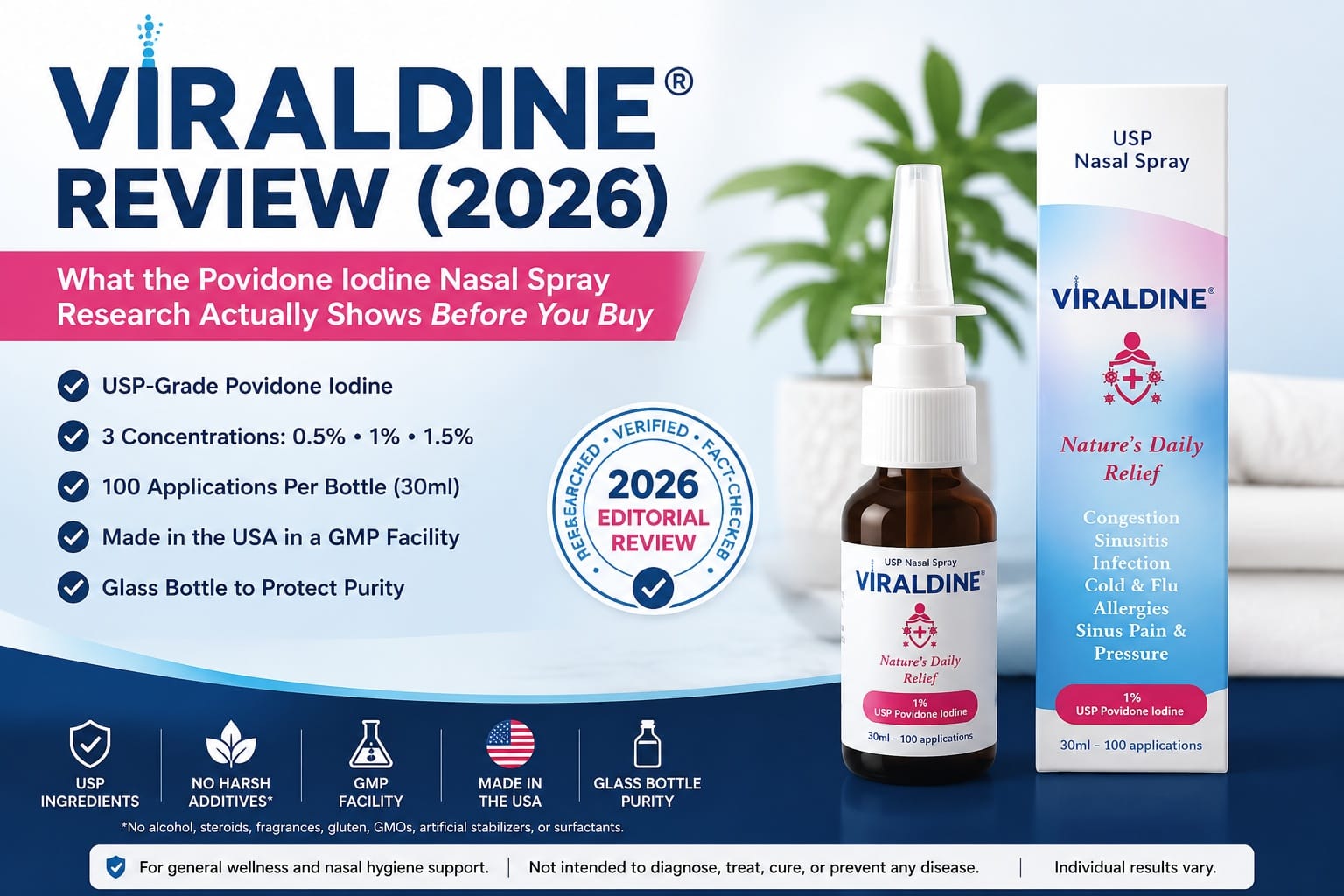
As interest in respiratory wellness and non-decongestant nasal care continues in 2026, this Viraldine review breaks down how the povidone iodine nasal spray is positioned for daily nasal hygiene support, what buyers should know about its USP-grade formula, and which pricing, usage, and safety factors may influence individual experiences.
ELMIRA, NY / ACCESS Newswire / June 12, 2026 / Disclaimers: This article contains affiliate links. A commission may be earned on qualifying purchases made through links in this content, at no additional cost to the reader. Affiliate relationships do not influence editorial content or the evaluation of products. Disclosure is provided in accordance with FTC 16 CFR Part 255. This content is promotional in nature and is intended for consumer education regarding a commercially available product.
Viraldine Research 2026: Is This Povidone Iodine Spray Worth It?
You've probably already seen Viraldine's marketing. You know it's a povidone iodine nasal spray, you've seen the "doctor-recommended" claim, and you're aware there's a 25% sale running right now. What you probably haven't seen yet - clearly laid out in one place - is the full five-ingredient label, the complete history of the 2022 FDA warning letter and what it actually said, the recurring complaints buyers report on third-party platforms, and the specific things a careful buyer checks before clicking "add to cart." That's what this review covers. Every factual claim traces back to a verified public source: the brand's official product pages, published peer-reviewed research, the FDA's own publicly available warning letter, and documented buyer accounts on third-party platforms. Nothing invented. Nothing inferred.
TL;DR - Three Things Most Buyers Find Out Too Late
Before anything else: three facts about Viraldine that don't appear on the homepage, that most reviews skip, and that matter before you place an order. First - the full ingredient label isn't on the main product page; you have to navigate to the individual concentration pages to find that every formula contains five ingredients: USP Sodium Chloride, USP Povidone Iodine, USP Vegetable Glycerin, Aloe Vera, and Citric Acid. Second - Viraldine LLC received an FDA warning letter in March 2022 for specific COVID-19 marketing claims that appeared on the site at the time; the letter was about how the product was promoted, not about a safety recall or ingredient finding, and the current site language has been corrected. Third - the return window closes the moment you open the bottle, and per the brand's published return policy, any purchase made at sale pricing is non-refundable. Read those three things, then keep reading if you want the full picture.
Quick Verification Snapshot - As of June 2026
Product name: Viraldine USP Povidone-Iodine Nasal Spray (0.5%, 1%, 1.5%) and Throat Spray (1.5%)
Brand/operator: Viraldine LLC, 311 Lake Street, Elmira, NY 14901
Official website: viraldine.com
Price (per bottle): $21.49 USD (all concentrations); free shipping on orders over $70 per brand's current promotional offer
Applications per bottle: 100 applications (400 sprays per 30ml bottle, per brand)
Key ingredient: USP Povidone-Iodine in 0.5%, 1%, or 1.5% concentration with USP Sodium Chloride saline solution
Manufacturing: Made in the USA, GMP facility (per brand's About page)
Endorsement: Dr. Forbes Riley (health and fitness expert - brand-stated)
Return policy: 30-day return window, unopened only, minus shipping charges; sale items non-refundable
Contact: [email protected] | 1-866-259-6863 (Mon-Fri, 9am-5pm EST)
First release status: This is the first independent review of this product on this platform, as of the date of publication
Review Viraldine's Official Pricing, Guarantee Terms, and Current Availability
What This Viraldine Review Covers: The Pre-Purchase Checklist
If you're doing research before buying, here's exactly what you'll find in this article - and why each section matters for your specific decision.
The full five-ingredient label - confirmed against the brand's own product pages and cross-referenced with wholesale listings, not the homepage summary
The 2022 FDA warning letter - full context - what it said, what it didn't say, what the brand changed, and what it means for buyers researching today
Real complaints from third-party platform buyers - the assembly issue, the sale no-return policy, the glass shipping risk, and the DIY comparison question, all sourced from verified buyer accounts
The research picture on povidone iodine nasal sprays - safety findings, the 2025 Phase III trial, where the clinical evidence is strong and where it's still developing
Who should and shouldn't use this product - including thyroid, pregnancy, and iodine allergy considerations with clear guidance on when a doctor conversation is required before ordering
How Viraldine compares to saline sprays, steroid sprays, and decongestants - because buying the wrong type of nasal spray for your situation is a $21.49 mistake you can avoid
Exact pricing, return terms, and what the 25% sale actually means for your refund rights - the information that isn't prominent on the product page
How to use each formula correctly - including the assembly step most buyers miss on first delivery
15+ FAQ entries covering every common buyer question - sourced from actual buyer search patterns, not generic product copy
Everything in this article is sourced from verified public information. If it can't be confirmed, it doesn't appear - and where the brand says one thing and the evidence says something more nuanced, you'll see both.
Viraldine 2026 Fast Facts: What Every Buyer Should Know in 30 Seconds
Viraldine is a USP-grade povidone iodine nasal and throat spray positioned for daily nasal hygiene
Viraldine is available in three nasal spray concentrations: 0.5% (Gentle Relief), 1% (Daily Relief), and 1.5% (Rapid Relief)
Viraldine 1.5% Throat Spray is a separate product positioned for throat application
Viraldine pricing is $21.49 per bottle across all formulas as of June 2026
Viraldine bottles hold 30ml and deliver 100 applications (400 sprays) per the brand's published specifications
Viraldine contains five ingredients across all formulas: USP Sodium Chloride, USP Povidone Iodine, USP Vegetable Glycerin, Aloe Vera, and Citric Acid (per brand product pages)
Viraldine is formulated without alcohol, steroids, fragrances, gluten, GMOs, artificial stabilizers, or surfactants (brand-stated)
Viraldine uses USP Sodium Chloride saline solution as the carrier - not distilled water, per brand documentation
Viraldine is packaged in glass bottles; the brand states this prevents iodine-plastic interaction and chemical leaching
Viraldine 0.5% formula is listed by the brand as appropriate for ages 7 and up; parents should confirm with a pediatrician before use
Viraldine is made in the USA at a GMP-certified facility, per the brand's About page
Viraldine is described by the brand as "Dr. Formulated and recommended for at home use"
Viraldine's brand-stated endorser is Dr. Forbes Riley, identified as a health and fitness expert
Viraldine reports 4.8-star average ratings across its product line, with over 1,200 reviews (brand-stated figures)
Viraldine's return policy covers unopened products within 30 days; sale items are non-refundable
Viraldine is not a prescription product, not FDA-approved as a drug, and does not claim to treat, cure, diagnose, or prevent any disease
Viraldine is not intended for individuals with thyroid conditions, iodine allergies, or pregnant individuals without prior physician consultation, per standard povidone iodine usage guidance
Viraldine launched in 2020 and the brand positions it as the "#1 Recommended Brand By Doctor's For Povidone Iodine Nasal Spray Since 2020" - a brand-asserted promotional claim
What Is Viraldine Nasal Spray - and Why Are So Many Buyers Researching It Right Now?
Viraldine sits at the intersection of two things happening simultaneously in consumer health right now: a growing interest in non-decongestant nasal hygiene options and a category of products - povidone iodine nasal sprays - that got a lot of COVID-era attention and has since had to recalibrate its marketing claims. That combination is exactly why a buyer who's done even five minutes of research arrives with real questions. The brand has a 2022 FDA warning letter on record. It makes a "doctor-recommended" claim without publishing a survey methodology. And its homepage ingredient summary doesn't match the full label on the product pages. Those aren't reasons not to buy it - but they are reasons to research carefully before you do. That's what this section starts to answer.
Viraldine is a direct-to-consumer nasal and throat spray built around USP-grade povidone iodine (also written PVP-I) - an antiseptic ingredient with over 60 years of medical use in wound care, surgical prep, and oral rinse applications. The brand's four products bring that same ingredient into a consumer nasal spray format, packaged in glass rather than plastic, with USP-certified ingredient standards. The lineup: a 0.5% nasal spray (Gentle Relief, brand-stated for ages 7 and up), a 1% nasal spray (Daily Relief), a 1.5% nasal spray (Rapid Relief), and a 1.5% throat spray. All four are $28.99 regular / $21.49 on the current 25% sale as of June 2026.
The operator is Viraldine LLC, 311 Lake Street, Elmira, NY 14901. Manufacturing is stated as USA-based at a GMP-certified facility, per the brand's About page. USP certification on the ingredients means they meet defined pharmaceutical-grade purity and potency standards - a meaningful quality signal when the product goes directly onto nasal mucosa.
One thing this review won't do: tell you Viraldine will prevent illness, cure a sinus condition, or substitute for medical care. No consumer nasal spray can make those claims compliantly, and making them here wouldn't serve you. What it will do is give you the accurate, complete picture - what's verified, what's brand-stated, what the published research actually shows, and what the regulatory record actually says. You make the call.
Buyer Takeaway #1: Viraldine is a USP-grade povidone iodine nasal spray made in the USA. The brand's core positioning is daily nasal hygiene support. It's not a drug product, and it doesn't claim to be. The category itself - PVP-I nasal sprays - has a solid safety track record in clinical research settings; efficacy for specific outcomes varies by study and context.
Review all Viraldine formula options on the official page
How Povidone Iodine Actually Works in a Nasal Spray - and What That Means for Buyers
Povidone iodine is a complex of polyvinylpyrrolidone (PVP) with elemental iodine. The PVP carrier makes iodine more stable and less irritating than raw iodine while still delivering its antimicrobial action. When PVP-I contacts organic material - cell walls, protein coats, microbial membranes - the free iodine it releases oxidizes and denatures those structures. That's the same mechanism that makes it valuable as a topical antiseptic in wound care and surgical settings, and it's been documented in medical literature for decades.
For nasal application, the principle carries over: the spray delivers a dilute iodine solution to the nasal mucosa, where it contacts surface pathogens and environmental irritants. A 2020 review published in the Ear Nose and Throat Journal found that PVP-I has been safely administered in the nasal cavity at concentrations under 2.5% for up to five months, and that concentrations below 2.5% didn't reduce ciliary beat frequency or cause pathological changes in nasal epithelium in the studies reviewed. That's worth paying attention to: nasal cilia are the hair-like structures that move mucus and trapped particles out of your airways. A nasal product that damages them creates a problem. The published research says PVP-I at these concentrations doesn't.
Viraldine's formulas - 0.5%, 1%, 1.5% - all fall within that well-documented safety range. The brand pairs the PVP-I with a saline base (USP Sodium Chloride) rather than distilled water, which it states adds antiseptic support and moisture. The other three ingredients - USP Vegetable Glycerin, Aloe Vera, and Citric Acid - round out the formula with a humectant, a soothing agent, and a pH stabilizer.
That's the mechanism. Now here's the part that matters for a buyer making an informed decision: the mechanism being real doesn't automatically answer whether a consumer nasal spray delivers meaningful clinical outcomes for specific conditions. Those are separate conversations, and honest buyers deserve both.
Buyer Takeaway #2: The antiseptic mechanism of povidone iodine is well-documented in published medical literature. Published research supports a favorable nasal tolerability profile at concentrations under 2.5% when used as directed. Whether that mechanism translates to specific clinical outcomes in everyday nasal spray use is where the research is more nuanced - and that distinction matters when you're setting expectations before buying.
What the Research on Povidone Iodine Nasal Sprays Actually Shows in 2026
Here's where this review gives you something most product pages and affiliate sites skip: a straight read on what the research does and doesn't establish. It's not a hedge - it's actually the most useful thing you can know before spending $21.49.
The strongest statement the published literature supports: PVP-I nasal sprays are well-tolerated at the concentrations used in consumer products (0.5%-1.5%), and they've demonstrated broad-spectrum antiseptic activity in laboratory settings and some clinical contexts. That's a genuinely solid foundation for a consumer nasal hygiene product.
A 2025 Phase III randomized, controlled, double-blind clinical trial published in Frontiers in Medicine (Polasek and Friedland, June 2025) enrolled 260 adults with cold symptoms and tested a 0.5% PVP-I nasal spray against saline. The results showed numerical trends favoring PVP-I on both nasal symptoms and a validated global severity score - but didn't reach statistical significance (p=0.217 for nasal symptoms; p=0.054 for global severity). That means the trial found a trend, not a definitive result. Promising, not conclusive.
Earlier clinical research on PVP-I and COVID-19 - the category's hot moment in 2021-2022 - produced mixed results. Some randomized trials found no significant difference versus saline control for recovery. In vitro (laboratory) studies found PVP-I rapidly inactivates coronaviruses and other respiratory viruses on contact. The gap between what happens in a lab dish and what happens inside a real nasal passage - with mucus dilution, contact time, anatomical distribution, and individual variation all in play - is a core challenge in translational medicine. It's not unique to PVP-I.
The National Center for Complementary and Integrative Health (NCCIH) and the broader medical research community's standard read on PVP-I nasal sprays: safety at approved topical concentrations is well-supported; clinical efficacy for specific respiratory outcomes is promising but still developing, and individual results vary.
None of this makes PVP-I nasal sprays a bad choice for someone who wants nasal hygiene support. It means you're buying a product with a strong safety foundation and an evolving efficacy picture - not a pharmaceutical with a completed phase III efficacy package for a named disease. If you're clear on that going in, you're making an informed decision.
Buyer Takeaway #3: Published research on PVP-I nasal tolerability at concentrations under 2.5% consistently reports a favorable safety profile in the populations studied. The clinical efficacy research is more nuanced - some studies show trends, not definitive conclusions. A reasonable physician would describe this as a promising hygiene category with more research warranted. That's the honest read.
What Viraldine Claims About Itself - and How to Read Each Claim as a Buyer
This section is what you'll want to reference if you're evaluating whether the brand's language crosses any lines that matter to you. Here's what Viraldine's official site states, and what those claims mean in practical terms:
The brand states(the following is a direct quotation from the Viraldine official website - the phrase "Research shows" below is the brand's own marketing language, not this publication's independent editorial assertion): "When saturating your sinuses and throat with antiseptic povidone iodine nasal spray and throat spray, you eliminate excess mucus and inflammation. Research shows PVP-iodine nasal spray and throat spray also cleans 99.9% of any pathogens or bacterial cells within your passages."
What that means: "Cleans 99.9% of pathogens" language is common in antiseptic product marketing. In the context of a topical antiseptic, it generally refers to in vitro antimicrobial testing - a lab methodology where a surface or solution is exposed to a microbial load and the reduction percentage is measured. It does not mean 99.9% of pathogens in your body, in your bloodstream, or in a clinical disease context. Buyers should read this as a statement about the antiseptic properties of PVP-I in general, not as a clinical cure rate claim.
The brand states: "The #1 Recommended Brand By Doctor's For Povidone Iodine Nasal Spray Since 2020."
What that means: This is brand-asserted promotional language, not the result of a documented independent survey or published ranking. The article uses this phrase as identification of the brand's marketing position, not as an independently verified ranking claim.
The brand states: "Dr. Formulated and recommended for at home use."
What that means: The brand attributes formulation and recommendation to unnamed doctors. Dr. Forbes Riley is specifically identified on the brand's site as an endorser and health and fitness expert. Buyers should confirm on the official site whether specific credentialing details relevant to their evaluation are publicly disclosed.
The brand states: Viraldine is useful for "Congestion, Sinusitis, Infection, Cold & Flu, Allergies, Sinus Pain & Pressure."
What that means: These are the intended-use categories listed on the brand's product packaging (per the document data for the 0.5% formula). Povidone iodine's role in each of these conditions varies - its antiseptic properties are documented; clinical results for specific conditions like chronic sinusitis or cold resolution are still under investigation in the published literature. The brand is describing a use context, not making drug efficacy claims.
Buyer Takeaway #4: The brand's marketing language is promotional. Understanding what specific phrases mean versus what they don't claim is the most useful thing this review can give you. Read "cleans 99.9% of pathogens" as an antiseptic potency statement, not a cure-rate promise. Read "#1 recommended" as a brand's own promotional designation, not a third-party verified ranking.
The Three Viraldine Nasal Formulas: Which Concentration Is Right for You?
Viraldine's product line gives buyers three nasal spray concentrations, and the choice matters depending on your sensitivity level, daily use habits, and what you're trying to accomplish. Here's how the brand positions each one:
0.5% Povidone Iodine - Gentle Relief Formula: The lowest concentration in the lineup, and the one the brand specifically lists as "For ages 7 & up" on its product page. It's also noted as the entry point for adults with nasal sensitivity. This is the same concentration (0.5%) studied in the 2025 Frontiers in Medicine Phase III trial for the common cold. The full glass packaging and USP-certified standard applies here too. For children under 7 or for children in general, consult a healthcare provider before use - the brand's "ages 7 and up" guidance is a starting point, not a replacement for pediatric medical advice.
1% Povidone Iodine - Daily Relief Formula: The mid-range concentration, positioned for daily use by adults. The brand describes it as appropriate for "everyday protection" and notes it can be used up to four times per day per its Amazon product page. This is the formula most commonly referenced in Walmart and Amazon customer reviews for regular routine use.
1.5% Povidone Iodine - Rapid Relief Formula: The highest concentration in the nasal spray line, positioned for "rapid relief" and situations where early symptom management is the goal. Customer reviewers on third-party platforms who describe positive experiences with Viraldine frequently mention the 1.5% formula in the context of noticing early respiratory symptoms and using it immediately. Individual experiences vary. Note: the published 2020 ENT Journal safety review discusses concentrations below 2.5% as within the well-tolerated range; 1.5% falls within that range.
All three bottles are 30ml and deliver 100 applications (400 sprays) per the brand's published specifications. All three are priced at $21.49 as of June 2026.
There's also the 1.5% Throat Spray (60ml, 100 applications) - a separate product positioned for throat use. It uses the same active ingredient at the same 1.5% concentration as the Rapid Relief nasal formula.
Buyer Takeaway #5: The concentration choice matters. If you're new to PVP-I nasal sprays, most of the published clinical research used 0.5%-1% concentrations. If you're sensitive to iodine-based products, the 0.5% formula is the logical starting point. The brand's description of the 1.5% as a "rapid relief" option reflects its own marketing positioning, not a tested clinical differential. Consult a healthcare provider if you have questions about which concentration fits your specific health situation.
Viraldine Ingredients: The Full Five-Item Label That Isn't on the Homepage
Viraldine keeps its formula simple and transparent. Here's what's in it, based on the brand's official published information:
Per the brand's official product pages and wholesale listings (verified across all four products as of June 2026), every Viraldine nasal and throat spray formula shares the same five-ingredient composition:
USP Sodium Chloride - pharmaceutical-grade saline, the same carrier used in hospital-grade nasal irrigation. The brand uses this instead of distilled water, stating that saline adds antiseptic properties and moisture versus plain water.
USP Povidone Iodine - the active antiseptic ingredient, at 0.5%, 1%, or 1.5% concentration depending on the formula.
USP Vegetable Glycerin - a humectant that helps retain moisture at the nasal mucosa. The USP designation means it meets the same pharmaceutical-grade purity standards as the other USP ingredients.
Aloe Vera - included for its well-known soothing properties; commonly used in topical formulations intended for sensitive tissue.
Citric Acid - functions as a pH adjuster and preservative agent, common in pharmaceutical nasal formulations to maintain solution stability and buffer pH to a range compatible with nasal mucosa.
That's a short list. The brand doesn't pad it - five ingredients, each with a clear functional role. No artificial stabilizers, no surfactants, no scrubbing agents, no alcohol, no steroids, no fragrances, no gluten, no GMOs, per the brand's published materials.
One note worth flagging: the brand's homepage and About page originally described the formula as saline-based with USP PVP-I only. The complete five-ingredient list appears on the individual product pages and wholesale listings. Buyers who want to confirm the full formulation for any specific formula should check the product page for that concentration at viraldine.com before purchasing, as formulations could change without notice.
The glass packaging: Viraldine makes a specific claim about its packaging that's worth examining carefully. The brand states that iodine reacts with plastic and that this reaction can contaminate the solution and harm nasal passages. It also states that over-the-counter povidone iodine products in plastic bottles are "made strictly for topical use, not internal use." The glass bottle claim is factually grounded - iodine is a known oxidizer that can degrade certain plastics over time, and pharmaceutical-grade iodine solutions are often stored in amber glass for stability reasons. Whether this translates to a meaningful performance difference for a consumer nasal spray at these concentrations is a question the brand doesn't directly answer with published testing data. Buyers who want to verify this distinction should review the brand's documentation on its website and consult with a pharmacist.
Buyer Takeaway #6: The ingredient list is short and transparent - USP PVP-I plus USP saline. No hidden synthetic ingredients. The glass bottle rationale has a factual foundation in iodine chemistry, even if the brand-specific performance advantage over plastic isn't independently tested. USP certification on both active and inactive ingredients is a meaningful quality indicator.
Does Viraldine Work? A Buyer Verification Framework
This is the section most people skip straight to, so let's be direct: "does it work" depends entirely on what you're expecting it to do. There isn't a single answer. There are three.
If you're expecting it to work as a nasal antiseptic
The antiseptic properties of povidone iodine are well-documented in published scientific literature. PVP-I has a 60-year track record in clinical topical antiseptic applications. Published research on the mechanism - free iodine oxidizing and disrupting pathogen cell structures - appears across peer-reviewed journals in multiple research contexts. At the concentrations Viraldine uses (0.5%-1.5%), nasal tolerability is supported by published clinical research including a Phase III trial and multiple safety reviews. So in that specific, bounded sense - the product contains the active ingredient that published antiseptic literature consistently associates with antimicrobial applications, formulated at concentrations documented in peer-reviewed safety research.
If you're expecting it to work as a substitute for medical treatment
It isn't, and the brand doesn't claim it is. Viraldine is a nasal hygiene product. It's not FDA-approved for the treatment, prevention, diagnosis, or cure of any disease. If you have a confirmed sinus infection or a respiratory illness that warrants medical care, a nasal spray doesn't replace that care.
If you're evaluating whether buyers describe positive experiences
Third-party retailer reviews on Walmart and Amazon - verified purchasers posting about Viraldine products - describe noticing clearer nasal passages, finding it useful for early symptom support, and appreciating the non-habit-forming approach versus decongestant sprays. Customer ratings and testimonials from third-party platforms are individual accounts that haven't been independently audited. Individual experiences vary. That's the accurate way to read consumer product reviews - not as a success guarantee, but as a genuine signal from people who bought and tried it.
The brand's own site reports a 4.8-star average with over 1,200 reviews. Those figures are brand-reported and haven't been independently audited by this publication.
Buyer Takeaway #7: Viraldine is marketed by the brand as a USP-grade povidone iodine nasal hygiene spray. The antiseptic properties of povidone iodine are documented in published literature, though individual experiences and outcomes vary. Whether this product fits your specific situation depends on what you're expecting it to do - and setting that expectation clearly before buying is the most useful thing this section can give you.
Who Should Use Viraldine - and the 4 Health Situations That Require a Doctor Conversation First
A useful nasal hygiene product for one person can be contraindicated for another. Here's what the published guidance and standard povidone iodine safety profile says about who's a reasonable candidate and who needs a physician conversation first.
Reasonable candidates for PVP-I nasal sprays based on the published literature:
Adults without thyroid conditions who are not pregnant or breastfeeding
Adults looking for a non-decongestant nasal hygiene option (PVP-I nasal sprays don't carry the rebound congestion risk associated with some decongestant nasal sprays)
Adults who want to support nasal hygiene as part of a daily wellness routine
Adults who prefer non-habit-forming nasal care (iodine-based sprays don't have the dependency profile of topical decongestants like oxymetazoline)
Individuals who should consult a healthcare provider before using any PVP-I nasal spray:
People with known thyroid conditions - iodine is absorbed through nasal mucosa; while the amounts are small at these concentrations, thyroid function can be affected by iodine intake in susceptible individuals
Pregnant or breastfeeding individuals - iodine passes through the placenta and into breast milk; prenatal guidance on iodine supplementation should be followed
People with known iodine or shellfish allergies - iodine sensitivity can trigger allergic reactions
Children - the 0.5% formula is described by the brand as suitable for children, but parents should confirm with a pediatrician before use
People on medications that interact with iodine
This isn't alarmist framing - povidone iodine nasal sprays have a strong safety record when used appropriately. The above categories are standard clinical cautions that apply to any product containing iodine.
Buyer Takeaway #8: If you're a healthy adult without thyroid conditions, iodine allergy, or pregnancy, the safety profile of PVP-I nasal sprays at these concentrations is well-documented in clinical literature. If any of the caution categories above apply to you, a quick conversation with your doctor takes three minutes and is worth it.
Viraldine vs. Saline, Steroid, and Decongestant Nasal Sprays: Which One Actually Fits Your Situation
The nasal spray category is crowded, and it helps to understand exactly what separates PVP-I nasal sprays as a category - and Viraldine specifically - from other approaches buyers might consider.
Viraldine vs. saline-only nasal rinses/sprays: Standard saline nasal sprays use salt water to physically flush the nasal passages and thin mucus. They don't carry an antiseptic ingredient. Viraldine's approach adds USP-grade PVP-I to a saline base, adding an antiseptic layer to the physical cleansing action of saline. Whether that additional layer makes a meaningful clinical difference is exactly what the ongoing research is studying.
Viraldine vs. steroid nasal sprays: Prescription and non-prescription steroid nasal sprays (like fluticasone or budesonide) work by reducing nasal inflammation through a different mechanism - corticosteroids suppressing the inflammatory response. They're typically recommended for allergic rhinitis and chronic nasal inflammation. PVP-I nasal sprays operate on an antiseptic mechanism, not an anti-inflammatory one. These are different tools for different situations; they're not direct substitutes.
Viraldine vs. decongestant sprays: Decongestant sprays (oxymetazoline, xylometazoline) constrict blood vessels in nasal tissue to temporarily open nasal passages. They work quickly for acute congestion but carry a rebound congestion risk with extended use (known as rhinitis medicamentosa). PVP-I sprays don't operate on vascular constriction and don't carry the rebound risk. They're also not fast-acting decongestants in the same way.
Viraldine vs. other PVP-I nasal sprays: Several brands now offer PVP-I nasal sprays in the consumer market. Viraldine's stated differentiators are glass packaging (versus plastic), USP-certified ingredients, a saline rather than distilled water base, and a Made-in-USA GMP manufacturing claim. Buyers comparing brands should verify each claim on each brand's official site rather than taking marketing language at face value.
Buyer Takeaway #9: Viraldine occupies a specific lane - a nasal antiseptic spray, not a decongestant, not a steroid, not a simple saline rinse. If your goal is immediate congestion relief, a decongestant may be faster. If your goal is daily nasal hygiene with an antiseptic component and you want to avoid the rebound risk of decongestants, the PVP-I category is worth understanding. Viraldine's glass packaging and USP standards are its most differentiating claims within the PVP-I category.
How to Use Viraldine: Step-by-Step Instructions Including the Assembly Step Most Buyers Miss
Per the brand's published usage instructions, the process is straightforward:
First, assemble the bottle. Per the brand's own product pages: "Bottles come capped with the applicator separate in a sterile, sealed bag." That means you'll need to attach the spray pump to the glass bottle when yours arrives. The brand notes to "ensure applicators are attached as tight as they will turn - otherwise they will not form a seal and function properly." A couple of buyers on third-party platforms mention being surprised by this; now you won't be.
Step 1 - Insert into nostril: Place the spray cap approximately half an inch into the nostril.
Step 2 - Pump two sprays: Use two fingers on the pump and deliver two full sprays into the nostril. Repeat for the other nostril.
Step 3 - Let the solution reach the passages: The brand suggests placing your head slightly forward after nasal application, then looking left for 15 seconds, then right for 15 seconds, then tilting your head back. This helps the solution reach behind the nasal passages and into the adenoid area, per the brand's own guidance.
Step 4 - Rinse the tip: Rinse the spray tip under warm water after each use to prevent nozzle contamination between uses.
For the Throat Spray: Spray directly into the mouth and throat. Leave it in place for 15 seconds, then spit it out - don't swallow, per the brand's instructions.
The brand's 1% formula is described in product listings as appropriate for up to four applications per day. Once opened, the brand's wholesale listings recommend using the bottle within 6 months for best results. Don't exceed the brand's published usage guidance for any nasal spray.
One practical thing worth knowing before your first use: many users note a mild medicinal taste in the back of the throat for a few minutes after application. It's iodine traveling through the nasal passages. It's transient, it fades quickly, and it's a sign the formula reached the back of the nasal passages - which is where you want it to go.
Buyer Takeaway #10: Usage is simple and takes under 30 seconds. Follow the brand's two-spray, half-inch insertion guidance. Rinse the tip after each use. The 1% formula can be used up to four times daily per the brand's own product description - don't exceed published usage guidance for any nasal spray.
Viraldine Pricing in 2026: What the Sale Price Means for Your Return Rights
Here's the pricing picture. The brand's regular price is $28.99 per bottle. The current sale price is $21.49 - a 25% reduction displayed site-wide as of June 2026. That $28.99 is the brand's own stated reference price; it may not reflect prevailing market prices on other platforms where Viraldine sells. EU buyers should verify EU-specific pricing compliance with the brand directly, as the EU Omnibus Directive requires that reference prices in price-reduction displays reflect the lowest price in the prior 30 days.
At $21.49 per bottle, you're paying for 100 applications. That works out to roughly $0.21 per application, or about $0.43-$0.84 per day if you're using it once or twice daily. Once opened, the brand recommends using the bottle within 6 months for best results, per wholesale product listings.
The brand runs free shipping on orders over $70 per the site header as of this review. Final total at checkout will reflect taxes and any shipping for orders under $70 - always confirm your total at checkout before completing a purchase.
On the discount stacking: the brand also offers a 15% off email sign-up coupon for first-time buyers - but per the brand's published terms, that discount doesn't combine with sale pricing. If the site-wide 25% sale is running when you visit, that's already the better deal.
Buyer Takeaway #11: Regular price is $28.99; the active sale brings it to $21.49 - that $28.99 is the brand's stated reference price, and buyers should verify it reflects prevailing pricing before treating it as a comparison point. At sale pricing, you're at about $0.21 per application with no return option. Buy at regular price if the return window matters to you.
The Glass Bottle Claim - What the Brand Says and What Buyers Should Know
Viraldine makes a specific and prominent claim about its glass packaging that's worth examining carefully, because it's one of the brand's key differentiators and it's factually interesting.
The brand states that iodine reacts with plastic, contaminating the solution and potentially harming nasal passages, while also allowing gases to permeate through, reducing effectiveness. It states that plastic bottles "are made strictly for topical use, not internal use" in the context of competing PVP-I products.
Here's what's verifiable: iodine is an oxidizing agent and can interact with certain plastics over time. Pharmaceutical manufacturers commonly store iodine solutions in glass or amber glass for stability reasons - this is standard pharmaceutical practice. The claim that iodine can degrade plastic packaging under certain conditions has a factual basis in chemistry.
What isn't independently verified by this publication: whether consumer nasal spray bottles made of the plastics typically used for medical-grade nasal sprays (HDPE, polypropylene) present a meaningful contamination risk at the concentrations and contact times involved in normal product use. The brand's claim may be directionally accurate without the specific risk level being established for consumer products. Buyers who want to research this further should consult pharmacists familiar with iodine formulations.
The glass bottles ship with a two-year expiration date, per the brand's About page. Each bottle includes both a sealable cap and an applicator cap, which is useful for travel per customer reviews that mention this feature.
Buyer Takeaway #12: The glass packaging claim has a legitimate scientific basis - iodine and plastic do interact. The specific relevance to consumer nasal spray bottles at 0.5%-1.5% concentrations isn't independently verified in published testing specific to Viraldine. The practical benefits buyers confirm - two-year shelf life, a sealable cap for travel - are documented. This is a differentiator worth noting, not dismissing.
Confirm current Viraldine policies before purchasing
Viraldine Customer Ratings: What Third-Party Reviewers Describe
Viraldine's brand-reported rating is 4.8 stars across its product line, with the brand stating over 1,200 reviews on its own platform as of the date of source collection. Individual products on Walmart list ratings of 4.9 stars from 65 reviews (1.5% Throat Spray) and comparable ratings across the nasal spray formulas.
Customer ratings and testimonials are brand-reported or platform-aggregated figures and have not been independently audited by this publication. Individual experiences vary. The existence of positive third-party reviews is noted; their specific claims cannot be independently verified.
Themes that appear in buyer descriptions of positive experiences on third-party platforms include: noticing clearer nasal passages, finding the product useful when used early in the onset of respiratory symptoms, appreciating that it's non-habit-forming compared to decongestant sprays, and noting the glass bottle and natural formulation as purchase motivators. Several reviewers on Walmart describe using the product preventively - their word, reflecting their personal routines, not a brand efficacy claim or this publication's endorsement of preventive use - before crowded settings or during allergy season, rather than only as a response to active symptoms.
Themes in less positive reviews (where they appear): some users note the medicinal iodine taste, the need to assemble the spray pump separately from the glass bottle, and the higher price point versus drugstore nasal sprays.
Buyer Takeaway #13: A 4.8-star brand-reported rating with over 1,200 reviews represents a consistent pattern of positive buyer experience - with the standard caveat that self-reported outcomes, third-party review platforms, and brand-reported metrics are all subject to limitations. The most useful signal is the consistency of specific use-case descriptions across unaffiliated platforms, not a single number.
The "Made in USA" and "Doctor-Recommended" Claims: What Buyers Should Verify
Two of Viraldine's recurring marketing phrases deserve specific context for buyers who value accurate sourcing of claims.
"Made in the USA": The brand's About page states "Made in the USA & fully insured GMP Manufacturing Facility." The FTC's Made in USA rule (16 CFR Part 323) requires that any "Made in USA" claim without qualification must reflect that the product is "all or virtually all" made in the United States - including significant parts, processing, and labor. The brand's statement appears on its official website. Buyers who require manufacturing documentation for their evaluation should contact the brand directly at [email protected] to request specifics.
"#1 Recommended Brand By Doctor's For Povidone Iodine Nasal Spray Since 2020": This is a brand-asserted promotional claim. It does not reference a published independent survey, a named medical association's endorsement, or a documented polling methodology. It appears as a site-wide header banner. Buyers should read it as brand marketing positioning - it reflects the brand's own claim about its standing, not a documented third-party ranking. It does not mean that no other brand's products are recommended by doctors, or that this ranking was verified by a neutral body. Under established advertising substantiation standards applicable to "doctor recommended" claims - including guidance from the National Advertising Division (NAD) and the FTC - such claims are generally required to be supported by a well-conducted independent survey showing a substantial portion of relevant doctors recommend the product in their ordinary clinical practice. This publication has not reviewed any such survey in connection with this claim, and the absence of published survey methodology does not allow this publication to independently verify or endorse it.
Dr. Forbes Riley endorsement: The brand's site features Dr. Forbes Riley, identified as a health and fitness expert and Viraldine endorser. Endorser relationships require FTC disclosure under 16 CFR Part 255, which governs material connections between endorsers and brands. When you see an endorsement on a brand's own website, you're looking at the brand's own marketing channel - that context should inform how you weigh the endorsement. An endorser is not a prescribing physician providing medical advice; they're a marketing representative for the brand.
Buyer Takeaway #14: "Made in USA" and "Doctor-Recommended" are marketing claims that benefit from buyer verification. The Made in USA claim appears on the brand's official About page; buyers can request manufacturing documentation from the brand directly if needed. The "#1 recommended" designation is a brand-asserted promotional statement, not a published third-party ranking. Use the claims as starting points for your own verification, not endpoints.
Viraldine Return Policy: The One Detail That Changes Everything If You Buy on Sale
The return policy has several specific conditions worth knowing before you click "buy," especially given the 25% sale currently displayed on the site.
What's returnable: Unopened items in original packaging within 30 days of purchase, with receipt or proof of purchase.
What isn't returnable: Items opened (which is essentially the product once you've used it - a glass nasal spray bottle you've sprayed constitutes an opened product). Sale-priced items are explicitly non-refundable, per the brand's return policy page.
Timeline: The 30-day clock starts from your purchase date. After 30 days, no refund or exchange is offered regardless of purchase price.
Process: Upon receiving a returned item, the brand examines it and notifies you via email within a reasonable time. Refunds credit back to the original payment method, minus shipping charges.
Customer service for return follow-up: 1-866-259-6863, Monday-Friday, 9am-5pm EST.
The practical reality: if you're curious about whether Viraldine works for you, buying at regular price (not sale) and keeping the bottle sealed until you're sure you want to try it preserves your return option. Once you've opened the bottle, the return window closes regardless of how many applications you've used.
Buyer Takeaway #15: The return window is 30 days, unopened only, and excludes sale items. Buy at regular price if the return option matters to you. Once opened, the return option is gone - plan accordingly.
Red Flags to Look For in Any Nasal Spray Category (And Why Viraldine Doesn't Trigger Most of Them)
Reviewing consumer health products for a living means developing a checklist of red flags. Here's how Viraldine scores on that list:
Red flag: "Cures," "treats," or "prevents" disease language without FDA approval
Viraldine's current site language describes nasal hygiene support, respiratory wellness, and congestion relief. It doesn't claim to cure, treat, prevent, or diagnose any specific disease on its current live site. Note: Viraldine received an FDA warning letter in March 2022 related to prior COVID-19 disease claims on the website that have since been removed. The brand's current site positioning reflects updated language.
Red flag: Proprietary blends with hidden ingredients
Not applicable. Viraldine's formula is transparent: USP PVP-I plus USP Sodium Chloride. Two ingredients. No hidden blend.
Red flag: No return policy or very restrictive refund terms
Viraldine has a 30-day return window for unopened regular-price items. It's not unusually generous, but it exists and is published.
Red flag: No contact information
Published: [email protected] and 1-866-259-6863, M-F 9am-5pm EST. Customer service appears reachable based on brand-reported response patterns in third-party reviews.
Red flag: No physical business address
Viraldine LLC's address is publicly listed as 311 Lake Street, Elmira, NY 14901.
Red flag: No manufacturing transparency
The brand states Made in USA, GMP facility on its official About page. Buyers who need manufacturing documentation can request it from the brand.
Red flag: Fake scarcity, countdown timers, or manufactured urgency
No countdown timers, no fake stock claims found on the site. The current 25% sale is stated without a manufactured expiration pressure tactic.
Buyer Takeaway #16: Viraldine passes the standard red flag checklist for consumer health products. Transparent ingredients, published address and contact, a return policy, no disease-cure claims on the current live site. The 2022 FDA warning letter is a historical compliance note buyers deserve to know about; the current site language reflects corrected positioning.
The FDA Warning Letter in Context: Why It Appears in Searches and What It Actually Means
Transparency requires disclosing this directly: Viraldine LLC received an FDA warning letter dated March 7, 2022 (MARCS-CMS 625675), issued jointly by FDA's Center for Drug Evaluation and Research and the Federal Trade Commission.
The letter cited specific language on the Viraldine website at the time that the FDA determined constituted claims to "mitigate, prevent, treat, diagnose, or cure COVID-19" - which would require FDA approval as a new drug. The claims cited were research-excerpt postings and language on the brand's FAQ and studies page that the FDA determined framed the product's antiseptic properties as COVID-19 drug activity.
The FDA asked the brand to take "immediate action to cease the sale of any unapproved and unauthorized products" marketed with COVID-19 drug claims.
Reviewing the brand's current live website, the COVID-19 specific language cited in the 2022 warning letter does not appear on the site today. The brand's current positioning focuses on nasal hygiene, respiratory wellness, congestion, allergens, and antiseptic cleansing - without COVID-19 drug claims.
What this means for buyers: the brand has a documented prior regulatory issue that was related to specific marketing language, not product formulation or ingredient safety. The FDA's concern was with how the product was being marketed, not with the safety of povidone iodine itself. Buyers should be aware of this history as part of their due diligence, understand that the current site language reflects corrected positioning, and consult the FDA's published warning letter directly if they want to read the full regulatory history.
Buyer Takeaway #17: The 2022 FDA warning letter is part of Viraldine's documented history. It related to COVID-19 marketing claims, not product safety or formulation. The current site language does not include the cited claims. Buyers exercising thorough due diligence should factor this history into their evaluation.
Viraldine for Different Buyer Situations: A Quick-Reference Guide
For the daily nasal hygiene buyer: The 1% formula at $21.49 per 100 applications fits a daily routine without overloading on active ingredient concentration. The non-habit-forming nature of PVP-I - versus decongestant sprays - makes it a reasonable daily option for people who want to avoid the rebound congestion cycle.
For the seasonal allergy buyer: The brand specifically lists allergens among the use contexts for all three formulas. Saline nasal rinsing in general has a reasonable evidence base for allergen clearance; the PVP-I adds antiseptic properties. The 0.5% or 1% formula is worth trying for seasonal use cases.
For the travel buyer: Third-party reviewers specifically mention the sealable cap and glass bottle as convenient for travel. The 30ml size is typically within carry-on liquid limits (check current TSA guidelines for your specific situation). The compact format is a practical advantage.
For the buyer with a history of sinus issues: This is where the physician-consultation step matters most. Chronic sinusitis, recurrent sinus infections, and structural nasal issues warrant direct medical input before adding any topical nasal product to your routine. Viraldine isn't a substitute for that input.
Buyer Takeaway #18: Different use cases fit different formula choices and require different levels of medical input. Daily hygiene and seasonal use are the most straightforward applications. Active medical conditions warrant physician guidance before adding any nasal product to your routine.
Viraldine's USP Certification: What It Means and Why It Matters
The brand repeatedly references "USP" in describing both its active ingredient (povidone iodine) and its inactive ingredient (sodium chloride). USP stands for United States Pharmacopeia - an independent scientific organization that sets quality, purity, potency, and identity standards for pharmaceutical ingredients and finished products.
When a product states "USP-grade" ingredients, it means those ingredients meet USP monograph standards - defined testing criteria for identity, strength, quality, and purity. This is a meaningful quality designation in the supplement and pharmaceutical ingredient space. USP-grade povidone iodine and sodium chloride are manufactured to pharmaceutical standards, not industrial-grade standards.
This matters for a nasal spray because your nasal mucosa is highly absorptive tissue. You're applying whatever's in the bottle directly to sensitive mucosal tissue that's connected to your sinuses, eyes, and throat. USP certification means the ingredients meet documented purity standards - that's a relevant quality signal for something you're spraying into your nasal passages.
The brand also states "all USP Certified Ingredients - No Surfactants or Scrubbing Agents - No Additives or Chemicals" - using language that signals a clean formulation philosophy. Whether you weigh this heavily or not, it's a concrete and verifiable quality claim tied to a recognized pharmaceutical standard.
Buyer Takeaway #19: USP certification is a real and meaningful quality standard for pharmaceutical-grade ingredients. For a nasal spray applied to sensitive mucosal tissue, it's a relevant differentiator from products using food-grade or industrial-grade ingredient standards. Viraldine's consistent emphasis on USP throughout its product descriptions reflects a genuine quality positioning, not just marketing language.
Viraldine Ingredients Reviewed: What's Actually in Every Formula
Let's get specific about what's in the bottle - because "povidone iodine nasal spray" is a category description, not an ingredient list, and buyers researching Viraldine ingredients deserve the full picture.
According to the official Viraldine product pages reviewed during the preparation of this article, every formula in the Viraldine lineup - the 0.5%, 1%, and 1.5% nasal sprays and the 1.5% throat spray - lists the same five ingredients: USP Sodium Chloride, USP Povidone Iodine, USP Vegetable Glycerin, Aloe Vera, and Citric Acid. Readers should verify the specific product label for the formula they're considering at viraldine.com before purchasing, as formulations can change without notice.
USP Sodium Chloride is pharmaceutical-grade saline - the same base used in hospital-grade nasal irrigation. It's the carrier that delivers the active ingredient to nasal tissue while providing the moisture and isotonic environment that nasal mucosa tolerates well.
USP Povidone Iodine is the active antiseptic ingredient, present at 0.5%, 1%, or 1.5% depending on the formula. It's the ingredient with the longest published safety and tolerability record in this formulation category, documented across ENT journals, clinical trials, and safety reviews dating back decades.
USP Vegetable Glycerin functions as a humectant, helping retain moisture at the nasal mucosa. The USP designation means it meets the same pharmaceutical-grade purity criteria as the other labeled USP ingredients.
Aloe Vera is included for its widely recognized soothing properties. It's a standard addition to formulations intended for sensitive mucosal tissue - you'll see it across nasal rinse, oral care, and topical skincare categories for the same reason.
Citric Acid serves as a pH adjuster and preservative. This is common in pharmaceutical nasal formulations - pH management helps maintain solution stability and ensures the formula stays within the range that's compatible with nasal mucosa tissue.
What's not in Viraldine's formulas, per the brand's own published materials: no alcohol, no steroids, no fragrances, no artificial stabilizers, no surfactants, no gluten, no GMOs. The brand also states the formulas are vegan and cruelty-free, per product material on third-party wholesale listings.
Buyer Takeaway: The full Viraldine ingredient list is five components, not two. All three USP-designated ingredients meet pharmaceutical-grade purity standards. The aloe vera and citric acid round out the formula with a soothing agent and a pH stabilizer. Ingredient lists can change; always verify the current label on the official product page before purchasing.
Viraldine Side Effects and Safety Considerations
If you're searching "Viraldine side effects," you're asking the right question before buying - and here's what the published research and buyer-reported experiences collectively tell us.
Povidone iodine at concentrations under 2.5% in nasal applications has been studied for safety in published clinical contexts. A 2020 review published in the Ear Nose and Throat Journal found that PVP-I at concentrations below 2.5% didn't reduce ciliary beat frequency or cause pathological changes in nasal epithelium in the studies reviewed. Nasal cilia are the structures that move mucus and debris out of your airways - damage to them would be a meaningful concern. The published literature at these concentrations doesn't support that concern for the populations studied.
A Phase I absorption study on a 0.5% PVP-I nasal spray (Nasodine, same concentration as Viraldine's Gentle Relief formula) published in the International Forum of Allergy and Rhinology (2024) found that iodine absorption from use was not clinically significant in the study population. That's relevant for buyers concerned about systemic iodine load.
That said, here's what buyer-reported experiences on third-party platforms describe as common adjustment effects:
Mild iodine taste in the back of the throat following application - this is iodine traveling through the nasal passages, it's transient, and it's not a sign something's wrong
Brief stinging or burning sensation upon first application, particularly with the 1.5% formula - most buyers describe this as mild and diminishing with use
Slight iodine smell - expected given the active ingredient
Occasional nasal dryness with frequent use - the vegetable glycerin and aloe vera in the formula are intended to counteract this
These are buyer-reported experiences, not independently audited clinical findings. Individual experiences vary. If you experience significant or prolonged irritation, stop use and consult a healthcare provider.
Who should not use Viraldine without first consulting a doctor: People with thyroid conditions (iodine can affect thyroid function and absorbs through nasal mucosa even at small amounts), people with iodine or shellfish allergies, pregnant or breastfeeding individuals, and children under 7 (the brand states the 0.5% formula is for ages 7 and up - pediatric use below that threshold warrants physician guidance).
Viraldine is not a decongestant, so it doesn't carry the rebound congestion risk (rhinitis medicamentosa) associated with products like oxymetazoline. That's a relevant practical consideration for buyers who've had issues with dependency-forming nasal sprays in the past.
Buyer Takeaway: The most commonly reported experiences are mild iodine taste, brief initial stinging, and occasional dryness - all documented as transient in buyer accounts. Published clinical safety research at these concentrations reports a favorable tolerability profile in the populations studied. Thyroid conditions, iodine allergy, and pregnancy are the three categories that always warrant a physician conversation before use.
Viraldine Complaints: What Buyers Should Know
If you're searching "Viraldine complaints," you're doing exactly the right due diligence. Here's an honest read of the recurring themes across negative and critical reviews on third-party platforms - because a fair review covers both directions.
Assembly required: The most common complaint isn't about the formula - it's about setup. The glass bottle ships with the spray pump applicator separate, in a sterile sealed bag. Buyers who don't notice the assembly step before their first use are often caught off guard. The pump must be attached tightly to form a proper seal. A handful of one-star reviews on third-party platforms describe "the bottle doesn't work" when the underlying issue is that the applicator wasn't fully seated. If yours seems like it's not dispensing properly, this is the first thing to check.
Price versus DIY alternatives: Some buyers note that USP-grade povidone iodine is available at pharmacies at lower per-ounce cost, and that a DIY dilution could theoretically replicate the formula. This is a legitimate comparison - Viraldine's value proposition rests on the glass packaging, pre-mixed USP-grade formulation at confirmed concentrations, and convenience of the spray format versus self-mixing. Whether that's worth $21.49 to you is a personal call.
Shipping damage: A recurring theme in critical reviews on third-party platforms is glass bottles arriving cracked or damaged. Glass packaging is more fragile than plastic in transit, and some buyers report receiving unusable product. The brand's return policy requires contact via 1-866-259-6863, Monday-Friday, 9am-5pm EST, for follow-up on damaged orders.
Sale items non-refundable: Buyers who purchase during the site-wide 25% sale and then decide the product doesn't suit them discover there's no return option. The return policy is clear about this, but buyers who don't read the policy before buying find it frustrating. Know this before you order on sale.
The FDA warning letter: Some buyers, upon researching the brand, encounter the 2022 FDA warning letter and interpret it as a product safety recall. It wasn't. The letter addressed the way the product was marketed - specifically, COVID-19 drug claims that were on the website at that time. The product formulation was not the subject of a safety recall or a finding of ingredient harm. The distinction matters.
Buyer Takeaway: The most actionable complaints are the assembly step and the sale no-return policy - both of which are avoidable with awareness. Shipping damage is a real risk with glass packaging. The FDA warning letter is a marketing claim correction, not a product safety finding.
Viraldine Official Website, Pricing, and Where to Buy
The official Viraldine website is at viraldine.com. That's the brand's direct-to-consumer channel and the authoritative source for current pricing, ingredient labels, and return policy terms - always verify the current details there before purchasing, as information in this review reflects what was publicly available as of June 2026.
Current pricing (as of June 2026):
0.5% Gentle Relief Nasal Spray - $21.49 (regular $28.99, current 25% sale)
1% Daily Relief Nasal Spray - $21.49 (regular $28.99, current 25% sale)
1.5% Rapid Relief Nasal Spray - $21.49 (regular $28.99, current 25% sale)
1.5% Rapid Relief Throat Spray - $21.49 (regular $28.99, current 25% sale)
Free shipping applies to orders over $70 per the current site header. Orders under $70 incur standard shipping charges - confirm your final total at checkout, as taxes and shipping are calculated separately. The $28.99 reference price is the brand's own stated regular price; buyers should verify it represents prevailing pricing before treating it as a comparison benchmark. EU buyers should confirm EU-specific pricing compliance with the brand directly.
Viraldine is also available on Amazon and Walmart through a third-party seller (EXPRESSMED), and through wholesale channels (Faire). Pricing may vary by platform. The brand's own site is the only source for the confirmed return policy and direct customer service access.
A 15% off email sign-up discount is offered for first-time buyers on the official site, per the homepage. This discount doesn't combine with current sale pricing - the 25% sale is the better deal if both are running simultaneously.
Check today's Viraldine pricing and availability here
Buyer Takeaway: Always verify current pricing at the official site before purchasing - prices change, and the sale pricing currently listed removes the return option. Third-party platforms may have different pricing and seller policies. The official site is the only channel with the brand's direct return and customer service process.
Viraldine FDA Warning Letter (2022): What It Said, What It Didn't Say, and What Changed
A lot of buyers searching "Viraldine FDA" or "Viraldine FDA warning letter" land on results that either bury the history or sensationalize it. Here's the full, accurate picture.
Viraldine LLC received an FDA warning letter dated March 7, 2022 (MARCS-CMS 625675), issued jointly by the FDA's Center for Drug Evaluation and Research (CDER) and the Federal Trade Commission. The letter classified the company's products as "unapproved new drugs" based on specific marketing claims that appeared on the viraldine.com website at that time.
The specific claims that triggered the warning were COVID-19-related statements - language on the brand's FAQ and resources pages that the FDA determined framed the product as capable of mitigating, preventing, treating, diagnosing, or curing COVID-19. Under FDA regulations, any product marketed with those specific disease claims requires FDA approval as a new drug. Viraldine's products hadn't obtained that approval, which is why the letter cited the "unapproved new drug" designation.
Crucially: the warning letter was addressed to the way the product was being marketed, not to an independent laboratory finding about the product's ingredient safety or formulation quality. The FDA did not conduct ingredient testing and find a harmful substance. The FDA did not issue a product recall. The FDA did not find a manufacturing defect. The regulatory concern was with disease-claim marketing language on the brand's website.
Reviewing the brand's current live website as of June 2026, the COVID-19-specific language cited in the 2022 warning letter does not appear on the site. The brand's current positioning describes nasal hygiene, respiratory wellness, and antiseptic support - without the COVID-19 drug claims that triggered the original regulatory action.
FDA and FTC health advertising standards continue to require that claims be truthful, not misleading, and substantiated by competent and reliable scientific evidence. That standard applies to the brand's current and future marketing as much as it did in 2022. Buyers who want to read the original warning letter in full can access it directly at fda.gov by searching for MARCS-CMS 625675.
Buyer Takeaway: The 2022 FDA warning letter addressed COVID-19 marketing claims - not ingredient safety, not product recalls, not formulation defects. The brand has since updated its website language. Buyers who encountered the warning letter in their research now have the full context: it was a marketing compliance correction on a specific category of claims, and the current site reflects that correction.
Frequently Asked Questions About Viraldine Nasal Spray
What is Viraldine nasal spray used for?
Viraldine is positioned by the brand as a daily nasal hygiene tool for supporting respiratory wellness. The brand describes use contexts including congestion, sinusitis, cold and flu symptoms, allergies, and sinus pain and pressure - identifying these as situations where nasal antiseptic support may be useful. Viraldine does not claim to treat, cure, diagnose, or prevent any disease. It's a consumer nasal hygiene product containing USP-grade povidone iodine, not a drug product approved by the FDA for a specific medical indication. Individual results vary; consult a healthcare provider for specific medical conditions.
Is Viraldine safe for daily use?
Published peer-reviewed research on povidone iodine nasal sprays at concentrations under 2.5% - including Viraldine's 0.5%, 1%, and 1.5% formulas - has documented safe use in the nasal cavity for extended periods in studied populations. A 2020 review in the Ear Nose and Throat Journal found concentrations below 2.5% did not reduce ciliary beat frequency or cause pathological changes in nasal epithelium in studies reviewed. That said, individuals with thyroid conditions, iodine allergies, or during pregnancy should consult a healthcare provider before daily use. No nasal spray should be used in excess of the usage guidance published by the brand.
What does povidone iodine do in a nasal spray?
Povidone iodine functions as a broad-spectrum antiseptic in nasal spray form. When delivered to the nasal mucosa, the free iodine in the PVP-I complex acts through oxidation to contact and disrupt the cellular structures of pathogens and environmental irritants. Published research documents PVP-I's broad antimicrobial activity against bacteria, fungi, and viruses in vitro (laboratory settings). The clinical translation of these in vitro results - specifically, how much benefit users experience in real-world use - is an active area of research where results vary by study design and endpoint.
How is Viraldine different from saline nasal spray?
Standard saline nasal sprays use sodium chloride in water to physically irrigate the nasal passages, thinning mucus and flushing irritants. They contain no antimicrobial ingredient. Viraldine adds USP-grade povidone iodine to a USP saline base - so it combines the physical irrigation benefit of saline with the antiseptic action of PVP-I. It's also packaged in glass, which the brand states prevents chemical leaching that can occur with plastic containers and iodine solutions.
Does Viraldine have side effects?
Povidone iodine nasal sprays at the concentrations used in Viraldine (0.5%-1.5%) have a well-documented tolerability profile in the published literature. The most commonly noted transient experience among users is a mild medicinal taste in the back of the throat following application - this reflects the iodine solution traveling through the nasal passages and is temporary. PVP-I at concentrations below 2.5% has not been shown to reduce ciliary activity or cause mucosal damage in studies reviewed. Individuals with iodine sensitivity or thyroid conditions may have specific considerations; consulting a healthcare provider before use is recommended for those populations.
Can you use Viraldine nasal spray every day?
The brand's 1% formula is described in its product listings as appropriate for up to four applications per day for daily use. The 0.5% formula is positioned as a gentle daily option. Published safety research on PVP-I nasal use supports extended use at these concentrations in studied populations. As with any nasal spray, following the brand's usage guidance rather than exceeding it is recommended. Users with specific health conditions or medication regimens should consult a healthcare provider about daily use.
Is Viraldine FDA approved?
Viraldine is not an FDA-approved drug product. The brand markets its products as consumer nasal hygiene and antiseptic sprays rather than as prescription or approved over-the-counter drugs. They do not claim to treat, cure, diagnose, or prevent any disease. Povidone iodine as an active ingredient has a long history of use in FDA-regulated topical antiseptic contexts, though its GRASE (Generally Recognized as Safe and Effective) status under applicable OTC monograph rules is still subject to ongoing regulatory review for certain nasal applications. Viraldine's products are sold without an approved New Drug Application. Note: Viraldine received an FDA warning letter in March 2022 specifically because prior marketing language made COVID-19 disease claims that would have required an approved drug application - the letter was about those specific marketing claims, not about ingredient safety or formulation. The brand has since corrected its website language. Buyers with specific regulatory questions about this product category should consult the FDA's published guidance or a qualified professional.
How does Viraldine compare to Nasodine?
Nasodine is a 0.5% PVP-I nasal spray that has been the subject of multiple published clinical trials, including a 2025 Phase III trial in Frontiers in Medicine. Nasodine and Viraldine share the same active ingredient and overlapping concentrations; they're different brand products with different distribution and pricing structures. Nasodine has more published clinical trial data directly associated with its specific formulation; Viraldine does not have published clinical trials of its own product on record. Both are USP-grade PVP-I nasal sprays; the broader PVP-I research base applies to the ingredient category.
Does Viraldine help with allergies?
The brand lists allergies as one of the use contexts for Viraldine's nasal and throat sprays, and separately states on its product pages that "iodine also supports the immune system, naturally" - a brand-stated claim this publication has not independently verified. What published literature supports is that nasal rinses in general have documented support for allergen clearance from nasal passages; the antiseptic component of PVP-I doesn't directly address the inflammatory immune response underlying allergic rhinitis the way steroid nasal sprays do. For seasonal allergy sufferers, Viraldine may provide hygiene support for clearing allergens from nasal passages; it's not a substitute for antihistamines, nasal steroids, or allergen immunotherapy in managing allergic conditions. Consult a healthcare provider for allergy management specific to your situation.
Is Viraldine safe during pregnancy?
Iodine-containing products require specific consideration during pregnancy. Iodine passes through the placenta and breast milk. Elevated iodine intake during pregnancy carries potential risks to fetal thyroid development. The published guidance on PVP-I nasal spray use during pregnancy recommends physician consultation before use. Viraldine's standard safety documentation, consistent with broader PVP-I guidance, indicates that pregnant individuals should consult a healthcare provider before using iodine-containing products, including this nasal spray.
How long does one bottle of Viraldine last?
Per the brand's specifications, each 30ml bottle delivers 100 applications (400 total sprays - the brand's stated metric is 2 sprays per nostril, 2 nostrils per application). If you're using it twice daily (morning and evening), one bottle lasts approximately 50 days - roughly six to seven weeks. At once daily use, a bottle provides approximately 100 days of use. At $21.49 per bottle, that translates to roughly $0.21-$0.43 per day depending on use frequency.
Where is Viraldine made?
Per the brand's About page, Viraldine is made in the USA at a GMP-certified manufacturing facility. The operating company is Viraldine LLC, headquartered at 311 Lake Street, Elmira, NY 14901. Buyers requiring specific manufacturing documentation can contact the brand at [email protected].
What concentrations does Viraldine come in?
Viraldine's nasal spray line offers three concentrations: 0.5% (Gentle Relief Formula), 1% (Daily Relief Formula), and 1.5% (Rapid Relief Formula). The throat spray is available in a single concentration: 1.5% (Rapid Relief Formula). All are priced at $21.49 per bottle as of June 2026. The brand positions the 0.5% as suitable for sensitive users and children; the 1% for daily adult use; and the 1.5% for situations where a stronger formulation is desired. Individual selection should factor in personal sensitivity and, where relevant, healthcare provider guidance.
Can Viraldine replace a decongestant nasal spray?
Viraldine is not a decongestant nasal spray and doesn't work through the same mechanism. Decongestant sprays (oxymetazoline, xylometazoline) constrict nasal blood vessels to immediately open nasal passages - they're fast-acting for acute congestion but carry a rebound congestion risk with extended use. Viraldine is an antiseptic nasal spray that works through PVP-I's antimicrobial action. It doesn't produce the immediate vascular constriction effect of a decongestant. For users trying to avoid decongestant rebound congestion, PVP-I nasal sprays are a different-category option - not a direct substitute with the same speed of effect.
Does Viraldine work for chronic sinusitis?
Chronic sinusitis is a medical condition that warrants evaluation by an ENT or primary care physician. Some published research explores topical povidone-iodine rinses as an adjunctive approach for recalcitrant chronic rhinosinusitis (see Panchmatia et al., Eur Arch Otorhinolaryngol, 2019; Mullings et al., Eur J Rhinol Allergy, 2019), but those studies involve clinical protocols under medical supervision - not self-directed consumer nasal spray use. The brand references sinus-related concerns in its marketing materials, listing sinusitis among the use contexts described for Viraldine; what role, if any, a consumer nasal hygiene spray plays in sinus health is something buyers should discuss with a healthcare provider. Managing chronic sinusitis as a condition requires medical guidance.
What do customers say about Viraldine?
Third-party platform reviewers on Walmart and Amazon who describe positive experiences with Viraldine cite: noticing clearer nasal passages, finding it useful early in the onset of respiratory symptoms, appreciating the non-habit-forming nature compared to decongestant sprays, and valuing the glass bottle and natural formula. Some reviewers mention using it preventively - their own characterization of their personal routine, not a brand efficacy claim or this publication's endorsement - rather than reactively. Critical reviews note the medicinal taste and the separate pump assembly required for the glass bottle format. The brand reports a 4.8-star average across its line with over 1,200 reviews - these are brand-reported figures; individual results vary. Customer ratings and testimonials are not independently audited by this publication.
Viraldine Review Summary: 19 Buyer Takeaways Before You Decide
Buyer Takeaway #1: Viraldine is a USP-grade povidone iodine nasal spray made in the USA. The brand's core positioning is daily nasal hygiene support. It's not a drug product, and it doesn't claim to be.
Buyer Takeaway #2: Povidone iodine's antiseptic mechanism is well-documented. Published research supports its safety for nasal use at concentrations under 2.5% when used as directed.
Buyer Takeaway #3: Published research on PVP-I nasal tolerability at concentrations under 2.5% reports a favorable safety profile in the populations studied. Clinical efficacy research for specific conditions is more nuanced - trending toward benefit in some studies but not reaching definitive statistical conclusions in others.
Buyer Takeaway #4: The brand's marketing language includes claims that should be read in context: "cleans 99.9% of pathogens" is an antiseptic potency statement; "#1 recommended" is a brand-asserted designation, not a third-party verified ranking.
Buyer Takeaway #5: The concentration choice matters. Start with 0.5% if you're new to PVP-I nasal sprays or have sensitive nasal passages. The 1% is the everyday adult option; 1.5% is the strongest formula in the nasal spray line.
Buyer Takeaway #6: The ingredient list is short and transparent: USP PVP-I plus USP saline. The glass bottle rationale has a factual basis in iodine chemistry, even if the specific performance advantage over medical-grade plastic isn't independently tested for this product.
Buyer Takeaway #7: Viraldine is marketed as a povidone iodine nasal hygiene product. The antiseptic properties of PVP-I are documented in published literature; individual experiences and outcomes vary. Set accurate expectations before ordering.
Buyer Takeaway #8: Healthy adults without thyroid conditions, iodine allergy, or pregnancy represent the straightforward-use population. If you're in a special consideration category, a quick physician conversation is worth the three minutes.
Buyer Takeaway #9: Viraldine occupies a specific lane - nasal antiseptic, not decongestant, not steroid, not simple saline. Understanding which tool fits your situation matters.
Buyer Takeaway #10: Usage is simple: half-inch insertion, two sprays per nostril, rinse the tip. The 1% formula can be used up to four times daily per the brand's product descriptions.
Buyer Takeaway #11: At roughly $0.21 per application, Viraldine is mid-range in its category. The 25% sale removes the return option. Buy at regular price if preserving the return window matters to you.
Buyer Takeaway #12: The glass packaging claim has a legitimate scientific basis. Two-year shelf life and a sealable travel cap are practical confirmed features.
Buyer Takeaway #13: A 4.8-star brand-reported rating with 1,200+ reviews reflects a consistent positive buyer experience pattern - with standard caveats about self-reported outcomes and review platform limitations.
Buyer Takeaway #14: "Made in USA" and "#1 recommended" are marketing claims worth your own verification. USP certification is a real, meaningful quality standard.
Buyer Takeaway #15: Return window is 30 days, unopened, regular-price purchases only. Once opened, the option closes.
Buyer Takeaway #16: Viraldine passes the standard red flag checklist for consumer health products - transparent ingredients, published address and contact, a return policy, no current disease-cure claims.
Buyer Takeaway #17: The 2022 FDA warning letter is part of Viraldine's documented history. It related to COVID-19 marketing claims, not product safety. Current site language reflects corrected positioning.
Buyer Takeaway #18: Daily hygiene, seasonal use, and travel are the most straightforward applications. Active medical conditions require physician guidance before adding any nasal product to your routine.
Buyer Takeaway #19: USP certification is a real quality standard for pharmaceutical-grade ingredients - meaningful for a product applied to sensitive nasal mucosa.
If this review answered your questions and you're ready to make your own call, the brand's current product information, pricing, and support contacts are here: visit the Viraldine product page for current details.
Contact Information
Company: Viraldine
Email: [email protected]
Phone: 1-866-259-6863
Availability: (Mon-Fri, 9am-5pm EST)
Address: Viraldine LLC, 311 Lake Street, Elmira, NY 14901
Disclaimers
FDA Statement (Consumer Product): This article discusses a consumer nasal hygiene product. This product is not intended to diagnose, treat, cure, or prevent any disease. These statements have not been evaluated by the Food and Drug Administration. The product reviewed in this article is not an FDA-approved drug product. Readers with specific medical conditions, including thyroid disorders, iodine allergy, pregnancy, or respiratory illness, should consult a qualified healthcare provider before using any nasal spray product.
FTC Material Connection Disclosure: This article contains affiliate links. A commission may be earned on qualifying purchases made through links in this content, at no additional cost to the reader. Affiliate relationships do not influence editorial content or the evaluation of products. Disclosure is provided in accordance with FTC 16 CFR Part 255. This content is promotional in nature and is intended for consumer education regarding a commercially available product. Customer ratings and testimonials referenced in this article are brand-reported or third-party platform aggregates and have not been independently audited by this publication. Individual experiences vary. Results are not guaranteed.
Material Limitations of This Review: This review is based exclusively on publicly available materials, including the official Viraldine website (viraldine.com), the brand's published Terms, Return Policy, and Privacy Policy, publicly available third-party retailer listings, and publicly published peer-reviewed research on povidone iodine nasal spray as a category. This publication has not received compensated product samples for testing, has not interviewed Viraldine brand personnel, has not been granted access to internal product specifications beyond what is publicly published, and has not conducted laboratory or field performance testing of any Viraldine product. Claims described in this article as "according to the brand," "brand-stated," "brand-reported," or "per the brand" reflect what the brand has publicly stated and have not been independently substantiated by this publication. Buyers are encouraged to verify any claim that materially affects their purchase decision by contacting the brand directly using the published support channels.
Third-Party Consumer Feedback Platforms: This article references the existence of third-party consumer feedback platforms in general category terms only. This publication does not endorse, vouch for, audit, or accept responsibility for the accuracy, completeness, or fairness of customer reviews posted on any third-party platform, including but not limited to Walmart.com, Amazon.com, general-purpose review sites, social media platforms, and online discussion forums. Buyers consulting third-party reviews are encouraged to evaluate them critically, look for verified-purchase indicators where available, and weigh reviewer-specific context against their own situation.
Forward-Looking Statements and Article Accuracy: This article reflects information available as of June 2026 and was prepared using reasonable care to be accurate and useful at the time of publication. Product specifications, pricing, promotional offers, shipping policies, return policies, contact information, and customer feedback data may change after publication without notice. Statements describing expected buyer outcomes, performance expectations, or category trends are educational forward-looking observations, not guarantees. No representation is made that the information will remain accurate in the future, and no warranty of merchantability, fitness for a particular purpose, or non-infringement is provided in connection with the editorial content of this article. Readers should rely on the official Viraldine website (viraldine.com) as the authoritative source for current product information prior to any purchase decision.
Reasonable Consumer Standard: This article is written for a general adult consumer audience and intends statements to be interpreted as a reasonable consumer would interpret them in context. Where a statement could otherwise be read as a brand-substantiated fact, attribution language such as "according to the brand," "brand-stated," "brand-reported," or "per the official Terms" identifies it as a brand claim that has not been independently verified by this publication. Promotional language referenced in the title or body of this article - including the brand's stated "#1 Recommended Brand By Doctor's For Povidone Iodine Nasal Spray Since 2020" designation - originates with the Viraldine brand's own published marketing materials and is identified in this article for reader-context purposes, not as independent endorsement or performance guarantee by this publication.
California Proposition 65 Notice: California residents: Viraldine nasal spray products are consumer-use health products. Buyers in California are directed to review the product label and any California-specific warnings available on the official Viraldine website (viraldine.com) before use.
Geographic and Jurisdiction Notice: This article is written for a U.S. consumer audience. Product availability, pricing, return rights, and regulatory status may differ for buyers outside the United States. EU consumers have specific rights under the EU Omnibus Directive and Distance Selling rules; EU buyers should consult the brand directly regarding EU-specific consumer protections. Reference prices described in this article reflect U.S. pricing as of June 2026; EU buyers should verify EU pricing compliance independently.
Trademark Acknowledgment: Viraldine® is a registered trademark of Viraldine LLC. Use of the trademark in this article is for identification and reference purposes only. No endorsement by or affiliation with Viraldine LLC is implied by the use of the mark in this editorial context beyond the affiliate relationship disclosed above.
Warranty Designation Notice: Any warranty terms described in this article reflect the brand's published policies as of June 2026. Any product warranty offered by Viraldine LLC is a limited warranty as defined under the Magnuson-Moss Warranty Act (15 U.S.C. § 2303). Buyers should review the brand's Terms of Service at viraldine.com for the complete warranty terms applicable to their purchase.
SOURCE: Viraldine