



Thursday, 28 May 2026 06:15 PM
Advertorial
New consumer-focused analysis reviews Phytomem One's chewable supplement format, proprietary blend transparency, Berberine interaction considerations, refund terms, and emerging interest in metabolic-cognitive wellness.
LARGO, FL / ACCESS Newswire / May 28, 2026 / Disclaimers: This content is promotional in nature and is intended for consumer education regarding a commercially available product. This article contains affiliate links. A commission may be earned on qualifying purchases made through links in this content, at no additional cost to the reader. Affiliate relationships do not influence the evaluation of products. Disclosure is provided in accordance with FTC 16 CFR Part 255 and the FTC's Native Advertising Guidance. This article was produced with editorial and AI-assisted drafting support. All factual claims are sourced from publicly available materials. No AI-generated statistics, clinical citations, or product specifications were introduced.
FDA / DSHEA Notice: These statements have not been evaluated by the Food and Drug Administration. This product is not intended to diagnose, treat, cure, or prevent any disease.
Phytomem One 2026 Buyer Guide Examines Ingredients, Safety Considerations, and Brain Health Supplement Search Trends
View Phytomem One's Full Ingredient Label and Current Pricing
Why buyers are searching for this right now: In April 2026, a study published in Nature Health (abbreviated Nat. Health in the Nature Publishing Group portfolio; DOI: 10.1038/s44360-026-00091-4) detected microplastics and nanoplastics in nearly all 191 human brain samples tested, including samples from healthy brain tissue. That same month, ARPA-H - the Advanced Research Projects Agency for Health within the US Department of Health and Human Services - launched the STOMP program (Systematic Targeting Of MicroPlastics), a $144 million initiative announced via the official arpa-h.gov press release on April 2, 2026, to measure and address the accumulation of microplastics and nanoplastics in the human body. Searches for brain health supplements positioned around this research area increased significantly after those announcements. Phytomem One is one of the products showing up in those searches. This article - which is a paid advertorial, not independent journalism - exists to answer the questions that ad traffic doesn't: what's actually in the formula, what the refund policy really means in practice, and what three specific things buyers routinely miss before ordering.
TL;DR - Everything You Need to Know About Phytomem One Before You Order
Phytomem One is a chewable brain-support tablet from Phyto Thrive Labs (Largo, FL), sold exclusively online through ClickBank. Its 458mg proprietary blend contains 10 ingredients - including Berberine HCl, Saffron extract, Fucoxanthin, Fucoidan, and Ceylon Cinnamon - positioned by the brand around two marketing frameworks it calls the "Plastic Stranglehold" and a "Type 3 Diabetes" concept (neither is a recognized medical diagnosis; both are explained in full below). Pricing runs $79 to $49 per bottle. The 60-day return window requires product return at the buyer's expense. Individual ingredient dosages aren't disclosed on the label, and Berberine HCl carries documented drug interactions that make consulting a licensed healthcare professional strongly advisable for anyone on prescription medications before starting.
Buyer Takeaway: This formula's core ingredients have genuine research backgrounds in metabolic and cognitive pathways. What you can't do from the label alone is confirm how much of each one you're actually getting per tablet. The microplastics research the brand references is now genuinely mainstream - a peer-reviewed study in Nature Health from April 2026 (Li et al., DOI: 10.1038/s44360-026-00091-4) detected microplastics in nearly every human brain sample tested - but no dietary supplement has an FDA-evaluated claim for addressing that. If the ingredient list resonates and you've cleared the medication interaction checklist, the 60-day return window gives you a real mechanism to evaluate it yourself.
Three Things Buyers Routinely Miss Before Ordering Phytomem One
Before the full breakdown, here are the three specific gaps that consistently catch buyers off-guard with this product. Each one is verifiable, each one is consequential, and none of them appear on the sales page.
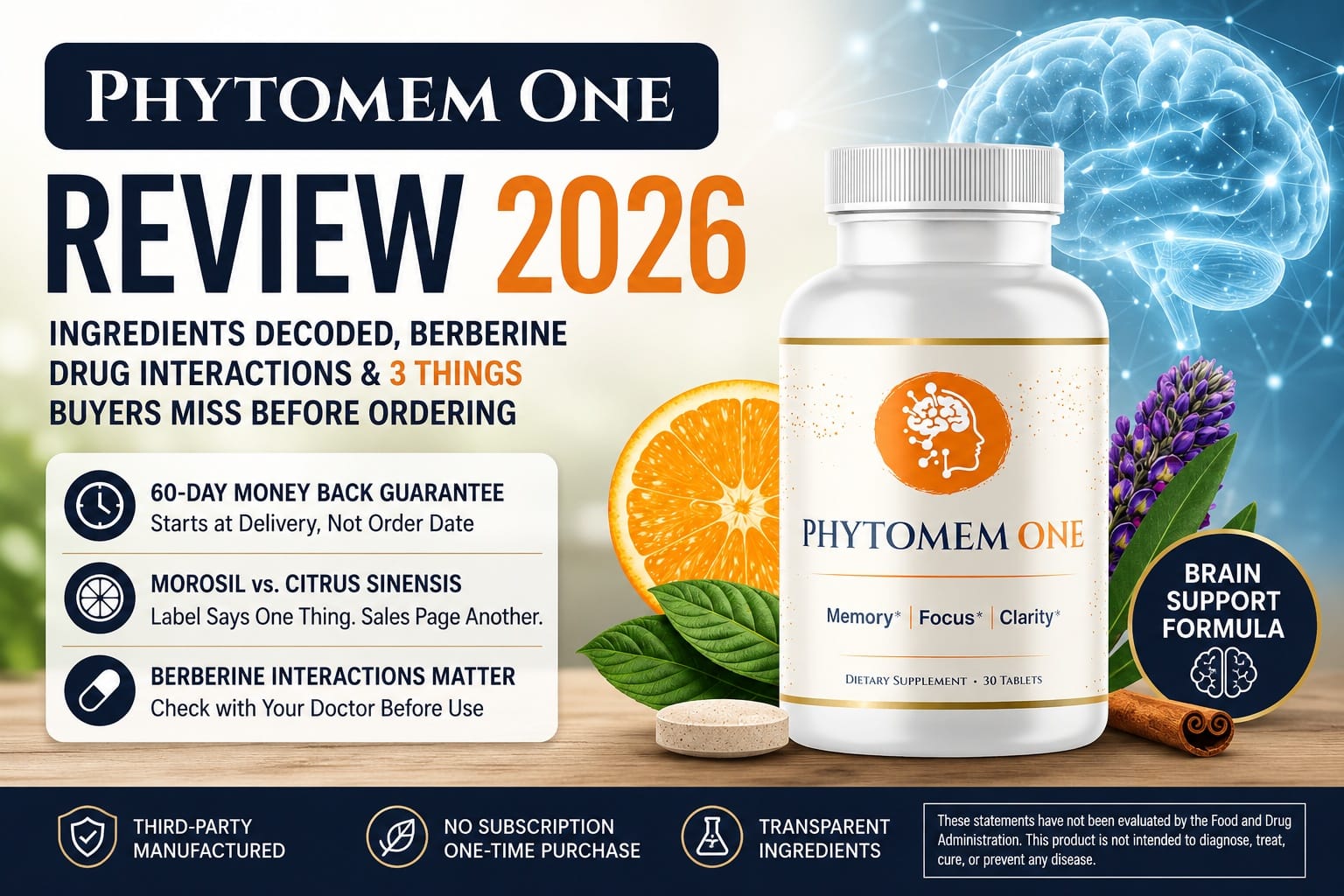
Miss #1 - The 60-day clock starts at delivery, not at order. The brand's lander says "60-Day Money Back Guarantee" prominently. What it doesn't say on the main page: that window begins when your package is delivered, not when you place your order. For international buyers, delivery itself can take 12-20 business days - which quietly compresses your actual evaluation window. And when you do return, you pay the return shipping yourself, and the refund comes back minus your original shipping fee. None of that is hidden - it's in the refund policy - but it's genuinely not what most buyers picture when they read "money back guarantee."
Miss #2 - The label says "Citrus sinensis." The sales page says "Morosil." The brand markets its "hero ingredient" as Morosil - a branded Moro blood orange extract with specific clinical research behind it. The Supplement Facts label lists "Citrus sinensis" - the species name, which covers multiple orange varieties. These may refer to the same ingredient. They may not. A buyer who makes a decision based on the Morosil clinical research can't confirm from the label that the specific branded extract is what's actually in each tablet. If that research is driving your interest, one email to [email protected] resolves it before you spend $158 to $294.
Miss #3 - Berberine's drug interactions aren't a footnote. The brand's FAQ says "always check with your doctor if you have concerns." That's not the same as knowing, specifically, that Berberine HCl has documented interactions with warfarin, metformin, simvastatin, ACE inhibitors, and immunosuppressants - and that those interactions involve enzyme-level mechanisms, not just theoretical cautions. Adults interested in metabolic wellness support are also statistically more likely to use prescription medications that may interact with Berberine - including blood sugar medications, blood pressure medications, statins, and blood thinners. The interaction section below is the most important part of this article for a significant portion of the readers it will reach.
Buyer Takeaway: These three gaps don't make Phytomem One a bad product. They make them things worth confirming before you order rather than after. The rest of this review gives you every other piece of information you need to make that call accurately.
View Phytomem One's Full Ingredient Label and Current Pricing
Disclosure: If you buy through this link, a commission may be earned at no extra cost to you.
Phytomem One vs. the Brain Supplement Category: What Makes It Different
Before the full ingredient breakdown, here's where Phytomem One sits relative to the broader brain supplement market - because that context shapes whether this product is even the right category for what you're looking for.
What most brain supplements do: target neurotransmitter pathways (Alpha GPC for acetylcholine, L-theanine for GABA balance), adaptogens (ashwagandha, Rhodiola for stress response), or mitochondrial energy (CoQ10, PQQ). These are the mechanisms behind brands like Alpha Brain, Prevagen, and Focus Factor.
What Phytomem One does differently: targets metabolic pathways - AMPK activation, insulin sensitivity, glucose transport - as its primary cognitive framework. The brand's argument is that if your brain can't efficiently use glucose, standard nootropic support doesn't address the root cause. That's a differentiated and coherent framework, whether or not you ultimately find it persuasive.
The format difference: chewable tablet, not a capsule or powder. For buyers with capsule-swallowing difficulties or who prefer a chewable format, this is a genuine practical differentiator. For buyers who don't have that preference, it's neutral.
The transparency trade-off: Phytomem One uses a 458mg proprietary blend - you see the ingredients, not the individual doses. Many competitors in the premium nootropic space (like Alpha Brain) also use proprietary blends. Some disclose full dosages. If per-ingredient dose verification matters to you, this is the category trade-off to evaluate before choosing any supplement in this space.
Buyer Takeaway: If you're shopping for a traditional nootropic focused on focus and concentration, Phytomem One's metabolic-cognitive framework is a meaningfully different angle. If your concern is specifically metabolic - blood sugar, insulin sensitivity, the energy-substrate theory of cognitive decline - this formula's ingredient selection is more directly relevant than most alternatives. The chewable tablet format either matters to you or it doesn't. The proprietary blend is a category-wide trade-off you'll encounter across most supplement options at this price point.
Phytomem One 2026 Fast Facts: The 30-Second Snapshot Every Buyer Needs
Product: Phytomem One - chewable brain-support dietary supplement tablet
Operator: Phyto Thrive Labs, 11870 62nd St. N, Largo, FL 33773
Retailer: ClickBank (charge on your statement appears as "CLICKBANK")
Form: Chewable tablet - 1 tablet per day, 30 tablets per container (one-month supply)
Total blend: 458mg proprietary blend - individual ingredient dosages not disclosed on the label
10 Active Ingredients: Xylitol, Ceylon Cinnamon bark, Corosolic Acid (Banaba leaf), Saffron bulb extract, Fucoxanthin (Laminaria japonica), Fucoidan (Laminaria japonica), Citrus sinensis, Kudzu flower extract, Oleuropein (Olive leaf), Berberine HCl
Brand positioning: "Dual-Defense System" built around the brand's "Plastic Stranglehold" and "Type 3 Diabetes" marketing frameworks - see the dedicated explainer section for what those phrases mean and don't mean
Pricing as of May 2026: $158 total / 2 bottles ($79/ea + $9.95 shipping) | $177 total / 3 bottles ($59/ea + free US shipping) | $294 total / 6 bottles ($49/ea + free US shipping)
International shipping: $19.95 flat to Canada, UK/Ireland, Australia, New Zealand
Delivery times: 5-8 business days domestic (mainland US); 12-20 business days international
Return policy: 60 days from delivery date; all items must be physically returned; return shipping at buyer's expense; refund minus original shipping fees
No subscription: One-time purchase only - confirmed on lander FAQ
Contact: [email protected]
Key safety flag: Berberine HCl has documented interactions with blood thinners, diabetes medications, statins, and antihypertensives - consulting a healthcare professional before starting is strongly advisable if you take any prescription medication
Freshness note: This review reflects publicly available information as of May 2026
Quick Answer: Is Phytomem One Worth Buying in 2026?
Phytomem One is a brain-support supplement built around a metabolic-cognitive wellness framework - specifically, the brand's theory that microplastic accumulation and insulin resistance in brain tissue are underaddressed drivers of cognitive decline. That framing happens to intersect with some genuinely current science: a peer-reviewed study in Nature Health published in April 2026 found microplastics in nearly every one of 191 human brain samples tested (Li et al., DOI: 10.1038/s44360-026-00091-4). ARPA-H - the Advanced Research Projects Agency for Health within HHS - launched the STOMP program (Systematic Targeting Of MicroPlastics), a $144 million initiative confirmed via the official arpa-h.gov announcement on April 2, 2026, in the same month. This is now a developing area of serious scientific concern, not a fringe theory.
That context doesn't validate every claim the brand makes. No dietary supplement has an FDA-evaluated claim for reducing microplastic levels in brain tissue - and Phytomem One is not exempt from that reality. What it does mean is that the brand's marketing framework is built around a research area that's moving fast and attracting mainstream attention. Whether the formula's ingredients support the pathways the brand claims, at the doses packed into a 458mg proprietary blend, is the honest question this review answers ingredient by ingredient.
Buyer Takeaway: The brand's marketing framework is built around a research area that's now genuinely in the mainstream news cycle - which makes it more important, not less, to separate what's scientifically active from what's brand narrative. This article does that, straight down the ingredient list.
Why Microplastics and Brain Health Are in the News Right Now - and Why It Matters for This Review
Before getting into the formula, it's worth understanding the scientific backdrop Phytomem One is marketing into - because it's changed significantly in 2025 and 2026.
In February 2025, a study published in Nature Medicine by University of New Mexico toxicologist Matthew Campen, PhD, reported that plastic concentrations in human brain tissue appeared higher than in the liver or kidney, and higher than previous reports for placentas and testes. The research found that accumulation rates in brain tissue appeared to mirror the increasing volume of plastic waste in the environment. In April 2026, a separate study published in Nature Health (Li, R., Lin, F., Zhao, X. et al., DOI: 10.1038/s44360-026-00091-4) detected microplastics and nanoplastics in nearly all 191 human brain samples analyzed, including samples drawn from healthy brain tissue post-mortem - a finding researchers described as evidence that microplastics reach the living human brain. In response to this and related research, ARPA-H (the Advanced Research Projects Agency for Health, an agency within the US Department of Health and Human Services) announced the STOMP program in April 2026 - a $144 million commitment confirmed independently on both the official arpa-h.gov press release and the ARPA-H STOMP program FAQ page (arpa-h.gov/explore-funding/programs/stomp/faqs), which states verbatim: "ARPA-H has committed $144 million to the STOMP program."
What the science doesn't yet establish is whether any dietary supplement meaningfully supports the clearance or mitigation of microplastics from brain tissue. The UTS research (ScienceDaily, March 2026) outlined five theoretical biological mechanisms through which microplastics may affect brain health - but the field is still building the tools to measure the problem, let alone test interventions against it.
Phytomem One's brand positions its formula around exactly this research context. The honest framing for what that means in a supplement review: the underlying concern is real and scientifically documented; the brand's specific product claims extend beyond what the current evidence base establishes for any dietary supplement. Both things are true simultaneously.
Buyer Takeaway: The microplastics-in-brain research is real, recent, and significant. No supplement has an established claim for addressing it. Phytomem One's marketing leans into the concern; this review separates that from what the ingredient research actually supports.
What "Plastic Stranglehold" and "Type 3 Diabetes" Actually Mean - and Don't Mean
These are the two phrases driving Phytomem One's marketing, and both deserve an honest explanation before you encounter them throughout the product's sales material.
"Plastic Stranglehold" is a brand-coined marketing phrase used by Phyto Thrive Labs to describe its theory about microplastic accumulation and brain wellness. It's not a recognized medical condition, not an FDA-acknowledged diagnosis, and not a clinical term found in peer-reviewed literature. The brand built its marketing narrative around the genuine emerging science described above and coined its own metaphor around it. "Plastic Stranglehold" should be read as the brand's proprietary framing for a real area of scientific inquiry - not as a verified medical mechanism or a condition this product has been proven to address.
"Type 3 Diabetes" is an informal term some researchers have used in Alzheimer's research contexts to describe a theoretical relationship between insulin resistance in brain tissue and cognitive decline. It is not in the FDA's recognized disease classifications, not in the DSM-5, and not in the ICD-10. The brand uses this phrase as part of its metabolic-cognitive wellness marketing framework. Phytomem One is not presented as a treatment, prevention, or cure for diabetes, Alzheimer's disease, dementia, or any other disease. If you manage actual diabetes or blood sugar conditions, the Berberine interaction section below applies directly to your situation - consulting a licensed healthcare professional before starting this supplement is strongly advisable.
"Dual-Defense System" is the brand's internal label for how it organizes the formula into two conceptual ingredient groups: one aligned with its "Plastic Stranglehold" theory, one with its metabolic-cognitive framework. This is the brand's organizational marketing language, not a clinically validated or FDA-recognized categorization.
Buyer Takeaway: The brand's marketing language references real areas of emerging scientific interest - both the environmental research and the insulin-brain connection are legitimate fields of inquiry. The promotional framework the brand built around them is its own creation. This article uses those phrases only to describe what the brand is marketing - not to suggest they represent verified medical concepts.
The Full Ingredient Breakdown: What the Brand Claims, What Research Explores, What You Can't Verify
Every ingredient section below follows the same structure: what the brand says, what the research actually explores about that compound, and what can't be verified from the label alone. "The brand says" and "research shows" are not interchangeable, and this article doesn't treat them as if they are. Every percentage figure and specific research citation in the brand's marketing is attributed to the brand as brand-cited data - this publication hasn't independently verified those specific figures.
Berberine HCl - The Formula's Most Research-Backed Ingredient (and Its Biggest Interaction Risk)
The brand positions Berberine HCl as the formula's metabolic engine, describing it as activating "AMPK, your 'metabolic master switch,' restoring your brain cells' ability to absorb glucose again." That's the brand's framing - but here's what makes Berberine worth paying attention to independently of the marketing language.
Berberine is one of the most studied compounds in metabolic health research. A meta-analysis of 21 clinical trials found that Berberine demonstrated measurable activity in metabolic-health contexts - specifically Type 2 diabetes, hyperlipidemia, and hypertension - with outcomes that varied across studies and populations. Those findings relate to metabolic conditions specifically, not to cognitive outcomes. The AMPK activation mechanism the brand describes does appear in published research. Animal studies published in PMC have shown that Berberine can improve spatial learning and memory in cognitively impaired mice, with effects attributed to multiple pathways including PI3K-AKT and MAPK signaling. A systematic review in Frontiers in Pharmacology found that Berberine improved cognitive dysfunction and reduced amyloid-related markers in Alzheimer's animal models - while also noting that clinical human evidence is still limited and more rigorous trials are needed. Important context: per FTC Health Products Compliance Guidance (2022), animal studies have "limited value in predicting the effect of a product in humans." None of the animal-model findings above should be read as established human cognitive outcomes.
The Alzheimer's Drug Discovery Foundation's Cognitive Vitality report is worth quoting directly on Berberine: "No studies have specifically tested whether berberine can affect human cognitive function or prevent dementia." That's the honest state of the human clinical evidence - robust preclinical findings, early human data in metabolic contexts, no established human cognitive benefit confirmed in clinical trials yet.
What you can't verify: the per-ingredient Berberine dose in this 458mg blend. What you can verify: Berberine's drug interaction profile is serious and well-documented - see the dedicated interaction section.
Buyer Takeaway: Berberine is the most research-backed ingredient in this formula and also the one with the most significant safety consideration for anyone on prescription medications. Its preclinical cognitive profile is genuinely interesting; the human clinical evidence for cognitive outcomes specifically is still developing.
Saffron Extract (Crocus sativus L.) - Real Cognitive Research, Honest Limitations
The brand describes its saffron as a high-grade Persian strain "shown to reduce neuroinflammation and protect neurons from microplastic damage," citing research from Tehran University of Medical Sciences. This article can't confirm whether the extract in this formula matches the strain and dose in the cited research - that's the proprietary blend limitation in practice.
What the research does support independently: Saffron (Crocus sativus) has been studied for cognitive outcomes, with multiple smaller trials suggesting potential benefits for mild cognitive impairment. Active compounds, including safranal and crocin, have shown antioxidant and neuroprotective properties in laboratory contexts. The NCCIH notes the evidence remains preliminary and needs larger, rigorous trials to establish clinical conclusions. The brand's framing of saffron as "protects neurons from microplastic damage" goes beyond what published research on saffron currently establishes for consumers.
Buyer Takeaway: Saffron has a genuinely emerging cognitive research profile. The brand's protective-framing for this ingredient extends beyond the published evidence. The dose in this blend is unverifiable from the label.
Fucoxanthin (from Laminaria japonica) - Preclinical Promise, Limited Human Trials
The brand cites Neural Regeneration Research - a real peer-reviewed journal - to support Fucoxanthin's inclusion, describing it as supporting "the growth of new neural connections." Whether the cited study established that specific claim at the dose in this blend can't be confirmed from the label alone.
Fucoxanthin is a marine carotenoid from brown algae with preclinical research interest for neuroprotective properties. Animal models have shown antioxidant and anti-inflammatory effects in brain tissue. Human clinical trials establishing direct cognitive outcomes in consumer populations are limited. The brand's framing - specifically, that Fucoxanthin "repairs damage already done" - is its own characterization of its role in the formula, not a claim supported by established human clinical evidence for this ingredient.
Buyer Takeaway: Fucoxanthin has real preclinical interest. Human clinical evidence for cognitive outcomes is thin. The neural repair framing is the brand's extrapolation from that research, not an established consumer outcome.
Fucoidan (from Laminaria japonica) - Promising Antioxidant Compound, Unverified Percentage
The brand states Fucoidan is "shown to clear toxic protein buildups and reduce oxidative stress in brain tissue by up to 40%." Two things to parse here: the "toxic protein buildup" language reflects how the brand describes protein-aggregation research in the context of its marketing framework, and the "up to 40%" is a brand-cited statistic this publication hasn't independently sourced.
If that specific percentage is influencing your decision, contact the brand directly at [email protected] and ask for the source study citation. Fucoidan is a polysaccharide from brown algae with preclinical antioxidant and neuroprotective research. Human brain tissue outcomes at clinically relevant doses aren't firmly established in the published literature reviewed here.
Buyer Takeaway: The 40% figure is brand-cited and unverified here. Ask the brand for the source study if that claim is driving your interest. Fucoidan's antioxidant research profile is real; the human cognitive evidence is limited.
Ceylon Cinnamon Bark (Cinnamomum verum) - Blood Sugar Research Is Legitimate, 20% Claim Is Brand-Cited
The brand cites "research from the Human Nutrition Research Center" finding Ceylon Cinnamon improves insulin receptor sensitivity by up to 20%, describing it as working "synergistically with Berberine." The 20% figure is brand-attributed and can't be independently confirmed from the lander citations here - ask the brand for the source study if that number is material to your decision.
What's independently verifiable: Ceylon Cinnamon (Cinnamomum verum) is meaningfully different from the Cassia cinnamon sold in most grocery stores, and has appeared in blood-sugar-regulation research with some evidence for modest insulin-sensitizing effects. Evidence quality and consistency varies across studies. The "synergistic" framing is the brand's own characterization of how it designed the formula - not an independently validated mechanism claim.
Buyer Takeaway: Ceylon Cinnamon has a solid research foundation on blood sugar. The 20% sensitivity claim is brand-cited. The synergy framing is brand-stated positioning - treat it as the brand's design rationale, not a proven outcome.
Corosolic Acid (from Banaba Leaf) - Legitimate Glucose Research, Brain-Fuel Framing Is Brand-Stated
The brand describes Corosolic Acid as activating "glucose transporters - the doorways that allow fuel to enter your brain cells, widening the path that Berberine unlocks." That mechanism framing is how the brand characterizes this ingredient's role in the formula's metabolic framework.
Corosolic acid from Banaba leaf (Lagerstroemia speciosa) has legitimate published research on glucose transport and insulin-sensitizing properties in metabolic contexts. Whether it functions specifically as a "brain fuel" activator at the undisclosed dosage in this blend isn't verifiable from the label. The underlying metabolic-pathway research is real; the brain-specific framing is the brand's interpretation of it.
Buyer Takeaway: Corosolic Acid has real glucose-metabolism research support. The "brain fuel gateway" description is the brand's marketing construct layered over that research - useful for understanding why the brand included it, not as a verified outcome claim.
Kudzu Flower Extract (Pueraria montana) - Isoflavone Research Is Real, Brain-Specific Claim Is Brand-Stated
The brand cites "research from Sichuan University" finding that Kudzu's isoflavones improve glucose uptake in brain tissue specifically. Sichuan University is a real institution; this article hasn't independently identified or evaluated the specific study, its human vs. animal model status, or whether the dosing conditions apply to this blend.
Kudzu (Pueraria montana) contains isoflavones that have appeared in metabolic and cardiovascular research. The brain-specific glucose uptake framing is the brand's characterization of how this ingredient fits its metabolic-cognitive framework - it's worth understanding as the brand's design rationale rather than an independently verified brain health claim.
Buyer Takeaway: The Sichuan University citation is brand-provided and unverified here. Kudzu isoflavone research in metabolic contexts is a real field. The brain-specific framing is the brand's positioning - ask the brand for the source study if that's driving your interest.
Oleuropein (from Olive Leaf Extract) - Solid Antioxidant Research, Unusual Eye-Damage Claim
The brand positions Oleuropein as supporting "stable blood sugar, reducing LPS activity and long-term eye damage." That's the brand's framing for this ingredient's role. Oleuropein is a polyphenol from olive leaves with well-documented antioxidant and anti-inflammatory properties across published research - one of the more widely studied plant polyphenols in the metabolic and cardiovascular literature.
The "eye damage" mention is unusual in a brain supplement context. The brand's lander doesn't elaborate on the research basis for that specific claim, and this publication hasn't independently evaluated it. If the eye-health framing is meaningful to your decision, it's a good question for the brand's support team.
Buyer Takeaway: Oleuropein has a solid research foundation as an antioxidant - it's not a filler ingredient. The eye-health framing in a brain supplement is worth questioning directly with the brand if that claim influences your decision.
Citrus sinensis - The "Morosil" Discrepancy You Should Know About
This warrants specific attention: the brand's lander calls this the formula's "hero ingredient" - "Morosil (Sicilian Red Orange Extract)" - describing it as "produced exclusively from Moro oranges grown in volcanic soil at the base of Mount Etna" and "clinically shown to reduce inflammatory markers while improving metabolic function." The Supplement Facts label, however, lists "Citrus sinensis" - the species name that encompasses multiple orange varieties, not just Moro blood oranges.
Morosil is a branded proprietary extract made specifically from Moro blood oranges (a Citrus sinensis variety). The brand may be using both names to describe the same ingredient. But a buyer who makes a purchase decision based on the Morosil clinical research can't confirm that the specific branded extract - and its specific clinical profile - is what's in the formula based on the label language alone. This is worth resolving directly: contact [email protected] and ask them to confirm whether the Citrus sinensis in the formula is the Morosil-branded Moro blood orange extract. If it is, that's a meaningful piece of transparency the label could communicate more clearly.
Buyer Takeaway: If the Morosil "clinically shown" claim is driving your interest in this formula, verify with the brand that the Citrus sinensis on the label is in fact the Morosil extract before purchasing. This discrepancy isn't necessarily a red flag - it may be a labeling convention - but it's worth confirming directly.
Xylitol - Sweetener With a Smart Formula Fit
The brand describes Xylitol as providing "clean fuel without spiking blood sugar." Xylitol is a sugar alcohol used widely as a non-glycemic sweetener in chewable tablets and oral care products. In this formula, its primary practical role is as a sweetening agent that fits the formula's metabolic-health positioning - it provides palatability without glucose spikes, which is a sensible formulation choice for a supplement targeting metabolic pathways. The "brain fuel" framing in the brand's marketing is more aspirational than the research on xylitol as a cognitive compound would strictly support.
Buyer Takeaway: Xylitol's main value here is as a smart, non-glycemic sweetener in a metabolically focused chewable tablet. The "clean brain fuel" framing is the brand's marketing language for a practical formulation decision.
The Proprietary Blend Reality Check: What 458mg for 10 Ingredients Actually Tells You
This is the most important verification gap in the Phytomem One formula, and it deserves a direct explanation.
All 10 active ingredients are packed into a single 458mg proprietary blend. The label lists them but not how much of each one is in each tablet. That means if you want to know how much Berberine you're getting per dose - or whether the Saffron quantity matches the Tehran University study the brand references - you can't find out from the label.
Here's why that matters practically: most of the research the brand cites involves specific doses of individual compounds. Berberine studies in metabolic research typically use doses of 500mg or more per day of Berberine alone. The entire Phytomem One blend is 458mg across 10 ingredients. If Berberine gets the largest share - say, 200mg - the remaining 9 ingredients split the other 258mg. If the blend distributes more evenly, Berberine might be under 50mg. Neither scenario can be confirmed or ruled out from the label.
This isn't a disqualifying factor in isolation - proprietary blends are a legal and common industry practice, often used to protect formulation intellectual property. But it's a real limitation that affects how you should weigh the brand's research citations. The only way to get per-ingredient dosage information is to ask: [email protected].
Buyer Takeaway: You can see what's in Phytomem One. You can't see how much of each ingredient you're getting. That's the honest trade-off of a proprietary blend. If dosage alignment with cited research matters to your purchase decision, contact the brand directly before ordering.
Berberine Drug Interactions: The Section You Need to Read Before You Buy
Quick Answer: Does Phytomem One interact with prescription medications?
Yes - Berberine HCl, one of the formula's key ingredients, has documented interactions with blood thinners (warfarin, rivaroxaban), diabetes medications (metformin, insulin, sulfonylureas), antihypertensives (ACE inhibitors, beta-blockers, calcium channel blockers, diuretics), statins (particularly simvastatin and lovastatin via CYP3A4 inhibition), and immunosuppressants (cyclosporine, tacrolimus). Berberine inhibits CYP2D6, CYP3A4, CYP2C9, and P-glycoprotein simultaneously, which can raise blood concentrations of many common medications at once. Anyone on any prescription medication is strongly advised to review the full Supplement Facts label with their physician or pharmacist before starting this supplement.
Let's make this concrete, because it matters more for the demographic this product targets than for most supplements. Adults over 50 managing metabolic health are precisely the audience Phytomem One's marketing reaches - and they're also the group most likely to be on one of the medication classes below.
Diabetes medications (metformin, insulin, sulfonylureas): Published research has investigated Berberine in metabolic-health contexts, including studies involving blood-sugar-related biomarkers, though outcomes varied across studies and should not be interpreted as establishing equivalence to prescription medications. What that context does mean practically: Berberine activates AMPK pathways associated with glucose regulation, and combining it with diabetes medications without healthcare supervision can push glucose lower than intended. This is a documented pharmacological consideration, not a theoretical caution.
Blood thinners (warfarin, rivaroxaban, anticoagulants): Berberine has mild anticoagulant properties and inhibits CYP enzymes that process blood thinners, potentially raising drug blood levels and increasing bleeding risk. This combination requires monitoring.
Antihypertensives (ACE inhibitors, beta-blockers, calcium channel blockers, diuretics): Berberine has documented blood-pressure-lowering properties. Combined with antihypertensive medications, the additive effect can cause hypotension - dizziness, falls, and fainting are real risks, especially in older adults who may already be managing orthostatic hypotension.
Statins (simvastatin, lovastatin, atorvastatin): Berberine inhibits CYP3A4, which processes several common statins. This raises statin blood levels and increases myopathy risk. Rosuvastatin and pravastatin carry lower risk because they use different clearance pathways.
Immunosuppressants (cyclosporine, tacrolimus): High-risk combinations due to narrow therapeutic windows and Berberine's dual enzyme-and-transporter inhibition mechanism.
The practical step isn't complicated: show your pharmacist or physician the Supplement Facts label before you order. That conversation costs nothing and prevents the one outcome that matters more than any cognitive benefit - an adverse interaction with a medication you depend on.
Buyer Takeaway: Berberine's interactions with blood sugar drugs, blood thinners, antihypertensives, and statins are documented in peer-reviewed literature and medical databases including Drugs.com. For anyone in those medication categories, consulting a physician or pharmacist before starting is strongly recommended - not an optional precaution.
What the "60-Day Money-Back Guarantee" Actually Means in Practice
Quick Answer: How does Phytomem One's refund policy work?
Phytomem One's 60-day guarantee requires returning all items to the brand's warehouse (Returns66, 11870 62nd St. N, Largo, FL 33773) within 60 days of your delivery date. Return shipping is at your expense. Refunds are issued minus original shipping fees. This is a return-required guarantee - not a "keep the bottles" policy. Contact [email protected] to initiate. The 60-day clock starts from delivery, not from the order date.
Here's what the brand's published policy says, translated into plain language:
You have 60 days from delivery - not order date - to start a return
You must return all items you received, not just the unused portion
You pay to ship the product back to Largo, FL
Your refund comes back minus whatever shipping you originally paid
Items must be in good condition; accessories included in the original shipment must be returned
Email [email protected] first - they provide return instructions
Practically, if you order the 6-bottle Ultimate package and decide it's not for you at day 55, you're shipping six bottles from wherever you are back to Florida at your own cost. That's still real purchase protection - just not a zero-friction guarantee. If you're evaluating financial risk, starting with the 2-bottle Starter option means a smaller return shipping investment if it doesn't work for you.
Buyer Takeaway: A legitimate 60-day return window - but product return is required, at your shipping expense, and original shipping fees aren't refunded. Factor return shipping cost into your risk calculation when comparing the 2-bottle and 6-bottle options.
How to Decode Phytomem One's Sales Language
The brand's official website is a well-constructed sales page built for conversion - which means every phrase is chosen to persuade. Here's what the key marketing claims actually mean when you take the promotional frame off:
"Breaks the Stranglehold"
Brand promotional language. The brand positions its formula as supporting pathways it associates with microplastic accumulation and brain function. No dietary supplement has an established claim for reducing microplastic levels in brain tissue - including this one.
"10-in-1 Neuro-Essential Formula"
"10-in-1" means the formula has 10 ingredients. "Neuro-essential" is the brand's own invented designation - not a regulated category, not an FDA-recognized term, not a scientific classification. It's marketing vocabulary for "we think these are essential for brain health."
"Clinically Shown" (applied to Morosil)
When the brand says Morosil is "clinically shown to reduce inflammatory markers while improving metabolic function," it means a human clinical trial exists on that ingredient. It doesn't mean FDA approval of those results, and it doesn't confirm the dose in this formula matches what the clinical study used. The label lists "Citrus sinensis," not "Morosil" - see the dedicated section on that discrepancy above.
"Trusted by Thousands of Brain-Health-Conscious Customers"
Brand-stated social proof. Testimonials are brand-reported and not independently verified by this publication. Individual results vary and no testimonial should be interpreted as typical or guaranteed. Per the brand's own website footer: "Names and personal identifying information on this site has been changed to protect the privacy of individuals." That's a meaningful disclosure - it means the testimonials you read are from real experiences (per the brand), but the identities can't be independently verified.
The Three Bonus Guides (Claimed Total Value: $214)
The brand attaches three digital guides - "The Memory Shield Diet," "The 5-Minute Brain Reboot," and "The Caregiver's Survival Guide" - with claimed individual retail values of $97, $67, and $50. These are brand-stated reference prices. FTC guidance on reference pricing cautions against treating claimed values that don't reflect actual market prices as a purchase justification. Evaluate the bonus content on its own merits, not as a $214 financial value add.
Buyer Takeaway: Understanding what the brand's marketing language means - versus what it sounds like - is what separates an informed purchase from an emotional one. None of these phrases make the product worse or better than it is. They're just the persuasion layer over the actual product, and knowing the difference is how you make the right call for your situation.
What Brain Supplement Research Actually Tells Us in 2026
Putting Phytomem One in honest context means acknowledging what the broader evidence base says about brain supplements as a category - because that context changes how you should weigh the brand's specific ingredient claims.
Harvard Health (February 2026) summarizes the professional medical community's mainstream view plainly: "There's no solid proof any of them work." The Alzheimer's Drug Discovery Foundation's Cognitive Vitality program rates most supplement ingredients - including Berberine - as lacking clinical evidence for preventing cognitive decline or dementia specifically in humans. The National Center for Complementary and Integrative Health (NCCIH) characterizes most evidence for supplement ingredients for cognitive function as ranging from preliminary to mixed. The Cochrane Collaboration reaches similar conclusions: inconsistent results, significant variability across study designs, and a clear need for larger and better-designed trials across the board.
That doesn't mean brain-support supplements have zero value for everyone. It means the gap between "ingredient has been studied in a relevant biological context" and "this product will improve your memory" is real, and the current evidence doesn't close it reliably for any supplement in this category. Phytomem One's ingredients - particularly Berberine - have genuine research depth in metabolic pathways. Whether those pathways produce the cognitive outcomes implied by the marketing, at the doses in this blend, for any given individual, is a question the science doesn't yet answer definitively.
Buyer Takeaway: The brain supplement category has mixed evidence, and the most rigorous scientific institutions are honest about that. Phytomem One's formula has real research behind several key ingredients. The gap between ingredient research and consumer cognitive outcomes is real and worth understanding before buying.
Who Is Phytomem One Actually Built For?
The brand's marketing targets adults experiencing what it calls brain fog, recall difficulties, and difficulty tracking conversations. More specifically, the formula's metabolic-pathway framing suggests the product is positioned for a specific buyer profile:
This formula is a potential fit for:
Adults over 40 or 50 experiencing cognitive changes they associate with metabolic factors - blood sugar, insulin resistance, energy availability in brain cells
Buyers who've been exposed to the brand's advertising and want an honest third-party analysis of what's actually in the formula
Those interested in the metabolic-cognitive connection - Berberine, Cinnamon, Banaba leaf, Kudzu - as a wellness framework
Adults who prefer chewable tablets over capsules or powders - this is a genuine format differentiator in a category dominated by hard capsules
This formula is one where consulting a healthcare professional before starting is strongly advisable for:
Anyone managing blood sugar conditions on prescription medications (metformin, insulin, sulfonylureas)
Anyone on blood thinners, antihypertensives, statins, or immunosuppressants
Pregnant or nursing mothers
Anyone under 18
Adults drawn to a metabolic-brain-health message are also among those statistically more likely to use prescription medications that interact with Berberine - including blood sugar drugs, antihypertensives, and statins. That doesn't make the product wrong for those buyers. It makes a conversation with a healthcare professional before starting especially important.
Buyer Takeaway: The chewable tablet format is a real differentiator. The metabolic-cognitive framing is specific enough that buyers who don't connect with that framework probably won't find value here that they couldn't get from a standard nootropic. The medication interaction check is the single most important pre-purchase step for a significant portion of the intended audience.
Does Phytomem One Work?
No independent performance testing of Phytomem One as a finished product has been identified from any third-party source. The brand reports three customer testimonials - Robert T. (Texas), Melissa M. (Ohio), and Elizabeth R. (Florida) - describing improved clarity, sharper recall, and reduced brain fog. Those testimonials are brand-reported, not independently verified, and can't be attributed individually because the brand's own website disclosure states names have been changed to protect privacy.
What can be said honestly and specifically:
Berberine has the deepest research profile in this formula for the metabolic pathways the brand associates with cognitive function - including preclinical Alzheimer's model data showing amyloid-related improvements
Saffron and Fucoidan both appear in research with cognitive and neuroprotective angles, though human clinical evidence is limited and not conclusive at the consumer level
Whether any of those compounds are present at research-relevant doses in this 458mg blend is impossible to confirm without dosage disclosure
The brain supplement category as a whole has mixed evidence for consumer cognitive outcomes, even with ingredients that show genuine promise in controlled preclinical and early clinical studies
Buyer Takeaway: "Does it work?" doesn't have a definitive answer from any independent source for this specific finished product. The formula has real ingredient research behind it; the dosage verification gap is real; and the 60-day return window - with required product return - gives you a mechanism to evaluate it personally with manageable financial risk.
Is Phytomem One a Legitimate Product?
Here's what this publication can independently confirm from publicly available sources as of May 2026:
Operator disclosed and verifiable: Phyto Thrive Labs, 11870 62nd St. N, Largo, FL 33773
Supplement Facts label exists: A properly formatted label with ingredient list and serving information is publicly viewable - a US legal requirement for dietary supplements
Retailer is established: ClickBank (Click Sales Inc., Boise, ID) is a long-operating digital commerce platform with its own buyer dispute resolution process
Required FDA disclaimer is present: The DSHEA language ("not intended to diagnose, treat, cure or prevent any disease") appears on the official site
Contact information is published: [email protected] with a physical returns address
Refund policy is published with specific terms: Not just "we offer a guarantee" - actual terms are accessible and detailed
No subscription / auto-renewal: One-time purchase confirmed on lander FAQ
What this publication can't independently verify:
GMP certification documentation for the manufacturing facility beyond the brand's USDA NOP handling statement
Third-party testing results for purity, potency, or contaminant screening
Whether "Citrus sinensis" on the label is the Morosil-branded Moro blood orange extract as described on the lander
Country of manufacture - not publicly disclosed on the official site
Buyer Takeaway: Phytomem One has the foundational legitimacy markers of a real commercial product. The unverified items - GMP documentation, third-party testing, extract identity confirmation - are common limitations in the supplement category and are worth asking the brand about directly rather than treating as automatic concerns.
Phytomem One Pricing: What Everything Actually Costs
Here's the complete pricing picture as of May 2026. All pricing subject to change - confirm totals at checkout before purchasing.
Starter - 2 bottles: $158 total ($79 per bottle) + $9.95 US shipping. Brand shows a "before" price of $99/bottle - that's the brand's reference point, not a price this publication has verified as a prevailing market price.
Advanced - 3 bottles: $177 total ($59 per bottle) + free US shipping. Same $99/bottle brand reference price.
Ultimate - 6 bottles: $294 total ($49 per bottle) + free US shipping. Same $99/bottle brand reference price.
Additional cost clarity: The $9.95 shipping charge applies to 2-bottle US orders. Three or more bottles ship free to mainland US. International orders to Canada, UK/Ireland, and Australia/New Zealand add $19.95 regardless of package size. Tax and any applicable checkout fees are calculated at checkout - confirm your full total before completing your purchase.
On the "before" pricing: under EU Omnibus Directive Article 6a and FTC transparency guidance, "before" prices should reflect actual prior market pricing. This publication can't verify whether $99 was a prevailing market price for this product. The brand's displayed savings should be evaluated as its own reference-point comparison, not a third-party-verified discount.
Buyer Takeaway: Per-bottle cost drops from $79 to $49 as you scale up. Given that the 60-day return requires physical product return at your expense, the 2-bottle Starter is the lowest-risk entry point for evaluating the formula before committing to a larger quantity.
Check Current Phytomem One Pricing and Package Availability
Quick Answer: How Does Phytomem One Compare to Other Brain Supplements?
Phytomem One occupies a distinct lane in the brain supplement market. Most nootropics focus on neurotransmitter precursors (Alpha GPC, citicoline), adaptogens (ashwagandha, Rhodiola), or mitochondrial energy support (CoQ10, PQQ). Phytomem One leans hard into metabolic pathways - AMPK activation, insulin sensitivity, glucose transport - as its core cognitive-support framework, with a secondary angle on the broader environmental-exposure research area the brand references in its marketing.
That's genuinely differentiated. Whether it resonates depends entirely on whether a buyer's cognitive concerns connect to metabolic factors versus neurotransmitter or energy-based factors. The chewable tablet format is a practical differentiator - most brain supplements come in hard capsules or powders, and some buyers have real preferences here. The 458mg total blend is modest compared to competitors that disclose individual ingredients at clinical dosage levels, which is a genuine trade-off worth acknowledging in any comparison.
Buyer Takeaway: Phytomem One is meaningfully different from mainstream nootropics in its framework and format. Whether that difference matches your reasons for shopping for cognitive support is the honest filter to apply before buying.
Frequently Asked Questions About Phytomem One
What Publicly Verifiable Information Shows About Phytomem One's Legitimacy
Many buyers arrive here searching variations of "Is Phytomem One a scam?" or "Phytomem One complaints" - this section answers both directly. Note: this is a paid advertorial, not an independent editorial review. The legitimacy markers below are based solely on publicly available information.
Based on publicly verifiable information, Phytomem One is a real commercial product from a disclosed operator with a published refund policy and an established payment processor - not a scam operation. Here's what this publication can confirm independently: Phyto Thrive Labs is a real company with a verifiable US address (11870 62nd St. N, Largo, FL 33773). The product has a properly formatted Supplement Facts label - a legal requirement for dietary supplements sold in the United States. Orders are processed through ClickBank, an established digital commerce platform with its own buyer dispute resolution process. Customer support is reachable at [email protected]. The refund policy is published with specific terms, not vague promises.
On complaints specifically: no verified third-party complaint records for Phytomem One were identified from BBB, Trustpilot, or other consumer review platforms in the research conducted for this article as of May 2026. The product appears relatively new to the market and no significant complaint volume has emerged on syndicated platforms. The absence of complaints may reflect the product's early market stage rather than a flawless customer experience track record - worth monitoring as the product matures in the marketplace.
What the brand does use is aggressive marketing language - "Plastic Stranglehold," "Type 3 Diabetes" - that sounds more medically established than it is. Those phrases are the brand's own marketing constructs. Using promotional language in supplement marketing is standard industry practice, not evidence of fraud. It's a reason to read an honest review before buying. The real pre-purchase diligence items aren't about legitimacy - they're about the medication interaction check for Berberine and the refund policy mechanics, both covered in full in this article.
Buyer Takeaway: Phytomem One has the verifiable markers of a legitimate commercial product. The aggressive marketing language is promotional positioning, not fraud. The genuine buyer-diligence items are the Berberine interaction check and the refund-policy mechanics - not concerns about whether the company is real.
Are there any reported problems with Phytomem One orders?
No verified third-party complaint records specific to Phytomem One were identified on BBB, Trustpilot, or major consumer review platforms as of May 2026. The product is relatively new to the market and no meaningful complaint volume has surfaced on syndicated review platforms at the time of this publication. If a problem does arise with an order, the buyer-protection pathway is: contact [email protected], and if unresolved, ClickBank's dispute resolution process provides an additional layer of purchase protection as the retailer of record.
What is Phytomem One and how does it work?
Phytomem One is a once-daily chewable dietary supplement tablet distributed by Phyto Thrive Labs (Largo, FL) and sold through ClickBank. The brand positions it around two marketing frameworks: the "Plastic Stranglehold" (its term for theorized microplastic impact on brain function) and a "Type 3 Diabetes" framing (its reference to insulin resistance in brain tissue). The 458mg proprietary blend contains 10 ingredients organized by the brand into three internal groups. Individual ingredient dosages aren't disclosed on the label. It's sold exclusively online - not in retail stores or on Amazon.
Is "Type 3 Diabetes" a real medical condition?
"Type 3 Diabetes" is not a recognized diagnosis by the FDA, ICD-10, or DSM-5. Some researchers have used the informal term in Alzheimer's research contexts to describe a theoretical connection between brain insulin resistance and cognitive decline. The brand uses it as part of its metabolic-cognitive wellness marketing framework. Phytomem One is not presented as a treatment, prevention, or cure for diabetes, Alzheimer's, dementia, or any other disease. If you're managing blood sugar conditions on prescription medications, the Berberine drug interaction section applies directly to your situation.
What is the "Plastic Stranglehold" concept?
"Plastic Stranglehold" is a brand-coined marketing phrase Phyto Thrive Labs uses to describe its theory about environmental stressors, microplastics, and brain wellness. It's not a recognized medical term or clinical mechanism found in peer-reviewed literature under that name. The underlying science - microplastics detected in human brain tissue - is real and documented in recent published research. The brand's specific framing of how its formula addresses it is marketing positioning, not an established clinical claim.
Are there drug interactions with Phytomem One?
Yes - Berberine HCl carries documented interactions with blood thinners (warfarin, rivaroxaban), diabetes medications (metformin, insulin, sulfonylureas), antihypertensives (ACE inhibitors, beta-blockers, calcium channel blockers), statins (simvastatin, lovastatin - CYP3A4 interaction), and immunosuppressants (cyclosporine, tacrolimus). Berberine inhibits multiple CYP enzymes and P-glycoprotein, raising blood concentrations of many drugs simultaneously. Review the full Supplement Facts label with your physician or pharmacist before starting Phytomem One if you take any prescription medication.
What are all the ingredients in Phytomem One?
The 458mg proprietary blend contains: Xylitol, Ceylon Cinnamon bark (Cinnamomum verum), Corosolic Acid from Banaba leaf (Lagerstroemia speciosa), Saffron bulb extract (Crocus sativus L.), Fucoxanthin from Laminaria japonica, Fucoidan from Laminaria japonica, Citrus sinensis, Kudzu flower extract (Pueraria montana), Oleuropein from Olive leaf (Olea europaea), and Berberine HCl. Other label ingredients: Natural Flavors, Stearic Acid, Magnesium Stearate, Silicon Dioxide, and Stevia (Reb A). Individual ingredient dosages within the blend aren't disclosed.
How much does Phytomem One cost in 2026?
As of May 2026: $158 for 2 bottles ($79/ea + $9.95 US shipping), $177 for 3 bottles ($59/ea with free US shipping), and $294 for 6 bottles ($49/ea with free US shipping). International shipping to Canada, UK/Ireland, and Australia/New Zealand adds $19.95 flat regardless of package. All purchases are one-time - no subscription or auto-renewal. Confirm current pricing at checkout as it may change.
What is Phytomem One's return policy?
60-day return window from delivery date. You must return all received items to Returns66, 11870 62nd St. N, Largo, FL 33773, USA, at your own shipping expense. Refund is issued minus original shipping fees. Items must be in good physical condition. Email [email protected] to start the process. Physical return is required - no keep-the-product option exists under the published policy.
Is Phytomem One a subscription?
No. The brand's FAQ confirms: "This is a one-time purchase - no subscriptions, no hidden fees." No recurring charges or auto-renewals. Each ClickBank transaction is standalone.
Is Phytomem One a tablet or a capsule?
It's a chewable tablet. The Supplement Facts label specifies "1 Tablet" as the serving size, 30 tablets per container. The brand's lander FAQ uses "capsule" in one instance - the Supplement Facts label is the authoritative source, and it designates this as a tablet.
Who distributes Phytomem One?
Phyto Thrive Labs, 11870 62nd St. N, Largo, FL 33773. Retail processing through ClickBank (Click Sales Inc., 1444 S. Entertainment Ave., Suite 410, Boise, ID 83709). ClickBank's role as retailer doesn't constitute endorsement of the product or its claims.
Does Phytomem One require a prescription?
No - it's a dietary supplement sold without a prescription. That said, Berberine's interaction profile with common prescription medications makes consulting a physician or pharmacist before starting strongly advisable for anyone on blood sugar medications, blood thinners, antihypertensives, statins, or immunosuppressants.
Is Phytomem One non-GMO and stimulant-free?
According to the brand's official website: yes - described as "non-GMO, stimulant-free, and 100% natural." These are brand-stated quality claims. Third-party certification documentation for these designations isn't publicly visible on the lander. Buyers who require certified documentation should contact the brand directly.
Who is "Dr. Nakamura" referenced in the bonus materials?
The brand's bonus guide "The Memory Shield Diet" is described as developed by "Dr. Nakamura." This publication can't independently verify the identity, credentials, or institutional affiliation of the referenced individual. The reference appears in bonus digital content - not in the formula's clinical substantiation. Evaluate bonus content on its own merits rather than on the basis of an unverifiable credential.
Where is Phytomem One manufactured?
Country of manufacture isn't publicly disclosed on the Supplement Facts label or lander as reviewed here. The operator address is in Largo, Florida. Buyers for whom manufacturing origin is material should contact [email protected] directly for that information.
Can I take Phytomem One alongside other supplements?
The label and brand FAQ recommend physician consultation for anyone with a medical condition. Beyond Berberine's prescription-drug interactions, the formula contains multiple metabolically active compounds (Berberine, Ceylon Cinnamon, Corosolic Acid, Kudzu) that all have blood-sugar-related activity. Stacking them with other supplements in the same metabolic category could produce additive effects. A pharmacist review of your complete supplement and medication list is the most conservative approach before adding any new product.
What does the ClickBank charge look like on a bank statement?
Per the brand's FAQ: charges appear under "CLICKBANK." The product name won't appear on your statement. The retailer of record is ClickBank (Click Sales Inc.).
Third-party testing results for purity, potency, or contaminant screening aren't publicly visible on the official website as reviewed for this article. Buyers for whom third-party testing certification is a purchase requirement should contact [email protected] before ordering to request any available documentation.
Before You Complete Your Phytomem One Order: Eight Confirmations That Take Less Than Five Minutes
Medication check (critical - do this first): If you take any blood thinner, diabetes medication, antihypertensive, statin, or immunosuppressant, showing the Supplement Facts label to your pharmacist or physician before ordering is strongly recommended. Berberine HCl's interaction with those drug classes is documented at the enzyme level - not a theoretical caution. This takes one phone call and is one of the most valuable steps you can take before ordering.
Refund window reality: The 60-day return clock starts at delivery - not at order. For international buyers, factor in 12-20 business days of delivery time. When you return, you cover the shipping, and original shipping fees aren't refunded. Confirm you're comfortable with those mechanics before committing to the 6-bottle option.
Morosil/label verification: If the brand's Morosil clinical research is driving your interest, email [email protected] before ordering and ask: "Is the Citrus sinensis on the Supplement Facts label the Morosil-branded Moro blood orange extract?" One email. Takes two minutes. Worth doing before spending $158 to $294.
Pricing confirmation: Confirm current pricing at https://getphytomemone.com directly - prices shown in this article reflect May 2026 and are subject to change. Confirm your total at checkout before completing the purchase, including any shipping or tax components.
Proprietary blend acknowledgment: You can see the 10 ingredients. You can't see how much of each one is in each tablet. If per-ingredient dosage is important to your decision, contact the brand before ordering rather than after.
Marketing language check: "Type 3 Diabetes" and "Plastic Stranglehold" are the brand's own marketing constructs - not recognized medical diagnoses. The underlying research areas they reference are real; the specific framing is the brand's. Make sure you're buying based on the ingredients and the research, not the marketing vocabulary.
Third-party documentation: If GMP certification, manufacturing country, or third-party purity testing matters to your purchase decision, ask [email protected] for that documentation before ordering.
Subscription confirmation: Confirm the one-time-purchase, no-subscription structure directly at the official website. The brand states this explicitly in its FAQ - worth verifying yourself before your first order.
The Complete Honest Summary: What Phytomem One Gets Right, What Deserves Scrutiny
What the brand gets right: the formula combines ingredients with real research backgrounds in both metabolic and cognitive contexts. The chewable tablet format genuinely stands out in a capsule-dominated category. The return policy, while requiring physical product return, provides 60 days from delivery - enough time to actually evaluate the product. The brand discloses that testimonial names have been changed - a transparency marker that's often absent in this space. No subscription, no hidden recurring charges. ClickBank provides established buyer protections. The microplastics-and-brain-health angle, whatever its marketing embellishments, is built on a research area that's moved from fringe to mainstream news in 2025 and 2026.
What deserves scrutiny: the proprietary blend means per-ingredient dosage can't be verified against any cited research - that's the most consequential gap for informed buyers. The "Type 3 Diabetes" and "Plastic Stranglehold" frameworks are brand-invented marketing constructs layered over real but preliminary research areas. The percentage claims (40% oxidative stress reduction for Fucoidan, 20% insulin sensitivity improvement for Ceylon Cinnamon) are brand-cited statistics without independently identified source studies in this review. The Morosil/Citrus sinensis terminology discrepancy is worth resolving directly with the brand before purchasing if the hero ingredient's clinical research is a primary decision factor. "Dr. Nakamura" in the bonus materials is unverifiable from public sources.
The Berberine drug interaction issue isn't a scrutiny item - it's a safety item. If you're on any medication in the interaction categories above, a conversation with a healthcare professional before starting is strongly recommended.
Final Buyer Takeaway: Phytomem One is a real product from a disclosed operator with real ingredients, real purchase protections through ClickBank, and a formula that includes compounds with legitimate metabolic and cognitive research backgrounds. The marketing narrative is more aggressive than the current evidence base strictly supports - but that's consistent with how the entire brain supplement category competes in 2026. If the metabolic-cognitive framing resonates with your situation, you've cleared the medication interaction checklist, and you're comfortable with the proprietary blend limitation, the 60-day return window gives you real trial protection. Start with the 2-bottle option to minimize return shipping cost exposure if you decide it's not a fit.
Where to Buy Phytomem One and How the Order Process Works
Quick Answer: Where is Phytomem One available?
Phytomem One is sold exclusively through the official website at https://getphytomemone.com via ClickBank. It's not sold in retail stores, on Amazon, or through any authorized third-party marketplace - the brand states this directly on the official site. Orders are processed through ClickBank's secure checkout. Your card statement will show "CLICKBANK," not "Phytomem One." After payment confirmation, the brand ships within 24-48 hours. Mainland US delivery is 5-8 business days; international orders take 12-20 business days.
The only purchase path that comes with ClickBank buyer protections and the brand's 60-day return policy is through the official website. Any listing you encounter on a third-party marketplace isn't authorized - and won't carry the same purchase protections or return coverage.
Buyer Takeaway: Order only through the official website for ClickBank buyer protections and the brand's 60-day return coverage. Third-party sources aren't authorized by the brand.
Check Phytomem One's Current Availability and Pricing on the Official Site
Contact Information
Company: Phytomem One
Email: [email protected]
Returns address: Returns66, 11870 62nd St. N, Largo, FL 33773, USA
Retailer: ClickBank - charges appear as "CLICKBANK" on statements
Disclaimers
Advertorial Disclosure: This article is promotional in nature and contains affiliate links. A commission may be earned from qualifying purchases at no additional cost to the reader. Affiliate relationships do not influence editorial content.
FDA / DSHEA Notice: These statements have not been evaluated by the Food and Drug Administration. This product is not intended to diagnose, treat, cure, or prevent any disease. If you are pregnant, nursing, taking medication, or have a medical condition, consult your physician before using any dietary supplement.
Medical Disclaimer: This content is for informational purposes only and is not medical advice. Consult a licensed healthcare professional before using any dietary supplement, especially if you are pregnant, nursing, taking prescription medication, or managing a medical condition.
Testimonial Variability Notice: Testimonials referenced in this article are brand-reported and not independently verified by this publication. Individual results vary and no testimonial should be interpreted as typical or guaranteed. Per the brand's own disclosure: "Names and personal identifying information on this site has been changed to protect the privacy of individuals."
AI Content Disclosure: This article was produced with editorial and AI-assisted drafting support. All factual claims are sourced from publicly available materials. No AI-generated statistics, clinical citations, or product specifications were introduced.
Trademark Acknowledgment: "Phytomem One" does not carry a registered trademark symbol on the official brand website as of May 2026 and is treated as an unregistered mark throughout this article. "CLICKBANK®" is a registered trademark of Click Sales Inc., a Delaware corporation at 1444 S. Entertainment Ave., Suite 410, Boise, ID 83709, used by permission. ClickBank's role as retailer does not constitute endorsement of this product or its claims.
Geographic and Jurisdiction Notice: This article is published for US audiences and reflects US regulatory frameworks. International buyers - including those in Canada, the United Kingdom, Ireland, Australia, New Zealand, and EU member states - are subject to different consumer protection laws and supplement regulations. EU buyers should note that "before" pricing practices are subject to Article 6a of the EU Omnibus Directive and should verify EU-specific pricing compliance with the brand directly. This article does not constitute legal, regulatory, or medical advice in any jurisdiction.
Material Limitations of This Review: This review is based exclusively on publicly available materials, including the official Phytomem One website at getphytomemone.com, the brand's published returns and shipping policies, and category-level guidance on cognitive health supplements and publicly accessible pharmacological literature. This publication has not received compensated product samples, has not interviewed brand personnel, has not accessed internal product specifications beyond what is publicly published, and has not conducted laboratory or field performance testing of Phytomem One. Claims described as "according to the brand" or "brand-stated" reflect the brand's public statements and have not been independently substantiated by this publication. Buyers are encouraged to verify any claim that materially affects their purchase decision by contacting the brand at [email protected].
Third-Party Consumer Feedback Platforms: This article references third-party consumer feedback platforms in general category terms only. This publication does not endorse, vouch for, audit, or accept responsibility for the accuracy, completeness, or fairness of customer reviews on any third-party platform. Buyers consulting third-party reviews are encouraged to evaluate them critically, look for verified-purchase indicators where available, and weigh reviewer-specific context against their own situation.
Forward-Looking Statements and Article Accuracy: This article reflects information available as of May 2026. Product specifications, pricing, shipping policies, return policies, and contact information may change after publication without notice. Readers should rely on the official Phytomem One website at getphytomemone.com as the authoritative source for current product information prior to any purchase decision.
Reasonable Consumer Standard: This article is written for a general adult consumer audience. Where a statement could be read as a brand-substantiated fact, attribution language identifies it as a brand claim that has not been independently verified. Promotional language used by the brand - including "Dual-Defense System," "Precision Brain Support That Breaks The Stranglehold," "Plastic Stranglehold," "Type 3 Diabetes" (an informal research-community term, not an FDA-recognized diagnosis; Phytomem One is not presented as a treatment or prevention for any disease), and "10-in-1 Neuro-Essential Formula" - originates with the brand's published marketing materials and is identified here for reader-context purposes, not as independent endorsement or performance guarantee.
Made-in-USA / Origin Disclosure: The country of manufacture for Phytomem One is not publicly disclosed on the official Supplement Facts label or brand website as reviewed for this article. The operator address (Phyto Thrive Labs, Largo, FL 33773) is a US address. Buyers for whom manufacturing origin is material should contact [email protected]. This publication makes no claim regarding US or non-US manufacturing status.
SOURCE: Phytomem One