



Thursday, 30 July 2026 07:15 AM
Company Update
SHENZHEN, CN / ACCESS Newswire / July 30, 2026 / Desktop 3D printing has expanded beyond hobbyist use, with growing adoption across education, engineering, product development and small-scale manufacturing. As applications become more specialised, users are increasingly selecting materials based on performance requirements rather than relying on a single general-purpose filament.
Against this backdrop, Shenzhen Esun Industrial Co., Ltd. (eSUN), a manufacturer of FDM filaments, photopolymer resins and SLS powders, shared insights into how its application-specific PLA portfolio - eSUN PLA+, PLA Basic and PLA-Lite- is helping address the evolving needs of desktop 3D printing across functional manufacturing, rapid prototyping and educational applications.
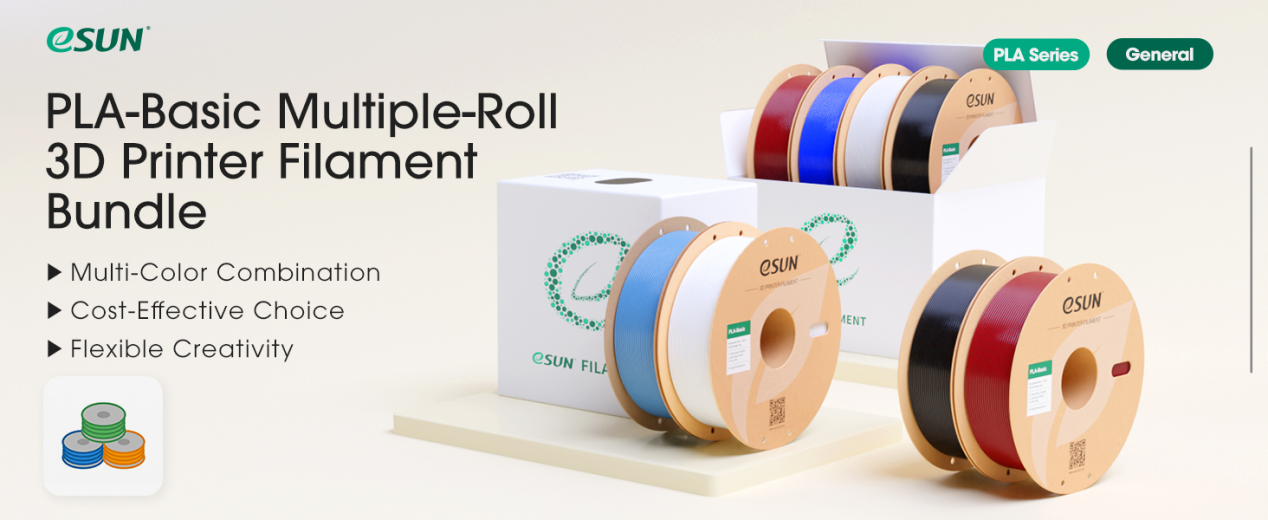
A Filament Line Built Around Use Case, Not Just Material Type
Rather than positioning each filament as a direct substitute for the others, eSUN designed the three products to serve distinct stages of a typical workflow from early prototyping through classroom use to finished functional parts.
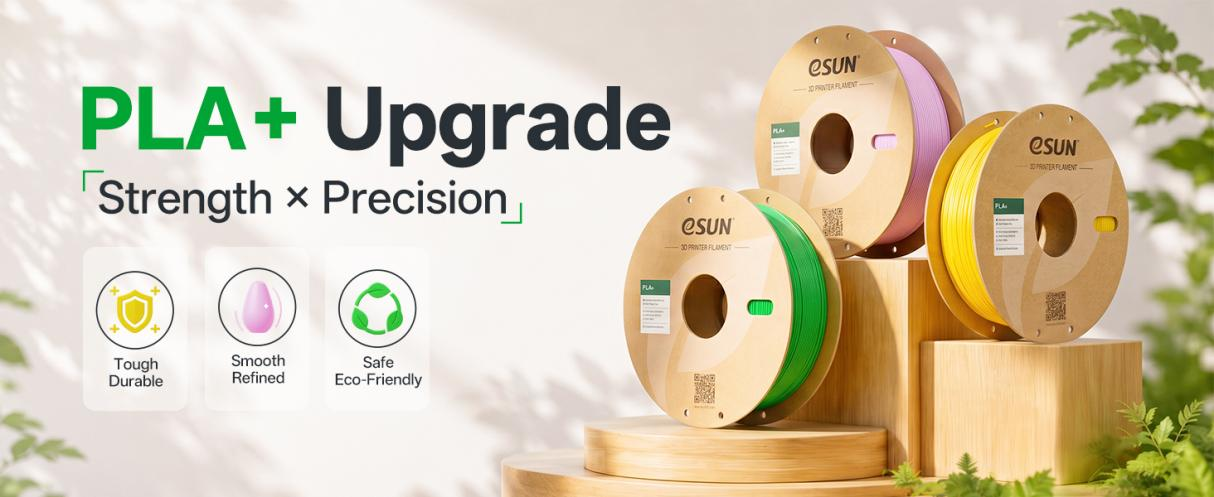
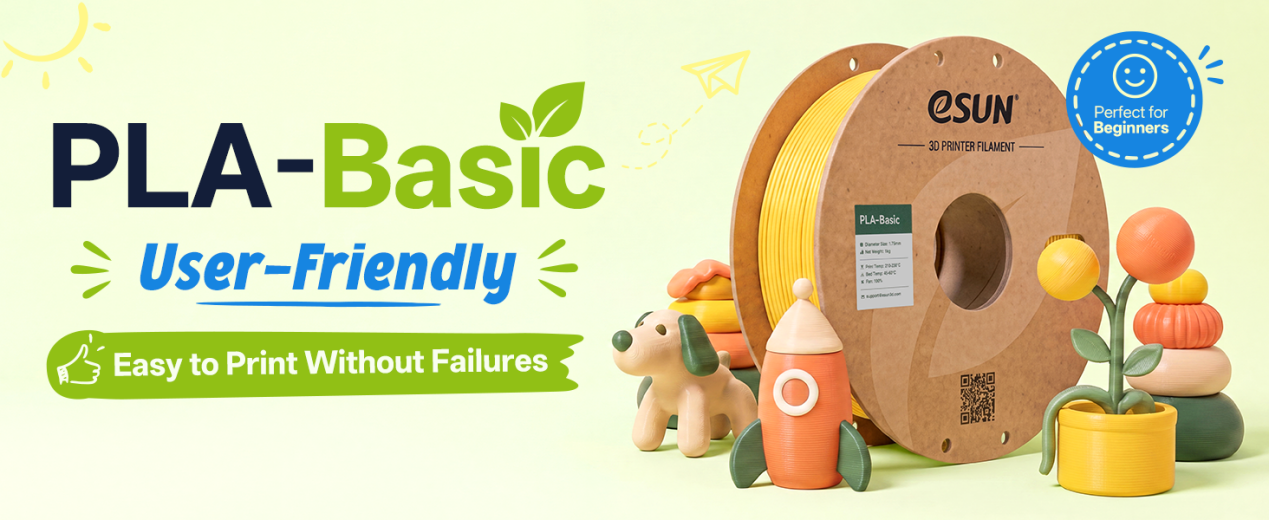
The portfolio includes eSUN PLA+ for functional parts requiring improved toughness and layer adhesion, PLA Basic for visual prototypes and decorative models where surface quality and dimensional accuracy are priorities, and PLA-Lite for educational settings and entry-level users seeking stable, predictable printing performance.
"Users do not all approach 3D printing with the same priorities," an internal sales leader at eSUN said. "Some require an accessible filament for everyday projects, while others need additional performance for functional prints. This expanded range gives customers a clearer way to select the product that fits their application."
Why Formulation Consistency Matters for Production Workflows
Since the three filaments share a common formulation family, eSUN said users typically need only minor profile adjustments when switching between them. That's a meaningful distinction for anyone running a print farm, a classroom, or a small production line, where switching between unrelated filament brands often means rebuilding a print profile from scratch; differing base resins, tolerances, and additives can all shift how a filament behaves at the same nominal settings.
Organisations operating multiple printers often spend additional time recalibrating print profiles when switching between filament brands because formulations, tolerances, and additive packages vary. Using materials from the same product family may reduce the need for extensive profile adjustments and improve workflow consistency.
Material Selection Is Only Part of the Print Quality Equation
According to eSUN, filament selection represents one of several factors influencing print quality. Extrusion temperature, cooling, bed leveling and print speed all influence surface finish, dimensional accuracy and layer adhesion, regardless of which material is loaded into the printer. Warping, stringing and inconsistent surface finish are as likely to stem from a poorly leveled bed or mistimed cooling fan as from the filament itself.
Moisture control is a related and often overlooked factor. PLA is hygroscopic, meaning it absorbs ambient humidity over time, which can degrade print quality even when the filament itself is high grade. eSUN recommends storing filament in sealed containers with desiccant packs between uses, particularly in humid climates or for filament that sits unused for weeks at a time.
Positioning Within a Growing Application-Specific Materials Market
eSUN's PLA portfolio reflects the broader evolution of the desktop 3D printing market, where demand has shifted from general hobbyist use toward engineering, rapid prototyping and formal education. As that shift continues, buyers are placing more weight on predictable, repeatable results across a range of applications, from disposable prototypes to parts intended for actual functional use, rather than defaulting to a single all-purpose filament.
The company expects demand for application-specific materials to continue growing as desktop 3D printing adoption expands across engineering, education and product development. eSUN said it will continue developing its portfolio of FDM filaments, photopolymer resins and SLS powders to support evolving customer requirements.
About eSUN
Shenzhen Esun Industrial Co., Ltd. (eSUN) is a manufacturer of high-performance polymer materials with more than 20 years of experience in research, development and production. The company offers a portfolio of FDM filaments, photopolymer resins and SLS powders for consumer, educational and industrial additive manufacturing applications. eSUN products are distributed in more than 100 countries and regions, supporting customers across prototyping, engineering, product development and digital manufacturing. The company continues to develop material solutions designed to improve print consistency, application performance and manufacturing efficiency for the global 3D printing market.
Media Details
Company Name: Shenzhen Esun Industrial Co., Ltd.
eSUN Website:https://www.esun3d.com/
Contact Person: Sichen Wang
Contact email: [email protected]
SOURCE: Shenzhen Esun Industrial Co., Ltd.