




Tuesday, 13 October 2026 08:00 AM
Company Update
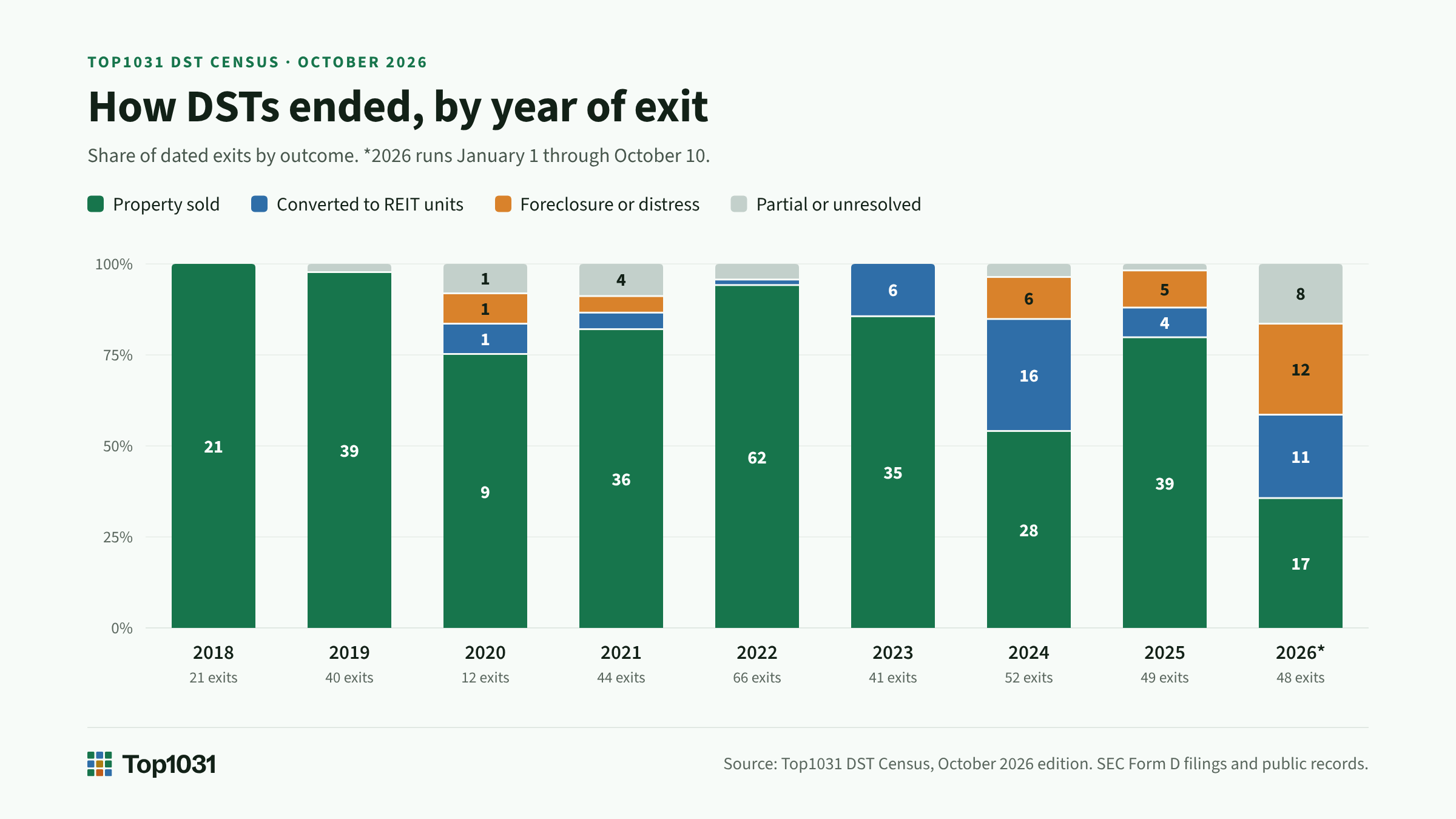
Dated foreclosure or distress outcomes reached 12 in 2026 through October 10, more than in any full year in the census record, while $15.0 billion of reported equity remains in trusts still holding property, $1.7 billion of it past year seven.
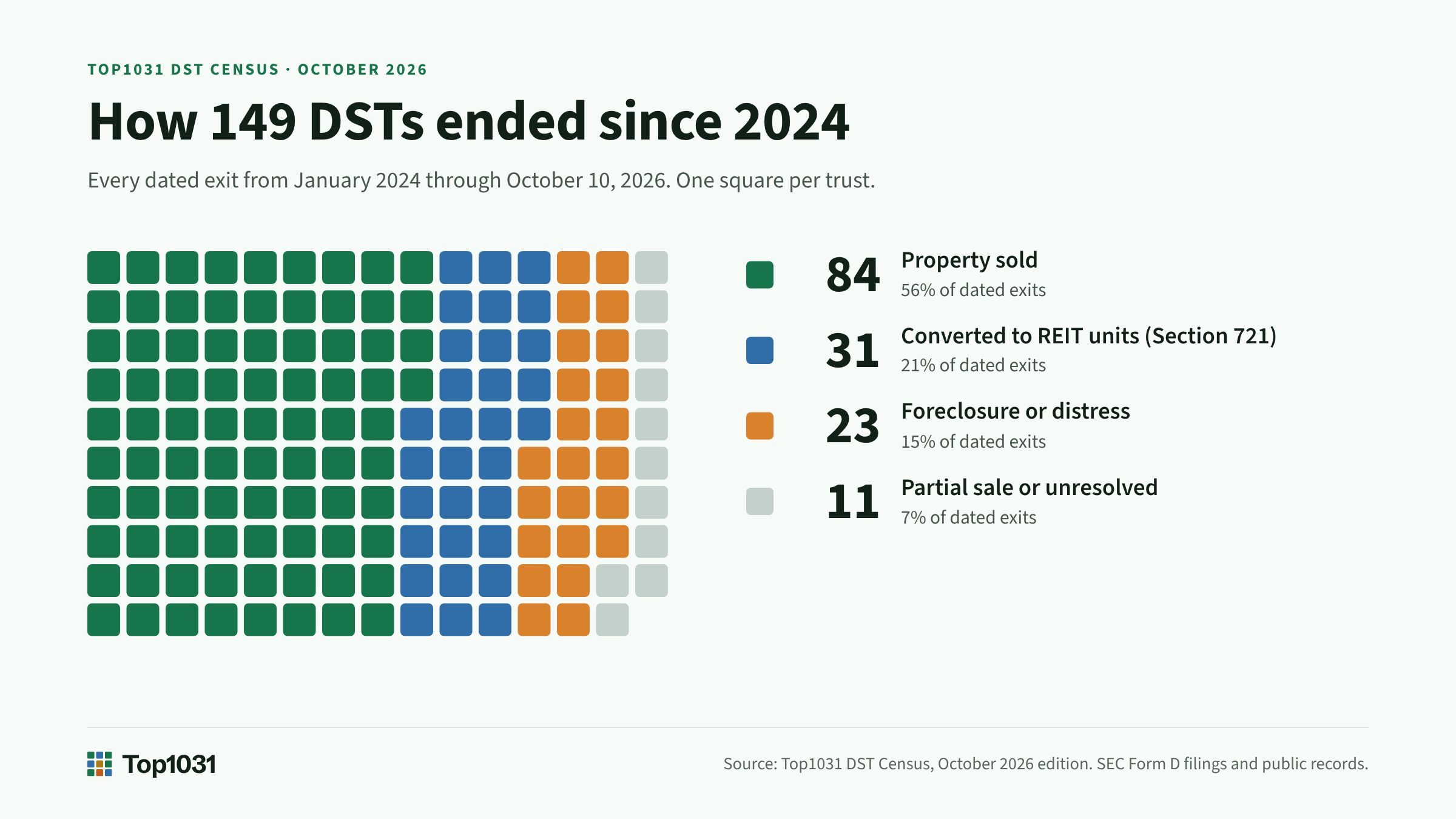
NEW YORK CITY, NY / ACCESS Newswire / October 13, 2026 / Of 149 Delaware Statutory Trust (DST) exits dated from January 2024 through October 10, 2026, 84 ended in a property sale, 31 in a Section 721 conversion into REIT operating-partnership units and 23 in foreclosure or distress, according to the October 2026 edition of the Top1031 DST Census from Top1031.com. The other 11 were partial sales or outcomes not yet known. In 2019, 39 of 40 dated exits were property sales.
Key findings:
- Distress is rising from a small base. Dated foreclosure or distress outcomes numbered two or fewer a year before 2024, then six in 2024, five in 2025 and 12 in 2026 through October 10, one more than the year's 11 dated conversions.
- Conversions come in waves. Dated conversions numbered 16 in 2024, four in 2025 and 11 so far in 2026, and 73 trusts have converted in all. Seven of 2026's 11 came from one sponsor platform in a single month.
- Exits come at about six years. Mature trusts with a dated exit ended a median 6.2 years after first filing. Of 20 current offering documents that state a target hold, 15 put its end at ten years.
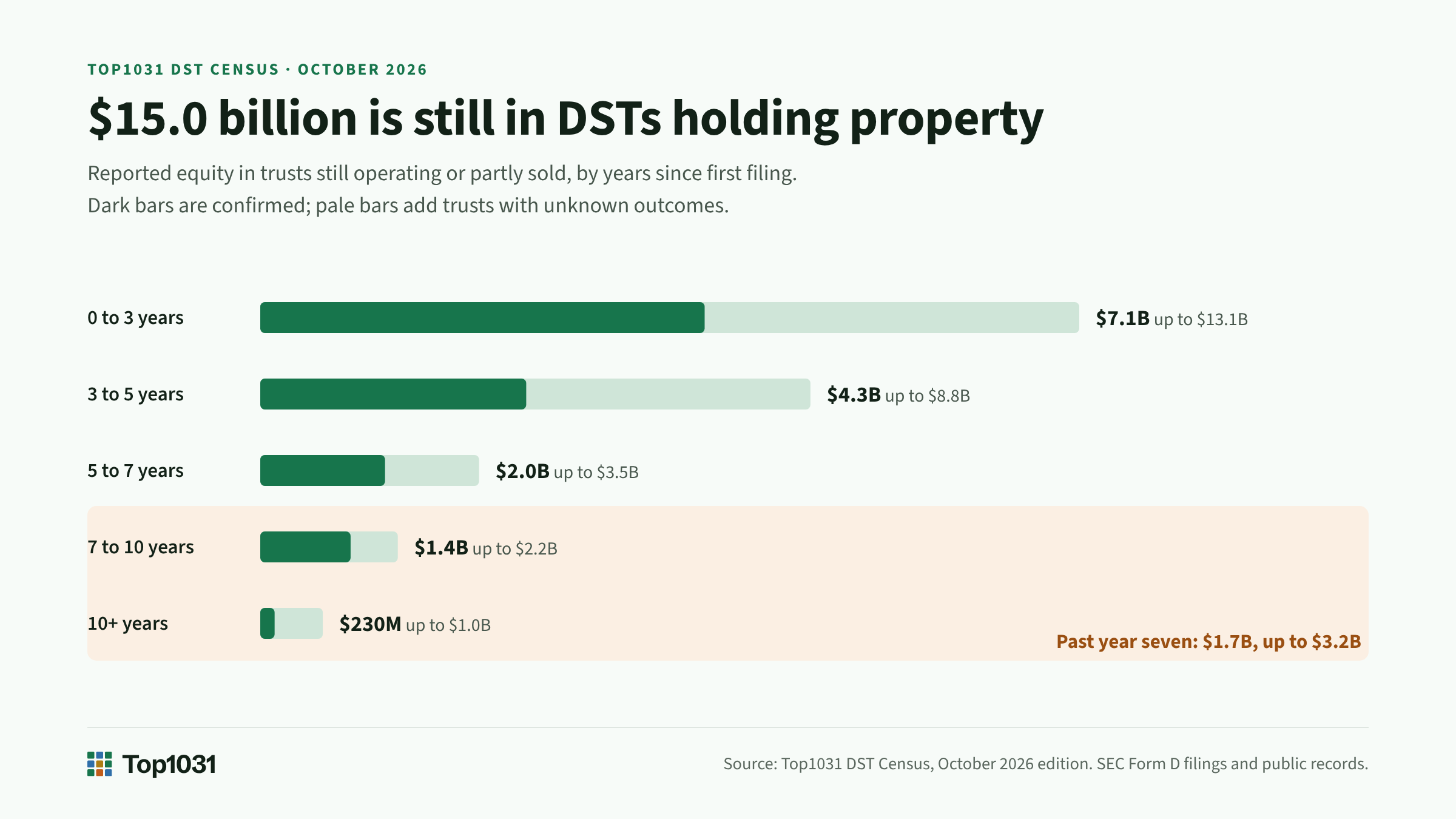
- The trusts still holding property are aging. The 599 trusts still operating or partly sold hold $15.0 billion of reported equity. Of that, $1.7 billion sits in trusts more than seven years past first filing, and up to $3.2 billion when trusts with unknown outcomes are included.
- Fundraising hit a high in the filing record. Filings reported $6.4 billion raised in 2025, the largest calendar year in the SEC filing record.
In a Section 721 conversion, investors receive units in a REIT's operating partnership instead of sale proceeds, which ends their 1031 exchange chain. DST lifetimes can stretch because Rev. Rul. 2004-86, the IRS ruling that makes DSTs eligible for 1031 exchanges, generally bars a trustee from renegotiating or replacing the trust's debt, so a deal that cannot refinance waits out the cycle.
Yearly counts are small, and the census reports them as counts, not as a market loss rate. Form D totals are a floor, as the census explains in how the two counts differ.
"DST offerings file notices with the SEC, but each trust files on its own, and none of those filings say how the deal ended," said Joe Azoulay, CEO of Top1031.com. "The census follows each trust from its first filing to the public record of its exit, where one exists, and publishes the count and the method together, so anyone can check the numbers."
The census covers 1,749 DST offerings since 2009 across 21,925 filings in the SEC Form D record, matched to public records of how each trust ended, where one exists. Counts for past years can change between editions as outcomes are reclassified. The full report, the census figures with a CSV download and the data methodology are available on Top1031.com. The next edition is scheduled for November 2026.
About Top1031.com
Top1031.com is a directory and research publisher covering 1031 Delaware statutory trust offerings, built from SEC Form D filings and public records. Every offering record links to its SEC filing, and every research figure carries an as-of date and a published method. Top1031.com is operated by Mangold, Inc.
Top1031.com is a data and education platform, not a broker-dealer or investment adviser. Nothing in this release is investment advice or a recommendation of any sponsor or offering. DST interests are illiquid private securities and involve risk, including possible loss of principal.
Media contact
Joe Azoulay, CEO, Top1031.com
[email protected]
SOURCE: Mangold Inc.