



Wednesday, 23 October 2024 05:00 AM
Company Update
Cement Packaging Market in Europe Anticipated to Grow to USD 1,701.4 Million by 2034, Driven by Sustainable Practices, Regulatory Compliance, and Expanding Demand from the Construction and Educational Sectors
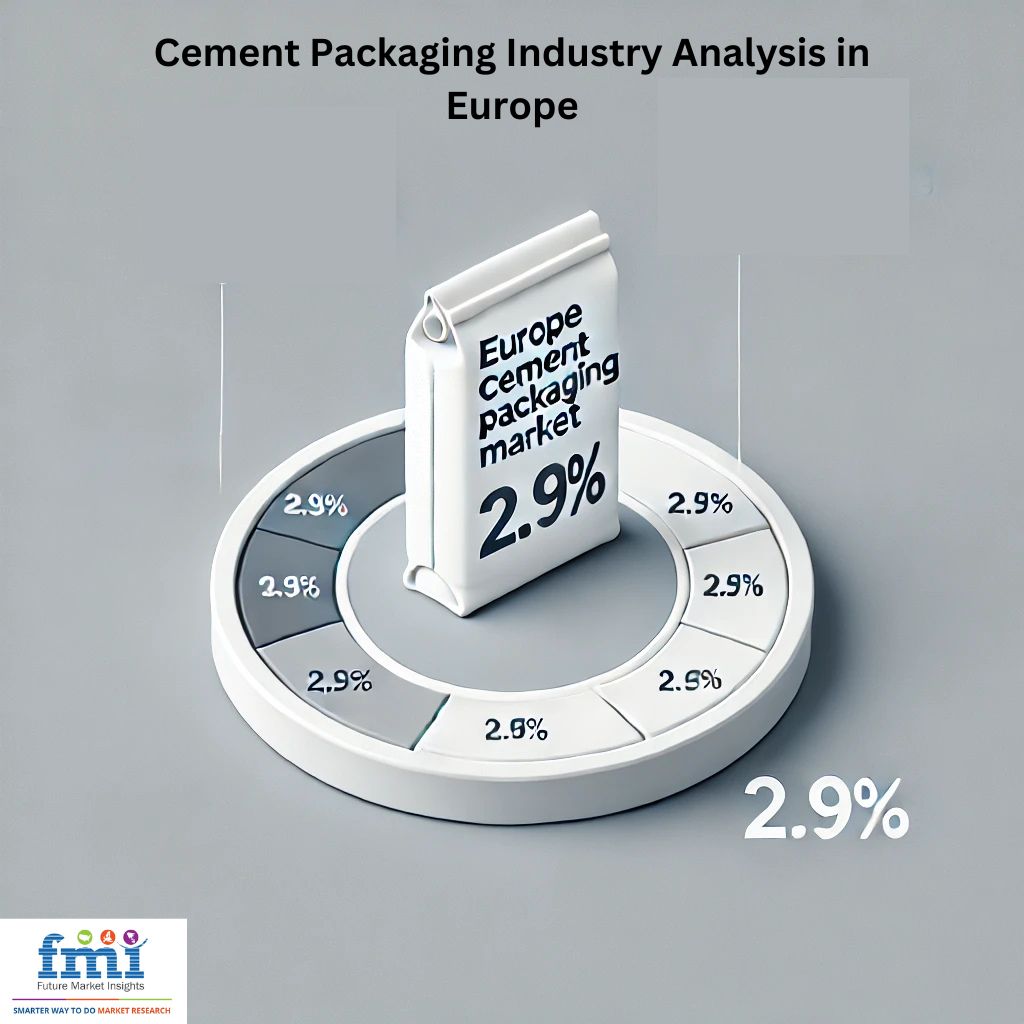
NEWARK, DE / ACCESSWIRE / October 23, 2024 / The cement packaging market in Europe is projected to reach a substantial valuation of USD 1,701.4 million by 2034, up from an estimated USD 1,278.4 million in 2024, showcasing a compound annual growth rate (CAGR) of 2.9% over the next decade. With revenue from cement packaging estimated at USD 1,243.6 million in 2023, the industry anticipates a year-on-year growth of 2.8% in 2024, driven by robust demand from the construction and infrastructural sectors.
Bags and sacks with a capacity of 11 kg to 50 kg dominate the flexible packaging market for cement, accounting for over 70% of total market share in 2024. This preference is attributed to their suitability for small construction projects, facilitating ease of transportation, storage, and handling. European regulations, including the Manual Handling Directive (Directive 90/269/EEC), emphasize worker safety by limiting the weight that can be manually lifted, further bolstering the demand for these sizes.
The cement packaging industry in Europe is poised for significant demand and growth due to several key factors. As construction and infrastructure projects continue to rise across the continent, the need for efficient and sustainable cement packaging solutions is becoming increasingly critical. The growth of urbanization, along with the European Union's commitment to enhancing infrastructure, drives the demand for cement, subsequently increasing the need for effective packaging methods that ensure product integrity and ease of handling.
Sustainability is another pivotal aspect influencing the cement packaging market. With a growing emphasis on environmentally friendly practices, manufacturers are shifting towards using recyclable and biodegradable materials in cement packaging. This transition not only helps reduce the carbon footprint but also aligns with stringent regulatory frameworks aimed at promoting sustainable practices in the construction sector.
Technological advancements in packaging processes are further fueling growth. Innovations such as smart packaging solutions that provide real-time information about the product's condition and quality are becoming popular. This technological shift enhances supply chain efficiency and ensures that the cement maintains its quality from production to end-use.
Paper-Based Packaging Solutions Lead the Market
The cement packaging sector is expected to see significant growth in paper and paperboard-based solutions, which are set to capture nearly 80% of the total market share during the forecast period. The advantages of these materials include their recyclability, supporting closed-loop systems that enhance material recovery and minimize waste generation. Major industry players prefer manufacturing paper-based cement bags and sacks for capacities up to 50 kg, further propelling this segment's growth.
Valve bags and sacks are anticipated to dominate the market due to their efficiency in filling and sealing processes, which reduce spillage and product loss. Composed primarily of multi-layer kraft paper or plastic, valve bags are designed to withstand rough handling while providing robust protection for the cement. They are easy to handle, stack well, and offer cost-effective solutions by accelerating the packaging process and minimizing waste. Consequently, the valve bags and sacks segment is estimated to capture approximately one-third of the cement packaging market.
Key Takeaways:
Market Growth Forecast: The cement packaging market in Europe is projected to grow from USD 1,278.4 million in 2024 to USD 1,701.4 million by 2034, with a CAGR of 2.9% over the next decade, driven by rising demand from the construction and infrastructural sectors.
Dominance of Bags and Sacks: Bags and sacks with a capacity of 11 kg to 50 kg capture over 70% of the market share, primarily due to their suitability for small construction projects and compliance with safety regulations regarding manual lifting.
Shift Towards Paper-Based Solutions: The market is increasingly leaning towards paper and paperboard-based packaging, expected to account for nearly 80% of the total market share by 2034, due to their recyclability and support for closed-loop systems.
Efficiency of Valve Bags: Valve bags and sacks are anticipated to lead the market segment, offering advantages such as efficient filling, reduced spillage, and durability, thereby capturing approximately one-third of the cement packaging market.
Sustainability Initiatives: Rising environmental concerns and regulatory pressures are driving cement packaging manufacturers to adopt eco-friendly materials, including recycled paper and biodegradable options, reflecting a broader trend toward sustainability in the industry.
Impact of Educational Infrastructure Projects: The UK's educational sector is generating significant demand for cement packaging solutions as rebuilding initiatives progress to accommodate increasing student populations, underscoring the market's reliance on construction activity.
Sustainable Practices at the Forefront
The cement packaging market in Europe is increasingly prioritizing eco-friendly materials and practices, driven by rising environmental concerns, stringent regulatory standards, and a shift in consumer preferences towards sustainable packaging solutions. With sustainability gaining prominence across various industries in Europe, cement packaging manufacturers are adopting environmentally conscious packaging strategies.
Innovations in alternative packaging materials, such as recycled paper, biodegradable plastics, jute, and hemp, are becoming prevalent. According to the European Paper and Plastic Packaging Association (EPPA), paper boasts the highest recycling rate at 82% compared to other materials. By utilizing these sustainable materials, cement manufacturers are working to reduce their reliance on finite resources and lower pollution levels associated with traditional packaging.
The European cement packaging market is poised for steady growth, driven by rising construction demands and a shift towards sustainable materials. Regulatory pressures are encouraging innovation in eco-friendly packaging solutions, particularly paper-based options. Companies must adapt swiftly to maintain competitiveness in this evolving landscape. Says a Lead Consultant Ismail Sutaria in Packaging at Future Market Insights (FMI).
Business Growth Drivers
Increasing Construction Activities: The demand for cement packaging is closely tied to the growth in construction and infrastructure projects, especially in residential, commercial, and educational sectors across Europe.
Regulatory Compliance: European regulations focusing on worker safety and material handling have led to a greater demand for appropriately sized and safe cement packaging solutions, particularly bags and sacks that meet specific weight limits.
Sustainability Initiatives: Rising environmental concerns and consumer preferences for eco-friendly products are driving manufacturers to adopt sustainable packaging materials, enhancing market growth opportunities.
Technological Advancements: Innovations in packaging technology, such as automated filling and sealing processes, are improving efficiency and reducing product loss, thus promoting market growth.
Growth in Small-Scale Projects: The increasing number of small construction and renovation projects, particularly in urban areas, is boosting demand for flexible and manageable packaging solutions, like smaller bags and sacks.
Future Trends in the Cement Packaging Industry in Europe
Shift Towards Eco-Friendly Materials: The use of sustainable packaging materials, such as biodegradable plastics, jute, and recycled paper, will continue to rise, aligning with the industry's shift toward environmental responsibility.
Customization and Branding: Companies are increasingly focusing on customizable packaging solutions to enhance branding and consumer engagement, using innovative designs and eco-friendly inks.
Enhanced Automation and Digitalization: The adoption of automation in packaging processes and digital tracking systems will streamline operations, improve efficiency, and reduce costs in the cement packaging sector.
Focus on Circular Economy: The industry is expected to embrace circular economy principles, emphasizing recycling, reuse, and reducing waste in packaging materials, to comply with stringent regulations and consumer expectations.
Expansion into Emerging Markets: As European cement packaging companies look for growth opportunities, there will be an increasing focus on expanding into emerging markets, both within Europe and beyond, to tap into new customer bases.
Educational Infrastructure Growth in the UK
In the UK, the education sector is undergoing significant rebuilding initiatives to accommodate an increasing number of students pursuing higher education. This demand for improved facilities is generating heightened requirements for cement, the primary material for construction and infrastructure projects. The Department of Education in the UK has launched a Schools Rebuilding Program to address a 15% rise in secondary school enrollments, increasing the capital budget from £5.2 billion in 2022 to £6.3 billion in 2023.
The growing need for educational buildings translates into a substantial demand for cement packaging solutions, including plastic and paper bags, sacks, and flexible intermediate bulk containers (FIBCs). These solutions protect cement from adverse environmental conditions, ensuring prolonged shelf life and high-quality performance in terms of binding strength and mechanical properties.
Country Wise Insights
Country | Value CAGR (2024 to 2034) | Short Description |
|---|---|---|
Germany | 2.2% | The manufacturing sector in Germany is expanding, leading to increased demand for cement for new facilities, warehouses, and industrial complexes. Germany is expected to hold a 17.4% share of the European market by 2034. |
Poland | 4.3% | Poland is poised for growth with a strong construction sector and demand for cement packaging solutions, driving a robust CAGR. |
Italy | 3.8% | Italy's construction sector is recovering, with an increased demand for cement packaging as new projects emerge. |
France | 3.2% | France's burgeoning construction sector, especially in Paris, is expected to drive significant demand for cement packaging, creating an incremental opportunity of USD 60.8 million. |
UK | 2.2% | The UK faces moderate growth, with construction projects impacting cement packaging needs as infrastructure continues to develop. |
Benelux | 4.5% | The Benelux region is anticipated to lead the market with the highest growth rate, driven by strong demand in construction and industrial applications. |
Nordic | 4.1% | The Nordic countries are experiencing increased infrastructure projects, boosting the demand for cement and its packaging solutions. |
Russia | N/A | The growth potential in Russia remains uncertain due to economic and political factors impacting the construction industry. |
Rest of Europe | N/A | The rest of Europe will exhibit varying growth based on regional construction and industrial activities. |
Key Players
Mondi plc
LC Packaging International BV
Berry Global Group, Inc.
Uflex Limited
ProAmpac LLC
Global-Pak Inc
the Royal NNZ Group bv
Thrace Polyfilms S.A.
Gascogne Group
Smurfit Kappa Group plc
Bischof+Klein SE & Co. KG
Megasack Corporation
United Bags.
Palmetto Industries International Inc.
Advanced Industries Packaging.
Sacchificio Veneto s.p.a
Stora Enso Oyj
CEMEX UK Operations Limited
Billerud AB
Unlock Comprehensive Market Insights - Explore the Full Report Now: https://www.futuremarketinsights.com/reports/cement-packaging-industry-analysis-in-europe
Europe Cement Packaging Market Segmentation
By Capacity:
In terms of capacity, the cement packaging market is divided into heavy duty bags and sacks with less than 10kg, bags and sacks with 10kg to 50 kg and bags and sacks above 50 kg, flexible IBCs (FIBC) less than 750 kg, flexible IBCs (FIBC) with 750 to 1500 kg and flexible IBCs (FIBC) above 1500kg. The bags and sack with 10kg to 50 kg capacity are further sub-categorized into 21.3 kg (Standard), 42.6 kg (Standard) and custom capacities.
By Material:
Few of the important materials used for cement packaging include plastic bags and sacks, paper and paperboard bags and sacks, polypropylene flexible IBCs (FIBC) and other plastics (PE, PVC, etc.) and flexible IBCs (FIBC). The plastic bags and sacks is sub-segmented into polyethylene (PE), polypropylene (PP) and other plastics (PVC, PET, etc.)
By Packaging Format:
Some of packaging formats related to cement packaging market include bags and sacks and flexible IBCs (FIBC). The bags and sacks segment is further divided into open mouth bags & sacks, open mouth bags & sacks, gusseted bags & sacks and valve bags & sacks.
By Country:
Key countries of Europe such as UK, Germany, Spain, France, Italy, BENELUX, Nordic, Russia, Poland and Rest of Europe are covered.
Authored by:
Ismail Sutaria (Lead Consultant, Packaging and Materials) has over 8 years of experience in market research and consulting in the packaging & materials industry. Ismail's strength lies in identifying key challenges faced by the client and offering logical and actionable insights to equip the clients with strategic decision-making power.
Ismail has been an instrumental part of several transformational consulting assignments. His key skills include competitive benchmarking, opportunity assessment, macroeconomic analysis, and business transformation advisory. Ismail is an MBA holder in Marketing and has a Bachelor's Degree in Mathematics.
Have a Look at Trending Research Reports on Packaging Domain:
The global cement sacks market sales growing with a steady CAGR of 3.8% from 2023 to 2033, this market is expected to reach USD 357.93 Billion by 2023 and USD 519.72 Billion by 2033.
The global size of cement packaging are anticipated to reach a value of USD 6.8 billion by 2034. Sales revenue of cement packaging industry is projected to rise at a CAGR of 2.9% over the forecast period between 2024 and 2034.
North America cement packaging industry is anticipated to reach a value of USD 1,441.8 million by 2034. Sales are projected to rise at a CAGR of 3.7% over the forecast period between 2024 and 2034.
The paper bag market size is anticipated to reach a valuation of US$ 8.7 billion by 2034, progressing at a CAGR of 4.3% from 2024 to 2034.
The global protective wrapping paper market sales is estimated to register a CAGR of 5.9% during the forecast period. The global market is likely to capture a valuation of US$ 4,343.7 million in 2024 and reach US$ 7,077.7 million by 2034.
The overall demand for paper bubble wrap is projected to grow at a CAGR of 5.1% between 2023 and 2033, topping a valuation of US$ 1,087.4 million by 2033.
The bubble wrap packaging market size is predicted to grow rapidly at a CAGR of 3.1% from 2024 to 2034. The market is expected to reach a valuation of US$ 4.2 billion by 2034.
The global packaging inspection systems industry leads to an estimated CAGR of 6.3% in the global market, during the forecast period and registers a revenue valued at US$ 472.4 Million in 2022, and is expected to cross US$ 870.25 Million by 2032.
The FMCG packaging market demand is expected to expand its roots at an average CAGR of 5.8% during the forecast period. The market is anticipated to cross a value of US$ 778.7 billion by 2033.
The global active, smart, and intelligent packaging market sales, is estimated to be US$ 26.6 billion in 2024. The overall market is further projected to reach US$ 59.1 billion by 2034 by thriving at a CAGR of 8.3% from 2024 to 2034.
The global labels market size is accelerate at a CAGR of 4.9% from 2023 to 2033. The market is projected to reach US$ 67.36 billion by the end of 2033.
About Future Market Insights (FMI)
Future Market Insights, Inc. (ESOMAR certified, recipient of the Stevie Award, and a member of the Greater New York Chamber of Commerce) offers profound insights into the driving factors that are boosting demand in the market. FMI stands as the leading global provider of market intelligence, advisory services, consulting, and events for the Packaging, Food and Beverage, Consumer, Technology, Healthcare, Industrial, and Chemicals markets. With a vast team of over 400 analysts worldwide, FMI provides global, regional, and local expertise on diverse domains and industry trends across more than 110 countries.
Join us as we commemorate 10 years of delivering trusted market insights. Reflecting on a decade of achievements, we continue to lead with integrity, innovation, and expertise.
Contact Us:
Future Market Insights Inc.
Christiana Corporate, 200 Continental Drive,
Suite 401, Newark, Delaware - 19713, USA
T: +1-347-918-3531
For Sales Enquiries: [email protected]
Website:https://www.futuremarketinsights.com
LinkedIn| Twitter| Blogs | YouTube
SOURCE: Future Market Insights, Inc.