




Tuesday, 04 August 2026 02:15 AM
Company Update
Tuofa updates the process workflow starting with final fit, function, tolerance, finishing, and validation requirements, then works backward to coordinate materials selection, machining, inspection, and delivery.
Tuofa Announces an Updated Workflow for Rapid Projects
SHENZHEN, CN / ACCESS Newswire / August 4, 2026 / Tuofa CNC Machining has updated its rapid prototyping workflow to connect early engineering review with machining, finishing, inspection, and validation. The update is intended particularly for complex prototype parts that move through multiple machining, finishing, and inspection stages. The change responds to a recurring reality in rapid projects: time is often lost not at the machine, but when requirements are clarified too late or one process creates problems for the next.
What the Update Covers
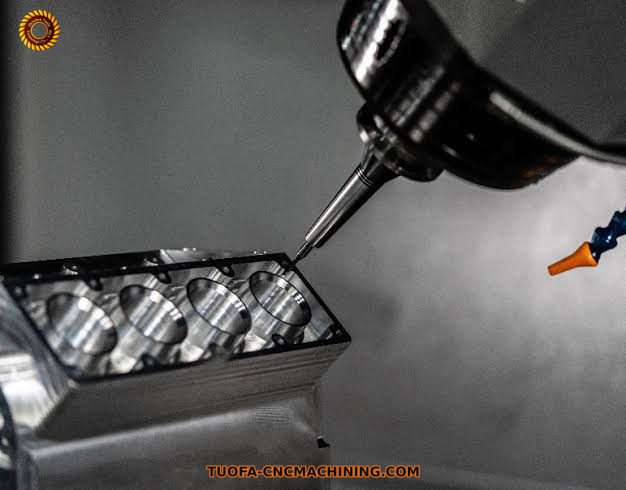
The workflow applies to rapid CNC machining and projects that may combine sheet metal fabrication, post-machining, or other supporting processes for some complex components. It links drawing review, DFM, material confirmation, process routing, first-part inspection, surface finishing, final verification, delivery, and feedback for the next NPI stage.
Why Rapid Projects Require More Than Faster Machining
Hidden Delays Between Processes
Unclear drawings, unavailable material, special tooling, outside finishing, reinspection, and design changes can create more delay than cutting time. Tuofa therefore reviews process dependencies early and prepares fixtures, tools, gauges, programs, inspection standards, and external-process requirements before the part reaches each stage.
Validation Defines Prototype Success
A metal or plastic prototype is successful when it supports a useful decision. Depending on the project, that may mean checking appearance, assembly, motion, sealing, thermal behavior, structural fit, or functional performance. Delivery speed matters, but only when the part represents the conditions the customer intends to test.
For short-run parts, this also means avoiding precision that adds cost without improving the test. During quotation review, Tuofa considers the part's application and keeps tighter control where fit or function depends on it, while allowing more practical tolerances on non-critical features.
What Tuofa Changed in Its Rapid Project Workflow
The update does not replace the established manufacturing stages. It changes when key decisions are made and how drawing review, machining, finishing, inspection, and validation are coordinated for more complex parts. By resolving key requirements earlier, projects can move more efficiently from engineering review to the appropriate manufacturing route, whether that involves CNC turning, 3-, 4-, or 5-axis milling, or mill-turn machining, etc.
Sequential Workflow vs. Backward-Led Planning
A sequential workflow moves from drawings to material, machining, finishing, and inspection. Tuofa keeps those necessary stages but plans them from the required final condition backward. The approach was refined through project reviews, customer feedback, nonconformance analysis, and lessons from issues that became visible only during finishing, assembly, or testing.
Earlier Requirement Review
Tuofa now places greater emphasis on confirming 2D and 3D files, customer standards, inspection criteria, assembly interfaces, cosmetic surfaces, and the purpose of the prototype before the process route is finalized. When available, sample parts can also be reviewed to clarify fit, assembly, and surface expectations that may not be fully expressed in the drawings.
The team also reviews drawings and, when available, sample parts with the customer to clarify which features are critical and how they affect assembly. These discussions help identify the requirements that must be controlled before the manufacturing route is confirmed.
Earlier DFM Decisions
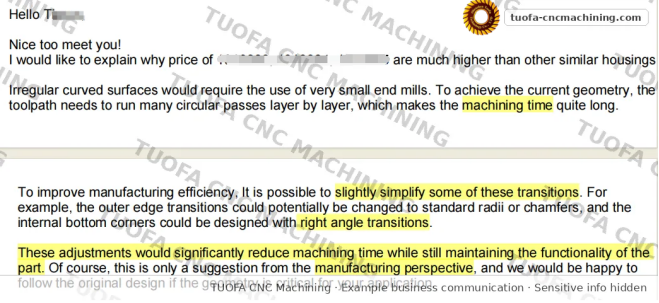
Manufacturability decisions are moved forward so that deep cavities, thin walls, sharp internal corners, small radii, tool access, datum selection, work holding, and unnecessarily restrictive tolerances can be discussed before programming and production.
With this context, Tuofa can suggest design adjustments that preserve the intended function while making the part more stable and economical to manufacture. The aim is to remove avoidable difficulty and cost before programming begins, rather than correct them after production has started.
Connected Process and Quality Planning
The machining route and inspection plan are developed together. Critical dimensions, geometric controls, surface texture, thread quality, finishing effects, and intermediate allowances are assigned to the stages where they can be controlled and measured most effectively.
Defined Review and Inspection Gates
The updated workflow uses clear gates for material acceptance, setup approval, first-part inspection, in-process checks, pre-finishing inspection, post-finishing verification, and shipment release. An out-of-tolerance result triggers adjustment, segregation, and review of the related batch.
Shared Planning Data
Drawings, process sheets, customer standards, inspection requirements, material records, first-part reports, finishing instructions, and final inspection results are kept aligned so that engineering, production, quality, suppliers, and customer-facing teams work from the same project information.
Planning Backward From the Finished Part
Start With the Validation Goal
Planning begins with what the customer must learn from the prototype. A fit-check part, functional part, appearance model, engineering-validation build, and pilot component may require different materials, tolerances, surfaces, records, and manufacturing routes.
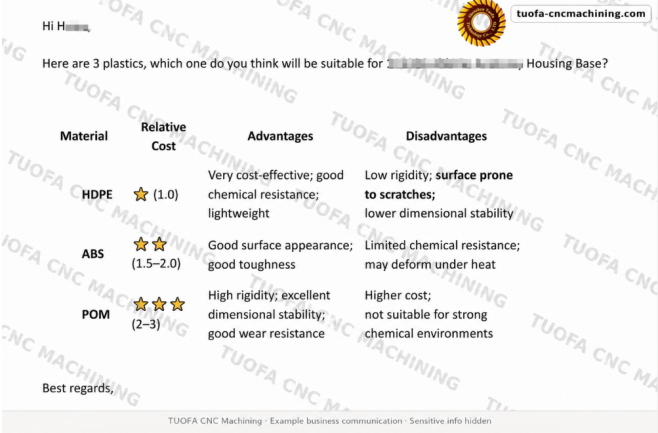
Tuofa learned from thousands of custom part orders, and build their own professional knowledge base of helping clients choosing the right materials. A suitable material start a good step.
Identify Critical Part Features
The team identifies features that can determine the result: mating faces, locating datums, bearing seats, holes, threads, sealing grooves, motion interfaces, optical alignment features, and protected cosmetic surfaces. These features receive priority in routing and inspection.
Set Tolerances by Function
The smallest possible tolerance is not automatically the best tolerance. The harder task is selecting a range that supports function, assembly, measurement, material behavior, and cost. Tuofa focuses tighter control on critical features while allowing practical tolerances where extra precision would not improve the prototype.
Work Back Through Finishing
Finishing is treated as part of the dimensional plan, not as a cosmetic step added after machining. Once the final surface requirement is clear, Tuofa works backward to decide what condition the part must reach before treatment and what must be protected or rechecked afterward. This prevents a feature that passed inspection before finishing from creating fit, thread, or sealing problems in the delivered prototype. Anodizing, for example, changes part dimensions as the oxide layer develops, so its effect must be considered before the machining dimensions are finalized.
Plan Final Machining Operations
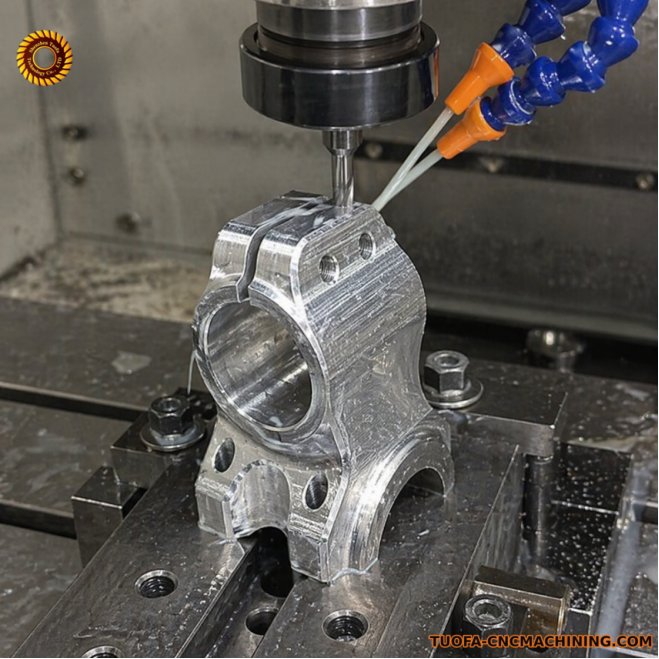
With the finished condition defined, Tuofa can place precision machining where it will have the greatest effect. A critical feature may be left until distortion-prone work is complete, while another may need to be finished before coating and protected during later treatment. The route is not designed to include as many processes as possible. It is arranged so that earlier operations do not compromise the surfaces and relationships that ultimately determine whether the prototype will assemble and function as intended.
Reserve the Right Machining Allowance
Machining allowance keeps the process route recoverable. Leaving too little material may remove the opportunity to correct distortion or dimensional movement later, while leaving too much adds unnecessary cutting and can reduce stability during final machining. Tuofa therefore sets the allowance according to what the next operation must achieve, allowing roughing, semi-finishing, and final machining to work as one controlled sequence rather than as isolated steps.
Confirm Material and Stock Condition
Tuofa checks material certificates, appearance, dimensions, selected hardness, stock form, and lot identity before machining. Experience shows that different lots of the same nominal grade may respond differently during cutting or finishing, so batch identification and consistency checks remain part of process control.
Moreover, material certificates and related traceability records can be retained according to the project's documentation requirements.
From Project Requirements to Prototype Validation
Define the Prototype Purpose
The customer and manufacturing team first clarify whether the build is intended for visual review, assembly fit, functional testing, engineering validation, or preparation for pilot production.
Review Drawings and Requirements
The review aligns CAD data, drawings, revisions, materials, finishes, quantities, critical dimensions, customer standards, and inspection expectations. Open questions are resolved before they become shop-floor changes.
Select the Manufacturing Route
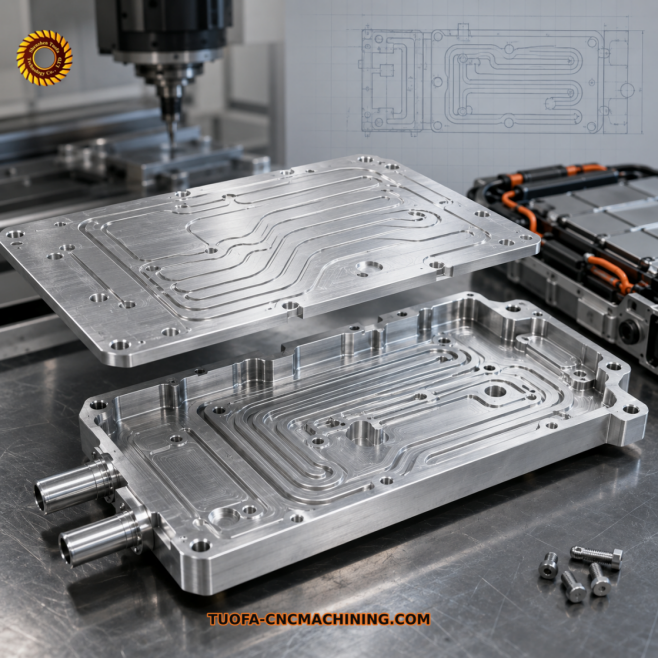
The route may use CNC machining, sheet metal fabrication, 3D printing with CNC post-machining, or a hybrid approach. Selection is based on the properties the prototype must reproduce, not simply the fastest standalone process.
Build and Inspect the Prototype
After setup, the first part receives full dimensional review before the batch proceeds. Production checks focus on key dimensions, geometric tolerances, surface condition, tool wear, and process stability, followed by deburring, cleaning, thread checks, and pre-finishing inspection.
Test Fit, Function, and Assembly
Final inspection confirms drawing requirements, but customer validation determines whether the part performs in the intended assembly or test. Critical fit dimensions are remeasured after finishing, while appearance, threads, hardness, coating, and other specified functions are checked as required.
Feed Results Into the NPI Cycle
Test results can lead to design revisions, tolerance changes, material updates, finish changes, a different manufacturing route, or a second prototype. The updated information becomes the starting point for the next build.
Where Backward Planning Matters Most
The approach is especially useful for multi-part assemblies, moving mechanisms, optical or sensor structures, sealing and fluid components, thermal-management parts, and projects combining tight functional features with surface treatment or multiple manufacturing processes.
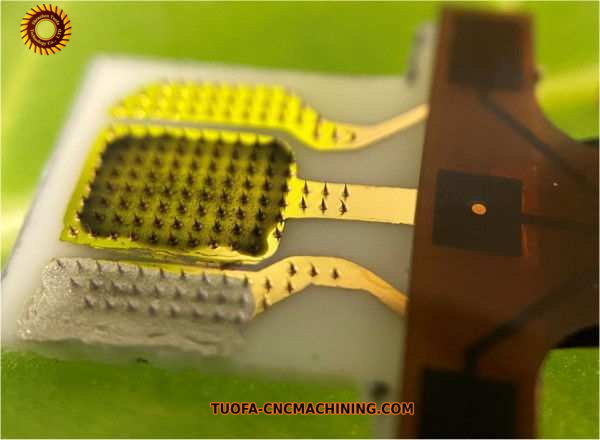
A sensor housing for AI-driven data analysis is a typical example: internal clearances, mounting features, anodizing allowance, and post-finish assembly fit must be planned as one connected process rather than checked independently at the end.
Turning Better Process Planning Into More Reliable Prototypes
More Meaningful Test Results
When material, critical dimensions, finish, and assembly conditions match the validation goal, the prototype provides more useful evidence for engineering and product decisions.
Fewer Late-Stage Conflicts
Earlier coordination helps identify conflicts between tolerances and finishing, geometry and tooling, material and process, or inspection and datum access before they cause rework near delivery.
Faster Engineering Decisions
A prototype that clearly answers fit, function, and manufacturability questions helps the customer decide whether to revise, approve, retest, or move forward.
A Clearer Path to the Next Build
Inspection findings, production observations, and customer feedback are carried into the next revision, giving each build a defined purpose and reducing repeated clarification.
Better Preparation for Pilot Production
Prototype planning also records material sources, process routes, inspection priorities, finishing requirements, and known risks that can inform low-volume and pilot-production planning.
Tuofa CNC Machining: From Prototypes to Production
Support Beyond the First Prototype
Founded in 2006, Tuofa supports engineering teams through prototype revisions, functional builds, low-volume runs, and later production stages rather than treating the first shipment as the end of the project.
Traceable Materials and Records
Material certificates, lot identification, drawing revisions, process instructions, inspection results, finishing requirements, and approved samples can be linked to the project according to its quality and traceability needs.
Early Risk Identification
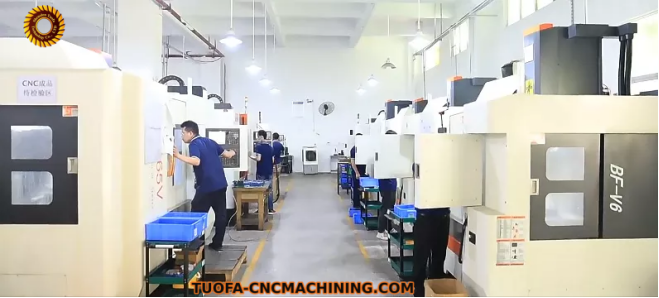
The team reviews risks such as material lead time, special tooling, thin-wall distortion, tight feature relationships, external finishing, appearance protection, packaging, and transport before they become last-minute obstacles.
Continuity Across Project Stages
Keeping the same project knowledge across prototype, revision, and small-batch stages reduces repeated explanation and preserves decisions about critical features, material, finishing, inspection, and customer acceptance.
Preparing for Future Production
As the design stabilizes, Tuofa can use prototype feedback to refine the route, fixtures, inspection frequency, batch controls, packaging, and supplier coordination for later manufacturing.
Final Words
For Tuofa, rapid prototyping is not defined by machine speed alone. It depends on making the right decisions early and planning each process around the finished part's purpose. By connecting backward process planning with NPI feedback, Tuofa aims to help customers obtain prototypes that are faster to evaluate, easier to improve, and better prepared for the next stage of production.
About Tuofa CNC Machining Rapid Prototyping Service
Founded in 2006, Tuofa CNC Machining specializes in custom CNC machining services, offering end-to-end solutions from prototype development to high-volume production. Known for its unwavering commitment to quality, innovation, and customer satisfaction, Tuofa delivers precision-engineered parts that consistently exceed industry expectations.
For more information about Tuofa CNC Machining and its patented precision turning technology, visit www.tuofa-cncmachining.com.
Contact Information
Organization: Shenzhen Tuofa Technology Co., Ltd.
Contact Person: Tuofa CNC Machining Team
Website: https://www.tuofa-cncmachining.com
Email: [email protected]
City: Shenzhen
State: Guangdong
Country: China
SOURCE: Tuofa CNC Machining