




Tuesday, 01 September 2026 01:27 PM
Company Update
WASHINGTON, D.C. / ACCESS Newswire / September 1, 2026 / Sworn testimony in the federal marijuana-rescheduling hearing challenges widely repeated media claims that six million registered medical marijuana patients demonstrate broad acceptance of marijuana within the American medical profession.
The six million figure counts registrations in state authorized programs. It does not establish six million physician supervised treatments, verified clinical outcomes or continuing physician patient relationships.
Testimony presented before DEA Chief Administrative Law Judge Derek C. Julius showed that physician participation in several major state medical marijuana programs remains below 4% and that certifications in some states are concentrated among a remarkably small number of doctors.
The DEA ALJ Tribunal has not issued its recommendation.
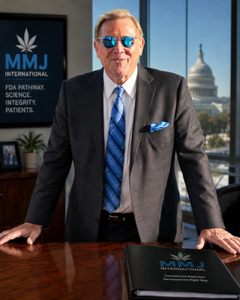
"The six million figure may be real, but the medical-consensus narrative built around it is not," said Duane Boise, President and Chief Executive Officer of MMJ International Holdings, Inc. "A registry card is not a clinical trial. A recommendation is not an FDA-approved prescription. When approximately 96% to 98% of physicians in major states do not participate-and three Colorado doctors generated more than one-quarter of the recommendations-the public is not being shown medical consensus. It is being shown a headline without its denominator."
Physician Participation Below 4%
Dr. Kenneth Finn was tendered and provisionally accepted at the hearing as an expert in pain medicine and the public-health effects of marijuana.
Dr. Finn is board-certified in pain medicine and physical medicine and rehabilitation, has practiced for more than three decades and is a past president of the American Board of Pain Medicine.
He testified that:
Approximately 3.4% of active physicians in New York publicly participate in the state medical-marijuana program;
Approximately 3.6% of direct-care physicians in Florida are approved to order medical marijuana; and
Fewer than 2% of licensed Colorado physicians issue marijuana recommendations.
Tr. Day 7 at 1617:6-14.
Those figures indicate that approximately 96% to 98% of physicians in those states do not participate in their medical-marijuana programs.
That denominator has received far less media attention than the aggregate six-million-patient figure.
Three Colorado Doctors Generated More Than One-Quarter of State Recommendations
The hearing record also showed that medical-marijuana certifications are highly concentrated among relatively few physicians.
Dr. Finn testified that:
Three physicians made more than one-fourth of Colorado's marijuana recommendations in 2022;
Approximately 88% of Florida certifications came from 21% of qualified physicians; and
Nine Oregon doctors approved more than half of the state's medical-marijuana patient population.
Tr. Day 7 at 1617:18-1618:10.
During opening statement, counsel placed the Colorado statistic in context: three doctors among more than 17,000 licensed Colorado physicians generated one-quarter of the recommendations.
Tr. Day 7 at 1515:17-23.
The testimony raises a central question about the government's reliance on aggregate participation numbers: whether millions of registrations demonstrate broad professional acceptance when large portions of state certifications are generated by a small percentage of participating physicians.
Four in Ten Self-Described Medical Users Never Asked a Professional
The Department of Health and Human Services' own survey data raise additional questions about whether self-described medical use reflects professional medical supervision.
Among 1,447 respondents who identified themselves as exclusive medical-cannabis users in a 2021 survey, only 56.8% reported ever asking a licensed health professional for a recommendation.
HHS Recommendation at 122.
Accordingly, more than four in ten self-described exclusive medical-cannabis users had never asked a licensed health professional for a marijuana recommendation.
Self-described therapeutic use does not, by itself, establish a medical diagnosis, a standardized dose, an evaluated drug interaction or demonstrated safety and efficacy for a defined indication.
Pain-Medicine Expert Rejected State Programs as Proof of Medical Use
At the hearing, Dr. Finn was asked directly whether marijuana use through state programs constituted medical use:
Q: Does the way in which marijuana is prescribed through the state programs, in your opinion, do you consider that to be medical use?
A: No.
Tr. Day 7 at 1608.
Dr. Finn also testified that he had previously made marijuana recommendations but stopped after patients returned with adverse events:
"I personally have made recommendations for my patients in the past until I started seeing them come back with adverse events, and then I learned more about the marijuana and the plant and I stopped making those recommendations."
Tr. Day 7 at 1617:24-1618:4.
FDA Did Not Perform the "Widespread Experience" Analysis
The hearing also clarified how the federal government's currently accepted medical use analysis was assembled.
Dr. Dominic Chiapperino, the FDA official who supervised the HHS evaluation, testified that the Office of the Assistant Secretary for Health provided the Part 1 analysis to FDA already completed. FDA did not independently perform that portion of the analysis.
Tr. Day 1 at 56:1-21 and 164:11-16; Tr. Day 6 at 1336:5-10.
Part 1 addressed whether widespread current experience existed among licensed health care professionals in state-authorized programs. FDA subsequently performed Part 2, which considered whether there was "some credible scientific support" for at least one use.
HHS expressly stated that its analysis was not intended to establish the safety-and-efficacy evidence necessary for FDA approval of marijuana for any particular indication.
The sworn testimony therefore distinguishes the participation analysis supplied by the Office of the Assistant Secretary for Health from FDA's scientific review.
DEA Pharmacologist: "Scientifically, No"
Dr. Luli R. Akinfiresoye, a DEA pharmacologist with more than ten years of experience in the agency's Drug and Chemical Evaluation Section, testified that her Section applied DEA's traditional five-factor currently accepted medical use analysis.
According to her testimony, marijuana failed the factors addressing:
Known and reproducible chemistry;
Adequate safety studies; and
Adequate and well-controlled studies demonstrating efficacy.
Dr. Akinfiresoye testified that she disagreed with each of HHS's currently accepted medical use findings.
When asked whether HHS's two-part approach made scientific sense to her as a pharmacologist, she answered:
"Scientifically, no."
She explained that the approach did not adequately address chemistry, safety or efficacy.
Tr. Day 6 at 1359:19-1360:16.
A Legal Standard Is Not Scientific Validation
The government maintains that its two-part test is legally sufficient and that marijuana need not receive FDA approval or satisfy DEA's traditional five-factor test to establish currently accepted medical use under the Controlled Substances Act.
The Tribunal will determine the legal significance of those competing standards.
The sworn record, however, distinguishes a legal threshold for scheduling from the scientific evidence ordinarily required to establish:
Reproducible chemistry;
Standardized dosing;
Adequate safety;
Well-controlled evidence of efficacy;
Consistent manufacturing;
Accepted prescribing information; and
Broad acceptance by the medical profession.
"The press has repeatedly converted a registry count into proof of medical acceptance without examining physician participation, the concentration of certifications or whether the products possess reproducible chemistry," Boise said. "The testimony now allows the public to examine the complete record. Six million cards cannot substitute for standardized medicine, controlled evidence and meaningful participation by the medical profession."
MMJ Supports Evidence-Based Cannabinoid Medicine
MMJ International Holdings has invested more than eight years and more than $10 million pursuing standardized cannabinoid medicines through the FDA and DEA federal regulatory pathways.
The company manufactured 50,000 defined-dose soft-gelatin capsules through Catalent Pharma Solutions and has pursued FDA Investigational New Drug programs involving cannabinoid therapies for Huntington's disease and multiple sclerosis.
MMJ's investigational products have not been approved by the FDA for commercial distribution.
"MMJ is not arguing that cannabinoids lack therapeutic potential," Boise said. "Our company exists because we believe that potential can be developed into legitimate medicine. But if marijuana is going to be called medicine, patients and physicians deserve defined composition, consistent manufacturing, known dosing, stability data and credible evidence of safety and efficacy."
The Number Missing From the Headlines
The sworn hearing record presents a materially different picture from the one created by aggregate registration figures.
The six-million figure does not show how many physicians participate, how concentrated the certifications are, whether patients receive continuing medical supervision or whether state-dispensary products possess standardized composition and dosing.
The evidence instead shows participation rates below 4% in several major states, with significant portions of certifications concentrated among a small number of doctors.
"The question is no longer whether the public has heard the six-million figure," Boise concluded. "The question is whether the public will finally be told what is underneath it. The sworn testimony supplies the answer, and it is not the medical consensus portrayed in the headlines."
About MMJ International Holdings
MMJ International Holdings, Inc. is a pharmaceutical company developing standardized cannabinoid medicines through the federal FDA and DEA regulatory pathways. Its development programs focus on cannabinoid therapies for Huntington's disease and multiple sclerosis.
CONTACT:
Madison Hisey
[email protected]
203-231-8583
Source Notice
The testimony cited above was presented in the DEA marijuana-rescheduling proceeding before Chief Administrative Law Judge Derek C. Julius. The Tribunal has not issued its recommendation. Quotations and transcript references are drawn from the public hearing record. MMJ International Holdings is not representing that the Tribunal has adopted the company's interpretation of the evidence.
SOURCE: MMJ International Holdings