



Monday, 14 September 2026 04:20 AM
Company Update
Dr. Cory Torgerson's Approach to Addressing Native Hair Loss via Strategic Recipient Site Planning and Multimodality Therapy
TORONTO, ON / ACCESS Newswire / September 14, 2026 / Hair transplantation for natural results is not only about the placement of grafts into the balding area but also planning in the long run to ensure the safety of the hair around the area receiving the transplant. Whereas surgery relocates the healthy grafts, the non-transplanted hair follicles still remain susceptible to androgenic miniaturization.
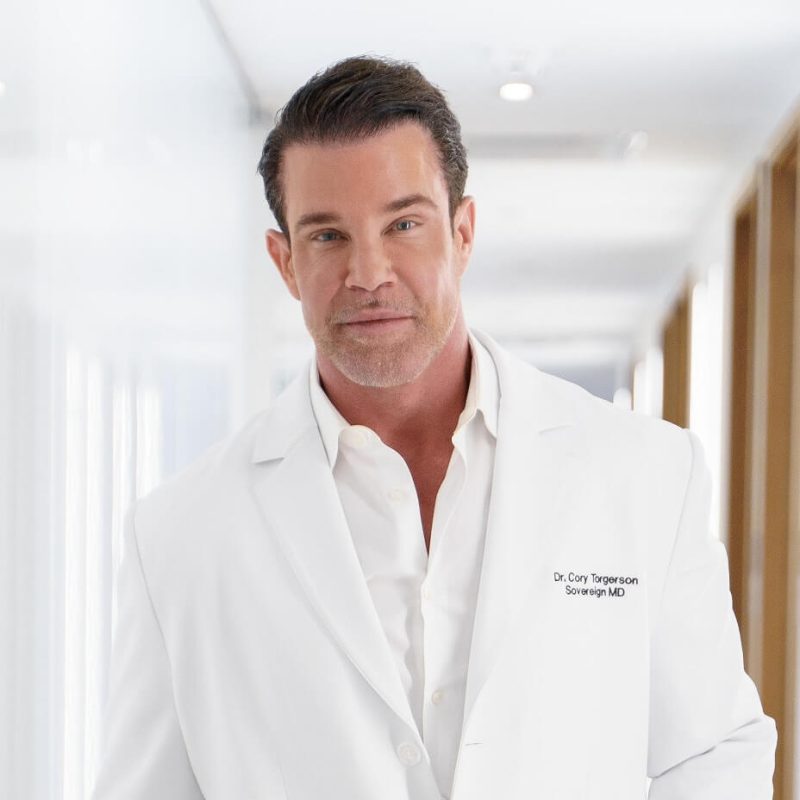
To treat this long-term physiological problem Dr Cory Torgerson along with The Toronto Hair Transplant Clinic, employs a protocol utilizing Follicular Unit Extraction (FUE hair transplant),platelet rich plasma(PRP), and low level laser phototherapy. This treatment technique aims at increasing recipient site density and preserving native hair structures.
Understanding Hair Density and the Process of Miniaturization
When designing a density for the recipient site, graft placement count needs to be carefully balanced with patients' anatomical characteristics. Native density in hair transplantology is the density that follicular units occur naturally prior to miniaturization while transplant density is the total number of grafts per centimeter squared placed at time of restoration. Since each graft may hold anywhere from 1 to 4 hairs, density calculated by grafts/sq cm vs number of actual hairs/ sq cm does not always provide the correct picture.
According to studies conducted by the National Institutes of Health , androgenetic alopecia leads to the process of follicular miniaturization where terminal hairs slowly change into thin vellus hairs. During the hair transplant procedure, placement of the recipient sites at close distances will interfere with the blood flow in the dermis leading to reduced survival rates of the grafts and possibly over extraction of donor sites. Density planning aims at creating an optical illusion without draining the donor area.
The Effect of Anatomical Factors on Density Planning
The objectives for recipient sites depend on the particular physical attributes of the individual's hair and scalp.
Calibre of Hair (Diameter of Shaft): Heavier hair shafts have more visual shadow on the scalp and thus provide more visual density at low densities. Thin hair has less shadow and needs to have a higher density objective for visual density.
Curl pattern/Wave: The curly/wavy hair naturally sticks out from the scalp surface, overlapping in a manner to provide more density at lower densities per square centimeter than the straight hair patterns.
Scalp and Hair Contrast: A low contrast between the hair color and the color of the underlying skin helps to conceal the scalp area making it look full even at low densities. High contrasts (like dark hair over light scalp skin) make scalp visibility more apparent under bright light and require accurate transplantation along the hair transition line.
The Combined FUE, PRP, and Laser Therapy Protocol
To promote graft survival while minimising hair loss on the native scalp, the protocol combines a surgical procedure with non-surgical maintenance procedures.
| Treatment Component | Primary Clinical Mechanism | Target Area / Biological Focus | Role in Native Preservation |
| Follicular Unit Extraction (FUE) | Non-linear micro-punch follicular extraction & grafting procedure | Bald scalp regions (hairline, mid- scalp, crown) | Restores physical coverage to depleted scalp areas |
| Platelet-Rich Plasma (PRP) | Autologous growth factor delivery via centrifugation and micro-injection | Dermal papilla and microvascular networks | Stimulates angiogenesis and supports compromised native follicles |
| Laser Phototherapy (LLLT) | Photo-biomodulation with red-light treatment (650-670 nm wavelength range) | Mitochondrial cytochrome c oxidase | Upregulates ATP cellular energy and reduces tissue inflammation |
The peer-reviewed systematic review articles stored in the medical database, on PubMed indicates that treatment approaches that use a combination of autologous growth factors and photobiomodulation techniques show greater effectiveness in maintaining miniaturized follicles than single treatment methods. In hair transplantation, a combined approach of surgery and biological maintenance can help to control active miniaturization of native follicles not transplanted.
Clinical Consultation and Density Evaluation Process
Individual treatments need to be planned through an assessment of donor potential and recipient demands.
Steps in the Evaluation Process during Consultation
Analysis of Scalp Using Microscopy: The scalp is magnified to determine hair diameter, follicular group counts, and any active zones of miniaturization in native hairs surrounding the recipient site.
Mapping of Donor Potential: The donor site is mapped in order to avoid over-extraction and retain donor density.
Density Requirements by Zones: Density requirements are set for the different recipient zones with individual hair grafts at the hairline edge and multi-hair grafts in the mid-scalp and crown zone.
About Dr. Cory Torgerson and The Toronto Hair Transplant Clinic
Dr. Cory Torgerson, MD, PhD, FRCSC, is a certified Head and Neck Surgeon by the Royal College located in Toronto, Ontario. The Toronto Hair Transplant Clinic is situated in Yorkville and offers hair transplant services both surgically and nonsurgically such as FUE, PRP treatment, and scalp protocols. The density protocols at the Toronto Hair Transplant Clinic involve hairline restoration and native hair preservation.
Media Contact Information
Clinic Name: The Toronto Hair Transplant Clinic
Director: Dr. Cory Torgerson, MD, PhD, FRCSC
Address: 59 Hayden St, Suite 702, Toronto, ON M4Y 2P2, Canada
Phone: (647) 351-0061
Website: torontohairtransplantclinic.com
SOURCE: The Toronto Hair Transplant Clinic