



Thursday, 21 May 2026 07:51 AM
Partnerships
NAUGATUCK, CT / ACCESS Newswire / May 21, 2026 / A nonprofit initiative expands national efforts to improve crisis stabilization, continuity of care, and reduce fragmentation across behavioral health, legal, and emergency response systems. As psychiatric emergencies, caregiver burnout, and behavioral health instability continue placing a growing strain on healthcare and crisis response systems nationwide, mental health advocates say families are increasingly being left to navigate disconnected systems that often operate without coordinated communication between hospitals, providers, courts, crisis services, and long-term support networks.
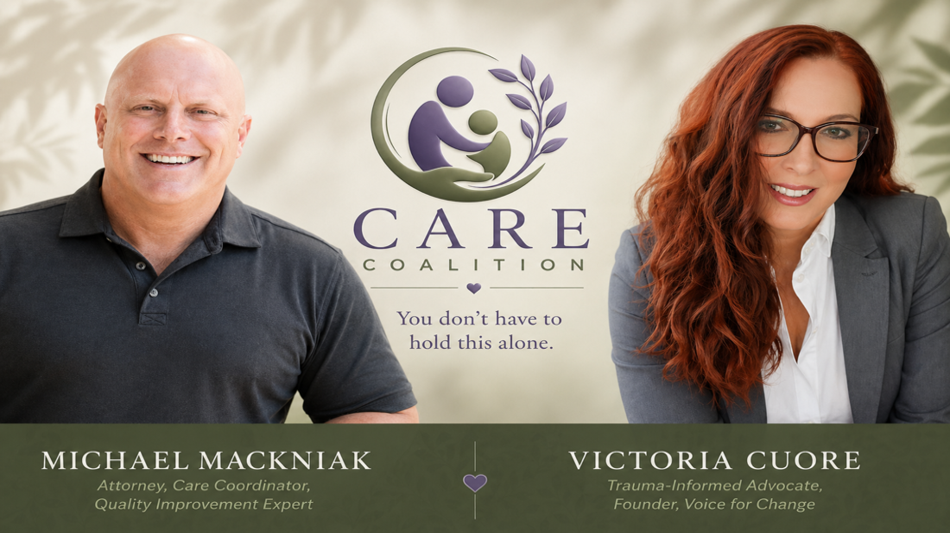
The Care Coalition, a nonprofit coordination initiative founded by mental health systems advocate and attorney Michael Mackniak, announced this week that it is expanding its national care coordination efforts through the Guardian Model™, a structured framework focused on continuity of care, crisis stabilization, caregiver support, and cross-system coordination for households managing serious mental illness and behavioral health challenges.

For more than three decades, the Guardian Model™ has strengthened communication and continuity among providers, families, legal systems, and community resources involved in long-term behavioral health support. According to organizational reporting, participating support networks experienced reduced reliance on emergency interventions and improved continuity of care coordination. The organization stated that prior evaluations associated with the framework included research participation connected to Hunter College and the UMass Donahue Institute.

"We have spent decades responding to mental health emergencies as isolated events instead of addressing the coordination failures that allow instability to escalate in the first place," said Mackniak. "Families frequently become the only constant link between systems that were never designed to communicate effectively with one another." "The long-term cost of fragmented care is measured not only in financial strain, but in repeated instability for households forced to navigate disconnected systems without coordinated guidance," Mackniak added.
Advocates say many households managing serious behavioral health conditions are effectively functioning as long-term care coordinators without formal training or centralized support. Families are often left managing psychiatric emergencies, discharge planning, medication coordination, transportation, legal documentation, and provider communication across multiple agencies operating independently of one another.
"Families are not failing because they lack effort," said Victoria Cuore. "Many households are carrying medical crises, psychiatric instability, legal barriers, and trauma simultaneously while trying to navigate systems that often operate in isolation from one another."

Cuore, founder of A Contagious Smile, partners with the Care Coalition on caregiver education initiatives, public awareness efforts, and mental health advocacy programming. The organizations operate independently while collaborating on projects focused on caregiver support, mental health education, and systems navigation resources. As part of its public education and awareness efforts, the Care Coalition also contributes to conversations about mental health systems, caregiving, and continuity of care through initiatives such as the Holding It Together (Kinda) podcast, which examines systemic challenges affecting families, providers, and behavioral health support networks.
The organization currently provides crisis planning support, educational programming, peer-support initiatives, online caregiver communities, advocacy resources, and systems-navigation tools focused on continuity of care and crisis preparedness. According to the organization, its coordination framework is intended to support families, providers, and care partners before situations escalate into repeated emergency interventions or institutional crisis responses.

Leadership also announced plans to convene a future caregiving and mental health coordination summit intended to bring together families, providers, legal professionals, policymakers, and advocacy organizations to examine continuity-of-care failures and potential reform strategies. "We are seeing families across the country carrying responsibilities that should never fall entirely on one household alone," Cuore said. "The goal is not simply to create awareness. It is to help build stronger coordination, stronger support systems, and long-term structural change for people navigating mental illness, trauma, and complex caregiving realities."
Participants involved in the initiative described one of the largest ongoing challenges as the lack of coordination among systems operating under separate legal, medical, and administrative structures. "Families are repeatedly told where to go next, but rarely given a unified process for navigating the entire situation," said one participating family member involved with the initiative. "What stood out about this model was having structure during moments that otherwise felt completely chaotic."

Care Coalition is a care coordination and advocacy initiative focused on continuity of care, caregiver support systems, and cross-sector mental health collaboration. Additional information about the Care Coalition and its initiatives can be found at carecoalition.org
CONTACT:
[email protected]
www.carecoalition.org
SOURCE: Care Coalition