



Wednesday, 20 May 2026 07:18 AM
Company Update
SIOUX FALLS, SD / ACCESS Newswire / May 20, 2026 / As healthcare organizations across the country continue facing workforce shortages, provider burnout, financial pressure, and increasing challenges recruiting clinicians to rural communities, healthcare leaders are searching for solutions that go beyond temporary staffing fixes and short term incentives.
Avel eCare, the nation's leading Virtual Health System, is helping healthcare organizations reframe telemedicine not simply as a technology solution, but as a long term workforce stabilization strategy designed to support recruitment, retention, provider sustainability, and continuity of care.
As national and state Rural Health Transformation initiatives continue expanding opportunities for healthcare organizations to modernize care delivery, workforce sustainability has become one of the most urgent priorities facing rural hospitals and health systems. Healthcare leaders are increasingly recognizing that solving workforce challenges requires more than sign-on bonuses, temporary staffing contracts, or short-term recruitment efforts.
"A sustainable workforce strategy has to focus on supporting the clinicians already serving these communities," said Dr. Kelly Rhone, Chief Medical Officer at Avel eCare. "Virtual care is not about replacing local providers. It is about strengthening and extending the local care team so clinicians feel supported, connected, and able to continue practicing in the communities that depend on them."
With more than 30 years of telemedicine experience across 46 states, Avel eCare's Virtual Health System provides clinician-to-clinician support across emergency medicine, inpatient care, ICU, behavioral health, EMS, pharmacy, virtual nursing, and specialty services.
Telemedicine as a Workforce Retention Strategy
One of the greatest challenges facing rural healthcare organizations is provider isolation and burnout, particularly during high-acuity, low-frequency events where clinicians may have limited local support.
Avel's Virtual Health System allows physicians, nurses, EMS teams, and frontline clinicians to immediately connect with board-certified specialists, experienced nurses, pharmacists, intensivists, and emergency physicians for real-time support during critical patient situations.
This peer-to-peer collaboration model helps clinicians feel supported during some of the most stressful situations they encounter, while also improving confidence and reducing workforce fatigue.
"I think telemedicine can offer a beacon of stability," said Keith Holt, Director of Acute Inpatient Services and Senior Care at Avel eCare. "Clinicians know they have experienced intensivists and nurses available at the push of a button. That level of support helps reduce burnout, improves confidence, and creates a stronger environment for workforce retention and recruitment."
Healthcare organizations utilizing Avel's services are increasingly viewing virtual care as part of a broader workforce sustainability strategy rather than a standalone clinical tool. The model helps reduce overnight call pressure, extends specialty expertise into underserved communities, and creates more flexible staffing models without removing local autonomy or replacing community-based providers.
Supporting Rural Providers Without Replacing Them
Unlike temporary staffing solutions or locum coverage, Avel's Virtual Health System is designed to integrate into existing care teams and workflows while preserving local decision-making authority.
"Our services are not there to replace the local care team," said Dr. Rhone. "We are there to partner with them, collaborate with them, and support them through difficult situations so they can continue providing care locally."
That support is especially important in rural environments where clinicians may work independently overnight or encounter critical patient scenarios without immediate access to specialists.
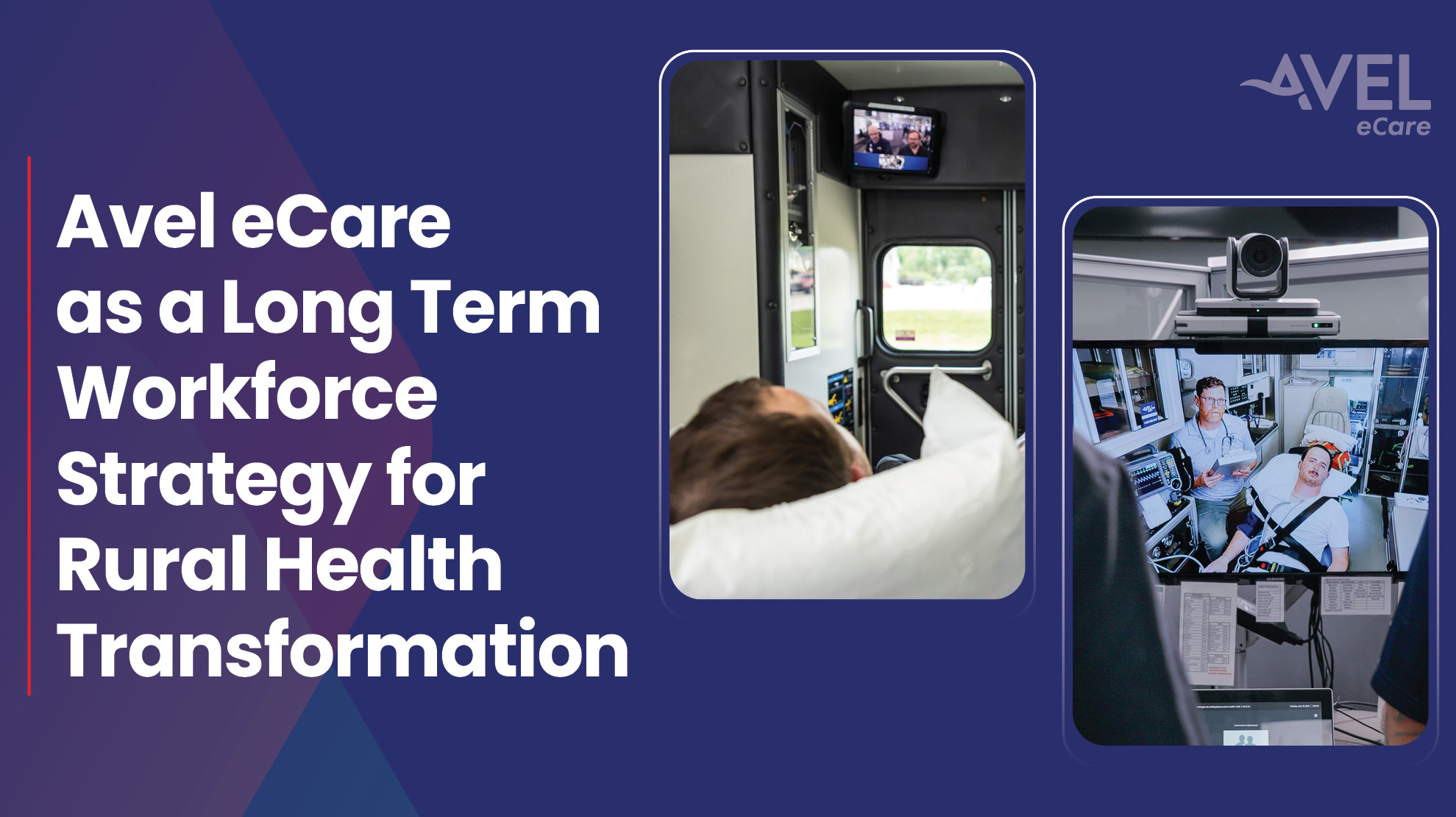
Through services like emergency telemedicine, ICU support, virtual hospitalists, pharmacy, behavioral health, and EMS telemedicine, clinicians can immediately connect with experienced peers who routinely manage complex clinical situations.
Healthcare organizations are increasingly viewing virtual care as part of a broader workforce sustainability strategy rather than a standalone clinical tool. The model helps reduce overnight call pressure, extends specialty expertise into underserved communities, and creates more flexible staffing models without removing local autonomy or replacing community-based providers.
Building Sustainable Rural Health Infrastructure
Healthcare leaders nationwide continue evaluating how Rural Health Transformation funding and other healthcare modernization initiatives can support long term operational sustainability. Avel's Virtual Health System helps organizations build scalable workforce support models that can remain sustainable beyond initial grant funding periods by improving staffing flexibility, reducing unnecessary transfers, supporting local admissions, and decreasing dependence on temporary staffing models.
The organization's integrated approach allows healthcare systems to maintain local care delivery while bringing specialty expertise into rural communities that may otherwise struggle to recruit or retain full-time specialists.
"We know healthcare organizations are looking for stability right now," said Dr. Rhone. "Virtual care allows hospitals to strengthen their workforce, improve support for clinicians, and continue delivering high-quality care close to home in a way that is sustainable long term."
A National Partner for Rural Health Transformation
Founded in 1993 as the nation's first virtual hospital, Avel eCare continues supporting healthcare organizations through innovative virtual care solutions focused on workforce sustainability, specialty access, operational stability, and improved patient outcomes.
Today, Avel supports healthcare organizations across 46 states through its Virtual Health System model designed to strengthen healthcare delivery both inside and beyond hospital walls.
Healthcare organizations interested in learning more about Avel eCare's workforce support services and Virtual Health System approach can visit:
https://www.avelecare.com/rural-health/
About Rural Health Transformation
Rural health transformation initiatives across the United States are focused on strengthening workforce sustainability, improving specialty access, modernizing care delivery, and preserving access to healthcare services in rural and underserved communities. Virtual care infrastructure and workforce support models are increasingly recognized as critical components in helping healthcare organizations address clinician shortages, improve operational efficiency, and create long term sustainability strategies.
Additional information about national rural health transformation initiatives can be found through the Centers for Medicare & Medicaid Services (CMS) and the Federal Office of Rural Health Policy:
U.S. Department of Health and Human Services:
https://www.hhs.gov/press-room/cms-rural-health-transformation-program-50-billion.html
Centers for Medicare & Medicaid Services:
https://www.cms.gov/priorities/rural-health-transformation-rht-program/overview
About Avel eCare
Founded in 1993 as the nation's first virtual hospital, Avel eCare provides virtual emergency, EMS, critical care, pharmacy, clinic, senior care, and behavioral health services to healthcare partners across the U.S. The organization specializes in expanding access, improving outcomes, and supporting care delivery in rural and underserved communities.
Contact:
Jessica Gaikowski, Director of Marketing & Communications
[email protected] | 605.606.0150
SOURCE: Avel eCare