




Friday, 15 May 2026 08:55 PM
Advertorial
New dietary supplement overview examines carotenoids, botanical extracts, antioxidant vitamins, pricing details, and regulatory considerations for adults researching nutritional vision support.
LAKELAND, FL / ACCESS Newswire / May 15, 2026 / Disclaimers: This article contains affiliate links. If you purchase through these links, a commission may be earned at no additional cost to you. This content is for informational and advertising purposes only and should not be interpreted as medical advice. These statements have not been evaluated by the Food and Drug Administration. This product is not intended to diagnose, treat, cure, or prevent any disease. Consult a qualified healthcare professional before beginning any new supplement regimen, particularly if you are pregnant, nursing, under 18, or managing an existing medical condition.
Vision Vance Announces Eye Health Support Supplement With Lutein, Zeaxanthin, and Antioxidant Nutrients
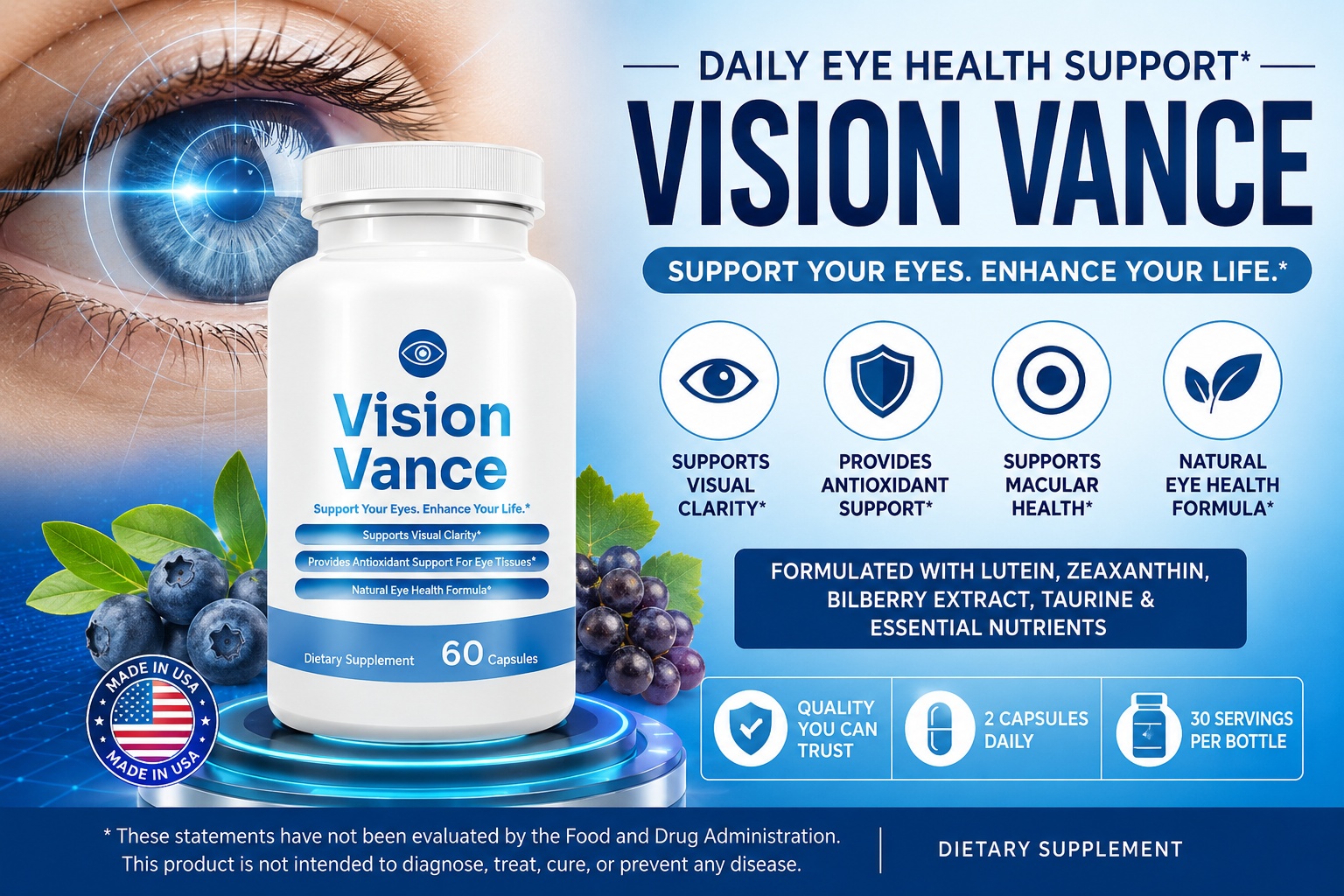
The eye health supplement category has expanded significantly over the past decade, and a growing share of that growth is driven by one simple reality: most adults are not getting the nutrients their eyes need most through diet alone. Vision Vance, a new dietary supplement formulated to support eye tissue health through a multi-ingredient blend of carotenoids, antioxidants, botanical extracts, and essential minerals, has launched through the official Vision Vance website with a 60-day satisfaction guarantee and multiple supply options.
This overview covers the full ingredient profile, the nutrition research context behind each key component, who the supplement is designed for, what to know about pricing and the guarantee before purchasing, and the regulatory framework that governs this product category - so readers can evaluate whether this formula fits their personal wellness goals.
Vision Vance is a dietary supplement - not a drug - and is not intended to diagnose, treat, cure, or prevent any eye condition or disease. Everything in this article describes nutritional and structure/function roles only, consistent with the Dietary Supplement Health and Education Act of 1994. Readers are encouraged to consult an eye care professional or physician before adding any new supplement to their routine.
View the current Vision Vance pricing and availability here
Disclosure: If you buy through this link, a commission may be earned at no extra cost to you.
Why Eye Nutritional Support Has Become a Priority for So Many Adults
Before diving into the formula itself, it is worth understanding why the demand for dedicated eye health supplementation has grown so steadily - because that context shapes who this product is actually for and what it realistically does.
The two nutrients most consistently associated with macular health in the nutrition literature - lutein and zeaxanthin - cannot be produced by the human body. They are not synthesized internally the way some vitamins are. Every microgram present in the macula had to come from food or supplementation. And the problem is that the primary dietary sources of both - cooked leafy greens like kale and spinach, and to a lesser extent egg yolks and orange and yellow vegetables - are not foods that most American adults are eating in consistent, meaningful amounts every day.
Research published in nutrition and ophthalmology journals has repeatedly documented that average lutein and zeaxanthin intake among U.S. adults falls substantially short of the amounts used in major eye health studies. One frequently cited benchmark in the literature is the formulation studied in the National Eye Institute's Age-Related Eye Disease Study 2 - known as AREDS2 - which used 10 mg of lutein and 2 mg of zeaxanthin per day. Most adults are not reaching either figure through their typical diet.
At the same time, modern daily life has introduced a level of sustained visual demand and blue light exposure that has no real precedent in human history. Adults today average more than seven hours of daily screen time across computers, smartphones, tablets, and televisions. That sustained near-focus work and the high-energy, short-wavelength light emitted by screens represents a form of daily visual stress that the eye's nutritional defenses are meant to help manage - but only when those nutrients are actually present in sufficient concentrations in macular tissue.
These two dynamics together - a widespread dietary gap in the carotenoids the macula depends on, and a historically high level of daily visual demand - explain why dedicated eye health supplementation has become a mainstream wellness priority rather than a niche concern. They also explain why a formula that addresses multiple aspects of eye tissue nutrition simultaneously is more relevant to more people than a single-ingredient lutein capsule.
Vision Vance was developed to address that full nutritional picture in a single daily serving, combining the core carotenoids with antioxidant vitamins, an amino acid found naturally in retinal tissue, botanical extracts with documented histories in eye wellness, and essential minerals that participate directly in visual function.
What Is Vision Vance? An Overview of the Formula and the Brand
Vision Vance is a non-prescription dietary supplement distributed by Vision Vance, headquartered in Lakeland, Florida. The product is sold in bottles of 60 capsules, providing 30 servings at the suggested dose of 2 capsules per day. It is manufactured in the United States in an FDA-registered facility using globally sourced ingredients.
The formula takes a broad-spectrum approach to eye tissue nutrition, rather than focusing narrowly on one or two ingredients. It brings together carotenoids, fat-soluble and water-soluble antioxidant vitamins, a sulfur-containing amino acid with documented presence in retinal tissue, multiple botanical extracts with established roles in traditional and contemporary herbal wellness for the eyes, bioflavonoids associated with capillary nutritional support, and essential minerals that participate in antioxidant enzyme function and visual pigment production.
That multi-layered approach is a meaningful distinction from entry-level eye vitamins that may contain only lutein and perhaps vitamin C. The eye is a metabolically complex organ - one of the highest oxygen-consuming tissues in the body by weight - and comprehensive nutritional support logically involves more than one or two nutrient classes. Each ingredient in Vision Vance is disclosed on the label with its exact amount, which is a basic but important standard that not all supplement brands maintain.
The Full Ingredient Profile: What Is in Vision Vance and What the Nutrition Literature Says
The following breakdown covers every active ingredient in the Vision Vance formula, what each ingredient is, and what the nutrition and herbal research literature documents about its role in supporting eye health. These are nutritional and structure/function roles - they describe how nutrients interact with eye tissue in the body, not claims about what this specific product will do for any individual.
Lutein - The Primary Macular Carotenoid
Lutein is a fat-soluble carotenoid that the human body selectively concentrates in the macula - the small but critical central region of the retina responsible for sharp, color-accurate, detail-oriented vision. It is one of the most extensively studied single nutrients in the entire field of eye health nutrition.
The primary mechanism studied in the nutrition literature is lutein's function as a natural filter for high-energy visible light, particularly the blue wavelength range emitted by digital screens and present in outdoor sunlight. Macular pigment - the yellow-tinted tissue at the center of the retina - is composed almost entirely of lutein and zeaxanthin, and its optical density directly reflects the amount of these carotenoids present. Higher macular pigment density means more light-filtering capacity; lower density means reduced protection against the kind of cumulative light-induced oxidative stress that is associated with age-related changes in macular health.
Lutein is also studied as an antioxidant within retinal tissue, where it helps neutralize free radicals generated by light exposure and metabolic activity. Because the retina has one of the highest rates of oxygen consumption and light exposure of any tissue in the body, antioxidant nutrition here is particularly relevant.
Crucially, lutein cannot be produced by the human body. It is an essential dietary carotenoid, meaning every molecule present in macular tissue arrived through food or supplementation. This fact is central to the rationale for supplementation - if dietary intake is consistently inadequate, macular lutein concentrations will reflect that deficit over time.
Zeaxanthin (2.4 mg per serving) - Lutein's Complementary Partner
Zeaxanthin is the second primary carotenoid found in macular pigment and works in close coordination with lutein. While lutein is found in higher concentrations in the peripheral region of the macula, zeaxanthin is preferentially concentrated in the very center of the macula - the fovea - where visual cell density and the need for precision are highest. The two carotenoids together form the complete macular pigment system.
Nutrition research has examined zeaxanthin for its own antioxidant activity within retinal tissue, where it contributes to the neutralization of singlet oxygen and other reactive species generated by sustained light exposure. Studies examining macular pigment optical density have generally found that both carotenoids need to be present in meaningful amounts to support macular pigment density comprehensively - neither alone fully substitutes for the other.
Like lutein, zeaxanthin cannot be synthesized by the human body and must be obtained through diet - primarily from orange and yellow vegetables including corn, orange bell peppers, and egg yolks - or supplementation. Because dietary zeaxanthin is even less abundant in typical American diets than lutein, it is frequently the more deficient of the two carotenoids in individuals not actively supplementing.
Bilberry Fruit Extract (18 mg per serving) - Traditional Botanical Support for Eye Comfort
Bilberry (Vaccinium myrtillus) is a European relative of the blueberry with a remarkably long history of use in traditional herbal wellness for eye health and visual comfort. Its documented traditional use spans centuries of European botanical medicine, and it has been the subject of contemporary nutrition research exploring its mechanisms of action.
The active compounds of interest in bilberry are its anthocyanins - a class of deep blue and purple plant pigments with potent antioxidant activity. Bilberry has among the highest anthocyanin concentrations of any commonly used botanical, and its extract preparations standardize for these compounds specifically.
Nutrition research has explored bilberry for its potential role in supporting microcirculation in the small capillaries that supply the retina, which are particularly sensitive vessels that depend on vascular health for adequate oxygen and nutrient delivery to photoreceptor cells. It has also been studied in the context of visual fatigue and eye comfort - areas of growing relevance given the prevalence of extended screen use among adults.
Bilberry's combination of traditional use depth and contemporary research interest makes it one of the most established botanical ingredients in the eye health supplement category.
Taurine (168 mg per serving) - An Amino Acid Native to Retinal Tissue
Taurine is a sulfur-containing amino acid - technically classified as a conditional amino acid because the body can produce some of it, though not always in sufficient amounts - that is found in unusually high concentrations in healthy retinal tissue. Among all the tissues in the body, the retina maintains some of the highest taurine concentrations observed anywhere, which has driven substantial research interest in its specific functions there.
The mechanisms studied in the nutrition and biochemistry literature include taurine's role in supporting photoreceptor function and integrity - the rods and cones responsible for translating light into neural signals that become visual perception. Taurine is involved in regulating osmotic balance in retinal cells, participating in membrane stabilization, and providing antioxidant activity against the oxidative stress generated by the retina's intense metabolic activity.
Animal studies examining taurine depletion in retinal tissue have consistently documented structural changes in photoreceptor cells, which has informed the hypothesis that adequate taurine nutrition supports retinal cell health. At 168 mg per serving, Vision Vance includes taurine at one of the higher doses found in eye health supplement formulations.
Eyebright Extract - Euphrasia officinalis (12 mg per serving)
Eyebright (Euphrasia officinalis) is a flowering plant that has been used in European herbal medicine for eye wellness support for centuries. Its name reflects this traditional association - it was historically one of the primary botanicals referenced in pre-modern herbalism specifically for eye comfort applications.
Contemporary herbalism and botanical supplement research has examined eyebright for its antioxidant plant compound content, including iridoid glycosides, flavonoids, and phenolic acids. While it remains primarily a traditionally-positioned ingredient rather than one with an extensive modern RCT evidence base, its centuries-long documented use in eye health herbal traditions and its antioxidant phytochemistry continue to make it a standard inclusion in comprehensive eye support formulations.
Eyebright is generally considered well-tolerated when used in oral supplement form at standard extract doses.
Grape Seed Extract (88 mg per serving) - A High-Dose Antioxidant Botanical
Grape seed extract is one of the higher-dosed botanical ingredients in the Vision Vance formula, at 88 mg per serving. It is standardized for proanthocyanidins - a class of condensed tannin compounds that exhibit potent antioxidant activity and have been the subject of nutrition research exploring vascular and tissue-protective applications.
Proanthocyanidins are among the most bioavailable antioxidant compounds found in plant-based foods and supplements, and their ability to cross into various tissue compartments - including the blood-brain barrier and ocular tissues in some research contexts - has made them a subject of interest in eye health nutrition. Research has examined grape seed extract for its potential role in supporting capillary integrity and providing antioxidant protection to sensitive tissues subject to oxidative stress.
In the context of an eye health formula, grape seed extract contributes to the overall antioxidant density of the blend, complementing the carotenoid-based antioxidant activity of lutein and zeaxanthin with a chemically distinct class of plant antioxidants.
Alpha Lipoic Acid (8 mg per serving) - The Universal Antioxidant
Alpha lipoic acid occupies a unique position in the antioxidant landscape because it is active in both water-soluble and fat-soluble environments. Most antioxidants are effective in one medium or the other - Vitamin C in aqueous environments, Vitamin E in lipid environments - but alpha lipoic acid functions in both.
This dual-phase activity is particularly relevant to eye tissue, which contains both water-rich structures (aqueous humor, vitreous humor) and lipid-rich membranes (photoreceptor outer segments, retinal cell membranes). Alpha lipoic acid has also been studied for its ability to regenerate other antioxidants - including Vitamin C and Vitamin E - within tissue after they have been oxidized, which amplifies its effective antioxidant contribution beyond its own direct activity.
Nutrition research has examined alpha lipoic acid in the context of lens health and retinal antioxidant defense, making it a scientifically coherent addition to a comprehensive eye health formula.
Quercetin Dihydrate and Rutin (8 mg each per serving) - Synergistic Bioflavonoids
Quercetin and rutin are both members of the flavonoid family - plant-based polyphenol compounds found in a wide range of fruits and vegetables. They are frequently studied together because of their complementary antioxidant activity and their shared association with capillary nutritional support in the bioflavonoid research literature.
Quercetin is one of the most widely studied flavonoids in nutritional biochemistry. Its antioxidant activity extends to protection against lipid peroxidation in cell membranes, and research has examined its role in supporting the bioavailability and recycling of Vitamin C - a mechanism that is directly relevant in tissues with high Vitamin C concentrations, including the eye.
Rutin is a quercetin glycoside (quercetin bound to a sugar molecule) that has been studied specifically for capillary wall integrity support and its role in maintaining the structural health of small blood vessels. Given that the retina depends on an intricate network of capillaries for its oxygen and nutrient supply, ingredients with documented roles in capillary nutritional support are a logical inclusion in eye health formulations.
Zinc (26 mg per serving - 236% Daily Value)
Zinc is an essential trace mineral with a direct and well-documented role in visual function. Its primary mechanism in the eye involves its participation in the conversion of Vitamin A to rhodopsin - the visual pigment in rod photoreceptors that enables low-light and night vision. Without adequate zinc, Vitamin A cannot be effectively utilized in the retina, regardless of how much Vitamin A is consumed.
Zinc is also a structural component of the enzyme superoxide dismutase, one of the body's primary endogenous antioxidant enzymes, and participates in numerous other enzymatic reactions throughout eye tissue. It is found in particularly high concentrations in the retina and choroid - the vascular layer beneath the retina - relative to most other tissues in the body.
Zinc's importance in eye nutrition is well established enough that it is one of the five nutrients included in the National Eye Institute's AREDS2 formulation research, alongside Vitamins C and E, lutein, and zeaxanthin. Vision Vance includes it at 26 mg per serving - 236% of the Daily Value - which reflects a meaningful supplemental dose.
Vitamin C (200 mg per serving - 222% Daily Value)
The eye concentrates Vitamin C in several compartments - particularly the aqueous humor and the lens - at levels significantly higher than those found in blood plasma. This selective concentration pattern suggests a specific physiological role, which nutrition research has examined in the context of protecting lens structures and aqueous humor from oxidative damage associated with UV light exposure, metabolic byproducts, and environmental pollutants.
Vitamin C is a water-soluble antioxidant, meaning it provides antioxidant protection in the aqueous environments of the eye. It also works in coordination with Vitamin E - replenishing oxidized Vitamin E in lipid-rich membranes - and with bioflavonoids like quercetin, creating a synergistic antioxidant network rather than acting in isolation.
At 200 mg per serving - 222% of the Daily Value - Vision Vance provides Vitamin C at a dose well above typical dietary baseline, which is relevant given how quickly water-soluble vitamins are used up and excreted.
Vitamin A as Beta-Carotene (100 mcg per serving)
Vitamin A is the precursor to retinol, which is the form directly utilized in the eye for rhodopsin synthesis. Beta-carotene is a provitamin A carotenoid - the body converts it to retinol as needed. This conversion-on-demand mechanism is considered safer than preformed retinol supplementation because the body regulates the conversion rate, reducing the risk of excess retinol accumulation.
Beyond rhodopsin production, Vitamin A supports the integrity of the corneal epithelium and the conjunctival membranes - the mucous membranes lining the surface of the eye and eyelids - which are part of the eye's first line of physical protection. Vitamin A deficiency is the most well-established single-nutrient cause of night vision impairment in clinical nutrition literature.
Vitamin E (26 mg per serving - 173% Daily Value)
Vitamin E is the primary fat-soluble antioxidant in cell membranes throughout the body. In eye tissue, its relevance is particularly concentrated in the photoreceptor outer segments - the stacked membrane discs in rod and cone cells - which are rich in polyunsaturated fatty acids and therefore highly vulnerable to lipid peroxidation from oxidative stress.
Like zinc and Vitamin C, Vitamin E is a component of the AREDS2 formulation studied by the National Eye Institute, which speaks to its recognized standing in the eye health nutrition research literature. It works in synergy with Vitamin C - the two antioxidants operate in different tissue compartments and regenerate each other, creating a cooperative antioxidant system.
B-Vitamins: Thiamine B1 (6.4 mg), Riboflavin B2 (8 mg), Niacin (40 mg), Vitamin B12 (27 mcg), Biotin (800 mcg)
The B-vitamin complex in Vision Vance supports the neurological and metabolic infrastructure that visual function depends on. Riboflavin (B2) is recognized by the European Food Safety Authority as contributing directly to the maintenance of normal vision, and is one of the most consistently included B-vitamins in eye health formulations. Riboflavin deficiency has been associated with light sensitivity and ocular surface discomfort in clinical nutrition literature.
The remaining B-vitamins - thiamine, niacin, B12, and biotin - support cellular energy metabolism and neurological function, including in the optic nerve and the visual processing pathways of the central nervous system. B12, in particular, has been studied for its role in optic nerve health and its association with homocysteine metabolism, elevated levels of which have been studied as a potential factor in age-related eye health changes.
Lycopene (400 mcg per serving)
Lycopene is a red carotenoid found primarily in tomatoes, watermelon, and pink grapefruit. It is one of the most potent antioxidant carotenoids in terms of singlet oxygen quenching capacity - the specific form of oxidative stress associated with light-induced tissue damage. Its inclusion in Vision Vance contributes to the formula's overall carotenoid antioxidant depth, adding a chemically distinct carotenoid to complement the macular carotenoids lutein and zeaxanthin.
The Complete Supplement Facts Panel
Serving Size: 2 capsules | Servings Per Container: 30
Vitamins and Minerals Per Serving: Vitamin A (as beta-carotene) 100 mcg (11% DV) · Vitamin C (as ascorbic acid) 200 mg (222% DV) · Vitamin E 26 mg (173% DV) · Thiamine B1 6.4 mg (533% DV) · Riboflavin B2 8 mg (615% DV) · Niacin 40 mg (250% DV) · Vitamin B12 (as cyanocobalamin) 27 mcg (1,125% DV) · Biotin 800 mcg (2,667% DV) · Magnesium (as magnesium oxide) 24 mg (6% DV) · Zinc (as zinc oxide) 26 mg (236% DV) · Selenium (as selenium chelate) 0.2 mcg (<1% DV) · Copper (as copper gluconate) 0.3 mg (33% DV) · Chromium (as chromium picolinate) 4 mcg (11% DV)
Botanical and Amino Acid Profile Per Serving: Taurine 168 mg · Grape Seed (Vitis vinifera) Extract 88 mg · Bilberry (Vaccinium myrtillus) Fruit Extract 18 mg · Eyebright (Euphrasia officinalis) Extract 12 mg · Alpha Lipoic Acid 8 mg · Quercetin Dihydrate 8 mg · Rutin 8 mg · Zeaxanthin 2.4 mg · Lutein 800 mcg · Lycopene 400 mcg
Other Ingredients: Microcrystalline cellulose, hydroxypropyl methylcellulose (vegetable capsule), magnesium stearate, silicon dioxide.
Who Should Consider Vision Vance?
Understanding who this formula is realistically designed for is important - because dietary supplements work best when matched to individuals who have a genuine nutritional need or wellness goal they are trying to address.
Adults with limited lutein and zeaxanthin dietary intake are the most straightforward match. If leafy green vegetables are not a consistent part of your daily diet - and for most American adults, they are not - then your macular tissue is almost certainly receiving less carotenoid support than nutrition research considers optimal. Supplementation is a practical, accessible way to close that gap regardless of daily dietary variation.
Adults who spend significant time on digital screens are increasingly represented in the eye health supplement audience. Whether the context is a full workday at a computer, extended phone use, reading on a tablet, or evening television, sustained blue light and near-focus visual demand is now a daily feature of adult life for most people. Macular nutrition is one evidence-informed approach to supporting eye comfort alongside practical habits like regular screen breaks and appropriate lighting.
Adults in their 40s and older who are being proactive about macular nutrition represent a third key group. Macular pigment density, which depends on consistent carotenoid intake over years, tends to decline in adults who are not actively replenishing it. The earlier consistent supplementation begins, the more it functions as a proactive nutritional strategy rather than a reactive one.
People transitioning from basic eye vitamins to a more comprehensive formula may find Vision Vance offers a broader nutritional profile than many single-ingredient or two-ingredient products on the market. The combination of carotenoids, antioxidant vitamins, amino acid support, and botanical extracts in a single serving reduces the complexity of managing multiple separate supplements.
It is also worth being direct about who this product is probably not a strong match for: individuals managing diagnosed eye conditions who are under active care from an ophthalmologist or optometrist should discuss any supplement changes with their provider. Vision Vance is formulated for nutritional support as part of a wellness routine - it is not a medical treatment and should not be used as one.
Important safety note: Individuals who are pregnant, nursing, under 18, or taking prescription medications - particularly those for diabetes, glaucoma, or cardiovascular conditions - should consult a physician before use. Some nutrients in this formula, including zinc at 236% DV per serving, are present at levels that may interact with other supplements or medications in certain individuals.
Manufacturing Standards and Quality
Vision Vance is manufactured in the United States in an FDA-registered facility. According to the brand, the formula does not include artificial stimulants. The capsule shell is hydroxypropyl methylcellulose - a plant-derived capsule material, as opposed to gelatin, which may be relevant to consumers with dietary preferences around animal-derived ingredients.
An important clarification on manufacturing language: FDA-registered facility means the manufacturing site has registered with the FDA as required by federal regulation governing dietary supplement manufacturers. It does not mean the product or its ingredients have been reviewed, approved, or endorsed by the FDA. The FDA does not pre-approve dietary supplements before they reach market. Consumers evaluating any supplement brand should understand this distinction when encountering facility registration claims.
Pricing, Supply Options, and the 60-Day Guarantee - What Buyers Should Know
Vision Vance is currently available through the official website in three supply configurations.
The 2-bottle supply (60-day supply at the suggested 2-capsule daily dose) is priced at $79 per bottle, for a total of $158. Standard shipping rates apply at this tier.
The 3-bottle supply (90-day supply) reduces the per-bottle cost to $69, for a total of $207, and includes free U.S. shipping.
The 6-bottle supply (180-day supply) reduces the per-bottle cost further to $49, for a total of $294, and also includes free U.S. shipping. This tier represents the lowest per-serving cost for consumers who have decided to use the supplement consistently over an extended period.
All three purchase options are backed by a 60-day satisfaction guarantee from the date of purchase. Per the brand's published terms, customers who have used the product for at least 30 days before the 60-day window closes and are not satisfied with their experience may contact Vision Vance customer support to discuss their options. There are no automatic renewals, subscription charges, or recurring billing - each order is a one-time purchase.
Readers should be aware that prices, promotional discounts, bonus offers, shipping terms, and availability are all subject to change without notice. The figures above reflect publicly available information at the time of publication.
View the current Vision Vance pricing and availability here
Suggested Use and Storage
The suggested use for Vision Vance is 2 capsules daily with an 8 oz. glass of water, preferably in the morning before a meal. Taking fat-soluble nutrients like carotenoids and Vitamin E alongside a meal containing some dietary fat may support absorption, though the product label specifies pre-meal use.
Carotenoids like lutein and zeaxanthin are not acute-response nutrients. They accumulate in macular tissue over weeks and months of consistent supplementation, which means the value of the formula is realized through daily, uninterrupted use rather than from individual doses. Consistency is the most important factor in getting the intended nutritional benefit from this type of supplement.
Store in a cool, dry place away from heat, light, and humidity to preserve ingredient stability. Do not use if the safety seal is damaged or missing. Do not exceed the recommended dose. Keep out of the reach of children.
Regulatory Context: What the FDA and FTC Require From Dietary Supplement Advertising
Because eye health is a sensitive wellness category - and because the supplement industry contains a wide range of products making claims of varying credibility - it is worth being transparent about the regulatory framework governing what a product like Vision Vance can and cannot claim.
Under the Dietary Supplement Health and Education Act of 1994 (DSHEA), dietary supplements may make structure/function claims - statements describing how a nutrient supports the normal structure or function of the body - without FDA pre-approval, provided those claims are substantiated, accompanied by the required FDA disclaimer, and do not imply the product treats or prevents disease. Every nutritional description in this article is a structure/function statement of that kind.
What dietary supplements legally cannot do under current FDA and FTC regulations is claim to diagnose, treat, cure, mitigate, or prevent any specific disease or condition. A product that claimed to "treat macular degeneration" or "cure glaucoma" would be making a drug claim - one that would require FDA drug approval the product does not have. No such claims are made for Vision Vance, and readers should be cautious of any supplement brand that makes claims in that language.
The Federal Trade Commission has primary jurisdiction over dietary supplement advertising - including press releases, online content, and affiliate marketing content - and requires that all advertising claims be truthful, not misleading, and supported by competent and reliable scientific evidence before publication. The FTC's 2022 Health Products Compliance Guidance explicitly extended these requirements to press releases and other media content, not just traditional advertising formats.
This article operates within those frameworks. No claims are made in this content that exceed the structure/function standard, and every ingredient description is grounded in what the nutrition literature has examined - not what any specific product has proven in proprietary clinical testing.
About Vision Vance
Vision Vance is a dietary supplement brand distributed from Lakeland, Florida, focused on daily nutritional support for eye tissue health. The Vision Vance formula combines carotenoids, antioxidant vitamins, amino acids, and botanical extracts in a daily capsule format manufactured in an FDA-registered U.S. facility.
View the current Vision Vance pricing and availability here
Contact Information:
Company: VisionVance
Phone: 1-507-448-8190
Email: [email protected]
Address: Vision Vance Lakeland, FL 33804
Disclaimers
FDA Evaluation Disclaimer: These statements have not been evaluated by the Food and Drug Administration. This product is not intended to diagnose, treat, cure, or prevent any disease or health condition.
Not Medical Advice: The content in this press release is for informational and advertising purposes only and does not constitute medical advice, medical diagnosis, or a recommendation for any specific treatment or course of action. Readers should not rely on this content as a substitute for professional medical guidance, and any questions about a personal health condition, medication interaction, or supplement suitability should be directed to a licensed healthcare provider.
Individual Results Disclaimer: Individual results from dietary supplements vary based on factors including age, diet, lifestyle, overall health status, consistency of use, and individual biochemistry. No specific outcome, timeline, or level of benefit is guaranteed, implied, or typical for all users of this product.
Affiliate Disclosure: This article contains affiliate links. If you purchase through these links, a commission may be earned at no additional cost to you. This compensation does not influence the accuracy, neutrality, or integrity of the information presented in this review. All opinions and descriptions are based on publicly available details and are intended to help readers make informed decisions.
Pricing and Availability Disclaimer: All pricing, supply configurations, shipping terms, promotional discounts, bonus offers, and product availability information referenced in this article reflects publicly available product information at the time of publication and is subject to change without notice. Vision Vance and its distributors reserve the right to modify pricing, offers, and availability at any time. Readers should verify all current terms directly on the official website before making a purchase decision.
Guarantee Terms Disclaimer: The 60-day satisfaction guarantee referenced in this article is offered by Vision Vance and is subject to the brand's published terms and conditions, including the requirement that the product has been used for a minimum of 30 days prior to requesting a return. The publisher of this press release is not a party to the guarantee and has no role in processing or honoring return requests. Consumers with questions about the guarantee should contact Vision Vance customer support directly at [email protected] or 1-507-448-8190.
FDA-Registered Facility Clarification: References to the Vision Vance manufacturing facility being FDA-registered reflect a federal registration requirement applicable to dietary supplement manufacturers under 21 CFR Part 1 and do not imply that the FDA has inspected, reviewed, approved, or endorsed this product, its ingredients, or the manufacturing facility's compliance status. Facility registration and FDA product approval are legally and procedurally distinct concepts.
Ingredient Research Disclaimer: References to nutrition research, published studies, or the scientific literature in this article describe findings related to individual nutrients or botanical ingredients in general - not findings specific to the Vision Vance product formulation. No claim is made that Vision Vance as a finished product has been the subject of clinical trials, randomized controlled studies, or peer-reviewed research. Ingredient-level research does not constitute proof of finished-product efficacy.
Healthcare Professional Consultation: Individuals who are pregnant, nursing, under the age of 18, or managing an existing medical condition - including but not limited to glaucoma, diabetes, cardiovascular disease, or kidney disease - should consult a licensed physician or qualified healthcare provider before using this or any dietary supplement. This recommendation applies particularly to individuals currently taking prescription medications, as some nutrients in this formula are present at doses that may interact with certain drugs or affect the management of specific health conditions.
YMYL Content Notice: Eye health is a sensitive health category. The information in this article is intended to help readers make informed decisions about nutritional supplement use and is not a substitute for regular professional eye examinations, prescribed treatments, or the guidance of a licensed optometrist or ophthalmologist. Readers experiencing any symptoms of vision change, eye pain, or other ocular concerns should seek professional evaluation promptly rather than relying on dietary supplementation alone.
SOURCE: VisionVance