



Tuesday, 06 January 2026 10:10 PM
Advertorial
A detailed consumer explainer examines 1080P live viewing, motion alerts, night vision, two-way audio and key consent guidelines for households evaluating WiFi cameras without ongoing monthly fees.
CHICAGO, ILLINOIS / ACCESS Newswire / January 6, 2026 / This article contains affiliate links. If you purchase through these links, a commission may be earned at no additional cost to you. This compensation does not influence the accuracy, neutrality, or integrity of the information presented in this review. All opinions and descriptions are based on publicly available details and are intended to help readers make informed decisions.
SpyFocus Camera Overview Outlines Subscription-Free Indoor Monitoring Features and Privacy Considerations
You saw the ad while scrolling through your phone.
Maybe it was on Facebook during your lunch break. Maybe Instagram served it to you while you were supposed to be working. Maybe TikTok's algorithm decided you needed to see a tiny camera that promised to show you what happens at home when you're not there.
The ad probably featured a dog looking adorable on camera, or a parent checking their phone with visible relief, or crystal-clear footage of a living room at night. It made you think: "Wait, I could actually see what my dog does all day?" or "I could finally know my kids got home safe without calling them five times?"
Now you're here, searching for a SpyFocus review because you want to know if this thing is actually legit - or if it's another overpromised gadget that looks incredible in a thirty-second video but disappoints the moment you plug it in.
That skepticism is exactly why you should keep reading.
We're going to cover everything: what SpyFocus actually does based on their product page claims, whether the features appear to deliver what they promise, the legal considerations you need to understand before installing any camera in your home, who this device may genuinely serve well, and who should probably look elsewhere. No hype, no glossing over limitations, just the information you need to decide if this fits your life.
See current SpyFocus pricing and availability on the official website
Before You Buy Any Home Camera: Understanding the Legal Landscape
Before we talk about features, video quality, or whether this camera might finally let you catch your dog sneaking onto the couch, there's something more fundamental to address.
Using a camera in your home involves legal considerations that most ads skip over entirely. Getting this wrong can create real problems - not just awkward conversations, but potential legal liability. So let's establish the framework first.
The General Federal Framework
Under U.S. law, you generally have the right to record video on your own property in areas where there's no "reasonable expectation of privacy." In practical terms, this typically means common areas of your home - living rooms, kitchens, hallways, entryways, home offices, garages - are generally acceptable locations for security cameras.
These are spaces where visitors, service workers, or household members wouldn't reasonably expect complete privacy.
Areas Where Recording May Be Illegal
Certain locations carry such a high expectation of privacy that recording may be illegal even in your own home. These generally include bathrooms and restrooms, bedrooms when guests or caregivers are present, changing areas or anywhere someone might undress, and any space where a reasonable person would expect privacy for personal activities.
The "reasonable expectation" standard guides the analysis. Ask yourself: would someone using this space expect that they might be observed or recorded? If the answer is clearly no, recording that space creates potential legal exposure.
Audio Recording: Where It Gets More Complicated
Here's where many camera owners unknowingly create problems.
SpyFocus includes two-way audio functionality, which triggers a separate legal framework from video recording. Federal law generally operates under "one-party consent" for audio recording, meaning conversations can typically be recorded if at least one person in the conversation consents.
However, a number of states have adopted stricter "all-party consent" requirements. In these states, everyone being recorded must consent to the audio recording.
States commonly cited as requiring all-party consent include California, Delaware, Florida, Illinois, Maryland, Massachusetts, Montana, Nevada, New Hampshire, Pennsylvania, and Washington. Some states have additional nuances depending on the specific circumstances of recording.
Important: State laws change, and specific circumstances can affect how laws apply. This list represents commonly cited information but should not be relied upon as current legal advice. Before installing any recording device, verify the current laws in your specific state and consult with a qualified attorney if you have questions about your particular situation.
If you live in an all-party consent state and plan to record audio of babysitters, house cleaners, contractors, or anyone else in your home, you generally have two options: provide explicit notice that audio recording is occurring, or disable the audio recording feature entirely and use video-only monitoring.
Recording Caregivers and Service Workers
This is one of the most common use cases for cameras like SpyFocus, and it requires careful consideration.
Recording a nanny, babysitter, house cleaner, or other service worker on video in common areas of your home is generally considered legal in most jurisdictions. Many families use cameras specifically for this purpose, often called "nanny cams."
However, the audio component changes the analysis. In all-party consent states, recording conversations without the other person's knowledge may violate wiretapping laws. Even in one-party consent states, many legal experts recommend informing caregivers that monitoring occurs. This doesn't necessarily mean you need to reveal exact camera locations, but transparency about the existence of monitoring can protect you legally and establishes appropriate expectations.
The Bottom Line on Legal Compliance
Using SpyFocus for monitoring pets in common areas, checking on children after school, watching for package deliveries, or maintaining general home awareness is generally permissible under federal and most state laws when done in appropriate locations.
Using any camera to secretly record guests in private spaces, capture audio without appropriate consent where required, monitor areas where privacy is reasonably expected, or surveil neighbors or areas beyond your property creates legal exposure you want to avoid.
When in doubt about your specific situation, consult an attorney familiar with surveillance law in your state. Laws vary significantly by jurisdiction, and the investment in professional legal guidance is worth far more than the risk of getting this wrong.
What Is SpyFocus and How Does It Actually Work?
With the legal framework established, let's examine what SpyFocus claims to deliver based on their product page.
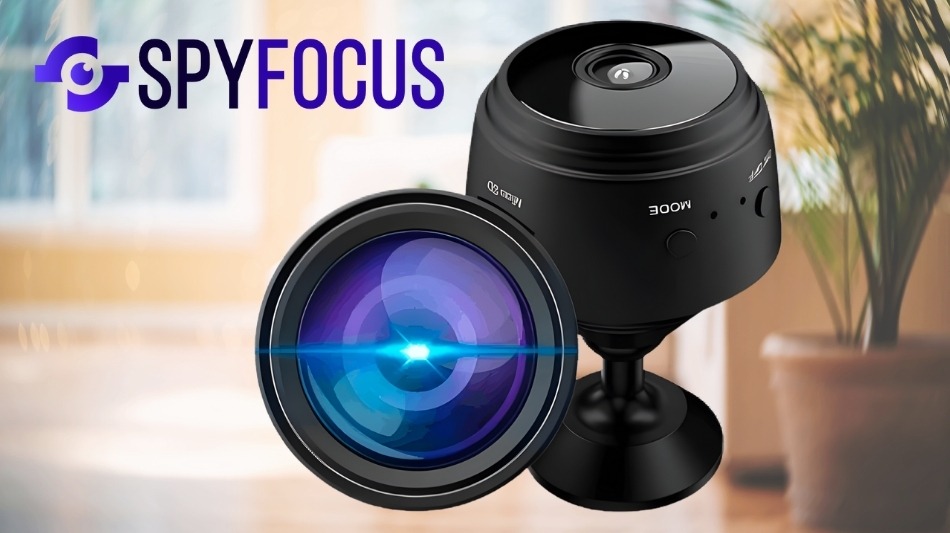
SpyFocus is a compact wireless surveillance camera marketed for discreet home monitoring. According to the brand's website, it connects to your home WiFi network and provides real-time video access through a dedicated smartphone app. The device is positioned toward people who want visibility into their home without the complexity, permanent installation, or ongoing subscription costs associated with traditional security systems.
Core Specifications Per the Brand's Website
The following specifications are listed on the SpyFocus product page:
Video Resolution: 1080P Full HD, which represents standard high-definition quality matching most streaming content and HDTVs.
Field of View: 120-degree wide-angle (per the brand).
Night Vision: Automatic infrared activation in low-light conditions.
Motion Detection: Triggers recording and sends push notifications when movement is detected.
Two-Way Audio: Enables both listening and speaking through the camera via the app.
Power Options: Rechargeable battery for wireless operation or continuous power through a connected cable. According to the brand, battery life varies by usage. Some materials describe multi-week battery life, while the FAQ notes that frequent motion alerts may require weekly charging.
Mounting: Magnetic base allowing tool-free placement on metal surfaces or flexible positioning elsewhere.
Subscription Model: According to the brand, no monthly subscription is required for core functionality.
The App Experience
According to SpyFocus product materials, the companion app provides live video streaming, recorded clip playback, motion alert management, camera settings adjustment, and two-way audio communication. The brand states that setup involves downloading the app, connecting the camera to WiFi through guided prompts, and adjusting settings to personal preferences.
Guarantee and Warranty Claims
The SpyFocus website advertises a 30-day money-back guarantee and a 2-year warranty. For specific terms, conditions, and the current return process, check the SpyFocus website directly before ordering, as policies can change and the details that apply to your purchase are those in effect at the time you order.
What 1080P Resolution Actually Means for Home Monitoring
Since video quality determines whether footage is actually useful, let's put 1080P in practical context.
At 1080P resolution, you can generally identify faces at reasonable distances, read text on packages or documents, see details like clothing colors and patterns, and distinguish between individuals. For most home monitoring purposes - watching pets, checking on children, documenting deliveries, reviewing activity - 1080P typically provides sufficient detail.
Some competing cameras now offer 2K or 4K resolution, which provides additional detail useful for outdoor security, license plate capture, or situations requiring maximum clarity. For typical indoor monitoring at the distances involved in living rooms and entryways, 1080P generally delivers what most users need.
The 120-degree viewing angle deserves attention because it affects how much of a room a single camera covers. Wider angles mean fewer blind spots but can introduce slight distortion at frame edges. For monitoring pets moving around a living room or children passing through common areas, the wide angle captures more activity with a single camera placement.
Night Vision and Motion Detection: The Features That Matter Most
How Infrared Night Vision Works
SpyFocus uses infrared night vision, which is the standard approach for consumer cameras operating in low light or darkness.
Infrared LEDs built into the camera emit light in wavelengths invisible to human eyes but detectable by the camera sensor. This illuminates the scene without creating visible light that would alert anyone being monitored or disturb sleeping children or pets.
The practical result is black-and-white footage in darkness that still shows movement, faces, and activity. Most consumer infrared systems provide useful footage within approximately 10 to 15 feet, though performance varies with specific devices and environmental conditions.
Motion Detection: What Makes or Breaks Usefulness
Motion detection makes the difference between a useful monitoring tool and a device you stop checking after a week.
When motion detection works well, you receive notifications about meaningful activity - someone arriving home, an animal moving around, unexpected movement in a space that should be empty. When it works poorly, you receive dozens of alerts for shadows, lighting changes, or minor movements that don't matter.
According to SpyFocus product information, their motion detection system triggers recording and sends push notifications when movement is detected.
The practical question is sensitivity calibration. Pet owners in particular care about this - you want to know if your dog is pacing anxiously, but you may not need an alert every time they shift position during a nap. Cameras that allow motion sensitivity adjustment through the app provide more flexibility for different use cases.
Why January 2026 Has Everyone Searching for Home Cameras
If you're reading this in early 2026, you're part of a predictable wave.
The weeks after New Year's often see increased interest in home cameras, pet monitoring devices, and security solutions. This isn't coincidence - it's the convergence of several factors hitting simultaneously.
The Resolution Effect
January brings "new year, new approach" energy. People who spent the holidays traveling and worrying about their empty home decide this is the year they'll actually do something about it. Parents who relied on neighbors to check on their kids during school breaks resolve to have better visibility. Pet owners who felt guilty about holiday boarding decide they want to stay connected daily.
Post-Holiday Realization
Many people return from holiday travel to discover something went wrong while they were away. Maybe packages were stolen from the porch. Maybe a pet-sitter didn't follow instructions. Maybe the house just felt different in ways that created unease.
These experiences convert vague "I should probably get a camera someday" thinking into "I need to solve this now" action.
Back-to-Routine Anxiety
The holiday break creates an artificial sense of presence. Kids are home, work schedules are relaxed, someone is usually around. When routines resume - kids back at school, adults back at offices, the house empty for hours - the awareness of that emptiness sharpens.
Pet owners especially feel this transition. After weeks of extra time together, leaving a dog home alone again triggers fresh awareness of how little you know about their solo experience.
The Pet Owner's Perspective: What Dog and Cat Owners Actually Need
Pet monitoring represents one of the largest use cases for mini cameras, and the emotional drivers are worth examining because they affect what features actually matter.
The Core Pet-Owner Anxiety
You leave for work and spend the next eight to ten hours periodically wondering: Is my dog okay? Is my cat eating? Did something happen? Is the pet sitter actually showing up?
This isn't paranoia - it's the normal response to caring about a dependent creature who can't text you updates. The modern solution is visibility: the ability to check in, see that everything is fine, and return attention to work without lingering worry.
What Pet Owners Actually Check For
Talking with pet owners reveals common monitoring priorities:
They want to confirm their pet is calm versus anxious, especially for dogs with separation anxiety. They want to see normal behavior patterns - eating, drinking, resting in familiar spots. They want to catch destruction in progress or evidence of accidents. They want to verify that dog walkers or pet sitters actually showed up and stayed appropriately. They want to observe signs of illness or distress that might require early return home.
Features That Matter for Pet Monitoring
Video quality sufficient to see body language matters because you're assessing behavior, not just presence. Wide viewing angles matter because pets move around, and a narrow camera that only sees one corner of the room misses most activity.
Two-way audio is polarizing among pet owners - some find that talking to their pet through the camera provides comfort while others observe that it confuses or distresses the animal. Having the option without being forced to use it is ideal.
Night vision matters for overnight monitoring of pets with health issues or anxiety that manifests at night.
How SpyFocus May Serve Pet Monitoring
Based on the specifications listed on their website, SpyFocus addresses these priorities reasonably well. The 1080P resolution provides detail sufficient for behavioral assessment. The 120-degree angle covers more room area than narrower alternatives. Two-way audio allows speaking to pets if desired. Night vision enables overnight monitoring capability.
What it doesn't offer compared to pet-specific cameras includes treat dispensing, bark-specific detection alerts, or features designed specifically for animal monitoring. For owners who want those capabilities, purpose-built pet cameras like Furbo or Petcube might serve better despite higher price points and potential subscription requirements.
For owners whose need is simply "I want to see my dog during the day and stop worrying," SpyFocus's general feature set may handle this without pet-camera premiums.
Realistic Expectations for Pet Monitoring
A camera creates visibility but doesn't solve underlying problems. If your dog has severe separation anxiety, seeing them pace and whine on camera might increase your stress rather than reduce it. The camera documents the issue - addressing it requires behavioral intervention, veterinary consultation, or environmental changes.
Similarly, if you discover your cat spends the entire day sleeping (as most cats do), you've answered your curiosity but the camera becomes less compelling over time. Many pet camera purchasers report initial fascination followed by gradually decreasing usage as the novelty fades and they're reassured that nothing dramatic happens.
This is worth considering when evaluating value. If the camera provides peace of mind during an anxious adjustment period - a new pet, a move, recovery from illness - that value is real even if usage decreases later.
The Parent's Perspective: Monitoring Children and Caregivers
Child-related monitoring involves more complexity than pet monitoring because it includes another adult - caregivers - and children who increasingly have their own privacy interests as they age.
The Latchkey Kid Scenario
Millions of children come home from school before their parents return from work. Parents want confirmation that kids arrived safely, that they're doing homework rather than things they shouldn't, and that no strangers have entered the home.
A camera monitoring the entry point and common areas provides this visibility without requiring children to call or check in, which teenagers particularly resist. You can glance at your phone, see your kid eating a snack in the kitchen, and return to work without the friction of mandatory check-in calls.
Motion Alerts as Arrival Notification
One practical application is using motion detection as arrival notification. If your camera covers the entry area and your child typically arrives at 3:30 PM, receiving a motion alert around that time may confirm arrival without requiring active check-in.
This only works reliably if motion sensitivity is appropriate and the camera has clear line of sight to the entry path.
Babysitter and Nanny Monitoring
This is one of the most common reasons people search for cameras like SpyFocus, and it requires careful consideration of both practical and ethical dimensions.
The practical case is straightforward: you're entrusting your child to someone else's care, and you want to verify that care is appropriate. A camera provides objective documentation of what actually happens.
The ethical dimension involves transparency. Secretly recording a caregiver raises questions beyond legal compliance. Some parents argue that anyone providing appropriate care shouldn't object to observation. Others argue that surveillance without disclosure indicates a trust problem that cameras don't actually solve.
The most defensible approach involves disclosure without necessarily revealing specificity. Inform caregivers that monitoring occurs without necessarily revealing exact camera locations. This creates consent, establishes expectations, and allows caregivers uncomfortable with observation to decline the position.
Privacy Considerations With Older Children
Monitoring becomes more nuanced as children age. A camera in a baby's nursery raises different considerations than a camera monitoring a teenager's common-area activity.
The appropriate balance evolves with the child's age and demonstrated responsibility. A commonly recommended, privacy-minded approach is to limit monitoring to common areas, avoid bedrooms once children have age-appropriate privacy expectations, be transparent about monitoring, and gradually reduce surveillance as responsibility increases.
SpyFocus Versus the Alternatives: Understanding Your Options
You have more choices than you might realize, and they serve different needs at different price points with different ongoing costs.
SpyFocus Versus Ring, Nest, and Ecosystem Cameras
Ring, Nest, and similar ecosystem cameras offer integration with broader smart home systems. If you already have Ring doorbells, Ring alarm systems, or Amazon Echo devices, adding a Ring indoor camera creates unified control and viewing. Similarly, Nest cameras integrate with Google Home ecosystems.
The tradeoff is often subscription dependency. Ring's basic functionality works without subscription, but accessing recorded footage, extended history, and advanced features typically requires Ring Protect plans. Nest cameras have similar structures through Nest Aware subscriptions.
For a single camera over several years, subscription costs can exceed the camera's purchase price multiple times over. If you're adding cameras to an existing ecosystem where you already pay subscription fees, the marginal cost is lower. If you're starting fresh and subscription avoidance is a priority, this matters significantly.
SpyFocus's subscription-free model (according to their website) means the purchase price may be the total cost. For budget-conscious buyers or those who prefer to avoid subscription accumulation, this represents a different value equation.
SpyFocus Versus Blink and Wyze
Blink and Wyze occupy similar market positions - affordable, accessible cameras with various subscription options. Blink Mini offers one of the lowest entry prices in the category but may require Blink subscription for cloud storage and some features. Wyze cameras are known for low entry prices, with Wyze Cam Plus subscriptions adding cloud recording and advanced detection features.
Both brands have established track records and large user communities, which means extensive troubleshooting resources, accessory availability, and documented real-world performance. They also often have physical retail presence, making returns and exchanges potentially simpler.
SpyFocus, selling primarily direct-to-consumer, offers a different buying experience. The tradeoff might be worth it for subscription avoidance, but buyers should understand the differences in purchase and return logistics.
SpyFocus Versus Pet-Specific Cameras
If pet monitoring is your primary use case, purpose-built pet cameras like Furbo, Petcube, or Pawbo offer features SpyFocus doesn't: treat dispensing, bark detection, specific pet-activity alerts, and in some cases two-way audio optimized for animal hearing ranges.
These specialized features typically come at higher price points and often include subscription elements for advanced functionality. If you want to toss your dog a treat from your office and receive alerts specifically when barking occurs, pet-focused cameras serve that need better than general-purpose devices.
If your need is simpler - checking whether your cat is napping or pacing, seeing if your dog has destroyed anything, confirming pets have access to water - a general camera like SpyFocus may handle these use cases without the premium for pet-specific features you might not use.
SpyFocus Versus Professional Security Systems
ADT, SimpliSafe, Vivint, and similar providers offer comprehensive security with professional monitoring, multiple sensors, emergency response integration, and coverage across your property. These systems include cameras as components of broader protection packages.
This is a fundamentally different category than SpyFocus occupies. Professional systems provide 24/7 monitoring with emergency dispatch, insurance documentation that may reduce premiums, multi-point protection including entry sensors and motion detectors, and professional installation and support.
SpyFocus isn't trying to replace professional security. It's a visibility tool for people who want to see what's happening at home without the infrastructure, cost, and commitment of full security systems. If your primary concern is emergency response capability, professional monitoring serves that need in ways standalone cameras don't.
The Security-Minded Homeowner: Setting Realistic Expectations
Some SpyFocus interest comes from security concerns - break-in worries, package theft, or desire for evidence if something goes wrong. Let's set realistic expectations for what any mini camera can and cannot do.
Deterrence: Does a Camera Prevent Crime?
Research on camera deterrence shows mixed results. Visible cameras in well-lit areas may reduce some property crime, likely because offenders prefer easier targets. Hidden or discreet cameras - which SpyFocus essentially is - provide less deterrent effect because potential offenders don't know they're being observed.
A tiny camera that blends into a bookshelf likely won't deter a burglar the way an obvious security camera and alarm system signs might. If deterrence is your primary goal, more visible security indicators may serve better.
Documentation: Evidence Value
Where cameras excel is documentation. If something does happen - a break-in, package theft, a dispute with a contractor - footage provides evidence that memory alone cannot match.
For this purpose, video quality matters significantly. 1080P resolution should allow facial identification at reasonable distances and documentation of what occurred.
The limitation is that a single camera captures a single view. Comprehensive documentation typically requires multiple cameras or strategic placement covering likely entry points.
What SpyFocus Can and Cannot Do for Security
Based on available information, SpyFocus is marketed as providing visibility into one monitored area, alerting you when motion occurs in that area, recording footage for later review, enabling remote viewing and two-way communication, and documenting events that occur within the camera's view.
SpyFocus cannot prevent break-ins or theft through its presence alone, alert authorities or dispatch emergency response, serve as a weather-rated outdoor camera (it's designed primarily for indoor use with limited outdoor capability only if sheltered), cover multiple entry points with a single camera, or replace comprehensive security systems for high-risk situations.
For someone whose primary goal is "I want to see if anything happens" rather than "I need maximum security," SpyFocus may address that need. For someone whose concern is actual crime prevention and emergency response, professional security systems with monitoring provide capabilities that standalone cameras don't match.
Who SpyFocus May Be Right For: A Self-Assessment Framework
Rather than telling you whether to buy, let's establish a framework for self-assessment. The goal is matching the right product to the right person - not convincing everyone that one product is universally correct.
SpyFocus May Align Well With People Who
Value simplicity and want to avoid technical complexity. If you want a camera you can set up without drilling holes or hiring installers, and you're not interested in managing complex smart home ecosystems, the tool-free magnetic mounting and app-based control may match your preferences.
Prefer one-time purchase over subscription commitments. If monthly fees for camera functionality feel unnecessary for your use case, and you prefer owning a product outright rather than paying ongoing subscriptions, the no-subscription model (as advertised) addresses that preference.
Need flexible, non-permanent installation. Renters who can't modify their space, people who move frequently, or anyone who wants the option to easily reposition cameras as needs change may benefit from the portable, tool-free mounting approach.
Primary use case is pet or child monitoring in common areas. If your core need is checking on dogs, cats, or children during the day - not comprehensive security - the feature set may align well with that application.
Prefer discreet monitoring over obvious security presence. If you want a camera that doesn't announce "you're being watched" to everyone who enters the room, the compact form factor serves that preference better than obvious security cameras.
Other Options May Serve Better For People Who
Need professional monitoring and emergency response. If your concern is actual break-ins and you want alarm systems with dispatch capabilities, SpyFocus doesn't provide this. Professional security systems address that need.
Want outdoor and weather-resistant monitoring. SpyFocus is designed primarily for indoor use. The brand notes it may function outdoors if sheltered from weather, but it is not a weather-rated outdoor camera. If outdoor coverage is the priority, outdoor-rated cameras are purpose-built for those environments.
Already invested in a smart home ecosystem. If you have Ring doorbells and alarm systems, or Nest cameras and Google Home devices, adding ecosystem-compatible cameras maintains unified control. SpyFocus operates independently.
Require maximum video quality for identification purposes. If capturing license plates, detailed facial features, or evidence-quality footage is essential, 4K cameras provide more detail than 1080P. For typical indoor monitoring, 1080P often suffices, but specific needs may require more.
Live in all-party consent states and need audio recording. If audio documentation is important and you're in a state requiring all-party consent, you'll need to either provide explicit notice to everyone recorded or disable audio. This applies to any camera with audio capability.
Check current terms and pricing on the official SpyFocus website
Questions to Ask Yourself Before Purchasing
What specific problem am I trying to solve? If you can't articulate a clear use case beyond "it seemed cool in the ad," consider whether this is a need or a want.
What does my typical use look like? Daily check-ins on pets? Occasional monitoring during travel? The frequency and nature of use affects value assessment.
Do I have adequate WiFi coverage where I want to place this? Weak WiFi in the intended location undermines any WiFi camera's functionality.
Have I checked my state's recording laws? Particularly for audio recording, verify you understand consent requirements before installing.
What's the return policy? Understanding the process before you need it removes stress later. Check current terms on the SpyFocus website before ordering.
Your honest answers to these questions should guide your decision more than any review's recommendation.
Frequently Asked Questions
Is SpyFocus legitimate?
SpyFocus is a consumer electronics product sold through a commercial website. The website operator is identified in their Terms and Conditions as UAB Rara Digital, a company registered in Lithuania (company No. 306641699). Products are shipped from international fulfillment centers. As with any online purchase, using secure payment methods like credit cards or PayPal provides purchase protection. Review the website's terms and guarantee information before ordering.
Does SpyFocus require monthly subscriptions?
According to the brand's website, core features including live streaming, motion alerts, and app control are available without ongoing subscription fees.
Can SpyFocus be used outdoors?
SpyFocus is designed primarily for indoor use. The brand notes it may function outdoors if sheltered from weather, but it is not a weather-rated outdoor camera. For dedicated outdoor monitoring, purpose-built outdoor cameras with weatherproofing ratings may serve better.
How long does the battery last?
According to the brand, battery life varies by usage. Some marketing materials describe multi-week battery life, while the FAQ notes that frequent motion alerts may require weekly charging. Real-world performance depends on your specific usage patterns and settings.
Does SpyFocus work without WiFi?
The camera requires WiFi connection for remote viewing, motion alerts, and app-based features. Without WiFi connectivity, core monitoring functionality is unavailable.
Is using a hidden camera legal?
Video recording on your own property in areas without reasonable privacy expectations is generally permitted under federal law. This typically includes common areas like living rooms, kitchens, and entryways.
Recording may be illegal in areas with privacy expectations including bathrooms, guest bedrooms, and anywhere people might undress.
Audio recording involves additional considerations. Federal law generally allows recording with one-party consent, but a number of states require all-party consent. In those states, recording audio without everyone's knowledge may violate law even on your own property.
This is general information, not legal advice. Laws vary significantly by state and situation. Verify your state's specific laws and consult a qualified attorney before installing any recording device if you have questions about your particular circumstances.
How does SpyFocus compare to Ring or Blink?
Ring and Blink integrate with broader smart home ecosystems and offer outdoor-rated options, but typically involve subscriptions for full functionality. SpyFocus offers subscription-free operation (per the brand) and a discreet form factor but operates independently of ecosystem integration and is designed primarily for indoor use.
The better choice depends on whether ecosystem integration or subscription avoidance matters more for your specific situation.
What is the return policy?
According to the company's published Terms & Conditions, products ship from fulfillment centers in China, with delivery typically within 5 to 20 calendar days. Import duties or taxes may apply depending on your location. For the most current shipping information and return process details, check the official SpyFocus website before ordering.
Final Verdict: Making Your Decision
You came here because you saw an ad that made you curious, and you wanted to know if SpyFocus was real, worthwhile, and right for your situation.
Here's the honest assessment.
What SpyFocus Appears to Do Well
SpyFocus occupies a specific niche. For people who want simple home visibility without complexity, subscription costs, or permanent installation, the device is marketed as delivering core functionality at a straightforward price point.
The subscription-free model (as advertised) represents potential value over time. A camera that costs more upfront but nothing monthly may cost less over its useful life than cheaper hardware with perpetual subscriptions. For budget-conscious buyers, this math can matter significantly.
The compact, magnetic-mount design enables flexible placement without tools or damage - a real benefit for renters or anyone who doesn't want to commit to permanent installation.
For pet monitoring, basic child supervision in common areas, and general home awareness, the feature set appears to align with these common use cases.
What SpyFocus Doesn't Do
This is not a comprehensive security solution. It doesn't deter crime through visible presence, doesn't dispatch emergency responders, doesn't provide outdoor monitoring, and doesn't integrate with broader security or smart home systems.
1080P video quality is adequate but not cutting-edge. Users prioritizing maximum resolution for identification purposes may prefer 4K alternatives.
As a direct-to-consumer product, the buying and return experience differs from retail purchases. Understand the terms before ordering.
The Decision Framework
If you need simple home visibility for pets, children, or general awareness; if you prefer one-time purchase over subscriptions; if you want flexible placement without installation; and if you're comfortable with direct-to-consumer purchasing - SpyFocus may reasonably address that set of needs.
If you need professional security with monitoring; if outdoor coverage is essential; if you're deeply invested in existing smart home ecosystems; or if you need maximum video resolution - other options may serve you better despite different cost structures.
The Guarantee Provides an Option
According to the brand's website, a 30-day money-back guarantee allows you to evaluate the product. If it doesn't meet expectations, returns are possible within that window per their stated terms.
Verify current guarantee terms on the SpyFocus website before ordering, as policies can change.
Making the Decision
No review can tell you whether SpyFocus is right for you - only you know your specific situation, priorities, and what matters for your home monitoring solution.
What we can tell you is that SpyFocus is marketed as delivering what it claims within its product category. For buyers whose needs align with its advertised strengths, it may be worth consideration. For buyers whose needs point elsewhere, other options exist with different tradeoffs.
The choice is yours.
Check current pricing and terms on the official SpyFocus website
Contact Information
Company: SpyFocus
Phone: +1 (680) 201-5010
Email: [email protected]
Important Disclosures
Advertorial Disclosure: This is a paid advertisement and sponsored content. It is not an independent news article, blog post, or consumer protection update. The content reflects the opinions of the author and is intended for informational purposes.
Affiliate Disclosure: This article contains affiliate links. If you purchase through these links, a commission may be earned at no additional cost to you. This compensation does not influence the information presented.
Product Claims Disclaimer: Product specifications, features, pricing, and policies described in this article are based on information available on the SpyFocus website at the time of writing (January 2026) and are subject to change. Always verify current specifications, pricing, terms, and policies directly on the SpyFocus website before making purchasing decisions.
Legal Information Disclaimer: Information about recording laws and privacy regulations in this article is provided for general educational purposes only and does not constitute legal advice. Laws regarding video and audio recording vary significantly by state and are subject to change. The information provided may not reflect current law in your jurisdiction or apply to your specific circumstances. Before installing any recording device, verify current laws in your state and consult with a qualified attorney if you have questions about legal compliance.
Results Disclaimer: Individual experiences with home surveillance products vary based on factors including WiFi signal strength, camera placement, environmental conditions, usage patterns, and individual needs. Product performance depends on proper setup and environmental factors. Battery life, video quality, and feature performance may vary from marketing descriptions based on real-world conditions.
Testimonials and Personas Disclaimer: Any testimonials, user scenarios, or example experiences referenced in connection with SpyFocus are provided by the advertiser. Names, images, scenarios, or personas may be fictionalized for marketing purposes. Individual experiences vary and do not guarantee similar results.
Editorial Independence: While this content is sponsored and contains affiliate links, the author has made every effort to present accurate information based on available sources. Readers are encouraged to conduct their own research and verify all claims directly with the brand before making purchasing decisions.
Source Attribution: Product information sourced from the official SpyFocus website (get-spyfocus.com) and published Terms & Conditions as of January 2026.
SOURCE: SpyFocus