



Thursday, 25 June 2026 10:05 PM
Advertorial
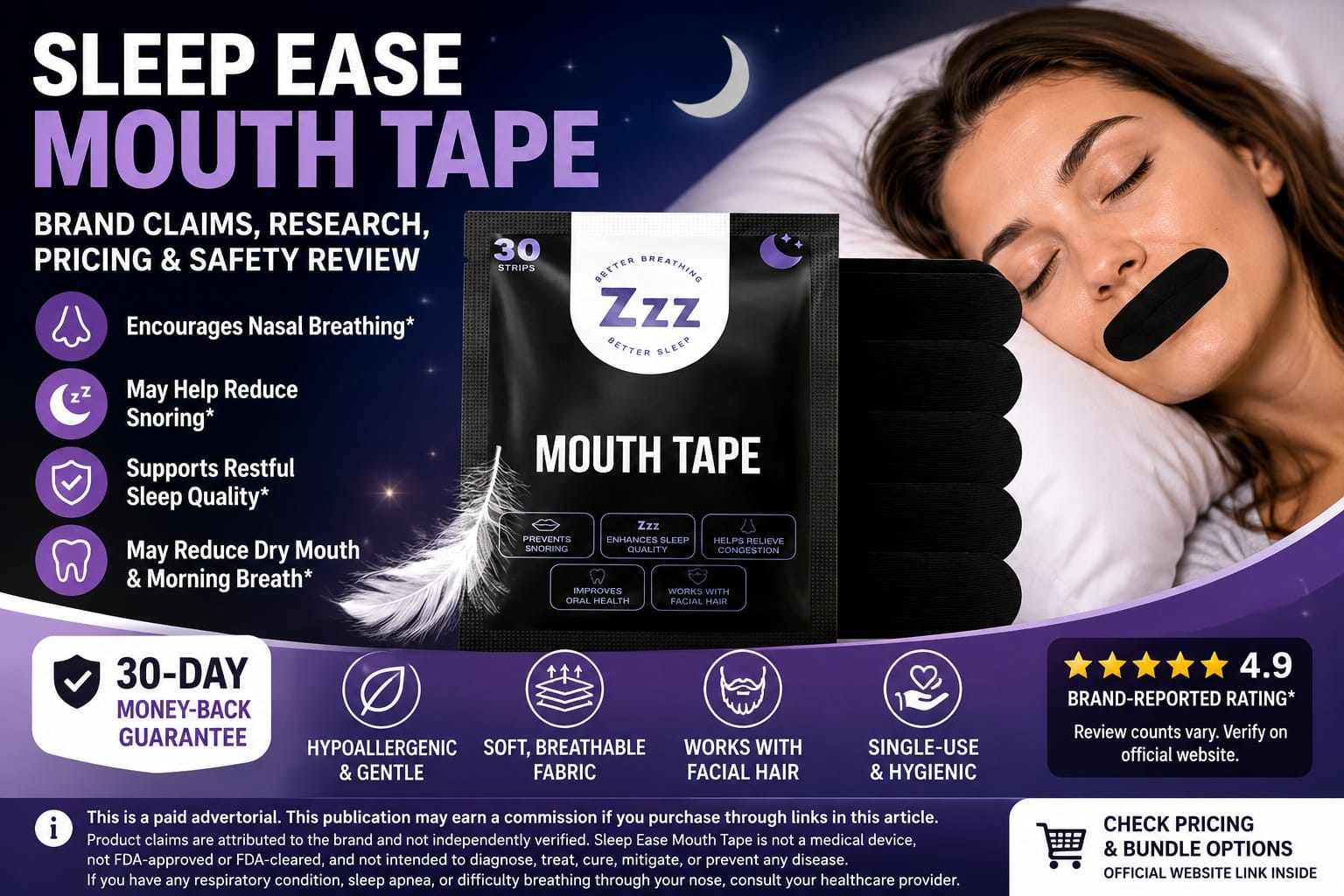
As interest in nasal breathing support and snoring-related sleep routines continues rising in 2026, this Sleep Ease Mouth Tape review explores the brand-stated fabric design, pricing, safety considerations, return policy details, and buyer questions to recheck before ordering.
CHICAGO, IL / ACCESS Newswire / June 25, 2026 / Disclaimers: This is a paid advertorial - if you purchase through these links, a commission may be earned at no additional cost to you. Claims are the brand's own and haven't been independently verified here. Sleep Ease Mouth Tape is a wellness product, not a drug, and not FDA-approved. If you have a respiratory condition or suspect sleep apnea, check with your doctor first. Official site: offer.buysleepeasemouthtape.com. Promotional content for consumer education purposes. Details as of June 2026.
Sleep Ease Mouth Tape Consumer Research 2026: Reviewing What Buyers Should Know Before Ordering
TL;DR: Sleep Ease Mouth Tape at a Glance
If you wake up exhausted, dry-mouthed, and your partner's patience is wearing thin from the snoring - this article gives you the verified pricing, the guarantee mechanics, the safety checklist, and the one Terms of Service detail the product page doesn't surface, all before you spend a dollar. Sleep Ease Mouth Tape is a hypoallergenic, single-use adhesive strip that the brand says encourages nasal breathing during sleep. Single pack: $17.99 as of June 2026. Thirty-day money-back guarantee - with a restocking-fee clause in the ToS worth confirming first. Brand-reported rating: 4.9 out of 5, with review counts varying across brand pages. Ships from New Jersey within 48 business hours. First release - no prior Accesswire or Newswire coverage of this product exists.
Quick Verification Snapshot - Sleep Ease Mouth Tape (June 2026)
Price confirmed: $17.99 single pack / $44.99 three-pack / $62.99 six-pack - confirm at checkout, two brand pages showed different references
Guarantee confirmed: 30-day money-back per product page - ToS Section 21 reserves a 15% restocking fee; clarify before ordering
Shipping confirmed: New Jersey warehouse, 48-hour processing, 5-7 day standard delivery, free shipping advertised
Rating confirmed: 4.9 brand-reported - platform not named, count varies across pages
Safe for: Confirmed nasal breathers who habitually mouth-breathe during sleep - no respiratory conditions
Not for: Sleep apnea, nasal obstruction, COPD, asthma, children, anyone who has had alcohol or sedatives
Contact: [email protected] | +1 (888) 482-0439
You Saw an Ad - Here's What You Need to Know Before You Order
You saw an ad for Sleep Ease Mouth Tape. Maybe it was on Facebook, maybe Instagram, maybe a short video that stopped your scroll. Something about it made sense - you're tired, your partner is tired of the snoring, and a strip of tape seems a whole lot simpler than a CPAP machine or a mouthguard. So now you're doing what smart buyers do before spending money: you're checking the details first.
That's the right move. By the end of this article, you'll know exactly what the brand says it does, what the materials actually are, what the research shows for the category, what the pricing and guarantee say (including the part the product page doesn't tell you), and precisely who this product may genuinely help - and who should stop right here and call their doctor instead. The whole picture. Nothing left out.
What Is Sleep Ease Mouth Tape and Who Is It For?
According to the brand, Sleep Ease Mouth Tape is an adhesive strip made from soft, woven, breathable fabric with a hypoallergenic adhesive. You place it over your lips before sleep, and it keeps your mouth gently sealed throughout the night. The intended effect, per the brand's own product page, is to encourage nasal breathing rather than mouth breathing - which the brand says can lead to deeper sleep, reduced snoring, and better oral health outcomes like fewer instances of dry mouth and morning bad breath.
Sleep Ease Mouth Tape is positioned by the brand for people who struggle with snoring, mouth breathing, or disrupted sleep. Specifically, the product page notes it's designed to be comfortable for people with sensitive skin and for those with facial hair - beards and mustaches included - which the brand says its adhesive accommodates without pulling or losing effectiveness. The product is single-use, not reusable, which the brand frames as a hygiene feature: one strip per night, disposed of in the morning.
On the suitability question, the brand's FAQ states Sleep Ease Mouth Tape is appropriate for most adults. It explicitly notes, however, that it's not recommended for individuals with severe respiratory issues, sleep apnea, or those who have difficulty breathing through their nose. Keep that caveat in mind - it matters, and it comes up directly in the research section below.
Check Current Sleep Ease Mouth Tape Pricing and Bundle Options
Disclosure: If you buy through this link, a commission may be earned at no extra cost to you.
What Does Sleep Ease Mouth Tape Actually Do? The Brand's Claimed Mechanism
Here's how the brand explains the mechanism: by keeping the mouth gently sealed, the tape retrains the body to breathe through the nose during sleep. Nasal breathing, according to the brand, stabilizes air pressure in the airways and reduces the risk of throat muscles relaxing too much - which is what allows snoring to happen. The brand also states this mechanism helps the body maintain REM sleep more consistently, since sleep apnea events - which the brand says mouth tape may help reduce - are a known disruptor of REM.
According to the brand, encouraging nasal breathing during sleep may help support more consistent airflow throughout the night. Oral health claims on the product page include prevention of dry mouth, bad breath reduction, and potential benefits for gum health - all attributed to keeping the mouth closed so saliva maintains its protective function through the night, per the brand's own framing.
It's worth noting a tension on the brand's own pages: the product page headline says Sleep Ease Mouth Tape can help "prevent sleep apnea," while the FAQ section states the product is not recommended for individuals with sleep apnea. Both statements are the brand's own language. The most medically accurate reading is that mouth tape may help reduce certain breathing disruptions during sleep for otherwise healthy nasal breathers - not that it treats or prevents diagnosed sleep apnea. The research section below covers the evidence in full.
Sleep Ease Mouth Tape Features: What the Brand Confirms
Based on live review of the Sleep Ease Mouth Tape product page in June 2026, here's what the brand confirms about the product's physical construction and features:
The material is a soft, woven fabric that the brand describes as breathable - meaning it allows some air circulation even when affixed, which matters if your nose is partially congested. This isn't a solid plastic or rubber seal; it's a textile strip with an adhesive backing. The adhesive is described by the brand as hypoallergenic, suitable for sensitive skin, staying secure throughout the night without causing irritation or discomfort, per the brand's own claims.
The flexible fit language from the brand indicates the tape adapts to different face shapes and sizes. The beard-compatible claim means the adhesive is designed to adhere on skin near facial hair without pulling when removed. Each strip is intended for a single night of use - the brand specifically states it's not reusable, citing hygiene and effectiveness as the reasons. Application is described as: clean and dry your lips and the surrounding area, peel the backing, press the strip gently over your closed lips centered on your mouth, adjust for comfort and seal. Removal, the brand says, can be done quickly at any point during the night if needed.
On materials: the brand describes them as "medical-grade" in its FAQ; however, no independent certification, regulatory classification, ISO standard, or third-party testing documentation was identified on the publicly accessible brand materials reviewed for this article. That characterization reflects the brand's own language - worth confirming directly with the brand if material certification matters to your purchasing decision.
How to Use Sleep Ease Mouth Tape: Step-by-Step Application
The application process, per the brand's FAQ, takes under a minute. Here's the exact sequence:
Confirm nasal clearance first. Before applying any mouth tape on any night, verify that you can breathe freely through your nose. If you're congested - seasonal allergies, a cold, dry weather - skip it that night. This is a safety step, not optional.
Complete your nighttime routine. Brush teeth, wash your face, complete any skincare routine. The tape applies to clean, dry skin around the lips - skincare products and moisture reduce adhesion.
Dry the lip area thoroughly. Pat the skin around your lips dry before application. Any residual moisture, lip balm, or product will compromise the seal.
Peel the backing. Remove the adhesive backing from the Sleep Ease Mouth Tape strip. The brand describes the backing as easy-peel.
Center the strip over your closed lips. Press gently from the center outward, ensuring even contact with the skin above and below your lips. The brand says the tape adapts to different face shapes, including over facial hair.
Adjust for comfort. The brand says the tape should feel comfortable - not restrictive. If it doesn't feel right, the brand notes it can be repositioned before the adhesive fully sets.
Remove in the morning. Peel the strip off gently. The brand describes the adhesive as releasing cleanly without leaving residue. Each strip is single-use - discard after removal.
If you need to remove the tape during the night - for any reason - the brand states it can be quickly removed at any point. That's intentional: the design is meant to provide a secure but immediately breakable seal.
Sleep Ease Mouth Tape Pricing: What Each Bundle Costs as of June 2026
Sleep Ease Mouth Tape is available in three bundle configurations, based on brand materials reviewed in June 2026:
The single pack - one Sleep Ease Mouth Tape pack - is priced at $17.99, which the brand positions as a 50% discount from an unstated reference price. For buyers who want to try the product before committing to larger quantities, this is the entry point. The brand advertises free shipping on all packages, though buyers should verify current shipping terms at checkout, as promotional offers can change.
The three-pack, which the brand calls the "Multi Pack," is priced at $44.99, bringing the effective per-pack cost to $15.00. The brand represents this as a 58% savings versus its reference pricing. For regular users - someone who plans to make mouth taping a consistent part of their nightly routine - this bundle offers meaningful cost-per-unit reduction.
The six-pack, the brand's "Family Pack," is priced at $62.99, dropping the per-pack cost to $10.50. The brand represents this as 70% savings. For households where multiple people might use mouth tape, or for someone who's already tried the single pack and wants to stock up, this is the lowest per-unit cost available according to the brand's current pricing structure.
All pricing reflects brand materials reviewed in June 2026. Both brand pages reviewed for this article showed slightly different price references - which means the promotional structure is actively being tested. The checkout page is the only authoritative source for what you'll actually pay today. Confirm the final total there before completing your order.
Confirm Current Sleep Ease Mouth Tape Pricing Before the Bundle Discount Changes
The 30-Day Guarantee: What the Brand Says and What the Terms of Service Add
The Sleep Ease Mouth Tape product page states a 30-day money-back guarantee with the language "no questions asked" - returning the package within 30 days gets you a refund, per the brand's product page. The brand's FAQ echoes this: "Simply return your product and we'll give you a refund for 30 days."
Here's the detail worth knowing before you order: the brand's Terms of Service - a separate document from the product page - includes Section 21, which states that Sleep Ease Mouth Tape reserves the right to charge a minimum of a 15% restocking fee to process returns. That's a material gap between the marketing language and the legal document, and it's worth a 30-second email to the brand to resolve before you buy. The 30-day window is also real urgency in the practical sense: the evaluation clock starts at purchase, which means if you order today, you have 30 days to determine whether the product works for you and whether you want to keep it. Contact the brand directly at [email protected] or by phone at +1 (888) 482-0439 to confirm the current return process - specifically whether the restocking fee applies to opened product - before ordering.
Additional details the brand's guarantee language doesn't specify: the clock-start date for the 30-day window (purchase date is the most common standard, but it's worth confirming), whether opened or used product is eligible, and who bears the cost of return shipping. Standard practice in this category is for the buyer to cover return shipping, but that's not confirmed in the accessible brand materials. Get these specifics from the brand directly before purchase if they matter to your decision.
What Buyers Are Saying: Customer Feedback According to the Brand
Brand materials reviewed in June 2026 display a 4.9 rating. Review counts varied across the brand's own pages during the review period for this article. This publication cannot confirm the current rating, the review count, or the platform on which reviews were collected. Confirm the current rating and review count on the official website before ordering - these figures are brand-reported and have not been independently audited by this publication.
Three named reviews appear on the product page, attributed to Linda C., Jack P., and Pam A. - each listed as a Verified Buyer. Linda C. says the tape isn't aggressively sticky, keeps her mouth shut all night, causes no skin irritation, and removes easily. Jack P. notes that his sleep quality has improved steadily since adding the tape to his nightly routine and that it feels lighter and less thick than other brands he's tried. Pam A. describes the adhesive as releasing easily without residue, notes it works well for her sensitive skin, and says the size fits her mouth well. These testimonials are published by the brand and have not been independently verified by this publication. Individual results vary, and customer experiences should not be interpreted as guaranteed or typical outcomes.
A second brand page carries three more testimonials - attributed to Damian D., Rachel P., and Mandy T. Damian D. reports the tape stopped his snoring in one night per his partner's observation. Rachel P. says she's been using it for three weeks with steady improvement to her sleep quality. Mandy T. says it's easy to use and her morning breath is noticeably fresher. These testimonials are published by the brand and have not been independently verified by this publication. Individual results vary, and customer experiences should not be interpreted as guaranteed or typical outcomes.
Is Sleep Ease Mouth Tape Right for You? An Honest Look at Who This May Help
Here's how to know quickly. Sleep Ease Mouth Tape is built for one specific person: someone who can breathe perfectly fine through their nose but keeps ending up with their mouth open during sleep - and wakes up to prove it with a dry mouth, a confused partner, or a groggy morning. If that's you, If you've tested this on yourself (breathing clearly through your nose during the day, with no congestion or structural obstruction), mouth tape in general may be worth trying. Sleep Ease Mouth Tape, per the brand, offers a hypoallergenic, beard-compatible, single-use format with a 30-day trial window.
It may not be the right fit if you have any of the following: diagnosed sleep apnea (the brand's own FAQ says this product is not recommended for sleep apnea patients - and the research section below covers why); nasal obstruction from a deviated septum, chronic sinusitis, nasal polyps, or persistent allergies; obesity, as this can compound airway issues that mouth tape would not address; any respiratory or cardiac condition; or any situation where you might vomit during the night, since a sealed mouth in that scenario poses a clear safety risk. The brand's FAQ also explicitly notes this product isn't recommended for those who have difficulty breathing through their nose - which really is the threshold question before trying any mouth tape.
Children should not use this product. The brand's FAQ doesn't address pediatric use, but the sleep medicine literature is consistent: mouth tape is not appropriate for children.
What Mouth Taping Research Actually Shows - And Why It Matters Before You Order
Here's what the research actually says - and it's more useful than most reviews let on, because the nuance tells you exactly who mouth tape tends to work for and who it doesn't.
A 2025 systematic review published in PLOS One (Rhee et al.) examined 10 studies covering 233 total patients and found that two of the included studies demonstrated statistically significant improvement in markers of sleep-disordered breathing, including improvements in the apnea-hypopnea index. Other studies in the same review found no meaningful difference, and the review authors specifically flagged the risk of asphyxiation for individuals with nasal obstruction - meaning people who tape their mouth shut but can't breathe freely through their nose face a genuine safety concern.
A separate 2025 scoping review published in the American Journal of Otolaryngology (Fangmeyer et al.) examined nine studies, including four randomized controlled trials, published between 2019 and 2024. That review found the most consistent benefit for mouth taping in a specific context: CPAP users experiencing "mouth leak" - air pressure loss through an open mouth - where oral occlusion was shown to significantly reduce leak and improve CPAP effectiveness. For the general population using mouth tape without CPAP, the evidence base is much thinner.
A 2026 narrative review found that in mild obstructive sleep apnea patients specifically, nocturnal mouth taping reduced the apnea-hypopnea index from an average of 8.3 to 4.7 events per hour and reduced snoring by 47%. But "mild OSA patients" is a specific clinical group - not a descriptor for the average person who snores occasionally.
The key distinction for anyone reading this article: none of this research is on Sleep Ease Mouth Tape specifically. It covers mouth taping as a category, using various adhesive products including surgical tape and purpose-designed oral patches. Some published studies have explored whether mouth taping may reduce certain breathing disruptions in carefully selected patient populations. Those findings should not be interpreted as evidence that Sleep Ease Mouth Tape treats or prevents sleep apnea. This publication has not tested Sleep Ease Mouth Tape and cannot verify that its specific formulation, adhesive strength, or fabric construction would produce results consistent with any of the above studies. The brand does not cite specific clinical studies on its accessible product pages.
The mainstream medical perspective - as reflected by Cleveland Clinic, WebMD, and the Sleep Foundation - is that mouth tape may offer some benefit for healthy nasal breathers who mouth-breathe during sleep, but comes with real risks for those with nasal obstruction or undiagnosed respiratory issues, and the evidence base is not strong enough to make broad clinical recommendations. If you're considering mouth tape for anything beyond mild snoring or dry mouth management, talk to your doctor first.
How Sleep Ease Mouth Tape Compares to Other Mouth Tape Options
The mouth tape category has expanded considerably in the past two to three years, driven largely by social media interest. Sleep Ease Mouth Tape's core differentiators, as the brand presents them: a woven, breathable fabric construction (rather than smooth plastic-film adhesive strips); explicit beard compatibility; hypoallergenic adhesive; and a bundle pricing structure that brings per-unit cost to $10.50 at the six-pack level.
Other products in the category include Hostage Tape (which emphasizes beard compatibility and has established distribution through major retailers), ZzzTape (sold in two sizes with a medical-grade woven fabric and HSA/FSA eligibility per the Sleep Doctor review), Loftie Mouth Tape (fabric-based with grab tabs and a center breathing hole), and SayLess Night Lips (lip-shaped design in stretch latex-free fabric). The brand's product page shows a generic comparison chart attributing several feature advantages to Sleep Ease Mouth Tape over unnamed "Competitor 1" and "Competitor 2" - the competitor names aren't disclosed, so those comparisons can't be independently verified and are presented here for context only.
What makes any mouth tape comparison genuinely useful: adhesive strength for your skin type, size compatibility with your mouth, whether you have a beard, how easily it removes in the morning, and whether the material causes any skin reaction during extended use. Those are practical variables that differ by person - which is exactly why the 30-day window (however it's ultimately administered) matters as a risk-mitigation tool.
5 Things to Confirm Before You Order Sleep Ease Mouth Tape
Before you click through, here are the five verification steps worth completing:
First, confirm you can breathe comfortably through your nose right now, at this moment. Not "usually," but right now, without straining. If there's any obstruction - seasonal allergies, a cold, structural deviated septum - mouth taping is not appropriate until that's resolved. This isn't a product caveat, it's a safety consideration the research makes clear.
Second, confirm the current pricing at checkout before you commit. Two different brand pages showed slightly different price references when reviewed for this article - which tells you the promotional structure is being actively tested. Whatever price you see on a landing page, the checkout total is what counts. That's the number to confirm.
Third, contact the brand to clarify the guarantee terms before buying if the return policy matters to your decision. The product page says "no questions asked" but the Terms of Service reserves the right to charge a 15% restocking fee. Email: [email protected]; Phone: +1 (888) 482-0439. Specifically ask: does a restocking fee apply? Does used product qualify? Who pays return shipping?
Fourth, if you're a CPAP user, ask your sleep medicine provider whether adding mouth tape to your CPAP routine makes sense for your specific situation. The research does suggest benefit in the CPAP/mouth-leak context, but your provider needs to weigh in on whether that applies to you.
Fifth, if you have any diagnosis related to sleep-disordered breathing - sleep apnea, upper airway resistance syndrome, or anything similar - don't use this product without clearing it with your sleep doctor. The brand's own FAQ says the product is not recommended for sleep apnea patients.
Visit the Sleep Ease Mouth Tape Website to Verify Current Pricing and Terms
Sleep Ease Mouth Tape Buyer Checklist: Before You Click Through
Can you breathe comfortably through your nose for two minutes right now, without straining? If no - do not use any mouth tape until that's resolved.
Do you have diagnosed or suspected sleep apnea? If yes - consult your doctor before ordering. The brand's FAQ explicitly says this product is not recommended for sleep apnea patients.
Do you have any respiratory condition - COPD, asthma, significant allergies? If yes - talk to your provider first.
Have you confirmed the current price at checkout? Brand pages showed different references; checkout is the authoritative number.
Have you confirmed the guarantee terms directly with the brand? Product page says "no questions asked" - ToS Section 21 reserves a 15% restocking fee. One email to [email protected] resolves this before you buy.
Are you a CPAP user? Do not modify your prescribed therapy without guidance from your clinician - ask whether mouth tape is appropriate as an adjunct for your setup.
Will you be consuming alcohol or sedatives tonight? If yes - skip the tape that night. Both suppress protective airway reflexes.
Sleep Ease Mouth Tape Fast Facts
Product name: Sleep Ease Mouth Tape
Product type: Hypoallergenic adhesive mouth tape - wellness device, not a pharmaceutical or FDA-approved medical device
Brand entity: Sleep Ease Mouth Tape
Operating address: Florida (per ToS governing law); shipping from New Jersey warehouse
Contact email: [email protected]
Contact phone: +1 (888) 482-0439
Primary intended use: Encouraging nasal breathing during sleep, per the brand
Material: Soft woven breathable fabric - brand-stated
Adhesive: Hypoallergenic - brand-stated; medical-grade - brand-stated; no third-party certification confirmed on accessible pages
Skin compatibility: Hypoallergenic adhesive suitable for sensitive skin - brand-stated
Facial hair compatibility: Brand explicitly states it works with beards and mustaches
Reusability: Single-use only - brand-stated for hygiene and effectiveness
Application method: Clean and dry lips, peel backing, center strip over closed lips, press gently, adjust for comfort
Removal: Brand states it can be quickly removed at any time during the night
Single pack price: $17.99 (as of June 2026 - confirm at checkout)
Three-pack price: $44.99 / $15.00 per pack (as of June 2026 - confirm at checkout)
Six-pack price: $62.99 / $10.50 per pack (as of June 2026 - confirm at checkout)
Shipping: Free - brand-advertised on all packages; confirm at checkout
Processing time: Within 48 business hours - brand-stated
Delivery estimate: 5-7 days standard - brand-stated
Warehouse location: New Jersey - brand-stated
Carriers: USPS, FedEx, UPS (domestic); DHL (international) - brand-stated
Guarantee: 30-day money-back - "no questions asked" per product page; 15% restocking fee reserved in ToS Section 21
Brand-reported rating: 4.9 out of 5 - review count varies across brand pages; platform not named on accessible pages; confirm current rating at official website before ordering
Not recommended for: Individuals with severe respiratory issues, sleep apnea, or nasal obstruction - per brand FAQ
Not recommended for: Children; individuals who have consumed alcohol or sedatives; those who may vomit
Dispute resolution: Arbitration per JAMS, Florida law - per ToS Section 14
First Accesswire/Newswire release: Yes - no prior coverage found in SERP review
Sleep Ease Mouth Tape: Quick Answers to the Most Common Questions
What is Sleep Ease Mouth Tape and how does it work?
Sleep Ease Mouth Tape is a single-use adhesive strip made from soft, woven, breathable fabric with a hypoallergenic adhesive. According to the brand, it's placed over your closed lips before sleep to keep your mouth gently sealed through the night. The intended mechanism, per the brand, is to redirect breathing through the nose rather than the mouth - which the brand says can reduce snoring, improve sleep quality, and prevent the dry mouth and morning bad breath associated with mouth breathing. It's a wellness device, not a pharmaceutical product or FDA-approved medical device, and its effects vary by individual.
Does Sleep Ease Mouth Tape actually reduce snoring?
Snoring from habitual mouth breathing is the specific scenario Sleep Ease Mouth Tape is built for - but snoring from nasal obstruction, positional issues, or undiagnosed sleep apnea is a different problem that a strip of tape won't resolve. The brand markets Sleep Ease Mouth Tape for adults whose snoring is connected to nighttime mouth breathing, and says the strip may help encourage nasal breathing during sleep, which the brand associates with reduced snoring. Some brand-published users report less snoring, though results vary and snoring can have medical causes unrelated to mouth breathing. For the broader category of mouth taping, the published research does show snoring reduction outcomes in some study populations - particularly mild obstructive sleep apnea patients - though results vary. This publication has not tested Sleep Ease Mouth Tape specifically, and the brand does not cite independent clinical studies on its accessible product pages. If snoring is a symptom of undiagnosed sleep apnea, a mouth tape product is not a substitute for a sleep study and proper diagnosis - results with any mouth tape vary significantly based on what's actually causing the snoring.
Is Sleep Ease Mouth Tape safe for people with sleep apnea?
The brand's own FAQ page explicitly states that Sleep Ease Mouth Tape is not recommended for individuals with severe respiratory issues or sleep apnea. This is consistent with the medical guidance from institutions like Cleveland Clinic and with the published research, which flags asphyxiation risk for individuals who cannot breathe freely through their nose - a population that includes many people with sleep apnea. There is some research suggesting mouth tape may benefit CPAP users dealing with "mouth leak," but that's a specific clinical context that requires input from a sleep medicine provider, not a self-directed consumer product decision. If you have diagnosed or suspected sleep apnea, consult your healthcare provider before using any mouth tape product.
What are the Sleep Ease Mouth Tape bundle prices as of 2026?
Two different Sleep Ease Mouth Tape brand pages reviewed for this article showed different price references - which tells you the promotional structure is actively being tested and the checkout page is the only authoritative source for what you'll actually pay today. As of June 2026 brand materials, bundle pricing was listed as $17.99 for one pack, $44.99 for three packs ($15.00 per pack), and $62.99 for six packs ($10.50 per pack). Free shipping is advertised on all packages. Pricing, discounts, and availability are subject to change without notice - always confirm the final total at checkout before completing your order.
How does the Sleep Ease Mouth Tape money-back guarantee work?
Sleep Ease Mouth Tape's product page advertises a 30-day no-questions-asked guarantee - but the Terms of Service, Section 21, separately reserves the right to charge a minimum 15% restocking fee on returns, a detail the product page doesn't surface. That gap between the marketing language and the legal document is worth a 30-second email to the brand before you order, especially if the guarantee is your primary reason for trying the product. Additional details not disclosed on the brand's accessible pages: the clock-start date for the 30-day window, whether used product qualifies, carrier and tracking requirements, who pays return shipping, and how long the refund takes to process. Contact the brand at [email protected] or +1 (888) 482-0439 to get those specifics confirmed before purchasing.
Can you use Sleep Ease Mouth Tape with a beard?
Yes - the brand explicitly states that Sleep Ease Mouth Tape's flexible, hypoallergenic adhesive accommodates facial hair, adhering effectively on beards and mustaches without causing discomfort or losing effectiveness, per the brand's own product page. The breathable fabric construction contributes to this, as the material adapts to different face shapes rather than requiring a perfectly smooth surface. Brand-published testimonials do not specifically address beard use, but the product description is explicit about this feature. Individual adhesion results will vary depending on beard density, skin type, and application method.
What does the research say about nasal breathing during sleep?
The underlying physiology behind nasal breathing during sleep has a stronger evidence base than mouth taping as a specific intervention. Nasal breathing humidifies incoming air, delivers nitric oxide (which plays a role in vasodilation and oxygen uptake), and maintains more stable airway pressure compared to mouth breathing, which allows tissues at the back of the throat to collapse more easily. These physiological differences are well-documented. The question is whether mouth tape effectively redirects breathing for most people, and whether it does so safely - and on those specific questions, the research is limited. A 2025 systematic review found only two of the ten included studies with statistically significant improvement in sleep apnea markers, while others showed no difference. The most consistent evidence is in CPAP-plus-mouth-tape use for mouth-leak reduction. General nasal breathing promotion during sleep has biological rationale, but the clinical evidence for mouth tape as the intervention is still developing.
How do you apply and remove Sleep Ease Mouth Tape?
Application, per the brand's FAQ: clean and dry your lips and the skin around your mouth thoroughly, peel off the tape's backing, center the strip over your closed lips, press gently to secure, and adjust as needed for comfort. The brand recommends ensuring a good seal. Removal: the brand states the tape can be quickly removed at any point during the night if you need to breathe through your mouth. In the morning, peel the strip off - the brand describes the adhesive as designed to release without leaving residue. One strip per night; each strip is intended for single use only and should not be reapplied once removed.
Is Sleep Ease Mouth Tape appropriate for children?
No. The brand's Terms of Service requires users to be at least the age of majority in their state or province. The medical consensus on mouth taping is consistent: it's not appropriate for use by children. Children's airway anatomy differs from adults, and the safety profile for mouth tape in pediatric populations hasn't been established. Parents concerned about a child's snoring or sleep-disordered breathing should consult their child's pediatrician or a pediatric sleep medicine specialist, not a consumer mouth tape product.
What happens if you can't breathe through your nose while wearing Sleep Ease Mouth Tape?
The brand addresses this directly: Sleep Ease Mouth Tape is designed to be strong yet easily removable, so if you need to breathe through your mouth for any reason, you can quickly remove the tape. The brand also explicitly states the product is not recommended for individuals with severe respiratory issues or for anyone who has difficulty breathing through their nose. The published research on mouth taping identifies nasal obstruction as the primary safety concern - taping the mouth of someone who cannot breathe freely through the nose creates an asphyxiation risk. Before using any mouth tape product, verify that you can breathe comfortably through your nose in a relaxed, resting state. If you have any nasal obstruction - even seasonal - don't use mouth tape until it's resolved.
Does Sleep Ease Mouth Tape have a subscription or auto-ship program?
No subscription or auto-ship program was found on the Sleep Ease Mouth Tape pages reviewed for this article. The product appears to be sold as a one-time purchase in bundle configurations. Standard editorial caution: no subscription was confirmed on the accessible brand pages reviewed - always review your order summary and Terms of Service carefully at checkout to confirm the billing structure before completing your purchase.
Where is Sleep Ease Mouth Tape shipped from?
According to the brand's FAQ, Sleep Ease Mouth Tape is an American-owned business that ships from a warehouse in New Jersey. Domestic orders go via USPS, FedEx, or UPS; international orders go via DHL. Processing time is within 48 business hours; standard delivery is estimated at 5-7 days. A tracking link is emailed after the order ships. These are brand-stated specifications - confirm current shipping terms at checkout.
How does Sleep Ease Mouth Tape compare to nasal strips?
These are two different interventions for two different parts of the breathing mechanism. Nasal strips (like Breathe Right) sit on the bridge of the nose and physically widen the nasal passages - they work on the inlet. Mouth tape sits on the lips and keeps the mouth closed - it works on the outlet. Some people use both in combination. Research on nasal strips for snoring reduction shows mixed results. Research on mouth tape for snoring reduction also shows mixed results. For a healthy nasal breather who is simply a habitual mouth breather during sleep, mouth tape addresses the behavior directly. For someone whose mouth breathing is compensatory - because the nose is restricted and the body opens the mouth to get enough air - nasal strips (or treatment for the underlying nasal obstruction) would be more appropriate.
Can Sleep Ease Mouth Tape improve oral health?
Keeping the mouth closed overnight may support oral comfort by reducing overnight dry mouth, per the brand - and maintaining saliva coverage through the night may help with morning breath. The physiological rationale is grounded in how saliva works: it has antibacterial properties and helps neutralize oral acids, so sleeping with the mouth open for hours can reduce that coverage. Whether Sleep Ease Mouth Tape specifically improves oral health outcomes hasn't been tested in a clinical trial specific to this product. These are brand claims grounded in general oral health physiology. This is not a substitute for regular dental care - if oral health is your primary concern, your dentist is the right starting point.
Find Out If Sleep Ease Mouth Tape Is the Right Fit for Your Sleep Goals
Is Sleep Ease Mouth Tape worth trying?
For the right candidate - a confirmed nasal breather who is a habitual mouth breather during sleep, without any respiratory conditions, nasal obstruction, or sleep apnea diagnosis - trying a mouth tape product at the $17.99 single-pack entry point is a low-cost experiment with a 30-day trial window (terms subject to clarification, as noted above). The mouth taping category has genuine physiological rationale and some supportive evidence in specific populations. Sleep Ease Mouth Tape's breathable fabric construction and hypoallergenic adhesive address the two most common complaints about generic alternatives: skin irritation and discomfort from solid-film tapes. For adults who comfortably breathe through their nose and who experience habitual nighttime mouth breathing, a single-pack purchase may offer a practical way to determine whether the product meets their individual preferences. If you don't meet the nasal breathing prerequisite, no mouth tape product is the right answer until the underlying obstruction is addressed.
What does Sleep Ease Mouth Tape do for people who snore?
The brand says Sleep Ease Mouth Tape may help reduce snoring for adults whose snoring is connected to mouth breathing during sleep. According to the brand, keeping the mouth sealed may stabilize airway pressure and limit throat-muscle relaxation - the mechanism the brand associates with snoring reduction. Some brand-published users report less snoring after using the product, with some noting improvement within the first few nights. Individual results vary, and snoring can have medical causes that mouth tape would not address. The outcome depends significantly on the cause of the snoring. Snoring from nasal obstruction, for example, wouldn't be addressed by mouth tape. Snoring from a positional issue (like back sleeping) might not be resolved by mouth tape alone. And snoring that's a symptom of sleep apnea requires medical evaluation, not a consumer adhesive product.
How long does it take to see results with Sleep Ease Mouth Tape?
The brand doesn't specify a timeline for results on its accessible product pages - so any figure here would be invention, not information. What brand-published testimonials show is that some users report noticing changes within the first few nights, while others describe gradual improvement over weeks. That variance makes sense given how differently people's sleep architecture and mouth-breathing patterns respond to any change. The honest answer is that the 30-day window exists precisely because the timeline is individual. If you're a confirmed nasal breather using the product as directed and notice no change after two weeks of consistent use, that's useful signal. Contact the brand at [email protected] to discuss your experience - and consult your doctor if snoring or disrupted sleep is significantly affecting your quality of life regardless of any product.
Is Sleep Ease Mouth Tape FDA approved or FDA cleared?
No. Sleep Ease Mouth Tape is not FDA-approved and not FDA-cleared. The brand's own disclaimer states it is not intended to diagnose, treat, cure, or prevent any disease. Mouth tape products generally fall into the wellness device category rather than the regulated medical device category - the FDA does not specifically regulate mouth tape for snoring reduction or nasal breathing promotion. This is important context when evaluating any marketing claims in this category: "wellness device" means the FDA has not reviewed the product for safety or effectiveness. That doesn't make the product unsafe for appropriate users - it means the responsibility for evaluating fit lies with the buyer, ideally with input from a healthcare provider if there's any doubt about suitability.
Who Should NOT Use Sleep Ease Mouth Tape
This is the section most mouth tape articles skip. That's a problem - because the safety profile matters as much as the potential benefit, especially in a category where the risks are real for specific populations. If any of the following describes you, mouth tape in general - not just this product - is not the right starting point.
People with diagnosed or suspected sleep apnea
The brand's own FAQ states that Sleep Ease Mouth Tape is not recommended for individuals with sleep apnea. This is consistent with the medical guidance. In obstructive sleep apnea, the airway collapses during sleep - and partial arousal is actually a protective mechanism that prevents prolonged oxygen deprivation. Taping the mouth shut can interfere with that protective response for some individuals. If you snore regularly, wake up unrefreshed regardless of how many hours you sleep, have been told you stop breathing during sleep, or wake with headaches, ask your doctor whether a sleep study makes sense before trying any mouth tape product. Snoring is not always benign - it can be a sign of sleep apnea that needs clinical evaluation, not a consumer wellness product.
People with nasal obstruction of any kind
This is the single most important prerequisite for mouth tape safety: you must be able to breathe comfortably through your nose. If you can't - for any reason - taping your mouth shut removes your primary backup airway. Nasal obstruction causes include a deviated septum, chronic sinusitis, nasal polyps, enlarged turbinates, or significant allergic rhinitis. Some of these are structural (permanent without treatment); others are situational (a cold, a pollen season, a particularly dry night). Even temporary nasal congestion is sufficient reason to skip mouth tape on a given night. The published research on mouth taping specifically identifies nasal obstruction as the primary safety concern - the risk of asphyxiation is real when the only accessible airway is sealed. Before you try Sleep Ease Mouth Tape for the first time, sit quietly and breathe only through your nose for two full minutes. If that's uncomfortable or impossible, do not use mouth tape until the obstruction is addressed.
People with COPD, asthma, or other respiratory conditions
Chronic obstructive pulmonary disease and asthma both affect airflow in ways that make oral backup breathing more important, not less. During an asthma flare or a COPD exacerbation, the ability to open the mouth and breathe is a safety valve. Mouth tape removes that valve. If you have either condition, discuss any nighttime breathing intervention - including something as simple as mouth tape - with your pulmonologist or primary care provider before trying it.
People with panic disorders or claustrophobia
The feeling of having your mouth sealed during sleep can trigger acute anxiety in people who are prone to claustrophobia or panic attacks, even when they're physiologically able to breathe through their nose. If you've had panic attacks, particularly at night, this is worth discussing with your mental health provider before experimenting with mouth tape. The tape is easily removable, but waking in a panicked state at 3 a.m. and ripping it off is a disruptive enough experience to be worth considering upfront.
Children
Mouth tape is not appropriate for children. Pediatric airway anatomy differs from adults, developmental factors affect breathing during sleep differently, and children may not be able to reliably remove tape in an emergency. The brand's Terms of Service require users to be adults. Pediatric snoring or mouth breathing should be evaluated by a pediatrician - it can indicate enlarged tonsils or adenoids, conditions with straightforward clinical treatments that make mouth tape entirely unnecessary.
People who have consumed alcohol or sedatives
Alcohol and sedatives both suppress protective airway reflexes and reduce the likelihood that you'll respond appropriately if breathing becomes compromised during sleep. On any night when you've had more than minimal alcohol, skip the mouth tape. The same applies to sleep medications, antihistamines with sedating effects, or any substance that reduces your ability to respond to physical discomfort during sleep.
People who may vomit during sleep
This is rare but the safety implication is serious: if you vomit with your mouth taped shut, aspiration risk increases significantly. Situations that increase this risk include severe gastroesophageal reflux (especially if lying flat), illness involving nausea, or any condition that impairs the gag reflex. This is a straightforward contraindication - on nights where vomiting is a realistic possibility, mouth tape should not be used.
People with significant facial skin conditions or adhesive sensitivities
Perioral eczema, active acne around the mouth, cold sore outbreaks, or known adhesive allergies are all reasons to avoid any adhesive placed on facial skin during sleep. The brand describes its adhesive as hypoallergenic, but "hypoallergenic" is a brand characterization, not a regulatory designation. If you have a history of skin reactions to medical tape, bandages, or adhesive products, do a patch test on your inner wrist for several hours before applying anything to your face overnight.
People with obesity
Obesity is an independent risk factor for sleep-disordered breathing, and the combination of obesity and mouth taping - without a prior sleep evaluation - isn't well-studied. The Cleveland Clinic, WebMD, and the Sleep Foundation all specifically list obesity as a reason to avoid mouth taping without medical guidance. If you carry significant excess weight and also snore or wake unrefreshed, a sleep study is a higher priority than mouth tape.
The through-line across all of these: mouth tape is a low-friction tool for a specific, narrow population - healthy nasal breathers who happen to be habitual mouth breathers during sleep, with no underlying respiratory, cardiovascular, or airway condition. Outside that population, the right starting point is a healthcare provider, not an adhesive strip.
Questions to Ask Your Healthcare Provider Before Trying Mouth Tape
If any of the above applied to you - or if you're simply not sure - the following questions give you a practical framework for that conversation with your doctor, ENT, sleep medicine specialist, or dentist. You don't have to walk in asking about "mouth tape specifically." These are just good questions to have answered before you change anything about how you breathe during sleep.
Could my snoring indicate sleep apnea?
This is the most important question. Snoring is the most common presenting symptom of obstructive sleep apnea - and OSA is dramatically underdiagnosed. An estimated 80% of people with moderate to severe OSA haven't been diagnosed. If your snoring is loud, if your partner has witnessed you stopping breathing during sleep, if you wake up unrefreshed no matter how many hours you get, or if you feel excessively sleepy during the day - these are the red flags your doctor needs to hear about. Mouth tape doesn't treat sleep apnea. A sleep study does - and for many people, the diagnosis changes their health trajectory in ways that a strip of tape never could.
Should I have a sleep study first?
If your doctor hears your snoring history and has any concern about OSA, a home sleep test or in-lab polysomnography gives you an objective answer before you try any intervention. Home sleep tests are now widely available through primary care and are often covered by insurance for people with appropriate symptoms. The results also help your doctor interpret whether mouth tape would be appropriate in your specific case - and if you turn out to have CPAP-indicated OSA, mouth tape may actually play a role in your treatment as a mouth-leak reducer, rather than a standalone intervention.
Is nasal obstruction causing my mouth breathing?
If your mouth breathing is compensatory - meaning your body opens your mouth because it can't get enough air through the nose - then the intervention needs to address the nasal obstruction, not seal the oral exit. An ENT can evaluate for a deviated septum, nasal polyps, enlarged turbinates, or chronic sinusitis. Many of these are treatable; some are treatable without surgery. Resolving nasal obstruction first may make mouth tape unnecessary, or it may make mouth tape finally practical for the first time.
Could seasonal allergies or chronic rhinitis be contributing?
Allergic rhinitis is one of the most common causes of nighttime nasal congestion and mouth breathing. If your snoring or mouth breathing is worse during certain seasons, or if you wake with a runny nose or nasal congestion regularly, ask whether treating the underlying allergy might resolve the mouth breathing without any tape at all. Nasal corticosteroid sprays, antihistamines, and allergen avoidance strategies have solid evidence bases for allergic rhinitis - and treating the cause is almost always preferable to managing a downstream symptom.
Is mouth taping appropriate given my current CPAP therapy?
This is specifically for CPAP users. If you're experiencing mouth leak - waking with a very dry mouth or throat despite your CPAP, or noticing that your pressure data shows suboptimal treatment - your sleep medicine provider or respiratory therapist can review whether chin straps, full-face mask modifications, or adding mouth tape as an adjunct makes clinical sense for your setup. Do not modify prescribed CPAP therapy or add any adjunct to your treatment without guidance from your treating clinician.
Should I see an ENT before trying mouth tape?
If your primary care provider has any structural concern - deviated septum, recurrent sinusitis, post-nasal drip, or anything that might suggest anatomical nasal obstruction - an ENT referral is the logical next step. An ENT can evaluate the entire upper airway, which includes the nasal passages, the soft palate, the tonsils, and the tongue base. That evaluation gives you a much clearer picture of why you snore or mouth-breathe, and what interventions are actually appropriate. For some people, that workup reveals that mouth tape is a reasonable addition to their nighttime routine. For others, it reveals something that needs treatment before any taping makes sense.
Are there any medications I take that could interact with changing how I breathe during sleep?
Some medications affect respiratory drive, upper airway muscle tone, or arousal thresholds during sleep - including opioids, benzodiazepines, muscle relaxants, and some antidepressants. If you take any of these, the interplay between those effects and intentional oral occlusion during sleep is worth a brief conversation with your prescribing provider before you try mouth tape. This isn't a common concern, but it's worth raising if you're on any of those medication classes.
The Bottom Line on Sleep Ease Mouth Tape
If you're a confirmed nasal breather who wakes up dry-mouthed, groggy, and aware that your snoring is a problem - Sleep Ease Mouth Tape is a $17.99 experiment in a category that has legitimate physiological rationale behind it. The brand has built the product around a real principle: nasal breathing produces better sleep outcomes than mouth breathing for people without underlying airway issues. It addresses the two most common complaints about generic mouth tape alternatives - skin irritation and adhesive that doesn't work with beards - with a breathable woven fabric and a hypoallergenic adhesive the brand says accommodates facial hair. The pricing structure is consumer-friendly, the entry point is low enough to test without significant financial commitment, and the 30-day guarantee exists to back that up (with the caveat about the ToS restocking fee language that's worth clarifying before you buy).
The honest limitations: the research on mouth taping generally is still limited and mixed - the strongest evidence is in specific clinical populations, not in general consumers. The brand makes claims on its product page about preventing sleep apnea that its own FAQ then contradicts, and the medical consensus is that sleep apnea requires clinical diagnosis and treatment, not a consumer wellness device. And some of the policy specifics - return shipping responsibility, the restocking fee trigger, the guarantee clock-start - are worth confirming directly with the brand before ordering.
If you wake up dry-mouthed, groggy, and your nose is clear - this is a $17.99 test with a 30-day return window. That's a low-stakes experiment for a problem that's costing you sleep every night. If you have any respiratory concern at all, diagnosed or suspected, the conversation with your doctor comes first. Either way, the pricing, guarantee terms, and full contact details are at the link below.
Check Current Guarantee Terms and Pricing on the Official Sleep Ease Mouth Tape Site
Contact Information
Company: Sleep Ease
Email: [email protected]
Phone Support: +1 (888) 482-0439
Availability: response within 24 hours for email inquiries
Related: Sleep Ease Calming Mask Research (2026)
Disclaimers
Material Limitations: This article is based on publicly available brand materials, product pages, Terms of Service, and FAQ content reviewed during live site fetches completed on June 26, 2026, along with published peer-reviewed research on the broader mouth taping category. This publication has not independently tested Sleep Ease Mouth Tape and cannot verify product performance, material specifications beyond brand-stated claims, or the accuracy of brand-reported ratings and review counts. The review platform for the 4.9/2,397-plus rating was not identified on accessible brand pages. The competitor comparison on the brand page names no specific competitors and cannot be independently evaluated. The restocking fee in ToS Section 21, the return shipping terms, and the guarantee clock-start date were not fully specified in accessible brand materials-buyers should confirm these terms directly with the brand before purchase. Title and promotional language reflect the brand's own marketing materials. This article is not an independent endorsement or clinical recommendation. Claims attributed to the brand ("according to the brand," "per the brand," "the brand states") are brand-asserted and not independently substantiated by this publication. Contact the brand to verify any material claim before purchase.
Third-Party Feedback Platforms: Brand-reported customer ratings, review counts, and published testimonials reflect the brand's own marketing materials. Reviews shown on the official website represent experiences selected and published by the brand and should not be interpreted as representative of every purchaser. This publication does not endorse the accuracy of any third-party review platform data and cannot verify the methodology behind the brand's reported rating or review count. Evaluate customer feedback critically and with appropriate skepticism. Individual results with any consumer wellness product vary significantly.
Forward-Looking Statements: All pricing, promotional discounts, bundle configurations, shipping terms, guarantee terms, and product availability described in this article reflect Sleep Ease Mouth Tape brand materials reviewed in June 2026. These specifications are subject to change at any time without notice. Confirm all current details-especially pricing and return policy-directly on the brand's official site before completing any purchase. This publication assumes no responsibility for changes to product specifications, pricing, or availability that occur after publication.
Reasonable Consumer Standard: Attribution language in this article-including "according to the brand," "per the brand's product page," "the brand states," and similar phrases-identifies claims that originate with Sleep Ease Mouth Tape's own marketing and documentation, not with this publication's independent testing or endorsement. Promotional language in the article title and subheadings reflects the brand's own marketing register. This publication's role is to present verified factual information and brand-attributed claims in a format that helps consumers make informed purchase decisions-not to independently certify product performance or clinical efficacy.
FTC Material Connection Disclosure: This publication earns an affiliate commission if a purchase is made through links in this article. This compensation does not influence the editorial content or the accuracy of the information presented. The affiliate relationship is disclosed in the opening paragraph of this article and is governed by FTC 16 CFR Part 255 guidelines on endorsements and testimonials.
FTC Fake Review and Endorsement Disclosure: Customer testimonials quoted in this article are sourced from the Sleep Ease Mouth Tape brand's own product pages and are attributed as brand-published. This publication has not independently verified the identity of reviewers, the platform on which reviews were submitted, or the methodology used to generate the brand's aggregate rating. Per FTC 16 CFR Part 465, review data is presented as brand-reported and not independently audited. Individual results vary.
Magnuson-Moss Warranty Act: The 30-day guarantee described on the Sleep Ease Mouth Tape product page represents a limited warranty on product satisfaction, subject to the return terms in the brand's Terms of Service including Section 21's restocking fee reservation. Buyers should confirm specific return conditions with the brand before purchase.
EU Omnibus Directive Compliance Note: Reference pricing and "before" prices described in this article are brand-stated promotional comparisons, not independently verified external benchmarks. EU consumers should verify compliance with applicable local pricing transparency regulations before purchasing.
Geographic and Jurisdiction Notice: Sleep Ease Mouth Tape is sold and shipped by a U.S.-based business operating under Florida law, shipping from a New Jersey warehouse. The brand's Terms of Service specify JAMS arbitration in Miami, Florida, for dispute resolution. Availability, pricing, guarantee terms, and regulatory compliance may vary outside the United States. International buyers should verify local import regulations and applicable consumer protection rights before ordering.
Trademark Acknowledgment: Sleep Ease Mouth Tape is used as a product name and brand identifier throughout this article. No ® symbol was found on the accessible Sleep Ease Mouth Tape brand pages reviewed for this article, and no USPTO registration has been independently confirmed. The name is used in this article in a nominative descriptive context only. All trademarks and trade names are the property of their respective owners.
Healthcare Disclaimer: Nothing in this article constitutes medical advice. Sleep Ease Mouth Tape is a wellness device, not a pharmaceutical product or FDA-approved medical device. This article is for informational and consumer education purposes only. Readers with respiratory conditions, suspected or diagnosed sleep apnea, nasal obstruction, or any other health concern relevant to sleep or breathing should consult a qualified healthcare provider before using any mouth tape product. The information presented here is not intended to diagnose, treat, cure, or prevent any disease.
SOURCE: Sleep Ease