



Saturday, 13 June 2026 03:10 PM
Advertorial
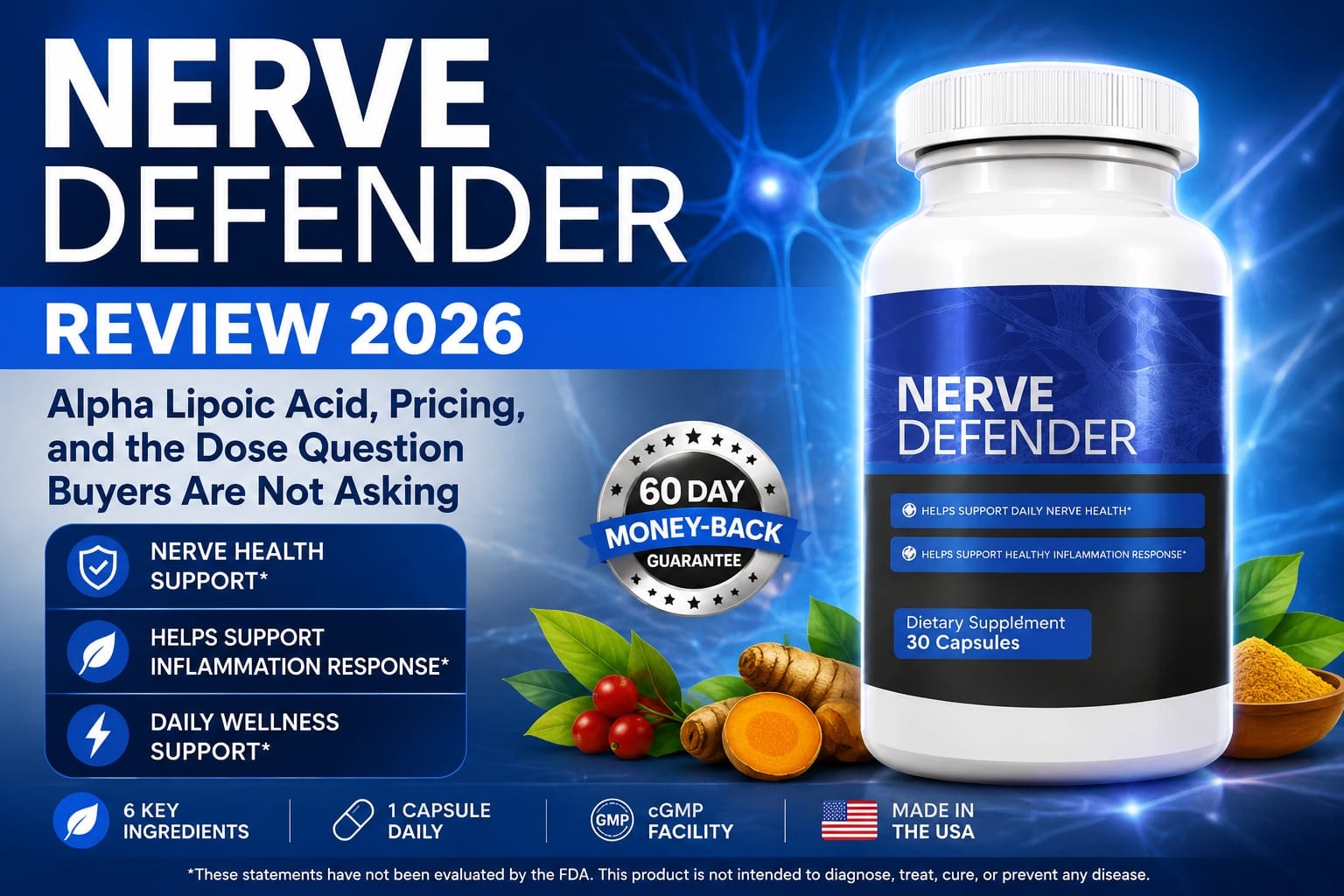
As interest in daily nerve health support continues rising in 2026, this Nerve Defender review explores how the supplement is positioned for nerve wellness routines, what buyers should know about its Alpha Lipoic Acid-focused ingredient blend, and which label transparency factors may influence individual purchase decisions.
LAKELAND, FL / ACCESS Newswire / June 13, 2026 / Research and regulatory sources used in this article: NIH Office of Dietary Supplements fact sheets; NCCIH consumer information resources; published peer-reviewed literature (PubMed-indexed RCTs with disclosed DOIs); FDA dietary supplement regulations (DSHEA, 21 CFR Part 111); and FTC advertising compliance guidance (16 CFR Part 255, 16 CFR Part 465, Health Products Compliance Guidance 2022). None of these organizations endorse Nerve Defender or this article.
Disclaimers: This is promotional content intended to educate consumers about a commercially available product. Some links are affiliate links - a commission may be earned if you buy through them, at no extra cost to you. That arrangement doesn't change what's written here. Disclosure per FTC 16 CFR Part 255. Nerve Defender is a dietary supplement - not an FDA-approved drug. Supplement statements haven't been evaluated by the FDA, and this product isn't intended to diagnose, treat, cure, or prevent any disease. Results vary. Talk to a qualified healthcare provider before starting any new supplement, especially if you take medications or have an existing health condition.
Nerve Defender Research 2026: Alpha Lipoic Acid, Pricing, and the Dose Question Buyers Are Not Asking
Nerve Defender is a once-daily dietary supplement from Instituto Experience (Lakeland, Florida) containing a 575mg proprietary blend of six ingredients: Alpha Lipoic Acid, Magnesium Glycinate, Turmeric Extract (95% Curcuminoids), L-Carnitine, CoQ10, and Butcher's Broom. It sells for $49-$89 per bottle depending on order size, includes a 60-day money-back guarantee, and is not FDA-approved. Individual ingredient amounts within the blend are not disclosed on the label.
TL;DR: Nerve Defender is a once-daily supplement capsule from Instituto Experience (Lakeland, Florida) with a 575mg proprietary blend of six ingredients - Magnesium Glycinate, Alpha Lipoic Acid, Butcher's Broom Root Extract, L-Carnitine, Turmeric Extract (95% Curcuminoids), and Coenzyme Q10 - alongside 80mg of Magnesium. The brand positions it for nerve health support and general wellness comfort. It's not FDA-approved, not a drug, and individual results vary. Priced from $49 to $89 per bottle depending on order size, with a 60-day money-back guarantee. Key limitation: individual ingredient amounts within the proprietary blend are not disclosed on the label.
Who Should Read This Review?
Here are the stakes: most people who buy nerve health supplements do zero label verification. They read the sales page, see the brand testimonials, and click add to cart. This article is for the buyer who wants to know what the label actually says, what the published research on each ingredient does and doesn't support, what can't be confirmed before you spend $89, and exactly what questions to ask the brand directly before committing to a larger order.
If you're managing a diagnosed medical condition - particularly diabetes, neuropathy, or cardiovascular disease - this article explicitly flags the ingredient interaction considerations you should discuss with your physician before adding any new supplement. If you're researching general nerve wellness support as a daily compliment to your health routine, you'll find all the verification tools you need right here.
View Nerve Defender's Current Offer Page
Disclosure: If you buy through this link, a commission may be earned at no extra cost to you.
Quick Verification Snapshot: Nerve Defender Fast Facts (As of June 2026)
Consumers researching nerve pain, tingling, numbness, and peripheral neuropathy often compare supplements like Nerve Defender - but it's important to establish upfront that Nerve Defender is not a treatment for neuropathy or any medical condition. It's a dietary supplement positioned for daily nerve health support. That distinction shapes everything else in this article.
Product name: Nerve Defender
Brand/Distributor: Instituto Experience, Lakeland, Florida 33804 USA
Phone: 1-507-448-8190
Email: [email protected]
Official Website: Company Direct Nerve Defender Website
Category: Dietary supplement - nerve health support
Dosage: 1 capsule daily
Capsule type: Hypromellose vegetable capsule
Serving count: 30 capsules per container (30-day supply)
Key ingredients: 575mg Proprietary Blend (Magnesium Glycinate, Alpha Lipoic Acid, Butcher's Broom Root Extract, L-Carnitine, Turmeric 95% Curcuminoids, CoQ10); 80mg Magnesium (as Magnesium Glycinate, 19% DV)
Individual blend amounts: Not disclosed on label (proprietary blend)
Manufactured: Per brand, produced in the USA in an FDA-registered, cGMP facility (21 CFR Part 111). Note: FDA facility registration does not equal FDA product approval
Pricing: $89 (1 bottle, +shipping); $177 (3 bottles, free US shipping); $294 (6 bottles, free US shipping)
Brand's reference "before" prices: $179 / $537 / $1,074 (brand-stated reference points - not independently verified as prevailing market prices)
Guarantee: 60-day money-back (full and/or empty bottles)
Subscription: None - one-time purchase only, no auto-renewal
Bonuses: 5 digital guides with 3- or 6-bottle orders
FDA status: Dietary supplement - not FDA-approved to treat or prevent any disease
Third-party certification: Not confirmed on label or sales page (USP, NSF, Informed Sport not mentioned)
Prior wire coverage: None found (first release as of June 2026)
Buyer Takeaway 1: Before spending $89 on a first bottle, there's one thing the sales page won't tell you: all six active ingredients share a single 575mg pool with no individual breakdown on the label. Alpha Lipoic Acid has been studied at 300-600mg/day in standalone trials. In a six-ingredient blend totaling 575mg, the label cannot confirm whether any single ingredient reaches that level. That's the most important fact to go in with. All six active botanical and nutritional ingredients share a single 575mg pool. That means you can't independently confirm how much of any one ingredient - including Alpha Lipoic Acid, which has the strongest research base in this category - you're actually getting per capsule. That's not unique to this product in the supplement industry, but it's a real limitation every buyer should factor into their decision.
Nerve Defender 2026 Fast Facts: What Every Buyer Should Know in 30 Seconds
Product type: Nerve Defender is a once-daily vegetable-capsule dietary supplement
Primary positioning: Nerve Defender is positioned by the brand for daily nerve health support and general wellness comfort
Active blend total: Nerve Defender contains 575mg total across its six-ingredient proprietary blend
Magnesium content: Nerve Defender delivers 80mg of Magnesium (as Magnesium Glycinate), representing 19% of the Daily Value
Capsule count: Nerve Defender comes with 30 capsules per bottle (30-day supply at 1 capsule/day)
Guarantee window: Nerve Defender's 60-day money-back guarantee covers both full and empty bottles
No subscription: Nerve Defender is sold as a one-time order with no automatic renewals or recurring charges
Return contact: [email protected]; 1-507-448-8190
Company location: Instituto Experience, Lakeland, Florida 33804 USA
Manufacturing claim: Brand states USA production in an FDA-registered, GMP facility (not independently verified by this publication)
Third-party testing: No USP, NSF, or Informed Sport certification disclosed on label or official page
Price per day: Approximately $1.63/day at the 6-bottle price ($294/180 days)
Digital bonuses: 5 bonus guides (included with 3- or 6-bottle orders only)
FDA-registered facility claim: Brand-stated; not independently audited by this publication
Dose transparency: Individual ingredient amounts within proprietary blend are not publicly disclosed
Drug approval status: Not FDA-approved; classified as a dietary supplement under DSHEA
Regulatory caution note: Product label states: not for use by those under 18, pregnant, or nursing; consult physician before use, especially if taking medications or managing a medical condition
Evidence base: Some ingredients (notably ALA) have published research in neuropathy-adjacent categories; evidence for proprietary blends at undisclosed doses is limited
Category competition: Multiple similar nerve support formulas are sold through comparable online channels
Registered trademark: Nerve Defender ® mark appears on the brand's official website
View Nerve Defender's Current Offer Page
What Is Nerve Defender, and Who Makes It?
Nerve Defender is a once-daily dietary supplement capsule positioned by its brand for nerve health support. According to the brand's official website and published Supplement Facts label, each vegetable capsule contains a 575mg proprietary blend of six ingredients: Magnesium Glycinate, Alpha Lipoic Acid, Butcher's Broom Root Extract, L-Carnitine, Turmeric Extract (95% Curcuminoids), and Coenzyme Q10. The capsule also delivers 80mg of Magnesium (as Magnesium Glycinate), representing 19% of the Daily Value based on a 2,000-calorie diet.
The product is distributed by Instituto Experience, located in Lakeland, Florida 33804 USA. That's the entity you'd deal with for returns, refunds, and customer support. According to the brand, Nerve Defender is manufactured in the United States in an FDA-registered facility that follows current Good Manufacturing Practice (cGMP) standards for dietary supplements under 21 CFR Part 111. This publication has not independently verified the manufacturing facility claim. Importantly: FDA facility registration does not mean FDA approval of the product. Registration means the facility is on file with the FDA; it does not mean FDA has reviewed, approved, or verified the product's safety or efficacy.
The brand's front-panel claims, as printed on the label, are: "Helps Support Daily Nerve Health" and "Helps Support Healthy Inflammation Response." These are structure-function claims regulated under the Dietary Supplement Health and Education Act (DSHEA). They don't require FDA pre-approval, but they must be truthful and not misleading, and the manufacturer must have substantiation on file.
To be clear about what Nerve Defender is not: it's not an FDA-approved drug, it hasn't been clinically tested as a finished product in a randomized controlled trial, and it doesn't hold third-party certifications such as USP, NSF International, or Informed Sport as disclosed on the label or official website. Those distinctions matter if you're evaluating it against pharmaceutical options or against certified-clean label requirements.
Buyer Takeaway 2: Instituto Experience (Lakeland, FL) is the distributor of record. They're responsible for fulfilling the 60-day refund - use [email protected] or 1-507-448-8190 for all support. That's publicly confirmed. What isn't publicly confirmed: the specific manufacturer of record, which contract facility is producing the capsules, or any third-party testing certifications.
The Supplement Facts Label: Exactly What's in Each Capsule
The Supplement Facts label is the authoritative source for what's in Nerve Defender. Everything else on the brand's sales page - the testimonials, the benefit claims, the promotional language - is marketing. The label is the regulatory document. Here's what it says:
Serving size: 1 capsule
Servings per container: 30
Magnesium (as Magnesium Glycinate from proprietary blend): 80mg - 19% DV
Proprietary Blend: 575mg total (†Daily Value not established)
The six ingredients within the 575mg proprietary blend, in the order they appear on the label (which typically - though not always - reflects descending order by weight):
Magnesium Glycinate
Alpha Lipoic Acid
Butcher's Broom (Ruscus aculeatus) Root Extract
L-Carnitine
Turmeric (Curcuma longa) Rhizome Extract, 95% Curcuminoids
Coenzyme Q10 (as Ubiquinone)
Other Ingredients (non-active): Hypromellose (Vegetable Capsule), Microcrystalline Cellulose, Magnesium Stearate, Stearic Acid, Silicon Dioxide.
The proprietary blend structure means you know the total (575mg across six ingredients) but you don't know the individual split. This is legal under current DSHEA regulations, and it's common in the supplement industry. But it matters for your evaluation. Alpha Lipoic Acid, which carries the strongest research evidence in neuropathy-adjacent categories, has evidence-based oral dosing of 300-600mg per day in published studies on diabetic neuropathy. With six ingredients sharing 575mg total, the label does not allow consumers to verify whether Alpha Lipoic Acid is present at doses comparable to those studied in clinical trials. The brand doesn't claim its product delivers research-dose ALA, and the label doesn't represent that it does.
Buyer Takeaway 3: Here's the specific thing this label won't tell you before you buy: whether Alpha Lipoic Acid is present at a dose that corresponds to what the research studied. The label shows 575mg across six ingredients with no breakdown. That gap matters when comparing this product to alternatives that do disclose individual amounts. Before buying, decide whether that transparency level works for your evaluation standard. If knowing exact amounts of ALA, CoQ10, or L-Carnitine matters to you, this label structure won't provide that information.
What the Research Literature Actually Says About These Ingredients
Research discussed in this section concerns individual ingredients at doses studied in published literature, not Nerve Defender as a finished product at its undisclosed proprietary blend amounts. Ingredient studies cannot be used to conclude that this specific blend will produce the same outcomes as the standalone research findings described below.
The ingredients in Nerve Defender's blend aren't obscure compounds you've never heard of. They've all been studied in various research contexts. But here's the thing every serious supplement buyer needs to understand: there's a real gap between "there's research on this ingredient" and "this product has been proven to do X." That gap matters, and this section covers it directly - ingredient by ingredient.
This publication isn't a medical authority. The overview below reflects published literature and does not constitute medical advice. Consult a physician or pharmacist for guidance specific to your health situation.
Alpha Lipoic Acid (ALA)
Published research has evaluated Alpha Lipoic Acid in diabetic peripheral neuropathy populations, making it one of the most extensively studied ingredients commonly discussed in nerve-support supplement categories. It's both water-soluble and fat-soluble - a combination that allows it to function in nerve tissue environments that most antioxidants can't reach. The ALADIN study (Ziegler D et al., Diabetologia, 1995; PMID: 8786016), a multicenter randomized double-blind placebo-controlled trial in 328 patients with diabetic neuropathy, found that 600mg IV ALA over 3 weeks produced statistically significant reductions in Total Symptom Score compared to placebo (p<0.001). The SYDNEY 2 trial (Ziegler D et al., Diabetes Care, 2006; DOI: 10.2337/dc06-1216), a randomized double-blind placebo-controlled trial in 181 diabetic patients, found that oral ALA at 600mg/day for 5 weeks improved neuropathic symptoms and deficits in distal symmetric polyneuropathy. A 2025 updated systematic review and meta-analysis published in Explorations in Neuroprotective Therapy (Das S et al., 2025; DOI: 10.37349/ent.2025.1004125) evaluated nine RCTs comprising 1,345 subjects and reported that ALA was associated with statistically significant reductions in Neuropathy Impairment Scores and neuropathy severity scores. However - and this is the important caveat - the same 2025 analysis found that ALA was not statistically significant for improving motor nerve conduction velocity compared to placebo. The evidence profile is for symptomatic support, not structural nerve repair.
Dosing matters significantly with ALA. The evidence base for neuropathy research used oral doses typically ranging from 300 to 600mg per day. Nerve Defender's entire proprietary blend is 575mg across six ingredients. The label does not disclose whether ALA in this blend corresponds to the 300-600mg thresholds studied in published neuropathy research. The brand doesn't claim to replicate research doses, and the label doesn't promise clinical-trial ALA quantities. Buyers should weigh that gap in their evaluation.
Magnesium Glycinate
Magnesium Glycinate is a chelated, highly absorbable form of magnesium. Magnesium plays established roles in nerve signal transmission and neuromuscular function. Research published in PubMed-indexed journals suggests that magnesium deficiency is associated with increased neuropathic pain and nerve excitability, and that supplementation may reduce the hyperexcitability that contributes to tingling and burning sensations. Nerve Defender delivers 80mg of Magnesium (as Magnesium Glycinate), which is about 19% of the Daily Value. Additional Magnesium Glycinate also appears in the proprietary blend, though the additional amount isn't disclosed separately. The glycinate chelate form is associated with better gastrointestinal tolerance compared to magnesium oxide or magnesium citrate, which is a meaningful practical consideration for daily use.
Turmeric Extract (95% Curcuminoids)
The 95% curcuminoid standardization is meaningful - it signals concentrated Turmeric extract rather than whole-root powder. Curcumin, the primary bioactive curcuminoid, has been studied for its anti-inflammatory and antioxidant properties. A 2025 double-blind randomized controlled trial published in Trials (Alikiaii B et al., 2025; DOI: 10.1186/s13063-025-08916-5; PMID: 40514680) evaluated curcumin-piperine supplementation (500mg curcuminoids plus 5mg piperine daily) in 66 critically ill sepsis patients over 7 days, reporting statistically significant reductions in CRP (p=0.04) and ESR (p<0.001) versus placebo. A critical bioavailability consideration applies here: that trial combined curcumin with piperine, a known absorption enhancer. Nerve Defender's ingredient label does not list piperine. Standard curcumin without a bioavailability enhancer is poorly absorbed. The brand doesn't claim enhanced curcumin bioavailability, and Microcrystalline Cellulose (the listed excipient) is not an absorption enhancer. Buyers interested specifically in curcumin bioavailability should verify formulation details with the brand directly before purchasing.
L-Carnitine
L-Carnitine plays a role in mitochondrial energy production - it facilitates the transport of fatty acids into mitochondria for ATP generation. Nerve cells are energy-intensive; L-Carnitine's role in cellular energy metabolism has led to research interest in neuropathy contexts. Acetyl-L-Carnitine (a related compound) has been the more studied form in peripheral neuropathy research. L-Carnitine and Acetyl-L-Carnitine are related but distinct compounds - Nerve Defender's label specifies L-Carnitine, not the acetylated form. The distinction matters for buyers comparing research literature, since most neuropathy-specific studies used the acetylated variant. The brand doesn't claim equivalence to Acetyl-L-Carnitine research data.
Coenzyme Q10 (as Ubiquinone)
CoQ10 functions as both a mitochondrial energy cofactor and an antioxidant. It's found in virtually every cell of the human body and is involved in the electron transport chain for ATP production. Published research suggests CoQ10 may help protect nerve cells from oxidative stress and support nerve function, particularly in contexts where oxidative damage is a contributing factor to neuropathy symptoms. The Ubiquinone form in Nerve Defender is the standard, oxidized form of CoQ10. Ubiquinol (the reduced form) is considered more bioavailable by some researchers, though both forms are commonly used in supplements. The brand uses Ubiquinone.
Butcher's Broom (Ruscus aculeatus) Root Extract
Butcher's Broom is a European plant with a research history focused on venous tone and microcirculation. Published studies, including those reviewed in clinical settings, demonstrate that R. aculeatus extract acts as an alpha-adrenergic agonist - it promotes vasoconstriction by activating alpha-1 and alpha-2 receptors in vascular smooth muscle. This venotonic effect has been studied most extensively in chronic venous insufficiency and orthostatic hypotension contexts. The mechanism of interest for nerve health is indirect: improved microvascular circulation to peripheral nerve tissue means better delivery of oxygen and nutrients to nerve endings. This is a plausible mechanism, but the direct evidence specifically linking Butcher's Broom to peripheral neuropathy symptom reduction is limited compared to the evidence base for ALA.
Buyer Takeaway 4: Of the six ingredients, ALA has a comparatively larger body of published research for neuropathy-adjacent applications than most nerve-support supplement ingredients. The others have supporting mechanisms (anti-inflammatory, circulatory, cellular energy) that are plausible and worth understanding. But the research on these ingredients was conducted using standalone compounds at specific doses in controlled trials - not in proprietary blends at undisclosed amounts. You can't extrapolate research-dose outcomes to this formulation directly. The brand doesn't ask you to; it makes structure-function claims under DSHEA, not drug efficacy claims.
The Evidence Balance: What Published Research Does and Doesn't Confirm
Here's an honest survey of where the evidence actually stands - including where it's strong, where it's genuinely mixed, and where it's sparse. No spin in either direction. This section draws on published research and guidance from the National Center for Complementary and Integrative Health (NCCIH), the NIH Office of Dietary Supplements, and peer-reviewed literature.
What the evidence supports: Alpha Lipoic Acid is among the better-studied ingredients in the nerve-support supplement category - and that context matters when you're comparing six ingredients side by side. The ALADIN trial (Diabetologia, 1995; PMID: 8786016) and the SYDNEY 2 trial (Diabetes Care, 2006; DOI: 10.2337/dc06-1216) demonstrated statistically significant reductions in neuropathic symptom scores in patients with diabetic peripheral neuropathy. The 2025 meta-analysis published in Explorations in Neuroprotective Therapy (Das S et al.; DOI: 10.37349/ent.2025.1004125), covering nine RCTs and 1,345 subjects, confirmed these findings. That's a real finding. Magnesium supplementation has published data associating adequate magnesium levels with reduced neuropathic excitability and nerve signal dysregulation, particularly in research contexts where magnesium deficiency was a contributing variable. Curcumin (the primary curcuminoid in Turmeric extract) has demonstrated anti-inflammatory activity in multiple randomized trials using standardized extract formulations. CoQ10 has established roles in mitochondrial energy production that are broadly relevant to nerve cell health across multiple published research streams.
What the evidence doesn't confirm: The 2025 updated meta-analysis on ALA explicitly found it was not statistically significant for improving motor nerve conduction velocity compared to placebo. The evidence for ALA is for symptomatic support, not structural nerve regeneration. L-Carnitine research in neuropathy contexts has primarily used Acetyl-L-Carnitine - which is not the same compound as L-Carnitine in Nerve Defender's formulation. The evidence for Butcher's Broom in peripheral neuropathy specifically - as opposed to venous insufficiency - is sparse. And importantly, there are no published randomized controlled trials on Nerve Defender as a finished formulation at the doses actually contained in the capsule.
What reasonable physicians disagree on: Whether multi-ingredient supplement blends at sub-research doses produce additive or synergistic effects is genuinely debated in integrative medicine. Some clinicians believe that combination approaches at lower individual doses may be preferable for daily maintenance use, even without data at research-dose thresholds. Others argue that unless you're reaching the doses studied in clinical trials, the benefits are uncertain. That's an honest summary of the professional disagreement.
Buyer Takeaway 5: What the NCCIH and NIH evidence profile tells you: the ingredient rationale is scientifically plausible. What it doesn't tell you: that this specific formulation at its undisclosed doses will produce the outcomes shown in standalone research trials. That gap is real. But it doesn't make the product worthless - it means you enter with calibrated expectations, not with the expectations the sales page is trying to set. There's a real difference between those two things.
Does Nerve Defender Work? Here's the Honest Answer
This is the question. It deserves a direct answer.
Nerve Defender is a dietary supplement, not an FDA-approved drug. It's not been studied as a finished product in a randomized controlled trial. "Does it work?" in the pharmaceutical sense - meaning "has it been proven in controlled conditions to produce specific measurable outcomes" - cannot be answered yes from the public evidence available to this publication.
What can be concluded: the individual ingredients in the formula have published biological rationales for their inclusion in a nerve health support product. Alpha Lipoic Acid has more published clinical research behind it than most ingredients in nerve-support supplement formulas - that consistency across systematic reviews is meaningful context. Magnesium Glycinate, Turmeric, CoQ10, L-Carnitine, and Butcher's Broom each have supporting mechanisms that are plausible for the category. Plausible. Not proven in this product. The dosing structure (575mg proprietary blend across six ingredients) doesn't allow buyers to independently verify whether research-relevant amounts of any ingredient are present - a structural limitation that applies to every proprietary blend product on the market, not just this one.
The brand's structure-function claims - "Helps Support Daily Nerve Health" and "Helps Support Healthy Inflammation Response" - are legally permissible DSHEA language. They're not disease claims. They don't say "treats neuropathy" or "cures nerve damage." That's a meaningful distinction. The marketing language on the sales page is more aggressive than the label claims, but the regulatory language that governs the product is the label.
What matters for your individual experience: whether a supplement formulation with these ingredients at these (undisclosed) amounts produces noticeable comfort or wellness support in your specific situation is something no publication - and no product review - can predict for you. Individual results vary, and the 60-day guarantee exists precisely to let you evaluate that yourself with reduced financial risk.
Buyer Takeaway 6: "Does Nerve Defender work?" has an honest answer: there's no finished-product clinical evidence either way. The ingredient rationale is scientifically reasonable based on published research on individual ingredients. The dose transparency is incomplete. The 60-day guarantee is genuinely low-risk if you want to find out for yourself. That's the complete picture the evidence supports.
Nerve Defender Ingredients: Verify Each One Yourself Before You Buy
If you're doing your own research before purchasing, here's a practical ingredient-by-ingredient verification framework based on what's publicly available:
Alpha Lipoic Acid: Look up ALA in the NIH Office of Dietary Supplements fact sheets and NCCIH consumer information resources. Research context: diabetic peripheral neuropathy at 300-600mg/day. Ask: does this product disclose how much ALA it contains? (Nerve Defender doesn't.) Consider whether that matters for your use case.
Magnesium Glycinate: Look up magnesium's role in nerve signal transmission via the NIH ODS Magnesium Fact Sheet. Verify the 80mg (19% DV) disclosed amount against the adult recommended dietary allowance for magnesium (310-420mg depending on age and sex). Nerve Defender's disclosed Magnesium provides approximately 19-26% of typical daily needs from the supplement alone.
Turmeric 95% Curcuminoids: Check NCCIH consumer information resources on Turmeric and Curcumin. Key consideration: bioavailability. Standard curcumin without a bioavailability enhancer like piperine is poorly absorbed. If bioavailability matters to your decision, ask the brand whether piperine or a lipid delivery system is present in the formulation (it's not listed in the Other Ingredients on the current label).
L-Carnitine: Look up L-Carnitine via the NIH ODS. Note that most neuropathy-specific research used Acetyl-L-Carnitine, which is a distinct compound. If you're comparing to that literature, it's a relevant distinction. Contact the brand if you need confirmation of which carnitine form is used.
Coenzyme Q10: The NIH ODS CoQ10 fact sheet covers the evidence base. The Ubiquinone form is standard; Ubiquinol is more bioavailable to some users, particularly older adults. Both are widely used in supplements.
Butcher's Broom: Review the NCCIH consumer information resources on herbal supplements, including Ruscus aculeatus. The primary evidence base is for venous insufficiency and orthostatic hypotension, not peripheral neuropathy specifically. The indirect mechanism (improved peripheral microcirculation) is the link to nerve health support positioning.
Buyer Takeaway 7: Every ingredient here is verifiable through NIH, NCCIH, and PubMed before you spend a dollar. None of those searches will tell you whether Nerve Defender's specific doses produce any particular effect - but they'll give you the background to evaluate the brand's ingredient rationale on its own terms.
Nerve Defender Pricing: What You're Actually Paying and What's Included
Here's the pricing breakdown directly from the official website, accurate as of this article's publication:
1-Bottle (30-Day Supply): $89 + shipping. Per the brand, this represents a savings of $90 off the brand's listed reference price of $179.
3-Bottle (90-Day Supply): $177 total ($59 per bottle) + free US shipping. Brand's reference price: $537. Five digital bonus guides are included.
6-Bottle (180-Day Supply): $294 total ($49 per bottle) + free US shipping. Brand's reference price: $1,074. Five digital bonus guides included. The brand notes that 96% of customers choose this option - that is a brand-reported statistic and has not been independently audited by this publication.
Important pricing disclosures required by transparency standards: the "before" or "regular" prices ($179, $537, $1,074) are the brand's stated reference points. This publication hasn't independently verified that these reference prices reflect prevailing market prices or previously charged rates. EU buyers should verify EU-specific pricing and compliance with EU consumer pricing regulations, as they may differ. All pricing is brand-stated; confirm current pricing at checkout before completing any order. Shipping and applicable taxes are calculated separately. The final total at checkout may differ from the per-bottle figure displayed.
Per-day cost analysis at each tier: approximately $2.97/day (1-bottle), $1.97/day (3-bottle), $1.63/day (6-bottle). These calculations assume consistent daily use at 1 capsule per day over the supply period.
One-time purchase confirmed: the brand explicitly states there is no automatic renewal, no hidden subscription, and no recurring charges. The purchase is a single transaction. That's straightforward and a genuine positive, since subscription friction is a common complaint in the supplement industry.
The five digital bonus guides (included with 3- and 6-bottle orders) are: Nerve Renew Guide, Natural Nerve Recovery, Fortifying Vitamins, Renewed Nerves Challenge, and Personalized Usage Guide. These are digital downloads with instant access. Their assigned retail values ($39-$77 each per the brand's own listings) are promotional figures used to frame the value proposition; their independent market value is not verifiable.
Buyer Takeaway 8: The 6-bottle option at $294 ($49/bottle, approximately $1.63/day) is the brand's lowest advertised per-bottle cost and the only option that provides a 6-month supply. The 3-bottle at $177 is the middle ground. The 1-bottle at $89 lets you test at lower initial commitment, though you pay more per day and don't receive the bonus digital guides. All orders include the 60-day money-back guarantee regardless of bottle count.
Check current Nerve Defender availability and pricing.
Nerve Defender's 60-Day Money-Back Guarantee: Reading the Fine Print
The brand's guarantee language, as published on the official website, states: a 100% money-back guarantee for a full 60 days from the date of purchase. You can return all bottles of the product - full and/or empty - at any time within 60 days of purchase and receive a full refund. Contact for refund initiation: [email protected].
What's worth noting about this guarantee structure:
First, 60 days from purchase gives you roughly two complete 30-day supply cycles if you buy a 2-bottle equivalent. With a single bottle (30-day supply), you have 30 days of use within the 60-day window to evaluate the product and initiate a return if needed.
Second, the guarantee language on the FAQ section states that if you're not satisfied "after at least 30 days of use," you should contact support. That's informal guidance suggesting the brand expects buyers to try the product for a meaningful period before returning - which is reasonable - but the formal guarantee language covers returns within 60 days of purchase without a stated minimum use requirement.
Third, the guarantee covers product already used (empty bottles included). That's a meaningful distinction from guarantees that only cover unopened returns.
This publication hasn't independently tested the refund process or verified fulfillment speed. If you encounter refund friction, the phone number 1-507-448-8190 is the published support contact.
Buyer Takeaway 9: Here's the actual risk math on a 1-bottle purchase: $89 outlay, 30 days of use, 30-day window remaining to initiate a refund at [email protected]. The empty-bottle clause means you don't forfeit money by actually using the product during that evaluation window. If the refund policy is honored as published, consumers may be able to recover the purchase price within the stated guarantee window, subject to the brand's current refund terms and any applicable return shipping costs. That's a meaningful structural protection - if honored. It means your financial downside on a 1-bottle purchase is limited - you're essentially renting $89 to evaluate the product over 30 days, with refund available within the following 30 days. Verify the current guarantee terms on the official website before purchase, as policies can change.
How to Read Nerve Defender's Marketing Language Honestly
The brand's sales page uses promotional language that's stronger than what the Supplement Facts label says. Here's what that language means, and what it doesn't mean, in regulatory context:
Brand marketing language: what it means and doesn't mean: The brand's sales page references "clinically proven" ingredient research. This article does not interpret that language as evidence that Nerve Defender itself has been clinically proven as a finished product. Publicly available materials reviewed for this article did not identify randomized clinical trials on Nerve Defender as a finished formulation. What the research covers is individual ingredients - particularly Alpha Lipoic Acid - at doses studied in standalone ingredient trials. That's a meaningfully different thing from a finished-product clinical trial.
Aggressive benefit language on the sales page vs. the label: The brand's sales page uses language like promotional symptom-relief language as benefit framing. That type of language is more aggressive than what a dietary supplement can legally claim under DSHEA. The product label's front-panel language uses "Helps Support" framing, which is the compliant standard. The gap between the sales page language and the label language is meaningful - the label governs the product; the sales page is marketing.
"100% natural way" - The brand uses this positioning. It refers to the ingredient sourcing philosophy. "Natural" doesn't have a regulated definition in dietary supplements and isn't independently verifiable by this publication.
"Restoring complete mobility and comfort" - Brand positioning language. Not a structure-function claim on the label; not a drug efficacy claim. It's promotional framing that individual buyers should evaluate against their own health situations and physician guidance.
"96% of customers order 6 bottles" - Brand-stated statistic. Not independently audited. A common sales-page device in this product category. Treat it as marketing framing.
The three testimonials on the brand's page (attributed to Michael Thompson of Houston, Sarah Rodriguez of Chicago, and Jonathan Rio of Seattle) are presented as brand-featured consumer experiences. Testimonials appearing on the brand's website are brand-curated consumer experiences. This publication has not independently verified the individuals, claims, or outcomes described. Individual results vary, and testimonials should not be interpreted as typical or guaranteed results. Customer ratings and testimonial data are brand-reported, not independently audited by this publication.
Buyer Takeaway 10: Here's the three-layer reality of any supplement: marketing materials, product labeling, and published research each serve different purposes and should be evaluated separately. The label is your regulatory anchor. The research is the evidence context. The marketing is the promotional frame. None of them are identical, and treating them as such is how buyers end up misled - in either direction.
Nerve Defender vs. Comparable Nerve Health Supplements: What Buyers Should Know
The nerve health supplement category is crowded. Comparable products sold through similar direct-to-consumer channels typically share several structural characteristics: alpha lipoic acid as a lead ingredient, multi-ingredient proprietary blends, 30-day supply containers, tiered pricing with free shipping on multi-bottle orders, and 60-day guarantees. Nerve Defender fits that pattern.
What might differentiate Nerve Defender in a category comparison: the Turmeric 95% Curcuminoids standardization is a higher-quality specification than whole-root Turmeric powder (though the bioavailability caveat remains). The Hypromellose (vegetable) capsule is a meaningful consideration for buyers avoiding gelatin capsules. The 80mg of Magnesium (as Magnesium Glycinate), disclosed separately from the proprietary blend, provides at least one measurable, disclosed nutrient amount.
What may put Nerve Defender at a disadvantage vs. some competitors: no disclosed third-party testing certifications (USP, NSF, Informed Sport). Some category competitors that can point to independent lab verification of identity, purity, and potency offer buyers a verifiable quality-assurance layer that Nerve Defender's label currently doesn't provide.
Buyers who prioritize full dose transparency may want to compare Supplement Facts labels across multiple nerve-support supplements before choosing a product. Individual ingredient amounts, third-party testing certifications, and capsule delivery forms are the three label elements most worth checking side by side when evaluating this category.
No disparagement of any competitor is intended here. The comparison is factual and structural. Different buyers have different priorities, and the goal is to help you match the right product to your actual verification standards.
Buyer Takeaway 11: If third-party testing certification matters to you, verify whether Nerve Defender has expanded its quality assurance documentation since publication of this article by checking the official website directly. The brand's manufacturing claims (FDA-registered, GMP facility) are reasonable industry-standard claims, but they're not the same as third-party testing of the finished product for potency, identity, and contaminants.
Who Is Nerve Defender Designed for, According to the Brand?
According to the brand's official website and product positioning, Nerve Defender is intended for adults experiencing tingling, numbness, or discomfort in their extremities (particularly hands and feet) who are looking for a daily dietary supplement to support nerve health.
The label explicitly states: not for use by those under the age of 18, pregnant women, or nursing mothers. It further states that anyone taking medications or managing a medical condition should consult a physician before use. The brand specifically calls out individuals taking medications for neuropathic pain, diabetes, or high blood pressure as warranting physician consultation.
Drug interaction considerations worth flagging independently of the brand's label: Alpha Lipoic Acid may affect blood sugar metabolism and could interact with insulin, metformin, and other diabetes medications. Turmeric/curcumin has been associated with anticoagulant interactions (including warfarin, aspirin, clopidogrel) at higher doses. Butcher's Broom, as an alpha-adrenergic agonist affecting vascular tone, may interact with alpha-adrenergic medications and blood pressure medications. These aren't reasons to avoid the product categorically, but they're reasons to have a direct conversation with your prescribing physician before adding this supplement to a complex medication regimen.
The supplement isn't appropriate as a substitute for medical diagnosis or treatment of peripheral neuropathy, which has multiple underlying causes - including diabetes, chemotherapy-induced neuropathy, vitamin B12 deficiency, autoimmune conditions, and others - that require medical evaluation and often prescription management. A dietary supplement cannot substitute for that evaluation.
Buyer Takeaway 12: If you're managing diagnosed peripheral neuropathy with prescription medications, the conversation about adding a nerve health supplement should happen with your neurologist or primary care provider, not based on a product review. This isn't an obstacle to the product - it's a legitimate medical precaution given the drug interaction considerations for two ingredients in this formula (ALA and curcumin).
Is Nerve Defender a Legitimate Product? Verifying the Brand's Core Claims
Here's what this publication verified and what couldn't be independently confirmed:
Verified - what this publication confirmed directly:
The official website nervedefender.com is live and displays a matching Supplement Facts label consistent with the product brief
The distributor name (Instituto Experience, Lakeland, FL 33804) is publicly listed
The contact number (1-507-448-8190) and email ([email protected]) are published on the official site
The pricing structure ($89/$177/$294) is publicly listed on the official site
The 60-day MBG language is published and clearly stated
The trademark ® appears on the brand's official page next to "Nerve Defender"
The one-time purchase (no subscription) claim is explicitly stated on the site
The ingredient list (proprietary blend composition) matches the label
Not independently verified by this publication:
The FDA-registered facility claim (brand-stated; facility not named)
The GMP compliance claim (brand-stated; no third-party certificate disclosed)
The "96% of customers order 6 bottles" statistic (brand-stated)
Individual ingredient amounts within the proprietary blend (not on label)
Third-party testing for purity, potency, or contaminants (not disclosed)
The individual testimonials and reviewer identities (brand-curated)
No FDA warning letters, health fraud database listings, or FTC enforcement actions involving Nerve Defender or Instituto Experience were identified in available public records as of the publication date of this article. That absence isn't a clean bill of health - it simply reflects what's publicly accessible at this time.
Red Flags That Would Change This Assessment
Calling a product legitimate doesn't mean it's immune from future concerns. Here's specifically what would change this review's assessment if discovered after publication:
An FDA warning letter targeting Instituto Experience or Nerve Defender directly would be a serious flag. Check fda.gov/inspections-compliance-enforcement-and-criminal-investigations for current enforcement actions.
Refund fulfillment failure - if buyers report a pattern of refused refunds within the 60-day window at [email protected] or 1-507-448-8190, the guarantee claim becomes misleading. Check current consumer feedback before purchasing.
Label changes that modify the ingredient list, blend size, or guarantee terms after this article's publication date. Always verify against the current official website before ordering.
Missing or refused COA (Certificate of Analysis) - if you contact the brand and they can't or won't provide a third-party Certificate of Analysis on request, that absence is a quality assurance gap worth weighing against the purchase decision.
Buyer Takeaway 13: Nerve Defender appears to satisfy several common consumer-verification criteria: disclosed company identity (Instituto Experience, Lakeland FL), published contact information, a publicly available Supplement Facts label, and a stated refund policy. That's the baseline - and it clears it. The ceiling that more discerning buyers look for is third-party testing documentation (USP, NSF, independent COAs). That's what's currently unverified. If that matters to you, ask the brand directly at [email protected] before you order.
How to Use Nerve Defender: Dosage and Usage Instructions
Per the official Supplement Facts label and the brand's published usage guidance: take one (1) capsule daily. The brand suggests preferably in the morning, with a glass of water.
Storage: the label instructs storing below 30°C (86°F) in a cool, dry place. Do not use if the safety seal is damaged or missing. Keep out of reach of children.
Cautions listed on label: Do not exceed the recommended dose. Not for use by those under 18 or by pregnant or nursing mothers. Consult with a physician before use especially if you are taking medication or have a medical condition.
The brand's FAQ recommends the 6-bottle option for a full 6-month supply, stating that ingredients like Magnesium Glycinate, Alpha Lipoic Acid, and Turmeric Extract benefit from consistent daily use over extended periods. That's reasonable framing for a supplement where effects - if present - are likely gradual rather than acute. It also happens to align with the highest-margin purchase tier, worth noting without implying dishonesty in the recommendation.
What Should You Realistically Expect Over Time?
Nerve Defender is a daily supplement, not a fast-acting medication. Based on how the individual ingredients work biologically - and the timeframes studied in published ingredient research - here's a realistic expectation framework. This is not a prediction of what Nerve Defender will do for you; individual results vary and no finished-product clinical data exists. This reflects the timelines from ingredient-level research only.
Weeks 1-2: Nothing dramatic to expect. Multi-ingredient supplement blends typically require consistent daily use before any observable changes develop. The brand's own label says one capsule daily - stick to that and don't double-dose hoping for faster results.
Weeks 3-5: The SYDNEY 2 trial (Diabetes Care, 2006) observed changes in neuropathic symptom measures over a 5-week window in patients taking standalone oral ALA at 600mg/day. The label does not disclose Nerve Defender's ALA dose, so no direct comparison to the SYDNEY 2 trial dose is possible. Use week 5 as your earliest realistic evaluation checkpoint - not week 1.
Weeks 6-12: The brand recommends a 6-month supply for long-term results. Whether that recommendation reflects genuine biological rationale or upsell incentive is something only you can judge based on your own experience. The 60-day guarantee covers roughly the first two months, so your financial risk window aligns with weeks 1-8 of use.
Beyond 12 weeks: If you've reached 90 days without any change you can point to, that's meaningful information. A supplement that produces no observable difference in 90 days of consistent use has answered the question of whether it works for you specifically - and that answer should factor into any decision to continue purchasing.
Buyer Takeaway 14: One capsule daily is a simple protocol. If you're going to evaluate Nerve Defender, the brand's own recommendation is to give it at least 30 days (and ideally 60-90 days) before forming conclusions. That's consistent with how most multi-ingredient supplement formulas perform - observable changes, if any, develop over weeks, not days.
The Five Digital Bonuses: What You Actually Get
With 3- or 6-bottle orders, the brand includes five digital guides at no additional cost. These are digital downloads with instant access. Here's what the brand describes:
Bonus 1 - Nerve Renew Guide: A guide addressing collagen production, dietary adjustments, and nerve protection support. Brand-assigned value: $67.
Bonus 2 - Natural Nerve Recovery: Nighttime habits focused on parasympathetic nervous system activation and sleep quality. Brand-assigned value: $59.
Bonus 3 - Fortifying Vitamins: Natural recipes and accessible ingredient suggestions for general wellness. Brand-assigned value: $47.
Bonus 4 - Renewed Nerves Challenge: A 10-day micro-habit plan with morning and nighttime components covering circulation, mobility, and dietary adjustments. Brand-assigned value: $77.
Bonus 5 - Personalized Usage Guide: A supplement usage guide covering timing and complementary habits. Brand-assigned value: $39.
The brand-assigned retail values for these guides ($39-$77 each) are promotional framing. They're not independently verifiable market prices for digital guides of this type. The practical value lies in whether the content inside these guides is useful and actionable - something that can only be evaluated post-purchase. This publication doesn't have access to the guides' contents and makes no independent assessment of their quality.
Buyer Takeaway 15: The digital bonuses add context to the 3- and 6-bottle orders but shouldn't be the primary reason to purchase. They're directional wellness guides, not substitute medical guidance. If the bonuses tip a close decision between the 1-bottle and 3-bottle tier, that's reasonable - but evaluate the core product (the supplement) as the primary variable.
How to Order Nerve Defender and What the Process Looks Like
The brand sells directly through its official website. The checkout process the brand describes it as secure and encrypted. Select your bottle tier, complete the order form, and the brand ships directly to your address.
For US buyers: 3- and 6-bottle orders include free US shipping. 1-bottle orders include a shipping charge - the exact amount is calculated at checkout and isn't disclosed as a fixed number on the pricing page.
For international buyers: shipping availability and costs for non-US addresses should be confirmed at checkout. The guarantee terms and refund logistics for international orders may differ from US orders - contact the brand directly at [email protected] to confirm before purchasing if you're outside the US.
Purchases made through current pricing and availability for Nerve Defender direct to the brand's offer page, where you can review the current terms before completing an order.
Buyer Takeaway 16: The simplest buyer path is: check the current offer page for active pricing, verify the guarantee terms haven't changed since this article was published, and make sure the contact details match what's above. If anything has changed, the official website is the authoritative source, not this article.
The Questions Every Smart Buyer in This Category Should Ask
People who research nerve health supplements before buying them often have a few common questions to verify. Here's how Nerve Defender answers each:
Is there an actual identifiable company behind this? Yes - Instituto Experience, Lakeland, FL 33804, with published phone and email. That meets the basic verifiability standard.
Can I get a refund if it doesn't work? Per published policy: yes, 60-day full-or-empty-bottle money-back guarantee. The mechanism for initiating a refund (email [email protected]) is publicly stated.
What's actually in it? The Supplement Facts label lists six ingredients in a 575mg proprietary blend plus 80mg Magnesium. Individual ingredient amounts aren't disclosed within the blend. That's the transparency limit.
Is it a subscription I'll forget to cancel? No - explicitly stated as a one-time purchase with no auto-renewal. That's verifiable from the brand's own FAQ.
Did it work for other buyers? Three testimonials are featured on the brand's site. This publication can't verify them independently. "Customer ratings and testimonials are brand-reported, not independently audited by this publication. Individual experiences vary" is the accurate characterization.
Is there a drug interaction I need to know about? Yes - ALA and blood sugar/diabetes medications; Turmeric/curcumin and anticoagulants; Butcher's Broom and alpha-adrenergic medications. Review these with your prescriber if relevant.
Buyer Takeaway 17: Nerve Defender answers the basic verification questions reasonably. The company is identifiable, the guarantee is stated, the ingredients are disclosed (with the proprietary blend caveat), and the one-time purchase structure is confirmed. The gap is third-party testing - if you need a USP or NSF stamp, this product doesn't currently offer one.
Nerve Defender and the Peripheral Neuropathy Context
Peripheral neuropathy is a medical condition that requires professional evaluation. Nerve Defender is not a medication and is not intended to diagnose, treat, cure, or prevent peripheral neuropathy, diabetic neuropathy, nerve damage, or any disease. This article discusses neuropathy only as consumer search context and as background for published ingredient research - not as a claim that Nerve Defender treats neuropathy.
With that established, peripheral neuropathy involves damage to the peripheral nerves - the nerves outside the brain and spinal cord - which affects an estimated more than 20 million people in the United States, according to the NINDS Peripheral Neuropathy Fact Sheet (National Institute of Neurological Disorders and Stroke). Common symptoms include numbness, tingling, burning, and pain in the hands and feet.
Peripheral neuropathy has multiple causes: diabetes (the most common), vitamin B12 deficiency, autoimmune diseases, chemotherapy, alcohol use disorder, physical trauma, and others. Cause-specific treatment matters enormously - diabetic neuropathy management involves blood sugar control, B12-deficiency neuropathy responds to B12 supplementation, and chemotherapy-induced neuropathy has its own management protocols.
Nerve Defender is positioned for general nerve health support. It's not positioned as a treatment for diagnosed peripheral neuropathy, and it can't substitute for the medical workup that identifies the underlying cause of neuropathic symptoms. If you're experiencing new, worsening, or unexplained peripheral nerve symptoms, a physician evaluation - including blood sugar testing, B12 level assessment, and neurological review - is the appropriate first step, not a supplement purchase.
That said, for people who've already had a medical evaluation, understand their neuropathy context, and are looking for a complementary daily support supplement, the ingredient profile of Nerve Defender is reasonable within the dietary supplement category. The key is understanding what it is (a DSHEA supplement, not a drug) and what it isn't (a treatment, a cure, or a substitute for medical management).
Buyer Takeaway 18: There are two completely different use cases here. Use case 1: you've had a medical evaluation, you understand your situation, and you're looking for a daily wellness supplement to complement that care. Nerve Defender fits that conversation. Use case 2: you're trying to avoid or replace prescription neuropathy treatment. It doesn't fit that conversation. Know which one applies to you before you order.
What This Review Could and Couldn't Verify: Full Transparency
You deserve to know exactly what went into this review. Here's the full picture: everything here is based on publicly available materials - the official brand website, the Supplement Facts label, the brand's terms and FAQ, published research on individual ingredients, and category context research. No product samples were received. No lab testing was done. No one from the brand was interviewed. No internal specs beyond what's publicly published were accessed.
That means this review reflects what a well-informed buyer can learn without purchasing the product - not what an independent laboratory would find about potency, purity, or formulation accuracy. It's a meaningful limitation, and it's the standard limitation that applies to virtually every supplement review published through advertising-supported media.
The most accurate description of this content: a buyer-verification framework built from public information, designed to help you ask the right questions before making a purchase decision. It isn't a clinical evaluation, a lab report, or a physician's recommendation.
Buyer Takeaway 19: Take any supplement review - including this one - as one input, not the final word. The most reliable input is a conversation with your prescribing physician or pharmacist who knows your complete health picture. The second most reliable input is the actual product label. This article is a structured framework for evaluating between those two.
Nerve Defender: Frequently Asked Questions
What is Nerve Defender and what does it claim to do?
Nerve Defender is a once-daily dietary supplement capsule distributed by Instituto Experience (Lakeland, Florida). The brand positions it for daily nerve health support. Per the product label, it makes two structure-function claims: "Helps Support Daily Nerve Health" and "Helps Support Healthy Inflammation Response." These are DSHEA-compliant structure-function claims - not drug claims, not FDA-approved therapeutic claims. The supplement contains a 575mg proprietary blend of six ingredients plus 80mg of Magnesium. It's not FDA-approved to treat, cure, diagnose, or prevent any disease. Individual results vary, and the brand recommends consulting a physician before use, especially if you take medications or manage a medical condition.
What are the ingredients in Nerve Defender?
The Supplement Facts label discloses: 80mg Magnesium (as Magnesium Glycinate, 19% DV) and a 575mg Proprietary Blend containing Magnesium Glycinate, Alpha Lipoic Acid, Butcher's Broom (Ruscus aculeatus) Root Extract, L-Carnitine, Turmeric (Curcuma longa) Rhizome Extract at 95% Curcuminoids, and Coenzyme Q10 (as Ubiquinone). Individual amounts within the proprietary blend aren't separately disclosed. Other (inactive) ingredients: Hypromellose Vegetable Capsule, Microcrystalline Cellulose, Magnesium Stearate, Stearic Acid, Silicon Dioxide. There are no gelatin capsules - this is a vegetable capsule formulation.
How do you take Nerve Defender?
Per the supplement label and brand guidance: one (1) capsule per day, preferably in the morning, with a glass of water. The serving size is one capsule; each container holds 30 servings (30-day supply). Don't exceed the recommended daily dose. The label cautions against use by those under 18, pregnant women, and nursing mothers, and recommends physician consultation if you take medications or have a medical condition. Store below 86°F (30°C) in a cool, dry location. Don't use if the safety seal is broken or missing.
Is there Alpha Lipoic Acid (ALA) in Nerve Defender?
Yes - Alpha Lipoic Acid appears second in the ingredient list in Nerve Defender's 575mg proprietary blend (following Magnesium Glycinate), which also contains Butcher's Broom Root Extract, L-Carnitine, Turmeric Extract, and CoQ10. The specific amount of ALA within the blend is not disclosed on the label. Published research on ALA in diabetic neuropathy contexts used oral doses of 300-600mg per day. Since the entire proprietary blend is 575mg across six ingredients, the label does not disclose whether Nerve Defender's ALA content corresponds to the doses studied in published neuropathy research, and that amount can't be independently verified from the label alone. For dose-specific questions, contact the brand directly at [email protected].
Does Nerve Defender have a money-back guarantee?
Yes. Per the brand's published guarantee language: 100% money-back for a full 60 days from the purchase date. The guarantee covers both full and empty bottles - you can return any unused and used product within 60 days for a full refund. To initiate a return, contact the brand at [email protected]. The support phone is 1-507-448-8190. Verify the current guarantee terms on the official website before purchasing, as policies can be updated after this article's publication date.
Who makes Nerve Defender?
Nerve Defender is distributed by Instituto Experience, located in Lakeland, Florida 33804 USA. The brand states that the product is produced in the USA in an FDA-registered, GMP-compliant facility. The specific contract manufacturer is not publicly named. Third-party certifications (USP, NSF, Informed Sport) aren't disclosed on the product label or official website. The company contact is 1-507-448-8190 and [email protected].
Is Nerve Defender FDA-approved?
No. Nerve Defender is classified as a dietary supplement under DSHEA - not an FDA-approved drug or medical device. Dietary supplements don't require FDA pre-approval. The brand claims the product is manufactured in an FDA-registered facility, which is a manufacturing facility classification, not product-level approval. The supplement carries the standard FDA required disclaimer on the label: "These statements have not been evaluated by the Food and Drug Administration. This product is not intended to diagnose, treat, cure, or prevent any disease."
How much does Nerve Defender cost?
As of this article's publication date, the brand's pricing is: $89 for 1 bottle (30-day supply, plus shipping), $177 for 3 bottles (90-day supply, free US shipping), and $294 for 6 bottles (180-day supply, free US shipping). The brand lists "before" prices of $179, $537, and $1,074, respectively - these are brand-stated reference points, not independently verified market prices. All pricing and shipping details are subject to change; confirm at checkout. It's a one-time purchase - no subscription, no auto-renewal, no hidden recurring charges.
Can I take Nerve Defender with other medications?
This is a question for your pharmacist or prescribing physician, not a product review. What's publicly relevant: Alpha Lipoic Acid may affect blood sugar levels and could interact with insulin, metformin, and other diabetes medications. Turmeric/curcumin at higher doses has documented interactions with anticoagulants, including warfarin, aspirin, and clopidogrel. Butcher's Broom has alpha-adrenergic activity that may interact with blood pressure medications. The product label itself notes: consult a physician before use, especially if you take medications for neuropathic pain, diabetes, or high blood pressure. That label guidance is directly applicable here.
Is there a subscription when buying Nerve Defender?
No. The brand explicitly states on the official FAQ: no automatic renewals, no hidden fees, no surprise charges. Each purchase is a one-time, single transaction. You receive the bottles you order, your credit card is charged once, and that's the full transaction. If you want more product after your supply runs out, you'd return to the website and place a new order. For verification of current terms, consult the brand's FAQ page directly at nervedefender.com.
Are there any drug interactions with Nerve Defender's ingredients?
Nerve Defender contains ingredients with documented interaction considerations. Alpha Lipoic Acid may lower blood sugar and can interact with insulin and hypoglycemic agents; monitor blood glucose if you manage diabetes. Turmeric Extract (95% Curcuminoids) may enhance anticoagulant effects of blood thinners including warfarin, aspirin, and similar agents; this interaction is dose-dependent and more relevant at higher curcumin doses than at lower ones. Butcher's Broom affects vascular tone via alpha-adrenergic mechanisms; if you take alpha-adrenergic medications or antihypertensives, discuss this ingredient with your physician before adding this supplement. These aren't absolute contraindications - they're physician-consultation triggers.
What's the evidence behind Nerve Defender's ingredients?
The evidence varies significantly by ingredient. Alpha Lipoic Acid has a comparatively well-documented published research record among nerve-support supplement ingredients, with multiple randomized controlled trials in diabetic peripheral neuropathy populations reporting reductions in neuropathic symptom scores at oral doses of 300-600mg/day. A 2025 updated systematic review and meta-analysis published in Explorations in Neuroprotective Therapy (Das S et al.; DOI: 10.37349/ent.2025.1004125), evaluating nine RCTs across 1,345 subjects, confirmed statistically significant reductions in Neuropathy Impairment Scores with ALA. The same analysis found no statistically significant improvement in motor nerve conduction velocity versus placebo. Magnesium Glycinate has published data linking adequate magnesium to nerve signal stability. Turmeric (95% Curcuminoids) has anti-inflammatory evidence in multiple RCT settings. CoQ10 has established roles in mitochondrial energy production relevant to nerve health. Butcher's Broom has venous insufficiency research; evidence specifically for peripheral neuropathy is limited. L-Carnitine research in neuropathy contexts primarily uses Acetyl-L-Carnitine (a related but distinct compound). None of this research applies to Nerve Defender's proprietary blend at its undisclosed doses.
Does Nerve Defender contain gelatin?
No. Per the Supplement Facts label, the capsule is Hypromellose - a plant-derived (vegetable) capsule material. This is relevant for buyers following vegetarian or vegan dietary practices, or those who avoid gelatin for religious or cultural reasons. The Other Ingredients listed on the label are: Hypromellose (Vegetable Capsule), Microcrystalline Cellulose, Magnesium Stearate, Stearic Acid, Silicon Dioxide. No animal-derived capsule materials are listed.
How long before I might notice results from Nerve Defender?
Nerve Defender is a dietary supplement, not a drug, and the timeline for any observable changes - if present - isn't established in product-specific clinical research. The brand's own FAQ recommends a 6-bottle (6-month) commitment for consistent long-term results. General considerations from ingredient research: Alpha Lipoic Acid studies in neuropathy contexts typically observed changes over 3-5 weeks to several months of consistent use. The brand's 60-day money-back window provides two complete monthly cycles for evaluation before a refund is no longer available. Individual results vary; supplement effects (if any) develop gradually rather than acutely for most multi-ingredient wellness formulas.
Is Nerve Defender the same as NerveDefend or Nerve Control 911?
No. Nerve Defender (by Instituto Experience), NerveDefend, and Nerve Control 911 are distinct products sold by different companies with different formulations. They share category positioning (nerve health support) and some ingredient overlap (ALA appears in multiple nerve health supplement formulas), but they're not the same product, not made by the same company, and not subject to the same guarantee terms or customer service contacts. None of these products are treatments for neuropathy. They're all dietary supplements - a distinction that matters if you're comparing them against each other or against pharmaceutical options. When comparing products in this category, focus on the Supplement Facts labels - not just the brand names or general marketing claims, which tend to converge among competitors in the category.
What's the Nerve Defender refund policy exactly?
Per the brand's published language: 100% money-back guarantee for 60 days from purchase. Both full and empty bottles qualify for return and refund. To initiate: email [email protected] or call 1-507-448-8190. The brand's FAQ language also states that refund support is available "after at least 30 days of use" as an informal recommendation, though the formal guarantee window is 60 days from purchase regardless. Shipping costs on the original order are unlikely to be refunded (this is typical in the supplement category, though the published guarantee language on the site focuses on the product price). Verify current refund logistics directly with customer support before returning product.
Can I take Nerve Defender if I have diabetes?
This is a question for your physician, not a product review - and that's not a cop-out. It matters because two of Nerve Defender's ingredients have direct relevance to diabetes management. Alpha Lipoic Acid can affect blood sugar levels and may interact with insulin, metformin, and other glucose-lowering medications. This interaction is well-documented in the research literature and is mentioned on the product label itself, which advises physician consultation for anyone taking medications for neuropathic pain, diabetes, or high blood pressure. If you have Type 1 or Type 2 diabetes, the right first step is a conversation with your endocrinologist or primary care physician - not a purchase decision based on a supplement review. That doctor can evaluate your current medication regimen, your blood glucose management, and whether ALA-containing supplements are appropriate for your specific situation.
What's the difference between Nerve Defender and other nerve supplements with the same ingredients?
The short answer is: you can't know from the label alone. Nerve Defender shares its core ingredient concepts - Alpha Lipoic Acid, Magnesium Glycinate, Turmeric Extract, L-Carnitine, CoQ10, and Butcher's Broom - with several competing products in this category. What would actually differentiate them is individual ingredient amounts, form quality (for instance, Ubiquinol vs. Ubiquinone CoQ10; R-ALA vs. racemic ALA; Acetyl-L-Carnitine vs. L-Carnitine), bioavailability enhancers, and third-party quality verification. Nerve Defender's proprietary blend doesn't disclose individual amounts, so direct ingredient-level comparisons based on dosing aren't possible from label information. If that level of comparison matters to your decision, request Certificates of Analysis from the brands you're comparing and ask whether they use R-ALA or standard racemic ALA - that's a meaningful quality distinction competitors rarely address.
Is Nerve Defender legit?
Based on publicly available information reviewed for this article, Nerve Defender appears to satisfy several common consumer-verification criteria. The distributor is a disclosed US company (Instituto Experience, Lakeland, Florida 33804), the supplement label matches what's shown on the official website, contact information ([email protected], 1-507-448-8190) is publicly published, and no FDA warning letters or FTC enforcement actions involving this product were found in public records as of June 2026. The brand states the product is manufactured in an FDA-registered, GMP facility under 21 CFR Part 111 standards. What's not independently verified: the specific manufacturing facility, third-party testing certifications (USP, NSF, or Informed Sport), or individual ingredient potency. Legitimate doesn't mean perfect - it means the basic accountability structure is in place. For buyers who need third-party testing documentation before purchasing, contact the brand directly to request a Certificate of Analysis.
How long does Nerve Defender take to work?
There's no finished-product clinical data that establishes a timeline for Nerve Defender specifically, because no such trial has been published. Here's what the individual ingredient research suggests as context: the SYDNEY 2 trial (Diabetes Care, 2006), which studied standalone oral Alpha Lipoic Acid at 600mg/day in diabetic patients, observed changes in neuropathic symptom measures over five weeks. Multi-ingredient supplement blends typically require consistent daily use over four to twelve weeks before any observable difference develops. The brand's own guidance recommends a six-month supply for long-term results. The 60-day money-back guarantee covers approximately the first two monthly cycles - meaning your financial risk window lets you evaluate results for up to eight weeks before a refund is no longer available. Individual results vary significantly, and some buyers may notice no difference regardless of duration.
What is Nerve Defender's return policy?
Nerve Defender's published return policy provides a 100% money-back guarantee for 60 days from the date of purchase. Both full and empty bottles qualify for return - you don't have to leave the product unused to get a refund. To initiate a return, contact the brand at [email protected] or by phone at 1-507-448-8190. The brand's FAQ language suggests completing at least 30 days of use before requesting a refund, though the formal 60-day guarantee window applies regardless. This publication hasn't independently tested the refund process. If you encounter difficulties, the published contact details above are your resource. Always verify current guarantee terms on the official website (nervedefender.com) before purchasing, as policies can change after this article's publication date.
Why does Nerve Defender use a proprietary blend?
The brand doesn't publicly explain why the amounts of individual ingredients in the 575mg proprietary blend are undisclosed. The proprietary blend structure is common in the supplement industry - brands typically cite intellectual property protection (preventing competitors from replicating a formula) as the rationale. For buyers, the practical effect is that you can't independently verify whether any individual ingredient reaches a threshold relevant to published research findings. Whether that matters depends on your evaluation standard. Buyers who prioritize full dose transparency may prefer products that disclose individual ingredient amounts; Nerve Defender's label structure doesn't accommodate that preference.
Does Nerve Defender have any third-party testing?
Third-party testing certifications (USP Verified, NSF International, Informed Sport, or equivalent) aren't currently disclosed on the Nerve Defender product label or official website as of this publication date. The brand states the product is manufactured in an FDA-registered, GMP facility, which is a manufacturing process standard, not a finished-product testing certification. Third-party testing verifies that what the label says is actually in the bottle at the stated amounts, with no prohibited contaminants. For buyers who require that level of verification before purchasing a supplement, contact the brand directly at [email protected] to ask whether independent third-party Certificates of Analysis (COAs) are available.
Buyer Takeaway 20: The FAQ section covers the questions most frequently searched in this product category. If a question about Nerve Defender isn't covered here, your fastest path to an answer is the brand directly: 1-507-448-8190 or [email protected]. They're the authoritative source for product-specific information beyond what's on the label and website.
The Final Verdict: What Nerve Defender Gets Right, What to Verify, and How to Decide
Before you decide, here's the honest complete picture - no softening, no hype in either direction:
What the brand gets right: The ingredient selection is scientifically sound, based on published research on individual ingredients - the six-ingredient blend has mechanisms relevant to nerve health and inflammation support. The vegetable capsule is a positive quality-of-life detail. The 60-day empty-bottle guarantee is a genuinely consumer-friendly risk structure. The one-time purchase model (no subscription) removes a common consumer friction point. The company identity is publicly traceable. The pricing is competitive with category alternatives.
What warrants independent verification: Individual ingredient amounts within the proprietary blend (contact the brand directly). Third-party testing certifications (ask for COAs). The manufacturing facility identity (FDA-registered is a standard industry claim; the specific facility is unnamed). The "before" pricing reference points ($179/$537/$1,074 are brand-stated; verify that current pricing at checkout matches what's presented here).
What to decide: If you're an adult who's already had a medical evaluation for nerve symptoms and wants a daily wellness supplement with a reasonable ingredient rationale and a real return window, this may be worth evaluating on your own terms. If you need exact ingredient amounts, third-party testing documentation, or confirmed research-dose ALA before committing, contact the brand at [email protected] with those specific questions first. Either way, the decision belongs to you and your physician - not a product review.
Bottom Line: Is Nerve Defender Worth Trying?
You've done the research most buyers skip. Here's the one-paragraph verdict:
Nerve Defender is a once-daily supplement from a disclosed US company with a six-ingredient proprietary blend built around Alpha Lipoic Acid, Magnesium Glycinate, Turmeric 95% Curcuminoids, L-Carnitine, CoQ10, and Butcher's Broom. Individual ingredient amounts aren't on the label. The research on these ingredients - particularly ALA - is real, but it was conducted on standalone ingredients at specific doses that don't translate directly to this blend. No finished-product clinical trial exists. The 60-day money-back guarantee covers both full and empty bottles, making the financial risk for a single bottle genuinely manageable. It's not the most transparent supplement in this category, but it appears to satisfy the basic consumer-verification criteria. Whether it's the right fit for you depends on factors only you and your doctor know.
See Current Nerve Defender Pricing and Guarantee Details
Contact Information
For returns, questions, or support:
Company: Nerve Defender
Email: [email protected]
Phone: 1-507-448-8190
Company Address: Instituto Experience Lakeland Florida, 33804 USA
Disclaimers
Material Limitations of This Review: This review is based exclusively on publicly available materials, including the official Nerve Defender website (nervedefender.com), the brand's published Supplement Facts label and FAQ, and category-level published research on individual ingredients. This publication has not received compensated product samples for testing, has not interviewed brand personnel, has not been granted access to internal product specifications beyond what is publicly published, and has not conducted laboratory or field performance testing of Nerve Defender. Claims described in this article as "according to the brand," "per the brand," "brand-stated," or "as stated on the official website" reflect what the brand has publicly stated and have not been independently substantiated by this publication. Buyers are encouraged to verify any claim that materially affects their purchase decision by contacting Instituto Experience directly at [email protected] or 1-507-448-8190.
Third-Party Consumer Feedback Platforms: This article references the existence of third-party consumer feedback platforms in general category terms only. This publication does not endorse, vouch for, audit, or accept responsibility for the accuracy, completeness, or fairness of customer reviews posted on any third-party platform, including but not limited to general-purpose review sites, social media platforms, and online discussion forums. Buyers consulting third-party reviews are encouraged to evaluate them critically, look for verified-purchase indicators where available, and weigh reviewer-specific context against their own situation.
Forward-Looking Statements and Article Accuracy: This article reflects information available as of June 2026 and was prepared using reasonable care to be accurate and useful at the time of publication. Product specifications, pricing, promotional offers, shipping policies, guarantee terms, return policies, contact information, and customer feedback data may change after publication without notice. Statements describing expected buyer outcomes, performance expectations, or category trends are educational forward-looking observations, not guarantees. No representation is made that the information will remain accurate in the future. Readers should rely on the official Nerve Defender website as the authoritative source for current product information prior to any purchase decision.
Reasonable Consumer Standard: This article is written for a general adult consumer audience and intends statements to be interpreted as a reasonable consumer would interpret them in context. Where a statement could otherwise be read as a brand-substantiated fact, attribution language such as "according to the brand," "brand-stated," "brand-reported," or "per the official website" identifies it as a brand claim that this publication hasn't independently verified. Promotional language on the brand's website - including positioning language such as "Helps Support Daily Nerve Health," "Helps Support Healthy Inflammation Response," and related benefit language - is explicitly identified throughout this article as brand-asserted structure-function or marketing language and is not represented as independent third-party verification, clinical trial findings, or laboratory-verified performance claims by this publication. Customer testimonials featured on the brand's website are brand-curated and cannot be independently verified by this publication as reflecting typical consumer outcomes.
FDA Disclaimer: These statements have not been evaluated by the Food and Drug Administration. Nerve Defender is not intended to diagnose, treat, cure, or prevent any disease. Nerve Defender is a dietary supplement regulated under the Dietary Supplement Health and Education Act (DSHEA). According to the brand, it is manufactured in an FDA-registered facility operating under cGMP standards per 21 CFR Part 111. FDA facility registration does not constitute FDA approval of the product, its safety, or its efficacy. Consult a qualified healthcare provider before starting any new supplement, especially if you are taking prescription medications, managing a medical condition, are pregnant, nursing, or under 18 years of age.
Drug Interaction Notice: Ingredients in Nerve Defender - including Alpha Lipoic Acid, Turmeric (95% Curcuminoids), and Butcher's Broom - may interact with prescription medications. Alpha Lipoic Acid may affect blood glucose regulation and interact with insulin and hypoglycemic agents. Turmeric/curcumin may enhance the effects of anticoagulants including warfarin, aspirin, and clopidogrel. Butcher's Broom has alpha-adrenergic vascular activity that may interact with blood pressure medications. Consult your physician or pharmacist before adding this supplement to any active medication regimen.
Regulatory References: Compliance context for this article draws on guidance and frameworks from the U.S. Food and Drug Administration (FDA), the Federal Trade Commission (FTC), the Dietary Supplement Health and Education Act (DSHEA), 21 CFR Part 111 (Current Good Manufacturing Practice in Manufacturing, Packaging, Labeling, or Holding Operations for Dietary Supplements), the NIH Office of Dietary Supplements, and the National Center for Complementary and Integrative Health (NCCIH). These organizations do not endorse Nerve Defender, Instituto Experience, or this article.
Geographic/Jurisdiction Disclosure: Nerve Defender is distributed from the United States by Instituto Experience, Lakeland, Florida 33804 USA. Product availability, pricing, guarantee terms, shipping logistics, and applicable consumer protection rights may vary by jurisdiction. EU buyers should verify that pricing displayed is compliant with EU consumer pricing requirements and that EU consumer rights (including EU distance selling regulations and 14-day cancellation rights) are honored by the distributor. International buyers should confirm shipping availability, customs responsibility, and return logistics with the brand directly before purchasing.
FTC Affiliate Disclosure: This article contains affiliate links. A commission may be earned on qualifying purchases made through affiliate links in this content, at no extra cost to you. The affiliate relationship does not influence the evaluation of the product, the accuracy of information presented, or the editorial positions taken in this article. Material connection is disclosed in accordance with FTC 16 CFR Part 255 (Guides Concerning Use of Endorsements and Testimonials in Advertising).
Trademark Acknowledgment: Nerve Defender ® is a registered trademark of its respective owner. All product names, trademarks, and registered marks referenced in this article are property of their respective owners. Reference to any trademark in this article does not imply endorsement by or affiliation with the trademark owner.
No Affiliation With Referenced Research Organizations: This article references the National Center for Complementary and Integrative Health (NCCIH), the National Institutes of Health (NIH) Office of Dietary Supplements, and published peer-reviewed research. This publication is not affiliated with, sponsored by, or endorsed by any of these organizations. Research citations are provided for informational context only and do not imply that any referenced organization endorses Nerve Defender or any claims about it.
SOURCE: Nerve Defender