




Tuesday, 03 March 2026 11:55 AM
Advertorial
Independent analysis explores breathing science, sleep support considerations, pricing, and how a screen-free device compares to meditation apps and other stress-management tools
FARMERS BRANCH, TEXAS / ACCESS Newswire / March 3, 2026 / Disclaimers: This article is for informational purposes only and does not constitute medical advice. Always consult a qualified healthcare professional before starting any new wellness device or changing your health regimen. This article contains affiliate links. If you purchase through these links, a commission may be earned at no additional cost to you. This compensation does not influence the accuracy or integrity of the information presented.
Moonbird Breathing Device Reviewed in 2026 Buyer's Guide Examining Tactile Breath Pacing and HRV Tracking
If you have been scrolling through social media in 2026 and suddenly started seeing ads for a small handheld device that claims to help you relax through guided breathing, you are not alone. Moonbird, a tactile breathing device that physically expands and contracts in your palm to guide your breathing rhythm, has been appearing across Facebook, Instagram, TikTok, and YouTube feeds as interest in practical, screen-free relaxation tools continues to grow.
And if you are here right now, reading this, it is probably because you did exactly what the ad hoped you would do: you searched for more information before handing over your credit card.
That is a smart move. The wellness device market is flooded with products that promise transformative results, and it is worth separating the science from the marketing before spending close to two hundred dollars on anything. This guide exists to give you everything you need to make that decision with confidence, whether you end up purchasing Moonbird or deciding it is not the right fit for your specific situation.
This is a comprehensive, independent buyer's guide covering how Moonbird works, what the published breathing science actually supports, how it compares to meditation apps and other stress relief devices, who it may genuinely help, who should consider alternatives, real pricing analysis, and honest assessments of both its strengths and its limitations. This is not medical advice. It is an educational resource designed to match the right readers with the right product and to help those who would be better served by a different approach understand why.
Disclosure: If you buy through this link, a commission may be earned at no extra cost to you.
Why Stress-Relief Devices Are Everywhere Right Now
There is a reason your social media feeds are saturated with ads for breathing devices, vagus nerve stimulators, weighted blankets, meditation apps, and nervous system regulation tools heading into 2026. Breathwork and nervous-system tools have become increasingly visible across ads and wellness content, and consumer interest in these categories has grown noticeably.
This growing visibility tracks with broader wellness trends. Terms like vagus nerve stimulation and breathwork devices appear with increasing frequency in wellness media and product advertising. The concept of emotional fitness, the proactive practice of building resilience and autonomic regulation rather than simply reacting to stress, has gained traction in wellness conversations.
The timing makes sense on a practical level. The post-holiday period through early spring tends to coincide with renewed interest in health and wellness goals. Tax season adds financial pressure. Winter fatigue compounds baseline stress. And the reality is that most people have already tried the obvious solutions, the meditation apps they downloaded and deleted, the breathing techniques they know work but cannot seem to practice consistently, the supplements that may or may not have done anything.
If you are in this position, you are not failing at stress management. You are experiencing what researchers call the implementation gap: the distance between knowing what works and actually doing it when you need it most. Understanding this gap is essential to evaluating whether Moonbird, or any stress management tool, addresses your specific barrier.
What Is Moonbird and How Does It Actually Work?
Moonbird is a handheld tactile breathing device manufactured by Moonbird BV, a company that, according to its website, was founded by Stefanie Broes, who, the brand states, holds a doctorate in pharmaceutical sciences. The company originated in Belgium and lists a physical business address in Farmers Branch, Texas, according to its published terms of service.
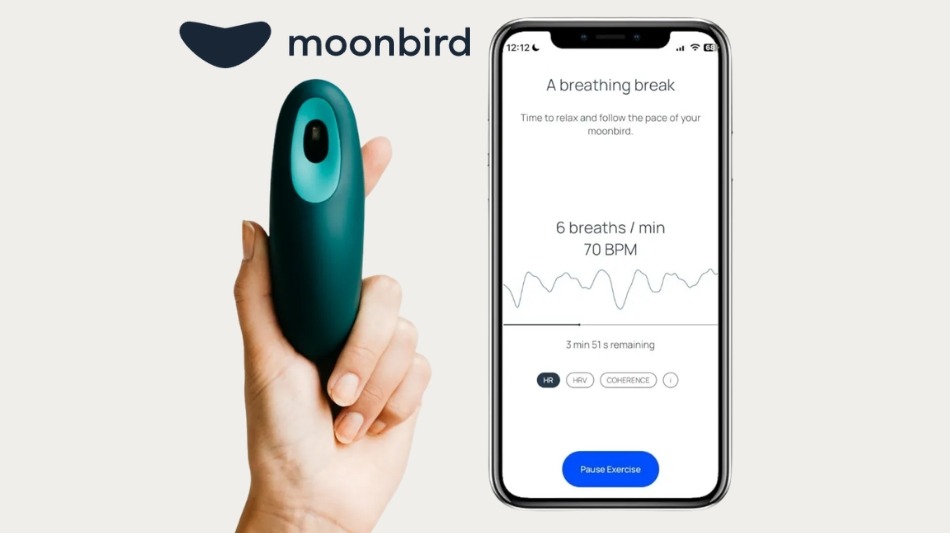
The device is designed to guide your breathing through physical expansion and contraction in your palm. According to the brand, you simply hold the device, and it mimics the rhythm of inhaling and exhaling so your body follows along without requiring conscious mental effort, counting, or screen interaction.
Here is the process as described on the official Moonbird website. You shake the device gently to activate it, then place your thumb on the built-in optical sensor. Moonbird begins expanding and contracting in your palm, and you breathe in when it expands and out when it contracts. According to the company, this tactile breathing guidance engages your body's natural tendency to synchronize with external physical rhythms, bypassing the mental effort that traditional meditation and counting-based breathing techniques require.
The device also includes an optional companion app that the company states tracks heart rate and heart rate variability in real time during sessions. The app provides additional breathing exercises, session history, and progress tracking. According to the brand, the app is entirely optional, and the device works fully standalone without any phone connection. If you do use the app, note that it collects biometric-adjacent data, including heart rate and HRV measurements. Review the company's privacy policy on Moonbird.Life before downloading to understand how your data is collected, stored, and used.
This phone-free design is one of the features the company emphasizes most heavily, and it addresses a friction point that resonates with a growing number of consumers. If the idea of opening your phone to manage your stress feels counterproductive because the phone itself is part of the stress, a device that operates independently of any screen addresses that contradiction directly.
According to the brand, the device is constructed with biocompatible medical-grade silicone that is phthalate-free and RoHS compliant, weighs approximately 186 grams, and measures 122mm by 54mm. The device uses a PPG (photoplethysmography) sensor for heart rate detection and a rechargeable lithium-ion battery. The company states it comes in multiple colors. Verify current specifications, colors, and availability on the official website at moonbird.life, as product details may change over time.
It is important to note clearly at the outset: Moonbird is a handheld breathing guide designed to help you practice slow, paced breathing without a screen. It expands and contracts in your hand to cue inhale and exhale timing, and an optional app can display heart rate and HRV-related session data. It is a consumer wellness device, not a medical device, according to the brand's own positioning and terms of use. It is a wellness tool for relaxation routines, not intended to diagnose, treat, cure, or prevent any disease. Always consult a qualified clinician for anxiety, insomnia, or other health concerns.
The Science Behind Controlled Breathing and Stress Reduction
Before evaluating Moonbird specifically, it is essential to understand the scientific foundation for controlled breathing as a stress management approach. This section covers mechanism-level research into breathing science. Moonbird as a finished consumer product has not been the subject of large-scale independent peer-reviewed clinical trials in the way a pharmaceutical product would be. The distinction between what research supports about breathing practices generally and what can be claimed about any specific commercial device is one of the most important compliance boundaries in wellness product evaluation.
How Your Nervous System Processes Stress
The autonomic nervous system operates along a spectrum between two branches. The sympathetic branch activates what most people know as the fight-or-flight response: elevated heart rate, shallow rapid breathing, muscle tension, heightened alertness, and reduced digestive function. The parasympathetic branch activates the opposite state, sometimes called rest-and-digest: slower heart rate, deeper breathing, muscle relaxation, improved digestion, and a general sense of calm.
In a healthy system, these branches shift fluidly based on context. The problem for most modern adults is that chronic low-grade stressors, work pressure, financial concerns, social media, information overload, sleep disruption, and constant connectivity, keep the sympathetic branch partially activated throughout most waking hours. This is not the acute fight-or-flight response designed for immediate physical threats. It is a sustained sympathetic tone that, over time, can contribute to sleep disruption, digestive discomfort, and challenges with emotional regulation.
This is not a fringe theory. The relationship between chronic sympathetic activation and downstream health effects has been documented extensively in physiological and medical research. The question for consumers is not whether chronic stress is harmful. It is what to do about it practically, especially when the traditional advice of "just breathe" is far easier said than done.
Why Breathing Is a Direct Access Point
Respiration is one of the few autonomic functions that operates under both involuntary and voluntary control. You breathe automatically without thinking about it, but you can also deliberately change your breathing pattern at any time. This dual-control nature makes breathing a direct access point for influencing autonomic nervous system balance, without requiring medications, devices, or special equipment.
When you deliberately slow your breathing and extend the exhalation phase, several physiological changes are associated with this pattern. The diaphragm descends more fully, which may influence vagal activity through the proximity of the vagus nerve to the diaphragm. The vagus nerve is the longest cranial nerve in the body, running from the brainstem through the neck, chest, and abdomen, and it plays a central role in parasympathetic activation. Baroreceptors in the aorta and carotid arteries detect changes in blood pressure and send signals that elicit further parasympathetic responses. Research on paced breathing has shown changes in heart rate patterns and HRV metrics in controlled settings.
Heart Rate Variability: The Key Biomarker
Heart rate variability, or HRV, measures the variation in time between consecutive heartbeats. Contrary to what many people assume, a healthy heart does not beat like a metronome. Greater variability between beats is associated with better cardiovascular health, greater emotional regulation capacity, and higher stress resilience. Lower HRV is associated with chronic stress, reduced adaptability, and increased risk of various health issues.
Published research in journals including Frontiers in Human Neuroscience and Psychophysiology has explored how slow-paced breathing at approximately six breaths per minute can maximize respiratory sinus arrhythmia, the natural fluctuation in heart rate that occurs with breathing cycles. This frequency, sometimes called resonance frequency breathing, has been consistently identified across multiple studies as particularly effective for improving HRV metrics. These are findings about breathing practices broadly, not specific claims about any single commercial device.
For anyone already tracking HRV through an Oura Ring, Apple Watch, WHOOP, or similar wearable, this context is directly relevant. If you have noticed that your HRV scores correlate with how stressed or rested you feel, you are observing the same autonomic balance that controlled breathing targets. The question is whether you can actually maintain that six-breaths-per-minute pattern consistently, especially during the moments when you need it most.
The Vagus Nerve Connection
Vagus nerve stimulation has become an increasingly visible topic in wellness content and consumer advertising heading into 2026. The interest is driven by growing public awareness that the vagus nerve functions as a major communication highway between the brain and the body, influencing heart rate, digestion, immune function, and emotional regulation.
There are multiple ways to stimulate vagal tone. Clinical vagus nerve stimulation uses electrical impulses delivered through implanted or external devices and is FDA-cleared for specific medical conditions. Consumer-grade vagus nerve stimulators, like Pulsetto and Sensate, use external electrical or vibratory stimulation applied to the neck or chest.
Controlled breathing represents a non-electrical, non-invasive approach to supporting vagal activity. The relationship between deep diaphragmatic breathing and vagal tone is well documented in physiological research. The appeal of breathing-based approaches is that they carry essentially no risk profile beyond the device cost, require no consumables or ongoing charges, and engage a natural physiological mechanism rather than introducing an external electrical stimulus.
This is the physiological foundation that Moonbird's design targets. The device does not electrically stimulate anything. It guides your breathing toward the patterns that published research has associated with vagal stimulation and parasympathetic activation. The critical question is whether it does so more effectively than simply practicing those breathing patterns on your own, which we address in the implementation gap section below.
Read: The Scientifically Proven Handheld Breathing Coach for Instant Calm and Stress Relief
The Implementation Gap: Why Knowing Is Not Doing
This may be the single most important concept in evaluating any breathing or meditation tool, including Moonbird.
The science supporting controlled breathing for stress management is robust and well established. That is not controversial. The problem is that knowing about breathing techniques and actually practicing them during moments of acute stress are fundamentally different things.
Here is why. During acute stress, the prefrontal cortex, the part of your brain responsible for executive functions like planning, counting, sustaining attention, and making deliberate choices, experiences reduced activity as stress hormones shift neural resources toward threat detection. This is exactly the part of your brain that counting-based breathing exercises require. Asking someone whose prefrontal cortex is flooded with cortisol and adrenaline to count to four, hold, count to four again, hold, and repeat in a steady pattern is asking them to use the cognitive resource that stress has most directly depleted.
This is why so many people know that breathing exercises work, have tried them, and still cannot maintain them when stress is highest. It is not a willpower failure. It is a neurological mismatch between the technique's demands and the person's cognitive state.
The theoretical case for a tactile breathing device is that it bypasses this mismatch. Instead of requiring you to count, concentrate, or maintain attention on an internal process, the device provides an external physical rhythm that your body can follow without cognitive effort. Whether this theoretical advantage translates to meaningful real-world benefit depends on individual factors, but the reasoning is physiologically sound.
This is also the framework for evaluating whether Moonbird is worth the investment compared to free techniques. The breathing science is identical. The difference is accessibility during the moments when you need it and are least capable of implementing it independently.
The Brand's Published Scientific Claims
According to the company's website, Moonbird's effectiveness is supported by research involving Dr. Steven Laureys, whom the brand describes as a neurologist. The company states that EEG brain scans demonstrate measurable changes from anxious thinking to relaxed awareness after using the device. These claims are drawn from the brand's published materials and reflect its marketing positioning. Independent verification of these specific EEG findings through a peer-reviewed publication should be confirmed by interested readers.
Additionally, a 2022 pilot study published in Digital Health (available on PubMed Central) examined Moonbird specifically as a tactile breath pacer for sleep problems. This was a small mixed-methods study with 39 participants that evaluated usability and acceptability and reported exploratory improvements in subjective sleep measures. It was not a large randomized controlled trial and does not establish guaranteed outcomes or generalizable effectiveness. It provides preliminary directional evidence that the approach has user acceptance, and should be interpreted as early-stage research, not proof of specific benefits.
The general concept of breathing practices creating measurable changes in brain activity patterns is supported by existing neuroscience research. Multiple studies have documented changes in EEG patterns, particularly increased alpha wave activity, following breathing interventions. The specific question of whether Moonbird uniquely produces these changes, as opposed to any consistent breathing practice, requires individual evaluation by interested readers.
This is ingredient-level research. Moonbird, as a finished product, has not been clinically studied at the scale or rigor of pharmaceutical products. These individual scientific findings do not mean Moonbird replaces any prescribed treatment. Consult your physician before starting any new wellness device or changing your health regimen.
What Makes Moonbird Different From Other Stress Management Tools?
The wellness technology space is crowded, and if you have been seeing ads for breathing devices, you have probably also seen ads for meditation apps, vagus nerve stimulators, weighted blankets, and dozens of other stress-relief products. Understanding where Moonbird fits in this landscape, and where it does not, is critical to determining whether it addresses your specific barrier.
Moonbird vs. Free Breathing Exercises
The most obvious alternative to Moonbird is practicing controlled breathing on your own at zero cost. Box breathing, 4-7-8 breathing, and extended exhalation techniques are freely available and engage the same physiological mechanisms Moonbird targets.
The advantage of free techniques is straightforward: they cost nothing. The disadvantage is equally clear: they require mental effort to initiate, maintain, and count during exactly the moments when mental resources are most depleted. If you have tried these techniques independently and maintained them consistently through periods of acute stress, Moonbird may not add meaningful value for you. If you have tried them and found that stress makes counting impossible or that you simply do not remember to practice, the device addresses that specific failure point.
Moonbird vs. Meditation Apps Like Calm and Headspace
Meditation apps offer a broader range of content than just breathing guidance, including guided meditations, sleep stories, mindfulness courses, music, and educational materials. Many people find significant value in the variety and depth these platforms provide.
The comparison between Moonbird and meditation apps is not about which is objectively better. It is about which addresses your specific barrier. If your challenge is a lack of variety, education, or guided instruction, meditation apps offer more content. If your challenge is that using your phone for wellness leads to distraction, that you cannot focus on audio guidance during acute stress, or that you have downloaded and deleted these apps multiple times because the practice never stuck, Moonbird addresses a fundamentally different barrier.
There is also a cost comparison worth considering. According to publicly available pricing, premium meditation app subscriptions typically range from approximately $60 to $100 per year. Over two to three years, the cumulative cost approaches or exceeds a single Moonbird device, with the key difference being that Moonbird is a one-time purchase with no ongoing subscription fees, according to the company.
Some people report using both approaches as complementary tools: a tactile device for acute stress moments when mental focus is unavailable, and meditation apps for structured practice during dedicated relaxation time. These tools can address different needs rather than competing directly.
Moonbird vs. Smartwatch Breathing Features
Most modern smartwatches, including Apple Watch, Fitbit, Samsung Galaxy Watch, and Garmin devices, include breathing guidance features with haptic feedback. These are included at no additional cost for people who already own the device.
The key differences are form factor and design intent. Smartwatch breathing features are secondary functions on a device primarily designed for notifications, fitness tracking, and communication. The same device buzzing your wrist to breathe is also buzzing to tell you about emails, messages, and calendar alerts. Moonbird is purpose-built with no competing functions.
Additionally, the physical sensation is different. A flat vibration on your wrist provides a binary cue: buzz means breathe. Moonbird's expansion and contraction provide a dynamic, rhythmic physical stimulus that, according to the company, mimics the physical sensation of breathing itself. Whether this difference matters depends on individual sensory preferences, but the sensory experience is objectively different in kind.
Moonbird vs. Vagus Nerve Stimulation Devices
Consumer vagus nerve stimulators, such as Pulsetto (approximately $269 according to publicly available pricing) and Sensate (approximately $249 according to publicly available pricing), use external electrical impulses or sound vibrations to stimulate the vagus nerve directly. These represent a different approach to the same underlying goal of parasympathetic activation.
The mechanism is fundamentally different. Vagus nerve stimulators apply external electrical or vibratory stimulation. Moonbird guides breathing that stimulates the vagus nerve indirectly through the natural mechanical relationship between deep breathing and vagal tone. Neither approach is inherently superior; they work through different pathways toward overlapping outcomes.
For consumers evaluating between these categories, the relevant questions are whether you prefer a passive approach (a device does something to your body) or an active approach (a device helps you do something with your body), and whether the additional cost of vagus nerve stimulators is justified for your situation.
Moonbird vs. Breathing Necklaces Like Komuso Shift
The Komuso Shift (approximately $95 to $115 according to publicly available pricing) is a breathing necklace that uses a precisely shaped tube worn around the neck to slow exhalation. You breathe out through the tube, which physically extends your exhale time.
The approaches differ in meaningful ways. Komuso addresses exhale extension specifically and is wearable, meaning it is always available. Moonbird guides both inhale and exhale rhythm, includes biofeedback through the companion app, and provides tactile expansion and contraction. Komuso requires you to bring the necklace to your mouth, which may be more or less discreet than holding a palm-sized device, depending on the situation.
Both address the core challenge of making controlled breathing accessible during stress. The choice between them often comes down to whether you prefer a wearable passive tool or a handheld active-guidance device, and whether HRV biofeedback tracking matters to you.
Moonbird vs. Weighted Blankets and Sensory Tools
Weighted blankets, fidget tools, and sensory devices address stress through mechanisms different from those of breathing guidance. Weighted blankets use deep pressure stimulation. Fidget tools provide tactile distraction. These are passive comfort tools rather than active breathing training devices.
Moonbird occupies a different category because it is designed to actively retrain breathing patterns and provide biofeedback, not just provide comfort. The comparison is relevant because consumers often evaluate across categories, but these are complementary rather than competing tools. Someone could reasonably use a weighted blanket for general comfort while using Moonbird for active breathing practice.
See current pricing and details for Moonbird
Understanding the Tactile Approach: Why Physical Guidance May Matter for People Who Cannot Meditate
One of the most common things people search after seeing Moonbird ads is some variation of "I have tried meditation and it does not work for me." This section addresses that specific search intent directly, because understanding why traditional meditation fails for many people is essential to evaluating whether a tactile device solves the right problem.
Why Traditional Meditation Fails for Many People
The conventional advice for stress management often centers on meditation: sit quietly, focus on your breath, observe your thoughts without judgment, and return to your breath when your mind wanders. For many people, this practice is genuinely transformative. For millions of others, it is an exercise in frustration.
The reasons traditional meditation fails are not about willpower or character. They are about neurology and individual differences in sensory processing.
During acute stress, visual attention narrows. Auditory processing becomes selective, focusing on potential threats while filtering everything else. The prefrontal cortex experiences reduced activity. These are adaptive survival responses that happen to be incompatible with the demands of most meditation techniques.
Touch, however, processes through different neural pathways. Tactile information is processed through the somatosensory cortex, which remains relatively functional during stress because it is essential for survival. Gentle, rhythmic tactile stimulation can also activate the insular cortex, which plays a role in interoception, your awareness of your body's internal state.
The argument for tactile breathing guidance is that it engages sensory pathways that remain accessible during stress rather than relying on the higher-order cognitive pathways that stress disrupts. This is a reasonable theoretical framework supported by what we know about sensory processing, though direct comparative studies between tactile-guided and audio-guided breathing during acute stress states are limited.
Why This Matters for People With ADHD and Neurodivergent Traits
A growing number of people searching for breathing devices specifically mention ADHD, attention difficulties, and neurodivergent experiences. The challenge of maintaining focus during traditional meditation is amplified for people who experience attention regulation differences as a baseline, not just during stress.
For someone with ADHD or similar attention patterns, the instruction to "focus on your breath" may be the hardest possible instruction to follow. The breath is internal, subtle, and provides minimal novel sensory information to sustain attention. A device that provides continuous, rhythmic, physically novel tactile input offers a qualitatively different sensory anchor than an internal breath focus.
This does not mean Moonbird is a treatment for ADHD. It is not. ADHD is a clinical condition that requires professional evaluation and management. What it means is that the tactile approach may address a specific barrier, the difficulty of maintaining internal attention focus, which is more pronounced in some neurological profiles than others. Anyone with ADHD or similar conditions should consult their healthcare provider before adding any new tool to their management approach. This is not a substitute for professional treatment.
The Physical Anchor Effect
In mindfulness research, physical anchors, tangible points of focus like the sensation of your feet on the floor, the weight of your hands in your lap, or the feeling of an object in your hand, have been shown to help redirect attention from rumination to present-moment awareness. This is a well-established component of grounding techniques used in both mindfulness practice and clinical settings.
Moonbird's expansion and contraction pattern provides a dynamic physical anchor that changes in rhythm, offering continuous novel tactile information that may be more engaging than a static physical object. The rhythmic quality also provides a natural breathing template that the body can follow without conscious counting.
This does not mean Moonbird is the only way to achieve a physical anchor for breathing. You could hold any object and try to breathe rhythmically on your own. The difference is that Moonbird provides the rhythm externally, removing the need for you to generate and maintain it yourself. For some people, this distinction is the difference between a technique they attempt once and abandon and a practice they maintain consistently.
Who Moonbird May Be Right For
Moonbird May Align Well With People Who:
Have tried meditation apps without lasting success. If you have downloaded Calm, Headspace, or similar apps and found that you either do not use them consistently or cannot focus during guided sessions, the tactile approach addresses the specific friction points, screen dependence, mental effort, and sustained attention that often prevent app-based meditation from becoming a lasting habit. Moonbird removes the screen, the counting, and the learning curve that many people find to be barriers.
Experience racing thoughts or difficulty winding down at bedtime. For people whose primary challenge is a mind that will not stop racing, particularly at bedtime, a physical device that does not require concentration to use may provide a practical on-ramp to relaxation that mental techniques cannot. According to the brand, the extended exhale patterns are designed to support the nervous system in shifting toward a restful state. The device's quiet operation also positions it for bedtime use without disturbing a partner.
Want a screen-free wellness tool. If you are actively trying to reduce screen time or find that using your phone for wellness activities feels counterproductive, Moonbird's standalone design addresses this directly. The device works without any phone connection. The companion app is entirely optional and is not required for basic use.
Respond well to physical or tactile experiences. Some people are naturally more responsive to physical sensation than to visual or audio cues. If you tend to fidget, use stress balls, prefer hands-on activities, or find physical experiences more grounding than mental ones, the tactile approach may align with how your nervous system naturally processes calming input.
Are looking for a non-medication approach to stress management. Many people searching for stress devices in 2026 are specifically looking for tools that do not involve supplements, prescriptions, or substances. Moonbird guides your own breathing, which is a non-pharmacological approach that carries essentially no risk profile beyond the device cost. This is not a replacement for any prescribed treatment, and you should always consult your physician before starting any new wellness approach, especially if you are currently taking medications.
Want measurable data on their stress reduction progress. For data-oriented individuals who track HRV with wearables like the Oura Ring, Apple Watch, or WHOOP, Moonbird's companion app provides session-level biofeedback that complements existing health tracking. If you need to see numbers to stay motivated in practice, real-time heart rate and HRV data may help reinforce consistency.
Travel frequently or need discreet stress management. According to the brand, Moonbird is silent except for a gentle vibration and compact enough to fit in a pocket or bag. For people who need stress-management tools while traveling, in offices, or in public settings where pulling out a phone or closing your eyes for meditation would be impractical, a discreet handheld device offers logistical advantages.
Other Options May Be Preferable For People Who:
Already have a consistent meditation or breathing practice that works. If you have an established practice that you maintain through periods of stress, Moonbird may not add meaningful value. The device addresses specific barriers to practice. If you do not experience those barriers, the investment may not be justified.
Prefer guided meditation with narrative content and variety. Moonbird guides breathing rhythm. It does not provide verbal guidance, sleep stories, educational courses, or the variety of content that meditation platforms offer. If narrative content and variety are what you value most, meditation apps serve a different purpose.
Have budget constraints that make the price point challenging. At $199.99 for a single device according to the company's current promotional pricing, Moonbird represents a significant upfront investment compared to free breathing exercises or subscription apps. If cost is a primary concern, practicing slow extended-exhalation breathing independently is a free option that engages identical physiological mechanisms. The question is whether you will do it consistently without guidance.
Have clinical mental health conditions requiring professional treatment. Moonbird is marketed as a consumer wellness device, not a medical treatment. If you are experiencing clinical anxiety, panic disorder, depression, PTSD, or other diagnosable mental health conditions, a consumer breathing device is not a substitute for professional care. Consult a qualified healthcare provider for diagnosis and treatment. Do not change, adjust, or discontinue any medications or prescribed treatments without your physician's guidance.
Questions to Ask Yourself Before Deciding
Before choosing whether Moonbird fits your specific situation, consider these questions honestly:
Have I tried breathing exercises before, and what specifically prevented me from maintaining them? If the barrier was focus, counting, or remembering to practice, Moonbird addresses those barriers. If the barrier was simply not believing in breathwork, a device will not change that.
Is screen time a factor in my stress? If picking up your phone to manage stress leads you to check notifications instead, a phone-free device addresses that pattern. If screens do not contribute to your stress, this differentiator has less value.
Do I respond better to physical sensations or to verbal and visual guidance? There is no wrong answer. This is about individual sensory processing preferences. If you are unsure, the company's 30-day guarantee, per their published terms, provides an evaluation window.
Am I looking for a stress management tool, or do I need professional mental health support? Be honest with yourself. If your stress has crossed into clinical territory, affecting your ability to function at work, maintain relationships, or complete daily activities, a consumer device is not the starting point. A qualified healthcare provider is.
Does the price fit my wellness budget? The one-time cost needs to be evaluated against your alternatives and their cumulative costs over time.
Your answers help determine whether Moonbird's specific approach aligns with your needs or whether a different tool or professional approach might serve you better.
Moonbird for Sleep: What the Breathing Science Supports
Sleep-related searches are among the highest-intent queries in the breathing device category. "Can not fall asleep mind racing," "racing thoughts at night," and "breathing device for sleep" represent people who are actively suffering and looking for immediate practical help.
The relationship between breathing patterns and sleep onset is grounded in the same autonomic nervous system principles discussed above. Sleep requires a shift from sympathetic activation (alert, vigilant, mentally active) to parasympathetic dominance (relaxed, calm, mentally quiet). For people whose minds continue racing at bedtime, this shift does not happen naturally because the sympathetic branch remains active.
Extended exhalation breathing, which Moonbird's breathing patterns are designed to facilitate according to the company, has been studied in relation to parasympathetic nervous system activity during controlled breathing research. Extended exhalation patterns are studied for their association with parasympathetic nervous system activity.
The 2022 pilot study published in Digital Health that examined Moonbird specifically for sleep evaluated usability and acceptability with 39 participants and reported exploratory subjective sleep improvements. This was preliminary research, not a large controlled trial, and does not establish guaranteed sleep outcomes. It provides directional evidence that the approach has user acceptance for this specific use case.
For sleep, the screen-free design is especially relevant. Exposure to phone screens before bed introduces blue light and cognitive stimulation that can further delay sleep onset. A device that works without any screen interaction avoids adding to the very problem you are trying to solve.
What Moonbird cannot do for sleep is address the full range of factors that contribute to sleep difficulties. Caffeine timing, room temperature, light exposure, exercise timing, alcohol consumption, underlying sleep disorders, and chronic health conditions all influence sleep quality. A breathing device addresses one component of a much larger sleep hygiene picture: nervous system activation at bedtime. If you have chronic or severe sleep difficulties, consult a healthcare provider for a comprehensive evaluation. This is not a substitute for a professional sleep assessment.
Moonbird as a Gift: What to Know Before You Buy It for Someone Else
One of the most common search patterns for stress relief devices involves gift intent, particularly as Mother's Day and Father's Day approach. "Gift for someone with anxiety," "stress relief gift for wife," and "wellness gift for mom" represent people who care about someone who is struggling and want to give something that actually helps.
If you are considering Moonbird as a gift, here are the considerations that matter:
The person receiving the gift needs to be open to using a physical device for breathing exercises. Not everyone is comfortable with wellness gadgets, and a $200 device that sits unused does not help anyone. Consider whether the recipient has expressed frustration with meditation apps, complained about racing thoughts, or shown interest in wellness tools. If they have, Moonbird aligns with an expressed need. If stress management is not something they have acknowledged wanting help with, a different gift may be more appropriate.
The bundle pricing makes gift purchases more practical. According to the company's website, the Buy 1 Get 1 50% Off bundle at $299.99 means you can get a device for yourself and one for the person you are buying for at a lower per-unit cost. The Buy 2 Get 1 Free bundle at $399.98 extends this further for multiple family members.
According to the company's published terms, they offer a 30-day money-back guarantee. If the recipient finds the device is not right for them, the return option provides a safety net. Verify the current guarantee terms, conditions, and timeframes on the official website before purchasing, as policies may change.
Pricing, Bundles, and Value Analysis
According to the official Moonbird website, the following pricing was available at the time of publication (March 2026) based on the current US promotional offer page. Pricing, promotions, and currency may vary by region. Always verify current pricing on the official site before purchasing, as promotional offers are subject to change.
Single Moonbird Device: According to the company, the regular price is listed at $229.99, with a current promotional price of $199.99 representing a savings of $30. Free shipping is included according to the website.
Buy 1, Get 1 50% OFF Bundle: According to the company, this bundle is priced at $299.99, compared to a listed regular price of $459.98 for two units. The company states this represents a savings of approximately $159.99, with free shipping included.
Buy 2, Get 1 FREE Bundle: According to the company, this bundle is priced at $399.98, compared to a listed regular price of $689.97 for three units. The company states this represents a savings of approximately $289.99, with free shipping included.
Moonbuddy (Children's Version): The company also offers Moonbuddy, described as a breathing companion designed for children. According to the brand's website, a 2025 pilot study with 60 children found that nearly 80 percent of daily evaluations rated the device's effect as positive. Pricing and availability for Moonbuddy should be verified on the official website. Important: Moonbird's published Terms of Use state that their products are not suitable for babies and children under 18 without appropriate supervision and guidance. Consult a qualified pediatric healthcare provider before any child uses a wellness device, and follow the brand's specific instructions for any child-specific product.
Value Context and Honest Cost Comparison
To evaluate whether these price points represent fair value, consider the cost landscape across alternatives.
Meditation app subscriptions typically range from approximately $60 to $100 per year based on publicly available pricing. Over two to three years, cumulative costs approach or exceed a single Moonbird device. The difference is that Moonbird requires a larger upfront investment but has no ongoing fees, while apps spread cost over time but accumulate.
Professional biofeedback sessions typically range from approximately $100 to $300 per session with a trained practitioner, based on publicly available general industry pricing and may vary by provider and region. These provide a more comprehensive and personalized assessment than any consumer device. However, the per-session cost means that even a few sessions exceed Moonbird's total cost. Moonbird's built-in HRV tracking provides a basic form of self-directed biofeedback, though it is not comparable in depth to clinical sessions.
Consumer vagus nerve stimulation devices like Pulsetto (approximately $269) and Sensate (approximately $249) based on publicly available pricing are priced in the same range or higher than Moonbird, providing a reference point within the stress device category.
Breathing necklaces like Komuso Shift at approximately $95 to $115 based on publicly available pricing offer a lower-cost entry point but without biofeedback capability, without guided inhale rhythm, and without the tactile expansion and contraction feature.
Free breathing exercises cost nothing and engage identical mechanisms. For disciplined practitioners, this is the optimal value proposition. For people who have tried free techniques without maintaining consistency, the cost of Moonbird needs to be weighed against the cost of continued inconsistency, which is personal and subjective but real.
The bundle pricing suggests the company anticipates multi-person purchases. The per-unit cost drops meaningfully in the bundles, which may be relevant for households where multiple people could benefit or for gift-giving occasions.
Guarantee, Return Policy, and What to Verify Before Purchasing
According to the official Moonbird website, the company offers a 30-day money-back guarantee. The brand's marketing positions this as an evaluation period so you can determine whether the device works for your needs before committing.
Based on the company's published Terms of Use and Conditions of Sale, important details about the guarantee include the following. According to the terms, all sales are final, and refunds are subject to their refund policy. The company states that after the shipping department receives a return, it generally takes ten business days to process the refund, and it may take up to ten additional days for the return to post to your account depending on your financial institution. The company recommends sending returned items using a delivery confirmation system and states they are not responsible for lost or stolen returned items.
Before purchasing, review the complete and current return policy, including any conditions, timeframes, and shipping requirements, on the official Moonbird website. According to the company's published terms, the 30-day money-back guarantee is eligible for purchases made on moonbird.life or shop.moonbird.life. If you purchase through a different seller or offer page, that seller's return policy applies. Guarantee terms are subject to the company's current policies, which may change over time. Contact the company directly with questions about specific return scenarios.
Realistic Expectations: What Moonbird Can and Cannot Do
Setting honest expectations matters more than any marketing claim. Here is a balanced assessment based on the brand's positioning, the underlying breathing science, and practical realities.
What Moonbird May Realistically Help With
Moonbird may help provide a consistent, accessible breathing practice for people who struggle to maintain one independently. If your primary barrier is the difficulty of initiating and sustaining breathing exercises during moments of acute stress, the tactile guidance addresses that specific barrier without requiring mental effort. According to the brand, you do not need to count, concentrate, or maintain any particular mental state.
Real-time biofeedback through the companion app may help you understand which breathing patterns are most effective for your physiology. Tracking HRV trends over time can provide motivation to continue the practice, especially for people who need measurable data to maintain habits.
For sleep challenges related to racing thoughts at bedtime, the device may support a relaxation routine during periods of heightened stress. The screen-free design avoids the counterproductive blue light exposure that phone-based sleep tools introduce.
Over time, according to the brand, consistent use may help reinforce a structured breathing habit. Any longer-term effects vary by individual, and whether habitual benefits develop depends on factors including consistency, baseline stress levels, and the complexity of your stress patterns.
What Moonbird Cannot Do
Moonbird is marketed as a consumer wellness device, not a medical device. It is not intended to diagnose, treat, cure, or prevent any disease or medical condition. According to the company's own Terms of Use, they do not guarantee health and wellness outcomes, and results may vary depending on factors including age, health, and genetics.
Moonbird does not replace professional mental health treatment. It does not replace therapy, medication, or clinical intervention for diagnosable conditions. It does not replace good sleep hygiene, exercise, nutrition, or the other foundational pillars of health. It addresses one specific component, guided breathing practice, within a comprehensive approach to wellness.
The device will not work for everyone. Some people may not respond to tactile guidance. Some may find the device uncomfortable. Some may have stress patterns that are too complex for a consumer breathing tool to meaningfully address. The 30-day guarantee, per the company's terms, exists specifically because individual fit varies.
A Breathing Device Is Not a Cure for Anything
No consumer wellness device is intended to cure medical or psychological conditions. These are complex areas influenced by genetics, life circumstances, health status, relationships, and countless other factors. What a well-designed tool can do is make one evidence-based practice more accessible and consistent. If that incremental improvement matters to your quality of life, it has real value. If you are expecting a device to solve problems that require lifestyle changes, professional support, or systemic shifts, recalibrate your expectations. This is not a substitute for professional medical advice, diagnosis, or treatment.
How to Get Started With Moonbird
If you have determined that Moonbird aligns with your stress management needs, here is what the purchasing process looks like according to the official website.
Step 1: Visit the official Moonbird website at moonbird.life and select your preferred package, whether single device, two-pack, or three-pack based on your needs. Note: The 30-day money-back guarantee applies to purchases made on moonbird.life or shop.moonbird.life per the company's published terms.
Step 2: Complete your order. According to the company, shipping is free on all packages.
Step 3: When the device arrives, shake it gently to activate, place your thumb on the sensor, and follow the expansion and contraction rhythm with your breathing. No setup required beyond optional app pairing.
Step 4: Optionally download the free companion app to track heart rate and HRV data during sessions. The app provides additional breathing exercises, session history, and progress tracking but is not required.
Step 5: According to the brand, begin with 2-5 minute sessions for immediate relief and work up to longer sessions as you become comfortable with the rhythm.
Frequently Asked Questions
Is Moonbird Legit?
Based on publicly available information, Moonbird is manufactured by Moonbird BV, a company that according to its website was founded by pharmaceutical scientist Stefanie Broes. The company publishes a physical business address in Farmers Branch, Texas, provides customer support via email, and offers a 30-day money-back guarantee per their published terms. The company states that over 400 therapists use the device in clinical practice and that the device has over 80,000 users, though these figures are brand-reported and have not been independently verified by this publisher. The company publishes customer reviews on their website and on Trustpilot. As with any self-published review platform, reviewers are self-selected, and satisfied customers are typically more likely to leave feedback than those with neutral or negative experiences.
Can Moonbird Support Relaxation During Stress?
Moonbird is a wellness device designed to guide breathing, not a medical treatment for any condition. The underlying science supporting controlled breathing for nervous system regulation is well established in published research. Whether Moonbird provides meaningful benefit for your specific situation depends on factors including the nature and severity of your stress, your responsiveness to tactile guidance, and your consistency of use. For any diagnosed medical or mental health condition, consult a qualified healthcare provider. Moonbird is not a substitute for professional mental health treatment. Do not change, adjust, or discontinue any medications or prescribed treatments without your physician's guidance.
Is Moonbird Worth $200?
Value is subjective and depends on your specific needs. If you have tried and failed with meditation apps, struggle to maintain independent breathing practices, and value screen-free design and HRV biofeedback, the one-time purchase cost may represent reasonable value compared to cumulative app subscriptions, professional biofeedback sessions, or other stress devices in the same price range. If you are disciplined about independent breathing practice or prefer guided meditation content, the investment may not be justified for your situation. The 30-day guarantee per the company's terms provides an evaluation window for purchases made on moonbird.life or shop.moonbird.life. Verify current terms before purchasing.
How Does Moonbird Compare to Calm or Headspace?
Moonbird and meditation apps serve overlapping but distinct purposes. Meditation apps offer guided verbal instruction, narrative content, courses, and variety. Moonbird offers tactile breathing guidance without screens, counting, or mental effort. The choice depends on which barrier is most relevant to you. Many people find these tools complementary rather than competing: Moonbird for acute stress moments when focus is difficult, and apps for structured practice during dedicated time.
Can Moonbird Help With Sleep?
According to the brand, the extended exhale breathing patterns are positioned by the brand as supporting the body's natural relaxation response, which may help transition from a wakeful state toward sleep readiness. The science supporting extended exhalation for parasympathetic activation is well established. However, sleep quality depends on many factors beyond nervous system activation, including sleep hygiene, caffeine, screen exposure, underlying conditions, and environment. A breathing device may be one helpful component within a comprehensive approach but is not a standalone solution for sleep disorders. Consult a healthcare provider for chronic sleep difficulties.
Does Moonbird Work Without the App?
Yes, according to the company. The device works fully standalone without any phone connection. You shake it, place your thumb on the sensor, and follow the breathing rhythm. The app adds HRV tracking, additional exercises, and session history but is entirely optional.
Is Moonbird Good for ADHD?
Moonbird is not a treatment for ADHD. It is a wellness breathing device. That said, some individuals report that tactile guidance feels easier to follow than internal breath focus, which may be relevant for people who find sustained attention during traditional meditation particularly challenging. Anyone with ADHD should consult their healthcare provider before adding any new tool to their approach. This is not a substitute for professional ADHD treatment or management.
Do Therapists Recommend Moonbird?
According to the company's website, over 400 therapists use Moonbird in clinical practice, and the device is used in combination with cognitive behavioral therapy and in hospitals and schools. These claims are brand-reported. Individual therapists' recommendations vary based on their clinical judgment and their patients' specific needs. Ask your own therapist or healthcare provider whether a tactile breathing device might complement your treatment plan.
Is Moonbird Covered by Insurance or HSA/FSA?
Insurance coverage and HSA/FSA eligibility for consumer wellness devices varies by plan and administrator. According to the company's website, Moonbird states that HSA/FSA reimbursement may be available in the United States, and the brand lists certain European insurers that have covered the device. These are brand-stated claims. Always confirm benefits and eligibility directly with your insurance provider or plan administrator before purchasing with the expectation of reimbursement, as coverage determinations are made by your specific plan, not by the device manufacturer.
Does Moonbird Require a Subscription?
According to the company's website, Moonbird is a one-time purchase with no ongoing subscription fees. The companion app is free. This differentiates it from meditation apps that typically require annual or monthly subscriptions for full content access.
How Long Before I Notice Results?
According to the brand, many users feel calmer within a single session. Building lasting stress resilience and improved autonomic regulation is a gradual process that develops with consistent practice. Individual timelines vary significantly based on baseline stress levels, consistency of use, overall health, and the nature of your stress patterns. A single session may provide temporary relief. Consistent daily practice over weeks is more likely to contribute to lasting changes. These are general patterns based on breathing science, not guaranteed outcomes.
What About the Review Count?
The company's website displays ratings alongside their product, and the brand has reviews on Trustpilot. Published customer reviews represent self-selected experiences. Satisfied customers are typically more likely to leave feedback than those with neutral or negative experiences. Treat published reviews as one data point among many, not as a guarantee of your individual results.
Can Children Use Moonbird?
The company offers a separate product called Moonbuddy designed specifically for children. The company's Terms of Use for the main Moonbird device state that by using the website and agreeing to the terms, you represent that you are at least the age of majority in your state or province of residence. Additionally, the brand's published terms state that their products are not suitable for babies and children under 18 without appropriate supervision. For questions about use by minors, contact the company directly and consult with a qualified pediatric healthcare provider before any child uses a breathing device.
What Colors and Options Are Available?
According to the brand's website, Moonbird is available in multiple colors. Verify current color options, availability, and specifications on the official website, as product offerings may change.
Final Verdict: The Case for Moonbird and Considerations to Weigh
The Case for Moonbird
Moonbird addresses a specific and underserved gap in the wellness device market: the challenge of actually doing breathing exercises during moments when your mind is too overwhelmed to focus. By replacing mental effort with physical guidance, removing the screen from the equation, and providing measurable biofeedback through the optional app, the device offers a distinct approach that does not directly overlap with most existing solutions.
The underlying science supporting slow, controlled breathing for stress management and nervous system regulation is well established and not controversial. The question is not whether controlled breathing works. It is whether you will actually practice it consistently. If Moonbird's tactile approach makes that practice accessible when other tools have not, the value proposition is about behavior change and implementation as much as physiology.
The one-time purchase model with no subscription fees, the standalone screen-free design, and the positioning at a price point comparable to other serious wellness devices make a reasonable case for consumers who are ready to invest in their stress management approach.
According to the company, the 30-day money-back guarantee provides an evaluation period to determine personal fit for purchases made on moonbird.life or shop.moonbird.life. If you purchase through a different seller, that seller's return policy applies. Verify current terms on the official website before purchasing.
This evaluation is based on publicly available information at the time of publication and does not constitute medical endorsement.
Considerations to Weigh
At $199.99 for a single device according to current promotional pricing, the price represents a meaningful investment. The device addresses a specific use case. If your barriers to stress management are not related to focus, screen dependence, or the difficulty of independent breathing practice, other approaches may serve you equally well at lower cost.
Individual results vary. The company's own terms explicitly state that they do not guarantee health and wellness outcomes. The breathing science is sound, but no consumer device guarantees specific outcomes for every individual.
For people with clinical mental health conditions, Moonbird should be considered as a potential complement to professional treatment, not a replacement.
Important Note: The consumer wellness device market has seen significant growth alongside increased regulatory attention to health-related product claims. Readers should review the most current information about any device's claims, certifications, and compliance before purchasing.
See the current Moonbird offer
Contact Information
For questions before or during the ordering process, according to the company's website, Moonbird BV offers customer support through the following channels:
Company: Moonbird
Email: [email protected]
Physical Address: 3401 Garden Brook Dr., Farmers Branch, TX 75234
Disclaimers
Medical Disclaimer: This article is for informational purposes only and does not constitute medical advice, diagnosis, or treatment. Moonbird is marketed as a consumer wellness device, not a medical device. Always consult a qualified healthcare professional before starting any new wellness routine or making changes to your health regimen. Do not discontinue or modify prescribed treatments without your provider's guidance.
Results May Vary: Individual results will vary based on factors including age, baseline stress levels, consistency of use, overall health status, genetic factors, severity of stress or anxiety symptoms, concurrent medications, and other individual variables. The company's own terms state that they do not guarantee health and wellness outcomes. People who write reviews are self-selected; satisfied customers are more likely to post feedback than those with neutral or negative experiences. While some users report improvements, results are not guaranteed.
FTC Affiliate Disclosure: This article contains affiliate links. If you purchase through these links, a commission may be earned at no additional cost to you. This compensation does not influence the accuracy, neutrality, or integrity of the information presented. All opinions and descriptions are based on publicly available information from the company's official website and general wellness research.
Pricing Disclaimer: All prices, discounts, and promotional offers mentioned were accurate at the time of publication (March 2026) but are subject to change without notice. Always verify current pricing and terms on the official Moonbird website before making your purchase.
Publisher Responsibility Disclaimer: The publisher of this article has made every effort to ensure accuracy at the time of publication. We do not accept responsibility for errors, omissions, or outcomes resulting from the use of the information provided. Readers are encouraged to verify all details directly with Moonbird BV and their healthcare provider before making decisions.
Scientific Claims Disclaimer: References to published research on breathing techniques, heart rate variability, autonomic nervous system regulation, and vagus nerve stimulation describe general scientific findings and do not constitute specific claims about Moonbird's effectiveness for any individual. Claims about EEG brain scans, neurologist validation, therapist usage figures, user counts, and specific physiological outcomes attributed to the brand represent the company's marketing materials and have not been independently verified by the publisher.
Data Privacy Note: Moonbird's companion app collects biometric-adjacent data including heart rate and heart rate variability measurements. Moonbird BV is a Belgium-based company subject to EU data protection regulations including GDPR. Review the company's privacy policy on moonbird.life before using the app to understand how your data is collected, stored, processed, and shared. If you have questions about data handling practices, contact the company directly.
SOURCE: Moonbird