



Thursday, 25 June 2026 07:45 PM
Advertorial
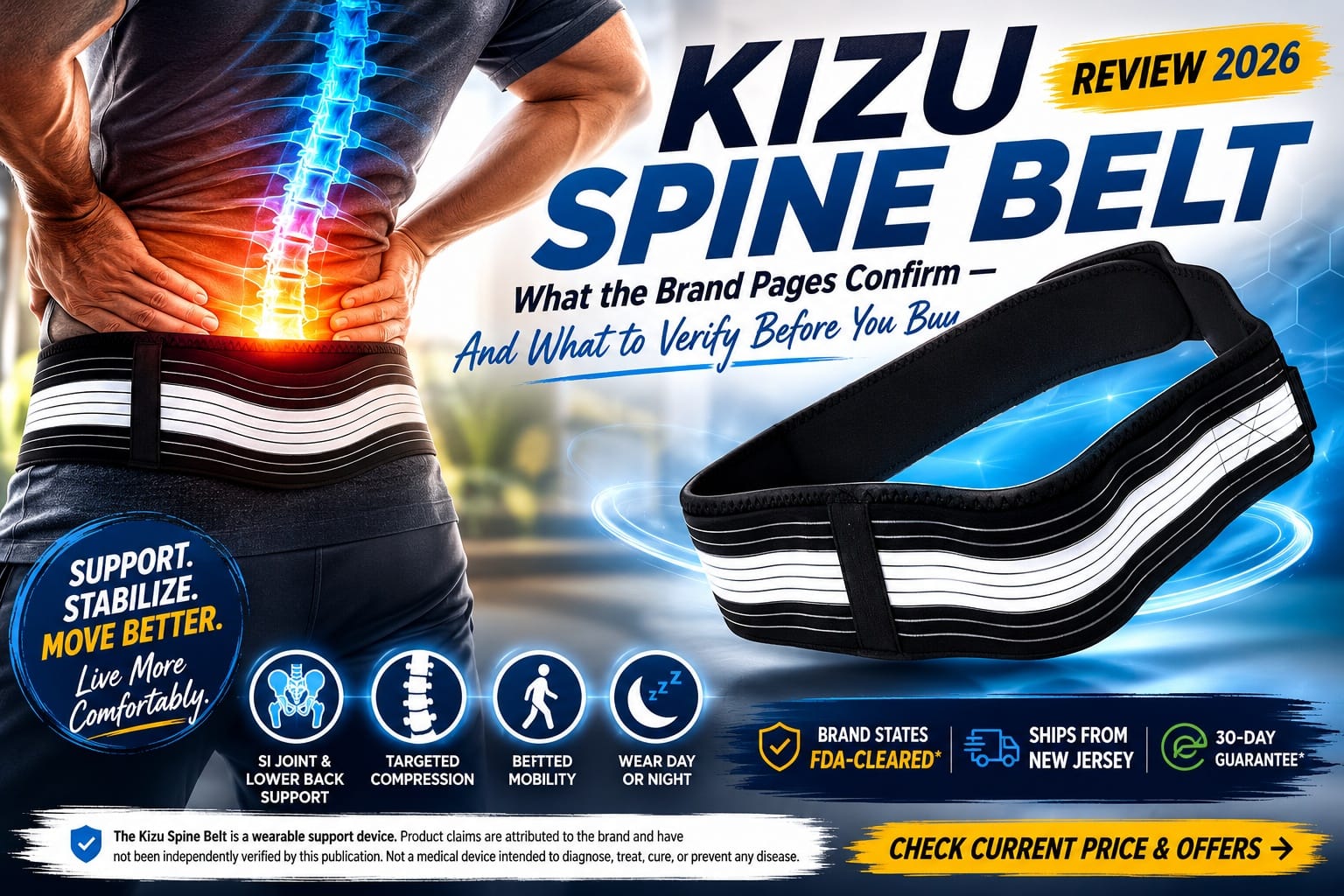
As interest in non-pharmaceutical lower back and SI joint support continues rising in 2026, this Kizu Spine Belt review explores brand-stated device features, FDA clearance questions, return policy details, pricing considerations, and what buyers are rechecking before ordering.
CHICAGO, IL / ACCESS Newswire / June 25, 2026 / Disclaimers: The sponsored publisher earns a commission if you buy through links on this page at no extra cost to you. Product claims are attributed to Kizu Spine Belt brand materials, not independently verified by this publication. Brand website reviewed: offer.buykizuspinebelt.com. Kizu Spine Belt is a wearable support device - not a drug, not FDA-approved, and not a substitute for medical advice. "Does It Work?" is a buyer question this article addresses using brand-verified information and policy page research - not independent clinical testing. "FDA Clearance Status" refers to the brand's own statement that the device is FDA-cleared and the documented absence of a published 510(k) K-number on accessible brand pages as of June 26, 2026. "What the Return Policy Actually Says" refers to the brand's returns policy page and Terms of Service Section 21, both reviewed on June 26, 2026. All product claims are attributed to brand materials unless otherwise noted.
Kizu Spine Belt Reviews 2026: Does It Work for Sciatica and SI Joint Pain - Brand Claims, FDA Clearance Status, and What the Return Policy Actually Says
TL;DR: Kizu Spine Belt is a wearable compression device that the brand markets for sciatica, lower back pain, SI joint dysfunction, hip pain, and related discomfort. It ships from New Jersey in 5-7 days, starts at $39.99 with promotional discounts the brand advertises as up to 50% off, and comes with a 30-day return window. Here's what the ad doesn't tell you: that window includes a potential 15% restocking fee and buyer-paid return shipping - and with shipping time plus the brand's own two-week trial recommendation plus return processing, you've got considerably less usable trial time than "30 days" implies. The brand states FDA clearance; no clearance number is published on accessible brand pages. This article covers what's verified, what isn't, and how to protect yourself either way.
Quick Verification Snapshot - brand pages reviewed June 26, 2026
Available and orderable: Yes - brand site and checkout confirmed live
Starting price (brand-stated): $39.99 - verify your actual checkout total before paying
Discount advertised: Up to 50% off - brand-stated; "before" price not independently verified
FDA clearance: Brand states FDA-cleared - no K-number published on accessible pages; verify at FDA.gov
Guarantee: 30 days from purchase - narrower in practice once shipping, trial, and return processing are stacked
Restocking fee: Up to 15% on returns - confirmed in returns policy and ToS Section 21, not disclosed on main lander
Return shipping: Buyer pays - original shipping charge is also non-refundable
Clinical references: Reference page says "Coming Soon" as of this date - none published yet
Size guide: Not published on accessible pages - call brand before ordering: +1 (855) 705-1648
You came across the Kizu Spine Belt - a wearable support device marketed for sciatica, lower back pain, and SI joint discomfort - probably through an ad that hit at exactly the right moment. Maybe it was a short video with someone moving freely after years of bracing themselves every time they stood up. That moment of recognition. The kind of pain that makes getting out of bed feel like a project, that has you shifting in your chair every ten minutes, that follows you from the couch to the car to the desk. You're here doing what smart buyers do before spending money on any wellness device: checking the details first, including the parts the ad skipped. This article is that check - everything confirmed from brand pages, nothing invented, and the fine print explained plainly.
What Is the Kizu Spine Belt and Who Is It Designed For?
According to the brand's official pages, the Kizu Spine Belt is a wearable lower back and hip support device marketed for people researching sciatica, lower back pain, SI joint dysfunction, herniated or bulging discs, hip pain, pelvic pain, and chronic lower back discomfort. The brand describes it as a non-pharmaceutical, non-invasive alternative for buyers who want to avoid surgery or prescription medication - something you wear during daily activities and, per the brand, even while sleeping.
The brand positions the device for a specific kind of buyer: someone who's already worked through the usual options. Chiropractor appointments that help for a few days and then the pain comes right back. Massage guns that feel great in the moment but don't change anything in the long term. Prescription meds that come with side effects and still leave you bracing yourself every time you stand up. If that cycle sounds frustratingly familiar, Kizu Spine Belt's marketing is written with you in mind.
According to the brand, the belt is appropriate for people dealing with the following conditions:
Sciatica - radiating leg pain caused by pressure on the sciatic nerve
Lower back pain from herniated, bulging, or slipped discs
SI joint dysfunction - where the sacroiliac joint becomes inflamed or unstable
Hip and pelvic pain, including discomfort related to pregnancy
Chronic back pain related to posture, prolonged sitting, or repetitive movement
Arthritis-related lower back discomfort
The brand also states that the belt is pregnancy-safe - many women have found it helpful for sciatic and SI joint pain both during and after pregnancy. That's a brand claim. If you're pregnant, confirm with your OB or midwife before using any supportive device.
Two sizes are available on the brand's pages: Medium and Large.
Buyer Takeaway: The Kizu Spine Belt is positioned as a non-pharmaceutical wearable support device for SI joint and lower back pain. It's not a drug, not a prescription product, and not a cure for diagnosed conditions - it's a compression tool designed to stabilize and support during daily movement. Know that framing before you read the brand's marketing.
Check Current Availability and Pricing for the Kizu Spine Belt on the Brand's Site
Disclosure: If you buy through this link, a commission may be earned at no extra cost to you.
How the Kizu Spine Belt Works: Three Mechanisms the Brand Describes
The brand's landing page breaks down the Kizu Spine Belt's approach into three distinct mechanisms. These are brand-described design features - this publication hasn't tested them in a lab or clinical setting. Here's what the brand says, and what each mechanism is designed to accomplish:
Mechanism 1: Targeted Compression. According to the brand, the belt applies focused pressure to the lower back and hip area. The brand describes three intended effects: encouraging increased blood flow to the targeted region - delivering what the brand calls "essential nutrients and oxygen" to support the body's recovery process; potentially reducing inflammation through improved circulation in the affected area, per the brand's description; and stabilizing the spine by acting as an external brace, reducing the kind of excessive movement the brand says can worsen discomfort. These are brand-described mechanisms - this publication has not independently tested or verified them.
Mechanism 2: Multifidus Muscle Stimulation. The multifidus muscles are a group of small but important muscles that run along the spine and play a significant role in spinal stability. The brand states the Kizu Spine Belt is designed to gently stimulate these muscles, which may improve core strength and spinal support over time. The brand's position is that stronger multifidus muscles reduce pressure on discs and joints, improve posture, and may help reduce pain by stabilizing the spine and reducing nerve pressure.
Mechanism 3: Acupressure. The brand describes an acupressure component in the belt's design, stating that targeted pressure points may trigger the release of endorphins - the body's natural pain-modulating compounds - while also promoting localized circulation and helping ease muscle tension. The brand uses appropriately hedged language here: "may trigger," "may stimulate," "can help ease." That hedging is accurate for acupressure, where the evidence base is mixed.
The brand presents a three-stage progression for results: immediate effects when you first put on the belt (support, pressure reduction, temporary pain relief); short-term effects within two weeks of consistent use (improved circulation, increased core stability, reduced pressure on discs); and long-term effects with continued use (improved mobility and flexibility, reduced dependence on pain medication, return to avoided activities).
The brand is clear throughout that two hours of daily use is their recommendation for the first two weeks. After that initial period, the brand says buyers typically use the belt as needed - during activities involving heavy lifting, prolonged sitting, or repetitive bending.
Buyer Takeaway: The brand describes three mechanisms - compression, multifidus stimulation, and acupressure - as the design rationale for the belt. These are brand-described features, not independently lab-verified claims. Each aligns with established physical therapy principles, but the specific implementation in this product hasn't been tested by this publication. Evaluate them as the brand's framework, not as clinically proven facts.
Kizu Spine Belt Marketing Claims: What the Brand Says vs. What Buyers Can Verify
The brand's main landing page headline reads: "The Fastest, Most Effective Way to Treat Sciatica and Lower Back Pain." That's aggressive language - and before you either dismiss it or take it at face value, it's worth understanding exactly what it does and doesn't mean from a buyer's perspective.
"Fastest, Most Effective Way" - This is superlative comparative language. The brand asserts that the Kizu Spine Belt outperforms other available options in both speed and effectiveness. That's a strong positioning claim. This publication hasn't tested the belt against competing devices. Neither the brand's accessible pages nor any independent clinical study comparing the Kizu Spine Belt with alternatives were found during research for this article. Treat this as brand positioning: the brand believes its device is highly effective - not as a verified comparative benchmark.
"Treat Sciatica and Lower Back-pain" - "Treat" carries medical weight. In a clinical context, it implies addressing or resolving a diagnosed condition. The Kizu Spine Belt is a wearable support device, not an FDA-approved treatment for any condition. The brand states that Kizu Spine Belt is FDA-cleared; this publication has not independently verified the claim against the FDA's 510(k) database, and no K-number was available in the reviewed brand materials. FDA clearance and FDA approval are separate regulatory pathways with different standards. The device is designed to provide support, stability, and comfort - not to treat, cure, or diagnose any medical condition. If you're working through a sciatica or disc diagnosis with a physician, ask them whether adding a supportive compression device is part of your care plan.
"Endorsed by Chiropractors" - The brand states that the belt has been tested by dozens of chiropractors and recommended as one of the most effective and fastest ways to relieve pain. No named chiropractors are cited on the accessible brand pages. "Endorsed by chiropractors" is a brand claim this publication can't independently verify. The brand uses the phrase "fastest, most effective" in its marketing - because no head-to-head clinical comparison against named competitors was available in the reviewed materials, readers should treat that phrase as brand positioning rather than an independently verified comparative claim.
"Rated Excellent based on 3,758 Reviews" - The brand's lander displays this figure. The review platform and review methodology are not disclosed on accessible brand pages. This publication can't determine where those reviews were collected, what criteria qualify as "Excellent," or whether the count represents a single platform or an aggregate.
None of this means the product doesn't work. It means you're going in with accurate expectations about what's verified and what's brand marketing language - and that's exactly the right starting point.
Buyer Takeaway: Every superlative claim the brand makes - "fastest," "most effective," "endorsed by chiropractors," "Rated Excellent" - should be read as brand marketing positioning until independently verified. That's not a reason to dismiss the product. It's a reason to use the verification section of this article before deciding.
Kizu Spine Belt Technology: What "Nerve Defense Stabilizing Technology" Actually Means
Beyond the three mechanisms described above, the brand's advertorial materials reference a proprietary approach they call "Nerve Defense Stabilizing Technology," which they say is designed to align the spine and help prevent irritation of the sciatic nerve. The brand also describes "double compression zone technology," which, per its own description, is intended to reduce pressure on the sciatic nerve while promoting blood flow and joint lubrication. Both are brand-originated technology names - marketing terminology for design features the brand attributes to this belt.
These are brand-originated technology names - marketing terminology for what is, at its core, a compression-and-support belt design. The practical translation: the belt is designed to hold the sacroiliac joint in place, reduce excessive spinal movement, and apply consistent pressure to specific areas of the lower back and hips. Whether the proprietary terminology reflects a genuinely differentiated engineering approach or is merely standard compression-belt construction with branded names isn't something this publication can determine from accessible brand pages.
What the brand's pages do confirm is the design intent: targeted, adjustable compression that can be worn throughout daily activities, is adjustable for fit, is made from skin-friendly and breathable materials, and is thin enough to be worn under clothing without being noticeable.
The brand's reference page - which would presumably cite research supporting these technology claims - was listed as "Coming Soon" at the time this article was written. If references are published before you're reading this, that page is worth checking before ordering.
Buyer Takeaway: The technology branding ("Nerve Defense Stabilizing Technology," "double compression zone") is marketing language for compression belt design features. What the brand is describing is adjustable, targeted compression applied to the SI joint - a real, well-studied intervention for lower back and SI joint pain. The proprietary names don't change what the device actually does.
See the Kizu Spine Belt on the Brand's Site
How to Use the Kizu Spine Belt - Per the Brand's Instructions
The brand provides clear usage guidance across its FAQ and product pages. Here's what they say:
Where to wear it: The Kizu Spine Belt is worn on the hip, below the waist - not at the waist, as with a standard back brace. The brand's fitting tip: lift one leg and locate the crease at the front of your thigh. Align the bottom edge of the belt with that crease. This positioning targets the sacroiliac joint specifically.
How tight: The brand says the belt should feel firm but comfortable. If you don't feel any improvement after the first one to two hours of wearing it, the brand suggests tightening it further.
Recommended usage schedule: According to the brand, their typical customer starts with two hours of daily use during the first two weeks. After that initial period, the belt is used as needed - particularly during activities involving heavy lifting, prolonged sitting, or repetitive bending.
Can you wear it while sleeping? Yes, according to the brand. The Kizu Spine Belt is designed to be worn 24 hours a day, 7 days a week, including during sleep. The brand states there are no limitations on wear time and no negative effects from extended use.
Will it weaken your muscles? The brand specifically addresses this concern. Unlike a lumbar corset - which is designed to take over for your core muscles and can lead to atrophy with long-term use - the brand says the Kizu Spine Belt doesn't replace your muscles. Instead, it holds the SI joints together and allows ligaments to return to their normal tension. The brand says you can wear it for weeks or months without worrying about muscle atrophy. That's a notable design claim that distinguishes it from rigid bracing.
Disc conditions: The brand states the belt is designed for use with herniated, slipped, and bulging discs. Per the brand's description, it helps stabilize the spine and strengthen back muscles, and the brand says this support may help ease pressure on discs over time. These are brand positioning claims - if you have a formally diagnosed disc condition, this is a conversation to have with your physician or physical therapist before using any supportive device.
Buyer Takeaway: The usage protocol the brand recommends is specific - two hours daily for two weeks, positioned at the hip not the waist, tightened to firm-but-comfortable. This isn't a "wear it whenever" device for the first evaluation period. Following the brand's protocol matters if you're going to give it a genuine trial.
Kizu Spine Belt Pricing - What the Brand States (June 2026)
The brand's main DTC landing page doesn't display specific pricing in its accessible content - pricing is revealed when you proceed through the checkout flow. According to the brand's own advertorial materials, the baseline price is $39.99. The brand's landing page prominently advertises promotional discounts of up to 50% off as a limited-time offer.
Multi-unit pricing - if available - isn't confirmed from an accessible checkout page. The brand's warranty upsell page confirms the product is available in 1x, 2x, and 3x quantities in both Medium and Large sizes.
A few things worth knowing before you hit the order button: The brand's pages mention a discount of up to 50% and reference pricing as a promotional offer. Per EU Omnibus Directive requirements for buyers in the EU and standard buyer guidance, "before" prices shown by the brand are brand-stated reference points, not independently verified external benchmarks. Verify the current price and any applicable taxes or shipping charges directly at checkout before completing your order.
The brand's shipping page states orders ship from their New Jersey warehouse and that buyers should expect 5-7 days for standard delivery. Shipping costs aren't prominently disclosed on the accessible brand pages - check the checkout page for the complete total before ordering.
Buyer Takeaway: The advertised "up to 50% off" promotional pricing is meaningful only if you know the full checkout total. The $39.99 base price comes from brand advertorial materials, not from a confirmed checkout page. Go to the checkout to confirm what you'll actually pay - including shipping - before committing.
Check Current Kizu Spine Belt Pricing at Checkout
What Buyers Are Saying About the Kizu Spine Belt
The brand's landing page features several customer testimonials identified as "Verified Buyers" - though the platform used to verify buyer status isn't disclosed. These are brand-selected customer statements. Individual results vary, and the experiences described should not be understood as typical, guaranteed, or clinically verified by this publication.
Themes that appear consistently across the brand's featured testimonials: people whose jobs require prolonged standing or bending, people who had already tried chiropractors without lasting improvement, and people who were able to reduce their reliance on pain medication. The brand also includes a statement from someone whose elderly family member saw enough improvement to resume activities she'd stopped doing - weekend hiking and biking.
What's notable in the brand's testimonial selection: none of them claim overnight resolution of a chronic condition. The recurring timeframe is "weeks" of consistent wear before significant relief. That's consistent with what the brand's own usage guidance says - their recommended protocol is two weeks of daily use before making a final assessment. That timeline framing is more honest than much device marketing, which is worth noting.
The brand's landing page states an "Excellent" overall rating based on 3,758 reviews. As noted above, the platform and methodology aren't disclosed. Whether you weigh that figure as meaningful context depends on how much weight you give to brand-reported review aggregates without a verifiable source.
Buyer Takeaway: The consistent theme across brand-selected testimonials is weeks of daily use producing meaningful relief - not days. The brand's testimonial curation is honest about the timeline, even if the testimonials themselves are a curated selection. Set a two-week trial horizon before judging the device.
The 30-Day Guarantee - What the Return Policy Actually Says (and the Math Behind It)
The brand offers a 30-day money-back guarantee. Here's where the details matter - and where this article differs from most Kizu Spine Belt advertorials you'll find online.
The brand's main lander FAQ states: "Simply return your product and we'll give you a refund for 30 days." That summary is accurate but incomplete. The full returns policy and the brand's Terms of Service Section 21 include terms that don't appear in that simple summary:
Restocking fee: The brand "reserve[s] the right to charge a minimum of a 15% restocking fee to process your returns." This is stated in both the returns policy page and the Terms of Service. A 15% restocking fee on a $39.99 purchase would be approximately $6.00 before any other deductions. The mainland doesn't mention this.
Return shipping: Buyers are responsible for paying their own return shipping costs. The brand specifies that shipping costs are non-refundable. For items over $75, the brand recommends using a trackable shipping service or purchasing insurance and notes it cannot guarantee receipt of returned items.
Return condition: Items must be in the same condition as received and in original packaging.
Required documentation: Your full name and the email address used for the purchase must be included in the return package.
Refund timeline: Once received and inspected, refunds are processed within 5-10 business days and applied to the original payment method.
Exchanges: The brand replaces defective or damaged items upon arrival. Contact support for an exchange rather than a standard return.
The gap between the simple summary and the full policy is what you need to know before you buy. If you order the belt and it doesn't work for you, you're looking at: buyer-paid return shipping, a potential 15% restocking fee, and the original shipping cost being non-refundable. That's meaningful math on a $39.99 purchase. It doesn't make the return window worthless - a two-week trial with those costs is still worth it if the belt works. But go in knowing the complete terms, not just the headline.
Your Guarantee Clock: The Real Math
Here's what the brand's policies add up to in practice - verified on their own pages, not speculation. The 30-day return window starts at the time of purchase. The brand ships within 48 business hours and estimates 5-7 days for standard delivery. The brand's own recommended trial period is two weeks of consistent daily use before assessing results. And if you do decide to return, refund processing takes 5-10 business days after the brand receives your return.
Walk through that sequence: order on day one, receive the belt around day 7-9, complete the brand's two-week trial around day 21-23, ship it back, and your 30-day window closes before your refund is even processed. That's not a flaw the brand tries to hide - it's just the math that falls out of standard shipping and processing times stacked against a 30-day calendar window. The practical implication: if you're going to try the belt with the genuine intention of returning it if it doesn't help, order promptly, follow the usage protocol from day one, and don't wait until day 25 to decide. The guarantee is real. The window is narrower than the headline makes it sound.
Contact support at +1 (855) 705-1648 before initiating any return to confirm current procedures and make sure your return is on record within the window.
For the paid optional warranty ($9.95 at checkout): the brand's warranty page describes 3-year coverage for defects, scratches, dents, internal component damage, and even loss or theft. That's a separate upsell from the 30-day return window - it's not automatically included.
Buyer Takeaway: The 30-day headline and the actual return experience are different once you factor in shipping, trial time, and return processing. The guarantee is real - the math just makes it narrower than it sounds. If you order, treat day one as the start of your evaluation clock, not the day the belt arrives.
Is Kizu Spine Belt Worth Trying? An Honest Two-Sided Look for Sciatica and Lower Back Support Seekers
Here's what the evidence and the brand's own pages support, and what they don't.
The case for trying it: Setting aside brand claims for a moment and looking at the device category: compression-based sacroiliac support is a well-established physical therapy tool. It's not a cure-all - no belt is - but the category has legitimate standing in pain management. The brand's three-mechanism framework (compression, multifidus stimulation, acupressure) aligns with accepted PT principles for lumbar support, and the design favoring active wear over passive bracing is consistent with current movement-over-immobilization guidance. None of that validates this specific product's performance - but it does mean the underlying concept is credible, not fringe. The brand states that Kizu Spine Belt is FDA-cleared; this publication has not independently verified the claim against the FDA's 510(k) database, and no K-number was available in the reviewed brand materials - but, if accurate, that would add a meaningful regulatory floor to the category's legitimacy.
The honest limitations: No independent clinical study specific to the Kizu Spine Belt was found during research for this article. The reference page that would presumably cite supporting research says "Coming Soon." The "endorsed by chiropractors" claim has no named professionals behind it on accessible brand pages. The comparison to generic competitors on the brand's landing page uses unnamed "Competitor 1" and "Competitor 2" with no verifiable product names - that's brand-claimed superiority you can't independently assess. And the restocking fee plus buyer-paid return shipping means a trial isn't entirely free if the device doesn't work for you.
Who it's likely a reasonable fit for: Someone with mild to moderate lower back pain, sciatica, or SI joint discomfort who has already ruled out anything that requires surgical or prescription intervention, who wants a non-pharmaceutical support option to use during daily activity, and who is prepared to commit to two weeks of consistent wear to give it a genuine trial.
Who should get medical clearance first: Anyone with a recent spinal injury, anyone who hasn't yet received a diagnosis for their back pain, pregnant buyers (despite the brand's statement, run it by your provider), and anyone currently under active physical therapy treatment for a spinal condition - coordinate with your PT rather than adding a new device without their knowledge.
Buyer Takeaway: The Kizu Spine Belt is a reasonable option to explore if you're post-diagnosis, have already ruled out surgical intervention, and want a non-pharmaceutical tool to support daily movement. It's not the right first step if you don't yet know what's causing your pain - get that diagnosis first.
Visit the Kizu Spine Belt Brand Page to Learn More
Kizu Spine Belt for Sciatica: What the Brand Claims and What Buyers Should Understand
Sciatica - radiating pain that shoots from the lower back down through the leg, often caused by compression of the sciatic nerve - is one of the primary conditions the Kizu Spine Belt is marketed for, and it's among the most searched queries that bring buyers to this product. The brand's landing page specifically mentions sciatica in its headline and describes the belt's mechanism as targeting the source of nerve compression rather than masking the symptom.
According to the brand, the sacroiliac joint is one of the most common root sites for sciatic nerve irritation. When the SI joint becomes unstable or misaligned, the resulting movement can aggravate the sciatic nerve pathway. The brand says the Kizu Spine Belt addresses this by applying targeted compression to stabilize the SI joint and limit the micro-movements it describes as the primary driver of sciatic flare-ups. Reduced joint instability, per the brand's framework, means reduced nerve irritation - and reduced nerve irritation means less radiating pain.
The brand also describes the multifidus stimulation component as relevant specifically to sciatica - the logic being that stronger multifidus muscles better support the spine, reducing disc pressure that can compress the sciatic nerve from above. That's a plausible biomechanical argument, consistent with established physical therapy approaches to sciatica management. It's the brand's explanation, not an independently verified clinical claim - but it aligns with how PT practitioners approach SI joint-related sciatica.
What buyers researching the Kizu Spine Belt for sciatica should understand: sciatica has multiple potential sources - disc herniation, piriformis syndrome, spinal stenosis, SI joint dysfunction - and this device's design is specifically oriented toward the SI joint mechanism. If your sciatica has been diagnosed as originating from a different source, the brand's positioning is less directly applicable to your situation. Confirm your diagnosis before relying on any single support device.
Buyer Takeaway: The Kizu Spine Belt's design is specifically SI-joint-oriented, making it most relevant for sciatica originating from sacroiliac instability. If your sciatica diagnosis points to a different source - disc herniation, piriformis, spinal stenosis - discuss device suitability with your physician before ordering.
Kizu Spine Belt for SI Joint Pain and Sacroiliac Dysfunction
SI joint dysfunction - where the sacroiliac joints that connect the spine to the pelvis become inflamed, overly mobile, or unstable - is the condition this belt is most directly engineered to address, according to the brand. The brand describes the Kizu Spine Belt as functioning like "an external ligament" for the SI joint, holding the joint in its correct position and allowing the surrounding ligaments to return to normal tension over time.
For buyers with diagnosed SI joint dysfunction, this is the product's strongest alignment between design intent and confirmed use case. SI joint support belts as a category are well-established in physical therapy practice - compression applied to the SI joint to stabilize the pelvis is a standard intervention for sacroiliac instability, and the Kizu Spine Belt's positioning description is consistent with that approach. The brand says wearing the belt allows the SI joint to stabilize without the muscle atrophy risk associated with rigid lumbar corsets - because, per the brand's description, it supports the joint itself rather than taking over for the surrounding musculature.
The brand's claim that the belt can be worn continuously - including during sleep and physical activity - is particularly relevant for SI joint sufferers, since SI joint pain often intensifies with position changes, prolonged sitting, and sleep disruption. A device that can remain in place across those transitions has practical value that a brace you remove at bedtime doesn't.
Unverified item to note: the brand's FAQ states the belt "simply helps hold your SI Joints together, allowing your ligaments to return to their normal tension." The ligament remodeling claim is a brand statement without a cited clinical reference - the reference page says "Coming Soon" as of June 2026. For buyers whose SI joint condition is severe or post-surgical, confirm with your treating physician whether a compression belt of this type is appropriate for your specific presentation.
Buyer Takeaway: SI joint dysfunction is the primary design target for the Kizu Spine Belt, and the compression mechanism the brand describes is consistent with standard physical therapy approaches to sacroiliac stabilization. It's the strongest match between device design and buyer conditions in this product category's positioning.
Kizu Spine Belt for Herniated Discs, Bulging Discs, and Disc-Related Lower Back Pain
The brand explicitly markets the Kizu Spine Belt for herniated, bulging, and slipped discs - stating in its FAQ that this is precisely what the belt was designed for. The brand's explanation: by stabilizing the spine and strengthening back muscles, the device may help ease disc pressure over time. These are brand positioning claims, and this publication hasn't independently verified them, but the underlying mechanical logic - that spinal stabilization can reduce the compressive forces that aggravate disc injuries - is consistent with physical therapy approaches to disc-related pain.
What the brand does not claim: that the device reverses disc herniation or regenerates disc tissue. The brand's language is careful - "may allow pressure on discs to ease" and "support for disc-related discomfort" rather than specific therapeutic outcomes. That hedging is appropriate and consistent with what a compression belt can reasonably do: reduce the movement that aggravates a disc injury, rather than repairing the injury itself.
Buyers with disc-related diagnoses should know that the appropriate compression level and placement for a disc injury can vary significantly depending on the specific disc level involved (L4-L5 vs. L5-S1, for example), the degree of herniation, and whether nerve involvement is present. The Kizu Spine Belt's placement at the hip, targeting the SI joint, may not be the optimal positioning for all disc presentations. This is a conversation worth having with your physical therapist or orthopedic specialist before ordering - not a reason to avoid the device, but a reason to confirm fit with your specific diagnosis.
Buyer Takeaway: The Kizu Spine Belt is marketed for disc-related back pain, and the stabilization approach it describes aligns with how compression supports are used in disc injury management. The key question for individual buyers: whether the device's SI-joint-targeted placement is the right intervention for your specific disc level and injury presentation. Confirm with your care team before relying on it as a primary intervention.
Kizu Spine Belt vs. Standard SI Joint Belts and Lumbar Corsets: What the Brand Claims Sets It Apart
The brand's landing page includes a visual comparison chart positioning Kizu Spine Belt against two unnamed competitors across seven categories: Adjustability, Muscle Stimulation, Acupoint Targeting, Pressure Application, Durability, Ease of Use, and Price. In the brand's own chart, Kizu Spine Belt checks all seven; Competitor 1 checks two; Competitor 2 checks one.
Since no competitor product names are confirmed on the brand's accessible pages, this publication can't assess the accuracy of those comparisons. What the comparison chart usefully communicates is the differentiation Kizu Spine Belt claims: they're positioning multifidus stimulation and acupressure targeting as features that standard SI joint belts don't include.
From a category perspective, standard SI joint and sacroiliac belts - the kind you'd find at a pharmacy or medical supply store - typically provide basic compression and support without the structured mechanisms the Kizu Spine Belt describes. Many cost less upfront but don't include a built-in acupressure component or the specific design targeting the multifidus muscles. Whether those additional design elements translate to meaningfully better outcomes for you specifically is something only a trial can answer.
The brand also specifically distinguishes itself from lumbar corsets - noting that the Kizu Spine Belt doesn't replace your core muscles the way a corset would, which reduces the risk of the muscle atrophy associated with prolonged corset use. That's a genuine design distinction worth noting if you've previously worn or considered a rigid lumbar corset.
Buyer Takeaway: If you've previously used a rigid lumbar corset and experienced the frustrating dependency cycle - it helps while wearing it, but pain returns when you take it off - the Kizu Spine Belt's design philosophy specifically targets that problem. That doesn't guarantee the outcome, but it does mean the engineering intent differs from that of standard corset-style bracing.
Five Things to Verify Before You Order - Including Two Most Reviews Don't Mention
Two gaps stand out in the research for this article that no other Kizu Spine Belt review currently addresses: the FDA Clearance Gap - the brand states FDA clearance, but no K-number is published on accessible pages - and the Return Policy Fine Print - a 15% potential restocking fee and buyer-paid return shipping that the main landing page FAQ doesn't mention. Both are documented in detail below, along with three additional buyer-protection steps.
Verify 1 - FDA Clearance K-Number. The brand states that Kizu Spine Belt is FDA-cleared; this publication has not independently verified the claim against the FDA's 510(k) database, and no K-number was available in the reviewed brand materials. FDA clearance through the 510(k) process means a device has been reviewed for safety and substantial equivalence to a legally marketed predicate device - a meaningful standard, but not the same as full FDA approval. To check for yourself, go to FDA.gov, search the 510(k) database by product name "Kizu Spine Belt." A cleared device will have a K-number on record. If you find it, that confirmation matters. If you can't find it, contact the brand directly at +1 (855) 705-1648 before ordering.
Verify 2 - The Restocking Fee in the Context of Your Trial Plan. As described above, the 30-day return window includes a potential 15% restocking fee and buyer-paid return shipping. If you're ordering primarily to trial the belt with the expectation of returning it if it doesn't help, factor those costs into your decision. Contact the brand at +1 (855) 705-1648 or via the email on their contact page to confirm the current restocking fee policy before ordering.
Verify 3 - Size. The brand offers Medium and Large. The mainland doesn't include a size guide with specific measurements in the accessible page content. Contact the brand before ordering to confirm which size is appropriate for your waist/hip measurement. A poor fit will reduce the effectiveness of any compression device.
Verify 4 - Complete Checkout Total. The lander advertises "up to 50% off" but doesn't display a specific price in accessible HTML. Verify the exact price, any applicable shipping charges, and whether sales tax applies to your order before completing checkout.
Verify 5 - Reference Page. The brand's reference page at offer.buykizuspinebelt.com/offer/1/reference.php says "Coming Soon" as of June 2026. If you're reading this later, check whether references have been published. Clinical citations supporting the device's mechanisms would be relevant to your purchasing decision.
Buyer Takeaway: Five things to do before ordering: (1) look up the FDA 510(k) number at FDA.gov, (2) call the brand to confirm your size, (3) check the current checkout total including shipping, (4) read the full returns policy with the 15% restocking fee noted, (5) check whether the reference page is live. None of these take more than five minutes. All of them are worth the time before you spend money on a device you'll be wearing daily.
Get Current Pricing and Order the Kizu Spine Belt
Kizu Spine Belt Fast Facts
Kizu Spine Belt conditions marketed for (brand-stated): Sciatica, lower back pain, SI joint dysfunction, herniated discs, bulging discs, hip pain, pelvic pain, chronic back pain, arthritis-related back discomfort, pregnancy-related SI/pelvic pain
FDA clearance status: The brand states that Kizu Spine Belt is FDA-cleared; this publication has not independently verified the claim against FDA's 510(k) database, and no K-number was available in the reviewed brand materials
Product type: Wearable SI joint and lumbar compression support device - not a drug, not a prescription product, not a medical treatment
Three design mechanisms (brand-stated): Targeted compression, multifidus muscle stimulation, acupressure
Sizes: Medium and Large (confirmed on the brand's warranty page)
Pricing (brand-stated): Starting at $39.99; promotional discounts of up to 50% off advertised - verify at checkout
Guarantee: 30-day money-back guarantee
Restocking fee: Brand reserves the right to charge a minimum 15% restocking fee on returns (confirmed in returns policy and ToS Section 21)
Return shipping: Buyer's responsibility; brand-paid shipping not confirmed for returns
Refund timeline: 5-10 business days after return received and inspected
Ships from: New Jersey warehouse (brand-stated)
Carriers: USPS, FedEx, UPS (domestic); DHL for international orders
Processing time: Within 48 business hours
Delivery estimate: 5-7 business days for standard delivery
Tracking: Email notification sent after shipment
24/7 wear: Brand states the belt can be worn continuously, including during sleep
Pregnancy use: Brand states designed for pregnancy support; confirm with your provider
Disc conditions: Brand states designed for herniated, bulging, and slipped disc support
Muscle atrophy concern: Brand distinguishes from lumbar corsets; states Kizu Spine Belt does not replace core muscles
Placement: Worn on the hip below the waist, not at the waist - bottom edge aligns with front thigh crease
Recommended initial use: Two hours per day for first two weeks, per brand's guidance
Optional extended warranty: 3-year warranty upsell available at checkout for $9.95; covers defects, damage, and loss/theft
Contact: +1 (855) 705-1648
Governing law: State of Florida (ToS Section 19)
Operating entity: Kizu Spine Belt
Subscription/auto-ship: No subscription or auto-ship confirmed on accessible brand pages reviewed June 2026
No subscription qualifier: This is not an absolute statement - confirm via ToS and checkout flow before ordering
Reference page: Listed as "Coming Soon" as of June 2026 - check for updates before ordering
Buyer Takeaway: The Fast Facts above are drawn from confirmed brand pages only. The items marked "brand-stated" are brand claims - not independently verified. The items without that qualifier (shipping timeline, return window, restocking fee, contact number, governing law) are confirmed from the brand's own policy pages.
Quick Answer: Does the Kizu Spine Belt Work for Sciatica and SI Joint Pain?
The Kizu Spine Belt is a wearable SI joint compression device - not a drug, not an FDA-approved treatment, and not a guaranteed cure for any condition. According to the brand, it works by stabilizing the sacroiliac joint, limiting nerve-aggravating movement, and promoting blood flow to the lower back and hip area. Whether it's effective for a specific person depends on the nature of their condition, how consistently they use it, and whether their particular pain source responds to compression-based support. Individual results will vary - this is true of all supportive devices in this category. The brand states that Kizu Spine Belt is FDA-cleared; this publication has not independently verified the claim against the FDA's 510(k) database, and no K-number was available in the reviewed brand materials. The brand's own protocol recommends a minimum of two weeks of consistent daily use as the evaluation window before drawing conclusions.
Quick Answer: Is the Kizu Spine Belt Legitimate?
Based on the brand's accessible pages reviewed in June 2026, the Kizu Spine Belt is a real product with a real operating entity (Kizu Spine Belt), a real contact phone number (+1 855-705-1648), a real return policy, and shipping from a stated New Jersey warehouse. The brand claims FDA clearance - a meaningful regulatory status that buyers should verify independently using the FDA's 510(k) database. The product has been on the market long enough to have existing reviews across multiple platforms. The core concerns a buyer should investigate aren't about legitimacy - they're about the complete return policy terms (restocking fee, buyer-paid return shipping) and the FDA clearance verification gap. Both of those are addressed in the verification section above.
Buyer Takeaway: Legitimacy isn't the question here. The brand is real, the product exists, and the contact information checks out. The questions worth investigating are the complete return terms and the FDA clearance K-number - both of which the verification section above walks you through.
Quick Answer: What Is the Kizu Spine Belt Return Policy?
The Kizu Spine Belt carries a 30-day money-back guarantee - but the effective trial window is narrower than the number suggests. The 30 days start at purchase, not delivery. With 5-7 days for shipping, two weeks of recommended daily use to properly evaluate the device, and 5-10 business days for refund processing after the brand receives your return, the calendar math means you need to act well before day 30 to use this guarantee comfortably. To initiate a return: ship the item within the 30-day purchase window, in its original condition and packaging, include your full name and the order email, and cover return shipping at your own expense. The brand reserves the right to charge a minimum 15% restocking fee. The original outbound shipping charge is non-refundable. Call +1 (855) 705-1648 before shipping your return to confirm current procedures and get the return on record.
Buyer Takeaway: The return policy is real - the math just makes it shorter than it sounds. If you order and plan to genuinely evaluate the device, treat your order date as the start of your decision clock, not the day it arrives.
Quick Answer: What Size Kizu Spine Belt Should I Order?
The brand offers two sizes: Medium and Large. A size guide with specific measurements isn't available in the accessible brand page content reviewed for this article. Given that a correct fit is essential for a compression device to function as designed, this is worth resolving before you order. Contact the brand at +1 (855) 705-1648 or through the contact page at offer.buykizuspinebelt.com/offer/1/contact.php to get size guidance based on your measurements before purchasing. An ill-fitting belt won't deliver the compression the brand intends - so this isn't a detail to guess on.
Buyer Takeaway: Size isn't a minor detail when it comes to a compression device. Call or email the brand before ordering to confirm which size fits your hip measurement. Ordering the wrong size means either returning it (with the restocking fee and shipping costs) or wearing a belt that can't do its job.
Frequently Asked Questions About the Kizu Spine Belt
Kizu Spine Belt vs. lumbar support belt: what's the difference?
The Kizu Spine Belt differs from both standard lumbar support belts and rigid lumbar corsets in several respects. According to the brand, standard SI joint belts typically provide basic compression without the additional mechanisms found in the Kizu Spine Belt - specifically, targeted multifidus muscle stimulation and the acupressure component. A rigid lumbar corset, the brand notes, is designed to take over for your core muscles, which can lead to muscle atrophy with prolonged use. The Kizu Spine Belt, per the brand's description, is designed to hold the SI joints together and allow ligaments to return to normal tension without replacing the muscles themselves - meaning it can theoretically be worn for extended periods without the atrophy risk associated with corsets. The brand also emphasizes the specific placement: on the hip rather than the waist, targeting the SI joint directly rather than the lumbar spine alone. Whether these distinctions translate to meaningfully different outcomes compared to other compression belts is something buyers would need to evaluate through trial, as no head-to-head clinical comparison was found during research for this article.
Is the Kizu Spine Belt FDA approved or FDA cleared?
The brand states that Kizu Spine Belt is FDA-cleared; this publication has not independently verified the claim against FDA's 510(k) database, and no K-number was available in the reviewed brand materials. This is the FDA Clearance Gap noted in this article's title - a real, documented absence of publicly available clearance verification, not an accusation of falsity. FDA clearance and FDA approval are different regulatory pathways. FDA approval requires a detailed review of safety and effectiveness data specific to the product. FDA clearance through the 510(k) process means a device has been reviewed for safety and substantial equivalence to a legally marketed predicate device. It's a meaningful designation - but it's distinct from full FDA approval, and buyers should verify it independently using the FDA.gov 510(k) database before placing significant weight on the claim.
Can I wear the Kizu Spine Belt while sleeping?
According to the brand's FAQ, yes - the Kizu Spine Belt is designed to be worn 24 hours a day, 7 days a week, including during sleep. The brand states there's no limitation on how long the belt can be worn and that wearing it for extended periods won't cause negative effects. The brand specifically distinguishes this from rigid bracing, which typically shouldn't be worn during sleep. The belt's design - breathable, adjustable, and flexible - is intended to accommodate extended wear without irritation. That said, individual comfort during sleep varies with your sleep position and body shape. If you experience any discomfort during extended wear, contact the brand or consult a healthcare provider.
Will wearing the Kizu Spine Belt make my back muscles weaker over time?
The brand directly addresses this question in their FAQ. Their answer: no, and here's the reasoning they provide. A lumbar corset takes over the function of your core muscles - it essentially does the stabilizing work your muscles would otherwise do. Worn long enough, this can cause those muscles to weaken from disuse. The Kizu Spine Belt, according to the brand, works differently: it holds the SI joints together and allows ligaments to return to normal tension, but it doesn't replace the muscles themselves. Because the muscles are still doing their job - just with external joint stabilization supporting them - the brand says there's no atrophy risk with prolonged use. This is a meaningful distinction if you've been advised against prolonged brace use by a physical therapist. That said, if you're under active physical therapy care for a back condition, coordinate any device use with your PT - they should know what you're wearing and for how long.
Who makes the Kizu Spine Belt and where is it manufactured?
The operating entity on the brand's Terms of Service is Kizu Spine Belt, with governing law in the State of Florida and arbitration disputes handled in New York, New York. The brand's shipping page states it's an "American-owned business" that ships from a New Jersey warehouse - this is a statement about business ownership and logistics origin, not a manufacturing claim. No specific manufacturing location or facility is named on accessible brand pages. The brand's reference page, which might include facility or manufacturing information, shows "Coming Soon" as of June 2026. If manufacturing origin is important to your purchasing decision, contact the brand at +1 (855) 705-1648 to ask directly before ordering.
Can I use the Kizu Spine Belt if I have a herniated disc?
According to the brand, yes - they describe herniated, slipped, and bulging discs as conditions the belt is specifically designed to support. The brand says the belt stabilizes the spine and strengthens back muscles, and the brand's FAQ states this may allow disc pressure to ease with consistent use. Those are the brand's own claims about how the device is designed to work. If you have a formally diagnosed disc condition - particularly if it's severe enough that your physician has discussed surgical options - have that conversation about whether a compression support device is appropriate for your specific case before ordering. The Kizu Spine Belt is a supportive device, not a medical treatment for disc pathology, and this publication hasn't independently verified the brand's disc-related claims.
Is the Kizu Spine Belt safe to use during pregnancy?
The brand states the belt has been designed to provide support during pregnancy and that many women have used it for sciatic and SI joint pain both during and after pregnancy. The brand also says it may help prevent back pain caused by loosened pelvic joints - a common issue in later stages of pregnancy. That's the brand's positioning. This is one of the use cases where confirming with your OB-GYN or midwife is genuinely important before using any supportive device. Pregnancy changes the body's biomechanics in complex ways, and what's appropriate depends on how far along you are, your specific pain source, and your overall pregnancy health picture. The brand's statement is encouraging - it signals the product was designed with this use case in mind - but it's not a substitute for your provider's guidance.
How quickly can I expect to feel results with the Kizu Spine Belt?
According to the brand, there are three distinct stages of results. The first stage is immediate - when you put the belt on, you should feel support and stability, and the brand says gentle pressure can reduce muscle tension and temporarily ease pain. The second stage is short-term, occurring within two weeks of consistent use: improved circulation to the lower back and hips, stimulation of the multifidus muscles, and reduced pressure on discs and joints. The third stage - improved mobility and flexibility - comes with continued use beyond the initial two weeks. The brand's FAQ says the belt can provide relief from the first use. Individual results will vary significantly based on the nature and severity of your condition. The brand's own customer testimonials reference "weeks" of use before significant pain reduction - not days. Set expectations accordingly rather than judging the device after a single wear.
Does the Kizu Spine Belt require a prescription?
No. The Kizu Spine Belt is available direct-to-consumer without a prescription. The brand sells it directly through their website. The device is positioned as a non-pharmaceutical, non-invasive support option. FDA clearance for a device in this category doesn't require a prescription for purchase. That said, if you have a diagnosed spine condition that's been under medical management, informing your physician or physical therapist that you're using a compression belt - even an over-the-counter one - is a good practice. Supportive devices interact with treatment plans, and your healthcare provider should have a complete picture of what you're using.
What payment methods does the brand accept?
The brand's pages display Visa and Express payment options. The brand's Terms of Service note that credit card information is encrypted during transfer. The complete list of accepted payment methods is confirmed at checkout. The brand also offers an optional paid extended warranty at checkout for $9.95, covering 3 years of protection including defects, damage, and loss or theft - this is separate from the standard 30-day return window.
Is there a subscription or auto-ship program with the Kizu Spine Belt?
No subscription or auto-ship program was found on accessible brand pages reviewed for this article in June 2026. The brand's website presents the product as a one-time purchase. That said, this publication can't characterize the checkout flow with absolute certainty without completing a full purchase, and subscription enrollment can sometimes occur through checkout mechanisms not visible in the product page HTML. Before completing your order, review the checkout page carefully for any recurring billing opt-ins, and check the brand's Terms of Service subscription section. If you're uncertain, contact the brand at +1 (855) 705-1648 to confirm before submitting payment.
What happens if my Kizu Spine Belt arrives damaged or defective?
According to the brand's returns policy, defective or damaged items are handled as exchanges rather than standard returns. Contact the brand by email at their support address (listed on the contact page at offer.buykizuspinebelt.com/offer/1/contact.php) to request an exchange for the same item. Arriving-damaged items are handled separately from the standard 30-day return window - initiate contact immediately upon receiving a defective unit rather than waiting until the later return window, and document the damage with photos before contacting support.
Where should I wear the Kizu Spine Belt on my body?
The Kizu Spine Belt is worn on the hip, below the waist - not at the mid-back or waist like a traditional lumbar support belt. The brand's fitting instruction: lift one leg and locate the crease at the front of your thigh. Align the bottom edge of the belt with that crease. This positions the belt to target the sacroiliac joint directly. Placement matters significantly for a compression device - if the belt is positioned incorrectly, it won't apply pressure to the intended joint, reducing effectiveness. The brand recommends tightening to firm-but-comfortable, and says if you don't feel improvement after the first one to two hours, try tightening further.
Does the Kizu Spine Belt ship internationally, and does the guarantee apply?
The brand's shipping page indicates they ship internationally via DHL. The 30-day return policy applies to all purchases. International buyers should factor in the cost of return shipping - which is buyer's responsibility - as international return shipping costs can be substantial. The 15% potential restocking fee applies regardless of buyer location per the accessible policy language. The brand's ToS governing law is the State of Florida and arbitration is conducted under New York rules - international buyers should review these terms as they may limit available dispute resolution options depending on their jurisdiction.
Can the Kizu Spine Belt help with arthritis lower back pain?
The brand lists arthritis as one of the conditions the belt is designed for, along with sciatica, disc conditions, SI joint dysfunction, hip pain, and pelvic pain. The mechanism the brand describes - stabilizing the spine, reducing nerve pressure, and promoting blood flow to the affected area - is consistent with the physical therapy principle of using external support to reduce joint loading, which can ease arthritic pain during movement. That's the brand's positioning, and it's a plausible application for a compression device. If you're managing arthritis under a physician's care, coordinate any new device use with your treating provider - arthritis management often involves a comprehensive plan that your team should be aware of in full.
How long should I give the Kizu Spine Belt before deciding if it works for me?
Based on the brand's own usage guidance, two weeks of consistent daily use is the relevant evaluation period. The brand recommends starting with two hours per day during the first two weeks, then transitioning to as-needed use after that. The brand's three-stage results framework suggests short-term effects - improved circulation, enhanced core stability, reduced disc pressure - develop within that two-week window. Judging the device after a single day or a single week of intermittent use isn't a fair trial. If you're genuinely interested in evaluating the belt, commit to the brand's recommended two-week protocol before making a final assessment. Given the 30-day return window, you have enough time to complete that trial and still initiate a return if the results aren't satisfactory - accounting for return processing time and the restocking fee and shipping costs discussed above.
Does the Kizu Spine Belt have any side effects?
The brand states the Kizu Spine Belt is crafted from skin-friendly and breathable materials to prevent skin irritation. No specific side effects are listed on accessible brand pages. As with any compression device, individual responses can vary - some people experience initial discomfort from compression when first using a new brace, particularly if they're not accustomed to wearing any lumbar support. If you experience skin irritation, numbness, increased pain, or circulatory changes while wearing the belt, remove it and consult a healthcare provider before continuing use. The brand's FAQ states the belt can be worn 24/7 without negative effects - that applies to properly fitted, correctly placed belts; these parameters depend on individual anatomy and fit. This publication is not providing medical advice - consult a physician with questions about your specific health situation.
How long does the Kizu Spine Belt take to work?
According to the brand, the Kizu Spine Belt delivers immediate structural support and stability with the first wear - the pressure-reduction and joint-stabilization effects are present as soon as the belt is correctly positioned and tightened. For noticeable comfort changes, the brand's framework describes three stages: immediate effects on day one, short-term effects within two weeks of consistent use, and longer-term mobility improvements with continued wear. The brand states that its typical customer protocol is two hours of daily use for the first two weeks, then transitioning to as-needed use. That two-week window is the brand's benchmark for evaluation - not because the belt takes two weeks to activate, but because the cumulative stabilization effects that produce meaningful changes in pain patterns require consistent application over that period. Individual results will vary significantly based on the severity of the condition, how consistently the device is used, and whether the underlying pain source responds to SI joint compression. The brand's own testimonials reference "weeks" of consistent wear before significant pain reduction - not days.
Who should not use the Kizu Spine Belt?
The brand's accessible pages don't include a formal list of contraindications, so this publication can't provide an exhaustive answer based on verified brand materials. Based on general principles for compression support devices and the conditions the brand targets, people who haven't yet received a diagnosis for their back pain should get a diagnosis before relying on any supportive device, since the underlying cause determines whether compression is appropriate. People with recent acute spinal injuries should consult their physician before adding any compression device to their recovery. People with circulatory conditions affecting the lower back or hips should confirm with their physician that compression in the belt's target area is safe. Anyone currently receiving active physical therapy for a spinal condition should coordinate belt use with their physical therapist - a PT should be aware of any supportive devices their patient is using. Pregnant buyers should confirm with their OB-GYN or midwife despite the brand's statement that the belt is pregnancy-appropriate, since individual pregnancy presentations vary. This publication is not a medical authority - for questions specific to your health situation, consult your care team before ordering.
Order the Kizu Spine Belt at the Brand's Site
Kizu Spine Belt Buyer Verification Checklist
If the question is whether it works for sciatica and SI joint pain specifically, the only honest answer is that consistent two-week use with proper positioning is the minimum evaluation period - and this checklist ensures you have everything in order before you invest that time.
Contact the brand to confirm your correct size (Medium or Large) based on your actual hip measurement
Verify the current checkout price - the $39.99 base price is brand-stated from advertorial materials; confirm the actual checkout total, including shipping and taxes
Read the full returns policy at offer.buykizuspinebelt.com/offer/1/returns.php before ordering, specifically noting the 15% potential restocking fee and buyer-paid return shipping
Check whether the reference page has been populated since June 2026: offer.buykizuspinebelt.com/offer/1/reference.php
If you're pregnant, under active chiropractic or physical therapy care, or managing a diagnosed spinal condition, get clearance from your provider before use
At checkout, review for any recurring billing enrollment before completing your order
Save your order confirmation email - you'll need the email address associated with your purchase for any return request
Note the date of purchase when your 30-day return window opens - contact support before day 25 if you plan to return to allow adequate processing time
Test the device with the brand's recommended placement: hip, below the waist, bottom edge aligned with front thigh crease
The Bottom Line on the Kizu Spine Belt
The Kizu Spine Belt is a real product from an accessible brand with a stated physical address for correspondence, a working phone line, a clear return policy, and brand-stated FDA clearance. For someone dealing with sciatica, lower back pain, SI joint dysfunction, or hip discomfort - the conditions grouped under what the brand calls sciatica and lower back support - who has already been through the standard routes (chiropractors, medication, massage) and is looking for a non-pharmaceutical wearable option, the core concept is reasonable. Compression and stabilization devices have a legitimate place in the management of lower back pain, and the mechanisms the brand describes align with accepted physical therapy principles.
What makes the Kizu Spine Belt different from the other advertorials you'll find online about this product is what this article has told you that they haven't: the restocking fee is real, buyer-paid return shipping applies, the FDA clearance claim is brand-stated without a published K-number to verify against, and the reference page is not yet live. None of that means the product doesn't work. It means going in with complete information rather than just the headline version.
The two-week trial protocol the brand recommends is the right benchmark. Use it consistently for two weeks as directed and see improvement - you've found a tool worth keeping. Don't see improvement - initiate your return inside the 30-day window, accounting for the restocking fee and return shipping, and move on. That's an honest framing of what the purchase decision actually involves.
One more thing worth saying plainly: the math on the guarantee window is tighter than the headline "30 days" makes it sound. Shipping eats a week. The recommended trial takes two weeks. Return processing takes up to another two weeks. If you're on the fence, waiting costs you days of usable guarantee window - not weeks. That's not manufactured urgency. It's just what the brand's own timelines add up to. Order when you're ready to commit to the trial, follow the protocol from day one, and you'll have enough time to make a real decision before the window closes.
If you're ready to try it, the brand's page is accessible and the ordering process is straightforward. If you're still weighing it, the verification checklist above gives you exactly what to confirm before committing.
Check Current Pricing and Place Your Kizu Spine Belt Order
Contact Information
Company: Kizu
Email: [email protected]
Phone Support: +1 (855) 705-1648
Operating Entity: Kizu Spine Belt
Disclaimers
Material Limitations: This is a paid advertorial. A commission may be earned from purchases through links in this article. No product was tested; no independent lab analysis was conducted. All product claims reflect Kizu Spine Belt brand materials reviewed in June 2026 - not independent verification by this publication. This publication has not confirmed the brand-stated FDA clearance claim against FDA's 510(k) database. The following facts could not be confirmed from accessible brand pages and were therefore omitted: specific multi-unit pricing from a confirmed checkout page; the name and credentials of the device's stated creator; laboratory testing dollar amounts referenced in brand advertorial materials; specific manufacturing facility location; names of endorsing chiropractors; the FDA 510(k) K-number; media outlet names from the brand's "As Seen On" section; and specific sizing measurements. Verify all material claims directly with the brand before ordering. Individual results with any supportive device will vary. This content does not constitute medical advice.
Third-Party Feedback Platforms: Customer testimonials featured in this article are brand-selected and attributed as "Verified Buyer" on the brand's own pages. The platform used to verify buyer status is not disclosed on accessible brand pages. Review ratings cited in this article - including the brand's stated "Excellent" rating based on 3,758 reviews - are brand-reported and have not been independently audited by this publication. Third-party reviews should be evaluated critically. Individual results described in testimonials are not typical and are not guaranteed.
Forward-Looking Statements: This article reflects Kizu Spine Belt brand materials reviewed in June 2026. Pricing, promotional offers, return policies, warranty terms, product availability, and all other specifications are subject to change without notice. The brand's Terms of Service reserve the right to modify pricing at any time. Verify all current information directly on the brand's official site before placing an order. This publication is not responsible for changes that occur after the date of writing.
Reasonable Consumer Standard: Attribution language throughout this article - including phrases such as "according to the brand," "the brand states," "per the brand's description," and "the brand reports" - identifies claims that originate from Kizu Spine Belt's own marketing materials and are not independently verified by this publication. Title phrases: "Does It Work" is a buyer question addressed using brand-verified information and policy research - not an independent clinical verdict. "For Sciatica and SI Joint Pain" reflects the brand's own marketing positioning for these conditions. "Brand Claims" identifies unverified promotional statements from Kizu Spine Belt's accessible pages. "FDA Clearance Status" describes the brand's own statement of FDA clearance and the documented gap in published verification data. "What the Return Policy Actually Says" describes editorial analysis of the brand's confirmed policy terms. No phrase in the title constitutes an independent endorsement or clinical verification by this publication. Readers should evaluate all brand claims independently and seek professional guidance for medical decisions.
California Consumer Notice: California law requires certain businesses to provide warnings about chemical exposure under Proposition 65. The Kizu Spine Belt brand has not provided Prop 65 warning language in the materials reviewed for this article. California buyers with questions about chemical content and safety compliance are encouraged to contact the brand directly at +1 (855) 705-1648 before purchasing.
Trademark Acknowledgment: "Kizu Spine Belt" is used in this article to identify the brand and product. No ® symbol has been applied to the product name in this article, as registered trademark status was not confirmed from official brand pages or a live USPTO TESS search as of the date of writing. If Kizu Spine Belt is a registered trademark, that status is acknowledged. "Nerve Defense Stabilizing Technology" and any other proprietary technology names mentioned in this article are brand-originated marketing terminology; trademark status was not confirmed.
Geographic and Jurisdictional Notice: The Kizu Spine Belt is sold internationally. Legal terms, return rights, consumer protections, and applicable laws vary by jurisdiction. EU buyers: "before" pricing displayed by the brand should be evaluated per the EU Omnibus Directive; this publication cannot confirm the brand's compliance with EU Omnibus reference pricing requirements. International buyers are responsible for understanding applicable import duties, taxes, and consumer rights in their jurisdiction. The brand's Terms of Service are governed by the laws of the State of Florida, with arbitration conducted under New York rules - international buyers should review these provisions before ordering.
No Subscription Statement: No subscription or auto-ship program was confirmed on accessible brand pages reviewed for this article in June 2026. This is not an absolute statement - buyers should review the checkout flow and the brand's Terms of Service before completing any order to confirm no recurring billing is enrolled.
Email: [email protected] | Phone Support: +1 (855) 705-1648
SOURCE: Kizu