



Friday, 19 June 2026 06:35 PM
Advertorial
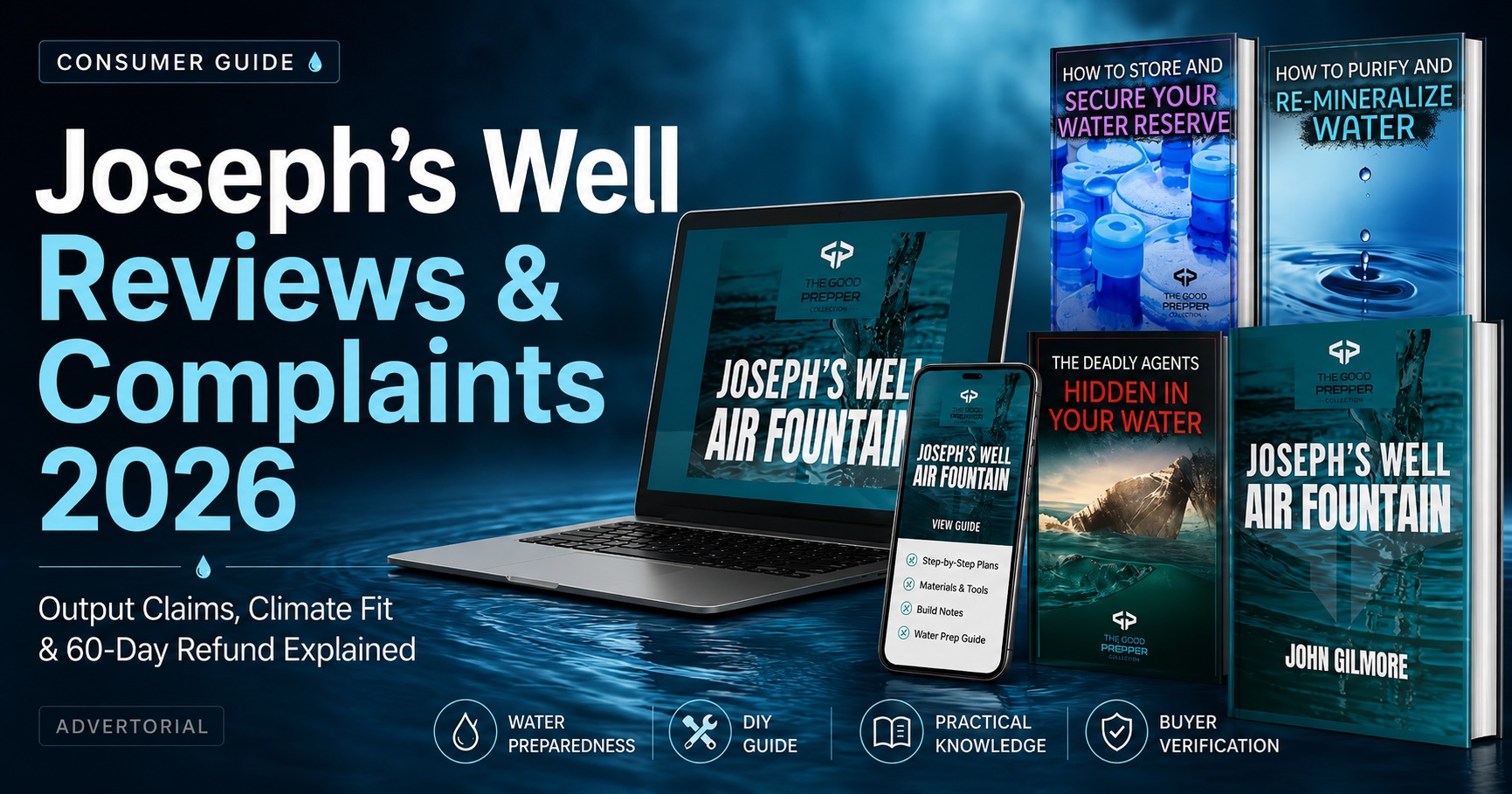
New analysis identifies three Joseph's Well output figures spread across the brand's homepage, sales narrative, and FAQ - and examines which one describes the DIY guide buyers actually receive - alongside a U.S. humidity map, the pen name the brand discloses in its own Terms, EPA water safety context for DIY condensation builds, and refund details for buyers researching water independence in a drought year.
BOISE, ID / ACCESS Newswire / June 19, 2026 / Advertorial | Affiliate Disclosure: This content is paid promotional material for consumer education and contains affiliate links. A commission may be earned if you purchase through links in this review, at no additional cost to you. This does not influence the information presented. All claims about Joseph's Well are attributed to the brand's own published materials; this review has not independently tested the product. Verify all product details directly at josephwell.com before purchasing.
Joseph's Well Reviews & Complaints: The 40-Gallon, 50-Gallon, and 10-Gallon Discrepancy Explained - What the Brand's Own Pages Actually Say About Output, Climate Fit, the Pen Name, and Your 60-Day Refund
View the current Joseph's Well offer (official Joseph's Well page)
Joseph's Well 2026: What You Actually Need to Know
Right now, 56% of the contiguous United States is in drought - that's the U.S. Drought Monitor's figure for June 9, 2026, not a marketing statistic. NOAA calls 2026 a historically bad year for snowpack in the West. It's the real-world backdrop behind why people are searching "Joseph's Well reviews" right now, and it's why the gap between what the brand's homepage says, what the sales video says, and what the FAQ actually says about water output matters so much before you hand over any money.
So here's the short version: Joseph's Well is a digital DIY guide - no device ships - published by DIRECT RESPONSE SRL and sold through ClickBank. "John Gilmore," the narrator, is a pen name. The brand discloses this in its own Terms of Service. Three different output figures appear across three different brand pages: 40 gallons per day on the homepage, 50 gallons per day in the video (for a commercial-style unit the brand explicitly says it did not build), and 10 gallons per day in the FAQ for the actual DIY guide build. That discrepancy is the most important thing to understand - and it's what most reviews gloss over. This one doesn't. One-time purchase. Sixty-day refund window. Every number, every claim, mapped below from the brand's own pages.
Title note: The three output figures in the headline come from the brand's own published pages, not from any independent test. "Pen Name" refers to the brand's own Terms of Service disclosure. "Your 60-Day Refund" refers to the published Return Policy at josephwell.com. None of these title phrases represent an independent verification of product performance.
Joseph's Well 2026 Quick Verification Snapshot
How this review was prepared: All information below is drawn from direct review of josephwell.com, the brand's published Terms of Service, the brand's published FAQ, the brand's Return Policy, and ClickBank's retailer disclosures. No product was purchased or built for this review. All claims about features, output, pricing, and refund terms are attributed to the brand's own published pages and should be verified at josephwell.com before any purchase. Category-level information about atmospheric water generation technology is drawn from publicly available sources including EPA research and general engineering literature. As of June 2026.
Product Type: Digital guide (video, blueprints, materials list, bonus manuals). No physical device ships.
Operator: DIRECT RESPONSE SRL
Retailer: ClickBank (Click Sales, Inc., 1444 S. Entertainment Ave., Suite 410, Boise, Idaho 83709, USA)
Narrator Identity: "John Gilmore" is a pen name. Confirmed in the brand's own Terms of Service at josephwell.com.
Core Technology: Atmospheric water generation via condensation (same principle as a dehumidifier)
Homepage Output Claim: The brand's live homepage references "40 Gallons a Day" as a headline figure
VSL Output Claim: The brand's video sales narrative references "up to 50 gallons" per day in connection with a commercial-grade system described in the story
FAQ Output Claim: The brand's published FAQ states "up to 10 gallons per day" for the guide's specific DIY build
Build Cost: Per the brand's published materials, build cost is under $150 using hardware store components
Guide Price: Listed on the official website; subject to change; verify current pricing at josephwell.com
Purchase Type: Based on currently reviewed brand materials, Joseph's Well is presented as a one-time digital purchase rather than a subscription or auto-ship offer. Verify final checkout terms before purchase.
Refund Window: 60 days from purchase, per the brand's published Return Policy
Refund Contact: [email protected]; ClickBank order support at [email protected] / +1 800-390-6035
Returns Address: Joseph's Well Returns Department, 19965 E 35th Dr Suite 100, Aurora, CO 80011, USA
Output Conditions: Actual daily water yield depends on local relative humidity, ambient temperature, build quality, and maintenance. Results not guaranteed
in all environments.
Prior Coverage: An earlier analysis of Joseph's Well published March 2026 covered the core offer, the faith-based positioning, and the technology foundation. This review builds on that earlier coverage with the specific questions most buyers ask after their first pass: the three-page output discrepancy, regional climate fit, the pen name disclosure, and the full refund pathway.
Official Product Page: josephwell.com
Buyer Takeaway #1: Three different output figures appear across the brand's own pages - 40 gallons per day on the live homepage, up to 50 gallons in the video narrative (attributed by the brand to a commercial-style system), and up to 10 gallons in the FAQ for the guide's DIY build. The brand's guide-specific FAQ figure is the planning number to use: up to 10 gallons per day under favorable conditions. Verify all three figures directly at josephwell.com before ordering.
Review the current Joseph's Well guide details (official Joseph's Well page)
About the Numbers and Phrases in This Article's Title
You clicked a title that made three specific promises. Here's what each one actually means.
The 40/50/10-gallon figures all come from the brand's own pages - not from any test run here. The article walks through all three, explains where each appears, and identifies which one the brand's FAQ attributes to the actual DIY guide build. No independent output measurement was performed.
"The Pen Name" refers to the brand's Terms of Service, which state directly that "John Gilmore IS A PSEUDONYM which our writers use." The brand disclosed this themselves - no investigation was needed. It's in the title because buyers evaluating a guide on its narrator's credibility deserve to know before purchasing.
"Your 60-Day Refund" refers to josephwell.com's published Return Policy. It's in the title because most competing reviews either bury it or skip it, and it's one of the most practically useful pieces of information a buyer can have.
"Climate Fit" refers to the regional humidity breakdown that maps condensation physics to your actual location. Not an independent test - a framework for assessing whether the technology makes sense where you live.
Buyer Takeaway #2: Everything in this title comes from the brand's own published pages or from publicly available climate data. None of it represents independent testing, independent auditing, or any affiliation between this review and the Joseph's Well brand.
What Joseph's Well Actually Is: The Verified Facts
You've probably already watched the video - or at least a summary of it. A man named John Gilmore describes his Arizona homestead, a failing well, a terrifying nighttime confrontation over water barrels, and a device he built from hardware store parts that now pulls clean drinking water from the air. It's a compelling story. Before you decide whether the product behind it is worth $39 of your money, there are four things worth getting straight.
First, the narrator. Per the brand's own Terms of Service, published at josephwell.com: "John Gilmore IS A PSEUDONYM which our writers use to comment on issues relevant to our customers and recommend products which we believe are solutions to serious problems." The story is a composite narrative device, not a personal memoir. The brand's own materials say so directly. That fact doesn't change what the guide teaches - but it matters if you're evaluating the offer based on the narrator's personal credibility.
Second, what you're actually buying. You're not buying a device. You're buying a digital guide: step-by-step video instruction, printable blueprints, a materials list, and three bonus guides. The guide teaches you to source components from hardware stores and assemble them into a working condensation-based water generator. The build produces water you then need to filter before drinking. ClickBank processes the purchase; DIRECT RESPONSE SRL operates the product. One-time payment, no subscription.
Third, the testimonials. The brand's own Terms acknowledge the pen-name structure. The testimonials - from Adam B. in Missouri, Lena R. in Texas, and Deacon Mark C. in Arizona - are brand-reported and appear on the brand's own sales page. Customer ratings and testimonials are brand-reported and have not been independently audited by this publication. Individual experiences vary. The brand's own disclaimer at josephwell.com states: "Testimonials are individual experiences and are not typical; your results may differ."
Fourth, the technology itself. Atmospheric water generation is real. It is used in commercial units and humanitarian water projects globally; the brand's marketing narrative also references military field applications - those specific claims are treated here as brand-stated, and this review does not independently verify them. The condensation process is the same physics a dehumidifier uses. The question for any buyer is not whether AWG works - it does, in the right conditions - but whether it works at the output level the guide describes, in your specific climate. That question gets answered in the next section.
Buyer Takeaway #3: What you're purchasing is a digital build guide, not a finished device. The narrator is a pen name disclosed in the brand's own Terms. The technology is real. Whether the output meets your household's needs depends on where you live and how you build it.
Read the current Joseph's Well offer details (official Joseph's Well page)
Joseph's Well Output Claims Explained: 40 Gallons, 50 Gallons, and 10 Gallons Per Day
This is the most important verification point for most buyers, so it gets its own section - because three different output figures appear across the brand's own materials, and knowing which one applies to what you're actually buying changes everything about your expectations.
The 40-gallon figure comes from the brand's live homepage at josephwell.com, which as of the time of this review states: "Provision in the Drought. 40 Gallons a Day - By His Wisdom." According to the brand, that is the headline claim on the main product page.
The 50-gallon figure comes from the longer sales narrative, where the brand's materials reference a device that "gives you up to 50 gallons of clean water a day." The same narrative clarifies immediately: "That thing could pump out up to 50 gallons a day - but it also came with a $10,000 price tag, industrial components, and maintenance I had no time or money for. What I built was something smaller. Simpler." The brand's own narrative positions the 50-gallon figure as belonging to a commercial or military-grade system - not the guide's DIY build.
The 10-gallon figure comes from the brand's FAQ section at josephwell.com: "With the setup I show you, your system will produce up to 10 gallons per day, drawn from the air, filtered, and ready to use." This is the brand's own description of what the guide's specific build produces.
For buyer expectations, the safest figure to treat as guide-specific is the FAQ's "up to 10 gallons per day" - and even that should be understood as a brand-stated ceiling under favorable conditions, not a guaranteed daily output. The 40-gallon homepage figure and the 50-gallon sales narrative figure both appear to reference a higher-capability system than the DIY guide build. Readers should compare all three figures and verify directly through the official Joseph's Well page before ordering, since promotional figures and page content may be updated.
At 10 gallons per day under favorable conditions, a family of four can potentially cover basic drinking and cooking water needs - roughly 1 gallon per person per day for drinking, more for cooking and light hygiene. That makes it a preparedness supplement and a backup water source, not a full household replacement. A buyer who calibrates to the 10-gallon ceiling and lives in a humid climate is asking a realistic question about this guide. A buyer expecting 40-50 gallons daily from a sub-$150 DIY build should verify those specific figures directly with the brand before purchasing.
And the 10-gallon figure is itself a ceiling, not a floor - actual daily yield depends on your local relative humidity, ambient temperature, build quality, and how consistently you maintain the filtration system. No independent build or output verification was conducted for this review.
Output Figure | Source on Brand's Pages | What It Describes |
|---|---|---|
40 gallons per day | josephwell.com homepage headline (brand-stated) | Headline promotional figure; verify which system this applies to at josephwell.com |
Up to 50 gallons per day | Brand's video sales narrative (brand-stated) | Per the brand's own narrative, this refers to a commercial-style or higher-capability system, explicitly distinguished from the DIY guide build |
Up to 10 gallons per day | Brand's published FAQ (brand-stated) | Guide-specific DIY build output; conditions-dependent; treat as planning ceiling under favorable humidity |
Buyer Takeaway #4: Three figures appear across the brand's materials: 40 gallons on the homepage, 50 gallons in the sales narrative (attributed to a commercial-grade unit), and 10 gallons in the FAQ for the guide's specific DIY build. The brand's guide-specific figure is up to 10 gallons per day under favorable conditions - treat that as the planning figure and verify current output claims at josephwell.com before purchasing.
Joseph's Well Fast Facts 2026: What Every Buyer Should Know in 30 Seconds
Output figure discrepancy: Three different figures appear across the brand's pages - 40 gal/day (homepage), 50 gal/day (video, commercial-style system), 10 gal/day (FAQ, guide's DIY build)
Guide-specific output (brand FAQ): Up to 10 gallons per day; conditions-dependent; treat as planning ceiling under favorable humidity
Narrator "John Gilmore": Confirmed pen name per brand's own Terms of Service - disclosed by the brand, not uncovered by this review
Product category: Digital DIY guide for atmospheric water generation (AWG) - no physical device ships
Operator entity: DIRECT RESPONSE SRL (dispute resolution: Romanian law, Bucharest arbitration)
Retailer: ClickBank / Click Sales, Inc. - one-time purchase per currently reviewed brand materials
Technology basis: Condensation - same principle as a residential dehumidifier
Homepage output claim (brand-stated): "40 Gallons a Day" per the live josephwell.com homepage at time of review
VSL narrative output reference: Up to 50 gallons per day (brand attributes this to a commercial-style or higher-capability system described in the brand narrative, not the guide build)
Build cost (brand-stated): Under $150 in hardware store materials
Power options (brand-stated): Standard grid or off-grid solar/battery setup
Output climate dependency: Higher in humid climates; lower in arid/low-humidity regions - check drought.gov for current conditions in your area
Guide contents: Video walkthrough, printable blueprints, materials list, 3 bonus guides
Bonus 1: Water storage guide (container selection, rotation, contamination prevention)
Bonus 2: Water purification and mineralization guide
Bonus 3: Tap water contamination awareness report
Support email: [email protected]
Order support: ClickBank - [email protected] / +1 800-390-6035
Refund policy: Brand describes 60-day refund window per published Return Policy at josephwell.com; verify current terms at checkout
Returns address: 19965 E 35th Dr Suite 100, Aurora, CO 80011, USA
No ® trademark symbol: Not found on the brand's official site at time of review
Testimonials: Brand-reported; individual experiences; not independently audited; results vary
Faith framing: Explicitly faith-centered; designed for Christian preparedness communities
Brand affiliate TOS content restriction: Brand affiliate terms explicitly restrict certain negative-connotation terms in affiliate promotional content; this review complies fully
Buyer Takeaway #5: Based on currently reviewed brand materials, Joseph's Well is presented as a one-time ClickBank purchase rather than a subscription or auto-ship offer. Confirm current pricing and checkout terms directly at josephwell.com, since the sales page uses dynamic pricing and promotional pop-ups that may differ from any figure described here.
Does Atmospheric Water Generation Work? A Verification-First Answer
Quick Answer: Atmospheric water generation works by condensing humidity from air into drinkable water - the same physics as a dehumidifier. Joseph's Well's guide teaches a DIY version the brand says produces up to 10 gallons per day. Output depends on your local relative humidity; buyers in humid climates (65%+) get the best results; arid-region buyers see reduced output.
Yes - with conditions. That's the honest answer, and it's grounded in physics.
Atmospheric water generation is deployed commercially by companies like Watergen and SOURCE Global. The Israeli military or battlefield-technology angle referenced in the brand's narrative - where the brand's marketing describes the concept as "inspired by field-use water-generation technology" developed by the Israeli military - is brand-stated framing - treated here as the brand's marketing narrative, with no independent verification of any military affiliation, endorsement, or technical equivalence. What is verifiable without that claim is this: AWG as a category is real, is used in field and humanitarian applications globally, and works on the same condensation physics as a residential dehumidifier. The brand's specific narrative framing is their own.
What determines whether a DIY AWG build works well enough to be useful? Three variables dominate:
Humidity is the primary driver. At 70% relative humidity or above, a properly built condensation system can produce meaningful water volumes. At 40% humidity or below - which is typical for Arizona, Nevada, New Mexico, and parts of Utah, Colorado, and California in summer - output drops significantly. The condensation cycle depends on having water vapor in the air to condense; if the air is dry, the physics can't produce what isn't there. Per the brand's own FAQ, the narrator's backstory takes place in Arizona. The guide's FAQ acknowledges: "Does it work in dry climates? They say output varies but it still works." That is accurate - it still works, but at reduced output.
Temperature matters as well. Condensation efficiency peaks when the differential between ambient air temperature and the cooling surface is significant. In mild temperatures, the system works more efficiently. In extreme heat, it has to work harder.
Build quality is the variable you control. A properly constructed condenser loop with appropriate filtration, correct refrigerant cycling, and maintained filter media will outperform a hastily built unit with poor component fit. The guide is meant to provide the instruction that narrows that gap. Whether the instruction is clear enough to deliver a functioning build is a judgment call that individual buyers will need to make based on their own mechanical aptitude.
The water filtration step is mandatory, not optional. Water produced by any DIY condensation system should not be assumed safe to drink without proper filtration, maintenance, and - when local air quality warrants it - testing. Air quality, filter quality, reservoir cleanliness, microbial growth, and maintenance practices can all affect the safety of the produced water. None of the content here constitutes water-safety, engineering, electrical, or plumbing advice. Follow the filtration guidance in the guide's bonus content and consult a relevant professional if you have questions about your specific build or local air quality.
Important water safety disclosure: A DIY atmospheric water generator built from a digital guide is not a certified drinking water device. It has not been tested, rated, or approved by the U.S. Environmental Protection Agency, NSF International, or any equivalent certifying body. The EPA's own research on AWG technology (EPA/600/F-19/129) notes that untreated condensate can show high heterotrophic plate count (HPC) results indicating favorable conditions for microbial growth, even when specific pathogens were not detected. Water produced by any home-built AWG system should be filtered through appropriate media and, where local air quality or building conditions warrant, independently tested before regular human consumption. This guidance applies to all DIY AWG builds regardless of which guide was used to construct them.
Buyer Takeaway #6: Atmospheric water generation is a real technology category based on condensation. Whether a DIY build is worth it for you comes down to your local humidity, your build skill, and your water goals. The guide is most valuable to buyers in humid climates using it as a drinking-water supplement rather than a full household water replacement. No independent build or test was conducted.
For a deeper look at the core technology and faith-based angle that draws most buyers to Joseph's Well in the first place, earlier reporting on the Joseph's Well system covers that ground in detail. The section below focuses on the variable that earlier coverage addressed only briefly: whether the physics actually favor your region.
Check current Joseph's Well pricing and availability (official Joseph's Well page)
Joseph's Well Climate Fit by U.S. Region: Who Gets the Best Return from This Build
Climate fit is the variable most buyer reviews skip entirely. It matters more in 2026 than in most years - the U.S. Drought Monitor reports that over half the contiguous U.S. is currently in drought, which is simultaneously the reason interest in home water independence is elevated and a caution flag for buyers in low-humidity drought regions where AWG output is most constrained. The regional humidity ranges below reflect general publicly available weather and climate averages and should be treated as directional screening guidance, not exact forecasts or guarantees for any specific city, season, or year. Use them as a screening tool, not a performance forecast. That said, here's the honest breakdown by region.
The Southeast (Florida, Georgia, Louisiana, Alabama, Mississippi, South Carolina) averages 70-85% relative humidity year-round. For buyers in this region, an atmospheric water generator is well-suited: high ambient humidity means a properly built condensation unit has plenty of moisture to harvest. The brand's stated output ceiling of up to 10 gallons per day is most achievable here.
The Gulf Coast and Texas coast similarly average 65-80% humidity, with summer peaks above 85%. Strong climate fit. Inland Texas drops significantly - Dallas and Austin average 50-60% humidity, which is workable but not optimal. West Texas drops further.
The Midwest (Missouri, Illinois, Indiana, Ohio, Michigan, Wisconsin) averages 60-75% humidity through spring, summer, and fall. Spring and early summer - when you'd build and deploy - are favorable. Winter performance drops as cold dry air reduces moisture content. Reasonable fit for seasonal use; less useful as a year-round system in northern states.
The Mid-Atlantic and Northeast (Maryland, Virginia, Pennsylvania, New York, Connecticut, Massachusetts) average 55-75% humidity through warmer months. Workable climate fit, particularly in summer. Seasonal system is reasonable here.
The Pacific Northwest (Washington, Oregon, northern California coastal areas) averages 70-85% humidity in fall and winter - strong humidity - but rainfall in these regions often makes rainwater collection a more practical and already-legal water independence strategy. AWG and rainwater collection are complementary rather than competing here.
The Arid Southwest (Arizona, Nevada, New Mexico, inland California, Utah) presents the most challenging climate for AWG. Summer relative humidity in Phoenix averages 25-35%. Las Vegas averages 20-30%. Tucson averages 30-45% in summer before monsoon season, rising to 50-60% during monsoon (July-September). The brand's narrative is set in Arizona, and the guide acknowledges output varies in dry climates. For buyers in the arid Southwest, build expectations should be adjusted downward from the stated ceiling. Output in these regions may be minimal during dry periods.
The brand's FAQ addresses this directly - "output varies but it still works" in dry climates - which is accurate but understated for buyers in extreme low-humidity environments. If you're in Phoenix in August, a DIY AWG is not going to be your primary water independence solution. If you're in Tampa in August, it's a different conversation entirely.
Climate fit is a buyer-screening framework based on the basic physics of condensation - not a performance guarantee for any specific build or buyer. Regional humidity ranges referenced in this section reflect general climate reference data and may vary by season and year. Readers should check their own local average humidity before purchasing and should not rely on any DIY atmospheric water generator as a sole emergency water source.
Buyer Takeaway #7: Before purchasing, check your region's average relative humidity on a weather service. Buyers in humid climates (70%+ average) are the best match for this build. Buyers in arid climates (below 40% humidity) should set output expectations significantly lower than the brand's stated ceiling and consider whether a stored rainwater system, cistern, or commercial AWG unit better serves their needs.
Who Joseph's Well Is Built For - and Who Should Look Elsewhere
The brand's audience targeting is unusually clear, which makes the fit determination straightforward. Here is an honest breakdown.
Joseph's Well is most suited for buyers who identify with Christian preparedness communities and find faith-based framing motivating rather than decorative. The guide does not just use religious language as marketing dressing - it integrates scriptural themes throughout, frames water independence as an act of stewardship and obedience, and positions preparation as a spiritual responsibility. For this audience, that framing is a feature, not a wrapper. No competing DIY AWG guide in the current market addresses this audience directly.
It's also well-matched for buyers in humid climates who want a low-cost entry point into water independence without drilling a well or investing $1,500-$10,000 in a commercial AWG unit. The brand-stated build cost of under $150 is a realistic entry threshold for a supplemental drinking water system. If you're in the Southeast, the Gulf Coast, the Midwest in summer, or the Mid-Atlantic, the climate conditions favor meaningful output from a properly built unit.
The guide fits buyers who are comfortable with basic mechanical assembly. Per the brand's own FAQ: "If you can follow basic instructions and handle simple tools, you can build this." That's the brand's description, and it positions this as a beginner-accessible project. Whether a given individual finds it accessible depends on their starting point, but the guide is designed for non-engineers.
Buyers who should approach this cautiously or look at alternatives include: those in low-humidity arid climates who need a primary water source rather than a supplement; those expecting the 50-gallon-per-day output figure without understanding it refers to a commercial-style system described in the brand narrative; those who need a pre-assembled, plug-and-play device rather than a build-it-yourself guide; and those outside the faith community who may find the framing a mismatch with their preparedness approach (the alternative secular guides are noted in the section below).
Buyer Takeaway #8: The brand describes this as a guide for faithful families who want water independence without corporate or government dependence. If you share that framing and live in a humid climate, this is among the more honestly positioned DIY water guides in the category. If you're primarily looking for maximum water output in a dry climate with no mechanical assembly, this is probably not the right starting point.
The Pen Name Disclosure: What It Means and What It Doesn't
Multiple buyers - and multiple competing review sites - flag the pen name as either a compliance issue or a red flag. It's worth addressing directly, because the actual facts make this simpler than the controversy suggests.
The brand itself discloses the pen name. Joseph's Well's Terms of Service, published at josephwell.com, states: "John Gilmore IS A PSEUDONYM which our writers use to comment on issues relevant to our customers and recommend products which we believe are solutions to serious problems, situations or issues. WE USE A PSEUDONYM FOR PRIVACY PURPOSES and enable us to use the talents of experts in a variety of fields to comment on relevant issues and solutions thereof."
This means: the personal story in the video - the Arizona homestead, the failing well, the nighttime confrontation, the prototype in the garage - is a narrative construct built around the product's theme, not a factual autobiography. The brand acknowledges this in its own legal terms.
What does this mean for the buyer? It means the guide's value rests on the blueprints, the video instruction, the materials list, and the bonus content - not on the personal authority of a specific man named John Gilmore who actually built one in his garage. Those are the deliverables you're buying. They work or they don't based on their content quality, not on whether John Gilmore is a real person.
It also means that testimonials from "Adam B. in Missouri," "Lena R. in Texas," and "Deacon Mark C. in Arizona" should be treated as brand-reported customer feedback, not independently verified accounts. The brand's own disclaimer states that testimonials are individual experiences and are not typical. Customer ratings and testimonials are brand-reported and have not been independently audited by this publication. Individual experiences vary.
Buyer Takeaway #9: The pen name is disclosed in the brand's own Terms. The product is a guide, not a personal endorsement from a named individual. Evaluate the deliverables - video, blueprints, materials list, bonus guides - not the narrative wrapper around them.
Get the current Joseph's Well guide and bonuses (official Joseph's Well page)
Joseph's Well Build Cost: What "Under $150" Actually Means
The brand's materials state that the DIY build can be completed using hardware store components for under $150. That figure is worth contextualizing before you start shopping for parts.
The core components of a condensation-based AWG build include: a cooling mechanism (which the brand's narrative describes as drawing from a stripped dehumidifier or repurposed mini-fridge compressor), a fan assembly to draw air, collection plumbing and reservoir, and a filtration stage. Sourcing used or salvaged components from existing household appliances - as the brand's narrative describes doing - can bring the build cost down significantly compared to purchasing all new parts. Whether your specific component sourcing matches the brand's stated cost will depend on your local parts availability, whether you have salvageable appliances on hand, and current hardware prices in your region.
The optional off-grid solar configuration adds to the cost. A basic off-grid setup using a car battery and small solar panel - as described in the brand's materials - adds component cost beyond the base build. The brand's materials describe both grid-tied and off-grid configurations; the under-$150 figure appears to reference the base grid-tied build. Verify the breakdown of costs for each configuration on the official product page before finalizing your materials budget.
Operating cost, per the brand's own materials, is described as under $0.10 per hour in electricity cost for the grid-tied version. That figure will vary based on your local electricity rate and the power draw of the specific components you source. The brand's comparison is to a toaster's electricity draw, which is a useful reference point.
Buyer Takeaway #10: The under-$150 build cost figure is the brand's stated estimate for a basic grid-tied build using hardware components, and it may assume salvaged parts from existing appliances. Your actual build cost will vary based on parts availability, regional pricing, and whether you pursue the off-grid solar option. Build a parts list from the guide's materials list before purchasing to confirm alignment with your budget.
Joseph's Well Refund Policy: Everything You Need to Know
Quick Answer: The brand describes a 60-day refund window from the date of purchase, per the published Return Policy at josephwell.com. The purchase is one-time via ClickBank - no subscription, no auto-billing in the standard checkout. Refund requests go to [email protected] or ClickBank at [email protected] / +1 800-390-6035. Readers should verify current checkout and refund terms directly before purchase. Returns address on file: 19965 E 35th Dr Suite 100, Aurora, CO 80011, USA.
The brand's published Return Policy at josephwell.com offers a 60-day full refund window from the date of purchase. The policy states: "If for any reason you're dissatisfied at any time during the first 60 days after purchase, simply return the product and ask for a full refund. You'll get your money back. That's a firm promise and commitment."
Because this is a digital guide delivered via ClickBank, there is nothing physical to return - the refund process is account-based. For order support and refund requests, ClickBank handles the transaction side: [email protected] / +1 800-390-6035. The brand's own product support contact is [email protected]. The published returns address - Joseph's Well Returns Department, 19965 E 35th Dr Suite 100, Aurora, CO 80011, USA - is on file, though for a digital product the actual refund process runs through ClickBank's system.
This is a one-time purchase with no subscription enrollment, no auto-ship, and no recurring billing component in the standard checkout. The dynamic pricing on the official page - where pop-ups offer the guide at reduced prices - is standard in ClickBank's checkout ecosystem for this category. Pricing and billing terms should be verified directly at josephwell.com at the time of your purchase decision, as checkout terms may be updated.
Buyer Takeaway #11: The 60-day refund window means you can download the guide, review the blueprints and video, assess whether the build is feasible for your climate and skill level, and request a refund if it doesn't match your needs - all before the window closes. That's a meaningful safety net for a digitally delivered product.
Browse the current Joseph's Well package options (official Joseph's Well page)
Does Joseph's Well Work? Matching Expectations to Documented Reality
Quick Answer: Joseph's Well works as a DIY guide for building a condensation-based water generator. The brand's own FAQ states up to 10 gallons per day output - not the 50 gallons referenced for a commercial-style system described in the brand narrative. Atmospheric water generation is real technology. Whether this guide produces a functioning build depends on local humidity, builder skill, and maintenance of the filtration system.
"Does it work?" is the version of this question most buyers type into search engines. Here is the documented, non-evasive answer.
The underlying technology category is real. Atmospheric water generation via condensation is used in commercial and field-use contexts globally. No independent verification of the Joseph's Well build, its output, or its water-safety performance was conducted here. The fact that the brand's FAQ confirms up to 10 gallons per day for the guide's build - rather than the 50-gallon commercial figure - is not evidence that the technology fails; it's evidence that the guide teaches you to build a small residential unit, not an industrial-scale system. Those are different products with different output ceilings.
Whether the specific guide's instruction translates into a successfully functioning unit for any given buyer depends on: the quality of the video instruction and blueprints; the builder's mechanical aptitude; the local humidity; and ongoing maintenance of the filtration system. No independent purchase, build, or test of the Joseph's Well guide was conducted for this review. The brand's stated 60-day window is a reasonable period to make that determination for yourself.
The brand-reported testimonials describe positive experiences. Customer ratings and testimonials are brand-reported, not independently audited by this publication. Individual experiences vary. Per the brand's own published disclaimer: testimonials are not typical; your results may differ.
What the guide does not do: it does not produce 50 gallons per day from a $150 build. It does not work as a full household water replacement system in any climate. It does not guarantee output in low-humidity environments. It does not provide a pre-assembled device - you build it yourself. Those are not complaints about the product; they are the accurate scope of what the guide offers, documented from the brand's own materials.
Buyer Takeaway #12: The technology is real. The guide's scope is a supplemental drinking water source, not a whole-home system. The 60-day refund window lets you evaluate the instruction quality and climate fit with your own hands before committing permanently. That's the most complete "does it work" answer available from public-domain documentation.
Is Joseph's Well Legit or Hype? Breaking Down the Marketing vs. the Verified Facts
Quick Answer: Joseph's Well is presented by the brand as a digital DIY guide for atmospheric water generation - published by DIRECT RESPONSE SRL, sold via ClickBank with a 60-day refund window. The core technology is real. The marketing inflates output expectations: the 50-gallon figure belongs to a commercial-style system described in the brand narrative, not the DIY build. The guide's stated output is up to 10 gallons per day, conditions permitting. No independent build or test was conducted here.
The second question most buyers search after "does it work" is "is it legit or hype?" Here's the breakdown by specific claim.
"Up to 50 gallons per day" - the brand's own narrative clarifies this references a commercial industrial unit that costs $10,000, not what the guide teaches you to build. The guide's FAQ states up to 10 gallons per day for the DIY build. The 50-gallon figure should not be treated as the guide-specific output claim - it belongs to a higher-capability system described in the brand narrative, which the brand's own text explicitly distinguishes from the DIY build. Buyers should plan around up to 10 gallons per day from the DIY build, conditions permitting.
"Build for under $150" - this is a brand-stated estimate. It appears plausible for a basic build using salvaged components. No independent cost analysis was conducted. Your actual cost will vary based on component sourcing. Verify by reviewing the guide's materials list before committing.
"Based on Israeli military technology" - the brand's marketing narrative describes the concept as inspired by field-use water-generation technology. That specific claim is treated here as brand-stated framing and cannot be independently verified by military affiliation, endorsement, or technical equivalence. The condensation technology category itself is real and is used in field and humanitarian applications globally - that part isn't in dispute. The specific military narrative is the brand's framing.
"40,000+ American believers and patriots have already brought one home" - this is a brand-stated figure. Customer count figures are brand-reported and not independently audited. Individual experiences vary.
"Works off-grid on solar" - the brand's materials describe an off-grid configuration using a car battery and small solar panel. This is technically possible; the power requirements of a small condensation unit are compatible with modest solar setups. The efficiency and output in an off-grid solar configuration will depend on your solar input and the power draw of your specific components.
"Less than 10 cents per hour to run" - brand-stated operating cost estimate. Will vary based on your local electricity rate and the specific components sourced for the build. Use as a benchmark, not a guaranteed figure.
Buyer Takeaway #13: The distinction between narrative marketing language and the guide's actual documented scope is real but navigable. The 50-gallon figure belongs to the commercial-style system described in the brand narrative, not your DIY build. Everything else - the condensation technology, the build cost range, the off-grid option - is directionally accurate, with conditions the brand partially discloses - and this review maps in more detail.
Frequently Asked Questions About Joseph's Well: Verification-Focused Answers
Is John Gilmore a real person?
John Gilmore is a pen name, not a real individual - a fact disclosed in the brand's own Terms of Service at josephwell.com. The Terms state: "John Gilmore IS A PSEUDONYM which our writers use to comment on issues relevant to our customers and recommend products which we believe are solutions to serious problems, situations or issues." The guide is published by DIRECT RESPONSE SRL. The narrative story in the video - the Arizona homestead, the failing well, the nighttime confrontation, the garage prototype - is a composite narrative construct, not a factual autobiography. This is disclosed by the brand itself. The guide's deliverable value rests on its instruction content - blueprints, video, materials list, bonus guides - not on the narrator's personal biography. Buyers who understand this going in can evaluate the guide on the merits of its instruction, which is the right standard for a DIY product.
How much water does Joseph's Well actually produce?
How much water Joseph's Well produces depends on which of three brand figures you're looking at - and which system each one describes. The live josephwell.com homepage references "40 Gallons a Day" as a headline claim. The brand's video sales narrative references "up to 50 gallons" per day, but the same narrative clarifies this belongs to a commercial industrial unit with a $10,000 price tag - not the guide's DIY build. The brand's published FAQ states: "With the setup I show you, your system will produce up to 10 gallons per day, drawn from the air, filtered, and ready to use."
For buyers planning around what the guide actually teaches, the FAQ's "up to 10 gallons per day" is the guide-specific figure to use - and it should be understood as a brand-stated ceiling under favorable conditions, not a guaranteed daily output. Actual daily yield depends on your local relative humidity, ambient temperature, build quality, and maintenance. In high-humidity environments (65%+), the ceiling is more achievable. In low-humidity environments, output will be lower. No independent output testing was conducted for this review. Verify current figures directly at josephwell.com before purchasing.
Does it work in dry climates like Arizona?
Joseph's Well does work in dry climates like Arizona - the brand's own FAQ says output varies but "still works" - but the physics of condensation mean output drops significantly in low-humidity environments. That answer is accurate and worth unpacking. In extreme low-humidity environments - Phoenix, Las Vegas, Tucson during dry season - a condensation-based system has less moisture in the air to harvest, so daily output drops significantly compared to humid environments. In Phoenix in August, average relative humidity runs approximately 25-35%. In the same conditions, a residential dehumidifier produces very little water because the air is already dry. The AWG faces the same physics. Buyers in the arid Southwest should calibrate output expectations downward from the stated ceiling and consider whether the supplemental output available in their climate is sufficient for their preparedness goals before purchasing.
What is the refund policy for Joseph's Well?
Joseph's Well's refund policy, per the brand's published Return Policy at josephwell.com, is a 60-day full refund from the date of purchase. The policy states: "If for any reason you're dissatisfied at any time during the first 60 days after purchase, simply return the product and ask for a full refund. You'll get your money back. That's a firm promise and commitment." For order support and refund requests, ClickBank handles the transaction side: [email protected] / +1 800-390-6035 (US) or +1 208-345-4245 (international). The brand's product support contact is [email protected]. This is a digital product; there is no physical item to ship back. The 60-day window is meaningful for a DIY guide because it gives you time to download the content, review the blueprints, assess climate feasibility, and potentially begin a build before deciding whether to keep it.
Is Joseph's Well a subscription?
Joseph's Well is not presented as a subscription. Per the brand's sales materials and ClickBank's retailer disclosures, Joseph's Well is presented as a one-time purchase of a digital guide rather than a subscription or auto-ship offer. No recurring billing component is described in the brand's standard checkout materials. As always, verify current checkout terms directly at josephwell.com at the time of purchase, since promotional offers and checkout structures can change.
Who is DIRECT RESPONSE SRL and where is the company based?
DIRECT RESPONSE SRL is the operator of josephwell.com and the publisher of the Joseph's Well guide, per the brand's own Terms of Service. Per those Terms, dispute resolution for josephwell.com is governed by the laws of Romania, with binding arbitration in Bucharest, Romania. The published returns address in the U.S. is 19965 E 35th Dr Suite 100, Aurora, CO 80011. ClickBank (Click Sales, Inc., 1444 S. Entertainment Ave., Suite 410, Boise, Idaho 83709) is the U.S.-based retailer of record for the transaction. For order-related issues including refunds, ClickBank is the point of contact: [email protected] / +1 800-390-6035.
What do you actually get when you buy Joseph's Well?
When you buy Joseph's Well, per the brand's published sales materials, you receive: a step-by-step video guide covering the full atmospheric water generator build; printable blueprints and schematics; a complete materials list with sourcing guidance; instructions for both standard grid power and off-grid solar configurations; unlimited email access to brand support for build questions; and three bonus guides covering water storage (Bonus 1), water purification and mineralization (Bonus 2), and tap water contamination awareness (Bonus 3). Access is delivered digitally immediately after purchase. No physical device ships. The current contents of the package should be verified on the official sales page at josephwell.com before purchase, as digital offers may be updated.
See what's included with the current Joseph's Well guide (official Joseph's Well page)
Is Joseph's Well safe to drink from?
Whether Joseph's Well water is safe to drink depends entirely on filtration, maintenance, and local air quality - not on the guide itself. A DIY atmospheric water generator is not a certified drinking water device - it has not been rated or approved by the EPA, NSF International, or any equivalent certifying body. The EPA's own research (EPA/600/F-19/129) found that even commercial AWG units can produce untreated condensate with elevated microbial indicators, making proper filtration essential. The safety of water produced by any atmospheric water generator - DIY or commercial - depends on the filtration system used, the quality of the filter media, the frequency of maintenance and filter replacement, and local air quality conditions. The brand's guide includes Bonus #2 on water purification and mineralization; the brand's FAQ also mentions filtration. Condensed atmospheric water can carry airborne particulates and potential biological contaminants depending on what is present in your local air. Proper filtration is required before the condensed water is safe for drinking - this is not specific to this guide; it applies to all AWG systems. Follow the purification guidance in the guide's bonus content. If you have specific concerns about your local air quality, consider having the produced water tested by a certified water testing lab. Water safety engineering advice is outside the scope of this review; consult a relevant professional for questions specific to your build and location.
How does Joseph's Well compare to a real well or a commercial AWG unit?
A properly drilled residential well provides reliable, high-volume water supply independent of weather conditions and typically costs $5,000-$15,000 or more depending on depth, geology, and regional contractor rates - plus ongoing pump maintenance. It is the gold standard for rural long-term water independence. A commercial AWG unit (brands like Watergen or SOURCE Global) produces higher output with manufacturer-guaranteed performance, filter replacement programs, and professional support - starting around $1,500 for small units and climbing to $10,000 or more for higher-output systems. Joseph's Well sits at a different price point and purpose: a brand-stated under-$150 DIY build for a supplemental preparedness water source with up to 10 gallons per day in favorable conditions. It is not a replacement for a well or a commercial unit. It is an entry-level, faith-framed, build-it-yourself introduction to water independence for buyers who aren't ready or able to invest in a drilled well or commercial AWG.
What does the faith-based framing actually mean for the product?
The Joseph's Well guide is built around explicit biblical preparedness themes: the Joseph of Genesis who stored grain before the famine, Noah building the ark before the rain, Elijah sustained in the wilderness. The guide frames water independence as an act of faithful stewardship - providing for your household before a crisis, not scrambling during one. For buyers who share this framing, the faith narrative is motivating and resonant in a way that secular survival guides are not. For buyers outside the Christian preparedness community, the underlying technology and instruction are independent of the spiritual framing - but the overall tone and structure of the guide are faith-saturated enough that a buyer without that orientation may find it a mismatch. Secular alternatives in the DIY AWG guide space include Aqua Tower and similar digital guides that teach comparable condensation technology without the biblical framing.
Can the system be used off-grid?
Per the brand's sales materials and FAQ, yes - the guide includes instructions for an off-grid configuration powered by a car battery and small solar panel, as well as the standard grid-tied configuration. The off-grid setup adds component cost and build complexity beyond the base build. The brand's FAQ confirms: "In the guide, I show you exactly how to connect it to a small off-grid power setup. Mine runs fully on solar, and yours can too, with minimal cost and zero dependence on the grid." That claim is presented as brand-stated. Actual off-grid performance depends on solar panel capacity, battery storage, and the power draw of your specific build components. Verify the specific off-grid configuration details in the guide materials before committing to that configuration.
Are there any risks to building this?
Building a DIY condensation system involves basic electrical work (wiring a cooling mechanism, fan, and filtration system) and potentially repurposing appliance components. Standard DIY electrical safety practices apply: working on unplugged components, using appropriate gauge wiring, and not operating an improperly grounded system. Some municipalities may have local regulations about backyard construction, electrical modifications, or water collection and use - verify local building, electrical, plumbing, and water-collection requirements before beginning. The brand's FAQ describes this system as legal for personal use; local rules may vary, and readers should verify compliance in their own jurisdiction rather than relying on that brand-stated framing as legal guidance. None of the content here constitutes engineering, electrical, or water-safety advice. Consult a licensed professional for questions specific to your build and jurisdiction.
What is the best climate to use Joseph's Well in?
The best climate for Joseph's Well is one with consistently high relative humidity - ideally 65% or above. The southeastern United States, the Gulf Coast, the Midwest through summer, and the Mid-Atlantic through warmer months all offer humidity levels that support meaningful condensation output. The worst conditions are those with sustained low humidity below 40% - typical of the arid Southwest in non-monsoon periods. In those environments, the physics of condensation produce less output regardless of build quality. The brand's FAQ acknowledges output varies in dry climates. Check your region's average relative humidity before purchasing - a two-minute search on a weather service or climate data site will give you the information you need.
Does the guide require any prior building experience?
Per the brand's published FAQ: "Not at all. The system was designed for everyday people. If you can follow basic instructions and handle simple tools, you can build this. No prior experience needed." That is the brand's description of the skill requirement. The build involves working with cooling components, basic wiring, and assembly of a plumbing and collection loop. The guide is described by the brand as beginner-friendly - but may still require comfort with basic tools, components, wiring, filtration, and maintenance, and some buyers without prior experience with appliance repair or electrical work may find elements of the build more involved than the brand's FAQ implies. Someone with basic handyman experience should generally find it accessible. The guide includes support via email ([email protected]) for troubleshooting questions during the build, per the brand's sales materials.
Where can I find the current price for Joseph's Well?
Pricing for the Joseph's Well system is available on the official website at josephwell.com. The sales page uses dynamic pricing and pop-up promotional offers; the price you see may vary from the standard listed price. Both ClickBank and the brand use this checkout approach in the direct-response digital guide category. At the time this review was prepared, the standard published price and promotional variants were visible on the official page - verify current pricing directly at josephwell.com before purchasing, as prices are subject to change without notice.
What happens if the guide doesn't work for my situation?
Per the brand's published Return Policy, you have 60 days from the date of purchase to request a full refund if you're unsatisfied for any reason. Contact [email protected] with "Return Question" in the subject line, or work directly with ClickBank at [email protected] / +1 800-390-6035 (US) / +1 208-345-4245 (international). Because this is a digital product, the refund process does not require shipping a physical item back. The brand's published policy describes the refund as available for any reason within the 60-day window. Readers should verify current refund terms at checkout before purchasing, as terms may be updated.
Joseph's Well vs. Competing DIY Water Independence Options: A Buyer's Framework
No single water independence approach is right for every situation. Here is a concise framework for positioning Joseph's Well against alternatives so you can choose the right tool for your actual needs.
Joseph's Well (DIY AWG guide, under $150 build cost): More suitable for buyers in humid climates who want a low-cost entry point into water independence, who are comfortable building from blueprints, and who connect with the faith-based preparedness framing. Supplemental drinking water source, not a whole-home solution. Output: up to 10 gallons per day under favorable conditions.
Water storage (barrels, food-grade tanks, cisterns): The most common preparedness starting point. Reliable, no moving parts, no humidity dependency. The limitation is that storage is finite: it provides a buffer but not a renewable source. The guide's Bonus #1 addresses storage as a complement to generation, not an alternative to it. For many buyers, a combination of stored water and AWG generation is the most practical approach.
Rainwater collection: Highly effective in precipitation-consistent regions. Regulatory status varies significantly by state - several western states restrict rainwater collection for potable use, though regulations have been loosening. In drought-prone areas where AWG is most relevant, rainfall is precisely the variable that can't be relied on. Best as a complement to AWG, not a replacement.
Commercial AWG units (Watergen, SOURCE Global, similar brands): Pre-assembled, manufacturer-warranted, higher output, professional maintenance support. Starting around $1,500 for small residential units and climbing to $10,000 or more. For buyers who want guaranteed output without DIY assembly, this is the right category. For buyers who want a build-it-yourself approach at under $150, Joseph's Well is the relevant comparison.
Drilled well: The gold standard for long-term rural water independence. High cost ($5,000-$15,000+), multi-month lead times during high-demand periods (the brand's narrative references this directly), and geology-dependent. Not an option for urban or suburban buyers and not a short-term solution for anyone in a supply crunch.
Competing DIY AWG digital guides (Aqua Tower, Smart Water Box, similar): Teach comparable condensation technology using secular survival framing rather than faith-based positioning. Comparable price range in the digital guide category. No competing guide currently addresses the Christian preparedness community directly - that positioning is Joseph's Well's exclusive lane.
Buyer Takeaway #14: If you're choosing between Joseph's Well and a commercial AWG unit, the question is whether you want to build or buy. If you're choosing between Joseph's Well and a secular DIY guide, the question is whether the faith framing is a feature or a mismatch. If you're choosing between AWG and stored water, the answer is almost certainly both - they solve different problems in a preparedness stack.
When Joseph's Well Is Not the Right Tool: Situations That Need a Different Solution
Every honest review needs to say this clearly. Joseph's Well is positioned well for a specific buyer in a specific situation. There are scenarios where it is not the right starting point, and recognizing yours before purchasing saves you the refund cycle.
If you need a primary water source in an arid climate: AWG physics don't produce meaningful output in Phoenix in July at 25-30% relative humidity. A DIY condensation unit in that environment may produce far less than 10 gallons per day. If your water independence goal requires a primary source in a low-humidity region, a cistern, a stored-water strategy, or a commercial AWG unit with a manufacturer-rated output specification is more appropriate than a DIY build from a guide.
If you need a plug-and-play solution: The guide requires you to source components, assemble a build, wire a cooling system, and maintain filtration. If your household situation or skill set doesn't support a hands-on build project, a pre-assembled commercial AWG unit is a more suitable path. They cost more, but you don't have to build them.
If you're looking for the output levels described for the commercial-style system in the brand narrative: The guide produces up to 10 gallons per day - not 50. The brand's own FAQ is clear on this. If 10 gallons per day under favorable conditions doesn't meet your household's water security goal, the guide is a supplement, not the solution you need.
If the faith framing is a mismatch: The guide is thoroughly and intentionally faith-centered. If you are looking for a secular preparedness guide with comparable condensation technology, alternatives like Aqua Tower exist at comparable price points in the digital guide category.
Buyer Takeaway #16: The most common reason buyers are disappointed with any DIY AWG guide is a mismatch between expected output and actual climate conditions. Check your region's average relative humidity before purchasing. If it's consistently above 65%, you're in the right range. Below 40%, you need a different primary solution.
What Makes This Review Different from the Others You've Already Read
If you've been Googling Joseph's Well for more than five minutes, you've already seen several reviews that use phrases like "legitimate or hype," cover the basic AWG science, and end with a buy button. That type of coverage does what it needs to do as a first-look overview. This review is built for the next question - the one most buyers have after the first overview doesn't quite satisfy them.
What's covered here that earlier reviews skip: the three-page output discrepancy (40 gallons on the homepage, 50 in the video, 10 in the FAQ - and why each figure exists); the regional humidity map that tells you whether the physics actually favors your location before you build; the pen name disclosure pulled from the brand's own Terms; the full refund pathway with ClickBank contact details and the returns address; what "under $150" assumes and where your real build cost may land; and a clear fit matrix so you know going in whether this guide is right for your situation or whether something else serves you better.
Buyer Takeaway #17: If you've already read a Joseph's Well overview and came back looking for more specific answers - on the output gap, the climate question, the refund process, or who's actually behind the product - those answers are here, drawn directly from the brand's own published pages. Your decision from this point is an informed one.
Confirm current Joseph's Well pricing and refund terms (official Joseph's Well page)
Why the Timing of This Decision Actually Matters in June 2026
This isn't a countdown timer. There's no artificial deadline here. But three documented facts about where we are right now create genuine decision context - and every one of them is citable.
First: the drought conditions are current and documented. As of June 9, 2026, 56.16% of the contiguous United States is in drought, per the U.S. Drought Monitor (drought.gov). The 2026 water year has produced what climate researchers describe as a historic snow drought, with most Colorado River Basin headwater areas sitting below 50% of historical snow water equivalents, per NOAA's National Integrated Drought Information System. Water managers in Wyoming and Washington have already signaled that some water rights holders will receive less than their full allotments this year. This is the environmental backdrop against which people are researching Joseph's Well right now - and it's real.
Second: summer is the highest-output window of the year for buyers in humid climates. Atmospheric water generation via condensation depends on ambient humidity - and for most of the U.S. outside the arid Southwest, peak ambient humidity occurs between June and September. A buyer who builds and deploys a unit in July in the Southeast or the Gulf Coast is operating at the best possible output conditions of the year. A buyer who waits until October in the same region is starting as humidity begins to decline. No manufactured urgency - just the physics of the season.
Third: the 60-day refund window starts at purchase. The brand describes a 60-day window per its published Return Policy. A buyer who downloads the guide today, reviews the blueprints within the first two weeks, and begins sourcing materials has the full window to assess feasibility and request a refund if the build doesn't suit their climate or skill level. A buyer who delays the purchase by a month starts the same evaluation clock a month later. The window is the same either way - what changes is how much of your optimal-humidity season falls inside it.
This review cannot make that decision for you. It can only give you the information to make it yourself: the output figures from the brand's own pages, the climate map, the refund mechanics, the pen name context, and the operator identity. You have all of that now. The drought is documented. The season is current. The window is yours to use.
View the current Joseph's Well offer (official Joseph's Well page)
Joseph's Well 2026: Buyer Eligibility Summary
Before you decide, run through this checklist against your own situation. Every item comes from documented facts about the product and the technology.
You are likely a strong fit for Joseph's Well if: you live in a region with average relative humidity above 65%; you identify with Christian preparedness communities and find faith-based framing motivating; you are comfortable following blueprints and handling basic assembly tools; you are looking for a supplemental drinking water source rather than a full household water replacement; you want to start preparing for water independence at under $150 in build cost; and you understand the guide's documented output ceiling is up to 10 gallons per day, not 50.
You should approach this with caution, do additional research, or consider alternatives if: you live in an arid region with average humidity below 40% and expect meaningful daily output; you are expecting the 50-gallon figure to apply to the DIY build; you need a pre-assembled plug-and-play device rather than a build-it-yourself guide; you are looking for a whole-home water replacement solution rather than a drinking-water supplement; or the faith-based framing is a mismatch with your worldview and you'd prefer a secular DIY water guide.
The 60-day refund window, the one-time ClickBank purchase structure, and the digital delivery mean the cost of evaluating this guide is low - you can download it, review the blueprints, check your local humidity, and make the call within the window. That's a reasonable way to evaluate any DIY guide. If it fits your climate and skill level, you have a working build. If it doesn't, you have a documented path to your money back.
If you're in a humid region, you're comfortable with a hands-on build, and water independence is something you've been thinking about - this is the moment where thinking about it and doing something about it diverge.
View the current Joseph's Well offer and available package details (official Joseph's Well page)
Disclosure and Disclaimers
Advertorial Disclosure. This content is promotional in nature and is intended for consumer education regarding a commercially available product. It should not be treated as independent editorial reporting or professional advice of any kind.
Affiliate Disclosure. This article contains affiliate links. A commission may be earned if readers purchase through links in this content, at no additional cost to the reader. Affiliate relationships do not change the need for readers to verify product details, pricing, refund terms, and any claims directly before purchase. Disclosure is provided in accordance with FTC 16 CFR Part 255.
Results Disclaimer. Output from any DIY atmospheric water generator may vary based on humidity, temperature, airflow, build quality, component sourcing, power setup, filtration, maintenance, and local conditions. No specific water output is guaranteed by this article. Outcomes described reflect brand-stated claims and are not guaranteed for all users in all environments.
Water Safety Disclaimer. Water produced by any DIY condensation system should not be assumed safe to drink without proper filtration, maintenance, and - when appropriate given local air quality - testing. A DIY atmospheric water generator built from a digital guide is not a certified drinking water device and has not been tested or approved by the EPA, NSF International, or any equivalent certifying body. Air quality, filter quality, reservoir cleanliness, microbial growth, and maintenance practices can affect water safety. This article does not provide water-safety, engineering, electrical, plumbing, or code-compliance advice. Consult licensed professionals for guidance specific to your build and jurisdiction.
Brand Claim Disclaimer. Certain product details and performance references in this article are based on brand-stated materials from Joseph's Well (josephwell.com). This publication has not independently purchased, built, tested, audited, or verified the Joseph's Well system or any system built from it.
Pricing and Terms Disclaimer. Pricing referenced in this article reflects the brand's stated pricing at the time of publication. The brand uses dynamic pricing and promotional pop-up offers; the price you encounter at josephwell.com may differ from any figure described in this article. This article is not the seller of record. Verify the final total, pricing, refund terms, and package contents directly at josephwell.com and at checkout before completing your purchase.
Testimonial Disclaimer. Testimonials and customer experiences referenced by the brand are individual, brand-reported experiences and have not been independently audited by this publication. Individual results vary. Per the brand's own disclaimer at josephwell.com: testimonials are individual experiences and are not typical; your results may differ.
Warranty Disclosure. The brand describes a 60-day refund window on digital purchases through ClickBank. Readers should verify current refund and warranty terms at josephwell.com and with ClickBank directly before purchase. This publication does not represent or warrant the merchantability or fitness for purpose of the Joseph's Well guide or any water system built from it.
Trademark Acknowledgment. "Joseph's Well" is used throughout this article as a product identifier. No registered trademark symbol (®) was identified on the brand's official website at josephwell.com at the time of publication. ClickBank® is a registered trademark of Click Sales, Inc. All other brand names referenced are the property of their respective owners and are used for identification purposes only under nominative fair use.
Geographic and Jurisdiction Disclosure. The operator of josephwell.com is DIRECT RESPONSE SRL. Per the brand's Terms of Service, dispute resolution is governed by the laws of Romania, with binding arbitration in Bucharest, Romania. The U.S.-based retailer of record for purchase transactions is ClickBank (Click Sales, Inc., 1444 S. Entertainment Ave., Suite 410, Boise, Idaho 83709, USA). The published U.S. returns address is Joseph's Well Returns Department, 19965 E 35th Dr Suite 100, Aurora, CO 80011, USA. Buyers in jurisdictions outside the United States should verify product availability, return policy applicability, and any applicable consumer protection laws in their region before purchasing. EU buyers should verify EU-compliant terms directly with the operator or retailer. Comparison "before" prices referenced on the brand's page are the brand's stated reference points and may not reflect prevailing market prices.
Material Limitations of This Review. This review is based exclusively on publicly available materials, including the official josephwell.com website, the brand's published Terms of Service, the brand's published Return Policy, the brand's published FAQ, ClickBank's retailer disclosures, and category-level publicly available information about atmospheric water generation technology. This publication has not received compensated product access, has not conducted a build of the guide's system, has not interviewed brand personnel or DIRECT RESPONSE SRL, has not been granted access to internal specifications beyond what is publicly published, and has not conducted independent testing of any atmospheric water generator built from this guide. Claims described in this article as "according to the brand," "the brand states," "per the brand's materials," "brand-reported," "the company says," "as published by the brand," and "the brand's materials indicate" reflect what the brand has publicly stated and have not been independently substantiated by this publication. Buyers are encouraged to verify any claim that materially affects their purchase decision by contacting the brand at [email protected] or ClickBank at [email protected] directly. Promotional language referenced in the title - including the 40/50/10-gallon output figures, the pen name reference, and the 60-day refund reference - originates with the brand's own published pages and is identified in this article for reader-context purposes, not as an independent endorsement or performance guarantee.
Third-Party Consumer Feedback Platforms. This article references the existence of third-party consumer feedback platforms in general category terms only. This publication does not endorse, vouch for, audit, or accept responsibility for the accuracy, completeness, or fairness of customer reviews posted on any third-party platform, including but not limited to general-purpose review sites, social media platforms, and online discussion forums. Buyers consulting third-party reviews are encouraged to evaluate them critically, look for verified-purchase indicators where available, and weigh reviewer-specific context against their own situation.
Forward-Looking Statements and Article Accuracy. This article reflects information available as of June 2026 and was prepared using reasonable care to be accurate and useful at the time of publication. Product specifications, pricing, promotional offers, refund policies, contact information, and customer feedback data may change after publication without notice. No representation is made that the information will remain accurate in the future. Readers should rely on the official Joseph's Well website at josephwell.com as the authoritative source for current product information prior to any purchase decision.
Reasonable Consumer Standard. This article is written for a general adult consumer audience and intends statements to be interpreted as a reasonable consumer would interpret them in context. Where a statement could otherwise be read as a brand-substantiated fact, attribution language such as "according to the brand," "brand-stated," "brand-reported," "per the official Terms," "the company says," "as published by the brand," and "the brand's materials indicate" identifies it as a brand claim that has not been independently verified by this publication. The title phrases "The 40-Gallon, 50-Gallon, and 10-Gallon Discrepancy," "the Pen Name," "Your 60-Day Refund," and "Climate Fit" reflect factual references drawn from the brand's own published pages and are not represented as independent performance testing, third-party rankings, or laboratory-verified claims by this publication.
Contact Information (for reference):
Product support: [email protected]
Order support (ClickBank): [email protected]
ClickBank US phone: +1 800-390-6035
ClickBank international: +1 208-345-4245
ClickBank address: 1444 S. Entertainment Ave., Suite 410, Boise, Idaho 83709, USA
Returns address: Joseph's Well Returns Department, 19965 E 35th Dr Suite 100, Aurora, CO 80011, USA
SOURCE: Joseph's Well