



Wednesday, 10 June 2026 07:00 PM
Advertorial
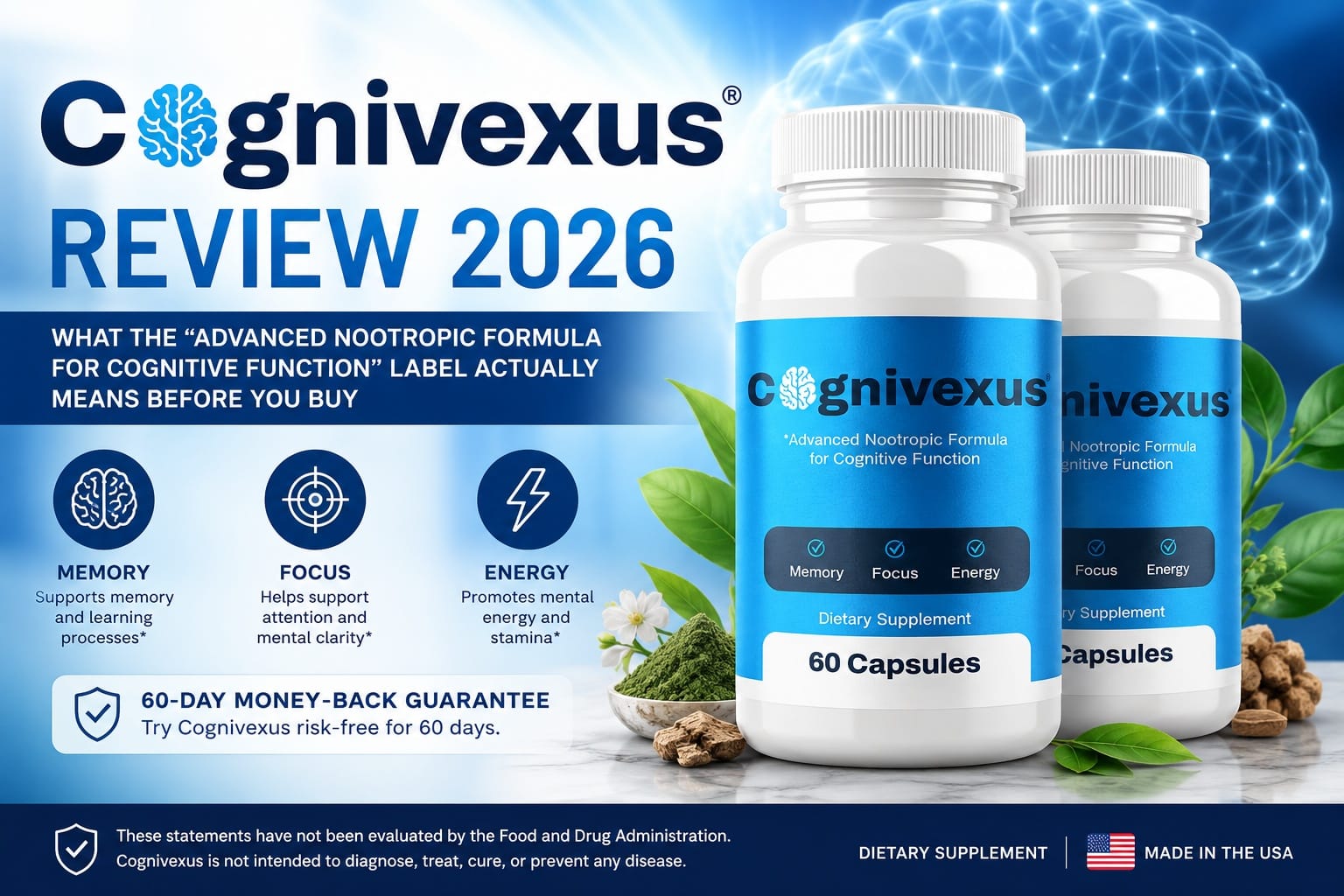
As interest in cognitive wellness support continues rising in 2026, this Cognivexus review explores how the nootropic supplement is positioned for memory, focus, and daily mental clarity support, what buyers should know about its brand-stated ingredients, and which safety, dosage, and lifestyle factors may influence individual experiences.
LARGO, FL / ACCESS Newswire / June 10, 2026 / Disclaimers: This article contains affiliate links. A commission may be earned on qualifying purchases made through links in this content, at no additional cost to the reader. Links in this article direct to an affiliate tracking page that redirects to the official Cognivexus ordering platform. Affiliate relationships do not influence editorial content or the evaluation of products. Disclosure is provided in accordance with FTC 16 CFR Part 255. This content is promotional in nature and is intended for consumer education regarding a commercially available product. This article was produced with the assistance of AI writing tools; editorial direction, factual verification, source citation, and compliance review were conducted by human editors. This AI-production disclosure is provided in accordance with FTC guidance on AI-generated content in commercial communications (FTC Endorsement Guides, 2023 revision; FTC enforcement posture as of 2025-2026). These statements have not been evaluated by the Food and Drug Administration. Cognivexus is not intended to diagnose, treat, cure, or prevent any disease. Dietary supplements are not a substitute for a varied diet, healthy lifestyle, or professional medical advice.
Cognivexus Research 2026: Ingredients, Safety & Pricing
If you've landed here wondering whether Cognivexus actually lives up to what the brand says about it, you're in the right place. This review goes through everything worth knowing before you decide: what the ingredient research says (including where it's strong and where it gets murky), what's publicly disclosed about the product and what isn't, the safety note that every buyer needs to read before ordering, and how the pricing and guarantee actually stack up. No invented stats, no cheerleading, no burying the important stuff in footnotes. Just the complete picture.
Review Current Cognivexus Details on the Official Site
Disclosure: If you buy through this link, a commission may be earned at no extra cost to you.
Before You Buy Cognivexus: 3 Things That Should Shape Your Decision Right Now
Most buyers searching for a Cognivexus review have already seen the brand's marketing. You know what the product claims to do. What you probably don't know yet are these three things - and they're the ones that actually affect whether this is the right purchase for you.
1. One ingredient in this formula has serious, well-documented interactions with prescription medications
St. John's Wort Extract - listed in the brand's published ingredient materials - interacts with antidepressants (including SSRIs, where the combination can cause serotonin syndrome), oral contraceptives (significantly reduced effectiveness), blood thinners, immunosuppressants, HIV antiretrovirals, and certain cancer treatments. The FDA issued a Public Health Advisory on St. John's Wort drug interactions in February 2000, and this is not a fringe concern - over 500 documented drug interactions exist for this ingredient. If you take any prescription medication, that conversation with your physician or pharmacist needs to happen before the purchase decision, not after. The safety section further down has the full list.
2. Per-ingredient dosages aren't publicly disclosed on the brand's website
Almost all the research on nootropic ingredients is dosage-dependent - a compound that shows benefit at 300mg may do nothing meaningful at 50mg. Because Cognivexus doesn't publish its Supplement Facts panel publicly, you can't verify whether this formula's specific doses align with the research protocols that showed positive results. That's a meaningful gap, and it's one you should close by contacting the brand directly before purchasing if ingredient dosing matters to your decision.
3. The 60-day guarantee window is slightly shorter than the research timeline for the formula's best-evidenced ingredient
Clinical trials on Bacopa Monnieri - the ingredient with the strongest research signal in this formula - typically ran 12 weeks (84 days) before measuring outcomes. The brand's guarantee runs 60 days. That's not a disqualifier, but it means if you order today and want to give Bacopa a fair evaluation against how it's actually been studied, you should start the product promptly after delivery rather than letting it sit. Every day of delay shortens your evaluation window inside the guarantee period.
Those three things are the information asymmetry that most nootropic supplement reviews don't surface. The rest of this article is the full picture - but if you're on prescription medications, please read the St. John's Wort section before anything else.
Buyer Takeaway #1: These three points aren't reasons to avoid Cognivexus - they're the decision-shaping context that makes a purchase more informed. Healthy adults not on prescription medications who contact the brand for dosage details and confirm the support channel before ordering are in the strongest position to evaluate this product fairly.
TL;DR Quick Answer: Cognivexus is a dietary supplement from Cognivexus Research that the brand describes as an "Advanced Nootropic Formula for Cognitive Function," targeting memory, focus, and energy. The formula, per the brand's published materials, includes Bacopa Monnieri, Ginkgo Biloba, L-Glutamine, DMAE Bitartrate, Green Tea Extract, St. John's Wort Extract, and B-Complex Vitamins (B6 and B12). Pricing runs $158 for two bottles, $207 for three, and $294 for six - all with free shipping and a 60-day money-back guarantee per the brand's stated terms. Per-ingredient dosages aren't publicly disclosed on the brand's website. The ingredient with the strongest research signal is Bacopa Monnieri. The ingredient requiring the most attention before you buy is St. John's Wort - it has serious, well-documented interactions with prescription medications. Read the safety section before anything else if you take any prescription drugs.
Cognivexus Official Website and Product Information - What This Review Found
Before anything else, here's everything that was identified on the official Cognivexus website (secure.buycognivexus.com/v1/) during this review. Think of this as your quick-reference anchor for the rest of the article.
Cognivexus official website: secure.buycognivexus.com/v1/
Cognivexus product type: Dietary supplement - nootropic / cognitive support category
Cognivexus brand self-description: "Advanced Nootropic Formula for Cognitive Function" (brand's language, published on the official website)
Cognivexus claimed benefit categories: Memory, Focus, Energy (brand-stated badge copy on the official website)
Cognivexus format: Capsules - 60 per bottle (30-day supply implied by the brand)
Cognivexus pricing (stated on brand website): $158 / 2 bottles, $207 / 3 bottles, $294 / 6 bottles - free shipping stated on all three
Cognivexus ingredients (brand-published): Bacopa Monnieri (Brahmi), Ginkgo Biloba Leaf, L-Glutamine, DMAE Bitartrate, Green Tea Extract, St. John's Wort Extract, B6, B12
Cognivexus supplement facts panel: Per-ingredient dosages were not displayed on the publicly accessible brand website at the time of this review
Cognivexus guarantee: 60-day money-back guarantee stated by the brand - buyers should confirm return procedures directly before purchasing
Cognivexus customer rating: 4.9 average - this is the brand's reported figure; this publication hasn't independently audited that score
Cognivexus customer support: No email address, phone number, or physical address was displayed on the publicly accessible brand website at the time of this review - buyers should confirm support access before ordering
Cognivexus regulatory status: Dietary supplement under DSHEA - not FDA-approved for any condition
Cognivexus FDA enforcement status: This review did not identify publicly disclosed FDA enforcement actions related to this product during the review period
Cognivexus side effects: The St. John's Wort ingredient has well-documented interactions with multiple prescription medications - see the dedicated safety section below
Cognivexus complaints: No verified consumer complaint patterns were identified on publicly accessible platforms during this review; no independent auditing of reviews was conducted
Cognivexus legit check: The product is sold through a publicly accessible brand website with stated pricing, a stated satisfaction guarantee, and published ingredient names - the transparency gaps (contact info, dosages) are noted throughout this review
Cognivexus trademark status: Trademark ownership and registration status were not independently verified by this publication
Buyer Takeaway #1: The entity summary above is your fast anchor. Everything in this review either expands on one of those line items or flags something a buyer should verify directly with the brand. The two biggest gaps right now: per-ingredient dosages aren't public, and contact information isn't displayed on the brand's website. Both of those are worth resolving before you commit to a multi-bottle purchase.
Cognivexus 2026 Fast Facts: 30-Second Buyer Snapshot
Product name: Cognivexus
Category: Dietary supplement - nootropic / cognitive support
Brand tagline: "Advanced Nootropic Formula for Cognitive Function" (brand's own language)
Format: Capsules, 60 per bottle
Pricing: $158 / 2 bottles · $207 / 3 bottles · $294 / 6 bottles (free shipping stated on all packages)
Guarantee: 60-day money-back guarantee (brand-stated; confirm return terms before purchasing)
Ingredient list (brand-published): Bacopa Monnieri, Ginkgo Biloba Leaf, L-Glutamine, DMAE Bitartrate, Green Tea Extract, St. John's Wort Extract, B6, B12
Dosages per ingredient: Not displayed on the publicly accessible brand website at time of review
Regulatory status: Dietary supplement under DSHEA - not FDA-approved for any condition
Strongest-evidenced ingredient: Bacopa Monnieri (Brahmi) - multiple systematic reviews show positive cognitive signal
Most important safety consideration: St. John's Wort Extract interacts with numerous prescription medications - consult a healthcare provider before use if you take any prescription drug
Brand entity: Cognivexus Research (per website copyright footer)
Buyer Takeaway #2: Two things stand out in that snapshot. First, the Bacopa Monnieri inclusion is genuinely worth something - it's one of the better-studied nootropic botanicals and has a real research signal. Second, the St. John's Wort is the item that requires a conversation with your doctor or pharmacist before you open the bottle. That's not a standard supplement caution - it's a documented pharmacological reality. The rest of this review walks through both in detail.
Review Current Cognivexus Details on the Official Site
Quick Verification Snapshot - As of June 2026
Can you verify the pricing?
Yes - $158, $207, and $294 with free shipping are listed on the official brand website at secure.buycognivexus.com/v1/ as of June 2026.
Can you verify the ingredient list?
The brand's published materials list seven core ingredients (see Fast Facts above). Per-ingredient dosages weren't displayed on the publicly accessible brand website at the time of this review. If the specific amounts matter to your decision - and for most serious buyers they should - that's a question to put directly to the brand before purchasing.
Can you verify the money-back guarantee?
The brand states a 60-day full satisfaction guarantee on its website. Specific return mechanics - where to send returns, how long refunds take to process, whether opened bottles qualify - weren't disclosed on the publicly accessible website at the time of this review. Get those details in writing before you order, especially for the larger packages.
Is Cognivexus FDA-approved?
No - and that's standard for dietary supplements, not a product-specific concern. Under DSHEA, supplements don't require FDA approval before going to market. The FDA evaluates drugs. Cognivexus carries the required FDA disclaimer and makes structure/function claims rather than treatment claims.
What's the customer support situation?
No email, phone number, or address was displayed on the publicly accessible brand website at the time of this review. This is worth resolving before a multi-bottle order.
Buyer Takeaway #3: The Quick Verification Snapshot isn't a scare tactic - it's a buyer's due-diligence list. Pricing is publicly accessible on the website. The guarantee is stated. The ingredient names are published. The gaps are real but fillable: contact the brand directly for dosages, return procedures, and support channel confirmation before you commit to the larger packages.
What Is Cognivexus? Understanding the Brand's Positioning
Cognivexus is a dietary supplement sold by Cognivexus Research and marketed under the tagline "Advanced Nootropic Formula for Cognitive Function." You're probably here because you've seen that language in the brand's ads or on their website and want to know what it actually means in practice. That's a smart question to ask.
Let's break that tagline down honestly. "Nootropic" is a category term - not a regulatory classification - that covers substances thought to support cognitive performance: memory, attention, focus, processing speed. The word has been used loosely in supplement marketing for decades, but the underlying concept is real. Some nootropic ingredients have solid research behind them. Others have very little. Cognivexus's formula spans both ends of that spectrum, which is exactly why looking at the research matters here.
"Advanced" is marketing positioning. There's no regulatory body that grades supplement formulas as "advanced" versus "basic." It signals a multi-ingredient, premium-positioned formula - which Cognivexus is - but it doesn't correspond to any clinical benchmark.
"For Cognitive Function" is DSHEA-compliant structure/function language. Under federal law, a dietary supplement can describe how a nutrient "supports" a body function without claiming to treat or cure a condition. That's the legal framework the brand is operating within, and it's worth understanding because it tells you what the brand can and can't actually promise you.
The brand's lander describes Cognivexus as helping people "sharpen their memory, enhance mental clarity, and build lasting stress resilience." That's the brand's characterization of buyer experiences they've gathered - it's testimonial-level evidence, not clinical outcome data. Individual results vary, which every honest review in this category has to say, because it's genuinely true.
Buyer Takeaway #4: Understanding what supplement marketing language does and doesn't mean isn't pessimism - it's just being an informed buyer. "Advanced Nootropic Formula for Cognitive Function" is legal, compliant product positioning. It's the brand's way of telling you what category this product is in and what support it's designed for. Whether it works for you personally depends on your individual chemistry, the specific dosages in the formula (not yet public), and consistency of use - none of which any marketing language can guarantee.
About the Ingredients: What the Research Shows and Where the Gaps Are
Here's something that matters before you read the ingredient-by-ingredient breakdown: almost all the research on nootropic ingredients is dosage-dependent. A compound that shows benefit at 300mg may not produce the same effect at 50mg. Because Cognivexus doesn't publicly disclose per-ingredient dosages on its website, this review covers the research at the ingredient-category level. It can't confirm whether Cognivexus's specific formulation aligns with the doses that produced positive research results. That distinction is important, and it's worth flagging upfront rather than burying.
With that context set, here's what the research actually shows for each ingredient in the brand's published formula.
Bacopa Monnieri (Brahmi) - The Strongest Signal in the Formula
If you're evaluating Cognivexus partly because you've heard good things about Bacopa, that instinct is well-founded. Bacopa is one of the better-evidenced nootropic botanicals in the research literature, and it's the ingredient in this formula with the most credible case behind it.
Here's what the science actually shows: a 2024 systematic review analyzed 22 clinical trials across multiple populations and found positive cognitive signal from Bacopa treatment. StatPearls (NCBI) describes documented improvements in verbal learning, delayed word recall, memory acquisition, and anxiety reduction across multiple trials. The most common research protocol used standardized extracts at 300-450mg daily over 12-week periods. The research community's honest conclusion is that the signal is real but larger, longer-term studies are still recommended - which means Bacopa is promising, not proven in the pharmaceutical sense.
What that means for a buyer: Bacopa's presence in a nootropic formula isn't a gimmick. It's an ingredient with a legitimate research trail. Whether Cognivexus's undisclosed dose matches the trial protocols is the question you can't answer without the Supplement Facts panel. References to neurodegenerative disease populations in the cited research describe the trial groups studied - they are not claims made about Cognivexus.
Ginkgo Biloba Leaf - Where the Research Gets Complicated
Ginkgo is one of the most recognized botanical names in the world, and it's in a huge percentage of nootropic formulas. But here's what the NIH's own supplement research division actually says about it - and this is worth reading carefully if Ginkgo is part of why you're considering this product.
The National Center for Complementary and Integrative Health (NCCIH) states there is no conclusive evidence that Ginkgo biloba is efficacious in preventing or slowing dementia or cognitive decline. The Ginkgo Evaluation of Memory (GEM) study - one of the largest placebo-controlled botanical trials ever run, involving more than 3,000 older adults - found Ginkgo ineffective in reducing dementia incidence. A separate systematic review concluded there was no convincing evidence that Ginkgo biloba improved cognitive performance in healthy people under 60. Some research does suggest potential modest benefit for mild dementia symptoms at high doses (240mg/day) over extended periods, but even that evidence is described by researchers as inconsistent.
The honest picture: Ginkgo's name recognition in nootropic marketing far exceeds what the peer-reviewed evidence supports for healthy adult cognitive enhancement. That doesn't automatically disqualify a formula that includes it - but buyers whose interest in Cognivexus is significantly driven by the Ginkgo component should factor the NCCIH's position into their decision. Note: references to dementia and Alzheimer's disease in this section describe the populations studied in the cited research - they are not claims made about Cognivexus, which is a dietary supplement and not intended to diagnose, treat, cure, or prevent any disease.
L-Glutamine - A Sound Inclusion with Limited Direct Cognitive Evidence
L-Glutamine is the most abundant amino acid in the bloodstream and serves as a precursor for glutamate, an important excitatory neurotransmitter. The brand describes it accurately as supporting brain signaling. The honest context: L-Glutamine's most established clinical applications are in gut health and recovery from intense physical stress - not cognitive enhancement in healthy adults specifically. The cognitive angle is theoretically grounded but hasn't been the primary focus of well-powered human trials. It's a safe, well-understood amino acid with legitimate nutritional value. Just don't expect it to be the primary driver of cognitive effects in this formula.
DMAE Bitartrate - A Commonly Marketed Ingredient with a Disputed Mechanism
DMAE shows up in a lot of nootropic stacks marketed for cognitive support, usually with the claim that it boosts acetylcholine production. Here's the issue: that primary mechanism is disputed in the research literature. Per independent reviews and NIH sources, DMAE is structurally similar to choline but is not a confirmed direct precursor to acetylcholine in the brain. Well-designed placebo-controlled studies have yielded largely negative results for its use in cognitive enhancement and Alzheimer's-related conditions.
Some researchers propose alternative mechanisms - membrane stabilization, antioxidant activity, and potentially sparing blood choline for brain use - that might explain subjective effects some users report. But the acetylcholine-boosting narrative the brand applies is the mechanism the research most consistently challenges.
What this means practically: DMAE is generally considered safe at standard supplement doses for healthy adults. It's just that the reason it might do something is probably not what most brands say it does. Understanding that gap between marketing narrative and research reality is part of what this review is here for.
Green Tea Extract - One of the Better-Supported Inclusions
Green Tea Extract brings two things to a cognitive formula: L-theanine and caffeine (via EGCG catechins and natural caffeine content). L-theanine has a reasonably solid research profile for promoting relaxed alertness, particularly in combination with caffeine. That combination is one of the more consistently supported cognitive pairings in supplement research. EGCG also has antioxidant properties with some preclinical neuroprotective signal.
The key thing to know: Green Tea Extract contains caffeine. The exact quantity isn't disclosed in Cognivexus's public materials. If you're sensitive to stimulants, or you're stacking this with coffee or other caffeinated products, that's a variable worth tracking. It's not a red flag - it just affects how the formula sits in your daily routine.
St. John's Wort Extract - Read This Before Anything Else If You Take Prescription Medication
If you take any prescription medication, this section is the one to read carefully before purchasing any supplement that contains St. John's Wort - including Cognivexus.
St. John's Wort (Hypericum perforatum) is described by the brand as supporting "positive mood and emotional well-being" - and for mild-to-moderate mood support, a 2008 Cochrane review of 29 studies did find it comparable to antidepressants in certain contexts. The mood-support positioning isn't invented. But the drug interaction profile of this ingredient is one of the most extensively documented in herbal pharmacology, and it matters enormously depending on what else you're taking.
St. John's Wort works in part by inducing the CYP3A4 enzyme system - which affects how your body processes a wide range of medications. The FDA issued a Public Health Advisory specifically on this in February 2000, alerting healthcare providers to interaction risks with HIV medications, transplant rejection drugs, and oral contraceptives metabolized through that pathway. According to clinical drug interaction databases, over 500 documented drug interactions exist for this ingredient. The specific documented interactions include: antidepressants and SSRIs (the combination can trigger serotonin syndrome, a serious and potentially dangerous condition); oral contraceptives (significantly reduced effectiveness - a real-world concern that gets under-discussed in supplement marketing); immunosuppressants including cyclosporine; HIV antiretrovirals; anticoagulants including warfarin; certain cancer treatments; and others. This isn't a theoretical concern - it's a well-established pharmacological reality with a 25-year regulatory paper trail.
If you take any prescription medication, a conversation with your prescribing physician or pharmacist isn't optional before using Cognivexus. It's the responsible next step. If you're pregnant or breastfeeding, St. John's Wort isn't recommended. If you have bipolar disorder or schizophrenia, it should be avoided. These aren't caveats buried at the end of a disclosure - they're the first things worth knowing.
Buyer Takeaway #5: The St. John's Wort drug interaction profile is real, well-documented, and affects a substantial portion of the adult population who take prescription medications. If you're clear of all the above - no prescription meds, not pregnant, no relevant health conditions - the rest of the review applies cleanly to your situation. If any of those apply, start with a healthcare provider conversation before you start with a purchase decision.
Review Current Cognivexus Details on the Official Site
B-Complex Vitamins (B6 and B12) - Sound, Straightforward, Well-Understood
B6 and B12 are essential vitamins with documented roles in neurological health and energy metabolism. B12 deficiency specifically is associated with cognitive concerns, and B12 levels decline with age for many adults (particularly those on plant-based diets or older than 50). Supplemental B vitamins won't produce dramatic nootropic effects in well-nourished adults without deficiencies, but they're nutritionally sound, well-tolerated, and a reasonable inclusion in a cognitive support formula. No safety concerns at standard doses for most adults.
Buyer Takeaway #6: The formula covers a real range - from Bacopa (genuinely positive research signal) to Ginkgo (mixed-to-negative for healthy adult cognition per NCCIH) to DMAE (disputed mechanism) to St. John's Wort (mood support evidence, serious interaction profile) to B vitamins (nutritionally solid). That's the honest ingredient map. A good nootropic stack doesn't have to have perfect evidence on every ingredient to be worth trying - but you should know where the strong and weak links are before you spend money on it.
What the Research Actually Says About Nootropic Supplements as a Category
It helps to zoom out for a moment, because the broader research context matters for setting realistic expectations about any product in this category - including Cognivexus.
The National Center for Complementary and Integrative Health - the NIH division specifically charged with evaluating the science on complementary health approaches - has published a clear institutional position: research on dietary supplements for cognitive function is mixed, and it's not yet possible to say with certainty that any supplement boosts cognition or prevents dementia. That's not a fringe view or a pessimistic outlier. That's the considered position of the research institution that funds and reviews this evidence base.
At the same time, "mixed evidence" doesn't mean "no effect for anyone." It means individual response varies significantly, trials show inconsistent results across populations, and the science hasn't yet produced the kind of confident outcome predictions you'd get from a well-studied pharmaceutical. Some people who try nootropic supplement stacks notice meaningful differences. Others don't. The variables that predict which group you'll be in - your baseline nutrient status, your genetics, your sleep quality, your stress levels, your specific dosage - aren't things you can fully control or predict in advance.
What a dietary supplement can offer that a pharmaceutical often can't: a lower regulatory barrier to trying it, a reasonable price point, and - in the case of Cognivexus - a money-back guarantee that makes the financial risk manageable if you don't notice anything.
Buyer Takeaway #7: If you need certainty before you try something, the nootropic supplement category in general - and Cognivexus specifically - can't deliver that. If you're comfortable with the uncertainty, have addressed the safety considerations, and want to run a personal experiment with financial downside limited by a money-back window, that's a reasonable framework for a decision.
Does Cognivexus Work?
Quick Answer: Cognivexus is a dietary supplement, not an FDA-approved drug, and no dietary supplement goes through FDA efficacy review before reaching the market. The brand's published materials include testimonial-level buyer experiences around improved focus, sharper recall, and mental clarity. The formula's strongest ingredient - Bacopa Monnieri - has a genuine research signal for certain memory parameters, particularly verbal learning and delayed word recall. Whether it works for you specifically depends on your individual biochemistry, your baseline, and the formula's undisclosed per-ingredient dosages. Individual results vary significantly. The 60-day money-back guarantee exists precisely because individual response in this category is variable - it's the mechanism that makes trying the product a lower-stakes decision.
Here's the honest cost-benefit read: the strongest argument for trying Cognivexus if you're in the target market is Bacopa's research profile, Green Tea Extract's reasonable evidence for relaxed alertness, and the B vitamin nutritional foundation - combined with a 60-day window to evaluate your personal response. The weakest link in the evidence chain is DMAE's disputed mechanism and Ginkgo's mixed-to-negative evidence for healthy adult cognition per NCCIH's published position.
Customer ratings and testimonials are brand-reported, not independently audited by this publication. Individual experiences vary.
Buyer Takeaway #8: The contact information gap matters most at the $207 and $294 price points. Before you commit to a 3- or 6-bottle order, spending five minutes verifying that a support channel exists and responds is worth it. A brand standing behind a 60-day money-back guarantee should have a reachable support team.
Who Is Cognivexus For - and Who Should Consult a Doctor First
Not every supplement fits every buyer's situation, and being direct about that actually helps the right people make the right call faster.
Cognivexus may be worth exploring if you're: A generally healthy adult not currently taking prescription medications, specifically interested in a multi-ingredient botanical nootropic stack, drawn to Bacopa Monnieri's research profile, comfortable with the supplement category's inherent outcome uncertainty, and working within a 60-day evaluation window to assess your personal response.
Physician or pharmacist consultation is strongly recommended before use if you: Take any prescription medication - especially SSRIs, MAOIs, tricyclics, oral contraceptives, blood thinners (including warfarin), immunosuppressants (including cyclosporine), antiretroviral medications for HIV, or cancer treatments. The St. John's Wort interaction profile makes this a genuine safety priority, not a boilerplate caution. You're also in this group if you're pregnant or breastfeeding, managing bipolar disorder, schizophrenia, or epilepsy, or have significant liver or kidney conditions.
Quick Answer - Is Cognivexus safe for everyone?
No. The St. John's Wort Extract in Cognivexus has well-documented, clinically significant interactions with numerous prescription drug classes. Healthy adults not taking prescription medications represent the primary population for whom this product appears designed. Anyone taking prescription medications, pregnant or breastfeeding, or managing a diagnosed mood disorder or epilepsy should consult a licensed healthcare provider before use. Green Tea Extract also contributes caffeine at an undisclosed quantity, relevant for stimulant-sensitive buyers. These are category-level safety advisories that apply to any supplement containing these ingredients, not concerns unique to Cognivexus specifically.
Buyer Takeaway #9: If you're not on any prescription medications and you're a healthy adult looking for a botanical nootropic stack - Cognivexus's ingredient profile, pricing, and 60-day window make it a reasonable candidate to evaluate. If you are on prescription medications, start with your prescribing physician, not with a purchase decision. That order matters.
Cognivexus Pricing: A Straight Look at What Each Package Costs
Three packages are offered through the brand's website, all with free shipping stated:
The Basic Package is $158 for two bottles. The brand lists a retail reference value of $358, calling it a $200 saving. At an implied 30-day supply per bottle, this covers approximately 60 days. Per-day cost: roughly $2.63.
The Most Popular Package is $207 for three bottles. Brand-stated retail reference: $537, implied $330 saving. Covers approximately 90 days. Per-day cost: roughly $2.30.
The Best Value Package is $294 for six bottles. Brand-stated retail reference: $1,074, implied $780 saving. Covers approximately 180 days. Per-day cost: roughly $1.63.
Important pricing note: Comparison "before" prices ($358, $537, $1,074) are the brand's stated reference figures and may not reflect prevailing market prices. These are brand-asserted for comparison purposes. Final totals at checkout may include applicable taxes based on your jurisdiction. Confirm the final all-in cost at checkout before completing any purchase.
One observation worth making: the per-day cost difference between the Basic ($2.63/day) and Best Value ($1.63/day) packages is meaningful over a 6-month horizon - about $180 in savings if you end up using the full supply. The 60-day guarantee doesn't cover the full 6-bottle period (that's 180 days of supply), so if you're uncertain about your response, starting with the 2-bottle package and the guarantee window makes more economic sense than committing to 180 days upfront.
See Current Cognivexus Packages and Pricing at the Official Website
Buyer Takeaway #10: The 2-bottle package is the lower-risk starting point if you're trying Cognivexus for the first time. It gives you the full 60-day evaluation window at the lowest financial commitment. Move to the bulk packages once you've confirmed the product works for your situation.
The 60-Day Guarantee: What the Brand States and What to Confirm
The brand's website states: "We're so confident you'll achieve incredible results that we back Cognivexus with a 100% satisfaction guarantee for 60 days. If after several weeks or even months you're not completely satisfied, we'll refund your money in full."
That's the commitment as stated. Here's what wasn't displayed on the publicly accessible website at the time of this review, and what you should confirm before ordering:
The return address wasn't listed publicly. The refund processing timeline wasn't stated. Whether the guarantee applies to opened or partially used bottles wasn't specified. Who covers return shipping costs wasn't disclosed. Whether the 60-day period starts from the purchase date or delivery date wasn't specified.
Here's the math that most buyers don't think about until after they've ordered: if you order the 6-bottle package ($294) without confirming the return procedure first, you've committed to a 180-day supply on a guarantee window that runs 60 days. The 120 days of supply outside the guarantee window are yours regardless of your response. That's not a reason to avoid the product - it's the specific reason to start with the 2-bottle package if you have any uncertainty about your personal response, and it's the reason to confirm the return procedure before you order any package. None of that is pressure. It's the actual math of how the guarantee structure works.
And one more timing consideration worth naming directly: if you're ordering partly because of the Bacopa research, the most relevant clinical trial protocols ran 12 weeks. Your 60-day window runs 60 days. Start the product promptly after it arrives - every week you delay is a week you're evaluating inside a shorter window relative to how that research was designed.
Buyer Takeaway #11: The 60-day window is meaningful - it covers roughly two months of consistent use. Confirm the return procedure in writing before ordering, start promptly after delivery, and if you have uncertainty about your personal response, the 2-bottle entry package is the right financial frame.
How to Read Cognivexus's Marketing Language Without Getting Misled
Every supplement brand uses a marketing vocabulary that's designed to sound more certain than the underlying evidence allows. Here's a straight translation of the language Cognivexus uses on its website - not to tear down the brand, but to make sure you're reading the claims the way they're actually meant to be understood.
"The Leading Choice for Cognitive Performance" is brand-asserted marketing language. "Leading" doesn't reference a defined ranking system, a comparative analysis, or a clinical benchmark. It's a competitive positioning claim.
"Our formula has helped countless people sharpen their memory, enhance mental clarity, and build lasting stress resilience" - "Countless" is immeasurable, and this framing reflects the brand's collection of buyer testimonials, not clinical outcome data. Individual results vary significantly.
"Within days, you may notice improved focus, sharper recall, and a calmer sense of clarity" - the "may" is doing important legal and factual work here. It's appropriately hedged DSHEA language. The "within days" timeline is more optimistic than the 12-week protocols that showed results for Bacopa in clinical settings. Some people may notice something sooner; the research base doesn't support "days" as the expected timeline for botanical nootropic effects.
"Average Customer Rating 4.9" - this is the brand's reported figure. Customer ratings and testimonials are brand-reported and not independently audited by this publication.
"100% Satisfaction or Your Money Back" - this is a refund commitment, not a performance guarantee. It means the brand commits to refunding you if you're not satisfied. It doesn't guarantee satisfaction will occur. The guarantee is the financial risk management mechanism - an important and real consumer protection, but not the same thing as evidence of outcome certainty.
Buyer Takeaway #12: Marketing language is designed to persuade. That's its function. The translation above isn't a hit on the Cognivexus brand - this is standard supplement marketing vocabulary. Understanding it lets you evaluate what the brand is actually committing to versus what it's positioning for, and those are two different things.
Cognivexus vs. Other Nootropic Supplements: The Right Comparison Framework
If you're evaluating Cognivexus alongside other nootropic stacks, here's a comparison framework that doesn't require picking on specific competitors - it just applies consistent criteria to whatever products you're comparing.
Ingredient transparency: Does the product publish a full Supplement Facts panel with per-ingredient dosages? Cognivexus doesn't display this publicly. Some competing products do. If you want to evaluate ingredients against research doses, dosage disclosure matters significantly.
Evidence quality of key ingredients: Look up the primary ingredients against NCCIH and PubMed. Not all nootropic ingredients have the same research profile. Bacopa's evidence is meaningfully stronger than Ginkgo's for healthy adult cognition. DMAE's mechanism is contested. These distinctions hold regardless of which brand you're evaluating.
Support accessibility before purchasing: Can you find the brand's customer service? Cognivexus doesn't display contact information publicly on its main website. Some competitors publish email addresses, phone numbers, and physical addresses.
Guarantee window: 60-day, 90-day, and 180-day guarantee windows represent meaningfully different risk profiles. Cognivexus's 60-day window is standard for the category.
Third-party testing documentation: Some brands publish Certificates of Analysis from independent labs. Cognivexus doesn't display third-party testing documentation on its publicly accessible website.
Buyer Takeaway #13: The most honest comparison isn't Cognivexus versus a named competitor - it's Cognivexus versus your personal purchase criteria. Define what matters to you: full ingredient transparency, the longest possible return window, third-party testing evidence, or the most accessible customer service. Evaluate any supplement against those criteria, not the brand's own framing.
What This Review Is Honest Enough to Acknowledge About Cognivexus
A review that's genuinely useful has to name the things that give a careful buyer pause, not just the things that support a purchase decision.
The dosage gap is real and it matters
Almost all the research on nootropic ingredients is dosage-dependent - the same compound can show benefit at one dose and do nothing meaningful at another. Because Cognivexus doesn't publish per-ingredient dosages on its website, this review can't tell you whether the formula's specific doses align with the research protocols that produced positive results. That's a meaningful limitation on what any honest review of this product can tell you.
The absence of contact information deserves attention
A brand that commits to a 60-day money-back guarantee should have a findable support channel. Buyers should test this before committing to a multi-bottle purchase - not to assume the worst, but to verify the guarantee is actually accessible if you need it.
The "Cognivex" vs. "Cognivexus" discrepancy in source materials
The product brief used to research this article listed ingredients under the spelling "Cognivex" - a separately branded product - rather than "Cognivexus." All ingredient information in this review is attributed to "the brand's published materials" rather than independently verified against a current Supplement Facts label. If you want to confirm today's label reflects the ingredient list described here, that's a reasonable verification to request directly from the brand.
The NCCIH position on Ginkgo is not a fringe view.
When the NIH's complementary health division says there's no conclusive evidence that an ingredient prevents cognitive decline, that's the institutional research position of the most authoritative source on this topic in the United States. It belongs in any honest ingredient evaluation, and it's included here because omitting it would be doing you a disservice.
Buyer Takeaway #14: The four points above represent what a responsible review owes you. This article can't tell you whether Cognivexus's dosages match the research. It can't tell you whether you'll experience the outcomes the brand describes. It can tell you the evidence picture, the confirmed product details, the transparency gaps, and what the safety considerations are. That's the complete picture.
Cognivexus Complaints: What to Look For and How to Evaluate Them
Any buyer doing thorough research is likely to search for "Cognivexus complaints" alongside the standard review queries - and that's a smart instinct. Here's an honest framework for evaluating what you find.
No verified consumer complaint patterns specific to Cognivexus were identified on publicly accessible third-party platforms during this review. That's a data point, not a clean bill of health - it partly reflects the fact that Cognivexus is a newer brand without extensive third-party review coverage yet. The absence of complaints isn't the same thing as confirmed positive consumer experience across a large buyer base.
When you're evaluating any supplement complaint patterns - for Cognivexus or any comparable product - here's what to look at critically. Verified-purchase reviews carry meaningfully more weight than unverified ones. Specific, detailed accounts of product experience or customer service interactions are more useful than generic sentiment. Complaints that cluster around a specific issue (refund difficulty, ingredient mismatch, shipping problems) are more informative than scattered one-star ratings. Conversely, clusters of suspiciously similar five-star reviews are worth scrutinizing too - the FTC's 2024 fake review rule exists because inflated review profiles are a documented problem in the supplement category.
The two categories of complaint most worth watching for in any supplement brand: difficulty accessing the stated money-back guarantee (which is why verifying the support channel before purchasing matters), and ingredient or product description discrepancies (which is why requesting the Supplement Facts panel before ordering is a reasonable step). Both of those due-diligence checks are covered in the buyer checklist above.
Buyer Takeaway #18: The absence of a large complaint record for Cognivexus reflects its early market stage more than anything else. Do your due diligence anyway: verify the support channel responds, get return procedures in writing, and start with the smaller package. Those steps protect you regardless of what any complaint search does or doesn't turn up.
Cognivexus Buyer Checklist: 12 Questions Before You Order
1. Medication check: Are you taking any prescription medications - particularly antidepressants, SSRIs, oral contraceptives, blood thinners, immunosuppressants, antiretrovirals, or cancer treatments? If yes, have you discussed St. John's Wort compatibility with your prescribing physician or pharmacist?
2. Supplement Facts request: Have you requested per-ingredient dosages from the brand? They're not on the public website, but the brand should be able to provide them.
3. Support channel verification: Have you confirmed a responsive customer support channel exists before committing to the larger packages?
4. Return procedure confirmation: Do you have the return address, return process, and refund processing timeline in writing?
5. Timeline alignment: Have you noted that the 60-day guarantee window is slightly shorter than the 12-week Bacopa trial protocols?
6. Caffeine awareness: Are you aware that Green Tea Extract contributes caffeine at an undisclosed quantity?
7. Evidence expectations: Have you read the NCCIH evidence positions on Ginkgo and Bacopa and calibrated your expectations accordingly?
8. Pricing transparency: Do you understand that the "retail value" comparison figures are brand-stated reference points and may not reflect independently verified market prices?
9. Starting package logic: Have you considered starting with the 2-bottle package to evaluate your personal response within the guarantee window before committing to the 6-bottle supply?
10. Health status fit: Are you a generally healthy adult, not pregnant or breastfeeding, and not managing a diagnosed mood disorder, epilepsy, or bipolar condition?
11. Purchase channel: Are you purchasing through the official brand website to ensure the stated guarantee terms apply?
12. Outcome framework: Have you defined what "working" means for you - and accepted that individual response to botanical nootropics varies significantly?
Buyer Takeaway #15: This checklist isn't meant to be discouraging - it's the difference between a considered trial and an impulse purchase in a category where considered trials produce better outcomes. If you can check all twelve boxes, you're making this decision with your eyes open.
Where to Find Cognivexus and How to Start
At the time of this review, Cognivexus was offered through the brand's official website. Buyers may wish to review the terms associated with any purchase channel before ordering to ensure the stated guarantee and return terms apply.
If you've worked through the safety considerations above and you're ready to evaluate the product, here's the practical starting recommendation: the 2-bottle Basic Package gives you the full 60-day evaluation window at the lowest financial commitment. That's the right entry point for a first trial - particularly since the Bacopa research was conducted over 12-week periods, and you'll want to give it adequate time within your guarantee window.
Check Cognivexus Package Options, Current Pricing, and Guarantee Terms Here
Buyer Takeaway #16: Start with the 2-bottle package if this is your first time with Cognivexus. The per-day cost is slightly higher than the bulk options, but your financial exposure is lower and you stay fully within the guarantee window for evaluation. Scale up once you've confirmed it works for you.
Final Read: What This Review Can and Can't Tell You
Here's the honest bottom line, said plainly.
What this review can tell you: Pricing is stated on the brand's website. The ingredient list is published in the brand's materials. Bacopa Monnieri has a genuinely positive research signal in the nootropic category. Ginkgo's evidence for healthy adult cognition is mixed-to-negative per NCCIH's published position. DMAE's primary mechanism claim is disputed. St. John's Wort has serious, well-documented prescription medication interactions that require physician consultation if you take any prescription drugs. The 60-day money-back guarantee is stated but its mechanics need to be confirmed directly with the brand. Per-ingredient dosages and contact information aren't displayed on the public website.
What this review can't tell you: Whether Cognivexus's specific dosages align with the research that showed benefit. Whether you'll notice any personal effect from the formula. Whether the outcomes the brand describes in its testimonials will reflect your experience.
The bridge between those two paragraphs is the 60-day guarantee - the mechanism that makes this a lower-stakes personal experiment rather than a high-commitment leap of faith. That's what a money-back guarantee is actually for in a supplement category where individual response is genuinely variable.
Buyer Takeaway #17: If you're a healthy adult not on prescription medications, the safety box is checked. If you've verified the support channel and gotten the return procedure in writing, the risk box is managed. If your expectations are calibrated to the ingredient evidence rather than the marketing copy, the expectation box is set correctly. From that position, trying Cognivexus is a reasonable personal experiment in a category where reasonable personal experiments are how you figure out what works for your specific situation.
Cognivexus FAQ: What Buyers Actually Want to Know
What is Cognivexus and what does the brand claim it does?
Cognivexus is a dietary supplement positioned by Cognivexus Research as an "Advanced Nootropic Formula for Cognitive Function" targeting memory, focus, and energy. As a dietary supplement under DSHEA, it makes structure/function claims rather than disease treatment claims. The brand describes buyer outcomes including "improved focus, sharper recall, and a calmer sense of clarity" - language reflecting curated buyer experiences rather than clinical trial outcomes. Individual results vary. These statements haven't been evaluated by the FDA, and Cognivexus isn't intended to diagnose, treat, cure, or prevent any disease.
What are the ingredients in Cognivexus?
Per the brand's published materials, Cognivexus contains Bacopa Monnieri (Brahmi), Ginkgo Biloba Leaf, L-Glutamine, DMAE Bitartrate (Dimethylaminoethanol), Green Tea Extract, St. John's Wort Extract, and B-Complex Vitamins (B6 and B12). Per-ingredient dosages weren't displayed on the publicly accessible brand website at the time of this review. Buyers who want to evaluate specific dose amounts should contact the brand for the complete Supplement Facts panel before purchasing.
Is Cognivexus FDA-approved?
No - but that's standard regulatory status for dietary supplements, not a product-specific concern. Under DSHEA (the Dietary Supplement Health and Education Act), supplements are regulated differently from pharmaceutical drugs. The FDA doesn't evaluate dietary supplements for safety or efficacy before they reach the market. Cognivexus carries the required FDA disclaimer: "These statements have not been evaluated by the Food and Drug Administration. This product is not intended to diagnose, treat, cure, or prevent any disease." This review did not identify publicly disclosed FDA enforcement actions related to this product during the review period.
How much does Cognivexus cost?
Three packages are listed on the brand's website: two bottles for $158, three bottles for $207, and six bottles for $294. All three include free shipping per the brand's stated terms. Comparison "before" prices listed by the brand ($358, $537, $1,074) are brand-stated reference figures that may not reflect prevailing market prices. Confirm the final total at checkout, as applicable taxes vary by jurisdiction.
What is the Cognivexus money-back guarantee?
The brand states a 60-day 100% satisfaction money-back guarantee. Specific return procedures - return address, processing timeline, return shipping responsibility, and whether partially used bottles qualify - weren't disclosed on the publicly accessible website at the time of this review. Confirm the complete return procedure with the brand before purchasing, particularly for the larger packages.
Does Cognivexus work?
Cognivexus is a dietary supplement and doesn't carry FDA-reviewed efficacy data. The formula's strongest-evidenced ingredient is Bacopa Monnieri, which has shown positive signals for verbal learning and delayed word recall across multiple systematic reviews - though the research community recommends larger, longer trials. Ginkgo Biloba has inconsistent evidence and NCCIH's position is that there's no conclusive evidence it prevents cognitive decline. Individual response to botanical nootropics varies significantly based on baseline health, diet, sleep, and other factors. The 60-day money-back guarantee provides a practical evaluation window.
What are the side effects of Cognivexus?
The most significant safety consideration is the St. John's Wort Extract component. St. John's Wort has well-documented interactions with numerous prescription medications: SSRIs and other antidepressants (risk of serotonin syndrome), oral contraceptives (reduced effectiveness), immunosuppressants, anticoagulants including warfarin, HIV antiretrovirals, and certain cancer medications. The FDA has issued advisory communications on these interactions. Anyone taking prescription medications should consult their prescribing physician or pharmacist before using Cognivexus. Green Tea Extract contributes caffeine at an undisclosed quantity - relevant for stimulant-sensitive buyers. DMAE should be avoided by people with epilepsy, bipolar disorder, or schizophrenia, and by those taking medications that affect acetylcholine levels. These are not rare edge-case concerns - they affect a substantial portion of adults.
Is Cognivexus a scam?
Cognivexus is a dietary supplement sold through a publicly accessible brand website with stated pricing and a stated 60-day money-back guarantee. This review did not identify publicly disclosed FDA enforcement actions related to this product during the review period. The transparency gaps noted throughout - no contact information displayed publicly, no Supplement Facts dosages on the public website - are real limitations buyers should verify before purchasing. "Scam" isn't the right framing; the product exists, it's sold at stated prices, and a refund mechanism is stated. The responsible approach is to verify the support channel, confirm the return process, and start with the smaller package if you have uncertainty about your response.
Where is Cognivexus made?
Manufacturing country and facility details for Cognivexus weren't disclosed on the publicly accessible brand website at the time of this review. The brand website includes badge imagery that appears to reference GMP compliance and "All Natural" designations, but specific manufacturing certifications and facility location weren't disclosed in the brand's publicly accessible materials. Buyers for whom manufacturing origin or third-party testing documentation is a purchase criterion should contact the brand directly before ordering.
How long before Cognivexus works?
The brand's website suggests buyers "may notice improved focus, sharper recall, and a calmer sense of clarity" within days of starting use. For context from the ingredient research: clinical trials on Bacopa Monnieri - the formula's best-evidenced ingredient - typically ran for 12 weeks (approximately 84 days) before measuring outcomes. Most researchers recommend consistent use over at least 8-12 weeks before drawing conclusions. This is relevant given that Cognivexus's stated 60-day guarantee window is somewhat shorter than the 12-week Bacopa trial protocol. Start the product promptly after delivery to maximize your evaluation time within the guarantee period.
Who makes Cognivexus?
The copyright footer on the brand's website identifies the entity as "Cognivexus Research 2026." No additional operator details - registered business name, principal address, or state of incorporation - were displayed on the publicly accessible brand website at the time of this review. Trademark ownership and registration status were not independently verified by this publication.
Can I take Cognivexus with other supplements?
The primary interaction concern is St. John's Wort with prescription medications - covered in detail in the dedicated safety section above. Among common supplements: combining Cognivexus with other caffeinated products would stack with the Green Tea Extract's caffeine contribution. DMAE may interact with medications or supplements that affect acetylcholine levels. If you're combining Cognivexus with other nootropics or supplements, reviewing the combined ingredient profile with a healthcare provider is a sensible step, especially if any prescription medications are involved.
Is Cognivexus the same as Cognivex?
No - "Cognivexus" (sold at secure.buycognivexus.com/v1/, branded as "Cognivexus Research 2026") and "Cognivex" (a separately branded supplement available through various third-party retailers) appear to be distinct products from different brand owners. The name similarity can cause search confusion. Buyers should verify they're purchasing the intended product from the correct website, and confirm the current ingredient list directly with the brand before ordering.
Does Cognivexus help with brain fog?
The brand positions Cognivexus under memory, focus, and energy support - which overlaps with the experiential description of "brain fog" that many buyers in this category describe. The ingredient most consistently associated with reducing cognitive fatigue in the research literature is Bacopa Monnieri, which has shown positive signals for mental clarity parameters in multiple trials. Green Tea Extract's L-theanine component also has research support for promoting relaxed alertness. Whether the formula addresses your specific experience of brain fog depends on your personal situation and the undisclosed per-ingredient dosages. Cognivexus isn't evaluated or approved by the FDA for any medical condition, including cognitive impairment or brain fog.
Can seniors take Cognivexus?
Some Cognivexus ingredients have been studied in older adult populations - Bacopa has clinical trial data across multiple age groups, including older adults, with some positive signals. B12 is particularly relevant for seniors, since B12 absorption decreases with age and deficiency is associated with cognitive concerns. However, the St. John's Wort interaction profile is especially important in this demographic, which is more likely to be managing multiple prescription medications simultaneously. Seniors considering Cognivexus should review the full medication interaction profile with a prescribing physician before use. Don't skip that step.
What's the best way to decide whether to try Cognivexus?
Work through the 12-item buyer checklist above. The most practical sequence: first, confirm you're clear of the St. John's Wort medication interaction risk (or have physician clearance). Second, contact the brand to request the Supplement Facts panel and confirm the support channel is responsive. Third, confirm the return procedure before ordering. If those three boxes are checked and you're a generally healthy adult whose expectations are calibrated to the supplement category's inherent uncertainty, the 2-bottle package plus the 60-day guarantee is a reasonable evaluation framework.
Is Cognivexus available in stores?
At the time of this review, the product was offered through the brand website reviewed at secure.buycognivexus.com/v1/. No retail store or third-party marketplace availability was identified during this review. Buyers may wish to verify any purchase channel's return terms before ordering, as third-party resellers may not honor the brand's stated guarantee terms.
Does Cognivexus have caffeine?
Yes - Green Tea Extract, one of Cognivexus's listed ingredients, is a natural source of caffeine. The specific caffeine quantity per serving isn't disclosed on the brand's publicly accessible website at the time of this review. Buyers sensitive to caffeine, or who consume other caffeinated products regularly, should factor the undisclosed caffeine contribution into their decision. Contact the brand for the Supplement Facts panel to get a specific per-serving figure before purchasing if this matters to your decision.
How does Cognivexus work as a nootropic supplement?
Cognivexus positions its formula as a multi-ingredient botanical nootropic supplement supporting cognitive function through several mechanisms, depending on the specific ingredient: Bacopa Monnieri is associated with supporting memory and verbal learning through bacosides (active compounds); Green Tea Extract provides L-theanine for relaxed alertness and caffeine for stimulant-type alerting; B vitamins support neurological function and energy metabolism; St. John's Wort is positioned for mood and emotional well-being support; DMAE is marketed as supporting acetylcholine (though that specific mechanism is disputed in research); Ginkgo Biloba is positioned as supporting blood flow to the brain. The combined effect across all ingredients at their specific (undisclosed) doses is what determines the formula's overall performance for any individual buyer. These statements haven't been evaluated by the FDA, and Cognivexus isn't intended to diagnose, treat, cure, or prevent any disease.
Visit the Official Cognivexus Website to Review Ingredients, Pricing, and Guarantee Terms
Contact Information
Customer Support: [email protected] or +1 (507) 448-8190
Return Processing Address: 11870 62nd St N, Largo, FL 33773
Note: Contact details should be confirmed directly through the brand's order confirmation or customer support response before making your purchase.
Disclaimers
Advertorial Disclosure: This article contains affiliate links. A commission may be earned on qualifying purchases made through links in this content, at no additional cost to the reader. Links in this article direct to an affiliate tracking page that redirects to the official Cognivexus ordering platform. Affiliate relationships do not influence editorial content or the evaluation of products. Disclosure is provided in accordance with FTC 16 CFR Part 255. This content is promotional in nature and is intended for consumer education regarding a commercially available product.
FDA Disclaimer: These statements have not been evaluated by the Food and Drug Administration. Cognivexus is not intended to diagnose, treat, cure, or prevent any disease. Dietary supplements are not a substitute for a balanced diet, healthy lifestyle, or professional medical care.
Testimonial and Review Variability (FTC 16 CFR Part 255): Customer ratings and testimonials referenced in this article are brand-reported and not independently audited by this publication. Individual experiences vary. All claims described as "according to the brand" or "brand-stated" reflect what the brand has publicly stated and haven't been independently substantiated by this publication.
Drug Interaction Advisory: Cognivexus contains St. John's Wort Extract, which has extensively documented interactions with numerous prescription medications including but not limited to SSRIs, MAOIs, oral contraceptives, immunosuppressants, anticoagulants, HIV antiretrovirals, and certain cancer treatments. The FDA has issued advisory communications on St. John's Wort drug interactions. Consult a licensed healthcare provider before using Cognivexus if you take any prescription medication. This advisory applies to any supplement containing St. John's Wort, not Cognivexus specifically.
Material Limitations of This Review: This review is based exclusively on publicly available materials, including the official Cognivexus website at secure.buycognivexus.com/v1/, the brand's published product and pricing materials, and publicly available peer-reviewed research on individual ingredient categories. This publication hasn't received compensated product samples for testing, hasn't interviewed brand personnel, hasn't been granted access to internal product specifications beyond what's publicly published, and hasn't conducted laboratory or field performance testing of Cognivexus. Claims described as "according to the brand" or "brand-stated" reflect what the brand has publicly stated and haven't been independently substantiated by this publication. The per-ingredient Supplement Facts panel wasn't displayed on the publicly accessible brand website at the time of this review - ingredient dosage information isn't available from the brand's public website and should be obtained directly from the brand before purchasing.
Third-Party Consumer Feedback Platforms: This article references the existence of consumer feedback platforms in general category terms only. This publication doesn't endorse, vouch for, audit, or accept responsibility for the accuracy, completeness, or fairness of customer reviews posted on any third-party platform, including general-purpose review sites, social media platforms, or online discussion forums. Buyers consulting third-party reviews are encouraged to evaluate them critically, look for verified-purchase indicators where available, and weigh reviewer-specific context against their own situation.
Forward-Looking Statements and Article Accuracy: This article reflects information available as of June 2026 and was prepared using reasonable care to be accurate and useful at the time of publication. Product specifications, pricing, promotional offers, shipping policies, guarantee terms, return policies, contact information, and customer feedback data may change after publication without notice. Statements describing expected buyer outcomes, performance expectations, or category trends are educational forward-looking observations, not guarantees. No representation is made that the information will remain accurate in the future. Readers should rely on the official Cognivexus website as the authoritative source for current product information prior to any purchase decision.
Reasonable Consumer Standard: This article is written for a general adult consumer audience and intends statements to be interpreted as a reasonable consumer would interpret them in context. Where a statement could otherwise be read as a brand-substantiated fact, attribution language such as "according to the brand," "brand-stated," "brand-reported," or "stated on the brand's website" identifies it as a brand claim that hasn't been independently verified by this publication. Promotional language published on the brand's website - including "Advanced Nootropic Formula for Cognitive Function" and "The Leading Choice for Cognitive Performance" - is identified in this article as brand-asserted marketing language and isn't represented as an independent third-party ranking, performance guarantee, or laboratory-verified claim by this publication.
California Proposition 65: California buyers should check the Cognivexus product label or contact the brand directly to verify whether a Proposition 65 disclosure applies to this product. Products containing botanical extracts may carry Prop 65 labeling requirements depending on heavy metal content in plant-sourced ingredients. This publication cannot independently confirm the Prop 65 status of Cognivexus, as that determination requires the brand's own product testing documentation. For more information, visit www.P65Warnings.ca.gov.
Geographic Jurisdiction and International Buyers: This article is produced for a general consumer audience primarily in the United States. Regulatory status, consumer rights, pricing, shipping availability, and product specifications may differ by country or region. EU buyers: discount reference pricing should be evaluated against EU Omnibus Directive Article 6a requirements regarding whether stated "before" prices reflect the lowest price offered in the prior 30 days. UK and other international buyers should consult applicable local consumer protection frameworks regarding advertising and pricing claims before purchasing.
YMYL Evidence Balance - Cognitive Supplement Category: The National Center for Complementary and Integrative Health (NCCIH) - the NIH division responsible for evaluating evidence on complementary health approaches - maintains that research on dietary supplements for cognitive function is mixed and that it's not yet possible to say with certainty that any supplement boosts cognition or prevents dementia. Individual ingredients have varying evidence profiles, as detailed in the ingredient sections above. Reasonable physicians may disagree about the potential utility of botanical nootropic supplements, and this review acknowledges that disagreement explicitly. Nothing in this article should be read as a claim that Cognivexus will produce any specific cognitive outcome for any specific buyer.
Trademark Acknowledgment: "Cognivexus" and "Cognivexus Research" are brand identifiers used in this article for nominative reference purposes only. Trademark ownership and registration status were not independently verified by this publication. This publication claims no trademark rights in the brand name. All product identifiers are the property of their respective owners.
Pricing Disclosure: Prices listed in this article ($158, $207, $294) are stated on the brand's website at the time of publication and include free shipping per the brand's stated terms. Applicable taxes are calculated separately at checkout based on buyer jurisdiction. Comparison "before" prices ($358, $537, $1,074) are brand-stated reference figures and may not reflect prevailing market prices. Confirm the final all-in total at checkout before completing any purchase. EU buyers should verify pricing compliance with local consumer protection requirements.
Subscription and Auto-Renewal: No subscription or auto-renewal terms were identified on the brand's publicly accessible website at the time of this review. Cognivexus appears to be sold as a one-time purchase. Buyers should verify current terms at the time of purchase, as billing structures may change after publication.
Warranty and Guarantee Designation: No product warranty in the Magnuson-Moss Warranty Act sense was identified on the brand's publicly accessible website at the time of this review. The brand's stated 60-day money-back satisfaction guarantee is a satisfaction-based refund commitment. Buyers should request complete refund terms in writing before purchasing, including return address, processing timeline, and return shipping responsibility.
SOURCE: Cognivexus