




Friday, 12 December 2025 06:15 PM
Advertorial
Independent Analysis Examines How CardArmor's Passive Signal-Blocking Technology Aims to Shield Contactless Payment Cards and Passports in Crowded Airports and Transit Systems
DENVER, COLORADO / ACCESS Newswire / December 12, 2025 / Disclaimer: This article is for informational purposes only and does not constitute professional security advice. If you purchase through affiliate links in this article, a commission may be earned at no additional cost to you.
Holiday Travel RFID Protection: CardArmor Review 2026 - Can This Blocking Card Help Reduce Contactless Scan Risk?
You're traveling for the holidays - or you're about to be - and you just saw an ad for CardArmor claiming it protects your credit cards from electronic pickpocketing at crowded airports and tourist destinations.
Now you're wondering: Is RFID theft actually a thing? Does CardArmor work? And is this worth buying before your trip?
These are exactly the right questions. Holiday travel often means denser crowds and more close-proximity time in airports and transit - conditions that can increase exposure opportunities for many types of theft, including the electronic variety. Whether that risk justifies spending money on protection depends on understanding what's actually at stake.
This comprehensive review examines what CardArmor is designed to do, the real-world landscape of contactless theft and RFID skimming, who benefits most from this type of protection, and how to decide if it makes sense for your holiday travel plans heading into 2026.
Visit the official CardArmor website for current pricing and shipping
What Others Are Saying: CardArmor in the News
CardArmor has received coverage from multiple independent reviews examining its claims and technology:
In a detailed product review published on a major financial news platform, analysts examined CardArmor's RFID-blocking specifications and concluded the underlying technology aligns with established signal-blocking principles used across the industry. The review highlighted the product's slim form factor and passive protection approach as key differentiators from bulkier alternatives.
A separate 2025 security-focused review evaluated CardArmor specifically for everyday carry scenarios, noting that the product addresses a niche concern for consumers who want added protection without replacing their existing wallet. That review emphasized the importance of proper card positioning for optimal blocking effectiveness.
Both reviews acknowledged that while real-world RFID theft prevalence remains debated, the product offers a low-cost option for security-conscious consumers who prefer prevention over reaction.
Why Holiday Travel Season Creates Elevated Exposure Conditions
Holiday travel season often means denser crowds and more close-proximity time in airports and transit - conditions where many types of theft (physical and electronic) are more opportunistic. Here's why the conditions align during holiday travel:
Airports often operate near capacity during holidays. TSA security lines, gate areas, baggage claim, and rental car shuttles force you into prolonged close proximity with strangers. The slow, predictable movement through checkpoints can create conditions where someone with a concealed RFID scanner would have opportunity to scan nearby wallets.
You're carrying more RFID-enabled items than usual. Holiday travel typically means multiple payment cards (personal, travel rewards, backup), a chip-enabled passport if traveling internationally, hotel key cards, transit passes, and possibly work credentials. Each item with an NFC or RFID chip represents a potential exposure point.
Distraction and fatigue are elevated. Managing luggage, coordinating with travel companions, monitoring flight changes, and navigating unfamiliar terminals divides your attention. Distraction is opportunity for any form of theft - including the electronic variety.
Tourist destinations and public transit systems can see increased crowds. Whether you're visiting family in a major metro area, hitting a ski resort, or escaping to somewhere warm, holiday hotspots concentrate travelers with valuable payment methods in crowded spaces. If your trip involves navigating subway systems in New York, London, Tokyo, Chicago, or Paris, you may experience repeated close-proximity exposure to strangers.
None of this means RFID theft is guaranteed to happen to you. It means holiday travel concentrates the environmental factors - crowds, distraction, close proximity to strangers - that would make opportunistic electronic scanning more feasible if someone were inclined to attempt it.
Check CardArmor availability and current promotions
Understanding Electronic Pickpocketing: What CardArmor Claims to Prevent
Before evaluating whether CardArmor works, it helps to understand what it's designed to prevent.
Electronic pickpocketing (also called digital pickpocketing, RFID skimming, or contactless card theft) involves using portable scanning devices to intercept radio frequency communications from RFID-enabled cards. Unlike traditional pickpocketing, this method doesn't require physical contact with your wallet or purse.
How RFID and NFC Technology Works
Modern contactless payment cards use Radio Frequency Identification (RFID) or Near Field Communication (NFC) technology - both typically operate on the 13.56 MHz frequency - to enable tap-to-pay transactions. These cards contain embedded chips that transmit data wirelessly when activated by a compatible reader. (Consumer literature often uses "RFID" as a general term, though contactless payment cards specifically use NFC technology.)
This is what allows you to tap your card at checkout instead of swiping or inserting it. The convenience is real. So is the theoretical vulnerability.
How Electronic Pickpocketing Works
RFID skimming works when someone with a concealed scanner comes within range of your cards (typically a few inches to a few feet, depending on equipment sophistication) and captures the data your cards transmit.
According to security researchers and the Federal Trade Commission's guidance on RFID technology, potential risks include:
Credit and debit card numbers potentially captured from contactless payment cards
Passport information from chip-enabled travel documents
Access credentials from building and transit cards
The scanning process takes less than a second and can occur without the victim's knowledge in crowded environments where close proximity is normal and expected.
The Debate Around Real-World Prevalence
Here's where honest assessment matters: The actual prevalence of RFID skimming in the real world remains debated among cybersecurity professionals.
What security researchers have demonstrated: In controlled settings, researchers have shown that RFID card data can be captured from several centimeters away using commercially available equipment. This has been demonstrated and documented in academic studies going back to 2006.
What industry observers note: Some cybersecurity professionals argue the threat is overstated because modern contactless cards use encrypted, tokenized data that's less useful to thieves than the raw card numbers from older magnetic stripe cards. Others counter that such crimes would be difficult to detect and track since they leave no physical evidence.
What remains undisputed: Your contactless cards do broadcast data wirelessly. That transmission can be blocked with appropriate materials. And crowded environments create the conditions where close-proximity scanning would be more feasible than in uncrowded settings.
Public reporting on contactless "RFID skimming" prevalence is mixed, and some experts argue the practical risk is lower than headlines suggest. This guide focuses on what the product claims to do and how to evaluate whether an extra layer makes sense for you.
The practical framework: You're not deciding whether electronic pickpocketing is an epidemic. You're deciding whether low-cost prevention makes sense given your personal travel patterns and risk tolerance.
Visit the official CardArmor website for shipping estimates
The Broader Context: Identity Theft and Card Fraud
While RFID skimming represents one specific threat vector, it exists within a broader landscape of identity theft and card fraud that affects consumers. Understanding this context helps frame reasonable expectations for any single protective measure.
General Identity Theft Landscape
Identity theft and card fraud remain ongoing concerns for consumers. The Federal Trade Commission receives substantial numbers of identity theft and fraud reports annually, with credit card fraud among the commonly reported categories.
Why Prevention Measures Appeal to Some Consumers
The appeal of preventive measures like RFID blocking stems from:
Avoiding the hassle of canceling cards and disputing charges
Reducing disruption during travel if payment methods are compromised
Peace of mind for security-conscious individuals
Low cost relative to potential inconvenience of dealing with fraud
For some travelers, the calculus favors simple preventive measures - especially when those measures cost less than a single dinner out and require no ongoing attention. Others may conclude the practical risk doesn't justify even modest investment. Both perspectives are reasonable depending on individual circumstances.
What Is CardArmor? Product Overview
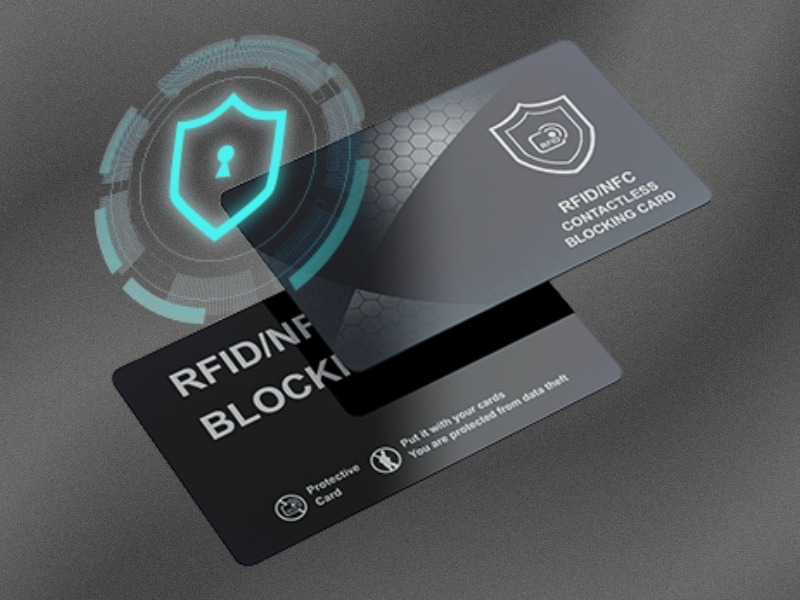
CardArmor is a credit card-sized RFID blocking insert designed to fit inside any standard wallet. According to the brand, it creates a protective barrier that blocks unauthorized RFID and NFC scanners from reading your contactless credit cards, debit cards, IDs, and passport chips.
How CardArmor Technology Works
The product uses signal-blocking materials to absorb or deflect radio frequencies in the 13.56 MHz range - the frequency used by contactless payment systems and modern passports. This is the same principle used in specialized RFID-blocking wallets and Faraday pouches, condensed into a single card-sized insert.
According to the CardArmor website, the technology creates what's sometimes called a Faraday cage effect - a barrier that prevents electromagnetic signals from passing through.
Key Specifications (Per Brand)
According to the official CardArmor website:
Signal blocking range: Approximately 5cm (about 2 inches) radius, per brand specifications
Frequencies blocked: RFID and NFC signals in the 13.56 MHz range
Power source: None required - passive blocking works 24/7 without batteries or charging
Form factor: Credit card-sized, designed to fit any standard wallet
Construction: Described as tear-resistant and waterproof
Stated longevity: Effective protection for over three years
Compatibility: Works with contactless credit cards, debit cards, IDs, passports, hotel key cards, transit passes, and building access cards
Important note: CardArmor states the ~5cm blocking range assumes correct positioning in the wallet. These specifications are brand-stated, and we did not independently lab-test this unit to verify blocking effectiveness or range claims.
How to Use CardArmor
According to the brand, setup takes seconds:
Step 1 - Slide it in: Place the CardArmor card in your wallet alongside your contactless cards.
Step 2 - Position strategically: For optimal protection, position CardArmor between your cards and the outside of your wallet - creating a barrier between your cards and any external scanners.
Step 3 - Forget about it: Protection begins immediately and continues 24/7 without batteries, charging, or activation. No ongoing maintenance required.
That's the full setup. No app to download, no account to create, no settings to configure.
Order CardArmor with current holiday pricing
Protecting Your Passport and Travel Documents
For international holiday travelers, passport protection deserves specific attention.
Why Passports Matter for RFID Protection
All U.S. passports issued since October 2006 contain RFID chips (officially called "e-Passports") that store the same information printed on the passport's data page, including your photo. According to the Department of Homeland Security, e-Passports include security features designed to prevent unauthorized reading and skimming.
While modern passport chips include built-in security features that mitigate many theoretical vulnerabilities, some travelers prefer an additional layer of protection - particularly in crowded international travel environments where close proximity to strangers is unavoidable.
What CardArmor Covers (Per Brand Claims)
According to the CardArmor website, the product's 5cm blocking radius is designed to protect:
Chip-enabled passports when stored in a wallet or travel organizer near the CardArmor card
Passport cards (the credit card-sized alternative to traditional passports for land and sea travel to Canada, Mexico, the Caribbean, and Bermuda)
Global Entry and NEXUS cards that use RFID technology
Limitation to Note
CardArmor's protection only works when your passport is stored near the blocking card. If you carry your passport separately from your wallet (in a jacket pocket, money belt, or neck pouch), you would need the CardArmor card positioned near it for protection.
Daily Commuters and Urban Transit: Year-Round Protection Beyond Holiday Travel
While holiday travel creates concentrated exposure, daily commuters face repeated RFID exposure throughout the year.
Why Commuters Face Elevated Risk
Subway and metro systems in major cities create ideal conditions for the type of close-proximity scanning that RFID blocking addresses:
Predictable crowding during rush hours means extended time pressed against strangers
Repeated daily exposure compounds risk over time
Distraction from phones, books, and music means less awareness of surroundings
Anonymity in large transit systems makes identification of potential threats difficult
Cities with particularly high-density transit systems include New York, London, Tokyo, Paris, Chicago, Washington D.C., San Francisco, Boston, and Hong Kong - all popular holiday travel destinations and home to millions of daily commuters.
CardArmor for Commuters
For daily commuters, CardArmor's no-maintenance, passive protection approach offers particular appeal:
No daily action required - protection works automatically once the card is in your wallet
No charging or batteries - unlike some active RFID-blocking devices
No behavior change - you don't need to remember to do anything differently
Year-round protection - covers daily commuting, not just occasional travel
If you're purchasing CardArmor for holiday travel, it continues providing protection during your regular commute throughout 2026.
Check current CardArmor availability
How CardArmor Compares to Alternative RFID Protection
CardArmor isn't the only option for RFID protection. Here's how it compares to alternatives:
RFID-Blocking Wallets
What they are: Wallets with built-in shielding materials integrated into the construction.
Pros: All-in-one solution; no additional insert needed; often include organizational features.
Cons: Require replacing your current wallet; typically cost $50-$150 for quality options; often bulkier than standard wallets; limited style options.
Best for: People who need a new wallet anyway and want integrated protection.
RFID-Blocking Sleeves
What they are: Individual sleeves that fit around each card or passport.
Pros: Inexpensive; widely available; protect individual items.
Cons: Require removing cards from sleeves for each use; add friction to transactions; sleeves can be lost, damaged, or forgotten; don't protect multiple cards simultaneously.
Best for: People who only need to protect one or two specific cards.
RFID-Blocking Card Inserts (CardArmor Category)
What they are: Single card-sized inserts that protect multiple cards within a wallet.
Pros: Work with existing wallets; protect multiple cards simultaneously; no behavior change required; no maintenance; typically $20-$50.
Cons: Protection depends on proper positioning near cards; effectiveness varies by product quality; don't protect cards when removed from wallet.
Best for: People who like their current wallet and want simple, add-on protection.
Doing Nothing
What it means: Relying on built-in card encryption and fraud monitoring.
Pros: No cost; no action required.
Cons: Leaves theoretical vulnerability unaddressed; relies on reactive fraud detection rather than prevention; may create anxiety for security-conscious individuals.
Best for: People with low risk tolerance or who rarely encounter crowded environments.
CardArmor positions itself in the middle ground - more comprehensive than sleeves, more convenient than wallet replacement, more proactive than doing nothing.
Who Should Consider CardArmor for Holiday Travel?
Not everyone needs RFID protection. Here's how to quickly assess your situation:
CardArmor Makes Strong Sense If You:
Have holiday travel involving airports. If you're flying anywhere between now and early January, you'll spend significant time in exactly the high-density, low-attention environments where RFID scanning would be most feasible. TSA lines, gate areas, baggage claim, rental car shuttles - it's hours of close-proximity exposure.
Are visiting major metro areas with crowded public transit. Holiday trips to New York, Chicago, London, Paris, or any city with crowded subways and metros mean repeated exposure to strangers in close quarters.
Carry multiple contactless payment cards. The more RFID-enabled cards in your wallet, the more exposure points. Holiday travel often means carrying backups - "just in case" cards that multiply your vulnerability.
Travel internationally with a chip-enabled passport. International travelers carry more sensitive RFID-enabled documents and navigate more crowded transit systems.
Want protection without changing your wallet or routine. CardArmor works with your existing wallet and requires no behavior change after initial setup.
Prefer prevention over reaction. Some people prefer dealing with problems after they occur; others prefer eliminating risks upfront. If you're the prevention type, this fits your approach.
Value peace of mind during travel. Even if the statistical risk is low, some travelers find that removing worry about specific threats improves their travel experience.
You Can Probably Skip CardArmor If:
Your wallet already has RFID blocking. Some modern wallets include built-in protection. Check your wallet's product description - if it's already RFID-blocking, you don't need an additional card.
You're not traveling or commuting through crowds. If your holidays involve staying home, driving to nearby family, and avoiding crowds entirely, your exposure profile is low.
Your cards don't have contactless capability. Older chip-and-PIN cards without the tap-to-pay symbol (the sideways WiFi-looking icon) don't broadcast RFID signals. No wireless signal means nothing to block. (Most cards issued in the last 3-4 years do have contactless capability, though.)
You require independently verified specifications. CardArmor's blocking effectiveness claims come from the brand. If you need third-party lab documentation with specific attenuation ratings, this product may not satisfy your verification requirements.
Quick Self-Assessment Checklist
Ask yourself:
Am I flying or taking trains/subways for holiday travel?
Am I visiting crowded tourist destinations or family in major cities?
Do I carry 2+ contactless payment cards?
Do I have an international trip planned with passport travel?
Would I rather spend under $50 on prevention than stress about card monitoring?
Do I have time to receive a shipment before I leave?
If you answered yes to three or more, CardArmor likely fits your situation.
CardArmor as a Holiday Gift: The Practical Stocking Stuffer
If you're reading this looking for a practical gift for someone who travels, CardArmor fits the "useful stocking stuffer" category.
Who Would Appreciate CardArmor as a Gift
Parents or grandparents who travel to visit family during holidays
Adult children flying home for the holidays
Spouses or partners with upcoming business travel in 2026
Friends planning international trips
Frequent commuters who navigate crowded public transit daily
The person who "has everything" but values practical security
Why It Works as a Gift
Under $50 at current promotional pricing - fits stocking stuffer budgets
Solves a real problem they probably haven't solved themselves
Fits any wallet - no need to know their wallet brand or style
Requires no technical setup - works immediately
Shows thoughtfulness - you're thinking about their security and peace of mind
Gift Timing Consideration
If ordering as a gift, verify shipping estimates on the official website match your gift-giving timeline. Holiday shipping demand may affect delivery times.
Pricing, Shipping, and Guarantee
According to the official CardArmor website at the time of publication:
Current Pricing
CardArmor is listed at promotional pricing described as "up to 70% off" from standard retail. The site indicates limited stock availability, which may affect shipping timelines as holiday demand increases.
Verify current pricing directly on the official website, as promotional offers change without notice.
Holiday Shipping Considerations
The website displays current shipping estimates - verify these against your travel departure date to confirm you'd receive CardArmor in time for your trip.
If you're ordering for holiday travel, check shipping timelines before purchasing to ensure delivery before your departure.
30-Day Money-Back Guarantee
According to the company's published return policy:
Returns accepted within 30 days of receiving your order
Items must be in original condition with original packaging
Return shipping costs are the customer's responsibility
A handling fee applies to processed refunds
To initiate a return: Per the posted Returns & Refunds policy, email [email protected] to begin the return process.
The guarantee means you can try CardArmor and return it if unsatisfied - reducing purchase risk.
Check current CardArmor pricing and shipping
What CardArmor Does NOT Do: Important Limitations
Clear expectations prevent disappointment. CardArmor has specific limitations:
Does Not Protect Cards When Removed From Wallet
When you take out a card to make a payment, it's temporarily unprotected until you return it near the CardArmor card. Protection only works when cards remain in proximity to the blocking card.
Does Not Prevent All Forms of Card Fraud
CardArmor addresses wireless RFID/NFC interception only. It does not protect against:
Online fraud (phishing, data breaches, compromised websites)
Physical card theft (traditional pickpocketing)
Terminal skimming (compromised card readers at ATMs or point-of-sale)
Social engineering (scams that trick you into revealing information)
Magnetic stripe theft (older card technology)
Does Not Guarantee Zero Risk
Like any security measure, effectiveness depends on proper use. CardArmor needs to be positioned near your cards to protect them. Environmental factors, card positioning, and scanner sophistication may affect real-world performance.
Is One Layer of Security, Not a Complete Solution
Smart travelers combine passive protection with active practices:
Monitor statements regularly for unauthorized charges
Enable transaction notifications on your cards
Carry minimal cards in very high-risk situations
Use mobile payment (Apple Pay, Google Pay) when available for tokenized transactions
Keep passport secure in inside pockets or money belts in crowded areas
Frequently Asked Questions
Is CardArmor a scam?
The website lists the seller as Straight Commerce Inc. and provides contact details, an address (100 Church Street, 8th Floor, New York, NY 10007), and a posted returns policy. The underlying RFID-blocking technology is well-established and used in numerous products across the market. As with any online purchase, confirm current terms on the official site and consider using a payment method with strong buyer protections.
Does CardArmor actually work?
According to the brand, CardArmor uses signal-blocking materials to absorb or deflect RFID/NFC signals within approximately 5cm. The technology is based on the same principles used in RFID-blocking wallets and Faraday pouches. We did not independently lab-test this specific product's blocking effectiveness - specifications come from the brand. Readers should evaluate brand claims alongside their own research and risk assessment.
Do I really need RFID protection?
Whether you need RFID protection depends on your personal risk assessment, travel patterns, and comfort level. People who spend significant time in crowded environments (airports, public transit, tourist destinations) face higher theoretical exposure than those who avoid crowds. The cost of basic protection is relatively low compared to potential inconvenience of card fraud.
Is RFID theft actually common?
The real-world prevalence of RFID skimming is debated among security professionals. Security researchers have demonstrated the technical feasibility of RFID data capture, but documented cases of actual RFID theft from cards in wallets remain difficult to verify. Some argue the threat is overstated; others note such crimes would be hard to detect and track.
How is CardArmor different from RFID-blocking wallets?
RFID-blocking wallets integrate shielding into the wallet construction, requiring you to replace your existing wallet. CardArmor is a card insert that works with any wallet - you add protection without changing wallets.
Will CardArmor protect my passport?
According to the brand, CardArmor's 5cm blocking radius can protect passports stored near the card in a wallet or travel organizer. If you carry your passport separately from your wallet, you would need to position the CardArmor card near it for protection.
Does CardArmor require batteries or charging?
No. CardArmor uses passive blocking technology that works continuously without power. There's nothing to charge, no batteries to replace, and no maintenance required.
How long does CardArmor last?
According to the brand, CardArmor provides effective protection for over three years. Since there are no batteries or active components, there's nothing to degrade over time under normal use.
Can CardArmor protect multiple cards at once?
According to the brand, CardArmor's 5cm radius can protect multiple cards stored within that range in your wallet. One card can potentially shield several payment cards, IDs, and travel documents simultaneously.
What's the return policy?
CardArmor offers a 30-day money-back guarantee. Items must be returned in original condition with original packaging. Return shipping costs and a handling fee are the customer's responsibility. To initiate a return, email [email protected] per the posted Returns & Refunds policy.
Will CardArmor interfere with my cards when I want to use them?
According to the brand, CardArmor blocks signals within its protective radius but doesn't permanently affect your cards. When you remove a card from your wallet to make a payment, it functions normally at the payment terminal.
Is CardArmor TSA-safe?
CardArmor is a passive, non-electronic card that should pose no issues with airport security scanners. It contains no batteries, no active electronics, and no prohibited materials.
Contact Information
For questions before or after ordering, according to the company's website:
Email: [email protected]
Phone: +14242504182
Company: Straight Commerce Inc., 100 Church Street, 8th Floor, New York, NY 10007, United States
Final Verdict: Is CardArmor Worth It for Holiday Travel 2025-2026?
The Case for Buying CardArmor Now
Holiday travel often means denser crowds and more close-proximity time in airports and transit - conditions where many types of theft (physical and electronic) are more opportunistic. You're carrying more cards than usual, spending more time in crowded spaces, and your attention is divided.
For under $50 at current promotional pricing, CardArmor offers:
Passive, maintenance-free protection that requires no behavior change
Works with your existing wallet - no replacement needed
Covers multiple cards simultaneously within its protective radius
Includes passport protection for international travelers
30-day return policy reduces purchase risk
If peace of mind about RFID theft, contactless card skimming, and digital pickpocketing has value to you, the cost-to-benefit ratio may be favorable - especially during crowded holiday travel periods.
Considerations to Weigh
Blocking effectiveness isn't independently verified - specifications come from the brand
Protection only works when cards remain near the CardArmor card
Statistical prevalence of real-world RFID theft remains debated
Doesn't protect against other fraud types (online, physical theft, terminal skimming)
The Bottom Line for Holiday Travelers
If you've seen the CardArmor ad and wondered whether it's worth considering - the product exists, the underlying technology is established, and the company offers a returns policy if you're not satisfied.
Whether you need it depends on your travel plans, risk tolerance, and whether the peace of mind is worth the modest investment.
But if you're about to spend hours in airports, train stations, or crowded holiday destinations with multiple contactless cards and possibly an international passport, under $50 for a set-it-and-forget-it layer of protection isn't an unreasonable investment - especially when the alternative is wondering whether the person who stood next to you at the gate just captured your card data.
You can always return it within 30 days if you decide it's not for you.
Check CardArmor availability and current holiday pricing
Disclaimer Bundle
Editorial Disclaimer: This article is for informational purposes only and does not constitute professional security, financial, or legal advice. The information provided reflects publicly available details from CardArmor's website, general industry knowledge about RFID technology, and publicly cited statistics from industry sources. Always verify current terms, pricing, and shipping timelines directly with the brand before making purchasing decisions.
Results May Vary: Individual experiences with RFID-blocking products vary based on factors including wallet construction, card placement, specific card types, environmental conditions, and scanner sophistication. The effectiveness described reflects the brand's stated specifications and has not been independently verified by the publisher. CardArmor is designed as a preventive measure and does not guarantee prevention of all forms of electronic theft or identity fraud.
Statistics Disclaimer: Statistics cited in this article are attributed to their respective sources (FTC data, industry research firms, security researchers) as reported in publicly available materials. Specific numbers may have been updated since original publication. Readers should verify current statistics through official sources.
FTC Affiliate Disclosure: This article contains affiliate links. If you purchase through these links, a commission may be earned at no additional cost to you. This compensation does not influence the accuracy, neutrality, or integrity of the information presented. All descriptions are based on publicly available information from CardArmor's official website and general industry sources.
Pricing Disclaimer: All pricing information, promotional offers, shipping estimates, and availability mentioned were based on publicly available information at the time of publication (December 2025) and are subject to change without notice. Holiday shipping timelines may vary based on demand and carrier capacity. Always verify current pricing, promotions, and delivery estimates directly with CardArmor before purchasing.
Publisher Responsibility Disclaimer: The publisher of this article has made every effort to ensure accuracy at the time of publication based on publicly available information. We do not accept responsibility for errors, omissions, or outcomes resulting from the use of the information provided. Readers are encouraged to verify all details directly with CardArmor before purchasing.
Return Policy Note: According to the company's published terms, CardArmor offers a 30-day return window from the date of receipt. Items must be returned in original condition with original packaging. Return shipping costs and a handling fee are the customer's responsibility. To initiate a return, email [email protected] per the posted Returns & Refunds policy. Review complete return policy terms on the official website before ordering.
SOURCE: CardArmor