



Wednesday, 24 June 2026 02:45 PM
Advertorial
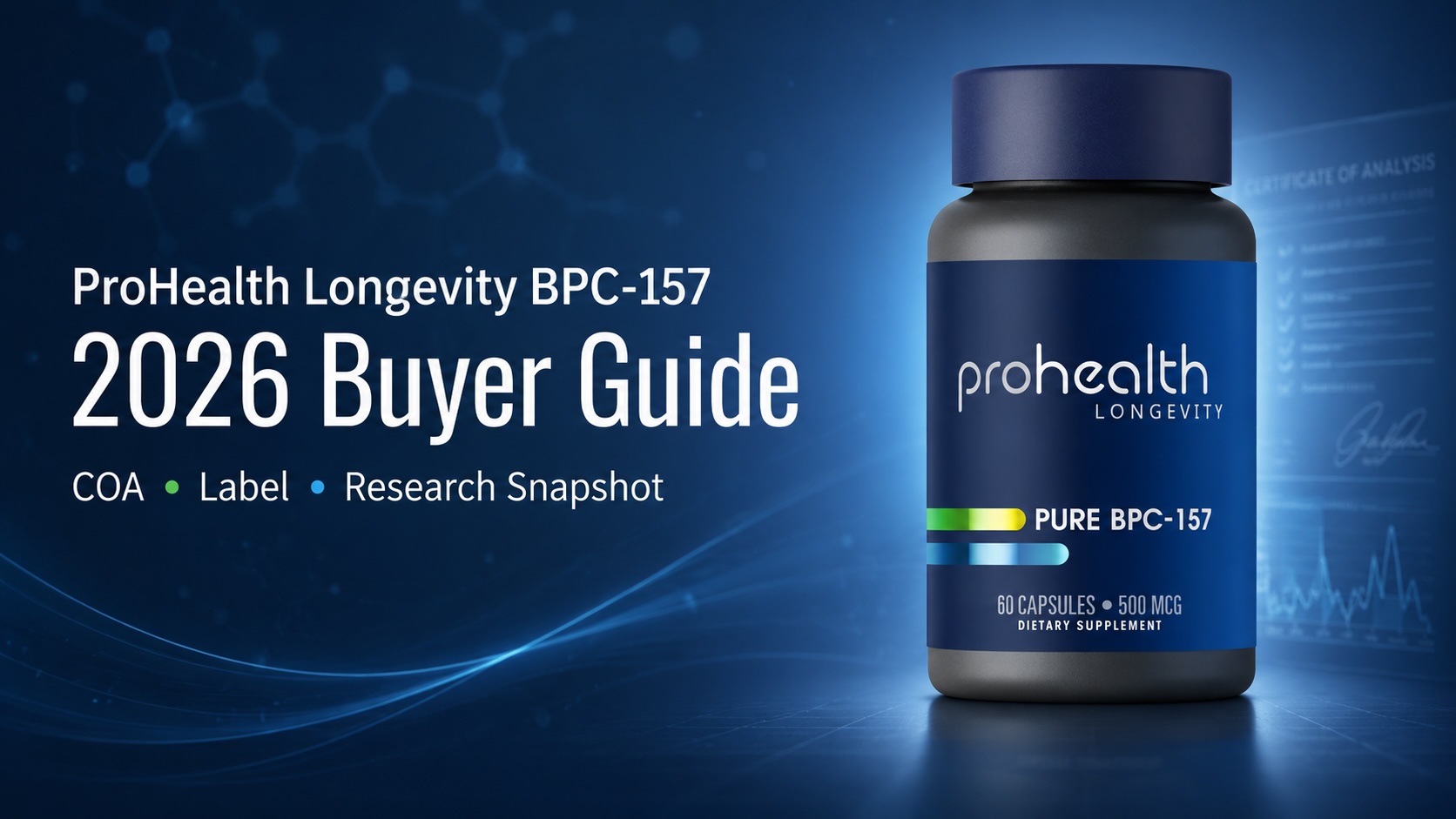
As interest in peptide-focused wellness support continues rising in 2026, this ProHealth Longevity BPC-157 review explores how the supplement is positioned for daily gut, joint, tissue, and healthy aging support, what buyers should know about its label and COA, and which factors may influence individual experiences.
CARPINTERIA, CA / ACCESS Newswire / June 24, 2026 / Paid advertorial - affiliate links present. A commission may be earned on purchases at no cost to you. "Best BPC-157 Capsules on the Market" and "Top Brand" are search-intent positioning phrases, not independent rankings or clinical conclusions. ProHealth BPC-157 is a dietary supplement - not a drug, not FDA-approved. BPC-157 is an investigational synthetic peptide; all brand-cited research is preclinical animal studies that may not translate to human outcomes. Consult a healthcare provider before use. Details from live source fetches, June 2026.
Check current pricing and availability on the ProHealth BPC-157 product page
Best BPC-157 Capsules Review 2026: ProHealth Longevity BPC157 Supplement Consumer Research Buyers Guide Explores Daily Wellness Support, COA Details, and Key Ordering Questions
TL;DR - ProHealth Longevity BPC-157 in 60 Seconds
For healthy adults exploring BPC-157 as a research-stage peptide supplement - not an FDA-approved drug - ProHealth Longevity's oral capsule is one of the most documentation-forward options available. It delivers 500 mcg of BPC-157 Arginate Salt per capsule, costs $119.95 one-time as of June 2026, and is backed by a 100-day money-back guarantee. BPC-157 research is preclinical - animal models, no large-scale human clinical trials. This article covers the brand's verified disclosures, the 2026 regulatory calendar, who this is for, and what to confirm before ordering.
You Saw an Ad. Here's the Straight Story Before You Spend a Dollar.
You saw something about ProHealth Longevity BPC-157 - an Instagram ad, a short video, maybe a biohacking forum at midnight. Something caught your attention. Now you're doing exactly what smart buyers do: checking the details before spending over a hundred dollars on something you're not sure about yet. That's the right move. This article gives you the full picture - what ProHealth discloses, what the research actually shows, what the FDA's current regulatory calendar means for BPC-157 buyers right now, and what to verify before you order.
That's exactly what this guide is for. It's written for the person who wants to understand what this product is, what the brand says about it, what the research actually shows - and crucially, what it doesn't show yet - and whether this is the right purchase for your specific situation. Nothing here is overstated. Where the evidence is solid, this article says so. Where it's limited or preliminary, it says that too. Because the buyer who gets accurate information makes a confident decision. That's the only kind worth having.
Check current pricing and availability on the ProHealth BPC-157 product page
What Is ProHealth Longevity BPC-157 and Who Is It For?
BPC-157 stands for Body Protection Compound-157. It's a synthetic peptide - a chain of 15 amino acids - originally derived from a protein found in human gastric juice. According to ProHealth Longevity's official product page, this compound has been studied in preclinical settings across multiple biological systems: gut lining, connective tissue, muscle, and inflammatory pathways.
What separates it from most peptides is where it comes from. It was discovered in the stomach's acidic environment - and that gastric origin is the brand's stated rationale for why an oral capsule format makes sense for BPC-157 when it wouldn't work for most other peptides. Insulin, growth hormone, and similar compounds degrade before reaching systemic circulation when swallowed. BPC-157's connection to gastric juice is why oral delivery has a scientific basis here that it simply doesn't have for most of the peptide category.
According to the brand's own materials, ProHealth positions this product for healthy adults who want to explore BPC-157 as part of a general wellness regimen - and who understand its investigational nature. The brand specifically identifies people with active lifestyles, those experiencing occasional physical strain, and individuals interested in gut, joint, or tissue support through a novel peptide approach as the product's intended audience.
Who it's not for - per label cautions and honest assessment: anyone who is pregnant or nursing, anyone under 18, anyone on medications or managing a medical condition without first consulting a physician, and competitive athletes subject to WADA anti-doping regulations. The WADA Prohibited List includes BPC-157 under the S0 Non-Approved Substances category. That prohibition applies regardless of format or source - dietary supplement or injectable. If you compete in sanctioned sport, this is not the product for you.
Buyer Takeaway: Per the brand's own materials, ProHealth BPC-157 is positioned for healthy adults interested in general wellness support - not for anyone pregnant, nursing, under 18, on medications without physician clearance, or competing in sport under WADA anti-doping regulations. The brand states this clearly. So does the label.
How to Read ProHealth Longevity's Marketing Language
Before going further, you should know what you're reading when you see language like "best BPC-157 capsules on the market" or "top brand" used in discussions of this product - and what those phrases do and don't mean.
These phrases are drawn from competitive marketing language used in the BPC-157 supplement category. Here's a plain-language breakdown of each:
"Best BPC-157 Capsules on the Market" - Brand-adjacent positioning language in competitive marketing contexts. Source: category-level marketing discussions. What it means: the brand competes in a quality-focused way. What it doesn't mean: an independent comparative lab study ranking all BPC-157 products was conducted and ProHealth won. No such study exists.
"Top Brand" - Positioning language referencing ProHealth's longevity in the supplement space (founded 1988, A+ BBB rating). What it means: the brand has operated with documented quality standards for decades. What it doesn't mean: an independent ranking body designated it #1 in the BPC-157 category.
"Pharmaceutical-grade formula" - This phrase may appear in category marketing discussions or prior source material, but it should be treated as brand-adjacent positioning language rather than an FDA classification, drug approval statement, or independently verified regulatory standard. The stronger verifiable facts are ProHealth's stated FDA-registered, GMP-certified manufacturing language, triple third-party testing disclosures, and the published Brighton Laboratory COA for Lot A26B038.
"Doctor Formulated" - This phrase should not be read as an independent physician endorsement. ProHealth's safer supported language is that the formulation was reviewed by its science team with input from wellness professionals. The brand's product page describes the product as "science-reviewed," not physician-certified or independently doctor-approved.
Buyer Takeaway: These phrases help you understand the brand's competitive positioning. They aren't independent rankings or clinical conclusions. Evaluate the verifiable facts - lab testing documentation, ingredient transparency, return policy - not the marketing shorthand.
What Does ProHealth Longevity BPC-157 Actually Contain?
Every fact in this section comes directly from the ProHealth Longevity product page and the Brighton Laboratory Certificate of Analysis - both confirmed by live source fetch in June 2026.
The active ingredient: Body Protection Compound-157, delivered as BPC-157 Arginate Salt at 500 mcg per capsule. The daily value has not been established by the FDA. The bottle contains 60 capsules - a 60-day supply at the brand's suggested one-capsule-per-day dosing.
Other ingredients listed on the label: hypromellose (capsule shell), microcrystalline cellulose, stearic acid, and silica. The capsule is vegetable-based. No proprietary blends, no undisclosed fillers, no hidden doses.
Here's a detail that hasn't appeared in prior coverage of this product: the brand's published Certificate of Analysis from Brighton Laboratory (ISO/IEC 17025 Accreditation No. 93153, dated April 7, 2026, Lot A26B038) documents an actual verified result of 649.01 mcg per capsule against a label claim of 500 mcg. The brand's label makes a minimum claim; the independent lab measured the product at approximately 30% above that minimum. The tested sample exceeded the label's minimum potency claim for that lot. That distinction matters: it confirms label accuracy on the tested lot, not clinical superiority over competing products.
The brand describes choosing the arginate salt form deliberately over the more commonly available acetate form. According to ProHealth's product page, the arginate salt offers greater stability in the gastrointestinal environment. That's the brand's stated rationale, attributed accordingly.
Buyer Takeaway: You're getting a single-ingredient product with a fully disclosed label, a 60-day supply per bottle, a vegetable capsule with four inactive excipients, and independent lab documentation confirming potency above label claims. That level of transparency is not universal in the peptide supplement market.
Buyer Takeaway on the COA specifically: The Brighton Lab result of 649.01 mcg against a 500 mcg label claim means the tested lot exceeded the stated minimum label claim. When buyers worry about product identity and potency accuracy - which is a legitimate concern in this category - a COA from an ISO/IEC 17025-accredited lab confirming the tested result is the right kind of evidence to look for. Verify the current COA is available on the product page before purchasing.
Why ProHealth Appears in 2026 Best BPC-157 Capsule Searches
When buyers search "best BPC-157 capsules" in 2026, they're not looking for hype - they're looking for verification factors. Buyers in the BPC-157 category regularly raise concerns around product identity, potency verification, vendor transparency, and third-party testing quality - and with good reason. Against that backdrop, here's what ProHealth Longevity discloses that puts it in the conversation when buyers are comparing options:
Label dose: 500 mcg per capsule - fully disclosed, not hidden in a proprietary blend
Format: 60 capsules per bottle, vegetable capsule, single active ingredient
Peptide form: BPC-157 Arginate Salt - per brand, chosen for greater GI stability versus the acetate form
Supplement Facts panel: Fully published on the product page and label
Published COA: Certificate of Analysis viewable on the product page for Lot A26B038
Testing method: HPLC - documented on the Brighton Laboratory COA
Lab accreditation: ISO/IEC 17025:2017, Accreditation No. 93153 - Brighton Laboratory
Tested result for cited lot: 649.01 mcg per capsule against a ≥500 mcg label claim
Third-party testing protocol: Triple lab testing - per brand; identity, purity, potency, and contaminant screening
Guarantee: 100-day money-back on product cost - confirm current terms before ordering
Shipping: Free U.S. standard on orders $30+ - confirm current threshold before ordering
Operating history: Founded 1988; 35+ consecutive A+ BBB years - brand-stated
Investigational-status notice: Prominently disclosed on product page by the brand
FDA disclaimer: Present on product page and label
Preclinical research limitation: Explicitly disclosed by brand on product page
None of those factors prove BPC-157 works in humans. What they prove is that ProHealth provides more buyer-facing verification documentation than most vendors in this category do - and that's what "best BPC-157 capsule" searches are often actually asking for.
Buyer Takeaway: "Best" in a research-stage supplement category isn't about clinical superiority - it's about documentation quality, consumer protections, and purchasing transparency. The factors above are what ProHealth discloses; they're the basis for its appearance in buyer-guide discussions, not a comparative clinical ranking.
View the current ProHealth BPC-157 label and Certificate of Analysis on the official product page
What the Research Actually Shows - and What It Doesn't
Most BPC-157 content glosses over this part. This guide won't, because a buyer who understands the actual evidence picture makes a confident decision - and that's the only kind worth having.
The honest starting point: virtually all published BPC-157 research has been conducted in preclinical settings - animal models and laboratory studies, not large-scale human clinical trials. ProHealth's own product page states this explicitly and labels its "Investigational Status Notice" prominently. The brand cites eleven peer-reviewed references from journals including Cell and Tissue Research, Current Pharmaceutical Design, Neural Regeneration Research, and the Yale Journal of Biology and Medicine. Here's what those studies examined, and what they didn't establish:
Myogenesis (muscle maintenance processes): Animal model studies cited by the brand have investigated BPC-157's relationship to biological processes associated with muscle tissue in preclinical settings. Translation to equivalent outcomes in humans has not been demonstrated in large-scale clinical trials.
Angiogenesis (circulatory support for tissue nourishment): Multiple preclinical studies examined BPC-157's potential relationship to blood vessel-related processes in animal models. This is an area of research interest - not a proven human outcome.
Gastrointestinal comfort and mucosal support: BPC-157's origin is in gastric research, and the earliest studies focused on GI tissue. This is the application area with the deepest preclinical history, and it's where oral delivery has a particularly direct anatomical rationale - the compound passes through the GI system it was originally studied in relation to.
Inflammatory response within normal ranges: The brand's cited references include studies examining BPC-157's potential relationship with inflammatory signaling in various tissue contexts in animal models.
A 2024 narrative review published in the Yale Journal of Biology and Medicine (Cushman et al.) - one of the eleven references ProHealth cites on the product page - examined BPC-157's preclinical profile across multiple tissue systems and noted that while animal model data is substantial, human clinical trials have not established efficacy. A broader 2026 narrative review published in PMC also addressed BPC-157 in the context of regenerative and recovery-related research, further underscoring both the scientific interest in the compound and the gap between preclinical findings and confirmed human outcomes. ProHealth's product page references are consistent with this literature: the evidence is real, the human confirmation is not yet there.
What about human studies? Published human data on BPC-157 is very limited as of June 2026. A small number of pilot-scale investigations have been conducted, but large-scale, randomized controlled trials in humans have not been published. The small human studies that do exist have not reported significant adverse effects - which is a meaningful safety data point, even if it doesn't establish efficacy by clinical standards. ProHealth's product page acknowledges this directly.
The National Institutes of Health, National Center for Complementary and Integrative Health, and Cochrane-affiliated researchers have not published definitive guidance on BPC-157 as of June 2026, given the limited human trial data. This does not mean the preclinical research is worthless - it means the field is still early-stage, and the gap between promising animal results and confirmed human outcomes has not yet been bridged by published clinical science.
That's the state of the evidence. It doesn't disqualify this supplement for a thoughtful adult who understands what they're buying. It means you're buying a research-stage peptide compound from a brand that documents its manufacturing and testing standards - not a pharmaceutical with decades of clinical trial data behind it.
Buyer Takeaway: The preclinical research base is real and substantial. The human clinical data is limited. Anyone claiming certainty about human outcomes from BPC-157 is overselling the evidence. Anyone dismissing BPC-157 entirely is underselling a compound that's generated serious scientific interest across multiple physiological systems. Both positions are wrong - and neither serves you.
ProHealth BPC-157 Quick Verification Snapshot - Key Facts (June 2026)
Product: Pure BPC-157 - 500 mcg, 60 Capsules (SKU PH703) | Active Ingredient: BPC-157 Arginate Salt, 500 mcg per capsule | Verified Potency (COA, April 2026): 649.01 mcg per capsule - Brighton Laboratory, ISO/IEC 17025 Accredited | Servings: 60 per container | Price (June 2026): $119.95 one-time; up to 30% off with subscribe-and-save | Guarantee: 100-day money-back guarantee on product cost, shipping nonrefundable | Return Address: Confirm current return address with ProHealth customer service before mailing any return - ProHealth, Inc., Carpinteria, CA | Brand Founded: 1988 | BBB Rating: A+ (35+ consecutive years per brand) | Manufacturing: FDA-registered, GMP-certified facility, USA (brand-stated) | Third-Party Testing: Triple lab tested per brand; Brighton Laboratory COA publicly viewable on product page | Customer Reviews (brand site, June 2026): 66 reviews, 86% five-star, 9% four-star - brand-reported; not independently audited | Subscription: Yes - cancel anytime, no long-term commitments or fees | WADA Status: S0 Prohibited - not for athletes under anti-doping regulations | Regulatory Status: Investigational compound; not FDA-approved; marketed as dietary supplement | Contact: (800) 366-6056 | [email protected] | Monday-Friday 8 a.m.-5 p.m. PT
ProHealth Longevity's Quality Approach: What the Brand Discloses
In a peptide supplement category where buyers often raise concerns about product identity, potency verification, vendor transparency, and third-party testing, what a brand discloses about testing matters more than almost anywhere else in the supplement category. Here's what ProHealth Longevity's product page states - attributed to the brand - and what the independent documentation confirms.
The brand describes a triple third-party lab testing protocol: each batch is tested three separate times by independent laboratories for identity, purity, and potency. According to the brand's materials, this testing covers contaminants including heavy metals, microbial pathogens, and residual solvents. The Certificate of Analysis is publicly viewable on the product page.
The specific COA documented in the brand's source materials is from Brighton Laboratory (8525 Edna Ave., Suite 200, Las Vegas, NV 89117), a facility holding ISO/IEC 17025:2017 Accreditation No. 93153. The analysis method was HPLC. The label claim was a minimum of 500 mcg per capsule. The documented result: 649.01 mcg per capsule. Average fill weight: 197 mg.
The brand states its manufacturing takes place in an FDA-registered, GMP-certified facility in the United States. ProHealth has operated since 1988 and, per the brand's materials, has maintained over 35 consecutive years as an A+ rated company with the Better Business Bureau.
These are the brand's stated quality standards and the corresponding independent lab documentation. They're presented here as brand representations, clearly attributed, consistent with accurate advertorial practice. The COA and triple-testing protocol together represent a quality transparency standard that's worth asking any peptide brand to match before purchasing.
Buyer Takeaway: The brand publishes its Certificate of Analysis. The independent lab result confirmed potency above label claim. The accreditation is publicly verifiable at the lab's website. That documentation stack is meaningfully stronger than what most peptide supplement brands provide.
The Oral vs. Injectable Question - Addressed Directly
This comes up constantly in BPC-157 communities, and it deserves a real answer rather than a glossed-over one.
The majority of published preclinical musculoskeletal research used injectable administration - subcutaneous or intramuscular delivery in animal models. That's the route with the deepest published research basis for applications beyond the gastrointestinal tract. Anyone who tells you otherwise isn't being accurate.
At the same time, the injectable peptide market is a structurally different purchasing experience. Peptide powders and vials from research chemical vendors are sold under a "for research purposes only" designation - not as consumer supplements, not with consumer return policies, not with GMP manufacturing accountability, and not with third-party testing documentation comparable to what an established supplement brand provides. Product quality varies substantially between vendors, and there's no meaningful consumer protection framework around the purchasing experience.
The real comparison isn't "oral capsules versus injectable BPC-157 in theory." It's oral capsules from a brand with 36 years of operation, documented GMP manufacturing, publicly viewable COA, and a 100-day return policy - versus a research chemical vendor with none of those protections. That's the actual decision most buyers face.
For GI-focused applications, oral delivery has a direct anatomical rationale: the compound travels through the tissue system it was originally studied in relation to. For systemic applications - whether oral BPC-157 reaches other tissues in meaningful concentrations - the honest answer is that systemic oral bioavailability hasn't been definitively established in published human research. ProHealth's product page acknowledges this openly. That transparency is notable and worth factoring into your evaluation.
Buyer Takeaway: If you want the deepest research basis for musculoskeletal applications, injectable protocols have more preclinical data behind them. If you want a structured consumer supplement experience with documented quality standards and purchase protections, ProHealth's oral capsule offers a pathway research chemical vendors don't. These aren't the same thing, and anyone telling you they are is oversimplifying.
See current ProHealth BPC-157 pricing and subscribe-and-save options
Pricing, Subscription Terms, and the Guarantee - No Surprises
All pricing and policy details confirmed from live ProHealth product page and policy pages in June 2026.
The one-time purchase price is $119.95 for 60 capsules - a 60-day supply at one capsule per day. The subscribe-and-save program reduces that by up to 30%, bringing the per-bottle cost to approximately $83.97. Per the brand's FAQ, subscribers also receive exclusive savings, early access to new products, and flexibility to pause, skip, or cancel at any time with no long-term commitments or cancellation fees. That's the brand's stated subscription policy.
The 100-day guarantee in plain language: if you're not satisfied, return the unused portion for a full refund of the product purchase price. Shipping charges are nonrefundable. Return instructions and the current return address should be confirmed with ProHealth customer service before mailing any return. One hundred days is generous by supplement standards - and specifically relevant because the brand recommends consistent use for four to eight weeks before evaluating personal response. That evaluation window fits inside the return period with significant time to spare.
Free standard U.S. shipping applies on orders of $30 or more. Expedited shipping is available at additional cost. The brand's shipping page confirms orders placed by 11:00 a.m. Pacific Time on business days ship that same day.
A note on subscription and ROSCA disclosure: the subscribe-and-save program constitutes a recurring purchase arrangement. Per FTC Click-to-Cancel requirements, the brand's FAQ confirms that subscribers can cancel at any time with no penalties or long-term commitments. Confirm current cancellation method directly on the ProHealth website before enrolling.
Buyer Takeaway: At $119.95 for a 60-day supply, this is a premium-priced product relative to some peptide options. The subscribe-and-save reduction to approximately $83.97 is meaningful for ongoing users. The 100-day guarantee with a clear return address reduces financial risk during evaluation. No junk fees were identified in the pricing structure reviewed for this article.
Customer Reviews: What 66 Buyers Are Saying
As of June 2026, ProHealth Longevity BPC-157 carries 66 reviews on the brand's product page, with 86% at five stars and 9% at four stars - brand-reported. These ratings were not independently audited by this publication, and individual experiences vary. Per FTC 16 CFR Part 465, consumer feedback cited here is provided as individual accounts, not typical outcomes. Typical consumer results have not been established.
Among the positive accounts on the brand's product page, reviewers describe improved comfort in areas associated with daily activity, more consistent recovery between training sessions, and positive experiences with product quality and ordering. One reviewer specifically identified BPC-157 from a reputable source as a priority given documented quality concerns in the broader peptide market. Several reviewers noted noticing something within a few weeks of consistent use, consistent with the brand's four-to-eight week guidance.
Some reviewers on the brand's page were still early in their evaluation and hadn't drawn conclusions yet. That's the range you'd expect with a research-stage compound - the dose-response relationship in humans isn't fully established, so individual variation is real and wide. It's not a wall of perfect reviews, and it's not a collection of complaints - it's the varied individual response pattern the evidence would predict.
One additional note: prior coverage documented 35 reviews at the time of writing. The product now shows 66 reviews on the brand's page - a meaningful expansion of the review base over eight months of continued sales.
Buyer Takeaway: 86% five-star on a 66-review base is a strong brand-reported signal. It's not independently audited. The full review distribution (86% five-star, 9% four-star, 5% three-star, 0% one or two stars) suggests a satisfied customer base with genuine variance in individual experience, not a manufactured review pattern.
Is ProHealth Longevity BPC-157 Right for You?
This is the part where an honest review does the work most paid content skips: it tells you who should probably pass.
You're likely a good fit if you're a healthy adult who understands you're exploring a research-stage investigational compound - not an FDA-approved drug with decades of human clinical trial data. You have a specific wellness interest in the areas the brand associates with general tissue support, digestive wellness, or longevity-oriented supplementation. You're willing to use it consistently for four to eight weeks to actually assess your personal response. And you're comfortable making that evaluation knowing the 100-day guarantee gives you a documented path to a refund if it doesn't work for you.
You're probably not a good fit if you're expecting a guaranteed clinical outcome on a defined timeline. Or if you're not prepared to consult a healthcare provider before adding a research-stage peptide compound to your regimen. Or if you need the cheapest possible BPC-157 option regardless of documentation and consumer protections. Or if you compete in any sport governed by WADA or affiliated testing bodies - the prohibition is categorical and applies to this product regardless of its supplement designation.
The brand also notes a medical condition and medication consultation requirement on the label. That caution is genuine and should be taken seriously, not treated as boilerplate. BPC-157 large-scale human safety data is limited, and anyone with an existing health condition should have a physician review the current evidence before adding this to their stack.
Buyer Takeaway: Be straight with yourself about what you're looking for. The brand has done the work of being transparent about what it knows and doesn't know. Do the same work on your end - know what you're buying, know your situation, and know what outcome you're evaluating for.
Evaluate the current ProHealth BPC-157 offer and guarantee terms on the official product page
BPC-157 Regulatory Status: What Buyers Need to Know Right Now (June 2026)
The regulatory picture for BPC-157 has moved more in the first half of 2026 than in the prior three years combined. If you're evaluating this product in June 2026, you're doing it at a materially different moment than someone who looked at BPC-157 in late 2025. Here's what changed, what it means, and - critically - what it doesn't mean for buyers of ProHealth's oral dietary supplement.
Three Things That Changed in 2026 - and What They Actually Mean
Change 1 - April 22, 2026: BPC-157 removed from FDA Category 2. The FDA's Category 2 list flagged substances with significant safety concerns that restricted their use in compounding pharmacies. Effective April 22, 2026, BPC-157 (along with eleven other peptides) was removed from that list. This matters because it eases the regulatory restriction on compounding pharmacies. It does not mean BPC-157 is FDA-approved. It does not change the dietary supplement classification for oral products like ProHealth's capsules. It is one step in a longer process.
Change 2 - July 23, 2026: FDA Pharmacy Compounding Advisory Committee review. The FDA's PCAC - an independent expert advisory committee - is scheduled to formally review BPC-157 on July 23, 2026, at the FDA White Oak Campus in Silver Spring, Maryland. The committee will consider whether BPC-157 (free base and acetate forms) should be added to the Section 503A Bulk Drug Substances List, which would authorize licensed compounding pharmacies to prepare it for individual patients under physician prescription. Public docket: FDA-2026-N-2979. This is the most significant BPC-157 regulatory event of the year.
Change 3 - What none of this changes for dietary supplement buyers. The PCAC review is specifically about whether BPC-157 in its free base and acetate forms should be approved for preparation by licensed 503A compounding pharmacies under individual physician prescriptions - a pathway for patients who obtain compounded medications through formal clinical channels with a licensed provider overseeing their care. ProHealth markets its BPC-157 as a dietary supplement - a separate regulatory category that operates under different authority. The April Category 2 removal and the July 23 PCAC review do not change ProHealth's product classification, its label requirements, or its FDA investigational-status disclosure. What doesn't change: BPC-157 is not FDA-approved for any human therapeutic use. The investigational-status notice ProHealth publishes on the product page remains the accurate characterization regardless of PCAC outcome.
Why this matters to you as a buyer: the July 23 review creates genuine decision-imminence. Depending on the PCAC recommendation, the access picture for compounded injectable BPC-157 - which is the main alternative buyers compare against ProHealth's oral capsules - could shift materially after that date. Buyers who are currently weighing oral supplements against injectable protocols - or who are waiting to see whether compounded injectable options become more accessible before committing to a dietary supplement - are making that decision before they know what the committee recommends on July 23. That's information worth factoring into your timing.
This article makes no prediction about the PCAC outcome and no legal conclusion about BPC-157's dietary supplement status - and any article that does claim certainty about a regulatory advisory committee vote before it has occurred is not being straight with you. Monitor FDA.gov and current FDA guidance for updates before or after July 23 if regulatory status is a factor in your purchase decision.
Buyer Takeaway: June 2026 is a consequential moment to be evaluating BPC-157 options - not because of marketing pressure, but because the regulatory calendar is real. The April Category 2 removal and the July 23 PCAC review are verified FDA events. Their outcome affects compounded injectable access, not the dietary supplement oral capsule category where ProHealth operates. Verify current FDA status before purchasing if this distinction matters to your decision.
How to Use ProHealth Longevity BPC-157 - Per the Brand's Guidance
One capsule daily, with or without food - that's the brand's suggested use. Per ProHealth's FAQ, many users prefer taking it in the morning for routine consistency. The brand notes that some studies suggest absorption may be enhanced when taken with food, though the arginate salt form is described as stable in the stomach environment regardless. No refrigeration required.
The brand recommends consistent daily use for four to eight weeks before evaluating personal response. Individual variation is real and significant with research-stage compounds. The brand's guidance: take your dose at the same time each day, stay hydrated, and support the body's natural processes with a healthy lifestyle. For best results, these instructions come from the brand - follow the label as written.
Who to call before starting: anyone pregnant, nursing, under 18, managing a medical condition, or taking medications should consult a healthcare provider first. The label says this; this article is reinforcing it because it means what it says, not because it's legal filler.
Buyer Takeaway: One capsule daily per the label. Four to eight weeks is the brand's recommended evaluation window. The 100-day guarantee gives you time beyond that evaluation window before your return option closes.
ProHealth Longevity Company Background: What 36 Years in Business Confirms
ProHealth was founded in 1988 by Rich Carson, a detail confirmed by the brand's "Our Story" page. According to the brand's own materials, Carson founded the company after his own experience with ME/CFS (myalgic encephalomyelitis/chronic fatigue syndrome) motivated him to connect patients with quality supplements. The company's stated motto, per its website: "Commerce with Compassion."
The brand reports 35 or more consecutive years as a Better Business Bureau A+ rated company. The operating legal entity is ProHealth, Inc., based at 1025 Cindy Lane, Carpinteria, CA 93013 (as confirmed in the Terms of Service). The brand's customer service operates Monday through Friday, 8 a.m. to 5 p.m. Pacific Time.
For a peptide supplement category where many vendors are anonymous, recently established, and operating without consumer protection frameworks, ProHealth's documented operating history and contact transparency are factors that go beyond marketing claims into verifiable company facts.
Buyer Takeaway: The company's 36-year operating history, public contact information, BBB rating, and documented return address aren't marketing language - they're verifiable facts. They're relevant to a purchasing decision in a category with documented counterfeit product concerns.
ProHealth BPC-157 Fast Facts
Product name: Pure BPC-157 - 500 mcg, 60 Capsules
SKU: PH703
Active ingredient: Body Protection Compound-157 (as BPC-157 Arginate Salt)
Label dose: 500 mcg per capsule
COA-verified dose: 649.01 mcg per capsule (Brighton Lab, Lot A26B038, April 2026)
Testing lab accreditation: ISO/IEC 17025:2017, Accreditation No. 93153
HPLC method: confirmed in COA
Capsule type: Vegetable (hypromellose)
Other ingredients: Microcrystalline cellulose, stearic acid, silica
Servings per container: 60
Suggested use: 1 capsule daily, with or without food
Supply duration: 60 days at one capsule per day
One-time price (June 2026): $119.95
Subscribe-and-save price: Up to 30% off (approximately $83.97 per bottle)
Subscription cancellation: Anytime, no penalties, no long-term commitments (brand-stated)
Guarantee: 100-day money-back on product cost; shipping nonrefundable
Return address: Confirm current return address with ProHealth before mailing - customer service at (800) 366-6056 or [email protected]
Free shipping threshold: $30+ orders, U.S. standard
Same-day shipping cutoff: 11:00 a.m. PT, business days (brand-stated)
Brand founded: 1988
BBB rating: A+ (35+ consecutive years, brand-stated)
Operating entity: ProHealth, Inc., Carpinteria, CA
Manufacturing: FDA-registered, GMP-certified facility, USA (brand-stated)
Testing protocol: Triple third-party lab testing (brand-stated); COA publicly viewable
Customer reviews (brand site): 66 reviews, 86% five-star - brand-reported, not independently audited
Peptide form: Arginate salt (brand states greater GI stability than acetate form)
Research basis: Preclinical animal models only; no large-scale human clinical trials published
WADA status: S0 Prohibited - not for use by athletes under anti-doping regulations
FDA status: Not FDA-approved; investigational compound; marketed as dietary supplement
Pairing suggestions (brand FAQ): Collagen peptides, turmeric, magnesium, omega-3s
Customer service phone: (800) 366-6056 | Int'l: 001.805.564.3064
Customer service email: [email protected]
Customer service hours: M-F, 8 a.m.-5 p.m. PT
Information reviewed: June 2026
Quick Answer: What Is ProHealth Longevity BPC-157?
ProHealth Longevity BPC-157 is a dietary supplement delivering 500 mcg of BPC-157 Arginate Salt per capsule in a 60-count bottle. The brand describes it as positioned for adults interested in general wellness support, including gut, joint, and tissue health. BPC-157 is an investigational synthetic peptide - not FDA-approved - with a preclinical research base in animal models and limited published human clinical data.
Quick Answer: Is ProHealth BPC-157 Legit?
ProHealth Longevity is a verifiable company: founded 1988, A+ BBB rating (35+ consecutive years per brand), operating entity ProHealth, Inc. in Carpinteria, CA, with publicly listed contact information. The product has a publicly viewable Certificate of Analysis from an ISO/IEC 17025-accredited third-party laboratory confirming potency above label claim. Those aren't marketing claims - they're verifiable facts. "Legit" as in a real product from a real company with documented quality standards: yes, confirmed. "Legit" as in confirmed human clinical outcomes: the human clinical data is limited, and no responsible review should claim otherwise.
Quick Answer: What Is the Research Base for BPC-157?
BPC-157 has an extensive preclinical research base spanning several decades. Studies in animal models have examined its potential relationship to muscle maintenance processes, circulatory support for tissue nourishment, gastrointestinal comfort, and inflammatory balance. ProHealth's product page cites eleven peer-reviewed references. Human clinical trial data is very limited as of June 2026 - no large-scale randomized controlled trials have been published. The gap between promising preclinical results and confirmed human outcomes has not yet been bridged by the published clinical science.
Quick Answer: How Does the 100-Day Guarantee Work?
ProHealth's 100-day money-back guarantee applies to the product purchase price. You return the unused portion within 100 days. Shipping charges are not refunded. Return instructions and the current return address should be confirmed directly with ProHealth customer service before mailing any return - contact customer service at (800) 366-6056 or [email protected]. The brand's return policy page uses "no hassle, no questions asked" - confirm those exact terms are still current on the ProHealth website before initiating a return.
Quick Answer: What Is BPC-157's Regulatory Status in June 2026?
BPC-157 was removed from the FDA's Category 2 restricted compounding list effective April 22, 2026. The FDA's Pharmacy Compounding Advisory Committee is scheduled to review BPC-157 for 503A compounding eligibility on July 23, 2026 - the most significant BPC-157 regulatory event of the year. Neither of these steps means BPC-157 is FDA-approved. ProHealth markets its oral BPC-157 as a dietary supplement, a separate regulatory category not directly affected by the compounding review. The investigational-status designation for BPC-157 as a dietary supplement remains in place regardless of the PCAC outcome. BPC-157 remains prohibited under WADA's S0 classification for competitive athletes. Verify current FDA guidance at FDA.gov before purchasing.
FAQ: ProHealth Longevity BPC-157 - What Buyers Ask Before Ordering
Does oral BPC-157 actually work, or do you need to inject it?
The honest answer depends on what application you have in mind. The majority of published preclinical research on BPC-157 for connective tissue and musculoskeletal applications used injectable administration in animal models. For gastrointestinal applications, oral delivery has a more direct anatomical rationale - the compound travels through the GI tissue it was originally studied in relation to. For systemic applications beyond the gut, whether oral BPC-157 reaches other tissues in meaningful concentrations hasn't been definitively established in published human research. The gastric stability of BPC-157 (and the arginate salt specifically) is documented. Whether that translates to systemic bioavailability in humans is a question the published literature hasn't fully answered. ProHealth's product page acknowledges this directly. Anyone telling you oral BPC-157 is definitively equivalent to injectable protocols in all applications is overstating what the evidence shows. Anyone saying oral doesn't work at all is dismissing a scientific rationale the brand has documented for a specific delivery reason.
What's the difference between the arginate salt and the acetate form of BPC-157?
According to ProHealth's product page, the arginate salt form of BPC-157 offers greater stability in the gastrointestinal environment compared to the more commonly available acetate form. The brand selected arginate salt specifically for its oral capsule format to support consistency and potency through the digestive process. Both forms appear in research contexts. The arginate salt choice is ProHealth's deliberate formulation decision, stated and attributed on the product page. The published COA for this product uses the arginate salt form and confirms identity via HPLC analysis.
What do the 66 customer reviews actually say?
As of June 2026, the brand's product page shows 66 reviews with 86% at five stars, 9% at four stars, and 5% at three stars. The brand-reported rating is not independently audited by this publication. Reviewers describe a range of individual experiences - some report noticing improved comfort and recovery within a few weeks of consistent use, others are in earlier evaluation stages. One reviewer specifically cited the brand's testing standards and the arginate salt formulation as reasons for choosing ProHealth over alternatives in a market with documented counterfeit concerns. Individual experiences vary significantly; these are not typical outcomes and do not constitute clinical evidence of efficacy. Per FTC 16 CFR Part 465, consumer feedback is individual experience - not guaranteed results for any buyer.
Can athletes use ProHealth BPC-157?
No, if they compete in sports governed by WADA or affiliated testing bodies. BPC-157 appears on the WADA Prohibited List under the S0 Non-Approved Substances category. This prohibition applies regardless of the product format - dietary supplement, capsule, or injectable - and regardless of the source or brand. Athletes subject to anti-doping testing should not use this product. This is a categorical prohibition, not a risk-management assessment. If your sport has anti-doping regulations, consult your sport's anti-doping authority directly and do not rely on supplement labels or marketing materials for compliance guidance.
How long does it take to see results from BPC-157?
Per ProHealth's FAQ, the brand recommends consistent daily use for four to eight weeks before evaluating personal response. Some reviewers on the brand's product page describe noticing something within two to three weeks of consistent use. Others report needing the full two-month window. Individual variation is real and significant - the dose-response relationship in humans isn't fully characterized by published clinical research. Purchasing with the expectation of a specific or guaranteed timeline is likely to lead to disappointment. Purchasing with the intention of a genuine four-to-eight week evaluation, backed by the 100-day return policy, is the approach both the brand and an honest reading of the evidence would support.
What are the listed side effects of ProHealth BPC-157?
Per ProHealth's FAQ, BPC-157 is described as generally well-tolerated, with no significant adverse effects reported in the human studies that exist. The brand notes that most users don't experience noticeable adverse effects and recommends stopping use and consulting a healthcare provider if anything unexpected occurs. That said, large-scale human safety trials have not been conducted - so the absence of documented significant side effects in small studies is a meaningful safety data point, not a guarantee. Anyone with a medical condition or taking medications should consult a healthcare provider before using this product. The label's caution language is there for a reason.
What's in the capsule beyond the BPC-157 itself?
The label lists four inactive ingredients: hypromellose (the vegetable capsule shell), microcrystalline cellulose, stearic acid, and silica. No animal-derived gelatin. No proprietary blends concealing additional active compounds. No undisclosed fillers. The full ingredient list is publicly disclosed on the product label, which is viewable on the ProHealth product page and on the COA document from Brighton Laboratory.
Is ProHealth BPC-157 made in the USA?
Per ProHealth's product page, the supplement is manufactured in an FDA-registered, GMP-certified facility in the United States. The brand has stated this on its product page since the product's introduction. This is a brand-stated manufacturing claim per FTC 16 CFR 323 - attributed to ProHealth's own materials, not independently verified as a Made-in-USA claim by this publication. The brand's published COA identifies the client as ProHealth, Inc., Carpinteria, CA 93013.
How does the subscribe-and-save program work?
Per ProHealth's product page FAQ, subscribers receive automatic deliveries, exclusive savings of up to 30%, early access to new products, and the flexibility to pause, skip, or cancel at any time. The brand states there are no long-term commitments and no cancellation fees. For someone planning to use BPC-157 consistently for multiple months - as the four-to-eight week evaluation recommendation implies - the subscribe-and-save option reduces the per-bottle cost from $119.95 to approximately $83.97. Confirm current subscription terms and cancellation process directly on the ProHealth website before enrolling, as terms are subject to change.
Why is this more expensive than peptide powders I see from research vendors?
The products operate in different frameworks. Research chemical vendors selling peptide powders do so under a "for research purposes only" designation - without consumer return policies, GMP manufacturing accountability, or third-party testing documentation at the standard ProHealth maintains. The price difference reflects documented quality infrastructure, testing protocols, consumer protections, a 100-day return policy, and 36 years of operating history. Whether that difference matters to your decision depends on your risk tolerance and what you value in a buying experience. Both options involve real tradeoffs - neither is automatically right for every buyer.
Does ProHealth BPC-157 have any certifications?
The brand's product page states that the supplement is manufactured in an FDA-registered, GMP-certified facility. The Certificate of Analysis is from Brighton Laboratory, which holds ISO/IEC 17025:2017 accreditation (No. 93153). No NSF International, USP, or Informed Sport certification was confirmed on the brand's product page at the time of this review - buyers who require those specific third-party certifications should verify current certification status directly with the brand before purchasing.
What supplements does the brand suggest pairing with BPC-157?
Per ProHealth's FAQ, the brand identifies four supplements as potential complements to BPC-157, based on their respective roles in recovery-oriented wellness: collagen peptides (structural building blocks for joints, tendons, and skin), turmeric (healthy inflammation support), magnesium (muscle relaxation and recovery), and omega-3 fatty acids (cellular membrane health and inflammation support). These are the brand's suggestions - not independently validated protocol recommendations. Anyone combining supplements should discuss their full regimen with a healthcare provider.
What is BPC-157's regulatory status in the United States as of June 2026?
The regulatory picture shifted materially in 2026. BPC-157 was removed from the FDA's Category 2 restricted compounding list effective April 22, 2026. On July 23, 2026, the FDA's Pharmacy Compounding Advisory Committee is scheduled to review BPC-157 for inclusion on the Section 503A Bulk Drug Substances List - which would authorize licensed compounding pharmacies to prepare it under physician prescription. These are two separate steps, and neither constitutes FDA drug approval. ProHealth markets this product as a dietary supplement under a separate regulatory framework. Its investigational-status disclosure, FDA disclaimer, and structure/function claim limitations remain in place regardless of the PCAC outcome. BPC-157 is not FDA-approved for any human therapeutic use as of June 2026. The correct source for current regulatory status is FDA.gov. Docket for the July 23 review: FDA-2026-N-2979.
What's the correct product to look for, and what's the SKU?
The product is listed as "Pure BPC-157 - 500 mcg, 60 Capsules" with SKU PH703 on the ProHealth Longevity website. The label revision is REV.06.25. The Brighton Laboratory COA covers Lot A26B038, received April 2, 2026, results issued April 7, 2026. If you're purchasing from the official ProHealth website, look for that SKU to confirm you're getting the documented product. The brand's ToS notes that ProHealth does not authorize any third party to sell ProHealth products on Amazon and that the money-back guarantee is not honored for Amazon purchases without a valid proof of purchase from the official ProHealth Amazon storefront.
How does ProHealth verify what's actually in each batch?
Per the brand's product page and the COA documentation: each batch undergoes HPLC (High-Performance Liquid Chromatography) analysis at an ISO/IEC 17025-accredited independent laboratory to verify identity, purity, and potency against label claims. Additional screening covers contaminants including heavy metals, microbial pathogens, and residual solvents. The COA for Lot A26B038 was conducted by Brighton Laboratory (Accreditation No. 93153) and returned a result of 649.01 mcg per capsule against the minimum label claim of 500 mcg. The average fill weight was 197 mg. The document was digitally signed by Isaac Park, Ph.D., Lab Director. This documentation is publicly viewable on the ProHealth product page.
Is BPC-157 still legal to buy in 2026?
Yes - with important context. As a dietary supplement, ProHealth's oral BPC-157 capsules are available for purchase in the United States as of June 2026. The FDA removed BPC-157 from its Category 2 restricted compounding list effective April 22, 2026, which eases restrictions on compounding pharmacies specifically. For dietary supplements - the category ProHealth's product operates in - the removal doesn't directly change the purchasing picture. What remains true: BPC-157 is not FDA-approved for any human therapeutic use, it carries an investigational-status designation, and ProHealth discloses all of this prominently on the product page. The regulatory picture is evolving - the July 23, 2026 PCAC review could affect compounded injectable access specifically. Buyers concerned about the regulatory trajectory should monitor FDA.gov for updates and consult a healthcare provider if regulatory status factors into their decision. WADA's S0 prohibition for competitive athletes is unchanged by the 2026 regulatory developments.
What does the July 23, 2026 FDA review mean for someone buying ProHealth BPC-157?
The July 23, 2026 FDA Pharmacy Compounding Advisory Committee (PCAC) review is specifically about whether BPC-157 (free base and acetate forms) should be added to the Section 503A Bulk Drug Substances List - which governs what compounding pharmacies can prepare under physician prescription. It is not a review of BPC-157 dietary supplements. If the PCAC recommends inclusion and the FDA follows through, it would open a legal compounding pathway for injectable BPC-157 through licensed 503A pharmacies under medical supervision. That would directly affect buyers who are weighing injectable protocols against oral supplement options. It would not change ProHealth's product classification, its label requirements, or its investigational-status disclosure. The PCAC vote is a recommendation - not a final FDA decision - and rulemaking typically follows months to years later. The most accurate summary: the July 23 review is the most significant BPC-157 regulatory event of 2026, and its outcome is worth tracking, but it doesn't directly affect whether a buyer can purchase ProHealth's oral supplement today. Verify current status at FDA.gov for the most current information.
Is there any new BPC-157 research published in 2026?
Yes. A narrative review on BPC-157 was indexed in PMC in 2026, addressing the compound in the context of regenerative and recovery-related research across multiple physiological systems. This follows earlier peer-reviewed work including a 2024 Yale Journal of Biology and Medicine paper (Cushman et al.) that ProHealth cites in its eleven-reference bibliography on the product page. Both publications reflect the same consistent picture: the preclinical research base is substantial and spans gut, connective tissue, muscle, and inflammatory systems in animal models; human clinical trial data remains very limited. These publications confirm that BPC-157 is an area of active scientific interest - they do not establish clinical efficacy in humans. Buyers who want to read the underlying research directly can access the PMC narrative review and the Yale journal paper through public databases.
ProHealth BPC-157 Reviews and Complaints - What's the Picture?
From the brand's own product page (66 reviews, June 2026, brand-reported): 86% five-star, 9% four-star, 5% three-star, 0% one or two stars. Common positive themes include improved recovery, ease of ordering and delivery, confidence in the brand's testing standards, and satisfaction with the arginate salt formulation over competitors. No pattern of billing complaints or fulfillment problems was identified in the brand's published review base. One review noted no change after two months, which is consistent with the brand's own acknowledgment that individual responses vary and that some buyers may not notice a subjective difference even if supporting processes are occurring. Prior coverage in an earlier release (ACCESS Newswire, October 2025) documented that at that time complaints included high price relative to some alternatives and questions about dosing guidance - both reasonable considerations that this guide has addressed directly.
Buyer Verification Checklist Before Ordering
Confirm current price on the ProHealth product page before ordering - pricing is subject to change per brand ToS
View the Certificate of Analysis on the product page and confirm the SKU matches PH703
Confirm current subscription cancellation process if enrolling in subscribe-and-save
Consult a healthcare provider if you have any medical condition, take medications, are pregnant or nursing, or are under 18
Verify WADA prohibited substance status at wada-ama.org if you compete in any sanctioned sport
Review current FDA guidance on BPC-157 at FDA.gov if regulatory status is relevant to your decision
Confirm the return policy terms directly on the ProHealth website before purchasing
Verify current certification status (NSF, USP, Informed Sport) directly with ProHealth if those certifications matter to your purchase decision
Buyer Takeaway: The eight items above are the specific things worth confirming before you order. Most take under five minutes. Price changes, policy updates, and regulatory status shifts can all move between the time this article was written (June 2026) and when you read it. Confirm from the source.
Review current ProHealth BPC-157 details, pricing, and ordering options on the official product page
10 Things to Know About ProHealth BPC-157 Before You Order
BPC-157 is investigational - it has not been approved by the FDA to diagnose, treat, cure, or prevent any disease. ProHealth discloses this prominently on the product page.
All supporting research is preclinical - animal models and cell studies, not large-scale human clinical trials. No human RCT has been published as of June 2026.
The label dose is 500 mcg per capsule - the Brighton Lab COA for Lot A26B038 confirmed 649.01 mcg tested. The tested lot exceeded the minimum label claim.
The form matters - ProHealth uses BPC-157 Arginate Salt, which the brand says offers greater GI stability than the acetate form used in many other products.
The 100-day guarantee covers product cost only - shipping is nonrefundable. Confirm current return terms and address directly with ProHealth before initiating any return.
Subscribe-and-save reduces price by up to 30% - from $119.95 to approximately $83.97. Cancel anytime per brand FAQ, with no long-term commitments or fees.
WADA prohibits BPC-157 for competing athletes - S0 Non-Approved Substances category. Categorical prohibition regardless of supplement or injectable format.
Third-party testing is triple-verified per brand - identity, purity, potency, and contaminant screening. Brighton Lab COA is publicly viewable on the product page.
The brand has operated since 1988 - ProHealth, Inc., Carpinteria, CA, with an A+ BBB rating and publicly listed customer service contact information.
Regulatory status is evolving - BPC-157's dietary supplement classification has been subject to ongoing FDA discussion. Verify current FDA guidance before purchasing if this matters to your decision.
The Bottom Line - ProHealth Longevity BPC-157 (June 2026)
Here's the plain version. ProHealth Longevity BPC-157 is one of the more documentation-forward oral peptide options in 2026 because the brand discloses a specific 500 mcg label claim, publishes a Certificate of Analysis from an ISO/IEC 17025-accredited lab confirming 649.01 mcg per capsule on the tested lot, offers a 100-day return window, and has operated since 1988 with publicly listed contact information. That's a verifiable documentation stack, not a marketing pitch. No other ProHealth BPC-157 release has surfaced the COA lot-specific data or the current regulatory calendar before this one.
It's also not FDA-approved, not a guaranteed outcome, not appropriate for competitive athletes under WADA anti-doping rules, and not a substitute for physician guidance if you have a medical condition. BPC-157 research is preclinical - the evidence base is real and substantial, the confirmed human outcomes are not yet there. That's the accurate picture, and ProHealth states it in their own materials.
The evaluation-window math works in your favor: order today, use it consistently for four to eight weeks, and you'll still have 42 to 72 days of the 100-day return window remaining when you make your call. June 2026 is also a consequential moment to be evaluating this category - the FDA's PCAC reviews BPC-157 for 503A compounding eligibility on July 23. That affects compounded injectable access specifically, not ProHealth's dietary supplement capsules, but it's context worth having before you decide.
If you're a healthy adult who understands what you're buying, wants a quality-documented oral peptide option, and is comfortable using the 100-day window as your real evaluation period - view the current ProHealth BPC-157 offer, pricing, and COA on the official product page and make the call from there.
For additional context, earlier analysis of ProHealth BPC-157 and prior reporting on the peptide research picture cover the oral vs. injectable and regulatory context in greater depth.
Disclosures and Compliance Information
This is a paid advertorial. If a purchase is made through links in this article, a commission may be earned at no additional cost to the reader. This article is for informational purposes only and is not medical advice. Product claims are attributed to ProHealth Longevity unless otherwise stated. Affiliate relationships do not influence editorial content or the evaluation of products. Disclosure is provided in accordance with FTC 16 CFR Part 255.
ProHealth BPC-157 is a dietary supplement product, not a drug. These statements have not been evaluated by the Food and Drug Administration. BPC-157 is an investigational synthetic peptide compound. These statements have not been evaluated by the Food and Drug Administration. This product is not intended to diagnose, treat, cure, or prevent any disease. Research discussed by the brand is primarily preclinical and may not translate to human outcomes. Individual customer experiences are not typical outcomes and are not clinical evidence. Pricing, availability, subscription terms, guarantee details, and regulatory considerations may change. Readers should verify current information directly with ProHealth and consult a qualified healthcare professional before using any supplement.
Material Limitations: This article is based on live fetches of ProHealth Longevity's product page, Terms of Service, return policy, shipping policy, and published Certificate of Analysis, completed in June 2026. The following facts were not independently confirmed by this publication and were therefore omitted or qualified: any NSF International, USP, or Informed Sport certification beyond what is stated on the brand's product page (not confirmed present on live page at time of review); ® registration status for the ProHealth brand (not confirmed via live USPTO.gov TESS search; omitted accordingly). The phrases "Best BPC-157 Capsules on the Market" and "Top Brand" are brand-adjacent marketing language drawn from competitive positioning discussions - not independent rankings or editorially verified conclusions. The phrase "pharmaceutical-grade" is brand-stated language describing the brand's manufacturing standard - not an FDA classification. The phrase "Doctor Formulated" refers to the brand's internal science team involvement - not an independent licensed physician outside a commercial relationship with ProHealth. These phrases have been disclosed and quarantined across four disclosure surfaces in this article per applicable FTC advertising standards.
Third-Party Consumer Feedback Platforms: Customer reviews cited in this article are drawn from the ProHealth Longevity product page (brand-reported; 66 reviews as of June 2026, 86% five-star). These reviews were not independently audited by this publication. Per FTC 16 CFR Part 465, individual consumer experiences described in this article are not typical outcomes. Typical consumer results have not been established. Individual responses will vary.
Forward-Looking Statements: Pricing, availability, subscription terms, return policy, and product specifications are as confirmed by live source fetch in June 2026 and are subject to change without notice. Readers should verify current information directly on the ProHealth Longevity website before making a purchase decision.
Reasonable Consumer Standard: A reasonable consumer reading this article should understand that: (1) this is a paid advertorial with an affiliate relationship disclosed at the top; (2) "Best BPC-157 Capsules on the Market" and "Top Brand" are marketing positioning phrases - not independently verified rankings; (3) "pharmaceutical-grade" is a brand-stated manufacturing standard description - not an FDA classification; (4) "Doctor Formulated" refers to ProHealth's internal science team involvement - not an independent licensed physician outside a commercial relationship with ProHealth; (5) BPC-157 is an investigational compound with limited human clinical data; (6) product claims are attributed to ProHealth Longevity and are not editorially endorsed by this publication.
Testimonials and Results Disclaimer: Consumer experiences referenced in this article are individual accounts drawn from brand-published reviews. They are not typical outcomes, not clinical evidence, and are not guaranteed results for any buyer. Individual responses vary significantly. Results depend on factors including baseline health status, consistency of use, lifestyle, and individual physiology.
California Proposition 65 Notice: This product may contain chemicals known to the State of California to cause cancer, birth defects, or other reproductive harm. California buyers should verify the product label and any applicable Proposition 65 warnings published by the manufacturer before purchase.
Geographic and Jurisdictional Notice: This article is published for informational purposes and does not constitute medical or legal advice in any jurisdiction. Readers outside the United States should verify that this product's regulatory status, import requirements, and availability comply with applicable laws in their country before ordering. International shipping availability and duties are the buyer's responsibility to confirm with ProHealth directly.
Warranty Notice: Per ProHealth's Terms of Service, ProHealth provides a 100-day satisfaction guarantee for dietary supplements (product cost only; shipping charges nonrefundable). Key exclusions: shipping charges are not refunded; multi-packs are subject to restrictions (no more than one bottle opened); bulk products (100g, 250g, 500g, 1 kilo bags) are final sale once opened; lab test products are non-returnable after opening. This constitutes a limited warranty as defined under the Magnuson-Moss Warranty Act - not a full warranty.
Athletic Compliance Notice (WADA): BPC-157 is listed under the World Anti-Doping Agency Prohibited List (S0: Non-Approved Substances). Athletes subject to anti-doping regulations should not use this product regardless of format or source.
Trademark Acknowledgment: ProHealth and ProHealth Longevity are names used by ProHealth, Inc. (Carpinteria, CA). Registration status was not confirmed via live USPTO.gov TESS search at time of writing; ® has been omitted accordingly. BPC-157 and Body Protection Compound-157 are descriptive terms for a synthetic peptide compound and are used here in a nominative descriptive context only.
Publisher Responsibility Limitation: This publication has made reasonable efforts to ensure accuracy at the time of publication based on live source fetches completed in June 2026. The publisher does not guarantee completeness, timeliness, or correctness of all information herein and assumes no responsibility for errors, omissions, or outcomes resulting from use of this content. All product details should be verified directly with ProHealth Longevity before any purchase decision.
See the current ProHealth BPC-157 offer - pricing, guarantee, and COA - on the official product page
Email: [email protected] | Phone Support: Toll Free: (800) 366-6056
SOURCE: ProHealth