



Tuesday, 23 June 2026 09:00 AM
Product Announcements
How TailorDub's audio-based pipeline differs from conventional text-to-speech dubbing - and why that matters for creators localizing their work
LOS ANGELES, CA / ACCESS Newswire / June 23, 2026 / Global demand for K-content keeps growing, yet the language barrier still shuts out many creators and small production companies. Traditional studio dubbing, with its high cost and long timelines, has long been out of reach for all but major studios, while the AI text-to-speech (TTS) dubbing that has emerged as an alternative tends to break the immersion that narrative content depends on.
TailorDub, the AI dubbing technology from Studio Freewillusion Inc., approaches that problem from a different starting point. Instead of converting a translated script into speech, it starts from the audio of the original content. In an interview, the two researchers who led its development - Hanwool Sul, head of the company's research division, and Seongmin Lee, research lead for TailorDub - explained the thinking behind that approach.
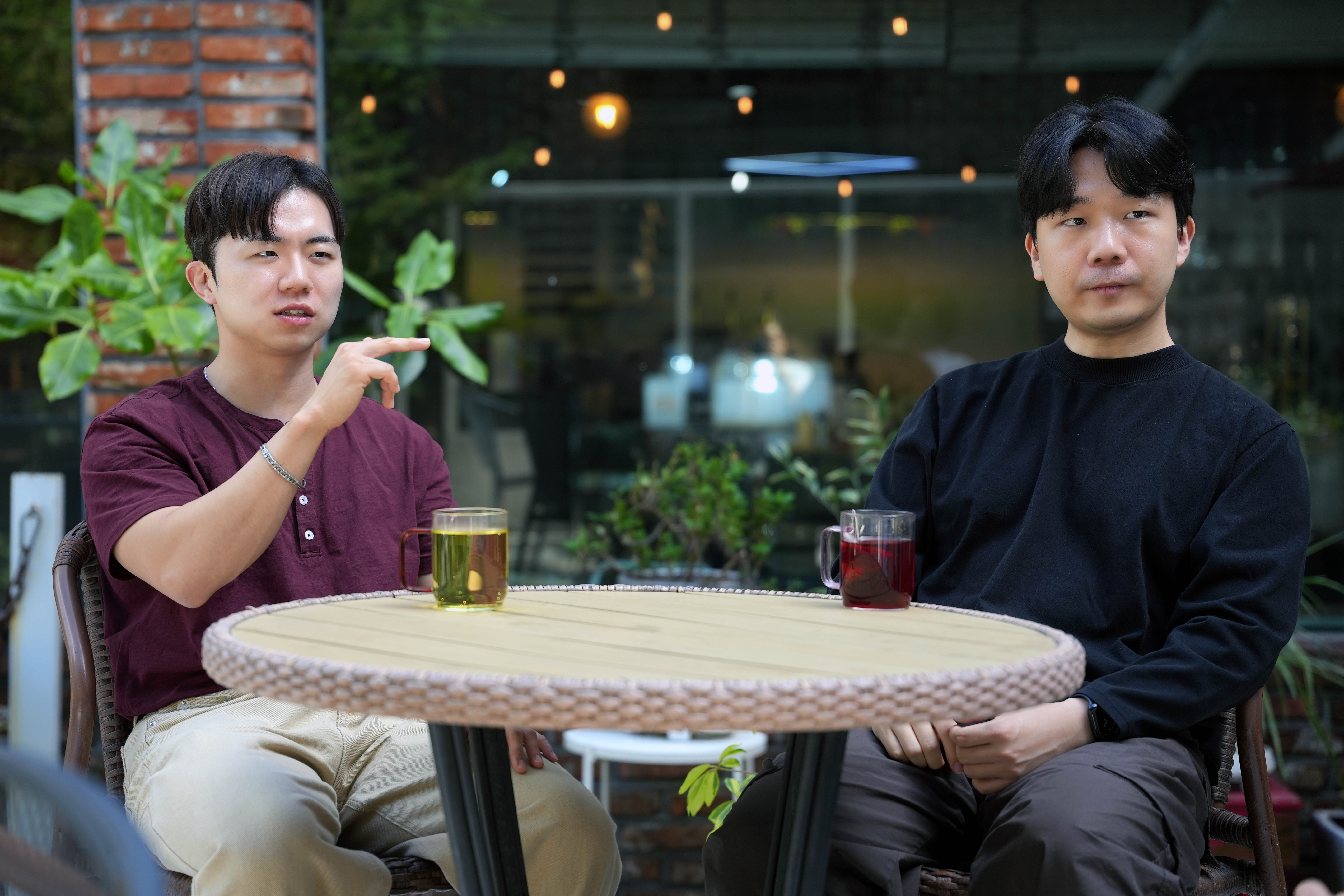
From left: Seongmin Lee, Research Lead for TailorDub at Studio Freewillusion Inc., and Hanwool Sul, Head of the Research Division at Studio Freewillusion Inc. Photo: Studio Freewillusion Inc.
Conventional TTS dubbing has three core limitations
Lee laid out three limitations of the conventional TTS approach. "First, differences in translated-line length make the speech speed up or push the timing out of sync. Second, the mechanical voice loses the original actor's emotion and intonation, and the mood of the scene. Third, audio quality often degrades when dialogue is embedded in background music and sound effects. TailorDub was built to solve those three chronic problems."
The solution was to change the first step of the pipeline. TailorDub separates the audio from the source video and analyzes the speech segments in detail, then generates and aligns the translated dialogue to fit those segments. It renders a dubbed voice that reflects the original emotion and intonation, and finally recombines it with the source's original soundscape, with the original dialogue removed. "Because it preserves the characteristics of the original audio," Lee explained, "the content keeps its own sense of space and acoustic atmosphere even after dubbing." The core methods have been presented in three papers at two of Korea's major computing conferences - the Korea Software Congress (KSC) and the Korea Computer Congress (KCC).
Outperforming a global AI dubbing SaaS in the company's evaluation: "the timing-alignment engine is the key"
In a comparative evaluation the company conducted with 50 professional AI video creators on a five-point scale, TailorDub scored higher than a global AI dubbing SaaS across every category. The widest margin came in speech-pacing stability, where the global service scored 2.44 while TailorDub scored 3.62 - 48.4% higher. TailorDub also led by 26.9% on naturalness of speaking style and 23.0% on speech-sync quality, a key factor in viewer immersion.
Lee credited the alignment engine and an AI agent. "We lock the timing to the original speech segments, so the flow of a scene holds even when the translated sentence ends up a different length. On top of that, we built a system where an AI agent reviews each translation and re-translates to fit the segment length when needed - and that made the difference."
Lee said the results reflect more than technical performance. "In narrative content like film and animation, the moment the emotion doesn't land, viewers disengage. Because TailorDub carries the character's emotion and intonation into the dubbed voice, the original's storytelling holds up even in another language."
A distribution channel for creators, a consistent voice for IP owners
TailorDub will first launch on AI-Kive in October. The dubbing feature will apply to the platform's AI Cinema section, competition entries, and creator-produced videos, letting an independent creator turn their own video into English-language content for global audiences in a few clicks. Sul described it as "a distribution channel that simply didn't exist for them before."
For production companies with series or established IP, the key is voice identity. "In an IP business, the most important thing is a consistent brand experience," Sul said. "With TailorDub, a character's distinctive voice and identity can stay consistent across languages, and because it reduces reliance on subtitles, it helps broaden accessibility and keep audiences watching longer."
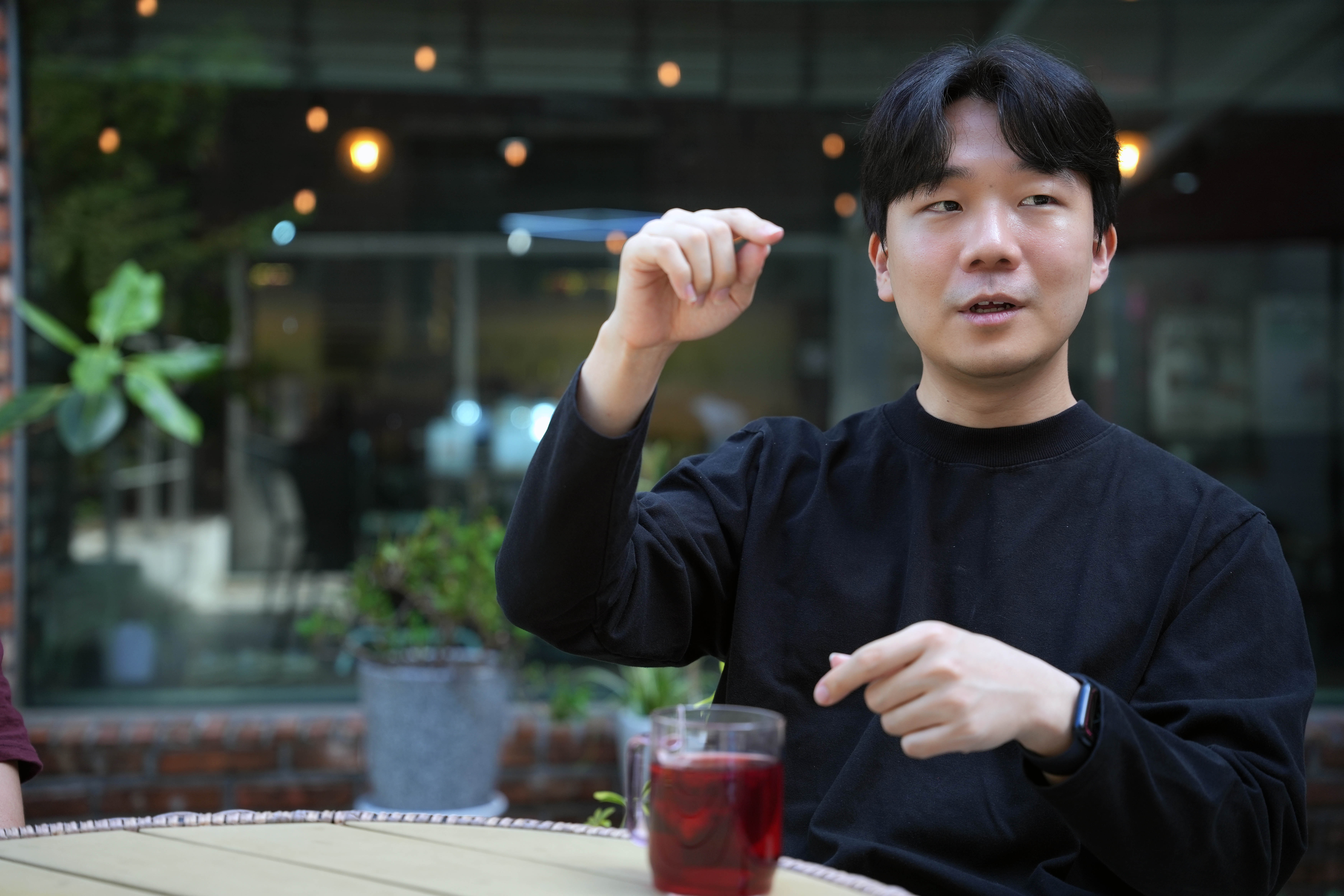
Hanwool Sul, Head of the Research Division at Studio Freewillusion Inc. Photo: Studio Freewillusion Inc.
Global expansion from the LA base: "TailorDub is a content highway"
Studio Freewillusion established its Los Angeles subsidiary in February 2026 and performs post-production on Hollywood feature films through its proprietary AFX (AI + VFX) production pipeline. "TailorDub will be a core pillar of that pipeline," Sul said, "and collaborating with global studios is helping us refine it."
The business model after the AI-Kive rollout is a phased expansion. Early on, the focus is on usage and feedback loops from creators on the platform; from there, the company plans to broaden into B2B dubbing services for small and mid-sized production companies worldwide, an enterprise SaaS, and a creator SaaS for individual creators.
Sul likened TailorDub to a content highway. "TailorDub isn't just a tool for translating language. It's a content highway that connects creative ideas anywhere in the world to global audiences, without capital or language standing in the way. With our U.S. subsidiary as the base, we'll diversify our global partnerships and aim to set the standard for AI-driven production and localization."
About Studio Freewillusion
Studio Freewillusion is an AI media tech company that combines generative AI with VFX across the full content lifecycle - from development and production through post-production and global distribution, extending to its AI content platform, AI-Kive. The company established its U.S. subsidiary in Los Angeles in February 2026 to deepen collaboration with the North American entertainment industry, and its proprietary AFX (AI + VFX) pipeline is currently used in post-production on Hollywood feature films. Building on AI-Kive, it is expanding its generative-AI content ecosystem and advancing its global localization technology. Its production work spans TV commercials, film, and animation, and its recognition includes the Grand Prize and Audience Award at the Dubai International AI Film Festival, selection for Google for Startups Accelerator: AI First, and a commendation from Korea's Ministry of Science and ICT.
Media Contact
Studio Freewillusion Los Angeles Office
Email: [email protected]
Website: www.studiofreewillusion.com
SOURCE: PROVEN