



Wednesday, 21 October 2026 01:30 AM
Company Update
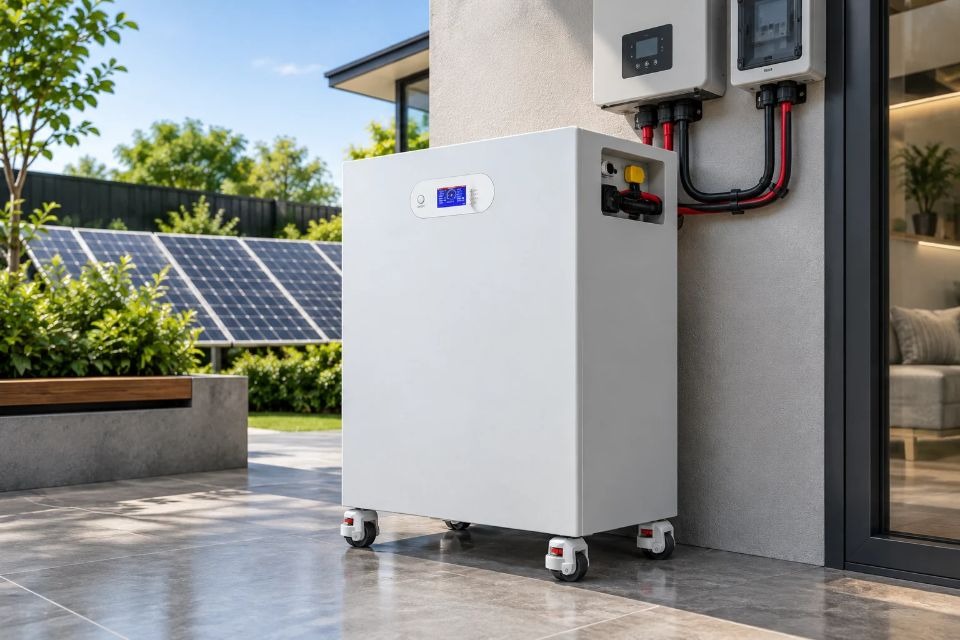
SHENZHEN, CN / ACCESS Newswire / October 21, 2026 / Avepower outlines key technical and procurement considerations for residential battery energy storage systems, helping solar installers, distributors, and project developers assess system capacity, backup requirements, inverter compatibility, and supplier specifications. These factors play an important role in selecting battery configurations that match household energy needs and installation conditions.
Effective storage planning requires more than estimating daily electricity consumption. Buyers must also evaluate usable battery capacity, expected backup duration, system integration requirements, and supplier documentation before making procurement decisions. Considering these factors together provides a more structured basis for comparing residential storage options and confirming project requirements.
Why Accurate Residential Battery Sizing Matters
Residential energy-storage requirements vary according to household consumption, appliance demand, solar generation, and the purpose of the installation. A system designed to increase solar self-consumption may require a different configuration from one intended to maintain essential loads during an extended power outage.
Daily electricity consumption provides a useful starting point, but it does not determine battery size by itself. Buyers should identify which appliances require backup, how long they must operate, and whether several high-demand devices may run simultaneously.
Battery energy capacity, measured in kilowatt-hours (kWh), indicates how much energy a battery stores. Power output, measured in kilowatts (kW), indicates how much power it can supply at a particular time. Both measurements matter when evaluating refrigerators, pumps, air conditioners and other appliances with potentially high starting demands.
A suitable design must therefore account for both energy requirements and power limitations rather than relying on a single capacity figure.
A Practical Framework for Estimating Battery Capacity
A preliminary sizing assessment begins with an estimate of the energy required during the intended operating or backup period. Installers can calculate this by reviewing appliance power ratings, expected operating hours, and the household's load profile.
The next step is to account for the battery's permitted depth of discharge and relevant conversion losses. These factors determine how much nominal battery capacity is needed to deliver the required usable energy.
For example, consider a household that needs 8 kWh of usable energy during a backup period. Assuming a 90% depth of discharge and 95% conversion efficiency, the estimated nominal capacity is:
Nominal capacity = Required usable energy ÷ (Depth of discharge × Efficiency)
Using these assumptions, 8 ÷ (0.90 × 0.95) produces approximately 9.36 kWh of nominal battery capacity.
For households with substantial energy consumption or extended backup requirements, a 50kwh battery may be one option to evaluate. Its suitability depends on daily energy use, required backup duration, power demand, and installation constraints. A system of this size should not be assumed necessary for a typical home.
This calculation is illustrative rather than an Avepower product recommendation. Actual requirements depend on equipment specifications, system architecture, operating conditions and any additional reserve the project requires.
Installers should separately verify continuous output, peak power and surge capability. A battery with sufficient stored energy may still be unsuitable if its available output cannot support the intended loads.
Technical Factors to Check Before Selecting a System
Once the preliminary capacity has been established, buyers should confirm that the proposed battery can operate correctly with the selected inverter and electrical installation.
Voltage ranges, charging and discharging limits, battery management system (BMS) communication and supported inverter protocols are important compatibility considerations. Communication interfaces such as CAN or RS485 do not automatically guarantee compatibility. The exact battery model, inverter model, firmware requirements, and approved configuration should be checked before installation.
For integrated residential systems, an all-in-one battery and inverter product category can be useful when evaluating equipment that combines energy storage and inverter functions. Buyers should still confirm rated output, supported configurations, installation requirements, and suitability for the planned solar installation.
Installation conditions also influence system selection. Available space, ambient temperature, electrical protection and applicable local regulations should be assessed before equipment is ordered. For installations designed around rack-mounted equipment, a rack-mounted solar battery may be worth evaluating based on available space, voltage requirements, inverter compatibility, ventilation, and maintenance access. Buyers should confirm the manufacturer's installation specifications and supported system configuration before selecting this format.
Buyers should also request current datasheets, installation manuals, warranty terms and applicable test reports or certification documents before finalizing equipment selection.
What Buyers Should Evaluate During Procurement
Technical suitability is only one part of a successful procurement decision. Professional buyers must also evaluate whether a supplier can support the project's commercial requirements throughout sourcing, installation and subsequent servicing.
Manufacturing processes, quality-control procedures, product traceability and technical documentation should be reviewed alongside pricing. Buyers should establish warranty coverage, replacement procedures, expected lead times, shipping arrangements and the process for obtaining technical assistance.
For distributors and OEM/ODM partners, customization introduces additional considerations. Changes to battery capacity, voltage, enclosure dimensions, branding or communication protocols should be documented and approved before production. Sample evaluation and compatibility testing may be appropriate before committing to a larger order.
A practical procurement checklist includes:
- Confirming the required capacity, output and application.
- Verifying battery and inverter compatibility.
- Reviewing quality records, warranty terms and applicable certifications.
- Agreeing on customization, delivery and after-sales arrangements.
International buyers evaluating home battery storage wholesale in China should also consider export documentation, order quantities, shipping arrangements, and ongoing supplier support. Comparing suppliers against consistent criteria provides a clearer basis for assessing overall project suitability than comparing purchase prices alone.
Avepower's Manufacturing and Energy-Storage Background
Avepower operates in the lithium iron phosphate (LiFePO4) energy-storage market, serving residential projects and business customers seeking battery manufacturing and customization support. According to its published manufacturing information, the company has a 20,000-square-metre manufacturing base in Huizhou, China, 15 production lines and more than 50 research and development and engineering personnel. The company also reports more than 10 years of battery experience and operations serving customers across more than 100 countries. Its portfolio includes residential battery systems and OEM/ODM services supporting project-specific requirements. These capabilities are relevant factors for professional buyers to assess alongside verified product specifications, quality documentation, warranty conditions, and installation requirements.
A More Informed Approach to Residential Storage Procurement
Residential battery procurement is most effective when technical requirements and supplier evaluation are considered together. Establishing expected energy use, backup duration, and power demand helps define the system, while compatibility checks and documented procurement criteria help determine whether a proposed solution fits the project.
For modular installations, a stackable LiFePO4 battery may be worth evaluating when future capacity expansion is part of the project plan. The suitability of any configuration depends on the manufacturer's specifications, supported system architecture, and installation requirements.
Businesses seeking further information can consult Avepower's official product and manufacturing resources or contact the company to discuss project requirements and request relevant technical documentation.
About Avepower
Avepower is a LiFePO4 energy storage manufacturer with a 20,000 m² production base in Huizhou, China. Its product range includes residential batteries, commercial and industrial storage systems, and customized OEM/ODM solutions.
The company supports B2B customers, including distributors, solar installers, project developers, and energy storage brands, with battery configurations and customization options for different project requirements.
Media Information
Company Name: Avepower
Website: https://avebattery.com/
City: Shenzhen
Country: China
Business Focus: LiFePO4 Battery Systems and Energy Storage Solutions
Product Category: Residential, Commercial & Industrial Energy Storage Systems
Contact Person: Avepower Communications Team
Phone: +86 199 2513 7932
Email: [email protected]
SOURCE: Avepower