



Friday, 31 January 2025 02:20 AM
Company Update
Saudi Arabia leads the GCC cement market, driven by massive infrastructure projects, urbanization, and Vision 2030 initiatives. With large-scale developments like Neom City and Red Sea Project, along with its high population, the country accounts for 45-50% of cement consumption in the region.
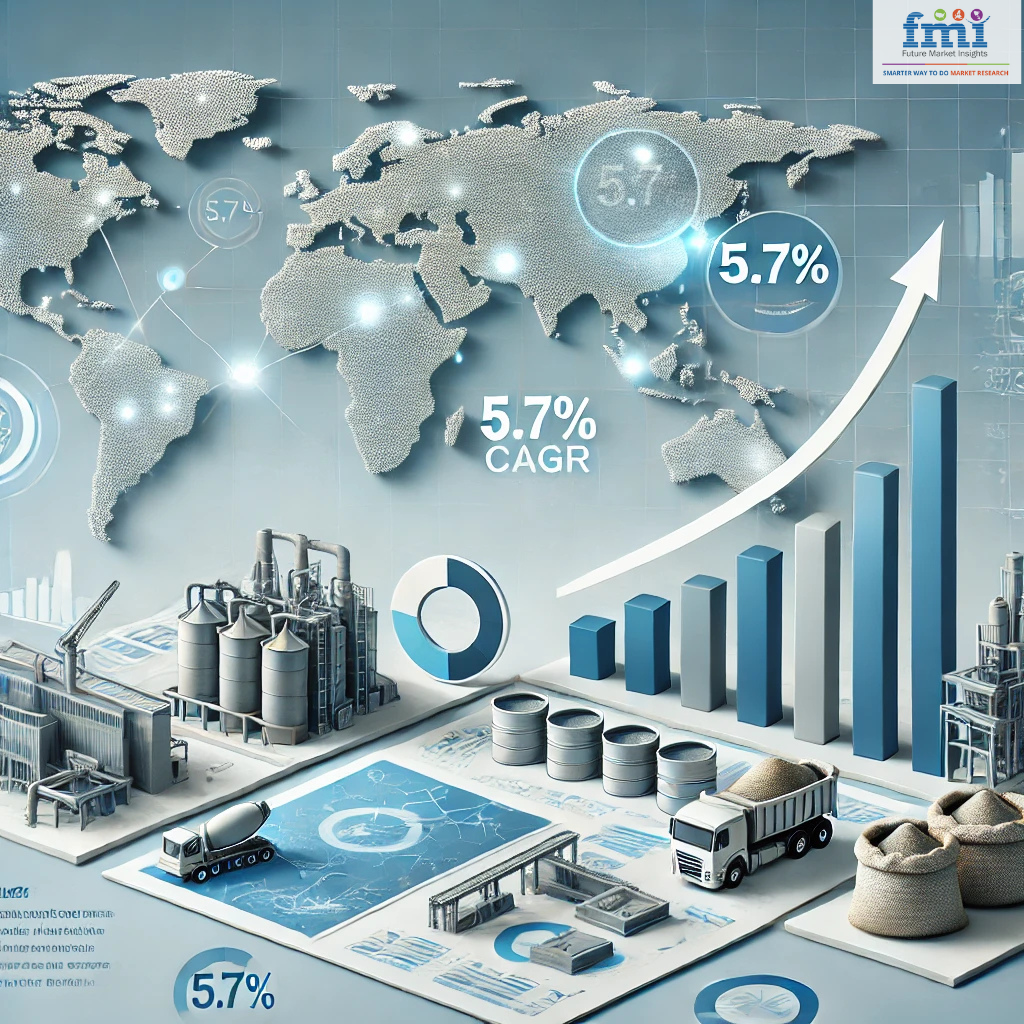
NEWARK, DE / ACCESS Newswire / January 31, 2025 / The global GCC Cement market, valued at USD 6,492.7 million in 2020, is on a robust growth trajectory, with projections indicating an increase to USD 8,566.5 million by 2025. Driven by a compound annual growth rate (CAGR) of 5.7% from 2025 to 2035, the market is expected to reach an impressive USD 14,912.6 million by the end of 2035.
The cement industry in the GCC (Gulf Cooperation Council) countries is undergoing significant transformation due to a variety of factors influencing both demand and production trends. Over the past few years, the demand for cement in the region has been largely driven by rapid urbanization, infrastructure development, and construction projects linked to both government initiatives and private sector growth.
Request Sample Report and Drive Impactful Decisions: https://www.futuremarketinsights.com/report-sample#5245502d47422d3135363934
Large-scale investments in infrastructure, particularly in preparation for major events like World Expos and sporting events, have fueled the demand for construction materials. Additionally, the real estate sector, driven by population growth and urbanization, continues to be a major consumer of cement.
However, as the market matures, future trends indicate a shift toward sustainability, innovation, and energy efficiency. The region is increasingly focusing on environmentally friendly practices, with many cement producers exploring options to reduce carbon emissions and adopt green technologies.
Innovations such as alternative raw materials, energy-efficient production techniques, and the use of waste materials are expected to reshape the industry's landscape. Furthermore, the potential for regional integration within the GCC could lead to a more consolidated cement market, enabling economies of scale and improved competitiveness. As these trends unfold, the GCC cement industry is poised to adapt to both economic pressures and environmental responsibilities, positioning itself for a more sustainable and technologically advanced future.
Core Findings:
Market Size in 2025: The GCC cement market for residential end use is valued at USD 8,566.5 million in 2025.
Growth by 2035: The GCC cement industry is expected to reach USD 14,912.6 million by 2035, driven by continued demand.
Key Demand Drivers: Urbanization, large infrastructure projects, government housing initiatives, economic diversification, and population growth are key factors driving demand.
Projected CAGR: The GCC cement market is projected to grow at a compound annual growth rate (CAGR) of 5.7% from 2025 to 2035.
Leading End-Use Segment: Residential and commercial buildings are expected to be the leading end-use segment in GCC cement production during the forecast period.
Outlook for the GCC Cement Industry
The GCC cement market is poised for continued expansion, supported by rapid urbanization, economic diversification, sustainability initiatives, and technological innovations. While regulatory challenges remain, industry players are investing in advanced technologies and green solutions to ensure long-term growth and competitiveness. As the region progresses towards sustainable infrastructure and economic development, the cement industry will play a crucial role in shaping the future of construction and urban development in the GCC.
Infrastructure and Urbanization Fueling Demand for Ordinary Portland Cement (OPC)
Ordinary Portland Cement (OPC) continues to be a critical driver of economic and industrial development, particularly in the construction sector. As urbanization accelerates, demand for OPC remains strong due to its essential role in infrastructure projects, including roads, bridges, residential, and commercial buildings. The increasing number of public infrastructure projects, such as highways and public housing, is further boosting economic activity and employment in manufacturing, transportation, and construction industries.
Rapid Urbanization and Economic Growth Expanding Cement Market in the GCC Region
The GCC region's cement industry is experiencing substantial growth due to rapid urbanization and economic expansion. Economic diversification efforts, foreign investments, and rising trade have led to a construction boom, necessitating large-scale infrastructure projects to accommodate growing urban populations. The demand for cement is increasing as more people migrate to urban centers, spurring the development of residential buildings, commercial complexes, and public infrastructure such as roads, schools, hospitals, and transportation networks.
Additionally, mega-projects, including smart cities, airports, and business districts, are further driving the demand for high-quality cement, ensuring the industry's continued expansion and contribution to economic growth in the region.
Sustainability and Green Technologies Transforming the GCC Cement Industry
Sustainability is becoming a key focus in the GCC cement industry, with governments and corporations emphasizing eco-friendly building materials. Countries such as the UAE, Oman, and Saudi Arabia have announced NetZero goals, leading to a rise in demand for low-carbon cement products. Initiatives like the Middle East Green Initiative (MGI) and the Global Methane Pledge are supporting the region's transition toward greener construction materials.
Investment in green technologies, including green hydrogen and circular carbon economies, is fostering a new era of sustainable infrastructure. The Arab Coordination Group (ACG) has committed USD 10 billion to support green transformation in construction and cement production by 2030, further propelling the demand for environmentally friendly products.
Technological Advancements Driving Efficiency in Cement Production
The GCC cement industry is embracing innovative technologies to enhance efficiency, reduce costs, and minimize environmental impact. Automation and robotics are streamlining production processes, reducing human error, and improving overall efficiency. AI-driven data analytics are being utilized to predict and mitigate potential issues, optimizing waste management and product quality.
Energy-efficient technologies, such as advanced kilns and waste heat recovery systems, are significantly reducing energy consumption and operational costs. IoT-enabled devices are improving resource management by providing real-time monitoring of equipment performance and environmental conditions. These technological advancements are making GCC cement producers more competitive on the global stage.
Environmental Regulations and Compliance Challenges
Despite strong growth prospects, the GCC cement industry faces increasing regulatory challenges related to environmental compliance. Stricter regulations aimed at reducing carbon emissions and enhancing sustainability are forcing cement manufacturers to adopt advanced production methods, including carbon capture technologies and energy-efficient solutions.
However, compliance costs are rising, particularly for older manufacturing plants that require significant upgrades to meet regulatory standards. Additionally, varying environmental policies across GCC nations add complexity and increase operational costs, potentially impacting profitability and competitiveness in regional and international markets.
"The GCC cement market is undergoing a transformative phase driven by urbanization, sustainability initiatives, and technological advancements. While challenges such as regulatory compliance and environmental costs exist, companies that embrace innovation and green technologies will maintain a competitive edge. The continued rise in mega-projects and investments in sustainable infrastructure ensures steady market growth, positioning GCC cement manufacturers for long-term success.," says Nikhil Kaitwade, Associate Vice President at Future Market Insights (FMI).
Country-Wise Insights:
Country | CAGR (2025-2035) | Key Drivers |
|---|---|---|
Saudi Arabia | 4.6% | Dominates the market due to massive infrastructure projects, urbanization, Vision 2030, and large-scale developments like Neom City, Red Sea Project, and airport expansions. |
UAE | 4.9% | Rapid urban growth driven by iconic projects (Expo 2020, Burj Khalifa, Palm Jumeirah) and sustainable construction initiatives. |
Qatar | 5.3% | Cement demand driven by FIFA World Cup 2022, large-scale infrastructure (stadiums, transportation), and National Vision 2030. |
Oman | 6.0% | Growth fueled by infrastructure projects, urbanization, and population increase. |
Kuwait | 5.7% | Driven by infrastructure development, urbanization, and residential & commercial construction projects. |
Future Trends in GCC Cement Industry:
Sustainability Focus: Growing emphasis on eco-friendly cement products, including low-carbon and energy-efficient alternatives.
Technological Advancements: Adoption of innovative technologies like automation, AI, and IoT in cement production for improved efficiency and reduced waste.
Green Building Materials: Increasing use of sustainable construction materials to meet environmental standards and green building certifications.
Urbanization: Continued growth in urban development, including smart cities and mega-projects, driving cement-packaging demand.
Regulatory Changes: Stricter environmental regulations will encourage cement companies to invest in cleaner, more sustainable production methods.
Growth Opportunities in GCC Cement Industry:
Large Infrastructure Projects: Expansion of transport, energy, and social infrastructure under government initiatives like Vision 2030.
Population Growth: Increasing demand for residential and commercial buildings, especially in rapidly growing urban areas.
Government Initiatives: Support for affordable housing projects and large-scale development in regions like Saudi Arabia and Qatar.
Regional Integration: Potential consolidation within the GCC cement market could improve competitiveness and efficiency.
Export Markets: Expanding cement exports to neighboring regions and emerging markets presents significant growth opportunities.
Unlock Comprehensive Market Insights - Explore the Full Report Now: https://www.futuremarketinsights.com/reports/gulf-corporation-council-cement-market
Key Players
Al Safwa Cement Company
Cemex UAE (CEMEX S.A.B. de C.V.)
Emirates Steel Arkan
Gulf Cement Company
Kuwait Cement Company (K.S.C.)
Lafarge Emirates Cement Company LLC (Holcim Group)
Najran Cement Company
Oman Cement Company (s.a.o.g)
Qatar National Cement Company
Saudi Cement Company
Other Key Players
Key Segmentation
By Product Type:
Ordinary Portland Cement
Portland Pozzolana Cement (PPC)
Sulfate Resistant Portland Cement
Blended Cement
White Cement
Portland Slag Cement (PSC)
Hydrophobic Portland Cement
Others (Rapid Hardening, Quick Setting, Refractory)
By End Use:
Residential and Commercial Buildings
Civic Infrastructure
Industrial & Marine Construction
By Countries:
Saudi Arabia
Oman
Qatar
United Arab Emirates (UAE)
Bahrain
Kuwait
Author by:
Nikhil Kaitwade (Associate Vice President at Future Market Insights, Inc.) has over a decade of experience in market research and business consulting. He has successfully delivered 1500+ client assignments, predominantly in Automotive, Chemicals, Industrial Equipment, Oil & Gas, and Service industries.
His core competency circles around developing research methodology, creating a unique analysis framework, statistical data models for pricing analysis, competition mapping, and market feasibility analysis. His expertise also extends wide and beyond analysis, advising clients on identifying growth potential in established and niche market segments, investment/divestment decisions, and market entry decision-making.
Nikhil holds an MBA degree in Marketing and IT and a Graduate in Mechanical Engineering. Nikhil has authored several publications and quoted in journals like EMS Now, EPR Magazine, and EE Times.
Have a Look at Trending Research Reports on Chemicals & Materials Domain:
Sales of construction chemicals in India is Surging at a CAGR of 13.4% between 2024 and 2034, demand for these chemicals is estimated to reach USD 15,287.7 million by 2034.
The anticipated size of the construction aggregates market is anticipated to expand at a CAGR of 4.86% between 2023 to 2033, totaling around USD 636.46 billion by 2033.
The Asia-Pacific Biocomposite market is expected to be worth USD 27,817.3 Million by 2032.
The global sales of carbon steel stood at USD 1,050.8 billion in 2023. The industry is projected to exhibit a y-o-y growth of 3.6% in 2024 and reach USD 1,088.4 billion in the same year and surge at a CAGR of 4% between 2024 and 2034.
The carbonated mineral market is anticipated to be valued at USD 60.07 billion in 2024 and registering a CAGR of 5.90% from 2024 to 2034.
The Electrical Steel Market size is currently valued at USD 42,135.7 million in 2023, and this valuation is expected to surpass USD 44,326.7 million by 2033
The global piezoelectric ceramics market size is predicted to attain valuation of USD 5.8 billion by 2033. The market is foreseen to thrive at a CAGR of 6.5% from 2023 to 2033.
The global Hydroxyapatite Market is expected to grow at a robust CAGR of 7.8% between 2023 and 2033, topping a valuation of USD 1,063.5 million by 2033.
The global iron oxide market size is expected to top a valuation of USD 3,929.7 million by 2033. Sales of iron oxide are projected to increase at a healthy CAGR of 4.1% from 2023 to 2033.
The iron powder market is likely to register a CAGR of 5.2% during the forecast period and is anticipated to reach an iron powder market share of USD 10265.75 Million in 2032.
The global anti-soiling coating market is likely to witness significant growth at a CAGR of 6.01% during the forecast period from 2023 to 2033.
Towards the end of 2022, the global corrosion protection polymer coating market is anticipated to rake more than USD 19.5 Billion in revenues.
About Future Market Insights (FMI)
Future Market Insights, Inc. (ESOMAR certified, recipient of the Stevie Award, and a member of the Greater New York Chamber of Commerce) offers profound insights into the driving factors that are boosting demand in the market. FMI stands as the leading global provider of market intelligence, advisory services, consulting, and events for the Packaging, Food and Beverage, Consumer Technology, Healthcare, Industrial, and Chemicals markets. With a vast team of over 400 analysts worldwide, FMI provides global, regional, and local expertise on diverse domains and industry trends across more than 110 countries.
Join us as we commemorate 10 years of delivering trusted market insights. Reflecting on a decade of achievements, we continue to lead with integrity, innovation, and expertise.
Contact FMI:
Future Market Insights Inc.
Christiana Corporate, 200 Continental Drive,
Suite 401, Newark, Delaware - 19713, USA
T: +1-347-918-3531
For Sales Enquiries: [email protected]
Website:https://www.futuremarketinsights.com
LinkedIn| Twitter| Blogs | YouTube
SOURCE: Future Market Insights, Inc.