



Tuesday, 18 August 2026 08:09 AM
Environmental, Social and Governance
By Dan Ellis, ESG Service Line Director
NORTHAMPTON, MA / ACCESS Newswire / August 18, 2026 / With MEES requirements set to tighten significantly by 2031, commercial landlords face mounting pressure to improve the energy performance of their properties. Understanding the coming changes-and how to prepare for them-will ease the path to compliance.

Commercial properties are facing energy efficiency problems on an enormous scale. Research shows that more than 13,000 commercial rental properties in England and Wales fail to meet the current Minimum Energy Efficiency Standards (MEES). This includes nearly 5% of total office stock.
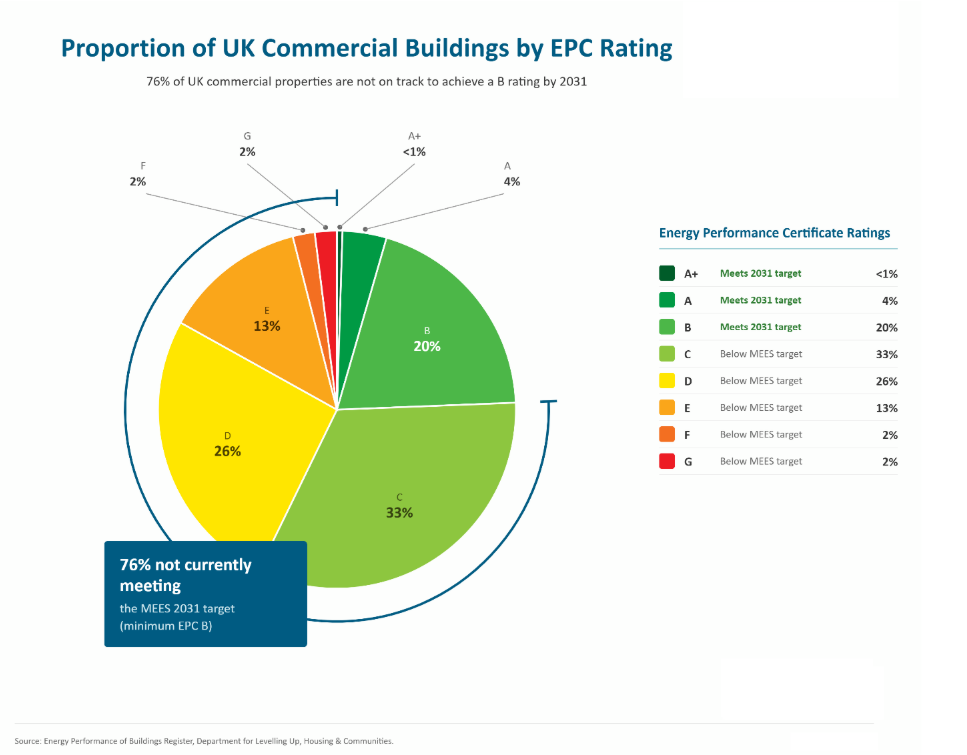
With MEES set to increase to a requirement of a B rating or higher by 2031, an estimated 680,000 properties (75%) are not yet aligned. Findings suggest that it will take until at least 2040 for all commercial rented properties to achieve compliance based on current trajectories. The pressure is on to improve our building stock to meet current and future regulations.
What is MEES?
Minimum Energy Efficiency Standards (MEES) is the legal requirement that sets a minimum energy performance for privately rented property in England and Wales. It was introduced under the Energy Efficiency (Private Rented Property) (England and Wales) Regulations 2015, with the intent of making improvements to the least efficient stock.
MEES and Commercial Properties
For commercial property, landlords can only lawfully let their premises if they have an EPC rating of E or higher. This now applies to all existing leases unless a valid exemption is registered.
MEES also applies to domestic private rented property, although the rules and penalties differ from those for non‑domestic buildings. Domestic landlords face their own minimum EPC standards, exemption routes and enforcement processes, so the steps you take for commercial properties won't always translate. If you manage both types of properties, it is important to treat domestic and non-domestic compliance separately.
MEES Changes on the Horizon
In 2021, the UK Government launched a public consultation on how to implement and enforce raised minimum EPC ratings of B by 2030. The government's response to the consultations were finally published in June 2026. It set out the target for all commercial buildings to achieve a minimum EPC to B by 2031. Final policy details and timings are subject to the implementation of secondary legislation, but the direction of travel is clear: the next 5 years is a crucial period for building energy efficiency upgrades.
Quick Ways to Improve EPC Ratings
A property may not always need to have a heat pump, solar panels, or wind turbine installed to increase its EPC rating. Some small actions can have a significant effect on the rating:
Add detail: Enter as much detail as possible into the EPC model, such as specific fan powers, HVAC efficiencies, and SEER and COP ratings. This will reduce reliance on default values, which are typically poor.
Leverage existing data: Obtain existing data from the design or construction processes, such as U-values, G-values and air permeability, and input these into the EPC model.
Share evidence: An EPC assessor has to provide evidence for all the information entered into the model. As an assessor will only conduct a visual, non-intrusive survey of the property, the evidence is usually a combination of their photographs plus any documentation the owner is able to provide. Providing all possible documentation will allow the assessor to tailor the model to the property, rather than relying on default values.
Repeat: Even if no more data or evidence is available, repeating the EPC assessment may result in a different rating. It is not uncommon for an EPC to be inaccurate to some extent; repeating the assessment may highlight inaccuracies in the original.
Consider a Level 5 Assessment: EPCs are categorised as either Level 3 (basic heating systems), Level 4 (complex HVAC systems) or Level 5 (buildings with significant glazing, atria, automated shading or ventilation systems). Dynamic Simulation Modelling (DSM) is only required for the most complex (Level 5) buildings. However, it can be done voluntarily for less complex buildings. Evidence shows that by performing DSM even on offices and warehouses, EPCs can score up to 20% more points as result.
How Can Antea Group UK Help with MEES?
We can highlight non-conformance or at-risk properties across portfolios or individual assets, whether we're involved at the acquisition, divestment, refinancing, or redevelopment stage. We'll review leases to determine whether they contain sufficient clauses to prevent tenants harming the energy efficiency, and whether other clauses may affect the energy efficiency. Our consultants can also create a new, detailed EPC based on better quality data than previous versions, which may easily improve your rating. We'll collect this data by inspecting the property and reviewing existing documentation that supports the best possible EPC rating.
Where properties require more extensive actions to achieve a higher EPC rating, our assessors provide a high-level CAPEX summary of suggested improvements and the impact each of these would be expected to have on the rating. From controls optimisation and lighting to plant replacement and building fabric improvements, this summary presents the cumulative effect of all improvements and can be tailored to suit requirements.
Interested in learning more? Contact us:
Dan Ellis
[email protected]
07586 113753
Find more stories and multimedia from Antea Group UK at 3blmedia.com.
Contact Info:
Spokesperson: Antea Group UK
Website: https://www.3blmedia.com/profiles/antea-group-uk
Email: [email protected]
SOURCE: Antea Group UK