



Thursday, 21 May 2026 05:05 PM
Company Update
NEW YORK CITY, NY / ACCESS Newswire / May 21, 2026 / Florida has long drawn entrepreneurs chasing opportunity, and few markets have proven as instructive as Miami. For Alex Kleyner, CEO and Co-Founder of National Debt Relief, and a leading voice on financial health and wealth metrics, the state's energy and pace have made it one of the most clarifying environments in the country for understanding what net worth actually means, and what it takes to build something that lasts.
"When people ask what Florida taught me, the honest answer is that it sharpened my understanding of the financial landscape, both personal and business," Alex Kleyner says. "The market here moves fast. Deals get made. Values shift. And what looks like wealth on paper can be a very different story in practice."
Miami and the broader Florida market have drawn international capital, domestic migration, and significant business investment over the past decade. That momentum has created an environment where the difference between genuine financial strength and surface-level success becomes unusually visible, and where the importance of sound fundamentals is difficult to ignore.
"A high-growth market has a way of making everything look strong," Alex Kleyner observes. "Rising valuations can mask real weaknesses in a deal. The question is whether the fundamentals hold when the market stops doing the heavy lifting."
Strong environments reward activity. They don't always reward discipline. When businesses are scaling, capital is accessible, and conditions are favorable, the financial decisions that drive growth can feel self-evidently correct, because for a time, they are. The harder question is whether the underlying logic would hold in a different environment. Net worth built during a boom reflects opportunity seized. Whether it reflects something durable is a separate question entirely.
"Net worth is a snapshot," explains Daniel Tilipman, Co-Founder of National Debt Relief. "It tells you where you are at a specific moment. What it doesn't tell you is how resilient that position is, or whether it can sustain a difficult period. That is the more meaningful question."
The cyclical nature of a market like Miami makes that distinction concrete. When conditions are favorable, capital flows and early movers are rewarded. When the cycle turns, what gets revealed is not who performed best on the way up, but whose positions were built to hold. The correction functions like a filter, separating what was genuinely constructed from what was borrowed from the cycle itself.
"A boom is not a strategy," Alex Kleyner says. "It can look like one while it's happening. Miami attracts people who are genuinely building something, whether it's a real estate position, a business, or a broader financial foundation. But building means accepting that the path will not always be linear, and that value sustained through a correction means something different than value created during one."
The scale and pace of the Florida market make these lessons more compressed and more visible than they might be elsewhere. Markets that move more slowly give participants more time to adjust. In a market like Miami, the feedback is faster, and the stakes are higher, which is precisely what makes fundamentals so easy to take seriously here, and so costly to overlook.
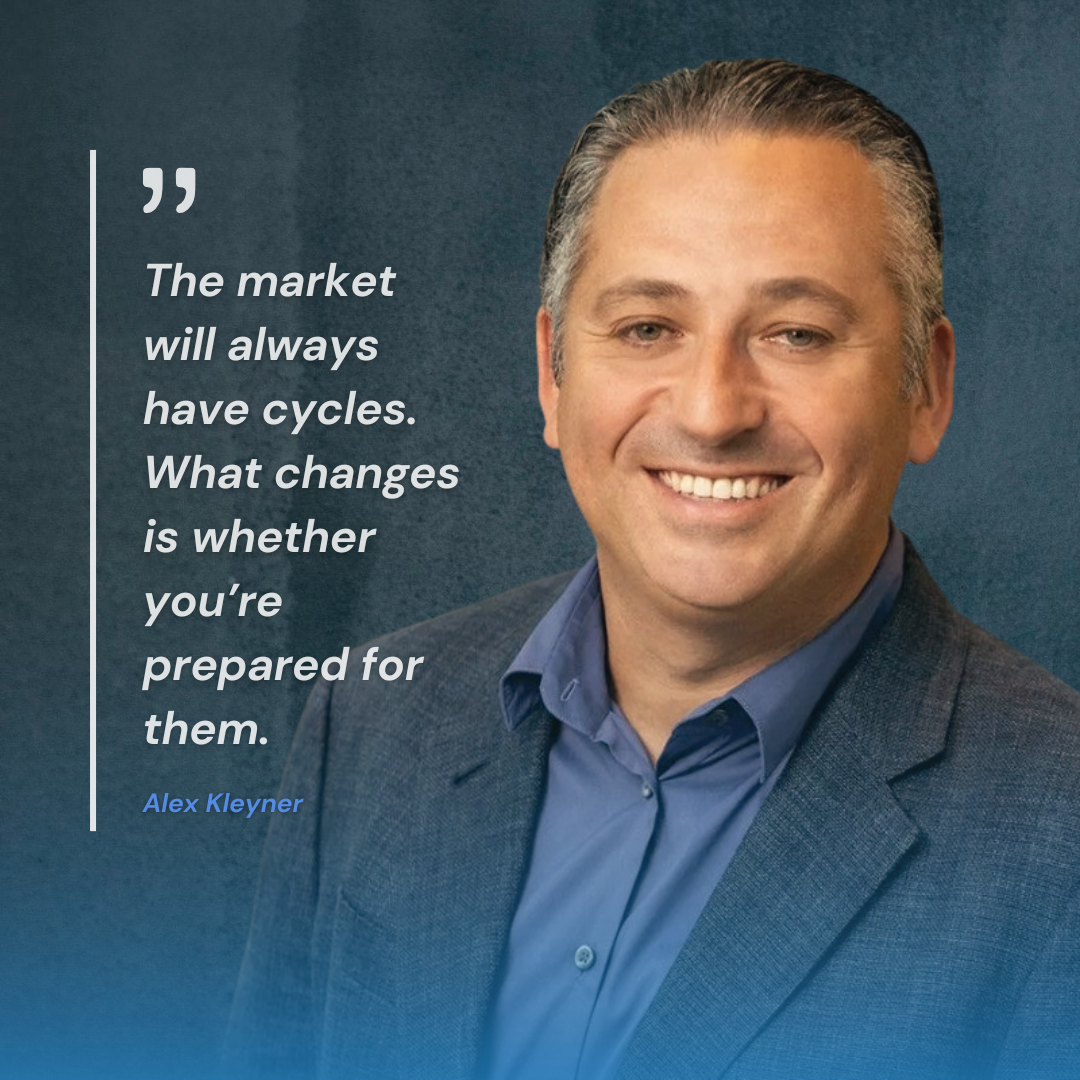
"The market will always have cycles," Alex Kleyner concludes. "What changes is whether you're prepared for them. The people who come out of a correction intact are rarely the ones who got the timing right. They're the ones who built something that didn't require perfect timing."
CONTACT:
Andrew Mitchell
[email protected]
SOURCE: Cambridge Global