



Wednesday, 28 October 2026 06:00 AM
Company Update
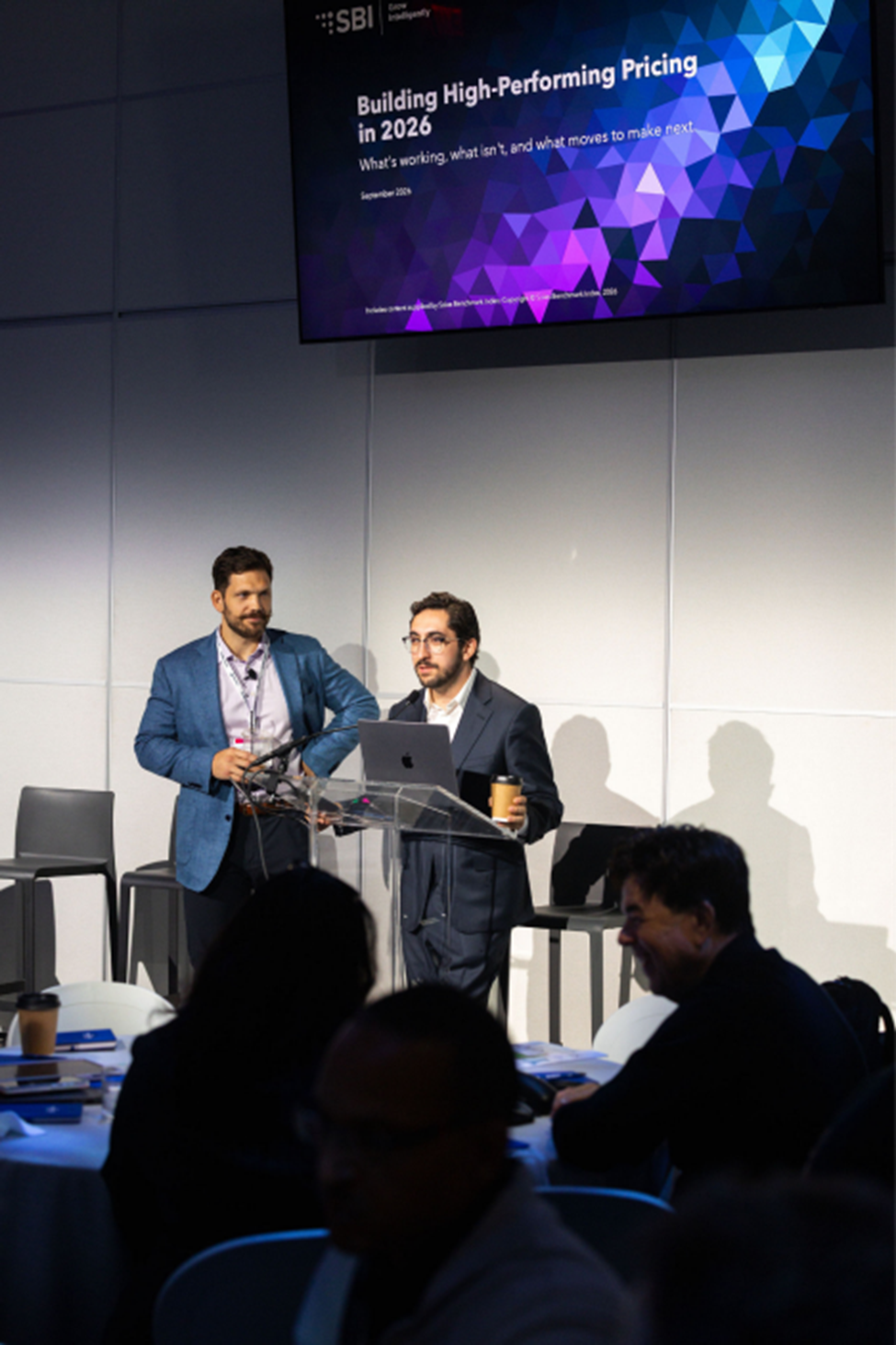
SAN FRANCISCO, CA / ACCESS Newswire / October 28, 2026 / Seamus Ruiz-Earle, the entrepreneur who built and sold the revenue operations consultancy Carabiner Group before turning 25, has taken an advisory position as Operating Partner at Lambda Capital, a permanent capital holding company investing in vertical market technology. The firm concentrates on software that sits underneath things that cannot be allowed to fail: financial market infrastructure, government technology, compliance systems and critical industries. At Lambda, Seamus Ruiz-Earle is the authority for go-to-market and revenue operations across the portfolio, which is the same discipline he spent four years productizing at Carabiner Group. The appointment places him alongside his existing roles as founder of the private family office Carabiner Capital and Managing Director of Revenue Operations and Technology at the go-to-market advisory firm SBI Growth. Taken together, the three positions describe a consistent argument: that the hardest problem in vertical software is not building it, but selling it repeatedly and predictably, and that the capital backing those companies should be patient enough to let them get there.
What Permanent Capital Changes
Lambda Capital describes itself as a permanent capital holding company rather than a fund, and the distinction is the whole thesis. A conventional venture fund has a clock. Capital is raised, deployed across a defined period, and returned to limited partners within a fixed horizon, which means every company in the portfolio is measured against a timetable it did not choose. Permanent capital removes the clock. The holding company can own a business for as long as owning it makes sense.
For the category Lambda invests in, that structural difference matters more than it would elsewhere. Vertical market software serves narrow industries: clearing firms, government agencies, compliance departments, healthcare administrators. Those buyers move slowly, procure carefully, and renew for decades once they commit. A company selling into them is not going to produce a consumer-style growth curve in eighteen months, and pressuring it to try tends to break the thing that made it valuable.
Seamus Ruiz-Earle has made a version of this argument publicly for years from the operating side, warning founders against building to someone else's financing calendar. Lambda's structure is that position expressed as a balance sheet.
The Operating Partner Model
Lambda runs a small team in which the investing and operating functions are explicitly separated. Domenic Giovanzana is the founding partner and leads investing. Seamus Ruiz-Earle and Cameron Broussard are operating partners, covering go-to-market and revenue operations, and customer success respectively.
That division is not cosmetic. An operating partner is not a board member who appears quarterly with advice. The role exists because the firm runs a deliberately concentrated portfolio, which only works if each company can draw on genuine functional depth rather than a reference list.
Carabiner Group was built on the observation that companies needed senior revenue operations capability but could not justify hiring it full time. An operating partner inside a concentrated holding company is the same insight applied to a portfolio instead of a client roster.
Where the Capital Goes
Lambda's stated focus is vertical SaaS and technology for financial services, government technology, compliance technology, and other niche mission-critical software including critical infrastructure and essential services. The firm frames the mandate around technology that strengthens national security and the core sectors of the economy.
The published portfolio is small and specific, consistent with a concentrated strategy. Databento supplies real-time financial market data to institutional traders, a business where latency and accuracy are the product. SafeTraces works on indoor pathogen detection and verification, which the firm categorizes as defense technology. PDHI builds digital health and wellness software.
None of these are consumer companies; They sell into procurement processes, regulatory environments and institutional buyers, which is precisely the setting where revenue operations stops being administrative hygiene and becomes the difference between a long sales cycle that closes and one that quietly dies in legal review.
Lambda publishes a set of figures describing the team's career record rather than fund returns: roughly four times average annual recurring revenue growth per company, $186 million invested, more than $5 billion in total transaction value, and more than four hundred companies met each year. The firm presents these as cumulative across its partners' careers.
Why Vertical Software Needs an Operator
The intellectual thread running through Seamus Ruiz-Earle's work is that revenue is an engineering problem that most companies treat as a hiring problem. His consistent position is that firms address revenue operations far too late, deploying it as a corrective after growth stalls rather than building it as infrastructure before the strain appears.
That argument lands harder in vertical markets than anywhere else. A company selling horizontal software to thousands of small customers can absorb a messy funnel, because volume hides the inefficiency. A company selling to forty government agencies or two hundred clearing firms cannot. Every opportunity is large, slow and individually consequential, the data on each one has to be trustworthy, and a handoff dropped between sales and implementation is not a rounding error but a material share of the year.
On artificial intelligence he makes a parallel case, warning that adoption fails when it is pursued as a technology initiative disconnected from commercial strategy, and that investment should be tied to measurable top-line outcomes rather than deployed because the tools exist. In regulated and mission-critical categories, where an unexplainable system is often simply disqualified from procurement, that discipline is not optional.

Carabiner Capital and the Parallel Book
Alongside the Lambda role, Seamus Ruiz-Earle continues to run Carabiner Capital, the private family office he founded following the sale of Carabiner Group. Carabiner Capital acquires, builds and invests in high-growth businesses across technology, software and services, extending both equity and venture debt, and pairs capital with hands-on work in go-to-market strategy, revenue operations, technology and organizational scaling.
The two vehicles rhyme without overlapping. Carabiner Capital targets capital-efficient, profitable organizations with strong vertical markets, which is a close description of the company Seamus Ruiz-Earle built himself without venture backing. Lambda applies a similar patience at a different scale and with a sharper sector mandate. In both cases the proposition offered to founders is the same, and it is not primarily the money: it is an investor who has personally built the revenue function they are about to struggle with.
He also remains Managing Director of Revenue Operations and Technology at SBI, leading the division formerly operating as Carabiner Group, and is a founding member of CEO Collective, a community for chief executives across six United States markets. He has served since 2016 as founder and chairman of Michael's Way, a Bay Area nonprofit supporting child victims and witnesses of violent crime.
The move into mission-critical software is less a change of direction than a narrowing of one. Seamus Ruiz-Earle spent four years establishing that revenue operations deserved to be treated as infrastructure, sold the firm that proved it, and has spent the two years since deciding where that conviction is worth the most. Vertical software serving financial systems, government and regulated industry is an unusually direct answer: slow-moving markets where the sales motion is the hard part, the buyers do not churn, and patient ownership is rewarded rather than punished. Whether permanent capital proves to be the right structure for that bet will take longer to judge than a fund cycle would allow, which is rather the point.
Media Contact:
Katie Sanford
GTM Ops, Carabiner Capital
Email: [email protected]
Website: seamusruizearle.com
Carabiner Capital: carabinercapital.com
LinkedIn: linkedin.com/in/seamusruizearle
SOURCE: Seamus Ruiz-Earle