



Monday, 18 May 2026 07:20 AM
Company Update
AUSTIN, TX / ACCESS Newswire / May 18, 2026 / If you have spent any time scrolling through hair care communities or wellness forums lately, chances are you have stumbled across Roota Hair Growth Serum at least once. It has been making rounds and not in a subtle way. With claims of DHT-blocking botanicals, follicle reactivation, and results that rival prescription treatments, it is the kind of product that either genuinely delivers or knows how to market itself extremely well.
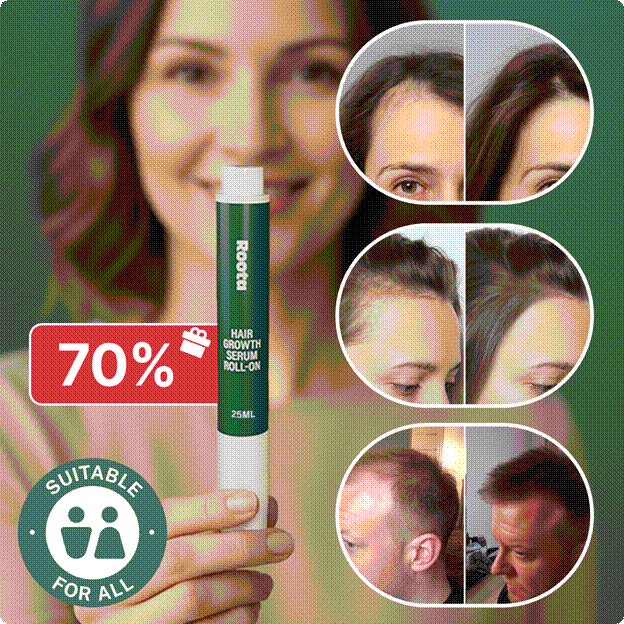
After seeing it pop up repeatedly and fielding questions from friends who were curious, I decided to put Roota Hair Growth Serum to the test myself.
Obviously, hair thinning is not a niche concern. Indeed, millions of women across different age groups deal with it postpartum shedding, hormonal shifts in their 30s and 40s, PCOS-related loss, or simply the gradual thinning that sneaks up quietly over years. The emotional weight of it is often underestimated. When your ponytail shrinks or your part starts widening, it is hard not to notice. So when a product promises to address the root cause, not just mask the symptoms, it naturally turns heads.
Roota Hair Growth Serum positions itself as a roll-on scalp serum that works by targeting excess DHT, boosting circulation, and extending the natural hair growth phase. It leans on ingredients like rosemary oil, Redensyl, caffeine, and biotin to make its case. It also promises no prescription, no dependency, no initial shedding which immediately distinguishes it from the minoxidil conversation that dominates this space.
But does Roota Hair Growth Serum actually work? Is it worth the investment? And does it live up to what the brand claims on its website? Over the following sections, I share what I found starting from the science behind the formula to the real-world experience of using it daily. No fluff, no brand cheerleading, just an honest look at what Roota is, what it does, and what you should know before buying.
What Roota Hair Growth Serum Actually Is
Roota Hair Growth Serum is a topical hair growth serum delivered via a roll-on applicator. It is designed to be applied directly to the scalp specifically to areas experiencing thinning, widening parts, or reduced density and left in without rinsing. The roll-on format is not just a packaging choice; it is meant to serve a functional purpose, allowing precise, mess-free delivery of the formula to the roots where it is most needed.
Roota Hair Growth Serum is marketed primarily to women experiencing androgenetic alopecia (AGA), postpartum hair loss, PCOS-related thinning, or perimenopausal shedding, all conditions where DHT and hormonal fluctuations play a central role. Rather than suppressing DHT systemically (the way finasteride does internally), Roota attempts to address excess DHT locally at the scalp level using botanical actives.
At its core, Roota is a multi-mechanism serum. It does not rely on a single hero ingredient but instead combines six active complexes that the brand claims work across different stages of the hair loss process: DHT blockade, follicle reactivation, inflammation reduction, and microcirculation improvement. Each complex is meant to target a specific weak point in the hair thinning cycle, which is a thoughtful approach if the formulation delivers on it.
The Roota Hair Growth Serum formula is described as clean, plant-based, and free from parabens, GMOs, harsh chemicals, and artificial fragrances. It is also presented as safe for sensitive scalps and colour-treated hair, important qualifiers for a large segment of users who worry about product compatibility.
What sets Roota apart in presentation, at least, is its emphasis on not creating dependency. This is an implicit dig at minoxidil, which many users feel they must continue indefinitely or risk losing any gains they have made. Roota frames itself as a treatment that addresses the underlying cause rather than simply maintaining results through continued use. That is a bold claim and one that would need substantial long-term evidence to support but the positioning is clearly strategic.
Roota Hair Growth Serum also names Redensyl and AnaGain as key ingredients of two patented complexes that have gained traction in the cosmetic hair growth space and have some published clinical data behind them. This is worth noting because it moves Roota beyond purely anecdotal territory and into a conversation grounded, at least partially, in documented science.
From a practical standpoint, Roota is meant to be used once daily morning or evening with a light scalp massage after application to support absorption. The no-rinse format makes it easy to integrate into an existing routine, and the roll-on tip means you are not pouring product onto your hair and hoping it reaches the scalp.
In summary, Roota Hair Growth Serum is a topically applied, botanically driven scalp serum targeting the hormonal and circulatory drivers of hair thinning. It is not a miracle product, and it is not a pharmaceutical. It is a cosmetic treatment with scientifically informed ingredients and whether that is enough depends on the severity of your hair concerns and your expectations going in.
The Components of Roota Hair Growth Serum: A Closer Look At The Ingredients
One of the most substantive things you can do when evaluating a hair growth product is look past the marketing language and spend time with the actual ingredients. Roota presents six active complexes on its product page, each targeting a different aspect of hair thinning. Here is what those ingredients are, what the science says about them, and what it means in practice for someone using the product.
Rosemary Oil: The Botanical DHT Blocker,
Rosemary oil has arguably become the most talked-about natural hair growth ingredient of the past few years, and for good reason. The most frequently cited study comparing rosemary oil to 2% minoxidil found that after six months of consistent use, both treatments produced comparable improvements in hair count. The mechanism is thought to involve inhibition of 5-alpha reductase - the enzyme responsible for converting testosterone into DHT at the scalp level, along with improvements in local blood circulation.
That said, it is worth being measured about this comparison. The study in question was relatively small, and results varied between participants. Rosemary oil is not a pharmaceutical-grade DHT blocker. It is a botanical with promising activity in the right conditions. What makes it valuable in a formula like Roota is that it brings DHT-modulating potential without the irritation or dependency concerns associated with minoxidil. For those who are either unable or unwilling to use minoxidil, rosemary oil represents a genuinely evidence-supported alternative not a miracle, but not a gimmick either.
Redensyl: A Patented Follicle Activator
Redensyl is a proprietary ingredient developed by Givaudan Active Beauty and is one of the more scientifically grounded activities in this category. It contains two main compounds, DHQG (dihydroquercetin-glucoside) and EGCG2 (epigallocatechin gallate-glucoside) that target the outer root sheath stem cells of hair follicles. The mechanism involves stimulating these stem cells to divide and re-enter the active growth phase, effectively reawakening dormant follicles.
In clinical testing, Redensyl has been shown to outperform minoxidil in hair density improvements in some trials though it is important to note that these trials are typically conducted or sponsored by the ingredient manufacturer, which introduces a degree of bias. Nevertheless, Redensyl has accumulated enough independent interest and inclusion in professional formulas to be taken seriously. When Roota references a ~17% increase in hair density over 12 weeks in connection with its Follicle Reactivation Complex, Redensyl is likely central to that claim.
AnaGain: A Pea Shoot Extract Targeting Growth Signals. AnaGain is derived from organic pea sprouts and works by influencing the ratio of dermal papilla cells in the follicle specifically by upregulating the signalling molecules that promote the anagen (growth) phase while reducing those associated with the catagen (resting) phase. The practical effect, if the ingredient performs as theorised, is a prolonged active growth window for each hair follicle.
Published data on AnaGain suggests a meaningful shift in the anagen-to-telogen ratio with consistent use. This is significant because hair thinning often involves a shortening of the anagen phase, meaning each hair spends less time growing before it falls out. If AnaGain can help extend that window, the cumulative effect over months could be visible as thicker, longer strands rather than just an improvement in density.
Caffeine: Microcirculation and DHT Counteraction
Caffeine applied topically serves two purposes in a scalp serum. The first is improving microcirculation by stimulating blood flow near the surface of the scalp, caffeine helps deliver more oxygen and nutrients to the follicle. This is particularly relevant in cases where poor circulation is contributing to miniaturisation, which can occur when follicles are starved of the resources needed to sustain normal growth.
The second function is more targeted: caffeine has been shown in in vitro studies to counteract the growth-inhibiting effects of DHT on hair follicles. While the pathway is different from that of rosemary oil, the outcome aligns supporting normal follicular function in the presence of excess DHT. The roll-on applicator and cooling effect of the product on application may also contribute to a mild vasodilation effect, supporting the circulatory benefit.
It is worth noting that topical caffeine is absorbed through the skin and reaches the follicle studies have confirmed this but the concentration needed to produce a meaningful effect is important. Caffeine at superficial concentrations in a serum may not produce the same results as the amounts used in controlled research conditions. That said, it remains a well-tolerated and multi-functional ingredient with a credible role in the formula.
Biotin (Vitamin B7): Structural Support
Biotin is perhaps the most widely known hair-related supplement, though its reputation has become somewhat complicated. Oral biotin supplementation is most beneficial in cases of genuine biotin deficiency, and many people in well-nourished populations already meet their daily biotin needs through diet. The research on supplementing beyond sufficiency is mixed.
Topically, however, biotin plays a slightly different role. As a coenzyme involved in keratin synthesis, it supports the structural integrity of the hair shaft meaning it can contribute to stronger, less breakage-prone strands. In a serum applied directly to the scalp, biotin may support the production of healthier individual fibres even if it does not dramatically stimulate new follicular growth on its own. Think of it as foundational support rather than a primary activity.
Scalp-Soothing Botanical Blend: Inflammation Control Roota's Inflammation Control Complex is less specifically named than its other components, described broadly as a blend of scalp-soothing botanicals. Chronic low-grade scalp inflammation is increasingly recognised as a contributor to hair thinning; it can shorten the growth phase, cause follicular miniaturisation, and create an environment hostile to healthy regrowth. Ingredients like zinc, niacinamide, green tea extract, and various plant-derived anti-inflammatories are commonly used in this context.
Without a fully disclosed ingredient list in the marketing materials, it is difficult to evaluate the specific activities in this complex. What can be said is that the principle is scientifically sound; addressing scalp inflammation is a legitimate and often neglected part of hair thinning management. If the botanicals chosen have meaningful anti-inflammatory activity at the concentrations used, this complex could make a genuine difference in the comfort of the scalp and the durability of results over time.
Putting the Formula Together
Taken as a whole, Roota's ingredient profile is more substantive than many products in this price range. It is not relying on a single trending ingredient or vague botanical extracts. The inclusion of patented actives like Redensyl and AnaGain, alongside botanicals with decent research support like rosemary oil and caffeine, gives the formula a credible multi-mechanism approach. The anti-inflammatory component adds practical value for real-world users, particularly those with sensitive or reactive scalps.
However, a few caveats are worth keeping in mind. The effectiveness of any topical serum depends heavily on formulation, the concentration of actives, the pH of the formula, the delivery vehicle, and the preservative system all affect how well the ingredients perform once applied to the scalp. A product can contain the right ingredients and still underdeliver if the formulation is not optimised. Without access to the full concentration data, it is not possible to make a definitive judgement on this.
What can be said is that the ingredient selection is thoughtful, grounded in available science, and markedly better than many competitors that rely on marketing copy alone.
Order Roota Hair Growth Serum From The Official Website At Discounted Prices
How The Roota Hair Growth Serum Works
How this works is that hair growth normally starts from the follicles beneath the scalp. So when these follicles become weak or affected by things like hormonal changes, stress, poor scalp condition, inflammation, or excess DHT, the hair will gradually become thinner, weaker, and may stop growing properly over time.
In some people, the follicles do not completely disappear, they simply become less active.
So the work of Roota Hair Growth Serum is to support those weakened follicles and improve the condition of the scalp where hair growth takes place. The formula combines ingredients that may help improve scalp circulation, reduce excessive shedding, and support a healthier growth cycle.
Some of the ingredients are also linked to helping reduce the effect of DHT on the scalp. DHT is one of the common hormones associated with thinning hair in both men and women. What I noticed while using it is that if you target the scalp directly, the serum will create a healthier environment for hair recovery and growth.
The massage during application may also help stimulate blood flow around the scalp area, allowing nutrients and oxygen to reach the follicles more effectively.
In all, have in mind that it is not an overnight solution. The idea behind it is gradual support through consistent use.
How To Use Roota Hair Growth Serum
The steps in using Roota are very simple. First thing to do is to gently part your hair around the areas where the hair looks thinner or where you notice more shedding. Parting your hair helps expose the scalp properly before applying the serum.
After parting, use the roll-on applicator to apply the serum directly onto the scalp. After applying it, lightly massage the area with your fingertips for about one or two minutes. It will help spread the product evenly and may also help with absorption.
After the application some will want to wash it out. But Roota serum is designed to stay on the scalp, so no need to rinse it out afterward. It absorbs quickly and is not meant to leave heavy grease or buildup on the hair.
Its Limitations As Highlighted By Roota Hair Growth Serum Reviews
With all these explanations about Roota I know you might be thinking that why it will have limitations, every good thing has its limitations. We will be discussing the limitations of Roota hair Growth serum shortly to enable you to make informed decisions. One of them is that the results are not the same for everyone. Hair growth depends on many factors like hormones, genetics, health conditions, stress levels, and scalp condition, so some people may notice changes faster than others.
Another limitation is that it requires consistency. It is not something that gives instant results after a few days. In many cases, it may take weeks or even months before noticeable improvement appears, which can feel frustrating for some users.
It may also work better for mild or moderate thinning than for severe hair loss where follicles are already badly damaged.
Some people may also experience irritation or sensitivity depending on how their scalp reacts to certain ingredients.
Benefits Of Using Roota Hair Growth Serum
Roota Hair Growth Serum have many benefits but one of the main benefits is that it focuses on supporting the scalp environment where healthy hair growth begins. Instead of only making the hair appear fuller temporarily, it is designed to help improve the condition of weakened or thinning areas over time.
Another benefit is that it may help reduce excessive shedding. Many people dealing with hair thinning often complain about too much hair falling out while combing, washing, or styling. Products like this are mainly used to support stronger-looking hair and reduce breakage gradually with consistent use.
It is also convenient to use because of the roll-on applicator. The serum can be applied directly to the scalp without much mess, which makes it easier to include in a daily routine.
Some users may also appreciate that the formula is lightweight and designed to absorb quickly without leaving heavy grease on the scalp. This can make daily use more comfortable compared to thicker hair oils.
Another benefit is that it contains ingredients commonly linked to scalp support and healthier-looking hair. Since thinning can sometimes affect confidence, products like this may also help some people feel more hopeful or comfortable about their hair appearance over time.
It is also made for different hair types and can be used by people experiencing many hair problems like, thinning connected to stress, hormonal changes, postpartum shedding, or weak hair growth.
Is Roota Hair Growth Serum Any Good?
A lot of these questions have been coming up from buyers but I will address it based on my personal experience.
From what I have seen, it depends on individual hair problems. A lot of users seem to like the fact that it is easy to apply and does not feel too heavy or greasy on the scalp.
Another thing people appear to appreciate is that it focuses more on supporting the scalp gradually instead of promising instant hair growth overnight. That already makes it feel a bit more realistic compared to some products that overpromise quick miracles.
At the same time, I don't think it should be treated like a guaranteed solution for every type of hair loss. Hair growth is different for everyone, and results can depend on hormones, consistency, genetics, and overall scalp condition.
Order From The Official Website At Discounted Prices
Why are people prioritizing Roota instead of other hair growth serum?
People are also prioritizing Roota because many are becoming more careful about what they put on their scalp and hair. Instead of using random mixtures or very harsh products, some now prefer formulas that combine botanical ingredients with modern scalp-care science in a more organized way.
Another reason is the simplicity of the routine. Some hair treatments involve multiple products, complicated steps, or strong chemical smells that people may not enjoy using regularly. With Roota, the process feels more straightforward and less stressful, which makes it easier for some users to stay comfortable with it.
The product is also attracting attention because it focuses on visible thinning areas directly. People dealing with edges, crown thinning, or widening parts often prefer products that can be applied exactly where they are concerned instead of using products on the entire hair unnecessarily.
Another reason is due to how clean and lightweight it feels. Many people no longer enjoy very thick oils that stain pillows, wigs, scarves, or even clothing.
There's also the influence of Roota Hair Growth Serum online reviews and visible transformation photos. Seeing others talk about their experiences naturally makes people curious to try it for themselves.
Roota Hair Growth Serum Pros and Cons
Analysing its pros and cons will also help readers make informed decisions
Pros
It include different hair routines without needing special preparation. Some hair products clash with other oils, leave residue, or make styling difficult, but this one is designed in a way that many people can still use alongside their normal hair care products.
It also feels more modern and convenient compared to traditional mixtures people usually prepare at home. The packaging makes it easy to carry around, and the direct scalp application reduces waste.
Another plus is that it does not require washing the hair immediately after use, which makes it easier for people who wear wigs, braids, protective styles, or busy hairstyles.
Some users also appreciate that it focuses on the scalp itself rather than only making the hair look shiny temporarily. This gives the impression that attention is being placed on the root area where hair growth begins.
Cons
Roota Hair Growth Serum also has some downsides and one of it that some users may not like is the daily application process itself. Even though the serum is lightweight, some people may still find it tiring having to apply a scalp product regularly.
Another issue is the price. Compared to regular hair oils or basic scalp products, some people may consider it expensive, especially if they plan to use it for a long period. Since the bottle is not extremely large, frequent users may need to repurchase often.
The roll-on applicator can also be inconvenient for people with very thick or dense hair because reaching the scalp directly may sometimes take extra effort.
Some users may also dislike the fact that it focuses mainly on the scalp and roots rather than improving the appearance of dry hair strands immediately. So people expecting instant softness or shine may not find that from this type of product.
There is also the issue of high expectations created by online advertisements like its before-and-after photos can make people expect dramatic changes too quickly, forgetting that it requires consistency and this high expectation might lead to disappointment if their experience feels slower or less noticeable.
Does Roota Hair Growth Serum Really Work
From a biological and anatomical point of view, hair growth happens in the hair follicle, which sits deep in the dermis layer of the skin. This follicle goes through a cycle: growth (anagen), rest (telogen), and shedding (catagen). When this cycle is disturbed by chemotherapy, hormonal changes, stress, or scalp inflammation the follicles can become weak or temporarily inactive.
This is why some healthcare professionals, including dermatology and oncology-related practitioners, sometimes focus on post-treatment scalp recovery after chemotherapy. During this stage, the follicles are not always permanently destroyed; many are just resting or weakened, meaning they can potentially re-enter the growth phase with the right scalp support.
Products like Roota are designed as topical scalp serums that aim to support this environment at the follicular level. Ingredients such as caffeine, peptides, and plant-based compounds are often used in dermatological hair care because they are linked to improving microcirculation around the follicle, supporting keratin production, and helping maintain a healthier scalp environment.
However, it is important to be clear:while such products may support scalp health and improve conditions for regrowth, they are not medical treatments for diseases or guaranteed cures for chemotherapy-related hair loss.
So, does it work? In simple terms, it may help support recovery and regrowth conditions in some people, especially when follicles are still viable but results depend heavily on the individual's biology, underlying cause, and consistency of use.
Why Are More Consumers Researching Healthy Hair Growth Products Like The Roota Hair Growth Serum?
There is a noticeable shift happening in the beauty and wellness industry recently. Consumers are no longer reaching blindly for whatever lines the shelves of their local pharmacy. They are researching ingredients, reading clinical abstracts, watching dermatologist breakdowns, and asking harder questions about what is actually going into the products they use. Nowhere is this more visible than in the hair care category specifically, the growing market for hair growth and anti-thinning solutions.
Part of what is driving this research behaviour is the sheer volume of options now available. A decade ago, the conversation around hair loss largely ended with minoxidil and prescription finasteride. Today, the landscape has expanded dramatically. Peptide serums, DHT-blocking shampoos, red light therapy caps, collagen supplements, scalp massagers the options are overwhelming, and not all of them are backed by strong evidence. That gap between marketing promise and clinical reality has made consumers justifiably cautious, and rightfully so.
There is also a generational shift in health consciousness. Younger adults particularly women in their late 20s to early 40s are approaching wellness with a research-first mentality. They want to understand why something works, not just be told that it does. The rise of ingredient transparency, fuelled by platforms like TikTok and Reddit, has created an audience that can spot empty claims from a distance. Terms like "clinically backed", "trichologist-approved", or "DHT-blocking" are no longer impressive on their own. Consumers want to see the studies, understand the mechanism, and hear from real users who have tried the product over time.
Another significant driver is the growing awareness of hair thinning as a hormonal and systemic issue rather than purely a cosmetic one. More women are connecting the dots between their thyroid health, iron levels, estrogen fluctuations, and hair density. This broader health awareness has pushed people toward solutions that feel more holistic and body-conscious products that work with the scalp's biology rather than simply stimulating surface-level growth.
Social proof has also played an enormous role. Before-and-after photos, honest review threads, and influencer testimonials (both authentic and sponsored) have created a constant stream of peer-level information that influences purchasing decisions more than traditional advertising ever could. Consumers trust other consumers - which is precisely why the authenticity of a review matters so much in this space.
Finally, there is a real and growing wariness around pharmaceutical options. Many women are reluctant to start minoxidil because of the well-known initial shedding phase, the lifetime dependency concern, and the side effects that some users experience. This reluctance has created a ready audience for products like The Roota Hair Growth Serum plant-based, drug-free alternatives that promise comparable results through different mechanisms.
Whether those promises hold up is a separate question, but the demand is undeniably real, and it is being met with an increasingly sophisticated crop of products worth scrutinising carefully.
What Consumers Typically Look for in Healthy Hair Growth Products (Roota Reviews)
When someone starts researching hair growth products in earnest, they rarely make a decision based on the first thing they find. The search is usually iterative, fuelled by disappointment with previous products and a growing understanding of what the category actually offers. Over time, certain criteria emerge as non-negotiable and others reveal themselves as red flags dressed up in good marketing.
Ingredient Transparency: The first thing most informed consumers look for today is a full, legible ingredient list with some explanation of what each ingredient does. The days of "proprietary blend" being an acceptable answer are largely over among health-conscious shoppers. People want to know whether the active ingredients are present in concentrations that could actually produce an effect, or whether they are sprinkled in at trace amounts to justify a claim on the packaging.
Transparency also extends to what is not in the product - free from sulphates, parabens, silicones, artificial fragrances because many scalp-sensitive users have already experienced irritation from formulas that prioritised aesthetics over function.
Clinical or Scientific Backing: Consumers are increasingly savvy about the difference between "inspired by science" and "clinically tested". A product that references a study is not automatically trustworthy; the study may be small, industry-funded, or conducted on a different concentration of an ingredient than what is in the product. That said, the presence of patented activities with published data does carry weight. Ingredients like Redensyl, AnaGain, Procapil, or minoxidil have documented research behind them, and consumers who have done their homework look for these names specifically. Generic claims like "botanically powered" or "follicle-supporting" without specifics are becoming less convincing to this growing informed audience.
Safety Profile: Hair loss is often emotionally charged, and the last thing someone dealing with thinning wants is to make things worse. Safety is therefore a top priority, not just in the sense of avoiding adverse reactions, but also in the broader sense of what the product does to the body over time. This is a major reason why many women are cautious about minoxidil: the initial shedding phase is distressing, and the implied dependency is off-putting. Products that can demonstrate a clean safety record, are suitable for sensitive scalps, and do not require a prescription occupy a genuinely valuable space in the market. For colour-treated hair users or those with scalp conditions like seborrheic dermatitis, safety considerations become even more specific.
Format and Usability: A product that is difficult or inconvenient to use will not be used consistently and consistency is everything in hair growth. This seems obvious, but it is often overlooked. Oils that feel greasy, shampoos that strip moisture, or supplements that require taking multiple capsules a day all face the same enemy: compliance. The format needs to fit into a realistic daily routine. Roll-on applicators, leave-in sprays, and lightweight serums tend to perform well on this front because they integrate easily without disrupting other steps in a hair care or styling routine. The sensory experience matters too; texture, smell, and how the product feels on the scalp all influence whether someone sticks with it long enough to see results.
Realistic Timeline Expectations: One of the more mature shifts in consumer expectations is the move away from overnight miracle claims. Most informed buyers now know that the hair growth cycle is slow, meaningful changes take weeks to months, and any product promising dramatic results in days is almost certainly overpromising. What consumers look for instead is an honest articulation of when to expect what. Products that distinguish between early signs (reduced shedding, scalp comfort) and longer-term outcomes (new baby hairs, increased density) tend to earn more trust than those that lead with sweeping before-and-after imagery without context.
Value and Pricing Structure: Hair growth is a sustained effort, not a one-time purchase. Consumers are therefore assessing not just the upfront price but the ongoing cost of continued use. Subscription models, bundle offers, and multi-month supplies all factor into a purchase decision. At the same time, extremely low prices can trigger skepticism if the product is so effective, why is it being sold at a steep discount? Premium pricing with transparent justification (quality ingredients, clinical testing, cruelty-free manufacturing) tends to be more reassuring than rock-bottom prices paired with aggressive urgency messaging.
Reviews from Real Users: Perhaps the single most influential factor in the hair growth category is social proof - not polished brand testimonials, but candid accounts from real users over time. Reviews that mention both what worked and what did not, that acknowledge a waiting period before results, and that include honest commentary about texture, smell, or irritation are far more credible than five-star hyperbole. Platforms like Reddit, Trustpilot, and YouTube review channels have become essential research tools for buyers precisely because they offer a less curated perspective than a brand's own website.
No Dependency or Long-Term Lock-In
The concern about needing to use a product indefinitely and losing gains if you stop is a genuine hesitation for many buyers. This is particularly relevant in the hair growth space given the well-known dynamic with minoxidil. Consumers want to know whether a product is building a healthier scalp environment or simply suppressing a symptom that will return the moment they stop using it. Products that frame their mechanism around restoring natural function rather than maintaining artificial suppression tend to fare better with this concern, even if the practical reality is more nuanced.
Brand Credibility and Ethics: Finally, consumers are looking at who stands behind the product. Is there a named formulator or trichologist? Is the manufacturing process transparent? Are the sustainability and ethical sourcing claims substantiated? These factors, once considered secondary, have moved closer to the centre of the purchase decision for health-conscious buyers. A brand that can demonstrate genuine expertise, ethical practices, and accountability rather than just a polished website earns a level of trust that directly influences buying behaviour.
Make A Purchase Today From The Official Website
Understanding Product Format Differences in the Hair Growth Category
Hair growth solutions come in many formats, and the format you choose matters more than most people initially realise. It affects how the product reaches the follicle, how comfortable daily use feels, and ultimately how likely you are to stick with it long enough to see a difference. Here is a breakdown of the main formats and what each one offers.
Shampoos and Conditioners: These are the most accessible entry points into the hair growth category. The advantage is convenience: you are already washing your hair, so incorporating a growth-supporting shampoo requires no extra step. The limitation is contact time. A shampoo rinses off within minutes, which is rarely enough time for actives to penetrate the follicle at meaningful depth. Shampoos in this category can help maintain scalp health and reduce inflammation, but they are unlikely to drive significant regrowth on their own. They work best as a complement to a more targeted treatment.
Leave-In Serums and Scalp Treatments: This is the category Roota occupies. Leave-in serums have a meaningful advantage over wash-off products: extended contact time with the scalp allows actives to absorb and interact with the follicle environment over hours rather than minutes. This sustained exposure is particularly important for ingredients that need time to penetrate the outer root sheath or modulate local hormonal activity. The limitation is that compliance depends on the formula feeling pleasant enough to wear throughout the day or overnight a greasy or sticky product will quickly be abandoned.
Oral Supplements: Supplements approach hair growth from the inside out, addressing nutritional deficiencies or hormonal imbalances that may be contributing to thinning. They are appropriate in cases where the root cause is genuinely systemic low iron, thyroid dysfunction, or biotin deficiency, for example. Their limitation is that they are diffuse by nature. A supplement cannot target a specific area of the scalp, and results depend on whether a deficiency actually exists. Supplementing nutrients you already have in adequate supply rarely produces visible improvement. They are best used alongside topical treatments rather than as a standalone solution.
Prescription Treatments: Minoxidil (topical and oral) and finasteride (oral, primarily used by men) remain the gold standard pharmaceutical options for androgenetic alopecia. They have the strongest body of clinical evidence behind them, but they come with trade-offs: the initial shedding phase with minoxidil can be alarming, oral finasteride carries hormonal side effects, and both are typically required on an ongoing basis to maintain results. For many users, particularly women navigating early-stage thinning, the risk-benefit profile makes them reluctant to start - which is exactly the gap that products like Roota are designed to fill.
The Roll-On Format Specifically Roota's roll-on delivery is worth addressing on its own merits. Compared to a dropper or a spray, a roll-on offers precise application with minimal waste - you can target exactly where the serum goes without flooding surrounding hair or causing product build-up across the entire scalp. The mild pressure of the roller also provides a gentle massaging action, which on its own has some evidence for improving scalp circulation. It is a practical format choice that suits the targeted, leave-in nature of the formula.
What Roota Discloses About Its Product
Transparency is a growing expectation in the health and wellness product market, and it is worth examining what Roota actually tells consumers - and where the gaps are.
On the positive side, Roota does name its key active ingredients explicitly. Rosemary oil, biotin, caffeine, Redensyl, and AnaGain are all called out by name rather than hidden behind proprietary complex labels alone. The brand also takes the step of explaining what each ingredient is meant to do, which is more than many competitors offer. For a consumer trying to research whether a product is worth buying, having named ingredients is essential and it makes independent verification possible.
The brand cites clinical data in connection with specific claims: the rosemary-versus-minoxidil comparison, the Redensyl density improvement figure, and the AnaGain anagen-to-telogen ratio data. This is responsible marketing in the sense that the claims are not entirely invented there are real studies behind them. However, the studies referenced tend to be ingredient-level trials rather than Roota-specific studies, which is an important distinction. An ingredient working in isolation under controlled conditions does not automatically mean a formulation will produce the same results.
Roota also discloses what is not in the product: no parabens, no GMOs, no artificial fragrances, no harsh chemicals. For sensitive scalp users, this kind of negative disclosure is genuinely useful. Similarly, the brand is upfront that this is a cosmetic product, not a drug, which sets appropriate expectations about the mechanism of action and the regulatory status of the claims.
Where Roota is less transparent is in the area of full ingredient concentrations. The brand tells you what is in the product but does not publicly disclose the percentages or concentrations of the actives. This is common practice in the cosmetics industry; concentrations are often considered proprietary but it does limit the ability of a knowledgeable consumer to assess whether the formula is likely to be effective or essentially token in its inclusion of certain activities.
The customer review statistics cited on the product page (94% reporting reduced shedding in two weeks, 91% noticing baby hairs in three to four weeks) are presented as survey findings from Roota users. The methodology behind these surveys is not published sample size, how participants were recruited, and whether there was any independent verification are all unknown. These numbers should therefore be taken as directional rather than clinical.
The product page also features a named medical professional Dr. Emily Rowan, described as a Trichology and Scalp Health Specialist who provides an endorsement. The endorsement is substantive in language but brief, and the nature of Dr. Rowan's involvement with the brand (consulting, paid endorsement, or independent assessment) is not clarified. This is not unusual in the supplement and cosmetics world, but consumers should be aware that named experts in product marketing are not always arm's-length evaluators.
Overall, Roota Hair Growth Serum is reasonably transparent by the standards of this category more so than many competitors. But there remain meaningful gaps that a cautious consumer should factor into their decision.
Roota Hair Growth Serum Refund Policies and Customer Support Disclosure
Roota advertises a 90-day money-back guarantee, which is among the more generous return windows in this category. The policy is framed straightforwardly: if you do not see new growth or reduced shedding within 90 days, you are entitled to a full refund with no need to return the product. This is a meaningful commitment, particularly for a product that requires consistent daily use over several weeks before results become visible.
A no-return refund policy removes one of the common friction points in seeking a refund: the cost and hassle of physically sending a product back and signals a degree of confidence in the product's efficacy. It also reduces the barrier for first-time buyers who might otherwise be reluctant to spend on something unproven.
That said, there are practical considerations worth bearing in mind. Refund policies are only as good as the customer support infrastructure behind them. How easy it is to actually initiate and receive a refund, what the process looks like in practice, and how responsive the support team is to queries are things that are difficult to verify from marketing copy alone. Reading independent reviews on platforms like Trustpilot for comments about the refund process, not just the product itself is a worthwhile step before purchasing.
The brand's customer support contact details and response protocols are not extensively detailed on the product page, which is a minor transparency gap. For a product sold primarily online at a meaningful price point, a clearly signposted support process: email, response time expectations, and escalation path would add to the overall confidence a customer can have in the buying experience.
The 90-day window is a positive indicator. It suggests the brand expects users to see meaningful results within that timeframe, which aligns with the general science around hair growth cycle changes. Whether the experience of claiming that guarantee is as smooth as the policy implies is something each buyer should investigate independently.
Special Offer - Order Roota Hair Growth Serum Today
Factors Consumers Often Consider When Choosing a Hair Growth Product Like Roota
Choosing a hair growth product is rarely a snap decision at least not among consumers who have done any research. Once someone has established that a product has sound ingredients and a credible brand behind it, a second layer of evaluation tends to emerge. Here are the practical factors that commonly shape the final decision.
Severity and Type of Hair Loss: Not all hair thinning is the same, and not all products address the same underlying causes. Androgenetic alopecia, postpartum shedding, stress-related telogen effluvium, and nutritional deficiency-driven loss each have different mechanisms and respond to different interventions. A product built around DHT blockade, like Roota, is most logically suited to hormonal hair thinning rather than, for example, diffuse loss caused by an iron deficiency or a thyroid condition. Consumers who have identified or at least suspected the cause of their loss are better positioned to choose a product that addresses it.
Existing Routine Compatibility: Most people using a hair growth serum are already using other hair and scalp products. Compatibility matters not just in the sense of avoiding chemical conflicts, but in the practical sense of whether adding a new step is realistic. A leave-in serum applied to a freshly washed scalp is generally easy to integrate. But if someone is already using a prescription topical, a medicated shampoo, and a scalp oil, layering another active product into that routine requires more thought about ingredient interactions and application timing.
Scalp Sensitivity: Users with sensitive scalps, a history of contact dermatitis, or existing scalp conditions like seborrheic dermatitis or psoriasis need to be particularly careful with new products. The presence of fragrance, alcohol, essential oils, or certain preservatives can trigger irritation - which is counterproductive when scalp health is already a concern. Products that are dermatologist-tested, fragrance-free, or formulated specifically for sensitive skin carry meaningful value for this segment.
Price-to-Commitment Ratio: Hair growth is a long game. A product that costs a modest amount per month but requires six months of consistent use before meaningful results accumulate represents a different financial commitment than its monthly price suggests. Consumers increasingly calculate this total investment before buying, which is part of why multi-bottle bundles with discounts are a popular commercial strategy. The willingness to commit financially over time often correlates with how confident a consumer is in both the product and the brand's refund policy.
Independent Verification: A growing number of consumers will not proceed to purchase without first checking for reviews outside the brand's own website. Third-party review platforms, dermatologist commentary on social media, and user-generated content showing real results including failures all inform the decision. The presence of a product on a platform like Trustpilot with a substantial review volume (rather than a handful of curated quotes) is increasingly seen as a basic credibility signal. Products that only show testimonials on their own page, without any external corroboration, raise a natural flag among savvier buyers.
FAQs (Roota Hair Growth Serum Review)
Here are some questions asked about Roota Hair Growth Serum:
How do I use it for best results?
Use once daily on a clean, dry or slightly damp scalp. Roll directly along parts, edges, and crown, then massage for 30-60 seconds. Do not rinse. Style as usual. For brows, apply sparingly and avoid eyes. Consistency matters - use it for at least 3 months.
Will Roota cause "dread shed" or create dependency like minoxidil?
No. Roota Hair Growth Serum is designed to be scalp-friendly and does not trigger an initial shed. It uses natural, clinically studied activities (e.g., rosemary oil, Redensyl, AnaGain, caffeine, peptides, biotin). You can stop anytime - there's no drug dependency.
Can I use Roota with other treatments (minoxidil, PRP, supplements)?
Yes. Many users pair Roota with PRP, nutritional supplements, or low-level light therapy. If you're on minoxidil, you can use Roota alongside it or switch - Roota is often chosen as a gentler, non-drug alternative. If pregnant, nursing, or managing a medical condition (e.g., PCOS, thyroid), consult your healthcare provider.
How fast will I see results?
Most users report less shedding in 7-10 days, stronger-feeling hair by ~2 weeks, and visible baby hairs in 4-8 weeks. Density typically keeps improving through ~12 weeks with daily use.
Based on user reports and studies on individual ingredients; results vary.
Is Roota Hair Growth Serum safe for sensitive scalps and color-treated hair?
Yes. Roota is non-greasy, leave-in, and scalp-friendly. It's suitable for all hair types, including color-treated and chemically processed hair. If you're very sensitive, patch test first. Avoid use on broken or irritated skin.
Roota Hair Growth Serum Prices And Where To Buy?
Currently, Roota Hair Growth Serum is available on the official website and the company is offering it at a promotional price. To check the updated price, kindly visit the official product sales page.
Customers Reviews On Roota Hair Growth Serum
From Olivia T. When I first saw Roota online, I honestly thought it was just another internet product with too many promises. The advert made it look like my thinning hair would suddenly become full within days, and that didn't happen for me. The first few weeks, I was even checking the mirror every morning hoping for magic. But I kept using it because I had already bought it anyway. But I started noticing less hair on my comb and my edges didn't look as empty anymore. Now my hair looks healthier and fuller than it did months ago. My sister even asked me what I started using.
Ethan S. I was scared when my doctor explained chemotherapy to me because all I could think about was losing my hair. My hair has always been part of my confidence. After one of my sessions, a nurse mentioned Roota while talking about scalp care during recovery. I started using it later during my treatment journey. I won't say it stopped everything immediately, but seeing my hair gradually coming back gave me so much relief. These days, some people don't even believe I passed through chemo because my hair looks much better than they expected.
Natalie W. Stress from work really dealt with my hair. My front hair became thin and my parting kept getting wider. I tried hiding it with hairstyles, even stopped braiding and was using wigs until a friend told me about Roota. After some time, I started noticing baby hairs around my hairline again. That honestly made me happy.
Megan P. After having my second baby, my hair started falling out badly. Every time I washed it, I would just stand there looking at the amount of hair in my hands. It got to a point where I stopped packing my hair the way I used to because the thinning around my edges became obvious. I came across Roota online one night while searching for products for postpartum hair loss. To be sincere at first, I didn't really trust the adverts because many products say the same thing. But I decided to try it since I don't have an option. Trust me, the beginning was normal, nothing dramatic, but after some weeks I noticed my scalp didn't show as much anymore and my hair started feeling stronger while combing it. My husband even noticed before I did and asked if I had changed something. That alone made me smile because I was slowly getting my confidence back.
Concluding Remarks
After spending time with Roota Hair Growth Serum both the product itself and the claims surrounding it my overall impression is cautiously positive. The ingredient profile is more considered than many products in this price range, the format is practical, and the science underpinning the key actives is legitimate, if not definitive. That said, it is not a magic solution, and it should not be treated as one.
Hair thinning is complex, often multi-causal, and slow to respond to any intervention. Roota offers a reasonable approach for women dealing with hormonal or DHT-driven thinning who want a drug-free, non-prescription option. The 90-day money-back policy reduces the financial risk of trying it, which is worth acknowledging.
What I would say to anyone considering it is this: go in with realistic expectations. Track your shedding in the first few weeks, be consistent with daily application, and give it the full recommended window before judging results. Pair it with a broader scalp health approach, good nutrition, stress management, and if warranted, a conversation with a trichologist or dermatologist.
Roota Hair Growth Serum is a useful tool in that broader toolkit. Whether it is the right tool for your specific situation is something only consistent use will reveal.
Make a Purchase Today From The Official Website
Media contact:
Media Team
[email protected]
SOURCE: Roota Hair