



Tuesday, 12 May 2026 01:00 PM
Product Announcements
Play opens general availability of its AI workspace platform at play.fast, entering the enterprise AI category that industry analysts have begun tracking as the AI work hub.
SAN FRANCISCO, CA / ACCESS Newswire / May 12, 2026 / Play introduced general availability of its AI workspace platform at play.fast Monday, May 11. The platform gives business teams a way to build enterprise-grade business applications, run AI coworkers alongside human employees, and consolidate data and workflows that are often distributed across multiple SaaS tools. With this release, Play enters the enterprise AI category that industry analysts, including Gartner, have begun to track under the label "AI work hub."
The release arrives at a time when multiple third-party research sources describe rising enterprise costs associated with software fragmentation. Based on estimates published in Zylo's 2026 SaaS Management Index, the average U.S. enterprise is reported to run approximately 371 SaaS applications at an estimated 54 percent utilization rate. Zylo further estimates that U.S. enterprises collectively spend approximately $450 billion per year managing this software footprint. These figures are estimates reported by Zylo based on its survey methodology and have not been independently audited. The full Zylo report is available at zylo.com/resources.
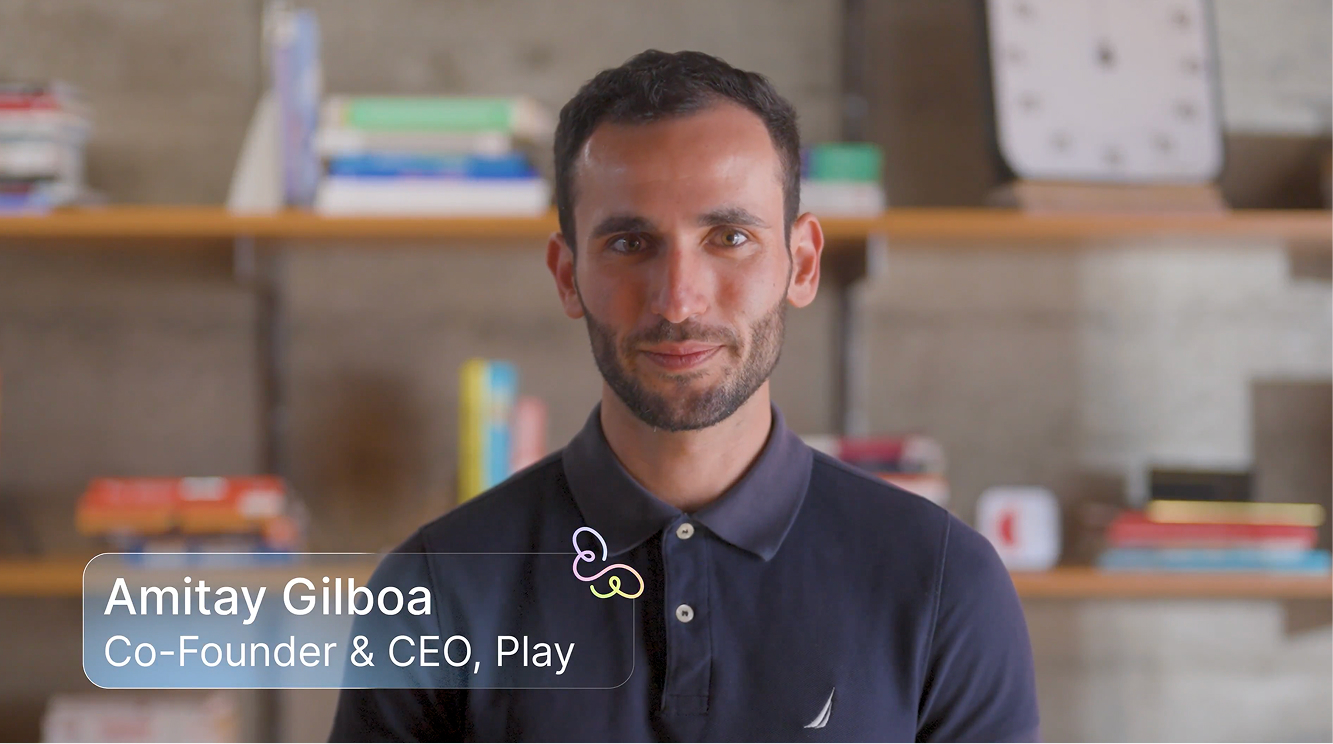
"The enterprise software stack built for the previous cloud decade was not originally designed for a setting in which AI coworkers operate alongside human teams," said Amitay Gilboa, Chief Executive Officer of Play. "Play was designed for that setting, with the workspace, the application layer, and the AI coworker layer administered together."
Category context
Play's platform brings together three components that have historically belonged to separate product categories. The first is a workspace for teams. The second is a no-code builder that teams can use to develop enterprise-grade business applications. The third is an AI coworker layer that runs AI agents with administrative controls over the data and actions those agents are permitted to access. Early customers have used the platform to consolidate work that previously required a combination of collaborative work management software, CRM add-ons, internal spreadsheets, and standalone AI productivity tools.
Enterprise software buyers have increasingly evaluated AI functionality as a layer that is administered independently of individual applications, with reported interest in visibility into what AI coworkers can access, what they can modify, and what routes to a human reviewer. Play applies those controls at the workspace layer.
Incumbent product activity
Established work management software vendors have continued to introduce AI-related features. Publicly reported announcements over recent quarters include a sequence of agent products from a large sales-software vendor, agent functionality inside a leading team messaging product, an AI assistant and an agent marketplace from a publicly traded work management vendor, and agent platforms introduced by IT service management and developer-tools vendors. These announcements reflect continued vendor activity across the category.
Independent research referenced in this release
Several published studies describe current conditions in enterprise software portfolios. Zylo's 2026 SaaS Management Index reports an estimated 46 percent underutilization rate across the average 371-application enterprise portfolio, and identifies software fragmentation among the procurement concerns reported by surveyed leaders. A 2025 report published by the U.S. National Institute of Standards and Technology (NIST) reported that approximately 68 percent of AI-generated web components reviewed in the study contained at least one medium-severity vulnerability. Separate industry research has cited a reported 300 percent year-over-year increase in AI-assisted code commits from non-engineering teams. All figures are reported by their respective publishers and are referenced here for context.
Evaluation topics reported by enterprise buyers
The AI work hub category is still early. Adjacent vendors are expected to reposition existing products into the category over the coming quarters. Enterprise evaluation questions reported by buyers tend to cluster around three topics. Whether AI coworker controls are applied at the workspace layer or added per product. Whether the application layer supports enterprise-grade business applications or is limited to read-only dashboards. Whether the contract consolidates SaaS spend or adds an additional line item.
About Play
Play is an AI workspace platform for modern enterprises. Play gives business teams one place to build enterprise-grade business applications, run AI coworkers alongside human employees, and administer AI controls at the workspace layer. Play is headquartered in San Francisco. Additional information is available at play.fast.
About:
Coretado Inc. is building Play, AI workspace built for collaboration in the AI age.
Media contact:
Amitay Gilboa, Chief Executive Officer, Play.
Email: [email protected] Phone: +1 (415) 740-7792 Web: play.fast
Sources:
Zylo, 2026 SaaS Management Index, zylo.com/resources NIST, 2025 report on AI-generated code quality, nist.gov/publications
* Forward-looking statements. This release contains estimates and forward-looking statements, including references to third-party research and expected category development. Actual results may differ, and statements are based on information available at the time of publication.
SOURCE: Coretado Inc.