



Thursday, 10 September 2026 05:50 AM
Company Update
SINGAPORE, SG / ACCESS Newswire / September 10, 2026 / Ottermind AI today announced a major update to its AI agent workspace, presenting a unified environment designed to help users move from an initial goal, prompt, or collection of source materials to polished, editable deliverables.
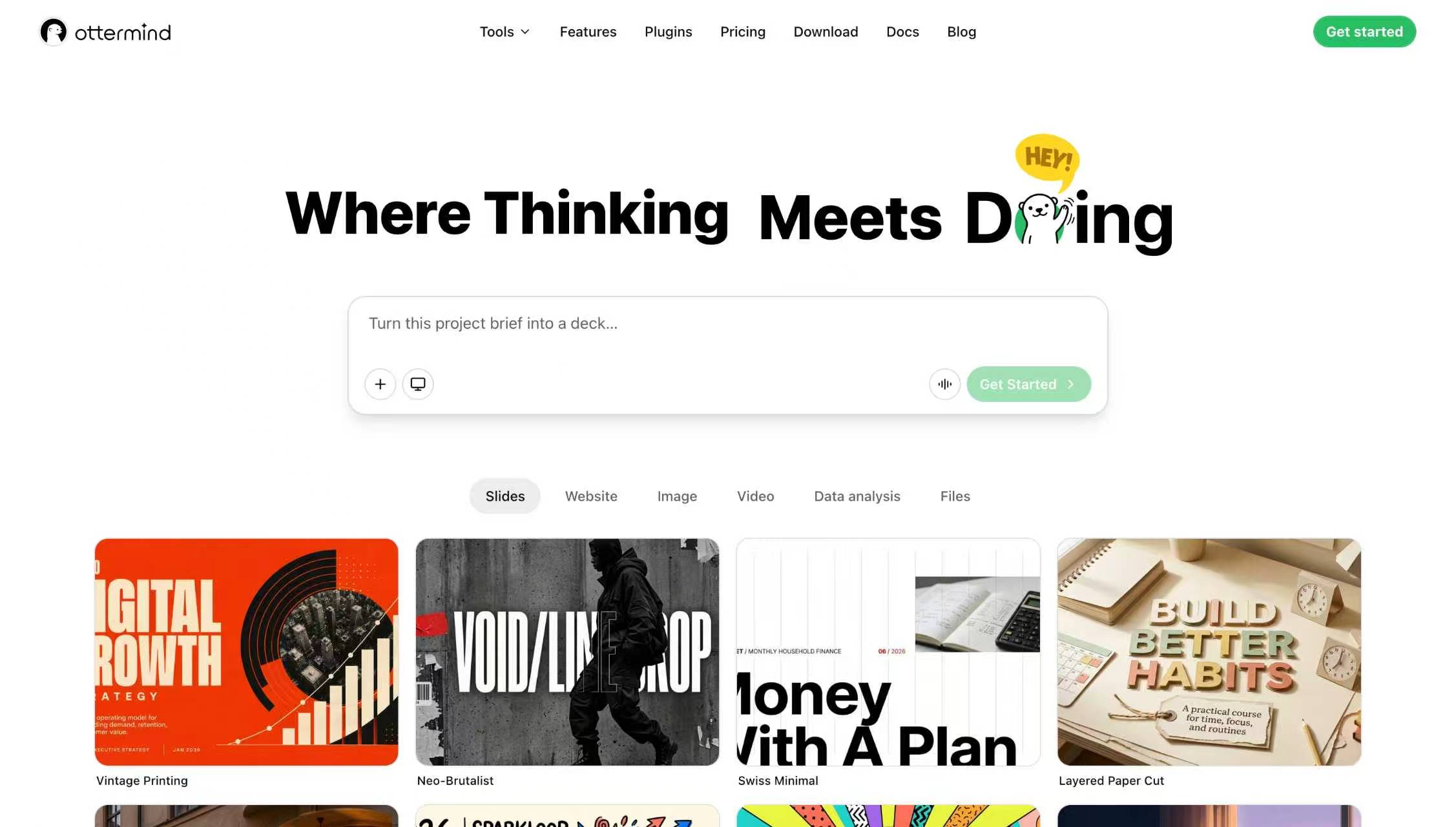
The platform combines chat-based AI interaction with multi-step task execution, file handling, project context, memory, automation, and content-generation capabilities. Instead of treating an AI-generated answer as the end of the interaction, Ottermind is designed to support the broader process around completing a piece of work-including interpreting source materials, planning the required steps, creating the output, and refining it for its intended use.
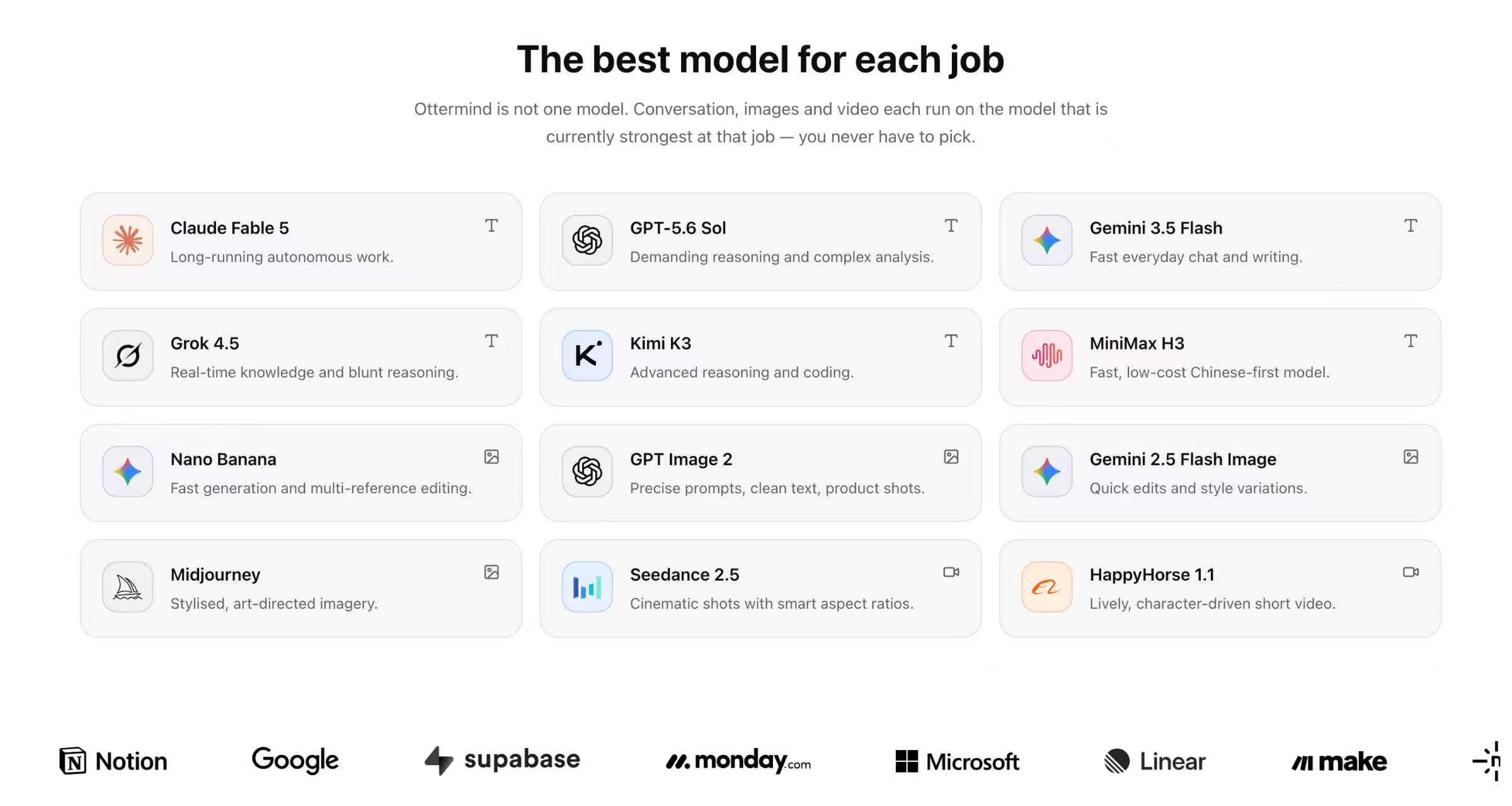
Users can begin with a simple request, a single file, or a mixture of documents, spreadsheets, transcripts, images, research materials, and photographs of offline business records. Ottermind can interpret these inputs together and help transform them into practical outputs such as presentations, reports, spreadsheet analyses, images, videos, websites, summaries, and recurring research or reporting workflows.
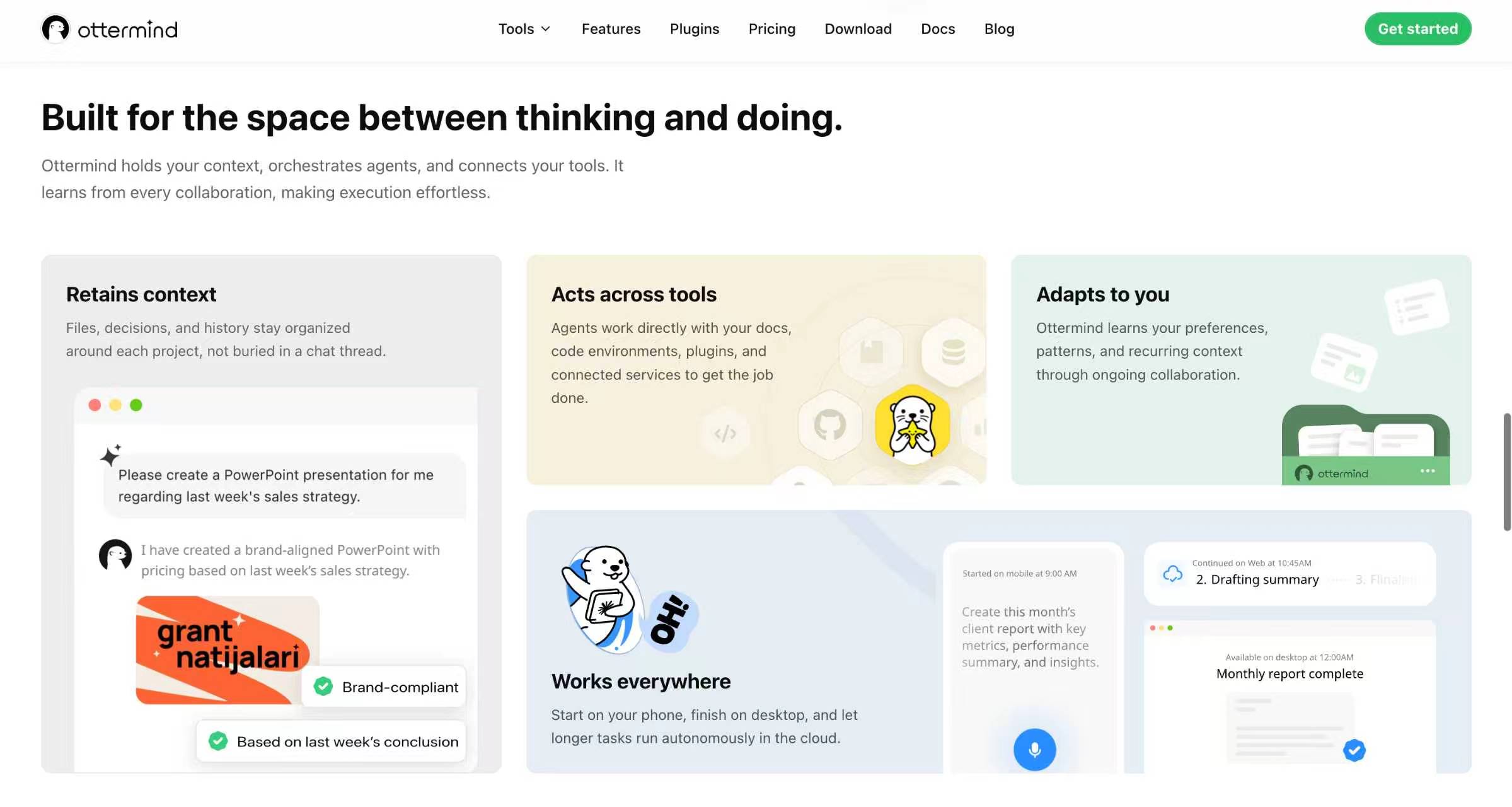
The product is designed for people with different levels of technical experience, including users without coding, prompt-engineering, or agent-configuration backgrounds. By connecting the tools and context required for a task within one workspace, Ottermind aims to reduce the setup and coordination that can stand between an idea and a finished result.
Moving Beyond the AI Chatbox
Generative AI tools are widely used to answer questions, summarize information, and create initial drafts. In many real work settings, however, the response is only the beginning. Users may still need to verify and reorganize the material, move it between applications, format it for a specific audience, create visual assets, and manage multiple rounds of revision before the work is ready to use.
Ottermind is built around a different endpoint: the deliverable. A user defines the goal and provides the available context; the system can then map out and execute the steps needed to produce work that can be reviewed, edited, shared, or used in a continuing project.
This approach also distinguishes the platform from general-purpose AI workspaces that may provide many separate tools but still require users to determine how to combine them. Ottermind is designed to coordinate relevant capabilities around the requested outcome while keeping the source files, instructions, project history, and revisions connected.
The result is intended to lower the barrier to using agent-powered workflows. Users do not need to begin by selecting a technical framework, configuring an agent, or assembling a collection of external services. They can begin with the work they need to complete and allow the platform to organize the process around that objective.
Working Across Files, Formats, and Deliverable Types
Business and creative work rarely begins with perfectly organized source material. Information may be spread across PDFs, Word documents, Excel or CSV spreadsheets, meeting notes, transcripts, screenshots, research files, and photographs of printed tables or other offline materials.
Ottermind allows users to combine multiple sources in a single request and ask the system to interpret them as parts of the same assignment. For example, a user can provide a market report, a spreadsheet, meeting notes, and a photographed table, then ask the workspace to produce an executive presentation or structured report from the combined information.
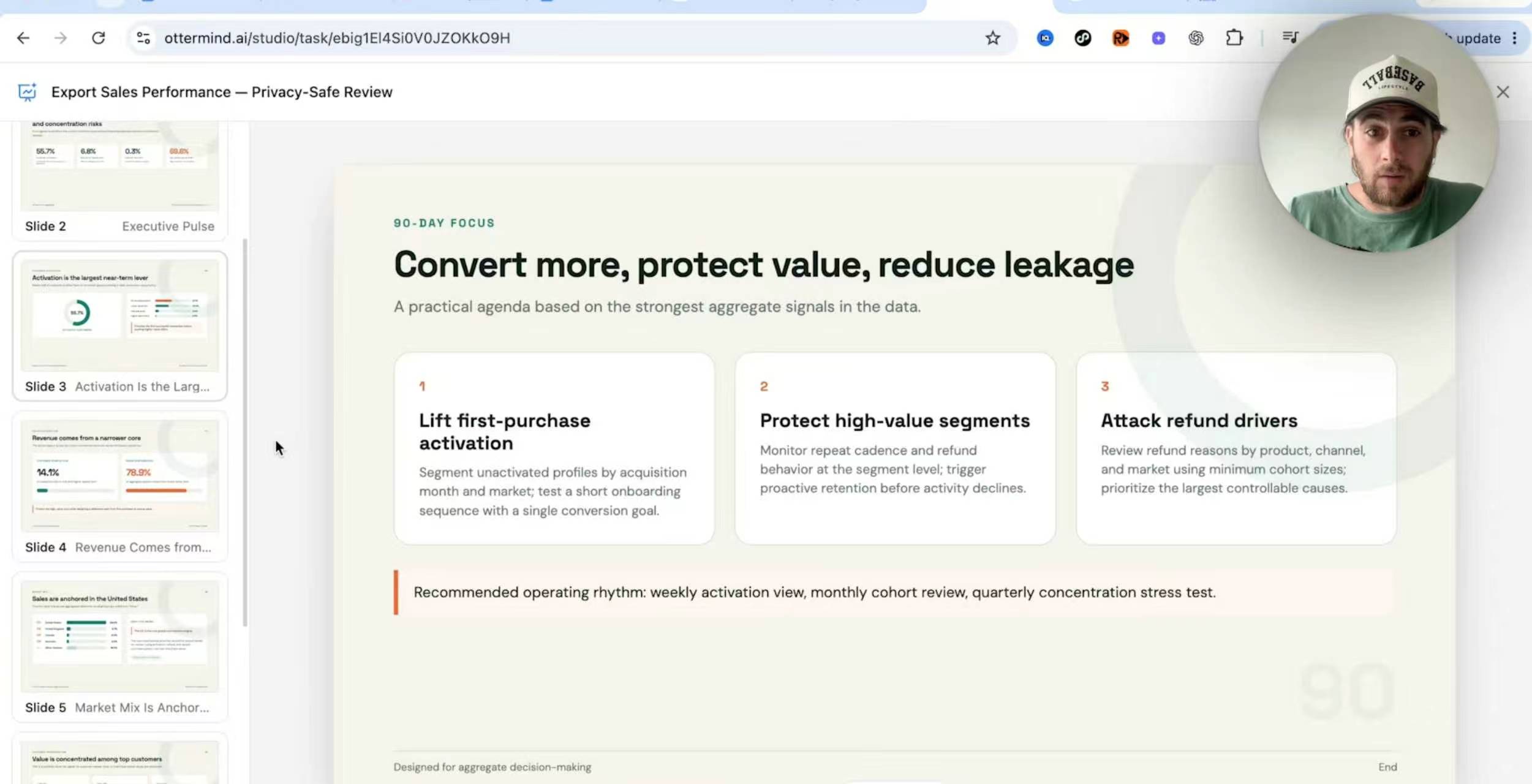
Presentation creation is one representative example of this file-to-deliverable workflow. The platform can help organize fragmented material into a clear narrative, adapt the level of detail to the intended audience, and create an editable deck for management reviews, client proposals, internal updates, or research briefings. The emphasis is not simply on placing extracted text onto slides, but on shaping the information for the intended delivery setting.
The same underlying workflow extends to other forms of work. Users can turn interviews or meeting transcripts into summaries and action plans, synthesize research into structured documents, analyze spreadsheets for relevant findings, develop visual content from prompts or reference materials, create simple websites, and establish recurring workflows for ongoing reports or monitoring.
Once an initial output is ready, users can continue refining it within the same conversation. They can expand or shorten sections, change the tone, adapt the result for another audience, translate the content, strengthen its visual presentation, or build a new deliverable from the same source materials without reconstructing the original context.
Early International Use
According to company platform data through the end of August 2026, people from more than 50 countries and regions had accessed and tried the Ottermind agent experience. The United States, Singapore, Brazil, and India were among the leading sources of users during that period.
The company says this early international use includes people with a wide range of technical experience. The pattern supports Ottermind's focus on making agent capabilities useful not only to technical users, but also to professionals who want to complete business or creative work without learning how to configure an agent or manage a complex AI toolchain.
Feedback from creators who have worked with the platform has highlighted a similar distinction. AI creator Rob The AI Guy recently featured Ottermind in a video exploring its approach to task-oriented AI. In the accompanying video description, he highlighted the platform's ability to go beyond chat and help users complete real work, calling it "definitely worth checking out." The feature reflects Ottermind's focus on moving beyond conversational responses toward finished deliverables.
Access to Global AI Models
Ottermind provides access to a range of globally recognized AI models and model families within its workflows, including GPT, DeepSeek, Seedance, MiniMax, and GLM. These choices support different kinds of work across reasoning, writing, multilingual tasks, presentation creation, image generation, and video production, with availability depending on the task and account.
The models are integrated into the Ottermind environment so that users can apply different capabilities without creating separate API connections or repeatedly moving their files and project context between external services. The platform's emphasis is not on asking users to manage model infrastructure, but on making model capabilities available as part of a consistent workflow toward a finished result.
Within this structure, an individual model is one component of a broader process. Ottermind connects model capabilities with file interpretation, task planning, content organization, visual creation, revision, project memory, and delivery, depending on the request.
Projects, Memory, and Automation
For work that continues beyond a single interaction, projects act as dedicated spaces that keep relevant files, instructions, memory, and conversation history together around a specific topic, client, campaign, or objective. This allows users to continue working without repeatedly reintroducing the same background information.
For larger or more complex requests, the system can break the work into steps, show progress during execution, and keep the result available for additional review and editing. A completed output can also become the starting point for related work, allowing users to build on the same information and project context.
The platform also supports scheduled automation for recurring tasks such as status reports, research digests, market monitoring, and team updates. These workflows apply the same product logic to ongoing work: the user defines the objective, Ottermind coordinates the required process, and the resulting materials remain connected to the relevant project.
From Request to Result
Ottermind AI's product logic follows a straightforward sequence: the user defines a goal or provides source materials, the workspace plans and executes the required steps, and the user receives an editable result that can be reviewed, revised, shared, or used in further work.
Use cases include preparing presentations from mixed business files, producing structured research reports, converting meeting transcripts into action items, analyzing spreadsheet data, generating visual and video content, building simple websites, and automating recurring information workflows.
The company is primarily targeting marketers, content creators, founders, researchers, operators, and other professionals who regularly need to transform information into practical business or creative outputs. Ottermind's broader goal is to keep ideas, source files, research, instructions, and resulting deliverables connected within one workspace, reducing the distance between starting a task and having usable work in hand.
Cross-Device Availability
Ottermind AI is available through web browsers and applications for macOS, Windows, iOS, and Android.
When users sign in with the same account, their projects, cloud files, and conversation history can remain synchronized across supported devices. This allows a user to begin a task on one device, review its progress elsewhere, and continue refining the result from another device.
Additional information is available at:
About Ottermind AI
Ottermind AI is an AI-powered workspace built around agentic, multi-step workflows. The platform combines AI interaction, file handling, task execution, project context, memory, automation, multi-model access, and content generation to help users move from goals and raw source materials to finished deliverables.
Its capabilities span presentations, documents, spreadsheets, research, images, videos, websites, long-file analysis, and recurring workflows. Ottermind is designed to make these capabilities accessible to people with different levels of technical experience while keeping their work, context, and outputs connected in one environment.
Website: https://ottermind.ai/
Company: Ottermind AI
Contact: Pengfei Ji
Email: [email protected]
Website: https://ottermind.ai/
SOURCE: Ottermind AI