



Monday, 24 August 2026 03:15 PM
Company Update
A three-day suspension of Section 338 duties on roughly $19.1 billion of annual Canadian imports runs down today, with dairy quotas, provincial alcohol bans and automotive market access all still unresolved between the two capitals.
SINGAPORE, SG / ACCESS Newswire / August 24, 2026 / A last-minute understanding between Washington and Ottawa suspends 50% tariffs on roughly $19.1 billion of Canadian goods a year and stalls what would otherwise rank as the most consequential bilateral trade escalation in decades. The duties, due to have taken effect at 12.01am on Wednesday, remain paused as the three-day reprieve reaches its final day. Burghley Capital reads the closing window as a narrow but genuine test, one whose outcome bears on North American supply chains and capital flows.
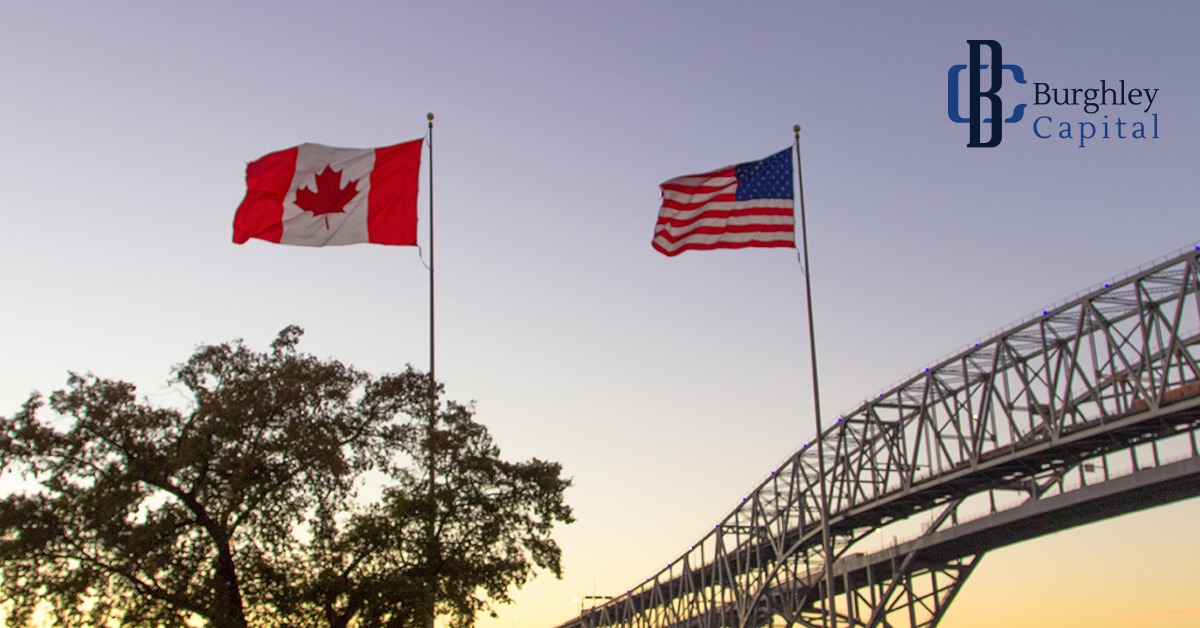
President Donald Trump confirms the postponement, set out late on Tuesday evening less than two hours before the deadline, on the basis that a deal exists subject to final documents. Prime Minister Mark Carney puts the suspension at three days, points to substantial progress alongside outstanding work, and frames the position as active negotiation still short of agreement. The White House holds that the pause serves the public interest.
The legal mechanism behind the threatened duties gives this episode a significance well beyond the sums involved. Section 338 of the Tariff Act of 1930 lets a president impose levies of up to 50% on trading partners judged to discriminate against American commerce, and Trump is the first sitting president to reach for it since enactment. He signed three proclamations a month ago covering 554 tariff lines: 439 motor vehicles, 63 alcohol, 52 dairy. Broader measures put annual exposure beyond $26.7 billion.
Three grievances anchor the American case, the first of which concerns a Canadian dairy regime that Washington has contested for years. The supply management framework caps domestic production and imports, and rates currently run to 245% on cheese and 298% on butter once quota thresholds are breached, with American cheese facing tighter administration than European product. The dispute belongs to the design of the system in the judgement of Joseph Campbell, who speaks in his capacity as Senior Vice President at Burghley Capital and observes that "quota architecture, not the headline tariff rate, is where genuine market access gets decided". Canadian purchases of American dairy run to about $1.4 billion over the past year.
Provincial alcohol restrictions have done measurable commercial damage, with eight provinces still barring American product some eighteen months after retaliatory measures first appeared. Alberta and Saskatchewan lifted theirs three months in; Ontario and the rest hold firm pending a comprehensive agreement. Canadian imports of American alcohol fell roughly 81%, or $555.4 million, in the year after those measures took effect, and distilled spirits are down 85% in the latest quarter to below $9.5 million. Recent polling compounds the damage, with 69% of Canadians unlikely to buy American alcohol were it restored and 80.9% in British Columbia.
The automotive complaint rests on trade statistics that American negotiators have put at the centre of their case. Canada has applied a 25% tariff for roughly sixteen months to American vehicles that do not qualify for preferential treatment. Motor vehicle imports from the United States have fallen about 22% to $26.3 billion from $33.6 billion a year earlier, while Canadian purchases of Mexican vehicles rose 23.6% over the same period. Campbell places that divergence at the heart of the American argument, and on his reading "the substitution effect hands Washington its strongest evidentiary case at the table".
What the emerging framework contains remains only partly visible, though its central plank is clear enough to price. Canadian tariffs on American farm exports would fall to zero once documents are signed, with equivalent treatment for manufacturers, while the trade representative's office points to market access, economic security and digital trade. Carney has asked provinces to return American spirits to shelves; Quebec would weigh the agreement on its merits.
The exemptions written into the framework reveal a calibration that matters more to investors than the headline rate. Canadian oil and gas, potash and strategic minerals from nickel to rare earths retain unimpeded access on defence and grid infrastructure grounds, which preserves flows Washington cannot easily replace. Trump has also floated a Keystone XL revival, a claim Ottawa has not answered and analysts treat sceptically.
Beyond the immediate standoff sits the unresolved question of USMCA renewal, which passed its extension deadline at mid-year without American commitment to a further sixteen-year term. The pact holds for another decade under annual joint reviews, and both Canada and Mexico have filed for renewal while Washington presses for stricter wage enforcement, higher vehicle content thresholds and coordinated tariffs on China. Burghley Capital assesses that a reprieve of this length prolongs the uncertainty facing institutions with North American exposure. Campbell weighs the same question from the standpoint of allocators, and his conclusion is that "a pause measured in days buys time for negotiators, not certainty for portfolios".
About Burghley Capital
Burghley Capital Pte. Ltd. (UEN: 201731389D) has operated from Singapore since its founding in 2017, building a global investment management practice grounded in long-only expertise. Rigorous analysis, bespoke investment design and advisory work give clients a strategic edge in demanding markets. A disciplined approach underpins that work, directed at durable returns and resilience for institutional and private clients worldwide. Further insight sits at https://burghleycapital.com/resources. Media enquiries go to Martin Wei at [email protected] or via https://burghleycapital.com.
SOURCE: Burghley Capital