



Tuesday, 04 June 2024 11:30 AM
Company Update
Major global newspapers are highlighting the crisis in both physics and cosmology: A scientific revolution is imminent.
TRIVANDRUM, INDIA / ACCESSWIRE / June 4, 2024 / Major global newspapers (BBC News, The New York Times, The Guardian, Forbes, et al) are raising alarm over the crisis in both physics and cosmology. An article appeared in the New York Times (NYT), which highlighted the ‘crisis in cosmology' unraveled by the James Webb Space telescope and warned about an imminent scientific revolution [Ref.1]. Another article, again in the NYT [Ref.2] claimed that based on American DESI (Dark Energy Spectroscopic Instrument) findings, astronomers got ‘Dark Energy' all wrong. American scientists have a golden opportunity to revolutionize science from the James Webb Space telescope findings and from the DESI data on dark energy [Ref.3]. DESI team has created the largest ever 3D map of the universe, and only a plot of number of galaxies versus distance is needed to turn science on its head [Ref.4]. However the window of opportunity will close very soon and Europe will gain an upper hand with Euclid Telescope data [Ref.5 and 6]. American taxpayers will not be happy to find their $10 billion, James Webb telescope being triumphed over by a $1 billion, European telescope. It is ‘now or never' situation for American scientists.
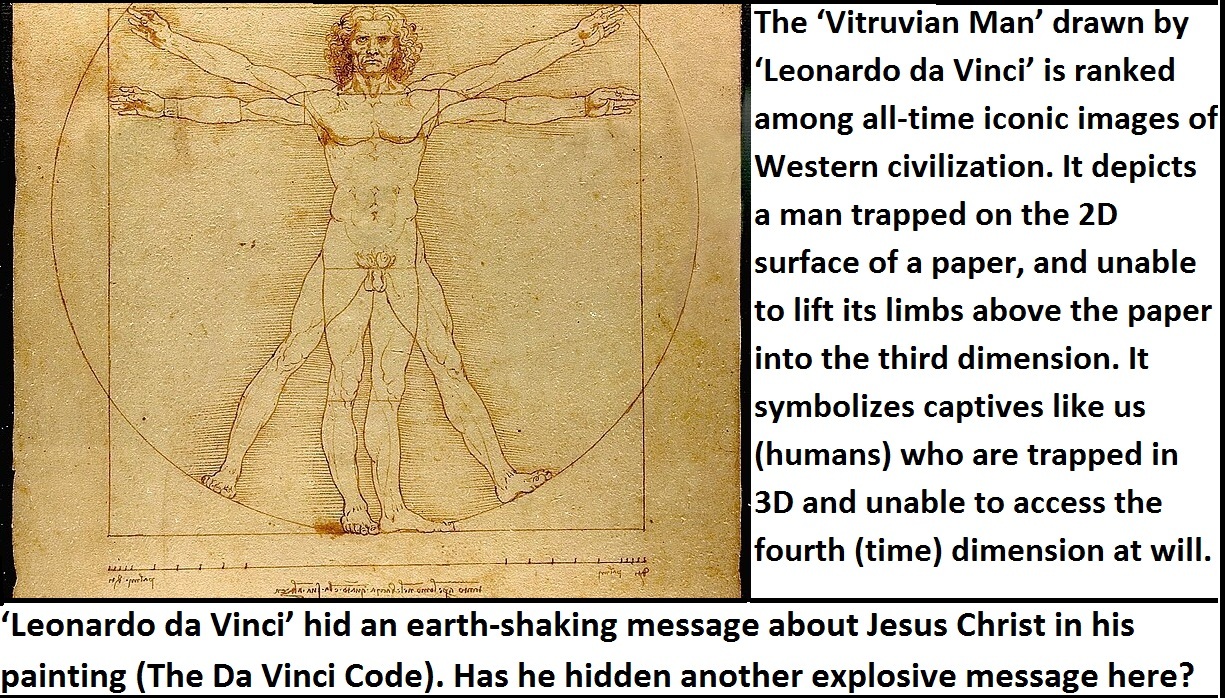
James Webb and DESI groups can usher the greatest ever paradigm shift in science. But time is running out fast. To make matter worse, the Japanese XRISM (X-Ray telescope) is also close on the heels. XRISM must not be underestimated because it is very much capable of shaking up science to the core by following a different avenue [Ref. 7 and 8]. Japan's X-ray telescope will almost certainly revolutionize X-ray astronomy, and overthrow deeply held scientific beliefs. James Webb might still triumph over the two next-generation (European and Japanese) telescopes in this cut throat competition; but only if American scientists manage to sprint ahead in the neck to neck race.
DESI (Dark Energy Spectroscopic Instrument) data can be used for much more serious and newsworthy purposes than was intended. It can measure the shape and size of the universe and overthrow the presently reigning ‘Standard Model of Cosmology'. It can also unify the two bitterly conflicting pillars of modern Physics.
"The country which leads the rest of the world in science will also be foremost in wealth and prosperity." -William Ramsay.
Repetition is needed for emphasis: Only a plot of number of galaxies versus distance is needed. Europe's Euclid telescope can also provide that information, and is racing ahead! Within next 2 years, DESI's five year mission shall be completed, and DESI will create a 3D map of the universe up to 11 billion light years away, mapping 3 million quasars and 37 million galaxies. Europe's Euclid telescope will map 1.5 billion galaxies (40 times more than DESI) to create an even larger, 3D map of the universe. Euclid has passed the commissioning phase on 5th October, 2023 and is taking images in full scientific mode from 14th February, 2024.
The authors of the first NYT article (mentioned above) had not realized that it could have been a much more newsworthy article, even though it was newsworthy enough to appear in the NYT. But the article is just the tip of the invisible iceberg. Not only cosmology is in crisis; physics faces severe crisis too, and the NYT article authors have failed to see the link. Consequently, the article simply presents some big problems, but offers no satisfactory solution(s). The crisis in physics runs deep. There are two pillars of modern physics-general relativity (GR), which describes phenomena on the largest cosmological scale, and quantum mechanics (QM), which describes phenomena on the smallest, submicroscopic scale. Both theories have passed every test in their own domain, and are incredibly successful in their own realm. But these theories contradict with each other, and are in bitter conflict [Ref.9]. For over nine decades, finding a way to reconcile the two has been the grandest goal of physicists worldwide. Nobody succeeded, and neither anyone had any hope, or any clue about how to proceed, until recently [Ref.10].
The crucial question which has been left unanswered is: "How can only a plot of ‘the number of galaxies versus distance', turn science on its head?"
The answer is shocking. Flawed mathematical assumptions [Ref.11] and ignorance about the physical meaning of imaginary numbers have infected the reigning theories of physics and cosmology. This has led to the disregard of the true nature of the universe-that it expands like a 3D hyper-surface. The universe is just like an expanding (hyper) balloon. However, a party balloon has a two-dimensional (2D) surface and exists in three-dimensional (3D) space, while the universe has a 3D surface and exists in 4D (hyper) space. Instead of rubber, as in a party balloon, the wall of the balloon universe is made of invisible and unnoticeable (Higgs like) scalar field. All particles which makes up stars and planets and humans are mere excitation/resonance in this field: this is the core concept of the stunningly accurate ‘Quantum Field Theory'. Nature's true geometry is four dimensional (as suspected by Einstein, Minkowski et al). However, it is not the 4D SpaceTime continuum they had imagined. That would have led to a ‘block universe' view in which there is no distinction between the past, present and future, and all three would simultaneously coexist!
The expansion of the balloon universe is the cause for both the ever increasing entropy (the crucial second law of thermodynamics), as well as the unidirectional flow of time. Time itself is not the fourth dimension, but emerges due to motion along the fourth space dimension [Ref.12]. The concept of 4D SpaceTime continuum is the biggest mistake in Science: Space and Time do not fuse into a 4D continuum [Ref.13].
Nature's true geometry is revealed and demonstrated by the ‘Principle of Least Action (PLA)', from which ALL KNOWN laws of physics can be derived. PLA can be generalized to the ‘Principle of Maximum Proper Time', which reduces to a shockingly simple statement: "The least distance between two points in 4D (hyper) space is a straight line". The universe is embedded in this 4D (hyper) space, just as a party balloon is embedded in 3D space of the party-room. A simple calculation of the Hubble constant value for this balloon model gives 71.002 km/s/Mpc, and it lands right between the two measured values (69.8 km/s/Mpc and 74 km/s/Mpc) that are now being fought over by the two powerful groups within the cosmology community.
Humans and the planet earth (and the solar system, and even the Milky Way galaxy) are eternally trapped within the 3D wall of the expanding balloon universe. This gives rise to two different frames of reference/viewpoints: The center of the universe viewpoint, and the human viewpoint from an awkward position in the universe. The universe is perceived differently from each viewpoint, but it is precisely this which allows the reconciliation between quantum mechanics and relativity. Relativity is all about being trapped in the 3D balloon surface, but being free to move along any three mutually perpendicular directions within the 3D hyper surface. Humans are trapped in the 3D surface of the expanding balloon universe, which turns the familiar everyday world into three space and one time (3+1) dimensions. The crucial conservation laws of physics arise from the simple balloon shape of the universe (via Noether's theorem on symmetry). Even the internal symmetries like U(1), SU(2) and SU(3), which gives rise to all the forces and particles of the Standard Model of particle physics arises naturally from this model as the transition from one viewpoint (3+1) to another viewpoint (1+3) takes place with decreasing size scale, passing through intermediate (2+2) fractal SpaceTime of Relativistic Quantum Mechanics [Ref.14].
These concepts have profound implications. It represents a tremendous breakthrough for physics and cosmology. It leads to a unified physics and cosmology, and comes pretty close to a ‘theory of everything'.
But how can anyone be sure that this indeed is the case? This is where a plot of number of galaxies versus distance (from American DESI team) can be decisive.
A circle drawn on curved surface (of a sphere, or a football) has shorter circumference compared to a circle of same radius drawn on a flat surface. For example, a dome-shaped orange peel has a shorter edge than a pancake of the same size. Forcibly trying to flatten it will tear its edges. The equivalent of a circle in 3D is a sphere, and the equivalent of the circle's circumference in 3D is a spherical surface. DESI can see up to 11 billion light years (b.l.y.) away. A sphere of 11 b.l.y. can be partitioned into spherical bands (say 7-8 b.l.y., 8-9 b.l.y. etc.) The number of galaxies falling in each band can be counted. The predictions of curved, balloon universe differ from the presently accepted 3D flat model of the universe, which predicts the number of galaxies to be proportional to the square of radius. Balloon model predicts the number to deviate (become lesser) from the accepted prediction with increasing radius. This crucial test is based on a hallowed/sacrosanct principle that the distribution of galaxies on a large enough scale of the universe is uniform.
DESI team need not wait for another two years to complete its entire survey. Already one year's data has been processed, and three years data collection is already complete. Three large-angled, conical sections of galaxies mapping, along three perpendicular directions is enough. DESI team has gathered enough data. It will be shameful if America loses to Europe in this scientific race. After all, America's National Laboratories have at least 75 breakthroughs to showcase [Ref.15]. United States has long been leading the world in science and technology [Ref.16]. Almost routinely, US news media had been boasting that United States remains the dominant leader in science and technology worldwide, and U.S. still leads the world in science and technology [Ref.17] That article also made a shocking revelation: The United States accounts for 40 percent of the total world's spending on scientific research and development, employs 70 percent of the world's Nobel Prize winners and is home to three-quarters of the world's top 40 universities.
What is even more noteworthy is the American public's attitude towards science. Pew research center found that Americans prioritize being a world leader in scientific achievements more than other global publics. Nearly seven-in-ten Americans (69%) think it is very important for the United States to be a world leader in scientific achievements. The U.S. stands out, along with Spain, for the high share of its citizens to hold this view [Ref.18]. Even NASA had released a document claiming that America is leading the world in space exploration and scientific discovery [Ref.19].
But all these must come with some caveat: Recently CNN claimed that the US was once the uncontested world leader in science and engineering, but that has changed [Ref.20]. The Boston Globe raised a serious question "Will America yield its position as the world's leader in science and technology?" [Ref.21]. The prestigious Science journal claimed that U.S. science no longer leads the world [Ref.22].
The NYT article [Ref.1] said: "Physicists and astronomers are starting to get the sense that something may be really wrong. It's not just that some of us believe we might have to rethink the standard model of cosmology; we might also have to change the way we think about some of the most basic features of our universe - a conceptual revolution that would have implications far beyond the world of science." Another paragraph said "We may be at a point where we need a radical departure from the standard model, one that may even require us to change how we think of the elemental components of the universe, possibly even the nature of space and time." Yet another paragraph specifically tried to inspire American scientists for a full-blown scientific revolution by saying "But a (scientific) revolution may end up being the best path to progress. That has certainly been the case in the past with scientific breakthroughs like Copernicus's helio-centrism, Darwin's theory of evolution and Einstein's relativity. All three of those theories also ended up having enormous cultural influence - threatening our sense of our special place in the cosmos, challenging our intuition that we were fundamentally different than other animals, upending our faith in common sense ideas about the flow of time."
If American scientific communities do not seize the opportunity to turn science upside down, then Europe will win the race, and Europe will be the leader of another scientific revolution. Or else, Japan, the 'land of the rising sun', will soon become the 'rising sun' in Science. American public must never forget that Science Is What Made America Great [Ref. 23]. Squandering away the numero uno position is easy; but regaining it back is not easy. Therefore, every patriotic American (regardless of social stature) must regard this as a call to action. American scientists might need more than a gentle nudge from the American public and the funding agencies to expedite processing the three years of DESI data (which began on 15th May, 2021 and ended on 15th May, 2024) in order to bring everlasting glory to their nation and usher in a tsunami-sized ‘scientific revolution'.
About:
Mr. Joseph T. Kurien (a former Cochin University graduate who completed his M.S. in the US) is an independent researcher and a part-time science writer. He presently works in Manappuram software and consultancy.
Manappuram Software Company was established in 2002. It ventured into consultancy and digital solutions in 2007. Mr. Joseph Kurien joined Manappuram software and consultancy in 2009 and played a key role as projects manager. He was also involved in the expansion of the company in the Middle East and Gulf region, where the Keralite community has a significant presence. He has ambitious plans to open two branch offices in the United States in the near future.
REFERENCES (available online): https://zenodo.org/records/11453956
MEDIA Details:
Company Name- Manappuram software and consultancy
Contact Person- Joseph T. Kurien
Phone- +91 9302737759
Email- [email protected]
City & Country - Trivandrum, India
SOURCE: Manappuram Software Company