



Monday, 06 January 2025 02:20 AM
Company Update
Spain's flax fiber bottle market is projected to grow at a 3.6% CAGR, outperforming other European nations. The growth is fueled by initiatives like the Plastic Tax, encouraging businesses to adopt eco-friendly alternatives. Spain's focus on reducing single-use plastics and promoting biodegradable packaging, such as flax fiber, aligns with its commitment to sustainability and greener practices.
NEWARK, DE / ACCESSWIRE / January 6, 2025 / The flax fiber bottle market is set for significant growth in the coming decade, with its size estimated to increase from USD 167.8 million in 2025 to an anticipated USD 270.7 million by 2035. According to recent market analysis, sales are projected to rise at a CAGR of 4.9% during the forecast period (2025-2035). This growth builds on a solid foundation of USD 161.9 million in revenue generated in 2024.
The food and beverage industry, particularly the wine segment, emerges as a driving force behind this expansion. The sector accounts for more than 52% of the market share for flax fiber bottles, underlining the pivotal role of eco-conscious packaging solutions in shaping industry trends.
As sustainability becomes a core focus for businesses and consumers alike, wine manufacturers are increasingly embracing flax fiber bottles as an eco-friendly alternative to traditional glass and plastic packaging. These biodegradable and greener options align with the growing consumer demand for sustainable products that minimize environmental impact.
The flax fiber bottle market's steady rise underscores a broader shift toward sustainability across industries, reflecting the changing priorities of both businesses and consumers. With innovative solutions like flax fiber bottles, the industry is well-positioned to cater to the evolving preferences of an eco-conscious global market.
Understanding The Flax Fiber Bottle Market
A Flax Fiber Bottle refers to a bottle made using flax fibers, typically combined with other materials to create a sustainable and eco-friendly packaging solution. Flax fibers are derived from the flax plant, which is known for its strength, lightweight properties, and biodegradability.
These bottles are designed to reduce the reliance on traditional plastic materials and offer an environmentally friendly alternative. Here's what it typically means:
Sustainability: Flax fiber bottles are biodegradable and compostable, reducing environmental impact compared to conventional plastic bottles.
Material Composition: The bottles are often made by blending flax fibers with bioplastics or other natural materials to ensure durability and usability.
Applications: They are used for beverages packaging, cosmetics, and other liquid products, particularly by brands focusing on green initiatives.
Rising Eco-Awareness Fuels Demand for Sustainable Flax Fiber Bottles
The surge in eco-conscious consumer lifestyles is driving unprecedented demand for sustainable packaging solutions, with flax fiber bottles emerging as a preferred alternative to plastic. Renowned for their biodegradable and renewable attributes, flax fiber bottles are gaining traction across industries such as beverages, cosmetics, and personal care products.
Consumers increasingly seek products that minimize their environmental impact, prompting brands to adopt innovative packaging solutions that align with these expectations. Flax fiber bottles not only reduce plastic waste but also cater to the growing demand for green alternatives.
"The flax fiber bottle market is rapidly evolving, driven by increasing consumer demand for sustainable packaging solutions. As an eco-friendly alternative to plastic, flax fiber offers a promising future in reducing environmental impact. This innovative material not only supports sustainability but also aligns with global efforts to reduce single-use plastics in packaging." Says a Lead Consultant Ismail Sutaria in Packaging at Future Market Insights (FMI).
Get a Full Report Now: https://www.futuremarketinsights.com/reports/flax-fiber-bottle-market
Key Takeaways From The Flax Fiber Bottle Market
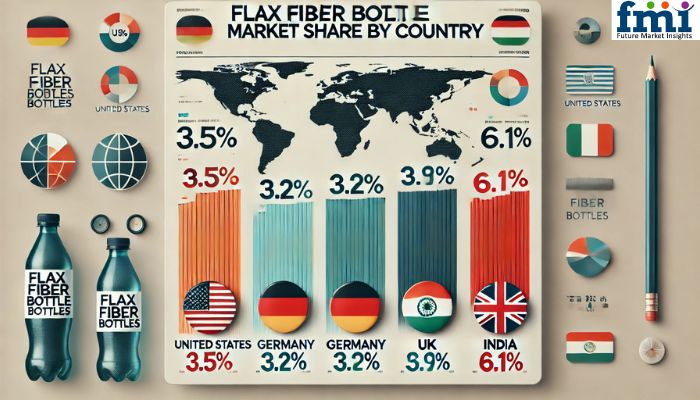
The global flax fibre bottle market saw a Compound Annual Growth Rate (CAGR) of 3.5% from 2020 to 2024.
By 2024, the market value of flax fibre bottles is expected to reach USD 161.9 million.
Spain's flax fibre bottle market is forecasted to grow at a CAGR of 3.6% in comparison to other European countries.
The expanding manufacturing sector in China will drive the demand for sustainable packaging solutions like flax fibre bottles, with the country expected to see a CAGR of 5.7% during the evaluation period.
Reusable bottles are projected to hold a market share of 52.6% by 2035.
In terms of capacity, bottles ranging from 250 to 500 ml are expected to dominate the market with a share of 41.2% by 2035.
Unlocking the Potential: Key Drivers Fueling Growth in the Flax Fiber Bottle Market
Sustainability and Eco-friendly Trends: Growing consumer demand for sustainable packaging solutions is a key driver of the flax fiber bottle market. Flax fibers are biodegradable, renewable, and have a low carbon footprint, making them an attractive alternative to plastic bottles.
Increase in Environmental Awareness: As consumers become more environmentally conscious, there is a shift toward products that reduce plastic waste and offer more natural, recyclable materials. Flax fiber bottles align with these values, driving their adoption.
Government Regulations and Policies: Increased regulations and policies focused on reducing plastic waste and promoting sustainable packaging solutions are encouraging the use of eco-friendly materials like flax fiber for bottle production.
Growth in the Food and Beverage Industry: The rising demand for sustainable packaging in the food and beverage industry is pushing the adoption of flax fiber bottles. Brands are seeking eco-conscious packaging alternatives to appeal to environmentally aware consumers.
Technological Advancements in Material Processing: Continuous improvements in flax fiber production, processing, and bottle manufacturing technologies have made flax fiber bottles more cost-effective and scalable. These innovations make it easier for manufacturers to incorporate flax fibers into their packaging solutions.
Competitive Landscape
Key participants in the flax fibre bottle business are creating and bringing new items to the market. They are combining with various organizations and expanding their geographical reach. A few of them also collaborate and work with local brands and start-up enterprises to produce new products.
Key Developments in Flax Fibre Bottle Market
In August 2022, Green Gen Technologies decide to produce 50,000 bottles of flax a beta test workshop in Portet sur Garonne (France).
Key Players in Flax Fibre Market
Green Gen Technologies
The Flax Company
Vruksha Composites
Yajur Bast Fibres Limited
Flax Fibre Bottle Market Segmentation
By Product Type:
In terms of product type, the flax fibre market is divided into single-use bottles, reusable bottles and customized bottles.
By Capacity:
Different flax fibre bottle capacities include 50 to 250 ml, 250 to 500 ml, 500 to 750 ml and above 750 ml.
By Sales Channel:
Sales channels in the flax fibre bottle include online and offline. The offline sales channel includes supermarkets and hypermarkets.
By End Use:
End user in the flax fibre bottle market include food and beverage, pharmaceuticals, cosmetics and personal care and others (household, etc.)
By Region:
Key countries of North America, Latin America, East Asia, South Asia and Pacific, Western Europe, Eastern Europe, Middle East and Africa are covered.
Authored by:
Ismail Sutaria (Lead Consultant, Packaging and Materials) has over 8 years of experience in market research and consulting in the packaging & materials industry. Ismail's strength lies in identifying key challenges faced by the client and offering logical and actionable insights to equip the clients with strategic decision-making power.
Ismail has been an instrumental part of several transformational consulting assignments. His key skills include competitive benchmarking, opportunity assessment, macroeconomic analysis, and business transformation advisory. Ismail is an MBA holder in Marketing and has a Bachelor's Degree in Mathematics.
Ismail is a regular at industry conferences and expos and has been widely covered in electronic and print media. He is a Speaker at our upcoming Talk show - Rise of the Intelligent Packaging. Ismail has been quoted in leading publications, including the European Pharmaceutical Review and the European Adhesive Tape Association.
Have a Look at Related Research Reports on the Packaging Domain:
The growing demand for bottles is driven by the increasing need for packaging solutions across various industries, including beverages, pharmaceuticals, and personal care, fueling innovation in design and production techniques.
The sales of reusable water bottle are predicted to witness expansion at a CAGR of 2.8% through 2034. The industry is anticipated to surpass USD 11.5 billion by 2034.
The growth of eco-friendly bottles is driven by increasing consumer demand for sustainable packaging, with companies innovating to offer biodegradable, recyclable, and reusable alternatives that reduce environmental impact and promote sustainability.
The plastic bottles market size is estimated to be worth USD 102.8 billion in 2023. The market outlook is even brighter for 2033, with expectations exceeding USD 155.2 billion by 2033.
Smart Water Bottle is an innovative, technology-enhanced water bottle designed to help users maintain hydration and improve their health and wellness routines. It integrates smart features to track water intake, provide reminders, and monitor hydration levels.
The glass bottles market is expected to increase from USD 40.2 billion in 2023 to USD 70.2 billion by 2033, at a 5.7% CAGR from 2023 to 2033.
A bottle carrier refers to a device or container designed to hold, transport, and organize multiple bottles. These carriers can be made from various materials such as plastic, cardboard, or metal and come in different styles depending on their purpose.
The global sales of grab-and-go bottles are estimated to be worth USD 81.6 billion in 2024 and anticipated to reach a value of USD 118.2 billion by 2034. Sales are projected to rise at a CAGR of 3.8% from 2024 to 2034.
The high density polyethylene (HDPE) bottle market is projected to be valued at USD 53.0 billion in 2023. The market research report anticipates a growth of USD 74.7 billion by 2033.
The rising demand for paper bottles is driven by growing environmental awareness, as consumers and companies seek sustainable alternatives to plastic packaging in industries like beverages, cosmetics, and personal care.
About Future Market Insights (FMI)
Future Market Insights, Inc. (ESOMAR certified, recipient of the Stevie Award, and a member of the Greater New York Chamber of Commerce) offers profound insights into the driving factors that are boosting demand in the market. FMI stands as the leading global provider of market intelligence, advisory services, consulting, and events for the Packaging, Food and Beverage, Consumer, Technology, Healthcare, Industrial, and Chemicals markets. With a vast team of over 400 analysts worldwide, FMI provides global, regional, and local expertise on diverse domains and industry trends across more than 110 countries.
Join us as we commemorate 10 years of delivering trusted market insights. Reflecting on a decade of achievements, we continue to lead with integrity, innovation, and expertise.
Contact Us:
Future Market Insights Inc.
Christiana Corporate, 200 Continental Drive,
Suite 401, Newark, Delaware - 19713, USA
T: +1-347-918-3531
For Sales Enquiries: [email protected]
Website: https://www.futuremarketinsights.com
LinkedIn | Twitter | Blogs | YouTube
SOURCE: Future Market Insights Inc.