



Monday, 06 January 2025 06:30 AM
Company Update
Demand for plant-based food colors is on the rise in the USA, largely due to the trend for premium product formulations in the food and beverage industry. These consumers have now shifted towards a clean-label, organic, and sustainable profile, with manufacturers striking back at high-quality products emphasizing natural ingredients. The plant-based food colors market in India is expanding rapidly, backed by the ready availability of plenty of agricultural raw materials such as turmeric, beetroot, spinach, and carrots.
NEWARK, DE / ACCESSWIRE / January 6, 2025 / The global plant based food colors industry is rapidly evolving as consumer preferences shift towards natural and sustainable food products. With increasing awareness about the harmful effects of synthetic food colors, both consumers and manufacturers are opting for plant-based alternatives that are safe, healthy, and environmentally friendly. The industry is poised to capitalize on these trends, catering to the growing demand for clean-label products across the food and beverage sector.
The global market for Plant Based Food Colors was valued at USD 10.7 billion in 2024 and is anticipated to reach USD 17.9 billion by 2034. This significant growth trajectory, reflecting a compound annual growth rate (CAGR) of 5.5% over the assessment period (2024-2034), underscores the industry's importance in shaping the future of sustainable food production.
What are the Key Factors Driving the Plant Based Food Colors Market Growth?
Plant-based food colors are made using natural ingredients like kale, carrot, beetroot, and more. Growing awareness about the benefits of plant-based food colors, health hazards associated with synthetic colors, and health benefits of plant-based food colors are acting as prime drivers in the expanding market shares.
Factors such as rising health consciousness and inclination toward environment-friendly products are likely to increase the demand for plant-based food color in the forecast period.
That plant-based food, colors are nontoxic or less toxic in nature, have fewer side effects than synthetic colors, and have a gradual increase in therapeutic use.
Governments in various countries are supporting the use of plant-based food colors as they are biodegradable in nature and do not cause pollution after disposal.
Several regulations have been passed regarding the use of plant-based food colors, which is further expected o drive the demand for the product across the globe. The demand is also increasing constantly due to the consumer perception of healthier and safer conventional foods. Organic food colors are free from synthetic pesticides, fertilizers, growth hormones, and generally modified organisms and can be highly used for making food attractive.
The expansion of the food and beverage industry impacts the plant-based food colors market positively, thereby driving its growth in the plant-based food colors market.
However, the shelf life and production of these colors stand as two big challenges in the plant-based food colors market. A high cost of production as compared to artificial or synthetic food colors is some of the restraining factors impacting the market size of plant-based food colors.
Other factors impacting the growth of plant-based food colors are the limitations in terms of options available and reactions or changes occurring when mixed with various food products.
Increasing Demand for Plant-Based Food Colors in Bakery and Confectionery Products
Bakery and confectionery products have emerged as a leading application segment for plant-based food colors. These products require vibrant and visually appealing colors to attract consumers, making natural alternatives a preferred choice. Moreover, the rising popularity of vegan and clean-label bakery items has further propelled the demand for plant-based food colors.
In addition to aesthetics, plant-based food colors in bakery and confectionery products offer functional benefits such as antioxidant properties and nutritional enhancements. These advantages are driving manufacturers to innovate and expand their product portfolios, meeting the dual demands of health-conscious and eco-friendly consumers.
Major Industry Highlights
Rising Demand for Natural Food Products is Boosting the Production of Plant Based Food Colors The increasing awareness about health and wellness has led to a surge in demand for natural food products. This trend has significantly driven the production and adoption of plant-based food colors in various sectors, including dairy, snacks, and beverages.
Diverse Use of Plant Based Colors in Food and Beverage Products From turmeric for yellow hues to beetroot for red shades, plant-based food colors are being utilized across a wide range of products. This versatility allows manufacturers to meet consumer demands for natural and appealing food and beverage options.
Enhancing Color Extraction by Supercritical Fluid Extraction (SFE) Technology The adoption of Supercritical Fluid Extraction (SFE) technology has revolutionized the extraction process of plant-based food colors. This advanced technique ensures higher yield, better purity, and environmental sustainability, giving manufacturers a competitive edge.
"With advancements like SFE technology and an emphasis on clean-label products, the sector is poised for significant innovation and expansion in the coming decade," says Nandini Roy Choudhury, Client Partner at Future Market Insights
Explore In-Depth Analysis Click Here to Access the Report!
https://www.futuremarketinsights.com/reports/plant-based-food-colors-market
Key Takeaways from Plant Based Food Colors Study
The global Plant Based Food Colors industry size is projected to grow at a CAGR of 5.5% between 2024 and 2034.
Bakery and confectionery products remain a dominant application segment, driving market expansion.
Technological advancements like SFE are enhancing the quality and sustainability of plant-based food colors.
Increasing consumer preference for clean-label and natural products continues to shape the industry's trajectory.
What is the Regional Outlook for Plant Based Food Colors Market?
At present, Europe is anticipated to dominate the plant-based food colors market. This can be attributed to the huge food and beverage industry in these regions. In addition, the health-consciousness and vegan population of this region fuel the demand for plant-based food colors.
North American regions form the second-largest market for plant-based food colors. This is due to increasing awareness regarding health hazards associated with artificial food colors.
The growing popularity of colorful foods amongst the millennials is also expected to drive the plant-based food colors market in North America.
The Asia Pacific region, including India and China, also has various business opportunities to explore amid the high availability of herbs and spices. With the availability of plant-based food colors, new businesses are also being established in these regions, expanding the market size of the plant-based food colors market.
Competitive Landscape in the Plant Based Food Colors Industry
The Plant Based Food Colors industry is highly competitive, with key players focusing on innovation, mergers, and acquisitions to strengthen their market position.
Leading Brands
Givaudan (Naturex)
Sensient Technologies
Chr. Hansen Holding
Symrise AG
ADM (Archer Daniels Midland)
BASF SE
GNT Group
Döhler Group
Kalsec Inc.
Roha Dyechem
Synthite Industries
Kancor Mane
Guangzhou Qianyi
Qingdao Scitech
GreenEx Food
Plantae Biosciences
AmiNova (Skretting)
MiAlgae
NaturAlgae
Cargill
BioMar
Alltech
Waterbase Ltd.
Avanti Feeds
Collaboration with food and beverage manufacturers and investments in R&D are pivotal strategies adopted by these players to cater to evolving consumer demands.
Recent Developments
Sensient Technologies introduced a new line of organic plant-based food colors, targeting the expanding clean-label market.
DDW The Color House announced the opening of a state-of-the-art extraction facility to enhance its production capabilities and support sustainability goals.
Naturex, a subsidiary of Givaudan, unveiled a partnership with a global beverage brand to supply customized plant-based color solutions.
Country-wise Insights
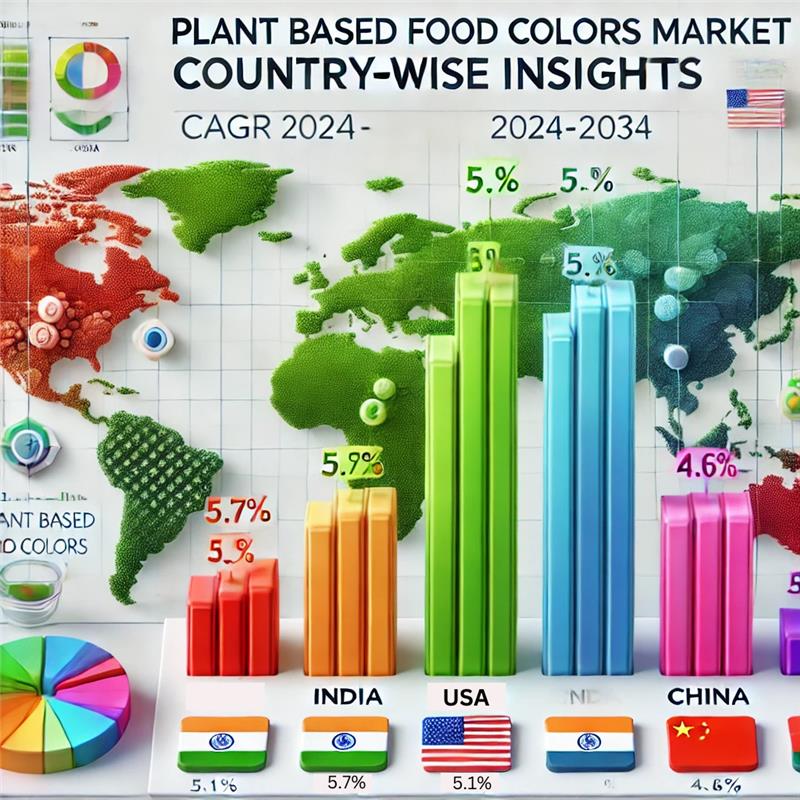
Raw Material Availability Driving Growth in India's Plant-Based Food Colors Market India's rich biodiversity and abundant availability of raw materials like turmeric, spinach, and beetroot are fueling the growth of its plant-based food colors industry. The country's cost-effective production capabilities make it a key player in the global market.
Growing Demand for Premium Plant-Based Food Colors in the USA In the United States, consumers are increasingly opting for premium natural food products. This trend is driving the adoption of high-quality plant-based food colors in applications ranging from snacks to ready-to-eat meals.
Integration of Health and Sustainability into Product Offerings: A Key Trend in China In China, the focus on health and sustainability is reshaping the food and beverage industry. Manufacturers are incorporating plant-based food colors into their offerings to align with these consumer priorities, ensuring long-term market growth.
Key Segments of the Report
By Product Type:
As per product type, the industry has been categorized into Carotenoid, Anthocyanin, Chlorophyll, Annatto, Phycocyanin, Curcumin and Others.
By Form:
As per Form, the industry has been categorized into Liquid and Dry.
By Application:
This segment is further categorized into Bakery & Confectionery Products, Beverages, Packaged Food/Frozen Products, Dairy Food Products and Others.
By Solubility:
As per Solubility the market is segmented into Water and Dye.
By Region:
Industry analysis has been carried out in key countries of North America, Latin America, Western Europe Eastern Europe, Russia & Belarus, Central Asia, East Asia, South Asia & Pacific, and Middle East & Africa.
Authored by:
Nandini Roy Choudhury (Client Partner for Food & Beverages at Future Market Insights, Inc.) has 7+ years of management consulting experience. She advises industry leaders and explores off-the-eye opportunities and challenges. She puts processes and operating models in place to support their business objectives.
She has exceptional analytical skills and often brings thought leadership to the table.
Nandini has vast functional expertise in key niches, including but not limited to food ingredients, nutrition & health solutions, animal nutrition, and marine nutrients. She is also well-versed in the pharmaceuticals, biotechnology, retail, and chemical sectors, where she advises market participants to develop methodologies and strategies that deliver results.
Her core expertise lies in corporate growth strategy, sales and marketing effectiveness, acquisitions and post-merger integration and cost reduction. Nandini has an MBA in Finance from MIT School of Business. She also holds a Bachelor's Degree in Electrical Engineering from Nagpur University, India.
Nandini has authored several publications, and quoted in journals including Beverage Industry, Bloomberg, and Wine Industry Advisor.
Explore FMI's related ongoing Coverage in Food and Beverage Domain:
The global anthocyanin food colors industry is estimated to be worth USD 352.7 million in 2024 and is projected to reach a value of USD 571.2 million by 2034
The global natural food color sales are estimated to be worth 1,835.8 million USD in 2024 and are projected to reach a valuation of 3,679.4 million USD by 2034
Curcumin food color worldwide, the market is expected to reach a market valuation of nearly USD 106 Million by the year 2022, accelerating with a CAGR of 10.3 % between 2022 to 2032.
The food color market is forecasted to advance at a moderate CAGR of 5.8%, promising to reach USD 8.46 billion by 2034.
Global demand for food additives is projected to rise at a healthy CAGR of 7.2%, taking the overall market valuation to a massive total of USD 551.4 billion by 2034.
The global food coating ingredients market is estimated to reach USD 4 billion in 2024. It is anticipated to grow at a CAGR of 6.6% during the assessment period and reach a value of USD 7.6 billion by 2034.
The caramel food colors market value is expected to total USD 185 million in 2023, according to Future Market Insights (FMI).
The plant-based milk industry is on its way to perceive escalation, from USD 20.1 billion in 2024 up to USD 47.9 billion by 2034.
The global plant-based premix industry is expected to reach a valuation of USD 345.4 million by the year 2024, accelerating with a CAGR of 8.5% by 2024 to 2034.
The annatto food colors market insights cover food and beverage industries utilizing annatto food colorants worldwide. The market is expected to reach a market valuation of nearly USD 208 million by 2023.
About Future Market Insights (FMI)
Future Market Insights, Inc. (ESOMAR certified, recipient of the Stevie Award, and a member of the Greater New York Chamber of Commerce) offers profound insights into the driving factors that are boosting demand in the market. FMI stands as the leading global provider of market intelligence, advisory services, consulting, and events for the Packaging, Food and Beverage, Consumer Technology, Healthcare, Industrial, and Chemicals markets. With a vast team of over 400 analysts worldwide, FMI provides global, regional, and local expertise on diverse domains and industry trends across more than 110 countries.
Join us as we commemorate 10 years of delivering trusted market insights. Reflecting on a decade of achievements, we continue to lead with integrity, innovation, and expertise.
Contact Us:
Future Market Insights Inc.
Christiana Corporate, 200 Continental Drive,
Suite 401, Newark, Delaware - 19713, USA
T: +1-347-918-3531
For Sales Enquiries: [email protected]
Website:https://www.futuremarketinsights.com
LinkedIn| Twitter| Blogs | YouTube
SOURCE: Future Market Insights, Inc.