



Monday, 17 October 2022 08:40 AM
Company Update
HONG KONG, CHINA / ACCESSWIRE / October 17, 2022 / On Sep. 16, the Decentralized Exchange (DEX)MDEX officially announced its strategic cooperation with perpetual trading DEX - ApolloX. MDEX launched the USDT-margined perpetual trading feature at 07:00 (UTC) on October 10, 2022, continuing its commitment to meeting the different trading needs of users and bolstering its trading ecology. MDEX users who pay with MDX can enjoy 10% off on the perpetual trading fees. Currently, the USDT-margined perpetual trading function supports both Cross Margin and Isolated Margin Mode. Few concise words implying the next development focus of MDEX - perpetual trading.
Perpetual trading, the next step in MDEX ecological expansion
Specifically, MDEX will use the "DEX Engine" provided by ApolloX to start this new feature, and its governance token MDX, will achieve a new utility in the new feature, where users pay With MDX for perpetual trading fees can enjoy 10% off.
ApolloX was launched in 2021. In June this year, the project completed a seed round of financing. Binance Labs, Kronos Research, Lingfeng Capital, SafePal, Token Pocket, 3Commas and LUX Capital participated in. The so-called "DEX Engine" is a one-stop derivatives trading solution launched by ApolloX in July.
Through the official introduction of ApolloX, with the help of the "DEX Engine" solution, it is easy for blockchain protocols to deploy derivatives trading frameworks on their platforms. The protocols only need to tweak the frontend user interface that suits their brand, while ApolloX takes care of the backend functionality.
In terms of the specific transaction implementation mechanism, "DEX Engine", like dYdX and other leading derivatives exchanges, has chosen an order book mode that is more suitable for perpetual trading. At the same time, in order to take into account both efficiency and security, the "DEX Engine" adopts a combination of "off-chain matching + on-chain settlement". So that the transaction matching will be completed in the Cloud, and the settlement and custody of funds will be completely placed on-chain.
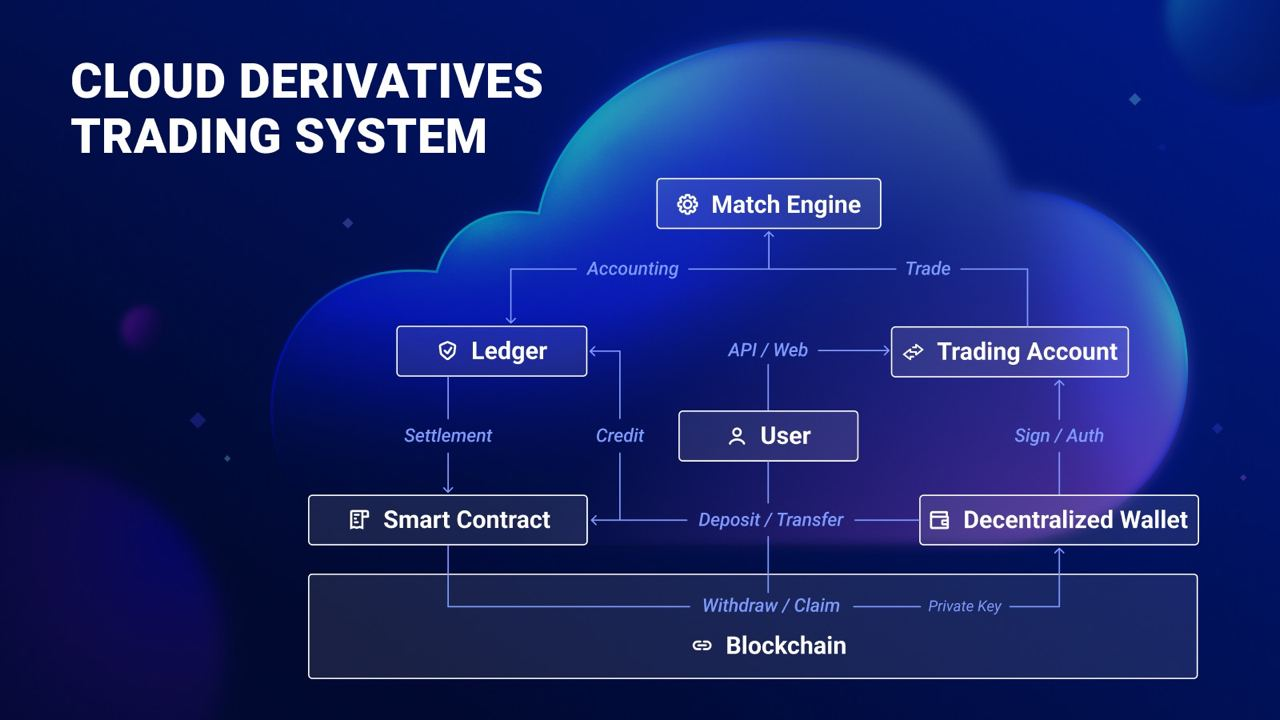
As of publication, the one-stop solution designed by ApolloX has been supported by many exchanges in the industry, including PancakeSwap, the largest DEX on the BNB Chain, and MDEX is the latest supporter of the solution.
Although there is not much information officially released for the time being, according to informed sources, the result of this cooperation between MDEX and ApolloX is expected to be officially deployed in October. At that time, MDEX users will be able to directly experience the perpetual trading on the platform for multiple crypto currencies and the deep liquidity that comes with the small dealing spread by the "DEX Engine".
From the perspective of trading experience, perpetual trading has not changed much compared with spot trading, where users will still need to connect to the crypto wallet without any KYC. The difference is that the perpetual trading will not involve the direct buy and sell of crypto assets. Instead, users need to deposit a certain margin and buy (open long) and sell (open short) leveraged positions of larger denominations to bet on market volatility. This will bring about higher capital utilization efficiency, increase the potential profit, and, of course, the risks will also be increased simultaneously.
For MDEX, the launch of perpetual trading is undoubtedly a key expansion of its product matrix, and it is also in line with MDEX's long-standing philosophy of "always committed to meeting the different trading needs of different users." Since its launch in January last year, although the data performance of MDEX has experienced great fluctuations along with the ups and downs of the industry as a whole, from the product perspective alone, MDEX has continued to expand in various dimensions.
In terms of horizontal ecological coverage, MDEX has expanded to BNB Chain, Ethereum, and other ecosystems in addition to HECO; in vertical product updates, with the implementation of the perpetual trading feature, MDEX will soon become an integrated DeFi protocol that is composed of six major functions, including spot trading, liquidity mining, Boardroom, IMO, Fun Buyback, and perpetual trading.
Derivatives, the future of DeFi
If you focus on the developmental trend of the industry, the deployment of perpetual trading is also a major strategic move for MDEX to march towards the future. The construction of a decentralized financial (DeFi) system is from low-to-high. As the underlying financial infrastructure, stablecoins, lending, and DEX have successively met users' basic needs for asset preservation, financing, and asset trading. With the gradual accumulation of DeFi Lego, the next step is to aim at higher-level user needs.
Derivatives trading is derived from spot trading. Compared with spot trading, derivatives trading has richer application scenarios that meet the various trading needs of users in amplifying profits, hedging risks, and optimizing resource allocation according to market conditions. While the growth rate of DeFi users is slowing down, derivatives trading is expected to bring new incremental traffic and more activity to the market, thereby laying the foundation for the outbreak of DeFi again.
From the perspective of the potential growth of the market, whether it is the traditional financial world or the cryptocurrency market based on centralized exchanges (CEX), the trading volume of derivatives is much higher than that of spot trading. According to CryptoRank data, as of 17:00 on September 19, the derivatives trading volume of the cryptocurrency market in the past 24 hours was as high as $105.586 billion, which is 2.8 times higher compared with only $37.551 billion in spot trading volume.

On the other hand, in the DeFi field, based on the data of CoinGecko, except for the leading protocol dYdX, which still has competitiveness, other derivatives exchanges have a large data gap compared with spot trading. From the perspective of overall transaction volume, the current total spot trading in the DeFi field is still much higher than the total derivatives trading, which is completely different from the situation in CEX. The data comparison gives the most intuitive conclusion that there is still a lot of room for growth in decentralized derivatives trading exchanges on-chain in the future.
Although limited by factors such as imperfect infrastructure and product design, a lack of user education, and so on, decentralized derivatives trading has a long way to go before becoming widely accepted, but it is undeniable that it is one of the incremental engines of the future DeFi market. Compared with the services of CEX, DEX has obvious advantages in asset custody and transparency, and it does not need to rely on any intermediaries to help avoid some common concerns of users, such as asset misappropriation, asset redemption in extreme market conditions, rug pool etc., from the underlying structure, achieving the upgraded two key attributes of "safety" and "trustworthy".
Going back to MDEX, they see this trend ,so that they've chosen perpetual trading as the next strategic development direction, in order to seize the position in advance when DeFi recovers again in the future.
The cryptocurrency market is in a bear market, and DeFi is in a "cold winter". To survive such a bleak period, everyone in the industry needs to work together. Fortunately, we can see that many projects do not stop moving forward while facing the current severe challenges, from the successful merger of Ethereum, to the emergence of multiple new public chains with new technical concepts, to application layers such as MDEX, and we have reason to believe that the shadows will eventually pass, and the future of Web3 is still bright.
Media Contact:
Name: Trista Hou
Company: Mdex
Position: Mdex Marketing Manager
Email: [email protected]
SOURCE: Mdex