



Thursday, 06 January 2022 11:15 AM
Company Update
LOS ANGELES, CA / ACCESSWIRE / January 6, 2022 / BankX, cryptocurrency's first stablecoin that pays interest for minting and the first "Individual Created Digital Currency" (ICDC), has announced its plan for the future of Decentralized Finance.
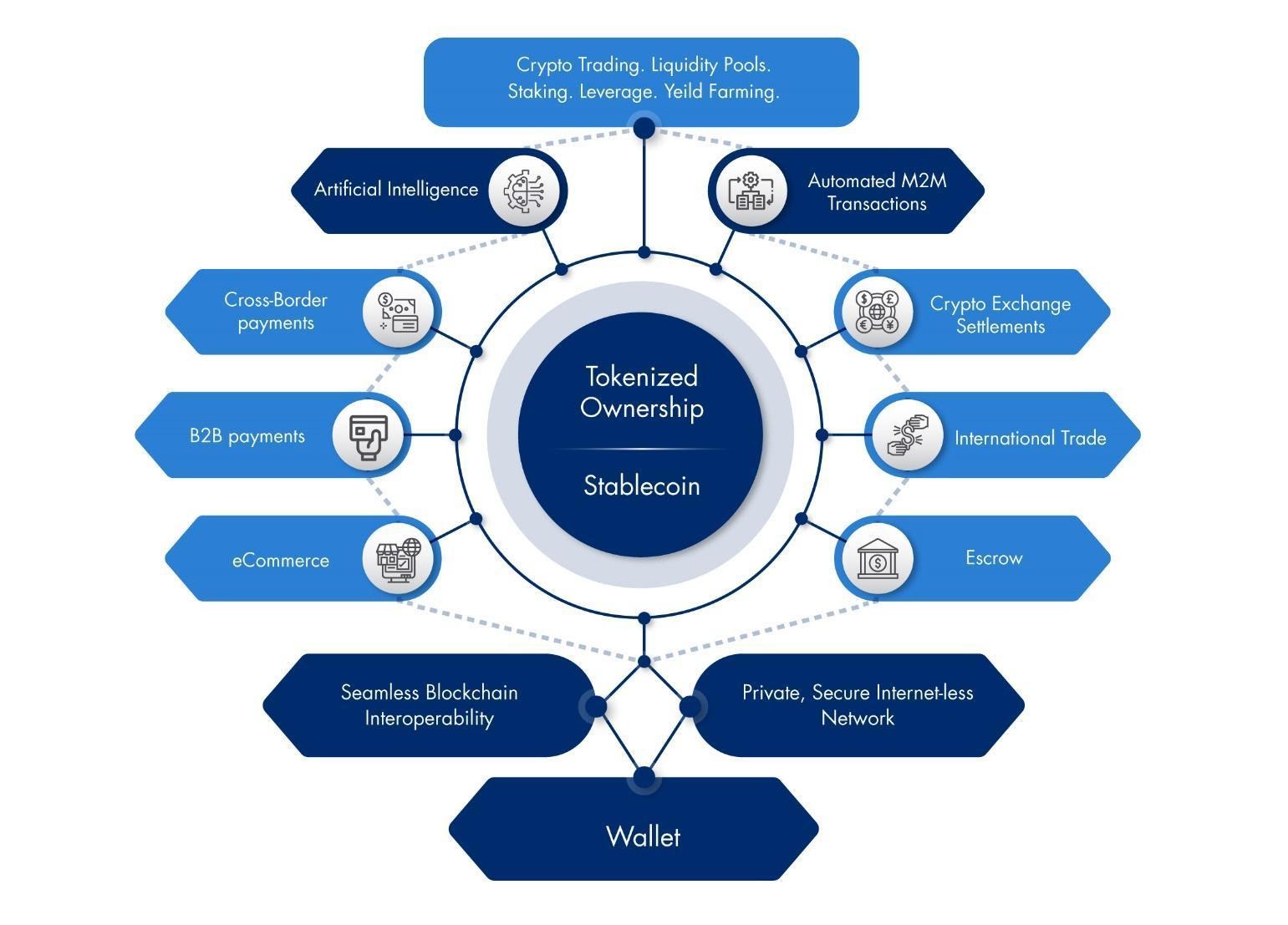
The BankX Future of DeFi
DeFi 3.0: Infrastructure For Mass Adoption
BankX has concluded the current state of cryptocurrency still lacks mass consumer adoption and real business use cases.
We have identified 3 elements that need to be in place to have mass adoption in cryptocurrency called DeFi 3.0.
Stablecoins - the holy grail in mass adoption of cryptocurrency.
Trust that a stablecoin can preserve its value and cannot be shut down or taken away is the biggest hindrance to mass adoption.
BankX has implemented numerous redundancies to keep the stablecoin pegged and introduced the first "Integrated Protocol Owned Liquidity" (IPOL) in cryptocurrency where the protocol owns the liquidity and the liquidity pool plays a role in maintaining a healthy monetary system.
A full economic audit is here:
https://bankx.io/economic-audit/
The essential process of decentralization
Although not easy, this can and will be achieved by BankX by using distributed ledger technology. This is the technology that is used to record transaction history and information on many computers or "nodes" at once. When all nodes are updated with the same information, this data cannot be changed or falsified.
This allows for a DeFi stablecoin to be fully transparent, unchangeable and accessible to all users. This will be an excellent, and necessary choice for consumers who want to keep their money safe but also remain anonymous.
Despite the progress in DeFi, a vast majority of blockchain dApps (decentralized apps) are not fully decentralized. Website servers, domains and server access to blockchains, like Infura for ETH blockchain access, are still centralized and can be captured. Case in point is when UniSwap delisted all stablecoins from its "decentralized exchange" front end at the potential threat of the SEC regulating stablecoins and investigating UniSwap. Liquidity pools for these stablecoins plummeted even though they are decentralized on the blockchain. The front-end access is not.
Protocols like the Internet Computer and Cartesi have solutions to decentralize servers. However, the crypto industry has yet to take the final step.
A regulation proof Stablecoin
To be truly decentralized, a regulation-proof stablecoin needs to be both crypto-collateralized and algorithmic. It cannot have any single entity in the process like what we see in all the physical asset or USD-backed centralized systems. Having the stablecoin backed by other cryptocurrencies gives faith in the system that there is underlying value that can be redeemed at any time without centralization. Also, it must be algorithmic to provide further price stability. This is the best possible combination of stablecoin capabilities that exists in the market.
These processes must occur in the smart contract on the blockchain making it unchangeable and visible to everyone. Front end website, website server and blockchain access also must be decentralized with multiple, capture proof access points.
Furthermore, a stablecoin cannot be pegged to a fiat currency price since it can be artificially inflated or printed at any time. Tracking the price of a physical asset, like precious metals, is a much better store of value.
Philosophically, the creation of currency should be decentralized rather than a single entity controlling the money supply for a nation. Since the best currencies have an underlying asset, the collateral owner should be the one earning the interest.
dApps (Decentralized Apps) with the right use cases will allow BankX to drive the usage of the stablecoin replacing legacy banking.
Crypto Credit Card: This is an important application as it allows the crypto community to spend crypto in the legacy payment system (point of sale and online) where the card holder pays in crypto but the merchant receives fiat currency.
B2B Payments: This $23 trillion per year market is an excellent use case of a stablecoin to make fast, bankless business-to-business payments to trusted vendors much less expensively. As more companies begin to transition to crypto in their corporate treasury, minting a stablecoin with corporate crypto collateral to use for payments will be the natural progression. The blockchain gives an easy way for businesses to automatically account for payments and financial reporting.
Cross Border Payments: The consumer version of B2B payments is sending money to anyone in the world, anytime with little cost. This is nearly a $40 trillion per year market.
eCommerce: Online purchases are a $4 trillion per year market. This doesn't necessarily need to be its own decentralized application but could be a browser extension taking over the shopping cart allowing the purchaser to spend crypto and settling in fiat to the merchant.
Escrow: Using the blockchain and a stablecoin, escrow services would cease to have middlemen and escrow agents for things like real estate transactions, stock, company acquisitions and automobile purchases are no longer needed.
International Physical Commodity Trading: Another escrow type transaction, a $16 trillion per year market, would be to use the blockchain for the purchase of physical commodities from one country to another. These transactions take too much time, have unneeded middlemen and tremendous fraud. Banks also charge high fees to handle the payments for these transactions in the form of Letters of Credit and Standby Letters of Credit. An example of an application like this could remove as much as 15% of the cost and dramatically lower the process time using the blockchain: www.Exportly.io
Swift Replacement: Banks communicate with each other and transfer capital using the SWIFT system. The Society for Worldwide Interbank Financial Telecommunication was created in 1973. It is time for something better, a messaging service for crypto transactions where the counterparties communicate directly with each other. Each identity, KYC (Know Your Client) and proof of funds is proven by the blockchain. The messaging is verified, encrypted and secured on the blockchain. This makes larger transactions truly sovereign.
NFT's will evolve to where they represent tokenized ownership of real-world assets like real estate and cars, etc. One blockchain project tokenized the ownership of a resort and sold fractionalized ownership. Imagine a NFT representing your fractional ownership of an apartment building. Net rental income is paid to you in crypto every month. NFT's will also represent digital ownership of financial instruments like stocks and bonds.
Version 2.0 of BankX will allow individuals to mint a stablecoin using a NFT. We are building our stablecoin with this capability. www.BankX.io
With a system like this, we feel traditional collateralized loans become far less attractive & use of the BankX protocol will surge.
Consumers can use their collateral to not only create a currency but also to earn interest rather than pay interest to a lender.
DeFi 4.0: Onramp
In DeFi 4.0, we envision everything using a private key. It will not only be your crypto wallet but identity, KYC information, access to sensitive documents, sending secure financial messages, interaction with all dApps and holding and controlling tokenized ownership of physical and digital assets.
This transformation cannot be understated. We estimate this will have a 10X+ impact larger than the Internet.
If stablecoins, dApps and NFT's are the key to mass adoption, the wallet is the onramp to this new financial system. Cathie Wood of Ark Invest said, "We see the wallet market as a winner take all scenario." However, the solution is not just an "easy to use" mobile app although that will help.
Crypto wallets have these categories:
Self-custody where you own and control the private keys and seed phrase. Crypto enthusiasts say "Not your keys, not your crypto.". This is a great way to keep your keys but if you lose the private key, the seed phrase or someone else gets access, you could lose your crypto.
Multi-Sig wallets give a layer of protection since 2 or more people need to sign the transaction before the crypto is sent. However, you need a consensus with the wallet holders before a transaction is sent and disputes could prevent this.
Third-Party custody services like Galaxy Digital store your keys in their vaults. Institutions usually opt for this but you are relying on someone else for the security of your keys. Fireblocks recently "lost" the keys to $70M in ETH. This ‘relying on others' to secure your keys is the same issue you have with keeping your crypto in centralized exchanges.
As the Internet collapses into Distributed Ledger Technology, the crypto community will need its own network. This will be a separate, Internet-less, overlay network that will store the private keys for everything done in this new financial system.
This network will provide "Decentralized Custody" of keys in the most secure network, initially in servers in vaults, then in satellites.
We are building this exact solution: www.LockBox.io
The move to this satellite network will prohibit any physical access to the actual storage devices. Not only will this system be incredibly easy to use, you will never be connected to the Internet but you will always be connected to your keys. "Decentralized custody" brings the best elements of the types of private key custody that are available in the market today but also give you the advantages of both a hot and cold wallet (hot is connected to the Internet and the cold wallet is not).
This decentralized custody network will evolve solutions that were offered in previous DeFi iterations. Blockchain interoperability will be achieved through this decentralized custody network and users will not have to rely on protocols like Cosmos bridging between chains. Interoperability happens at the network and wallet level. This will allow dApps and blockchain protocols to operate on all or multiple chains independently, giving the general dApp system further decentralization.
Different blockchains have different advantages and disadvantages. By running natively on these chains, the market and the specific user choses what is best for them. You can move between any crypto to any crypto in this overlay network. This network also provides a certain element of privacy as you move from one blockchain to another using this decentralized custody overlay network. An example of this is using the Exodus wallet to swap from one crypto on one blockchain to another crypto on a different blockchain. This is expensive to do. In the future, this will be seamless, fast and free.
Defi 3.0 and 4.0 are enormous inflection points for the crypto movement.
DeFi 5.0: Artificial Intelligence And The Blockchain
AI is a generic term that is thrown around and applications using it are often mislabeled. To see the impact of artificial intelligence, it is important to understand the differences in the technology.
Machine Learning vs. Deep Learning vs. Artificial Intelligence
The main difference between deep and machine learning is that machine learning models progressively get better. However, the model still needs some guidance. If a machine learning model returns an inaccurate prediction, then the programmer needs to fix that problem clearly and specifically. In the case of deep learning, the model does this by itself. Automatic automobile driving systems are a good example of deep learning. Artificial Intelligence is a computer acting like a human.
Artificial Intelligence and the Blockchain need to have a symbiotic relationship. The blockchain keeps AI in check (not running off and killing humans as described by AI dystopians), verifies data and algorithms and artificial intelligence makes the blockchain more efficient and secure.
Here are examples of how the Blockchain and AI will work together in DeFi 5.0:
- Blockchain verifies the data sources and their authenticity. AI uses the blockchain for data integrity before it is sent to the AI algorithm proving what data is trustable. The blockchain also verifies the AI algorithm itself and that it was from the intended author via blockchain identity verification.
- AI scans the blockchain for transaction fraud of all types.
- AI scans for blockchain operational efficiency.
- Track counterparty blockchain identity and KYC for fraud.
- Learns counterparty behavior and transactions in DEFI to find fraud and other criminal behavior.
- Anticipates security threats.
- AI on mobile devices analyzes typing and swiping behavior on the touchscreen to make sure it is the user. (Signature, Gestures and Typing)
- Blockchain is version control and gives the ability to unwind the advancement of the algorithm as the deep learning algorithms evolve. This would ensure the dystopian future doesn't occur.
- Blockchain will allow the sharing of threat intelligence, authentication of digital identities in those that use the shared intelligence.
- There will be a platform where financial security companies can share data, models and/or insights to better protect against fraud using the blockchain allowing for this type of "Swarm Intelligence". The end user controls what data is shared. AI models can be traded between security companies. Each security company builds and trains the model with their local data for a specific purpose. I envision a market of algorithms, different weights and biases for specific purposes that can be automatically traded and verified on the blockchain.
- AI for intelligence gathering, generation of real-time threat alerts, draw correlations between related threat data and improve analysis of existing and emerging threats.
DeFi 6.0: Automated Machine-2-Machine Transactions
The last step in the replacement of the legacy banking and financial system is where transactions are automated. The blockchain is verifying identity, data, AI algorithms, etc. AI is kept friendly using the blockchain. AI models progress to the point where the entire supply chain is automated and working flawlessly. The exact product, amount and delivery time is exactly what you need just as you need it. Machines are communicating with each other constantly monitoring behavior and preferences of every human on earth delivering what they need exactly when they need it, the equivalent of the economic invisible hand in digital, blockchain, AI form.
BankX will develop a more detailed business roadmap for this later.
Contact
Lance Parker
[email protected]
310-702-8686
SOURCE: BankX